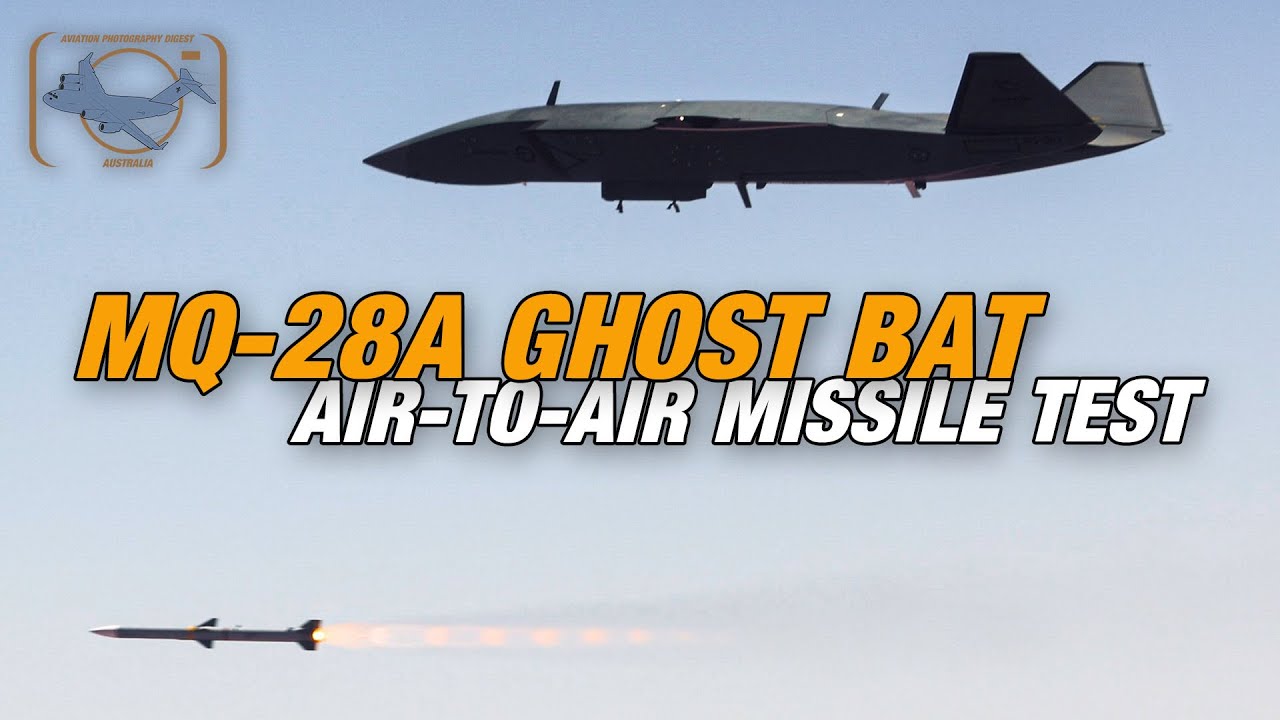
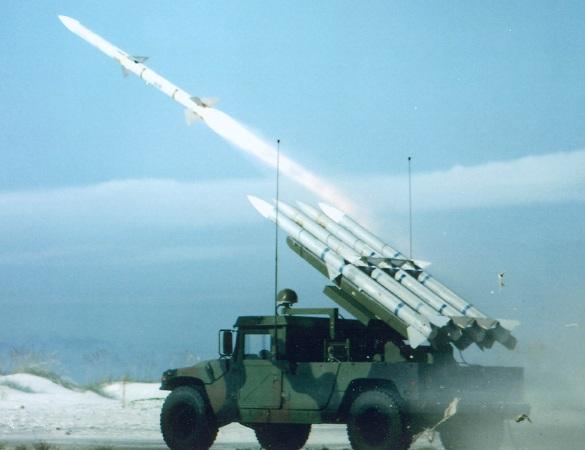
—big tinfoil moment ahead but— I believe they modelled it fine when it was on release, but when they noticed it overshadowed the R-77 in nearly every single circumstance, they nuked it deliberately. And since then they’re gaslighting us into thinking improvements in tracking and range will overshadow its basic maneuverability issues in a vacuum, ignoring that ratios of success on ARH slings depend proportionally on how close the range of sling was.
Man I even tried playing C-5s at 14.7 even with an AESA radar, and its just a pathetic missile at nearly every circumstance, I don’t even get how people make them work at all.
its too small to be a true swiss army knife. a modernized F-15E, or any advanced eagle sure, but not an F-16. you can pack on 2 sensor pods, 8 AAM, and then you get into the more versatile stations with an Advanced Eagle
can it even actually hit the advertised range? on statshark it barely has enough battery for 185km on a mach 0.9 target, mach 1.7 launch, at 11km altitude, but as far as i know it’s not particularly accurage (in fact, the AIM-120 seems to loft quite high, dive behind the target, and then chase in most 70+km shots.)
Flight path is irrelevant for current gameplay meta.
The minimum no escape zone is unchanged, and will only make a difference for 100km+ shots, which is worthless against any targets that regularly change altitude, speed and heading.
I’d argue that it’s actually pretty good to have a bigger loft. Aside from the fact that it gives bigger range, a high loft tends to make missiles go much more vertical, especially on low altitude targets, negating their multipath to a certain degree.
The amount of time I got killed by r77-1 specifically early game from a missile launched 30+km away can attest to that.
Now, multipath alone is sometimes not sufficient, you have to turn to get the missile in a different inclination
It’s not really relevant as it will drastically increase the time-to-hit, currently all missiles are really easy to notch anyways long range anyways, so most dangerous engagements happen at much closer ranges and that’s where the HOBS capabilities of the AIM-120 really start hurting it.
Since according to the devs there isn’t any actual information indicating an improvement in maneuverability, the only way to make the 120D better is by reducing it’s seeker FoV and maybe tweaking, if necessary tweaking the angle gating so that it’s stronger against chaff, making shots viable and harder to evade at longer ranges. Of course these specific values aren’t public data either but public information suggests that from the early C variants the AIM-120s have received several hardware and software upgrades related to guidance which in my opinion probably include improvements against CMs. Maybe @tripod2008 knows more about that and if a viable report in this regard is even possible.
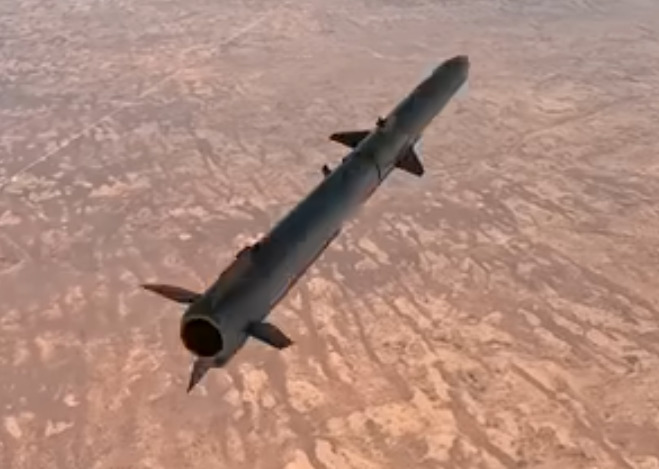
There is at least two reports that could probably be created to check the consistency of a 24 degree Fin AoA value using the following video and going frame by frame at launch, since in theory it should sweep though it’s limits as part of the post-release check.
The other would be to compare the subsequent shown Center Of Gravity(CoG) in the above video (scene following release) and know on rail values for the AMRAAM variants, which can be asserted to be similar across -A , -B & -C variants pre-engine fire (Clapped Control surfaces make obvious that the test occurred using a -C/D model) but with a longer engine (and shortened control section) the Moment Arm is reduced due to post engine burn out CoG shift leading to reduced static stability(center of lift is closer of Mass ), which should at a minimum offset loss of lift due to smaller surfaces (it’s also questionable that their aerodynamic profile would not have been reoptimized for the shorter chord length)
unfortunatly it only seems to do so with the horizontal fins, so we dont have a great angle, but to me it looks like it is past 24 degrees, my guess would be closer to 30
The surface has a known physical shape (Chord length & Finspan) so there is only one possible configuration in space to produce the area that is seen in the video.
Well, my first idea was more inclined towards trying to get the guidance properties improved so that the 120Ds maybe the Cs become better at rejecting chaff through changes on the seeker FOV and the angle gating setting, but that would demand some rough interpretation from the listed hardware/software upgrades to the guidance section.
Am I tripping or could we just roughly measure the pixel surface of the fin and that should be technically proportional to the angle change between the two frames? Although the problem is that the missile does drop and that is distorted by the camera lens.
You can account for the distance by knowing the span of the control surface so use the ratio of area to the apparent span between frames as to the comparison since the fin shouldn’t undergo significant deformation.
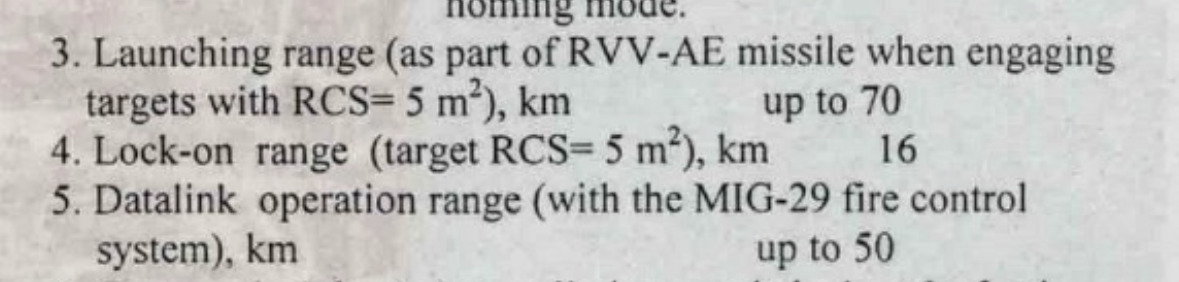
AMRAAM’s issues seem to stem less from its flight performance and more from the fact that Western missiles in general always have a disadvantage in seeker activation distance. Basically, once you are more than 16 km away from the opponent, you end up giving them more time to evade compared to the PL-12 or R-77 (-1).
I can clearly feel this because I play both the US and China. The AMRAAM and PL-12 have very similar flight characteristics, yet the PL-12 has a higher hit rate. (I generally prefer BVR engagements, so the difference in fin AoA is almost negligible.)
I don’t understand why Gaijin applies this kind of difference to ARH missiles. It’s unclear whether they actually want to standardize seeker performance or not.
omg i really hate 120 in this game right now
so fucking trash
people could easily notch and just walk away
Data link is not working as well
I cant even use my HMD just to defend and attack at the same time as r77 could did
Gaijin if you are not going to make 120 as real as it would be irl
why wouldnt you just del the whole US line