- Yes
- No
During World War I, the rapid expansion of German submarine warfare forced the Allied navies to rethink the protection of maritime supply routes. German U-boat attacks were responsible for the sinking of a large number of merchant vessels, threatening the transport of troops and supplies essential to the war effort. To counter this threat, the French Navy began developing specialized escort ships designed to patrol sea lanes and protect merchant convoys. Among the vessels created for this purpose were the Ailette-class avisos, ordered under the 1917 wartime naval program. These ships were designed with an unusual concept in mind: they were built to resemble civilian cargo vessels, allowing them to blend into merchant convoys. Their armament was partially concealed behind shields or structures so that enemy submarines would approach what they believed to be an unarmed merchant ship before the vessel revealed its weapons.
The Ailette was laid down in 1917 at the Arsenal de Brest and launched on 14 March 1918. It entered service with the French Navy later that same year. The class itself was relatively small, consisting of only two ships: Ailette and Escaut.
Because the Ailette entered service very late in the war, it had limited opportunity to participate in combat operations. Shortly after its commissioning, the ship was assigned to naval forces operating in northern European waters. In 1919, the vessel joined the Baltic naval division, which was deployed in the region during the turbulent period following the collapse of the Russian Empire and the end of the war. A few years later, in 1922, the ship participated in operations related to the evacuation of Memel (modern Klaipėda), demonstrating its continued use in international naval operations during the unstable postwar period.
Throughout the interwar period, the Ailette continued to serve the French Navy in a variety of roles. As submarine warfare technology evolved and new escort vessels appeared, ships like the Ailette gradually shifted from frontline military duties to patrol and security missions. In 1930, the ship was damaged in a collision with another vessel near the Pointe du Homet, but it was successfully repaired and returned to service. During the following years, the ship was primarily used as a fisheries protection vessel, patrolling maritime areas and ensuring that fishing regulations were respected. These missions were common for older naval vessels that were no longer suited for frontline combat but remained useful for maritime surveillance.
At the outbreak of World War II, the Ailette was still active despite its age. The vessel was assigned to escort and coastal defense duties. In June 1940, during the German advance into France, the ship participated in convoy escort operations near Casablanca and later assisted in the evacuation of the port of Lorient during the collapse of French defenses. Following the Armistice of 1940, the ship was assigned to port guard duties at Port-Lyautey in Morocco, where it remained until the end of its operational career. After more than two decades of service, the Ailette was finally withdrawn from active duty in October 1941.
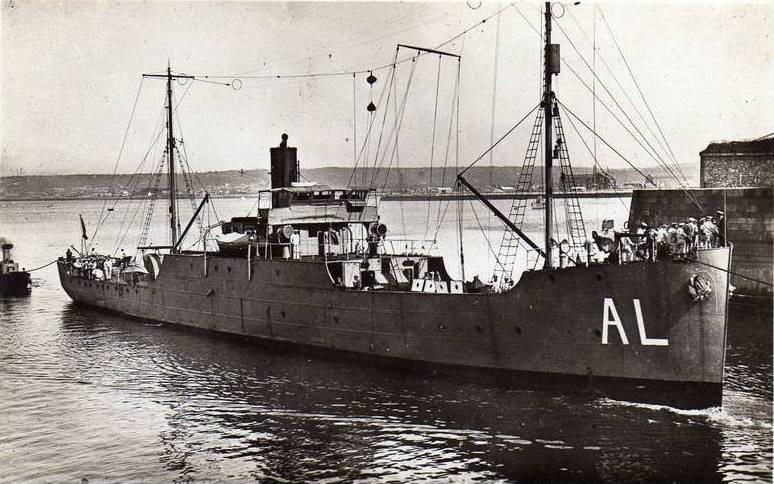
Characteristics
Length : 75.00 m
Width : 8.50 m
Draft : 3.30 m
Mass : 492 tons
The ship is powered by two Parsons turbines fed by two Du Temple boilers, giving it a total power of 4,000 hp and allowing it to reach a speed of 20 knots. Its range is estimated at 400 nautical miles at a speed of 11 knots.
The crew consists of 107 sailors.
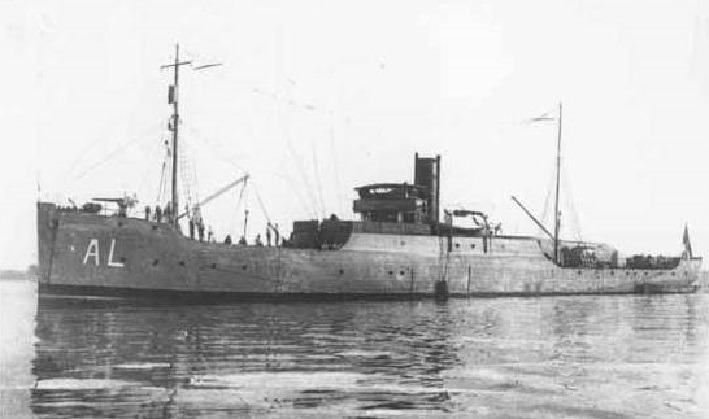
Weapons
This ship, like all those that served the same purpose, had simple armament for engaging German submarines. On the Ailette, the main armament was concealed by folding panels located at the corners of the bridge. The secondary armament, meanwhile, is installed on the bow of the ship.
Guns :
- 2 or 4 x 100mm Mle canons
- 3 x 65mm Mle canons
Unfortunately, there are few sources on this ship and some of them contradict each other; indeed, it is reported that the ship would have between 2 and 4 100mm guns and between 1 and 3 65mm guns.
Other :
- ASM grenades
In the game, this ship would be an interesting addition, complementing the French coastal ship tree alongside other ships of similar classes already present, such as the Arras or the Marne.