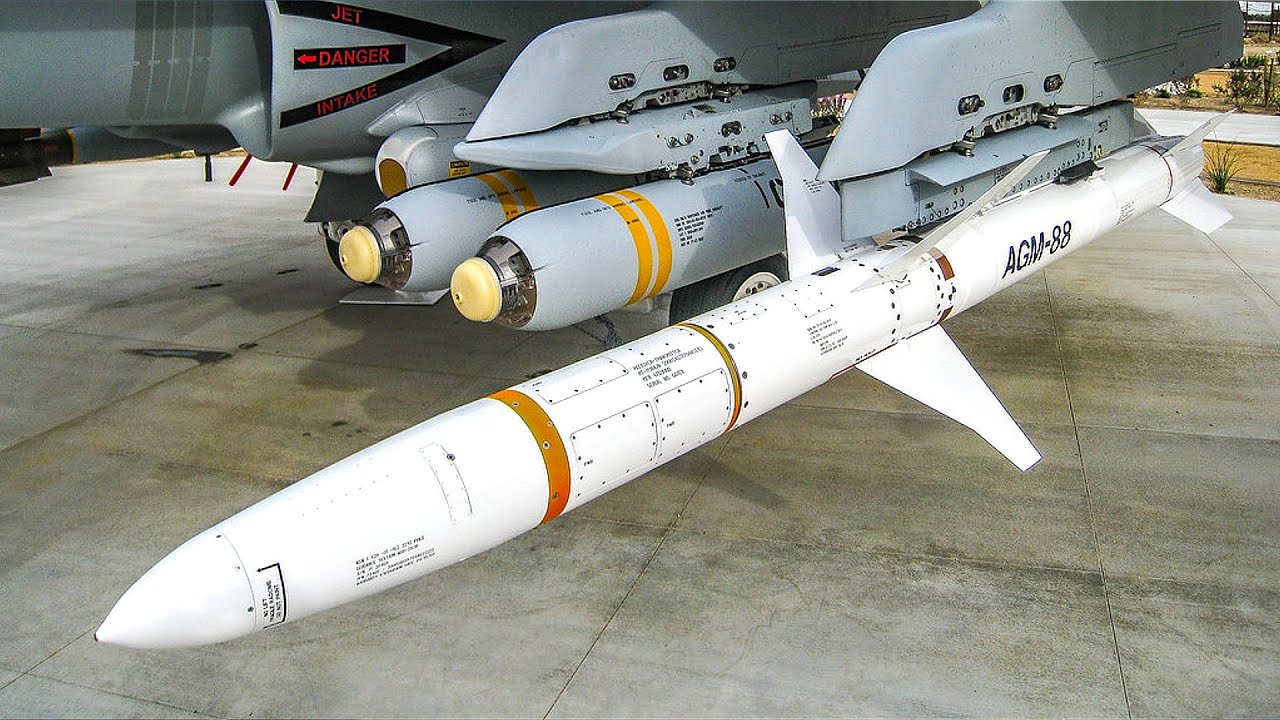
The history of the AGM-88 HARM traces back to the late 1960s when the Navy sought to replace its existing Shrike and Standard ARM missiles. A Tactical Air Armament Study (TAAS) concluded that the older antiradiation weapons were inadequate for post - 1975 threats, recommending a completely new aircraft and missile weapon system. In 1969, using local funds, the Naval Weapons Center (NWC) at China Lake began developing a fast, accurate, and affordable concept. Initially dubbed “Shrike 73” - reflecting an optimistic 1973 initial operating capability target - the project was formally named HARM in 1970. The new missile featured a larger propulsion unit capable of Mach 4 speeds (twice that of Shrike) and an advanced guidance system derived from China Lake’s ERASE research program. By the end of 1973, NWC had designed a 164-inch, 700-pound weapon that cost only a fifth of the Standard ARM’s price.
However, the program soon faced bureaucratic and developmental complications. NWC leadership, notably Rear Admiral Rowland G. Freeman III, pushed to build HARM within a comprehensive “system of systems” approach. In 1974, Texas Instruments won the HARM development contract and pursued an entirely different technical approach than China Lake had intended. Consequently, NWC’s direct design authority was phased out, reducing the Center’s role to testing and monitoring the contractor for the Naval Air Systems Command (NAVAIR).
The HARM program subsequently suffered significant delays and cost overruns due to changing Navy requirements and the complexities of integrating the missile with evolving aircraft avionics, such as the new AN/ALR-67 radar-warning receiver. The price per missile ballooned to roughly $250,000, half of which was just for the seeker.
The first production models were finally delivered in 1982, and HARM officially entered the Fleet in November 1983 with Navy A-7Es, later joining Air Force F-4Gs in 1984 and Navy F/A-18s in 1985. It saw its first combat use in 1986 against Libyan targets. Despite its tumultuous acquisition history - described by a former NWC Technical Director as a program where “every possible mistake [was] made at least once” - HARM became the principal defense-suppression weapon for U.S. forces, with over 10,000 units produced by 1990.
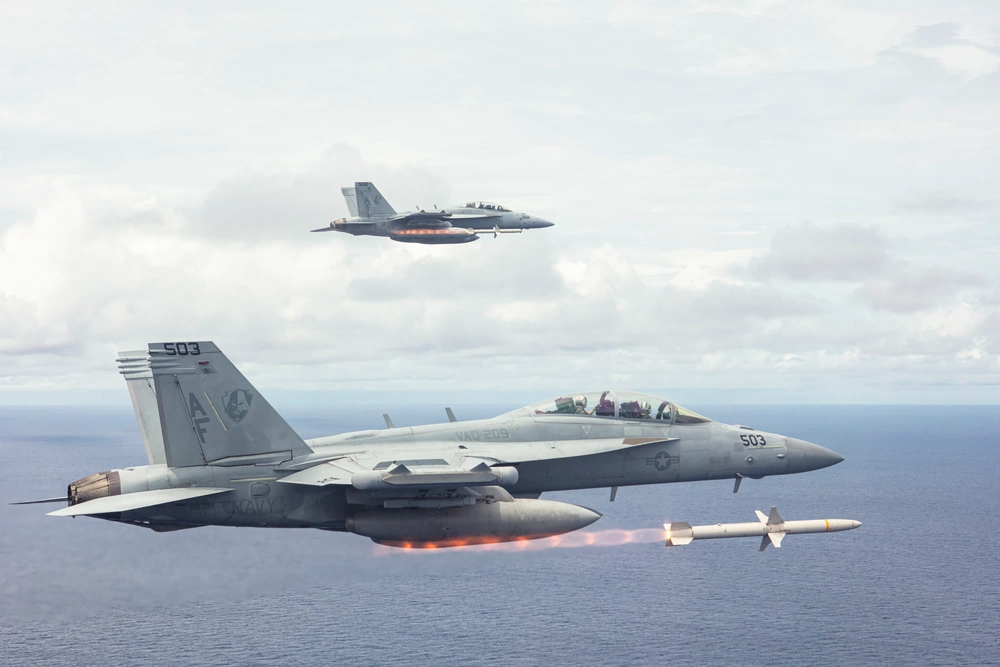
AGM-88A / B (Block I / II / III)
Spoiler
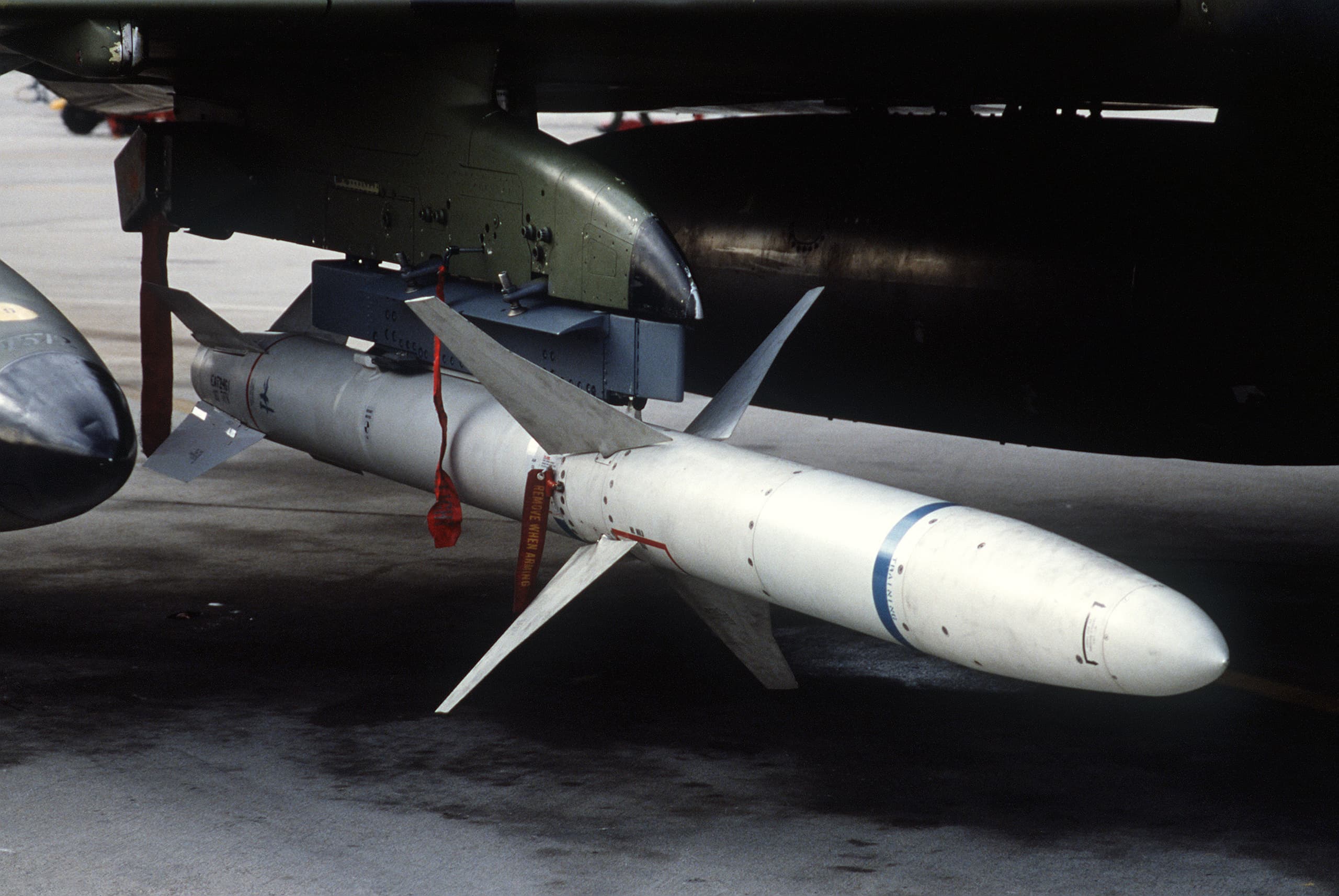

Dimensions
- Length: 13 ft, 8 in (4.14 m) or 13.667 ft
- Diameter: 10 in (25.40 cm) or 0.833 ft
- Wingspan: 3 ft, 8 in (101.60 cm)
- Mass: 800 lbs (360 kg)
- System Mass: 879.0 lbs (total store weight with LAU-118/A launcher)
Guidance / Receiver
- Receiver: WGU-2/B guidance section.
- Features (AGM-88A): Proportional guidance system utilizing a fixed antenna and seeker head. The Block I and II software utilized a broadband antenna. The seeker had to be pre-tuned to likely threats at depot-level maintenance.
- Features (AGM-88B): Block III software introduced the ability to rapidly change software on the flight line.
Warhead
- Type: Blast-fragmentation WDU-21/B.
- Explosive mass: 146 lbs
Propulsion
- Booster type: Thiokol SR113-TC-1 dual-thrust rocket engine.
- Propellant: Smokeless, solid-propellant.
- Speed: Supersonic (Mach 2+).
Engagement ranges:
- Maximum launch ranges: 30+ miles (48+ km) per primary USAF fact sheets , with secondary sources estimating up to 150 km.
AGM-88C (Block IV / V)
Spoiler
(Dimensions and Propulsion are identical to baseline AGM-88A/B)
- Launcher: LAU-118(V)1/A US NAVY, LAU-118(V)2/A USAF
Guidance / Receiver
- Features: Introduced advanced Block IV (and subsequently Block V) software. Featured a fundamentally redesigned seeker with advanced digital signal processing to counter frequency-agile target emitters. Remained vulnerable to radar shutdown tactics.
Warhead
- Type: Blast-fragmentation WDU-37/B, 12 800 tungsten fragments
- Explosive mass (WDU-37/B) : Classified
- Features: Capable of engaging hardened structures. Detonation is governed by the FMU-111/B laser proximity fuze.
AGM-88D (Block VI / PNU) & AGM-88F (HCSM)
Spoiler
(These variants represent navigation upgrades applied to legacy AGM-88C airframes; physical dimensions remain identical to baseline).
Guidance / Receiver
- Receiver (AGM-88D): The tri-national Precision Navigation Upgrade (PNU) added an Inertial Measurement Unit (IMU) coupled with a Global Positioning System (GPS) receiver. This architecture included a Selective Availability Anti-Spoofing Module (SAASM) to protect signals from jamming.
- Receiver (AGM-88F): The USAF HARM Control Section Modification (HCSM) utilized the WCU-33/B control section. It mated GPS/INS technology alongside reprogrammable Digital Terrain Elevation Data (DTED) to legacy AGM-88C passive RF guidance sections.
AGM-88E AARGM
Spoiler
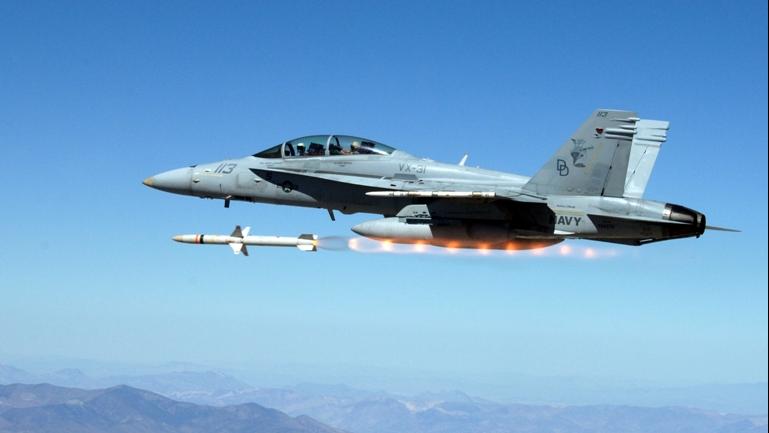
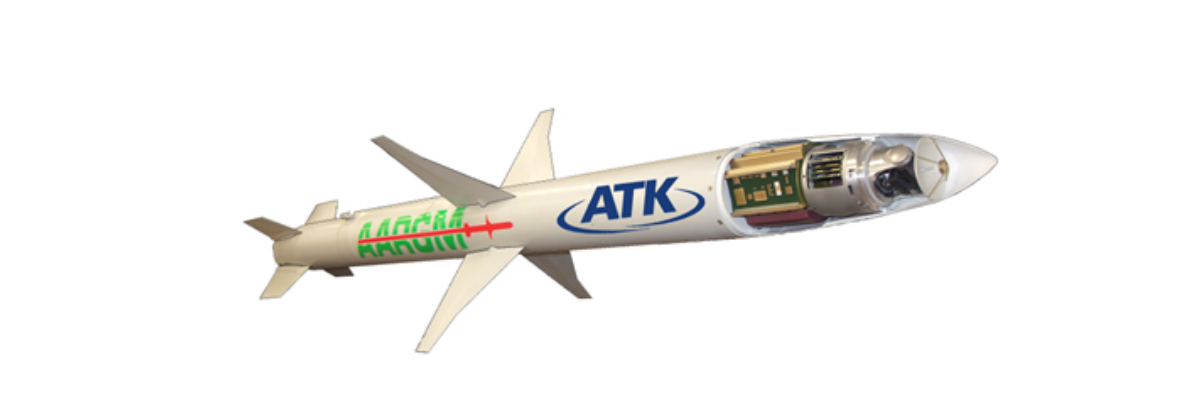
Dimensions
- Length: 13 ft 8 in (417 cm)
- Diameter: 10 in (25.4 cm)
- Wingspan: 44 in (112 cm)
- Mass: 795 lbs (361 kg)
Guidance / Receiver
- Receiver: Multi-mode seeker.
- Features: Combines Passive Anti-Radiation Homing (ARH) , a GPS/INS Navigation Suite , and an Active Millimeter Wave (MMW) Radar for terminal homing against mobile targets that have executed a radar shutdown. Integrates a Weapon Impact Assessment (WIA) transmitter and an Integrated Broadcast Service Receiver (IBS-R) to transmit terminal end-game telemetry before detonation.
Warhead & Propulsion
- Propulsion: Retains the legacy Thiokol dual thrust solid propellant motor.
- Warhead: Retains the legacy WAU-7/B warhead section with the WDU-37/B warhead .
AGM-88G AARGM-ER
Spoiler
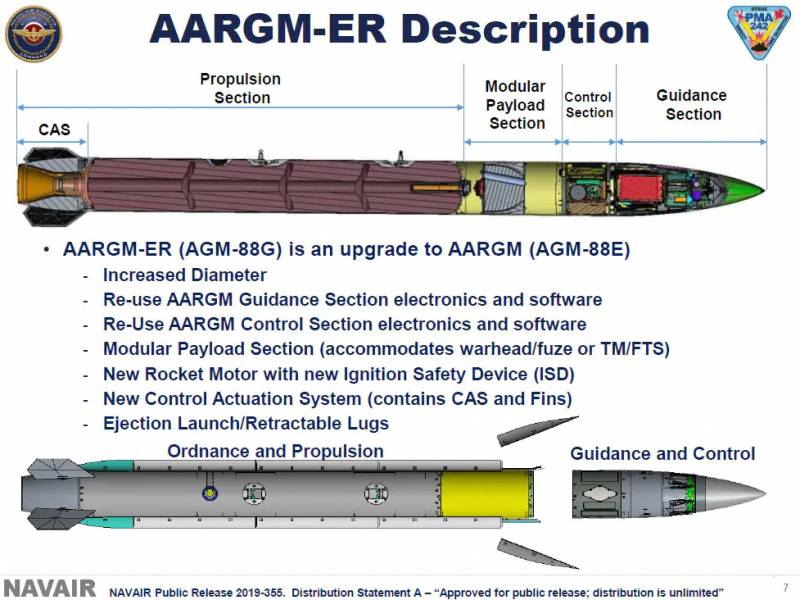
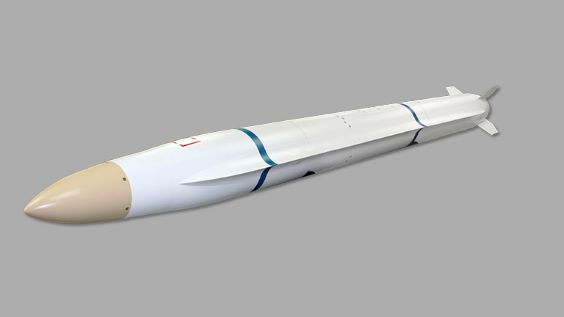
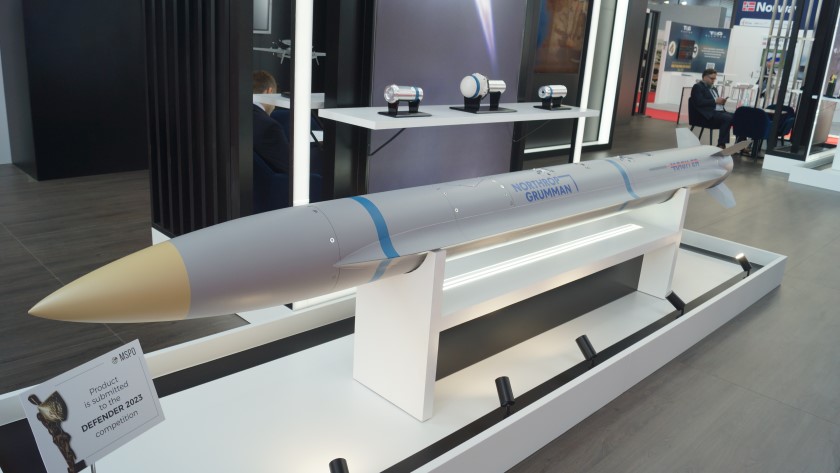
Dimensions
- Features a completely redesigned airframe with a larger diameter and a shorter length.
- External mid-body control fins were eliminated in favor of aerodynamic strakes to enable F-35A/C internal weapons bay carriage.
Guidance / Receiver
- Features: Employs the exact same multi-mode seeker and active millimeter-wave radar as the AGM-88E AARGM.
Warhead & Propulsion
- Propulsion: Incorporates a brand-new solid rocket motor engineered specifically to provide increased range.
- Warhead: Classified
SiAW (Stand-in Attack Weapon)
Spoiler
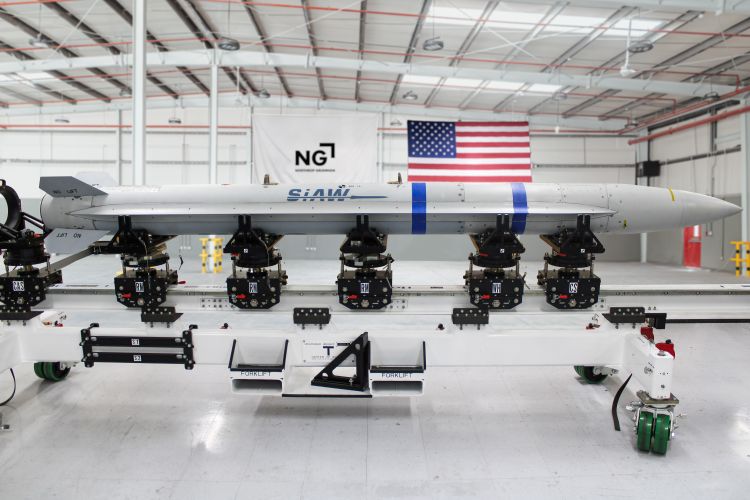
Dimensions
- Length: 4.06m (13 ft 4 in)
- Diameter: 0.29m (11.5 in)
- Mass: ~467 kg (1030 lb)
- Features: The physical and aerodynamic architectural foundation is heavily leveraged directly from the Navy’s AGM-88G AARGM-ER. Mid-body control fins are eliminated in favor of aerodynamic strakes to allow for strictly internal weapons bay carriage on 5th and 6th generation stealth platforms (F-35A, F-47, B-21).
Guidance / Receiver
- Receiver (Expected): Advanced multi-mode seeker integrating GPS/INS navigation, passive radio frequency (anti-radiation) tracking, and an active Millimeter Wave (mmW) terminal radar.
Warhead
- Explosive mass: Classified
Propulsion
- Booster type: Dual-thrust solid-propellant rocket motor (inherited from the AARGM-ER development via Northrop Grumman).
- Speed: Supersonic (Mach 2+).
Engagement ranges:
- Maximum launch ranges: Classified, similiar to the AARGM-ER
- Minimum launch ranges: Classified.
Spoiler
- U.S. Air Force Fact Sheet AGM-88 HARM
- B-410036
- Arming the Fleet 1943 - 2011 THIRD EDITION
- AARGM
- HARM AGM-88 Engineering Services
- AGARD Flight Test Techniques Series Volume 5
- AGREEMENT AMONG THE FEDERAL MINISTRY OF DEFENSE OF THE FEDERAL REPUBLIC OF GERMANY AND THE MINISTRY OF DEFENSE OF THE REPUBLIC OF ITALY AND THE DEPARTMENT OF DEFENSE OF THE UNITED STATES OF AMERICA FOR THE HIGH SPEED ANTI-RADIATION MISSILE ( HARM) AGM-88 UPGRADE
- Advanced Anti-Radiation Guided Missile (AARGM) - NDIA Guns & Missiles Conference
8 April 2009 - HARM Upgrade Live Fire Success
- 14 – Provide program/technical support as related to the Global Positioning System (GPS) Selective Availability Anti-Spoofing Module (SAASM) receiver.
- An Analysis of Testing Risks: A Strategy for Mitigation
- Selected Acquisition Report (SAR) - AGM-88E Advanced Anti-Radiation Guided Missile (AGM-88E AARGM)
- United Arab Emirates – High Speed Anti-Radiation Missile (HARM) Control Section Modification (HCSM) Upgrade
- AGM-88 HARM/AGM-88E AARGM
- FY16 NAVY PROGRAMS - AGM-88E Advanced Anti-Radiation Guided Missile (AARGM) Program
- DOT&E FY2024 Annual Report - Navy - AARGM-ER
- Advanced Anti-Radiation Guided Missile - Extended Range (AARGM-ER) FY 2024 President’s Budget
- DOT&E FY2025 Annual Report - Navy - AARGM-ER
- High-speed Anti-radiation Missile
- FY 2027 DEPARTMENT OF WAR BUDGET PROGRAM ACQUISITION COST BY WEAPON SYSTEM
- WeaponSystems.net - AGM-88 HARM
- Directory of U.S. Military Rockets and Missiles AGM-88
- Northrop Grumman Delivers Stand-in Attack Weapon Test Missile to the US Air Force
- AARGM Datasheet
- THE NAVAL ORDNANCE MANAGEMENT POLICY (NOMP) MANUAL
- SiAW DataSheet