- Yes - In the Tech Tree.
- Yes - Event/BP.
- Yes - Premium.
- Yes - Squadron
- No - I would not like to see HMAS Darwin in game.
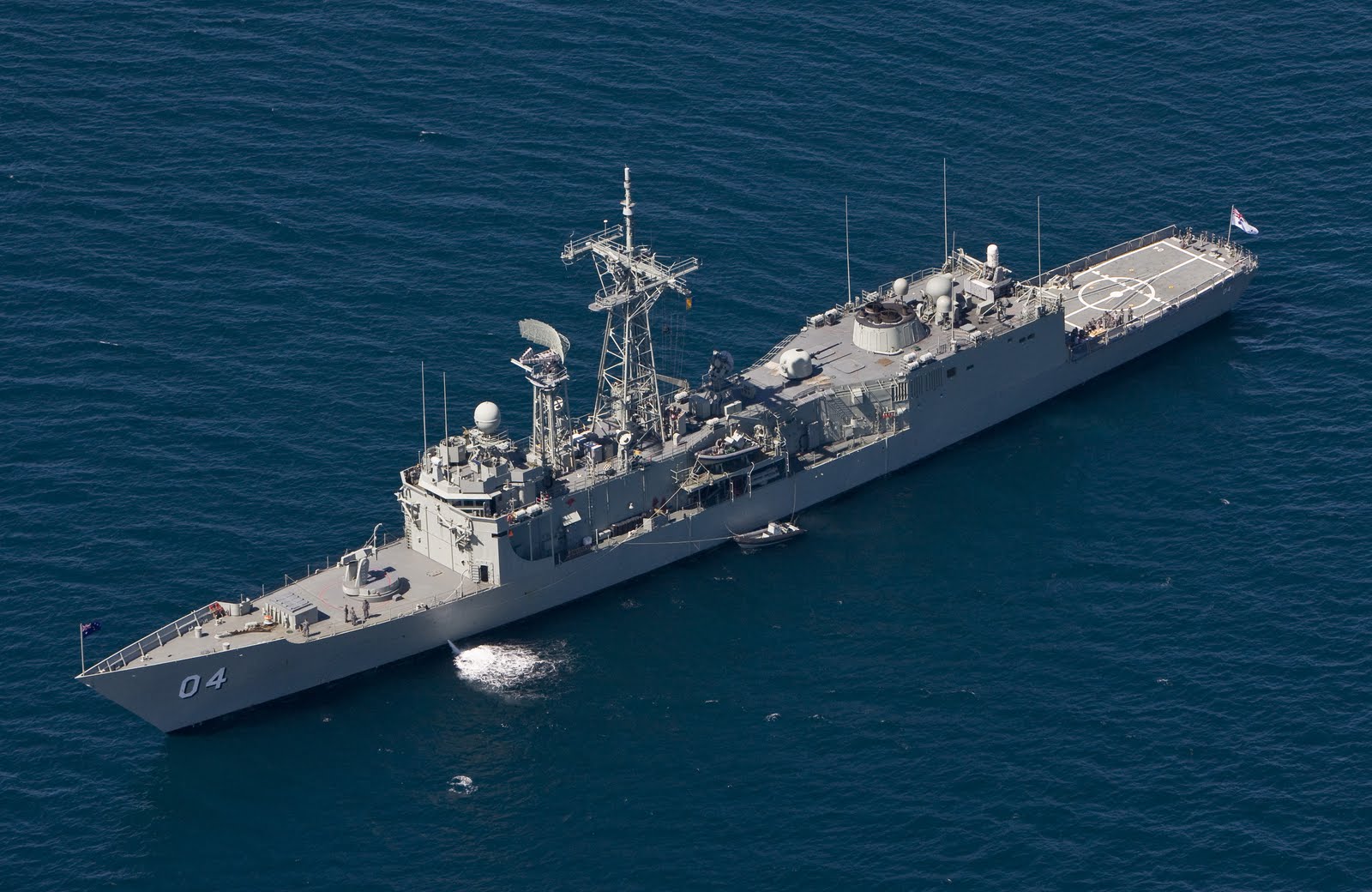
HMAS Darwin sitting at anchor at Jervis Bay during a Fleet Concentration Period, (2010)
Background:
With the Australian Light Destroyer (DDL) program coming into review for cancellation in late 1973, after years of delays and cost expansions, the Royal Australian Navy (RAN) quickly needed a new ‘light’ guided missile destroyer that would replace their ageing Daring-class Destroyers of 1949 vintage. For this competition two foreign designs were highlighted for tender in case the DDL program did indeed fall through. These two designs were the a unique variant of the British Type 42 Destroyer fitted with the SM-1 missile, as well as an unmodified American Oliver Hazard Perry-class frigate.
By the end of the initial comparison the team in charge of this tender found that the Modified Type 42 design was the only design to meet the RAN’s requirements,and listed the Oliver Hazard Perry-class (OHP-class) as “a second rate escort that falls short of the DDL requirements on virtually every aspect”. However, the RAN placed serious doubt that the Type 42 design could be fitted with SM-1 missiles, one of the base requirements for the program. As such the Australian Government placed approval for orders for two OHP-class vessels in April 1974.
With the new Fraser Liberal Government in late 1975, the DDL program was again reviewed, and unanimously voted to be cancelled, as the cost of the 3 DDL ships, which was down from the 10 original planned DDLs, was $130M more expensive than an equivalent number of OHPs, and would take a further three years to construct. With the DDL program now officially canceled, two OHPs were ordered from US yards in February 1976, a third in 1977, a fourth in 1980. The first ship, the future HMAS Adelaide was built to OHP Flight I standards, while the second and third, the future HMAS Canberra and Sydney to Flight II standards, and the fourth and last US built ship, the future HMAS Darwin was built to Flight III standards. Two future Australian built ships would also be built to Flight III standards, but with further upgrades.
This suggestion is for the HMAS Darwin (I) as she appeared in her 2008 “FFG Upgrade” refit, she is the only vessel of her name to serve with the RAN at the time of writing.
HMAS Darwin at Manado, Indonesia, for the 64th anniversary of Indonesian independence, (2011)

History:
Laid down on the 3rd of July 1981 with the US build number of FFG-44 by Todd Pacific Shipyards at Seattle, WA, she would be launched into the water on the 26th of March 1982 by Mrs Joan Johnston (CStJ), and would finish fitting out and would commission on the 21st of July 1984. Upon her commissioning she would swap her US build number of FFG-44 for her Australian hull pennant of FFG-04.
Unlike the first three ships in her class, HMAS Darwin was completed to Flight III OHP-class standards rather than the Flight II as seen in HMAS Canberra and Sydney, or Flight I as seen in the lead ship HMAS Adelaide. This meant that the Darwin completed with a longer hull, (453ft vs 445ft), and strengthened flight deck allowing for the use of larger and heavier helicopters on her flight deck. Although she would still initially use the AS350B Squirrel like her sisters did, as the S-70B-2 helicopters that could make use of the larger flight deck had not yet been delivered to the RAN.
After commissioning she would continue heavy trails in the Americas, visiting several ports between both the US and Canada, including Naval Air Station North Island, California, and Vancouver, BC. Here she would engage in plenty of training exercises with both the United States Navy (USN) and Royal Canadian Navy (RCN). This was probably done in part with USN Destroyer Squadron 9, which also hosted her sister ship HMAS Canberra during her working up and trials period in 1981. These exercises would take her through to late 1985.
Sometime during these trials she would gain her Phalanx CIWS system, which had recently been trialed on the HMAS Sydney to a great success. After this unit had been installed she would fire her fist missile on the Pacific Missile Test Range. This would be a Standard RIM-66 (SM-1MR) missile from her Mk.13 launcher, a second missile would be fired 13 minutes after the first. She would then return to her builders to continue working up before sailing for Australia in October, arriving at her namesake city of Darwin on the 1st of November. From here she would join Fleet Base East at Fremantle where she would exercise with the fleet.
She would continue in fleet exercises without deployment until 1988, when she sailed from Sydney in company with the HMAS Hobart, Canberra, Parramatta, Success, and Otama for RIMPAC 88. She would complete this in company with the USS Missouri Battle Group acting as the aggressor. She would return home in time to deploy to SEA in June 1988 for five months before visiting New Zealand South Island ports for a week.
Although the S-70B-2 helicopter began deliveries in 1988, allowing a great improvement in the Adelaide-classes ASW capability, as the AS350B Squirrel had no ASW gear at all. They would not finish deliveries until 1989, and the Adelaides would continue to use the AS350B Squirrel alongside the Seahawk. HMAS Darwin as the first Flight III ship did not have to be modified to carry this heli, and instead carried it as soon as it was delivered, and as such she was one of the earliest RAN vessels to carry them.
In August 1990, following the Iraqi invasion of Kuwait, HMAS Darwin would join Operation DAMASK I in the Persian Gulf alongside HMAS Success and Adelaide as part of Task Group 627.4. They would enter the Middle East Area of Operations (MEAO) on the 3rd of September, where they would operate in sanctions enforcement, challenging, stopping, and searching vessels. She would leave this area on the 3rd of December after being relieved by HMAS Brisbane and Sydney. She would again join this AO in 1991, again on sanction enforcement, but would also escort merchant vessels into Kuwait and operations with the USS Nimitz Carrier Battle Group. These would be part of Operation DAMASK III. On the 11th of March 1992 she would again join this AO as part of Operation DAMASK V, and would make 296 boarding, seizing 14 that were breaching such sanctions.
HMAS Darwin at Naval Air Station North Island, California, USA. (1984)

Further operations in the MEAO included Operation SLIPPER in November 2002, in company with HMAS ANZAC as part of Task Group 627.1. Here they would patrol the North Arabian Gulf for smugglers, but also to monitor Iraqi naval activity near the disputed maritime border between Iraq and Iran. By 2003 she would join Operation BASTILLE, where she would again conduct anti smuggling patrols. During this operation she would engage in over 300 boarding. During the Gulf War later in 2003, she would join Operation FALCONER, where she and the HMAS Kanimbla would conduct anti minelaying patrols, before moving back to mercantile vessel inspection duties. Sometime during these operations she would gain 2x 12.7mm Browning MGs on Mini Typhoon mounts as well as six other 12.7mm Browning MGs on Pedestal mounts in an effort to improve her armament. She would again join Operation SLIPPER on the 9th of January 2005, again patrolling through the North Arabian Gulf for smuggling and piracy.
By 2008 her sensors were becoming outdated, being over 20 years old, and as such a plan was drawn up to modernise the Adelaide-class to bring them up to the standards set by the ANZAC-class, not just sensor wise, but also with regards to armament. Work started on this plan during the mid 1990’s, however, it was severely delayed by the fact that some of their sensors were not behaving as expected mid upgrade, leaving them vulnerable. To free up funding for this modernisation the two oldest vessels of the Adelaide-class, HMAS Adelaide and Canberra were decommissioned when the HMAS Sydney came up to the Garden Island Dock to be modernised.
The first and largest change was the addition of an 8-cell Mk.41 VLS firing quad packed RIM-162 ESS, these cells were just forward of the Mk.13 Launcher, which itself had been replaced by a new unit, and would now fire a more modern RIM-66 (SM-2MR) missile. Her Phalanx system was modernised, and replaced by a newer block 1B unit. She kept the various Browning MGs that were added to her during her time in the MEAO, although they were often not fitted, instead being stowed. She replaced her Mk.46 ASW torpedoes with the MU 90 ASW torpedo, but retained the triple Mk.32 tubes. Her radar systems were replaced by new units of the same models, but her AN/SQS-56 bow sonar was replaced by a derivative of the Spherion bow sonar used by the ANZAC-class frigates, she also received a Petrel TSM 5424 3D mine detection and avoidance sonar, as well as a TMS4350 towed-array torpedo warning system.
Furthermore she had her Mark.36 SRBOC decoy launchers modernised, and also had a Elbit EA-2118 jammer installed. To control her Mini Typhoon mounts she had a Radamec 2500 Optical laser & IR tracking system installed. This refit was dubbed the “FFG Upgrade” program.
HMAS Darwin would recommission from these works on the 1st of November 2008, in time for a Fleet Review in Sydney Harbour by March 2009. She would again participate in another Fleet Review at Sydney in October 2013, although the “FFG Upgrade” was projected to allow these ships to operate up to 2020, signs of her age started becoming obvious around 2015. This would not affect her operations however, and by 2014 as part of the anti-piracy and smuggling task force, CTF-150, she would seize 1,032kg of Heroin off the east coast of Africa, followed by a further 6,248kg of Hashish in the Indian Ocean. She had sailed over 1 million miles by the 7th of January 2016, in time for her participation in the Indian International Fleet Review at Vishakhapattanam, India, February 2016.
Further patrols in the Indian Ocean and Arabian Gulf netted a seizure of over 1,989 AK platform rifles, and 100 RPGs bound for the Houthi Rebels in Yemen, and also another drug seizure, this time of over $800 million on the coast of Africa. In November 2016 she would be invited to the Royal New Zealand Navies (RNZN) 75th anniversary celebrations, however, due to severe earthquakes in Kaikoura, HMAS Darwin was rerouted to assist in humanitarian and disaster relief operations.
HMAS Darwin would be decommissioned on the 9th of December 2017, with over three decades of service under her belt. This was due to the commissioning of the HMAS Hobart, the first of the Hobart-class air warfare destroyers. Although planned to be scuttled as a dive site, the same fate as her sisters HMAS Adelaide and Canberra in 2011 and 2009 respectively, this was cancelled due to cost, and instead a proposal was made to save her as a museum ship.
This would fall through due to a number of oil drums catching fire underneath her keel while laid up on a stand, and she would sustain damage. She was scrapped at Henderson, Western Australia, in January 2019
| General Characteristics: | ||||||
|---|---|---|---|---|---|---|
| Name: HMAS Darwin | ||||||
| Country: Australia | ||||||
| Type: Guided Missile Frigate | ||||||
| Class name: Flight III Adelaide | ||||||
| Year of commission: 1984 | ||||||
| Refit: 2008 (FFG Upgrade program refit) | ||||||
| ----------------------------------------------------------------------------------------------------------------------------------------- | ||||||
| Dimensions: | ||||||
| Length: 453ft (138.1m) | ||||||
| Beam: 45ft (13.7m) | ||||||
| Draught: 25ft (7.5m) | ||||||
| Displacement: 4,100t @ standard displacement | ||||||
| ----------------------------------------------------------------------------------------------------------------------------------------- | ||||||
| Propulsion: | ||||||
| Primary Powerplant: 2x GE LM2500 Gas Turbines, @ 41,000hp (31,000kW) overall, One Screw | ||||||
| Secondary Powerplant: 4x Detroit Diesel 16V149TI generators @ 1,010hp (750kW) ea, 2x azimuth thrusters @ 350hp (260kW) ea | ||||||
| Speed: 29kt | ||||||
| Endurance: 4,500nmi @ 20kt | ||||||
| ----------------------------------------------------------------------------------------------------------------------------------------- | ||||||
| Armament & sensors: | ||||||
| Compliment: 220 with aircrew | ||||||
| Primary armament: 8-cell MK.41 VLS for RIM 162 ESS (quadpacked up to 32 missiles) | ||||||
| Secondary armament: 1x1 Mark 13 Missile launcher for RGM-84 Harpoon & SM-2MR (RIM-66), magazine capacity for 40 missiles | ||||||
| Tertiary armament: 1x1 OTO Melara 76mm gun, 1x1 Mk.15 20mm Phalanx CIWS Block 1B, 2x 12.7mm M2HB on Mini Typhoon mount | ||||||
| Other Armament: 2x3 Mk.32 12.75" torpedo tubes firing MU90 ASW torpedo, 6x 12.7mm M2HB on pedestal mount | ||||||
| ----------------------------------------------------------------------------------------------------------------------------------------- | ||||||
| Systems: | ||||||
| Radar: AN/SPS-49A(V)1 Air Search radar, AN/SPS-55 Surface Search and Nav radar, SPG-60 Target Illumination radar | ||||||
| Sonar: Spherion TMS4131 bow sonar, Petrel TSM 5424 3D mine detection and avoidance | ||||||
| Decoy and ESM: Mark.36 SRBOC Decoy Launcher, AN/SLQ-32 EW system, Elbit EA-2118 jammer | ||||||
| Other: Mark 92 gun and missile fire control system, Radamec 2500 Optical laser & IR tracking system, TMS4350 towed-array torpedo warning system | ||||||
| ----------------------------------------------------------------------------------------------------------------------------------------- | ||||||
| Aircraft Specifications: | ||||||
| Type: 2x S-70B-2 Seahawk | ||||||
| Armament Carried: 1x1 .50M2, 2x MU 90 12.75" ASW Torpedo OR 2x depth charges | ||||||
| Systems: MEL Super Searcher radar, AN/AQS-504 MAD, AN/SSQ-81 Barra Sonar bouys, Flare&Chaff, IFF | ||||||
| Engines: 2x GE T-700, producing 1,890hp (1,410 kW) ea | ||||||
| Crew: 3 | ||||||
| Main Rotor Diametre: 16.35m (53ft 7.7in) | ||||||
| Length: 19.8m (64ft 11.5in) | ||||||
| Height: 5.23m (17ft 1.8in) | ||||||
| Range: 1295 km (688nmi) | ||||||
| Max Speed (Never exceed speed) : 330 km/h | ||||||
| Empty Weight: 6,895 kg |
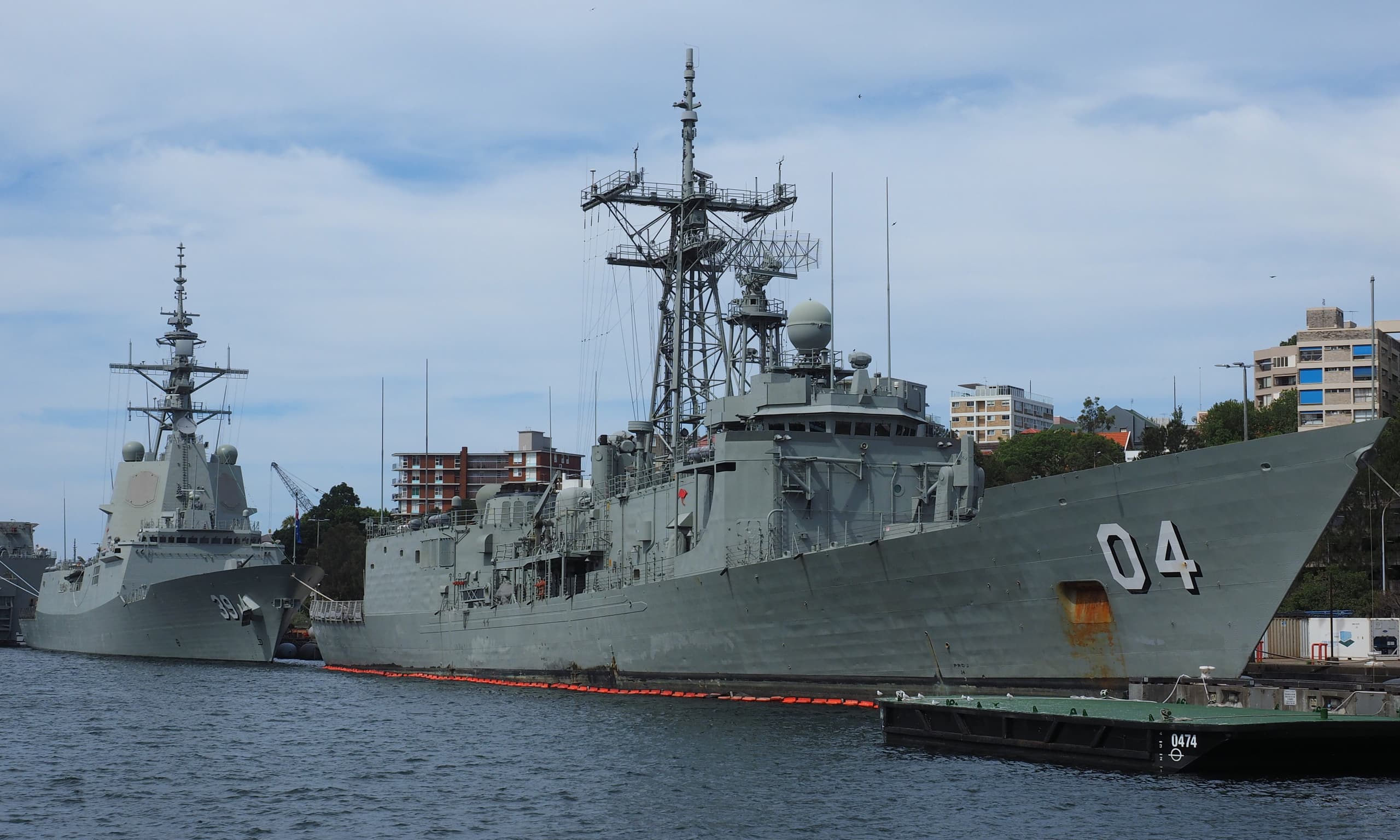
HMAS Hobart (39) behind the now decommissioned HMAS Darwin (04) (2017)
Extra Photos
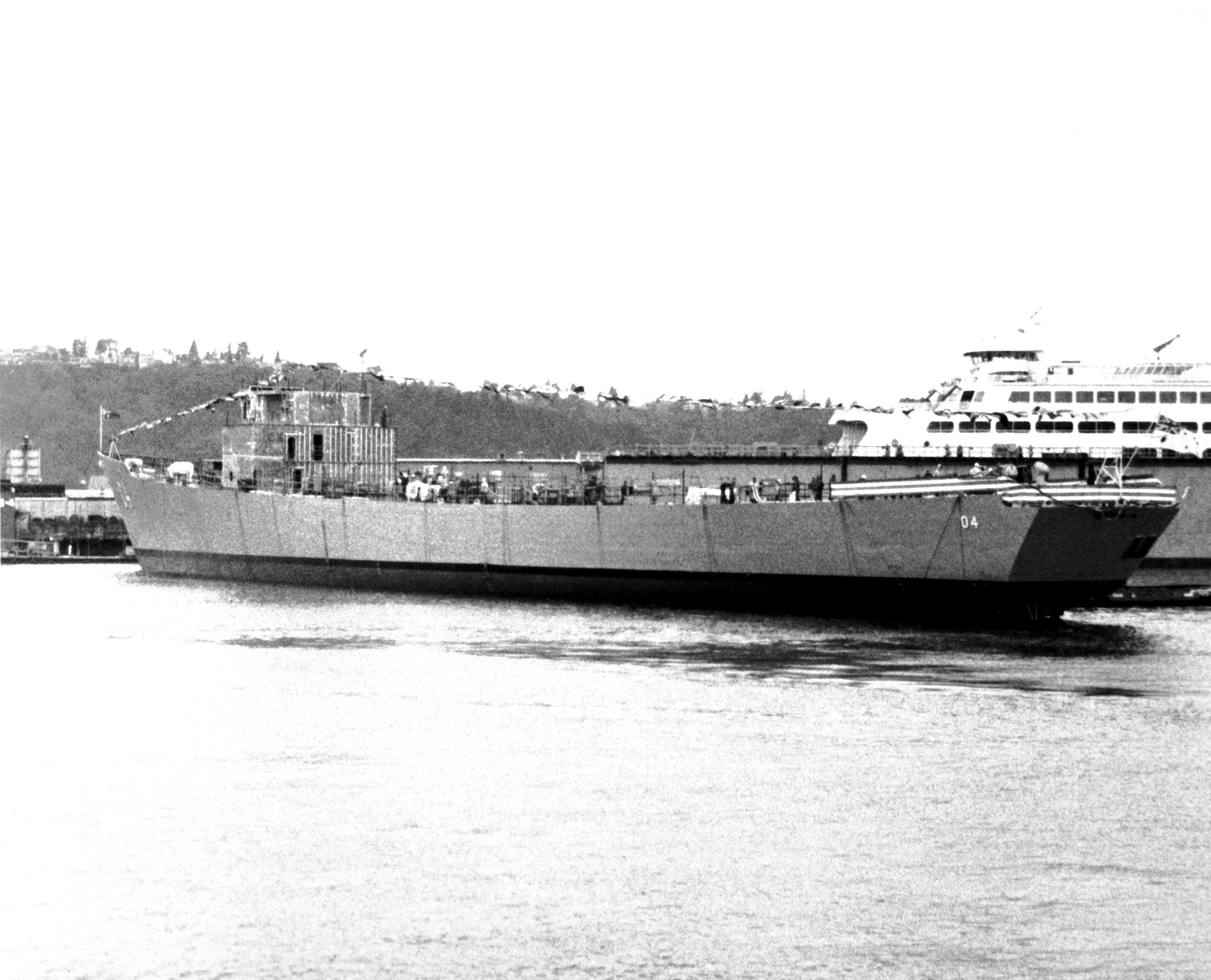
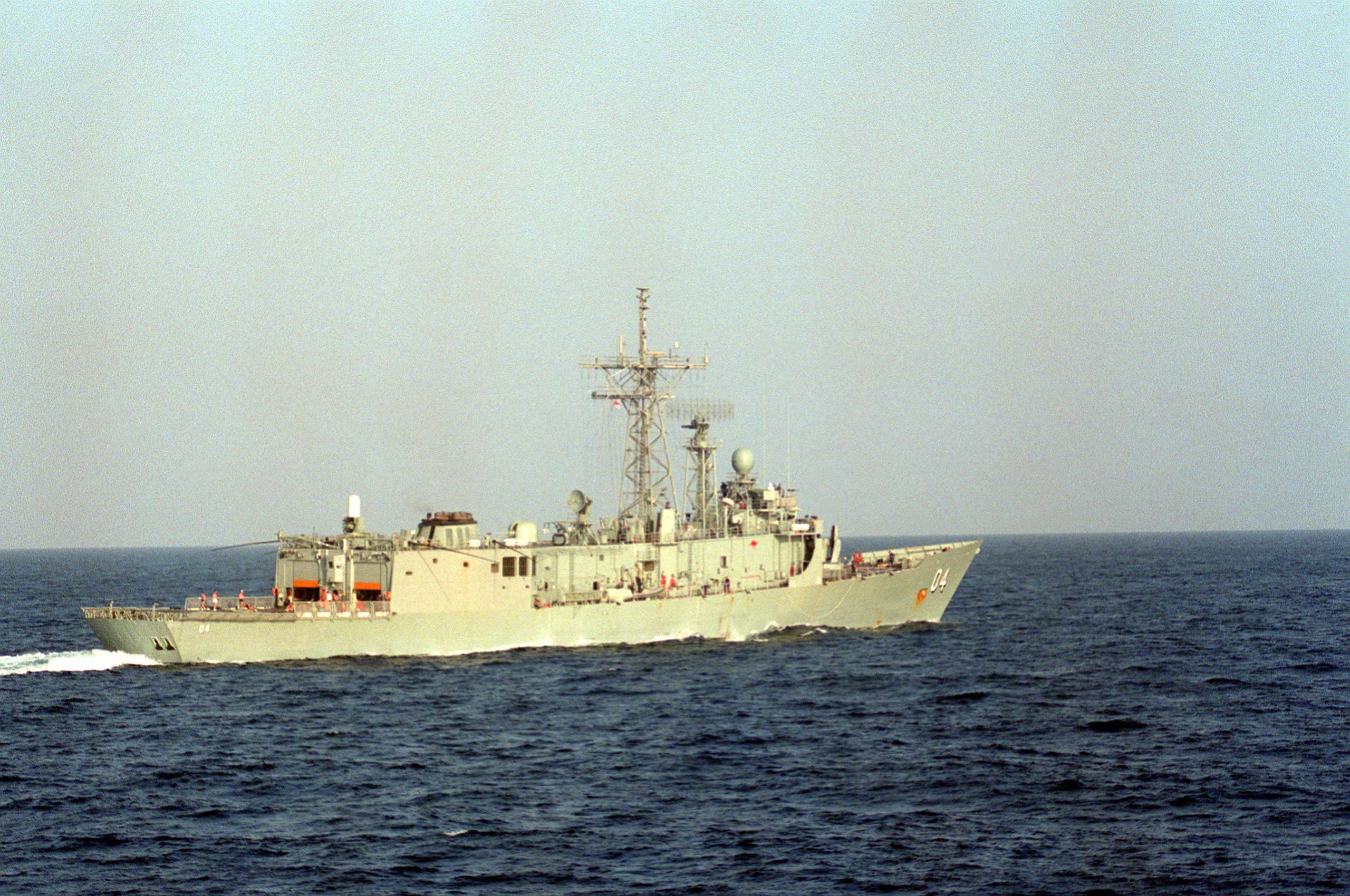
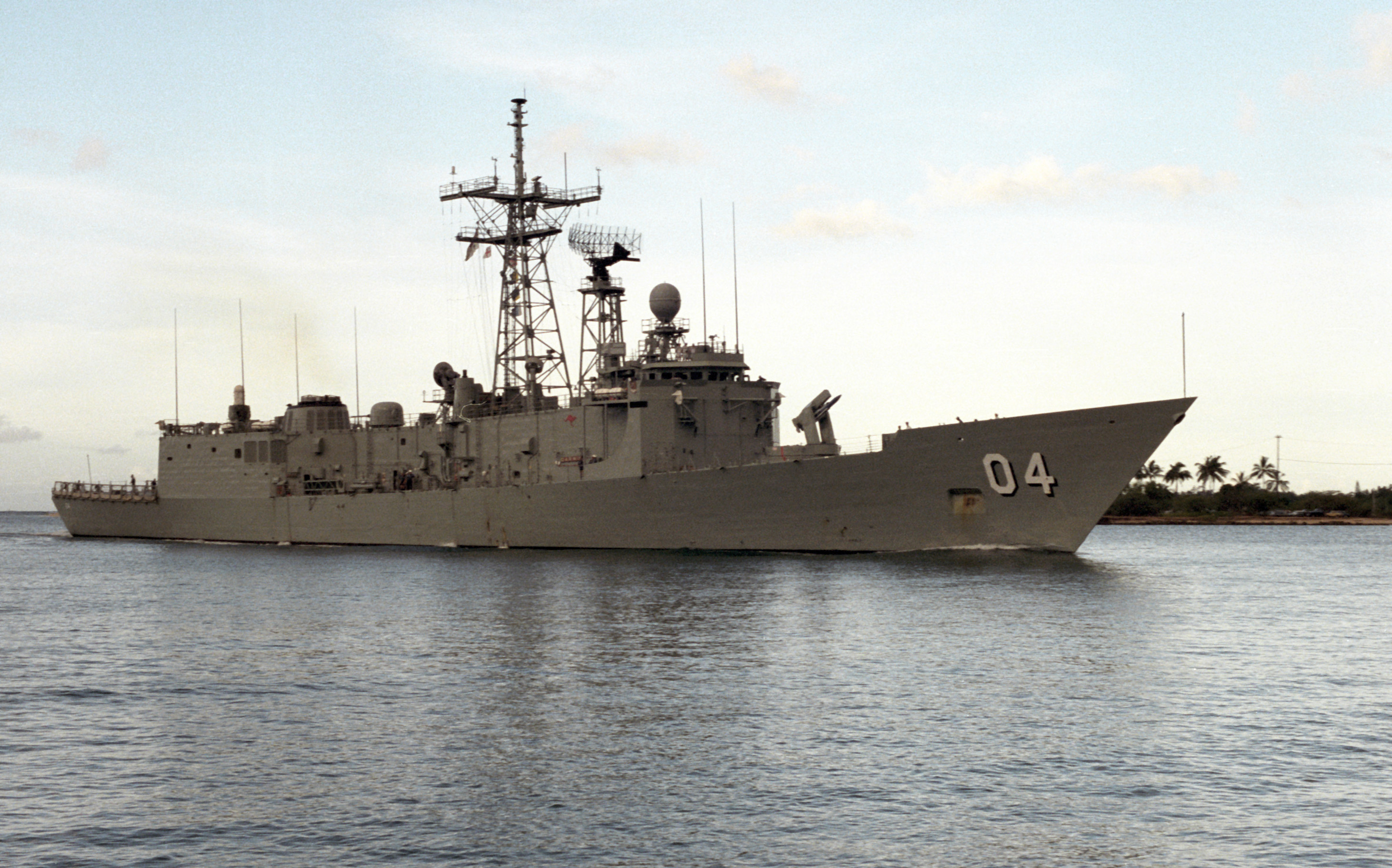
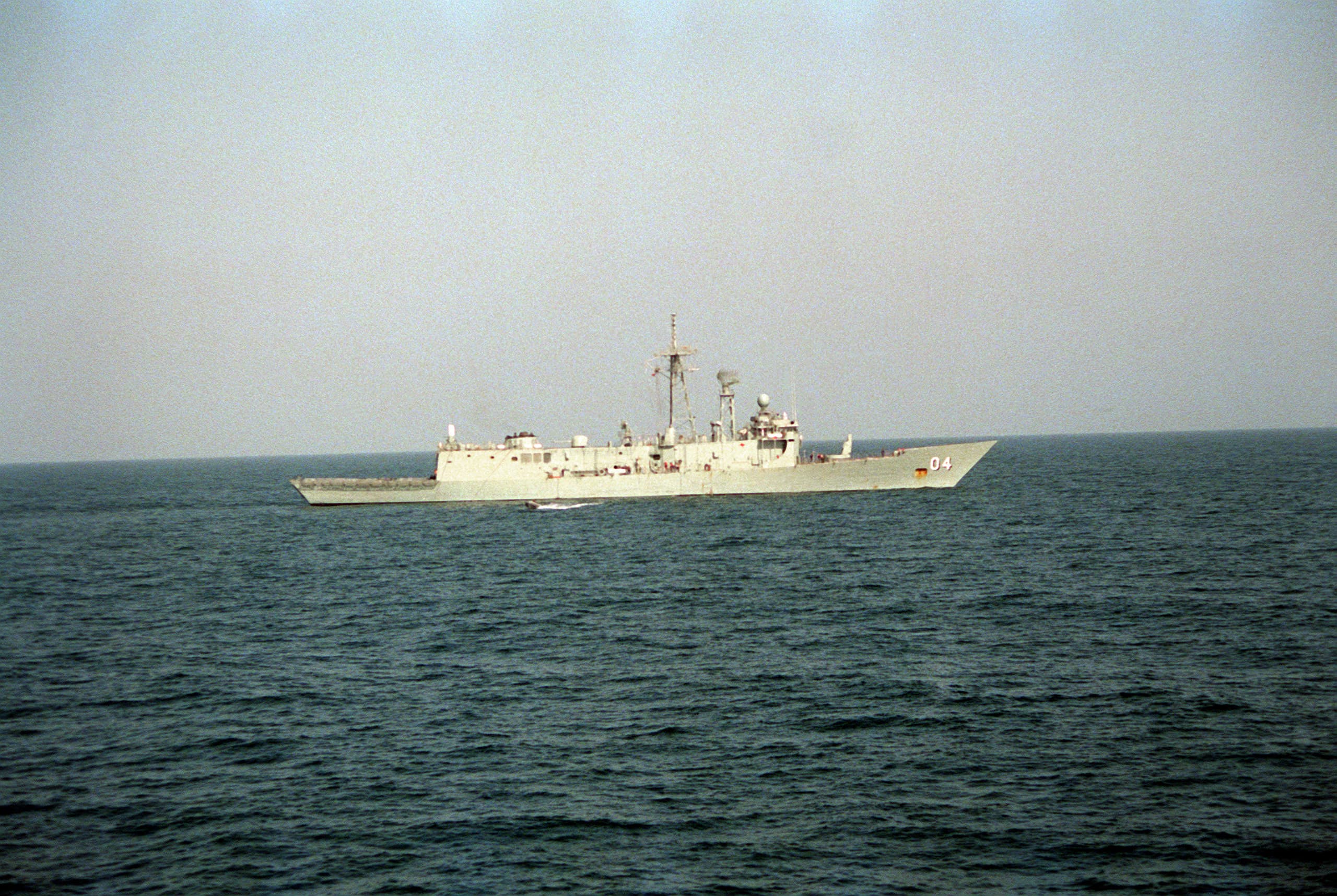
Sources:
HMAS Darwin - Wikipedia
Adelaide class Guided Missile Frigate FFG Royal Australian Navy
Electronic Warfare: The fate of the C-Pearl | ADM May 08 - Australian Defence Magazine
https://seapower.navy.gov.au/history/units/hmas-darwin
https://www.nepeannavalmuseum.org/post/hmas-darwin-ffg-04
https://seapower.navy.gov.au/history/units/sikorsky-s-70b-2-seahawk
HMAS Darwin Archives - Naval Historical Society of Australia
https://trove.nla.gov.au/newspaper/article/267233973
Making sure you're not a bot!
Making sure you're not a bot!