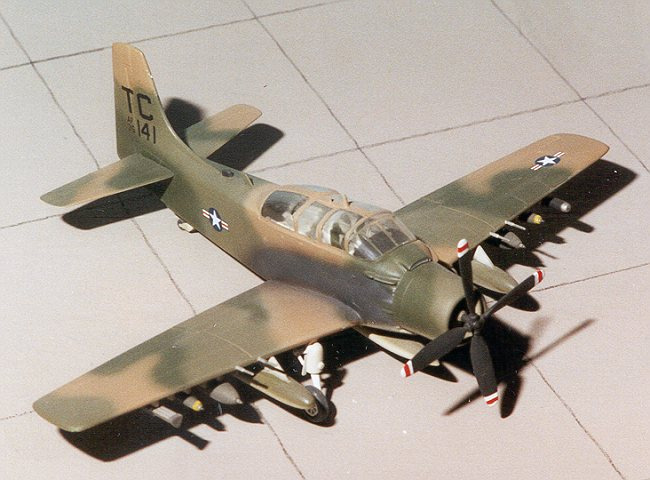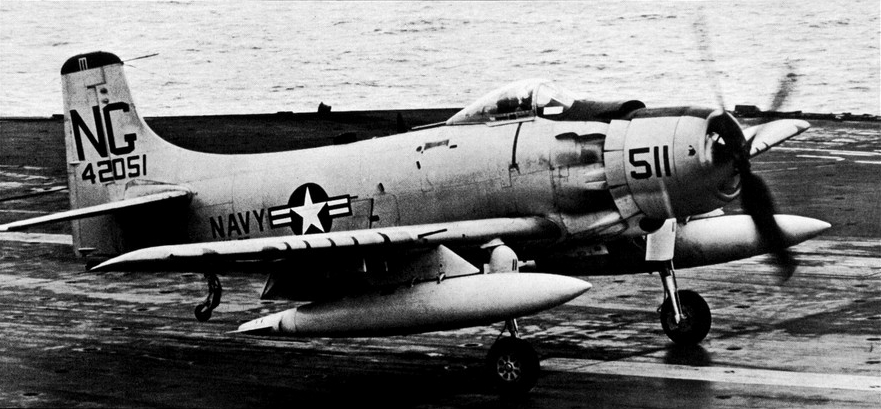
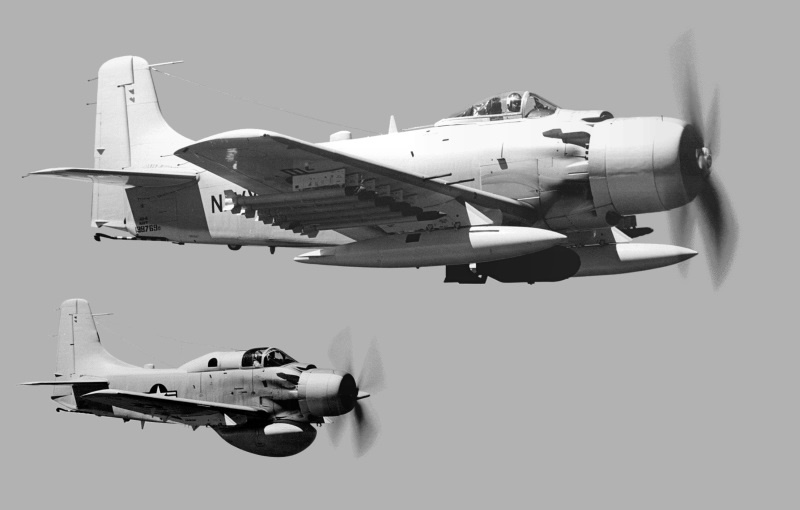
Please note that the A-1J is externally indistinguishable from the A-1H.
History of the Skyraider
The Douglas AD/A1 Skyraider is most famous for being one of the most rugged aircraft of the mid-20th century. It earned this nickname because it could carry a massive amount of weapons—sometimes more than its own empty weight—and stay over a battlefield for hours to protect soldiers on the ground. Even as faster jets were being built, this tough propeller plane remained a legend for its ability to withstand moderate volumes of gunfire and keep flying, making it one of the most respected and long-lasting combat aircraft in history.
The development of the aircraft began in June of 1944 when the U.S. Navy sought a high-performance replacement for its carrier-based bombers. Chief Engineer Ed Heinemann of Douglas Aircraft famously performed a comprehensive redesign of the prototype, the XBT2D-1, during a single overnight session in a Washington, D.C. hotel room. By prioritizing weight efficiency and structural simplicity, Heinemann created a platform that was significantly more capable than its heavier competitors, ensuring the design’s selection for production just as World War II was drawing to a close.
The aircraft was engineered around the Wright R-3350 Duplex-Cyclone radial engine, an 18-cylinder unit that produced up to 2,700 horsepower. This propulsion system was the core of the Skyraider’s performance, allowing it to lift a wide variety of munitions across its fifteen external hardpoints. With a maximum external load capacity of approximately 8,000 pounds, the Skyraider possessed a strike capability that rivaled the four-engine heavy bombers of the previous decade, all while maintaining the agility required for carrier operations.
Entering service in 1946, the Skyraider—initially designated as the AD series—found its first major combat role during the Korean War. While early jet aircraft of the era were limited by high fuel consumption and fragile engines, the Skyraider’s piston-engine design allowed for the extended loiter times necessary for effective close air support. A hallmark of its Korean service occurred in 1951, when Skyraiders successfully destroyed the Hwacheon Dam using torpedoes, a feat of precision that conventional high-altitude bombing had failed to achieve.
During the Vietnam War, the Skyraider transitioned into a specialized role within the U.S. Air Force and Navy, specifically supporting Search and Rescue (SAR) operations. Flying under the callsign “Sandy,” these aircraft provided a protective screen for rescue helicopters. The Skyraider’s ability to fly at low speeds and altitudes allowed pilots to accurately suppress enemy ground positions with its four 20mm cannons and external gun pods, such as the SUU-11B/A. Its reputation for durability grew during this period, as the aircraft frequently returned to base despite significant damage.
The Skyraider also maintained a notable international presence, serving as the primary strike aircraft for the South Vietnamese and French Air Forces. In the Algerian War, French pilots found the aircraft’s radial engine and simple maintenance requirements ideal for operating in austere desert environments. Despite the technological gap between the propeller-driven Skyraider and modern jet fighters, the aircraft recorded two air-to-air victories against North Vietnamese MiG-17s, proving that its heavy armament remained a threat even in the jet age.
While the single-seat variants are the most iconic, the Skyraider’s versatility was further demonstrated by the AD-5 (later redesignated A-1E) “widebody” variant. This version featured a side-by-side seating arrangement for a pilot and co-pilot, along with a large internal compartment that could be reconfigured for various specialized missions. This design allowed the Skyraider to serve as an electronic countermeasures platform, an airborne early warning station, or even a multi-passenger transport, showcasing an adaptability that few other combat aircraft of the era could match.
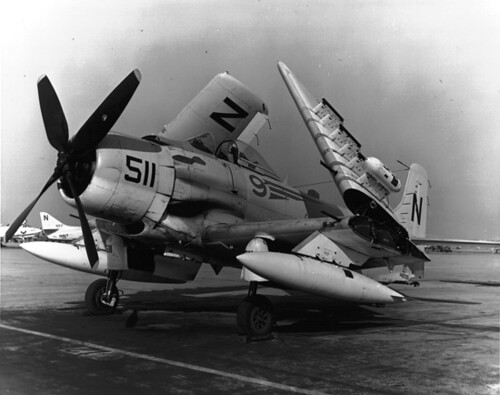
From an engineering perspective, the Skyraider was meticulously optimized for the high-stress environment of carrier-based dive bombing. One of its most distinctive features was the set of three massive, hydraulically operated fuselage dive brakes—located on the sides and bottom of the airframe—which allowed pilots to maintain steep, controlled dives without exceeding the aircraft’s structural speed limits. Additionally, its robust landing gear and hydraulically folding wings allowed the large aircraft to operate safely from the cramped decks of naval carriers, ensuring it remained the Navy’s premier strike asset well into the 1960s.
The Skyraider’s legacy is also inseparable from the unique “Spad” culture of its pilots, who often took pride in their aircraft’s perceived antiquity compared to modern jets. This legendary status was immortalized in October 1965, when a decommissioned ceramic toilet was mounted to a wing pylon and dropped over South Vietnam by VA-25. This “Sani-Flush” bomb was a humorous tribute to the aircraft’s “flying dump truck” reputation and the milestone of dropping six million pounds of ordnance, cementing the Skyraider’s place in military folklore as a machine that was as rugged as it was versatile.
By the early 1970s, the U.S. military began retiring the Skyraider, gradually replacing it with subsonic jets such as the A-7 Corsair II. However, the operational success of the A-1 directly influenced the requirements for the next-generation attack aircraft. The design of the A-10 Thunderbolt II, with its focus on pilot protection, high payload, and long loiter times, is widely considered the spiritual successor to the Skyraider, carrying its tactical philosophy into the modern era of close air support.
Despite its retirement, the quest for a “Skyraider 2” began early in the aircraft’s life cycle with the development of the Douglas A2D Skyshark. Intended to be a turboprop-powered evolution of the original, the Skyshark utilized a twin-turbine engine driving contra-rotating propellers to achieve speeds exceeding 500 mph while retaining the A-1’s massive payload capacity. However, the program was plagued by severe engine and gearbox reliability issues, and as pure jet technology advanced rapidly, the Navy cancelled the project in 1954 after only a few airframes were produced.
The legacy of the name was officially reborn in early 2025 with the introduction of the OA-1K Skyraider II. Developed from the Air Tractor AT-802U platform for Air Force Special Operations Command (AFSOC), this modern iteration honors its namesake by prioritizing mission endurance and the ability to operate from austere, unimproved dirt strips. Equipped with modern sensors and precision-guided munitions, the Skyraider II fills the same “Armed Overwatch” role as the original, proving that the A-1’s core philosophy—persistence, ruggedness, and overwhelming firepower—remains vital on the modern battlefield.
The enduring history of the Douglas A-1 Skyraider and its modern successor is defined by an ability to remain relevant across decades of technological change. It demonstrated that in the specific context of ground-attack warfare, reliability and persistence are often more valuable than raw speed. Today, from the vintage radial-engine warbirds to the high-tech OA-1K, the Skyraider remains a masterclass in functional aviation design—an aircraft that was built for a war that ended before it arrived, yet became indispensable in every conflict that followed.
History of the AD-7/A-1J
The AD-7, redesignated the A-1J in 1962, was the final variant of the original Skyraider series and the pinnacle of its structural evolution. As the aircraft’s requirements transitioned from traditional naval strike to low-level operations in Southeast Asia, the airframe required significant hardening. Only 72 of these aircraft were produced by Douglas, but they incorporated every lesson learned from a decade of operational service. This version was specifically designed to address the fatigue issues seen in earlier models, ensuring that the Skyraider could continue to serve as a primary attack platform well into the jet age.
Technically, the most significant upgrades in the AD-7 were found in its reinforced airframe and enhanced propulsion system. It was equipped with the Wright R-3350-26WB engine, which provided the consistent high-power output required for heavy-lift sorties in tropical climates. To support the stresses of maneuvering with a full combat load, Douglas engineers implemented strengthened wing spars and reinforced fuselage skins. These structural modifications enabled the AD-7 to withstand higher gravitational loads than previous iterations, making it a much safer and more capable platform for the violent maneuvers required during close air support and search-and-rescue missions.
To complement the increased structural strength, the AD-7 featured a significantly upgraded landing gear system. This was necessary to accommodate the aircraft’s increased maximum takeoff weight, which had grown substantially since the original AD-1. The reinforced struts and specialized tires enabled safer operations from both the pitching decks of aircraft carriers and the unimproved, often cratered runways of forward operating bases in Vietnam. This increased gross weight capacity solidified the Skyraider’s role as a heavy hitter, capable of carrying an immense variety of ordnance, from standard high-explosive bombs to the specialized SUU-11B/A minigun pods used for anti-personnel suppression.
The service life of the AD-7 saw it deployed across the most intense theaters of the Vietnam War, serving with the U.S. Navy, the U.S. Air Force, and the South Vietnamese Air Force. Because it was the final and most robust version, it was often the preferred choice for the most dangerous “Sandy” rescue missions and long-range interdiction flights. While the production run was relatively small compared to earlier variants, the A-1J’s presence was felt disproportionately on the battlefield. It stood as the ultimate expression of Ed Heinemann’s original vision—a simple, powerful, and nearly indestructible aircraft that remained effective long after its contemporaries had been retired.
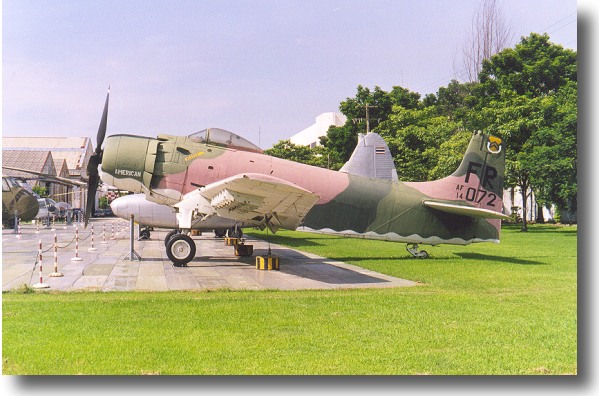
One specific aircraft, an A-1J (serial number 52-142072), is known to be on static display at the Royal Thai Air Force Museum. However, there are no known airworthy A-1J’s left in the world.
Weaponry and stats
Production: 1956-February 18, 1957
First flight: 1956
Last flight: 1972
Length: 39 ft 3 in (11.96 m)
Wingspan: 50 ft 0 in (15.24 m)
Wingspan (Folded): 23 ft 10 in (7.26 m)
Height: 15 ft 8 in (4.78 m)
Wing Area: 400.3 sq ft (37.19 m^2)
Engine: 1 × Wright R-3350-26WB Duplex-Cyclone 18-cylinder radial engine
Horsepower: 2,700 hp (Takeoff)
Maximum Speed: 343 mph (552 km/h) at 20,000 ft
Cruise Speed: 195 mph (314 km/h)
Combat Range: ~1,300 nautical miles (2,400 km) with external fuel
Service Ceiling: 30,650 ft (9,342 m)
Rate of Climb: 3,230 ft/min (16.4 m/s)
Hardpoints: 15
Guns: 4x 20mm (200 rounds per gun)
Max ordnance: 8000lbs
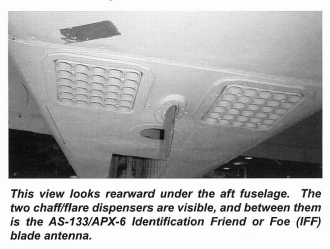
IFF: Yes
Radar: No (removed and plated over before vietnam)
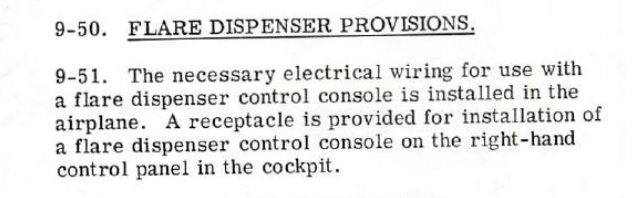
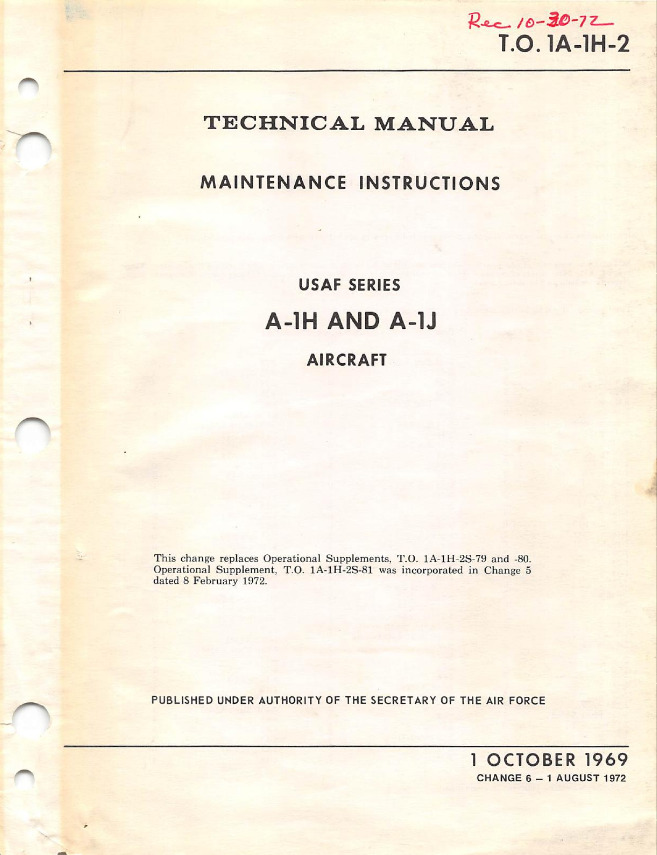
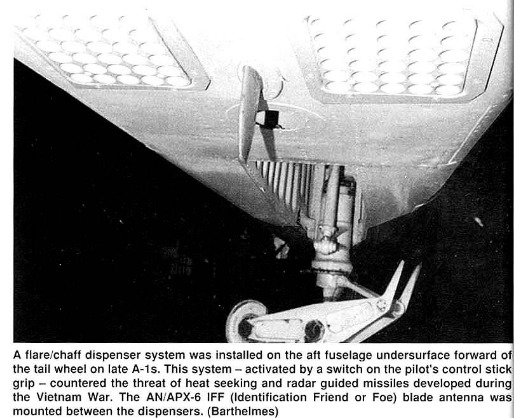
Countermeasures: yes provisions for 60 countermeasures as mentioned by the AH-1H/J maintenance instructions dated as August 1st 1972. Provisions for flares was included in the manual since it’s introduction in 1969.
Full ordnance
 AM](https://forum-en-cdn.warthunder.com/original/4X/3/7/3/3737d50ab79d22898bead4846b9c9cabca3c10ce.png)
 AM](https://forum-en-cdn.warthunder.com/original/4X/e/d/b/edb71500aaa7b4ceb75667a0b1c1baa86ebf7b0f.png)
 AM](https://forum-en-cdn.warthunder.com/original/4X/f/a/5/fa518e9ba431b7446c477e48dcd1070ca3e5076d.png)

Sources
https://www.aahs-online.org/images/Navy_SAC/A-1H_J.pdf
https://www.aahs-online.org/images/Navy_SAC/AD-7.pdf
https://peterlewisdesign.tripod.com/thaimuseum/skyraider.htm
https://forgottenprops.warbirdsresourcegroup.org/AD-7.html
https://www.usni.org/magazines/proceedings/1965/april/farewell-spads
https://www.scribd.com/document/765221297/01-40ALF-1-A-1H-and-A1J-FlightManual
- Yes
- No