That doesn’t get around the missile being hardcoded to the launching aircraft, any DL information would have to be relayed through the firing jet
This is not quite correct if you take the other data the missile has into account.
For example: The missile is a moving point and can detect signals over a timeline while getting its own height, orientation and detection angle. So over a flight time of multiple seconds it can triangulate the target radars GNSS coordinates rather precise, even if it can’t meassure the distance directly. The keypoint here is the “time” variable. Requirement is nevertheless, that the target is stationary or moving really slow to get somewhat precise coordinates.
Additionally: If the missile has multiple antennas then even these are enough to triangulate the target instantly as “the missile always knows where it is” and, in combination with a height map, can pinpoint the targets location :D
2 Likes
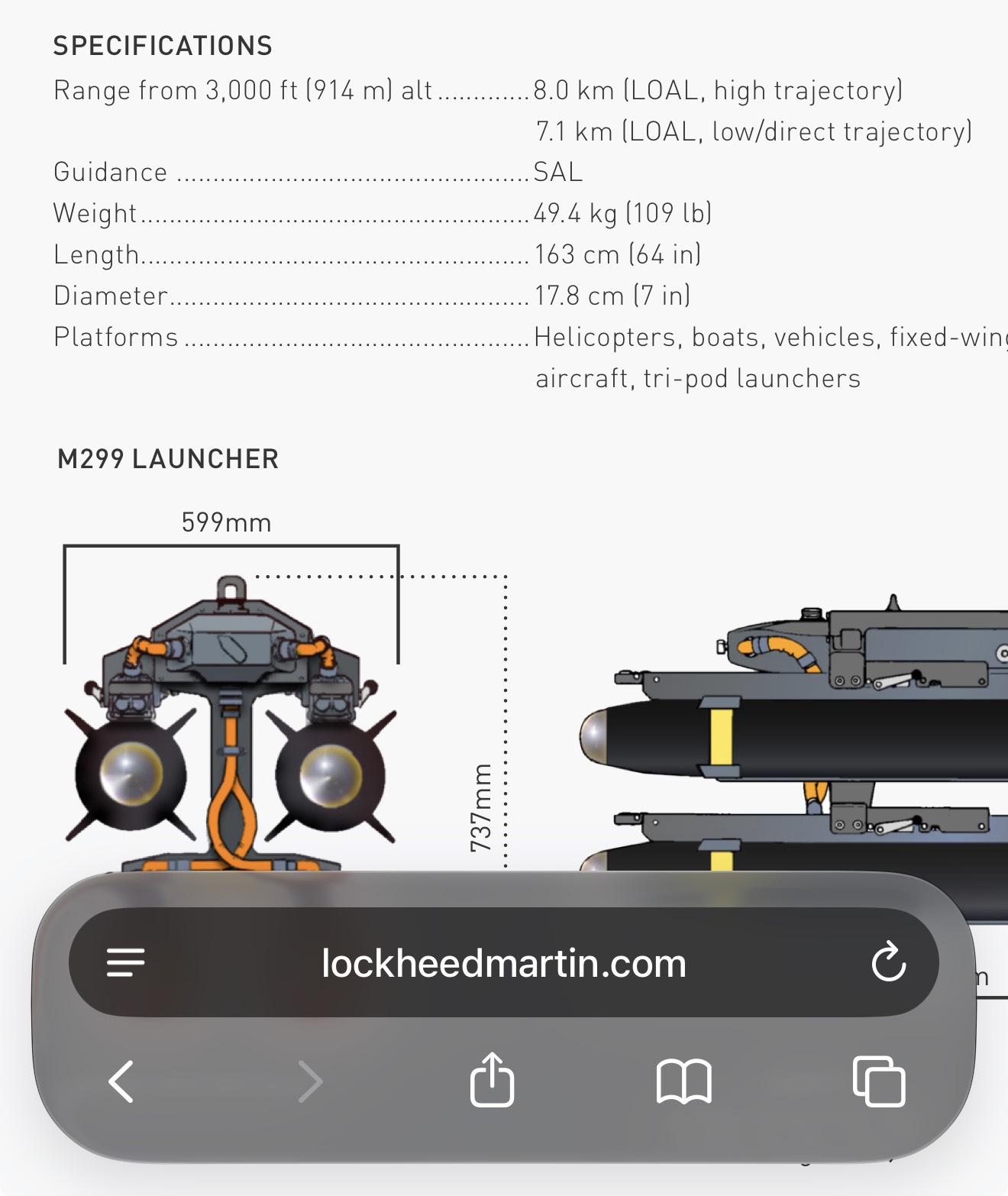
Or MMW muntions for NE
Maybe implementing frigates alongside these aircraft carriers, equipped with defensive systems and electronic warfare for protection, would be a good and easier to accept solution, wouldn’t it ?
That way, the only way to destroy an aircraft carrier with an updated damage model (similar to bombers) would be through saturation, with 3 or 4 jets launching their anti-ship missiles, making it possible for only around 3 or 4 missiles to actually hit the designated target.
What do you mean by that?
- towed countermeasures? (if they can be defined as ammunitions)
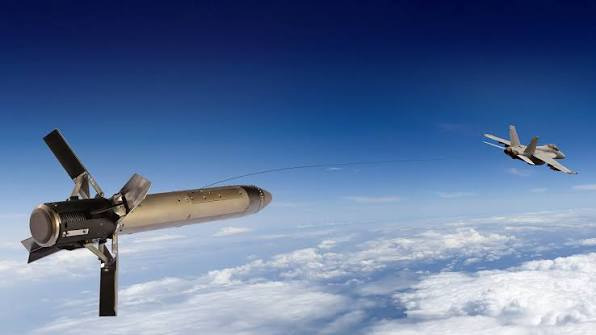
- lasers?
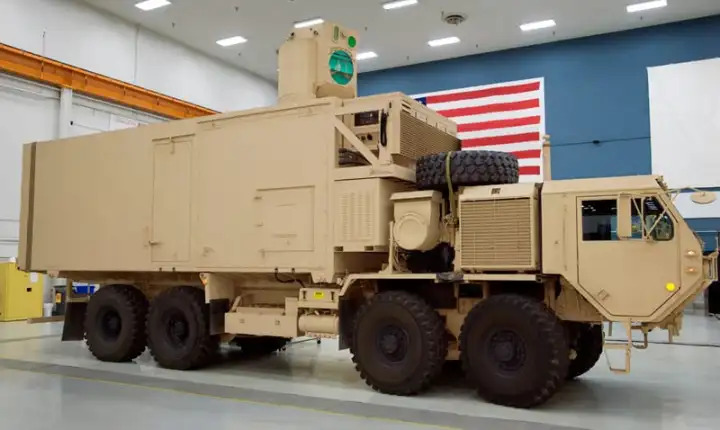
- maybe even just the implementation of IIR (idk if this qualifies as new tho)
1 Like
Instead of banning them, why not introduce a spawn point requirement for them? I would like to see a detailed and fleshed out SP mechanic implemented in NE’s future, and I think this would be a great way to test it!
4 Likes
Thats it, thats the way, keep doing this we appricate it.
I hope we have option not to play low rank, I get it let it be there but some uf us wants to play Top Tire.
Absolute BANGER. Just perfection. again appricite this.
I beg you @BVV_d, please shed some light into these points! Even if it’s just to say that you guys still want to wait to gather more data before making a decision.
Just the topic of raising the nuke SP cost would already be very helpful.
3 Likes
It is really great to see the development team continuing to support and develop Nuclear Escalation.
The mode has enormous potential, and I would absolutely love to see it expanded into Simulator Battles in the future. The larger maps, modern aircraft, complex objectives and focus on air-to-ground operations could make it a fantastic addition to Sim.
I also appreciate the improvements that have already been introduced, particularly the changes to AI radar behaviour, the initial implementation of pseudo-RCS for incoming munitions, and the adjustments intended to improve the balance between Blue and Red.
However, as someone who has previously provided feedback on Nuclear Escalation, I still feel that several fundamental gameplay issues have not been sufficiently addressed. While the newly announced maps, early warning radars and additional mission mechanics are exciting, I believe some of the existing combat mechanics deserve just as much attention.
- AI air defence and Blue vs Red balance
One of my primary concerns has been the behaviour of AI-controlled air defence systems and the differences in how both teams experience them.
In previous iterations, playing Blue could result in receiving RWR warnings and being engaged by enemy SAM systems almost immediately after takeoff, sometimes before even retracting the landing gear. Meanwhile, Red aircraft could seemingly operate much closer to Blue airfields without encountering the same level of resistance. This is still an issue.
I have also experienced AI-controlled convoys detecting and engaging aircraft through terrain, as well as inconsistent RWR behaviour. These issues still occur to some degree, and certain AI air defence systems remain excessively effective. In some situations, it feels almost impossible to break their radar locks or successfully defeat incoming missiles through notching and other defensive manoeuvres.
I acknowledge that changes have been made to radar activation, SAM behaviour and overall balancing, which are certainly steps in the right direction. However, I still believe that AI detection, terrain masking, engagement logic and reaction times require further refinement.
- The Missile vs Missile meta
This remains one of my biggest concerns with Nuclear Escalation.
The mode still feels too much like a Missile vs Missile simulator, where a significant part of the experience revolves around launching air-to-ground weapons only to watch players or AI-controlled air defence systems intercept them with extremely high effectiveness.
Whether using anti-radiation missiles, guided bombs or other precision-guided weapons, it often feels like almost anything can be detected, tracked and intercepted.
I appreciate the introduction of pseudo-RCS and the reduced detection ranges for certain smaller and low-observable munitions. These were necessary improvements, but I do not feel they have sufficiently addressed the underlying issue. Radar detection and tracking capabilities still feel far too effective.
I am not suggesting that air defence systems should be incapable of intercepting incoming weapons. Quite the opposite. However, their effectiveness should be determined by the actual capabilities of each system, including detection limitations, radar cross-section, weapon characteristics, reaction time and interception probability.
Different weapons should present different challenges, rather than allowing players or AI-controlled systems to counter such a wide variety of incoming ordnance by simply firing FOX-1, FOX-2 or FOX-3 missiles at them with consistently high success rates.
- Multipathing and the current low-altitude meta
Another issue is the continued effectiveness of multipathing.
Flying extremely low remains an overly reliable defensive strategy against radar-guided missiles, and it creates a gameplay environment where simply hugging the ground can often be more effective than properly defending against incoming threats.
This is particularly frustrating from a Simulator Battles perspective, where situational awareness, notching, defensive manoeuvres, countermeasures and tactical decision-making should play a much greater role.
I am not advocating for multipathing to be removed entirely. However, I would like to see a more realistic implementation that accounts for radar geometry, seeker capabilities, missile technology and environmental conditions, rather than relying so heavily on a general altitude-based mechanic.
Terrain masking should absolutely remain a viable tactic, but it should not be confused with multipathing. They are two different phenomena and should be represented accordingly.
These were among my main concerns in my previous feedback, and while the improvements introduced so far are appreciated, I believe there is still considerable room for improvement.
Nuclear Escalation has the potential to become something genuinely special, particularly if it eventually makes its way into Simulator Battles.
4 Likes
In particular, some scalability is needed for fuel-leak fires. Everything from 7.62mm punctures to breaches by high explosives or 30mm fragments produces the same massive fireball, regardless of the amount of fuel actually feeding the fire.
A single .50 cal leak should result in a small fire; however, in-game it always results in a large fire.
2 Likes
First off all thank you for the replies BVV_d.
As for what you said about the sea skimming anti ship missiles, this seems to be true when striking targets such as the MPK-33. But in my experience vs the Admiral Kuznetsov, when I use AGM-84D Harpoons they all get intercepted no matter how close. I believe this should not be the case because its CIWS equivalent guns are high on the deck. They should struggle to hit munitions so low to the ocean.
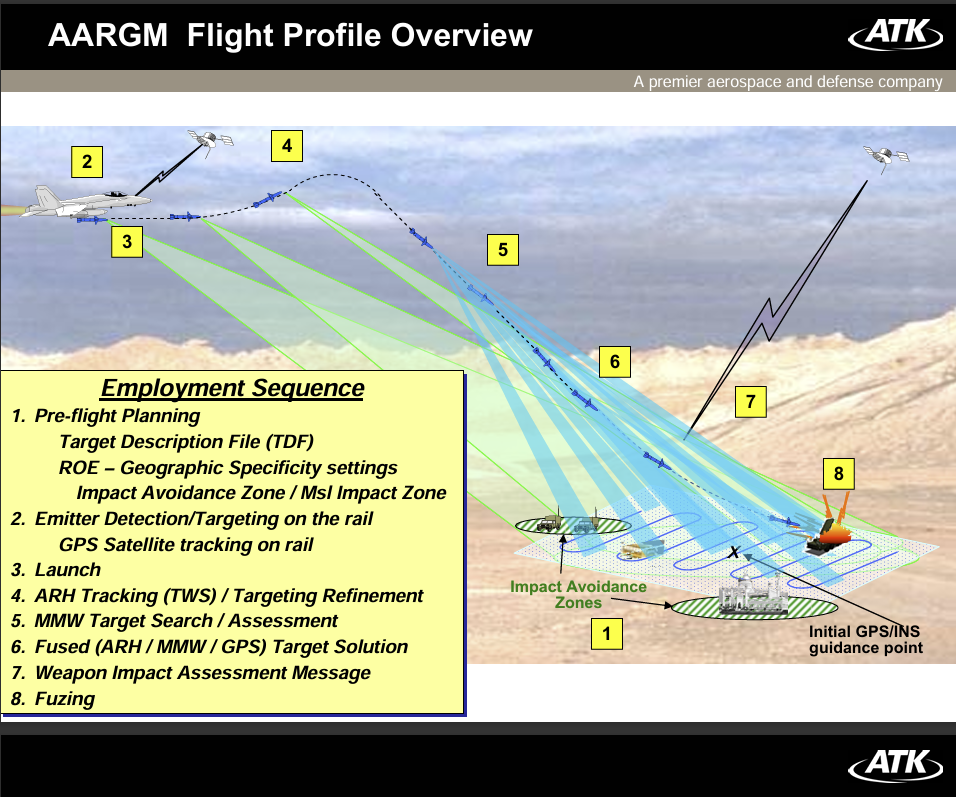
As for the GNSS of Anti Radiation Missiles, I respectfully disagree and think this needs to be reevaluated. It has been stated in the Alliant Techsystems (ATK) presentation on AARGM that the AARGM had satellite GPS guidance on the rail (before launch). It also showed that there was a predetermined GPS impact point close to the SAM system. Because of this, the GPS should work at any range.
6 Likes
Report it?
1 Like
Already have
1 Like
Link?
What about a 256x256 version of the current map? Its just sat there empty? (and heck if you are keeping it small, you could get 2-3 maps out of it just using different parts of it.
Its maybe okay for 9.7-10.7, but higher than that its too dense, if nothing else, you have waaaaaay too much overlap between SPAAs at around 12.0 that its really hard to do much. At top tier, the aircraft themselves are too fast, with too much weapon range to be fun on anything smaller than the max size.
Now this is a cool idea.
another good idea, but would be much better suited to the full scale map and just reinforces the idea of getting rid of player markers. Because at hte moment, whether its alive or dead, it doesnt matter, you know where the enemy team is anyway. So being sneaky and doing SEAD to disabling EWR is just a waste of time whilst markers exist.
Good change, was on my list of issues
Also on my list, far more than I was hoping for actually
Also on my list.
damn, did they actually read my suggested feedback?
Sounds good
Shame it didn’t get any responses then.
Because marketing brochures are totally known for always being 100% accurate. The bug report forum is totally stupid for not allowing them as a source for bug reports.
Also that is the maximum range for a guaranteed hit. Past that range, it can still hit, just less reliably so. This is already modeled in game with the vikyr for example. It has a stated guaranteed range of 8km, but it can still reach out to 10km.
Hope the “more ships with SAMs” apply to player controllable ships as well
1 Like