Would you like to see this in-game?
- Yes
- No
0
voters
• History:
Click here for the History
Back in the year of 1937 Lieutenant-General Sir Giffard Le Quesne “Q” Martel a British Army officer, military engineer and tank strategist, now appointed to the Master General of the Ordnance department, was quite happy to be designing and building his own tanks and so started a new project, this time to design a full-sized medium tank. In his endeavours, he set up a small cabal of tank officers, including Liddell Hart. The medium tank Martel designed seems to have gained the nickname ‘Monster’. For a year the group worked its influence but the Master General of the Ordnance, Lieutenant General Sir Hugh Elles, and Major General Alexander Elliott Davidson, the Director of Mechanisation, were opposed to the tank. By June 1937 these officers were considering tanks for the 1938 financial year. Although the A.7 was still about and technically a medium, it in no way fulfilled the General Staff requirements for a medium tank. The A.6 was closer to meeting the requirements, although falling some way short, which supports the claim that the A.6 was a tank ahead of its time.
On 9 June, Davidson forwarded two blueprints for consideration. One was a curiosity of which we have just a description. Based on the hull of an A.12 Matilda, how it differed from a normal infantry tank, or even what the turret looked like, we do not know. The second set of plans were the ones on which Martel had been working previously, and would in time become the A.14E1. A board met in committee on the 15th to review the situation and decide upon a course of action. After the current designs, A.6 and A.7, were reviewed, the board agreed that, if a Wilson-style steering was used, then a mere 15hp per ton would be sufficient to meet the General Staff requirements.
From this starting point the board reverse-engineered the maximum upper limit for the weight of the tank by comparing it to available engines and their horsepower. The four engines considered were the Liberty, with 400hp giving a tank of 24 tons, and the Meadows V12 with 430hp, giving a tank weight of 26.5 tons. Then came an interesting consideration, the Napier Lion engine, already fitted to the Supermarine S.4 and S.5 racing seaplanes, which would, eventually, lead to the Spitfire. The engine was also fitted to the British powerboat companies Type 2 high-speed launch, a craft that would later be used by the RAF’s search and rescue units during the Second World War. The Lion produced the same 430hp as the Meadows V.12.
The engine finally selected was the Thornycroft RY12, which had an output listed at 575hp. This gave the tank weight of 32.5 tons. The 575hp output is curious since the original engine only produced 548hp but, by the end of April, a set of Simms dual ignition had been fitted which pumped its power output up to 607hp. After selection for the medium tank, the power requirements were reviewed and the engine derated by carburettor adjustment. After this modification, a test programme was run with the engine doing eighty-five hours at differing speeds and loads without a single problem. Furthermore, a second of these engines, linked to a specially-designed Borg and Beck clutch, was able to complete a test programme of 500 hours running when fitted to the A.6E3.
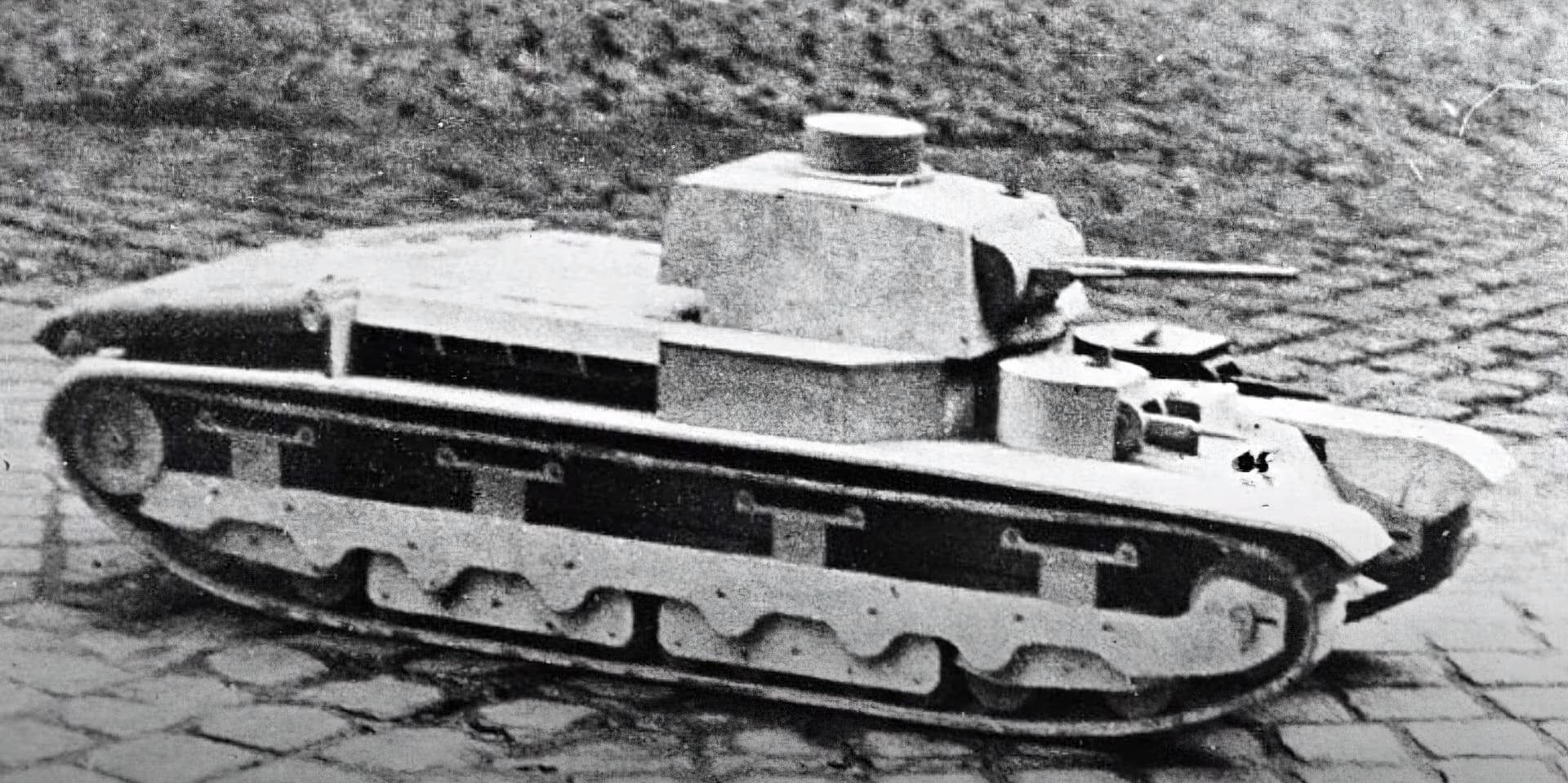
The board then turned its attention to the two blueprints on offer. The A.12-based one was rejected for unspecified reasons, but the second was much better liked, although it did have its flaws. In the eyes of the board the main difficulty was that it only had a single sub-turret on the left side. The board noted that if Martel’s original design could be altered to carry two sub-turrets, the Martel design would be viewed favourably.
The board’s requirements for a medium tank are worth studying. The requirements were called ‘1938 class medium tank’ and, in most respects, match those of the A.14E1 as eventually produced. However, there was a noticeable difference at first glance. The A.14 had a six-man crew, but the requirements had a seven-man crew, the spare man being located in the turret. Presumably, he was there to help take care of the plethora of weaponry crammed into the turret, which included a high-angle smoke mortar, a dedicated .303 anti-aircraft machine gun (which may also have had its own sub-turret at the rear of the tank; differing sources state different things) and, most intriguingly of all, the main gun was listed as a 2-pounder with an ‘automatic feed’. There was also the requirement that a howitzer could be fitted if need be.
Some more modern sources indicate that all the machine guns on the tank were to be air-cooled, and the Czech ZB machine gun (later the Besa machine gun) was discussed as a possible candidate. These were located with two twin-mountings in each sub-turret and a single machine gun mounted co-axially to the main gun. Another difference was that the requirement was for 25 tons in weight. When the A.14 was produced, it had a weight of 29 tons, and the board was hoping to fit in an extra man, and automatic feed for the gun, as well as fifty more rounds and the same difference in number of miles range, all under the same armour protection. This was a wildly optimistic weight.
Description from the book:
• Characteristics:
Quick Disclaimer:
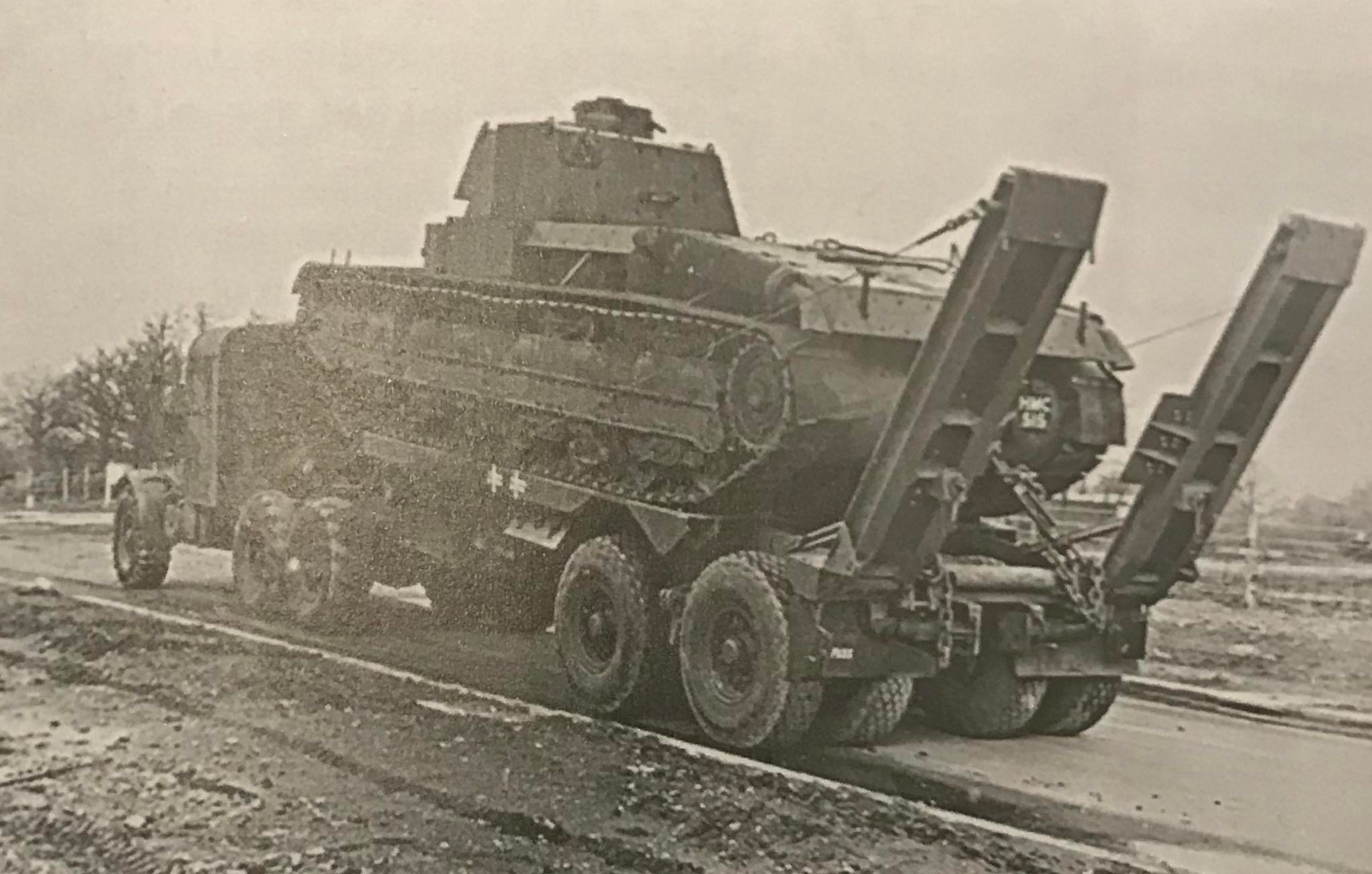
Before we start with the characteristics of the tank, keep in mind that these are the specifications for the tank that was actually build, i will not be describing the specs that were proposed to the tank, i’ll be using the description from the fully Produced variant (the one in the images) were the only things missing was the armament.
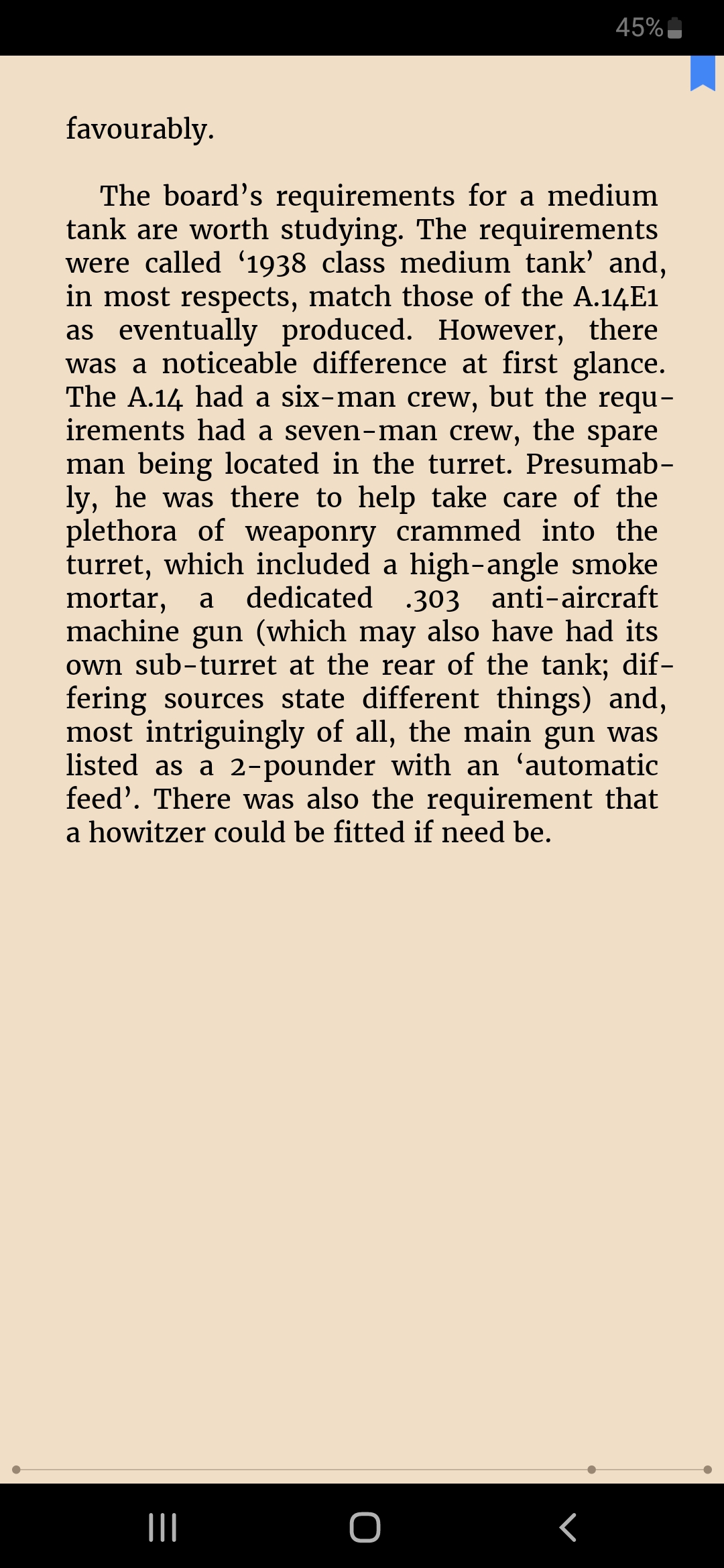
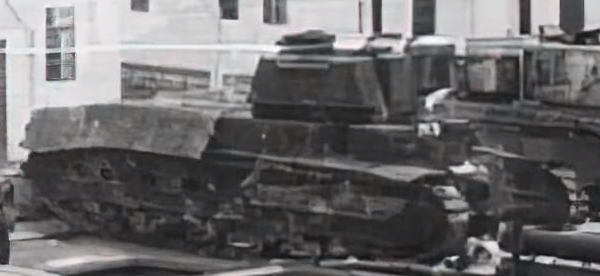
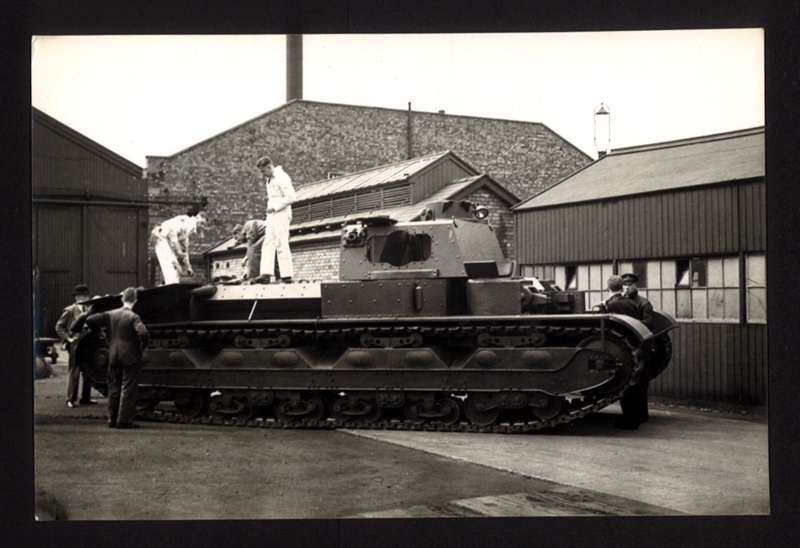
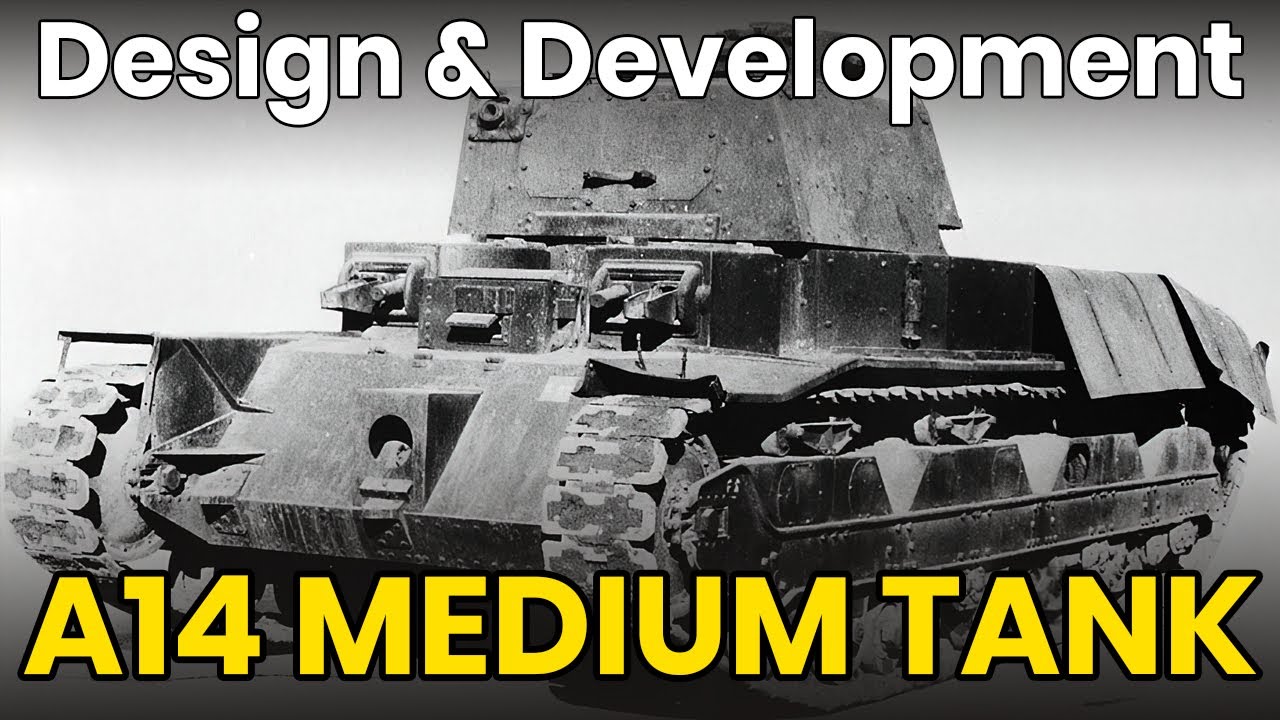
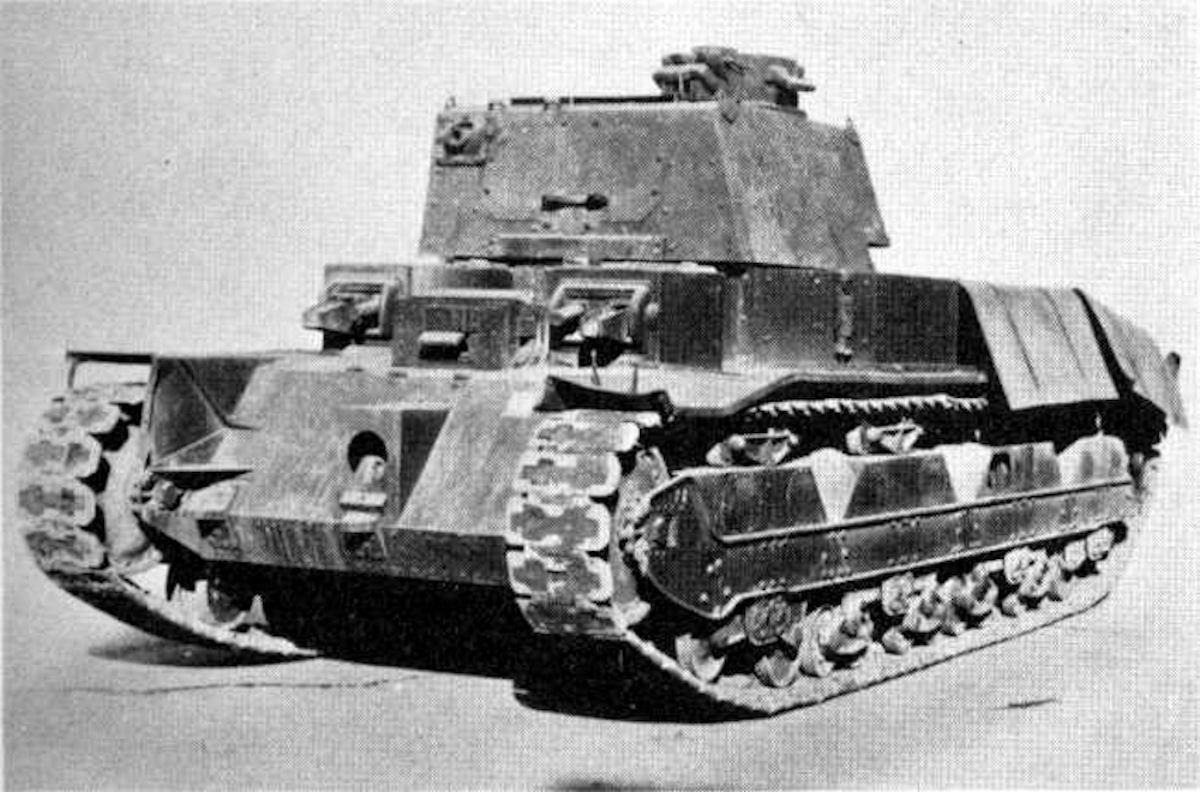
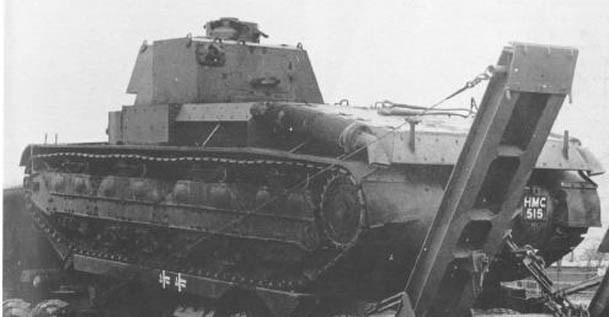
We don’t have a description on the overall size of the tank, but we know how big the tank would approximately be based on images, like the one above, the A14 sitting on a Scammell tank transporter (which is 11.12m Long and 2.87m Wide) we also know that the tank was similar in size to the A6E3, so we can say that the A14 would be approximately 6,5m Long, 2,67m Wide and 2,79m High. the Produced A14 had a weight of 29 tons.
The tank had a crew of 6, the Driver in his own small cabin at the front, either side of him the 2 machine gunners and a commander, gunner and loader in the main turret, the propulsion system was located in a separate compartment at the back of the tank. It was powered by a modified Thornycroft RY12 engine that produced 607hp at 2000rpm, but due to limitations with the suspension, the A14 ended up being slower than the Cruiser Mk. IV, the A14 would not be capable to exceed a top speed of 34kph (around 21mph).
The tank armor was of a riveted construction similar to the armor of the later Cruiser tanks Mk. IV, but it was considerably improved on sides and rear, the armor of the A14 had a 30mm basis, 20mm protecting the engine and everywhere else it had 25mm. Similarly to other british tanks of the time, the A14 also had a headlamp at the front protected by a 14mm armored box, only the intended mantlet for the main turret, and the mantlet for the machine guns was cast.
Hull front: 30mm (UFP had a angle of around 28~30°)
Hull sides: 25mm (around +10mm protecting the suspension)
Hull rear: 20mm
Engine deck: 20mm
Hull roof: 25mm
Hull floor: Unknown (Probably 9 to 6mm)
Machine gun turrets: 30mm all around
Turret front: 30mm
Turret mantlet: 30mm (cast)
Turret sides: 25mm
Turret rear: 25mm
Turret roof: 25mm (25mm commander cupola)
• Armaments: The tank would be armed with a QF 2-pounder gun, the mantlet would be the same as the Cruiser Mk. IVA so it would have around -12° of gun depression and 20° of gun elevation, it would also have a coaxial 7.92 BESA machine gun, and 2 additional BESA MG’s each mounted in the 2 sub-turrets at the hull front. The A14 also had a high-angle smoke mortar located in the turret front. around 100 rounds were to be carried for the 2-pounder gun.
This is how the A14 mantlet would look
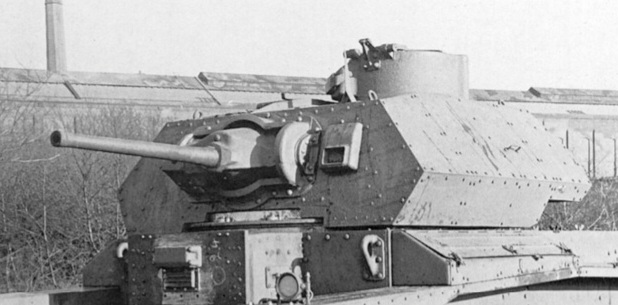
Only the mantlet would be the same as the Cruiser Mk. IVA, the A14 had it’s own turret design!
• Conclusion:
In the end only one A14 was produced, the Army realised that the tank was way too mechanically complicated, production cost for a single vehicle was too high and the tank didn’t really offer many advantages over the already existent A13 and A10 tanks, so the project was canceled before the A14 had it’s armaments mounted to it. Sources say that the tank still saw “service” as a training vehicle (what were they training in tank 2x larger than any other Cruiser tank at the time is beyond me) but the A14 was eventually scraped, and the only remaining proofs of its existance are the photos of it that you saw in this suggestion.
In my opinion, the A14 would be a very good addition to the British TT at around 1.7, it’s a medium tank that would bring something that low tier Britain really lacks, survivability, all our tanks have 3 to 4 crew very cramped together, and the A14 would give us 6 crew well spread in the hull and turret and some much better side and roof armor allowing the vehicle to be very hard to one shot, giving us better armor, survivability and a reliable gun, at the cost of some mobility, and a tank that will be easier to spot.
Sources:
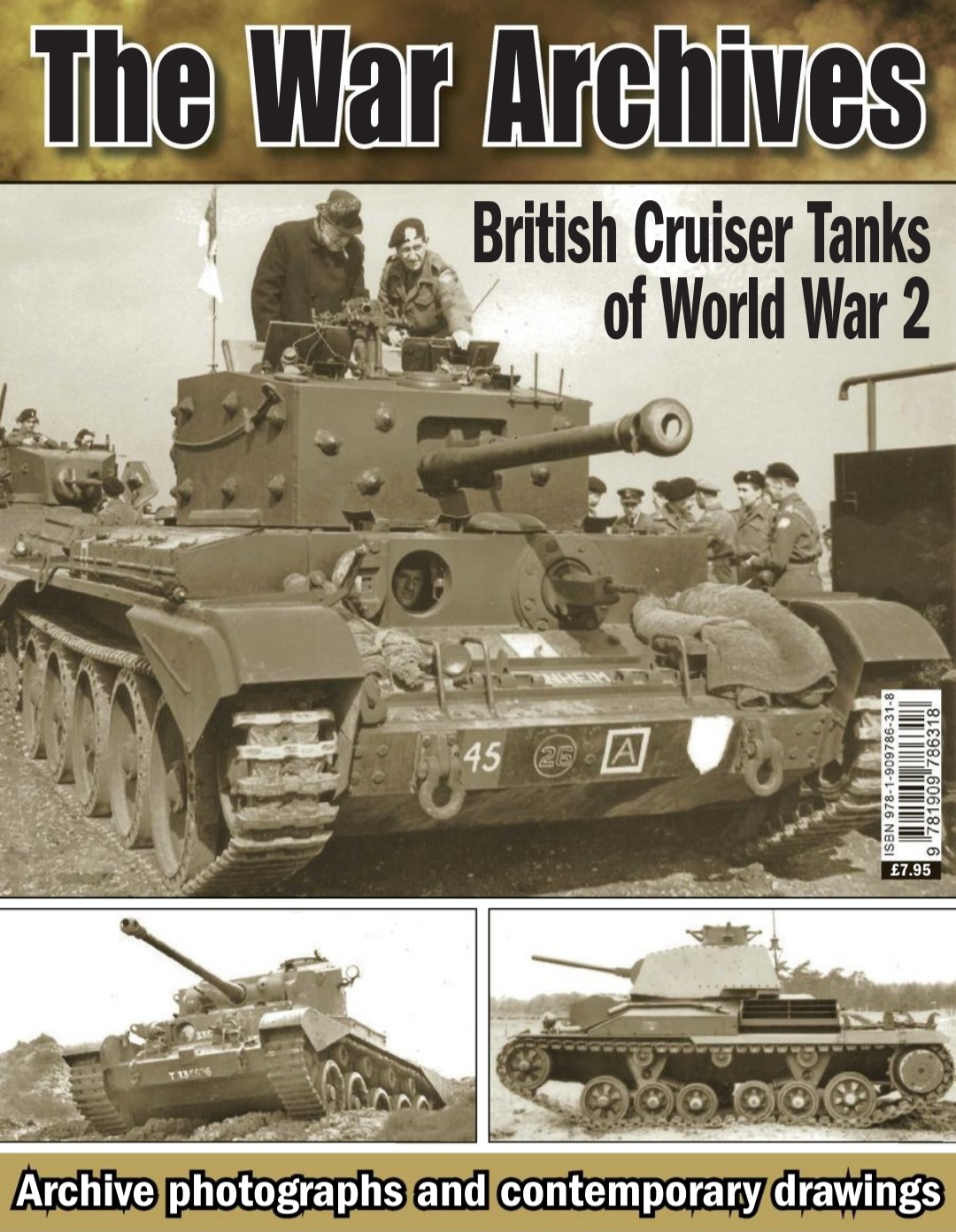
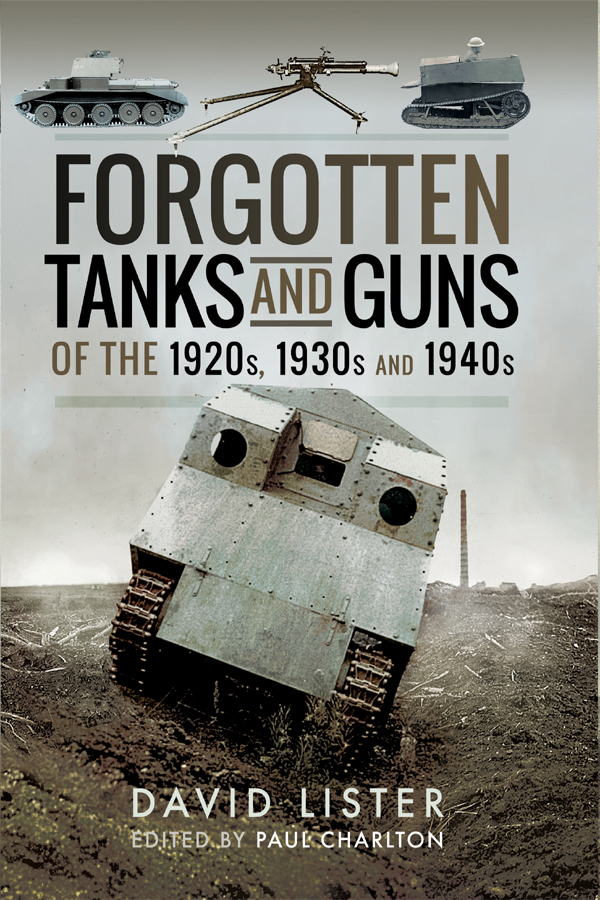
Source on the main armament is the book: "Forgotten tanks and Guns of the 1920s, 1930s and 1940s”. It’s located on Chapter 12 “The Tanks without a War” Page 22 of the Chapter