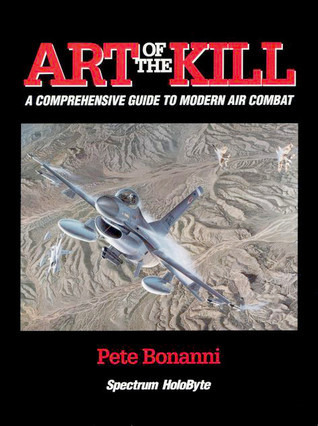
Right now, the tech-tree A-7E is stuck in a weird spot at 10.3BR(10.7BR in GRB). Because it faces 9.3s with no flares, it can’t get AIM-9Ls, but having to rely on rear-aspect AIM-9Gs against 11.3 supersonics makes it practically defenseless after dropping its payload.
Instead of keeping it artificially nerfed at 10.3, the A-7E should receive its proper late-Cold War / Gulf War loadouts alongside a corrected RWR, with a fair BR increase to 10.7 or 11.0 (Air) and 11.0/11.3 or maybe higher in Ground.
Keep in mind that all of these have already been reported to the developers.
- AN/ALR-45F(V) RWR
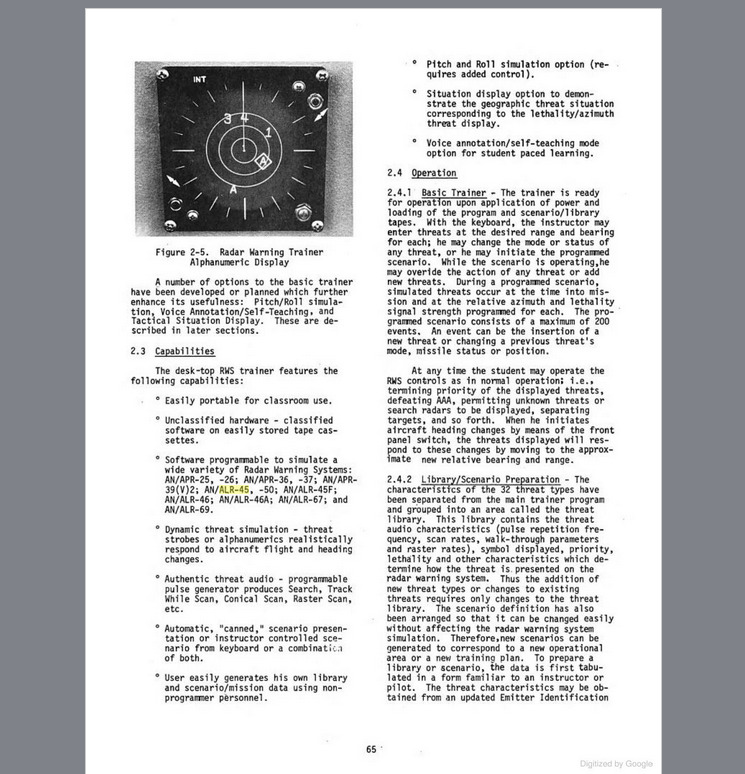
Currently in War Thunder, the A-7E is saddled with an obsolete analog strobe RWR that only displays a rough heading and broad frequency band, leaving the pilot unable to identify specific threat aircraft.
Historically, the AN/ALR-45F(V) was a modernized digital system incorporating the core CP-1293 processor and IP-1275/1276 display from the AN/ALR-67. Its functionality is practically identical to the RWR systems found on the F/A-18 and F-14B/D, with the only real difference being a lack of coverage for certain radar frequency bands.
It should function as a proper digital RWR with alphanumeric threat identification within its supported bands, displaying direct threat codes such as “MiG-21”, “MiG-23”, or “SA-2”. Correcting this system restores the essential situational awareness the Corsair historically relied upon in contested environments.
- AIM-9L Sidewinder
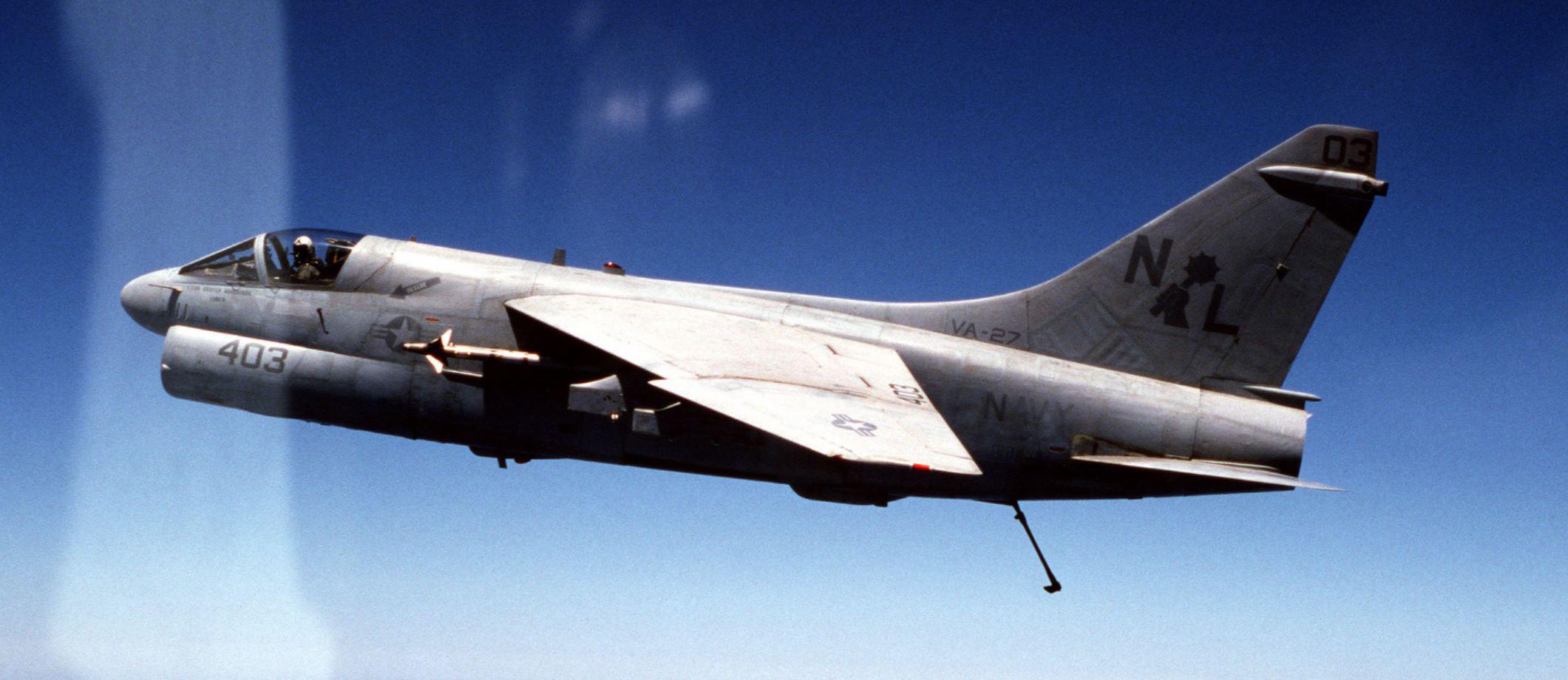
From the early 1980s, the AIM-9L served as the standard infrared-guided missile across the US Navy, demonstrating exceptional combat effectiveness in conflicts like the Gulf of Sidra incident (1981) and the Gulf War.
On the A-7E, it was carried on fuselage stations as the primary self-defense armament during low-altitude strike missions outside fleet air defense cover. While the AIM-9M was also historically fielded during its very late service, it should not be added for obvious reasons.
- AGM-65F Maverick
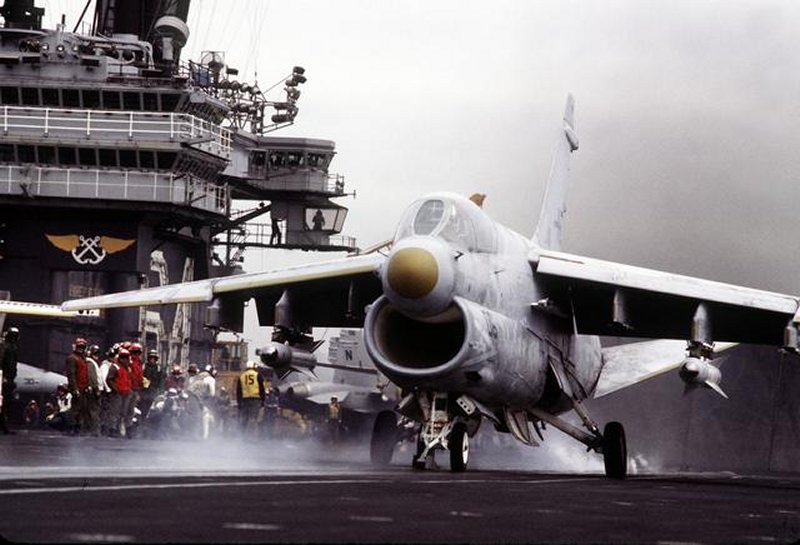
While Mavericks in War Thunder are predominantly seen on USAF and late/modern USN platforms, the US Navy also deployed the AGM-65F for A-7E.
In-game, the A-7E currently relies entirely on the AGM-62 Walleye series for guided precision strikes. While Walleyes pack heavy explosive mass, their glide-bomb mechanics require sustained straight-in flight paths and altitude. Adding the AGM-65F provides the naval Corsair with a true thermal fire-and-forget standoff weapon, allowing rapid engagement of high-threat SAMs and moving armor from lower, safer attack profiles.
- AGM-88A HARM
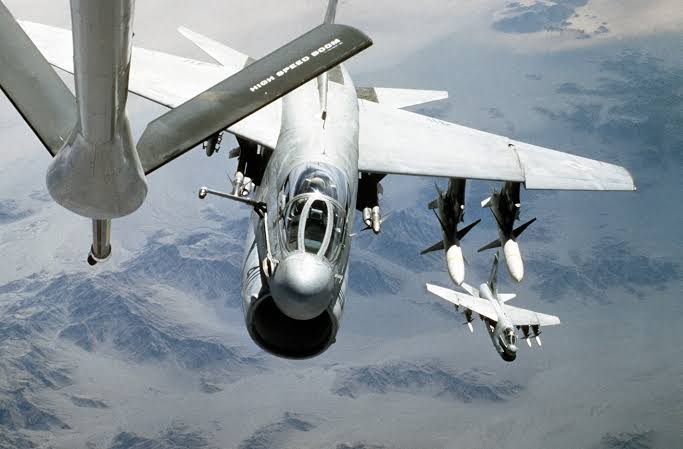
The A-7E currently carries early AGM-45B Shrike anti-radiation missiles in War Thunder.
However, during the late Cold War and Operation Desert Storm in 1991, the US Navy operated the modernized AGM-88A HARM on the A-7E, working seamlessly with its digital ALR-45F(V) interface.
Upgrading from the short-range AGM-45 to the AGM-88A as advanced anti-radiation missile mechanics are developed will cement the Corsair’s historical role as a frontline SEAD specialist, giving it reliable suppression capabilities against high-tier radar SAM systems in ground battles.