- Yes
- No
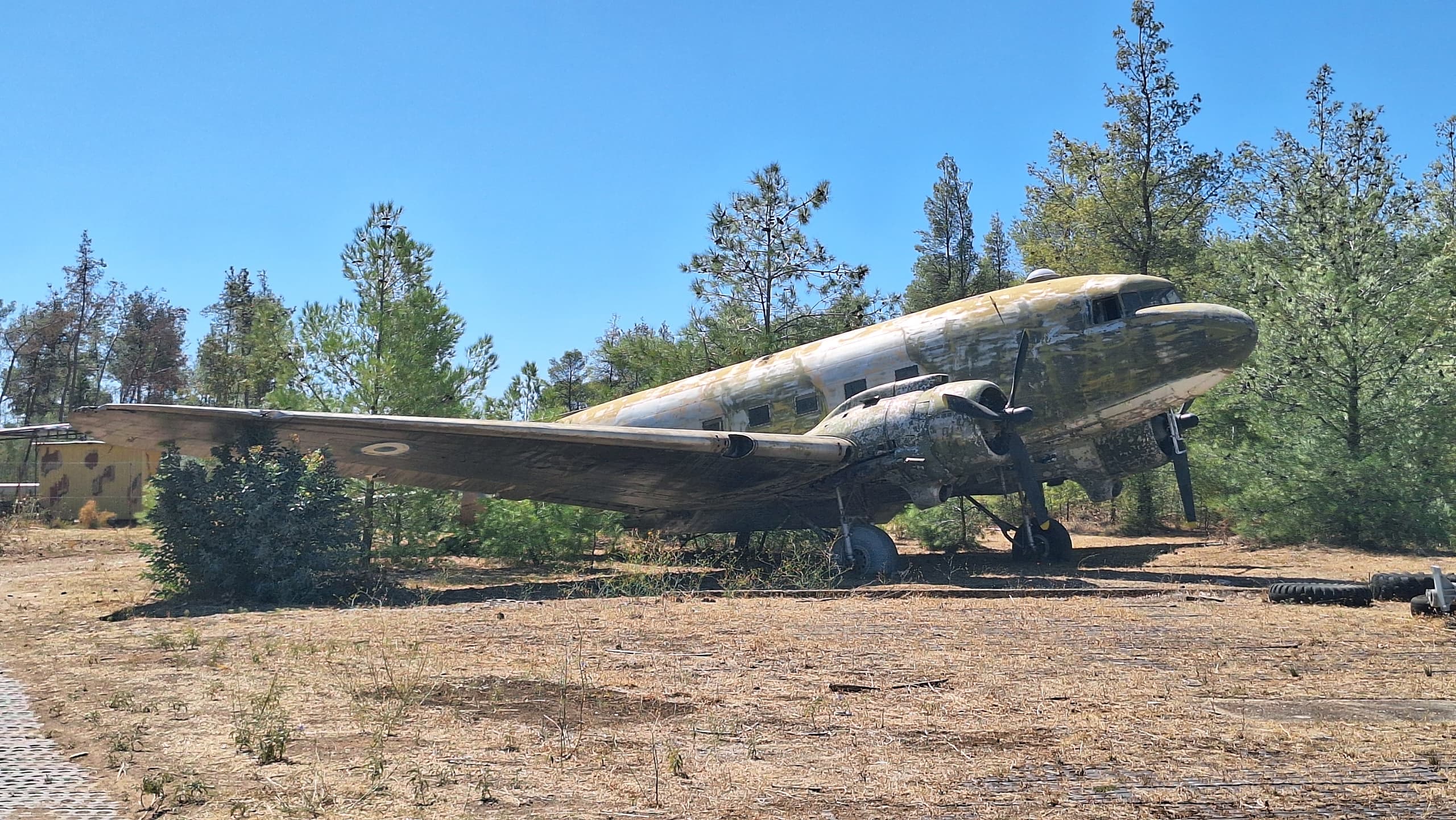
One of the few examples were a Dakota was armed, this modification happened during the Greek Civil war and it was a great success.
The Douglas C-47B Skytrain: From Commercial Roots to Global Workhorse
The Douglas C-47B Skytrain, known to the British and Commonwealth forces as the Dakota, stands as one of the most enduring and versatile military transport aircraft of the twentieth century. Its story begins not on a battlefield but in the commercial aviation boom of the 1930s. Developed from the civilian Douglas DC-3 airliner—which first flew in December 1935 and entered service the following year—the C-47 series transformed a pioneering passenger design into a rugged military workhorse. The U.S. Army Air Corps recognized the DC-3’s potential early on and ordered militarized versions starting in 1940. Engineers strengthened the fuselage and floor for heavy cargo, added a large port-side cargo door, reinforced the structure for paratroop drops and glider towing, and fitted more powerful Pratt & Whitney R-1830 Twin Wasp radial engines. Early production yielded the basic C-47 and the improved C-47A with a 24-volt electrical system. The C-47B, introduced as a specialized high-altitude variant, featured R-1830-90 series engines equipped with two-speed superchargers. These modifications delivered better performance at altitude—roughly 1,050 horsepower at 13,100 feet or 900 horsepower at 17,400 feet—along with extra fuel capacity and improved cabin heating. Built primarily at Douglas’s Oklahoma City plant (with some at Long Beach) between 1944 and 1945, approximately 3,200 to 3,360 C-47Bs rolled off the lines, plus about 133 TC-47B navigation trainers. This made the B model particularly suited for the demanding China-Burma-India theater.
More about the History of the C-47B
During World War II, the C-47B and its siblings proved indispensable across every major theater. The high-altitude capability of the B variant was especially critical for “flying the Hump,” the perilous supply route over the Himalayas that kept Chinese and Allied forces supplied when ground routes were severed. Beyond the CBI theater, the broader C-47 family formed the backbone of Allied airborne operations. More than a thousand of the aircraft dropped American and Allied paratroopers on D-Day in June 1944. They supported earlier assaults in Sicily and at Salerno, the ambitious but ultimately unsuccessful Operation Market Garden in September 1944, and the Rhine crossing in Operation Varsity in 1945. They also hauled cargo, evacuated wounded (carrying up to 14–18 litter patients), and towed gliders. In British service the C-47B became the Dakota IV. Across U.S. and Allied inventories, more than 10,000 C-47s of all subtypes were produced, earning the aircraft the affectionate nickname “Gooney Bird” and the judgment of General Dwight D. Eisenhower that it ranked among the most vital pieces of equipment that helped win the war.
When hostilities ended in 1945, the C-47B’s career was far from over. Many aircraft had their high-blower superchargers disabled or removed for peacetime operations and were redesignated C-47D. The type played a central role in the Berlin Airlift of 1948–1949, ferrying supplies into the blockaded city. It continued to serve in the Korean War for cargo delivery, paratroop drops, casualty evacuation, and night flare missions. In Vietnam, C-47s again flew transport duties while some were converted into AC-47D “Spooky” gunships armed with side-firing miniguns; others performed electronic warfare and special-mission roles. The U.S. Air Force finally retired its last operational example in 1975, yet the aircraft lived on in the inventories of numerous foreign air forces, civil airlines (often converted back toward DC-3 configuration), and specialized operators. Decades later, a number remain airworthy as warbirds or utility aircraft—testimony to a design whose commercial origins, wartime refinement, and postwar adaptability combined to create one of aviation’s longest-serving and most widely respected transports.
The C-47B in Greek Service
The C-47 (including C-47B variants) in Greek service formed a cornerstone of the Hellenic Air Force (then the Royal Hellenic Air Force) for over six decades, from 1947 until final retirement in 2008.
Acquisition and Introduction
Greece began receiving C-47s in 1947 as military assistance, primarily through the RAF (including ex-RAF Dakota IVs, many of which were C-47B equivalents) and later directly from USAAF/USAF stocks under aid programs, plus some from the Mutual Defense Assistance Program and a handful transferred from Olympic Airways in 1963. Sources indicate a total of around 78–89 aircraft of various C-47 subtypes (C-47A, C-47B, and later C-47D conversions) entered service. They equipped the 355th and 356th Transport Squadrons, based mainly at Elefsina (and later other locations).
Early aircraft often flew in natural metal finish before receiving olive drab, NATO-style dark green/gray, or other schemes over the years.
Greek Civil War (1946–1949)
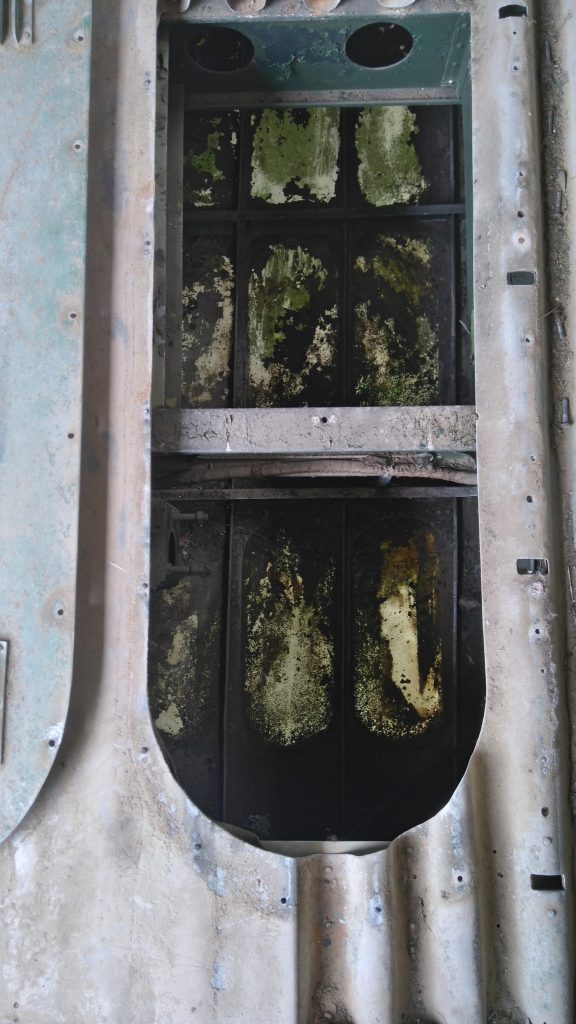
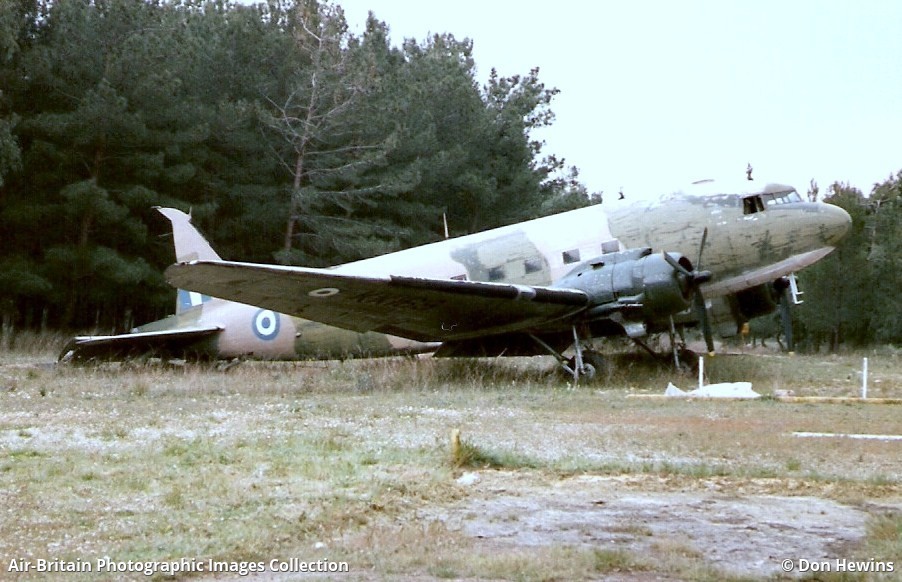
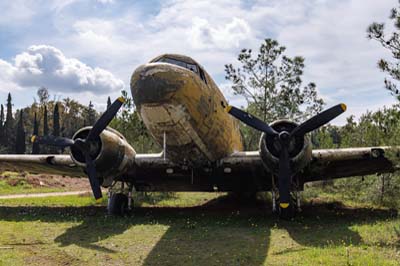
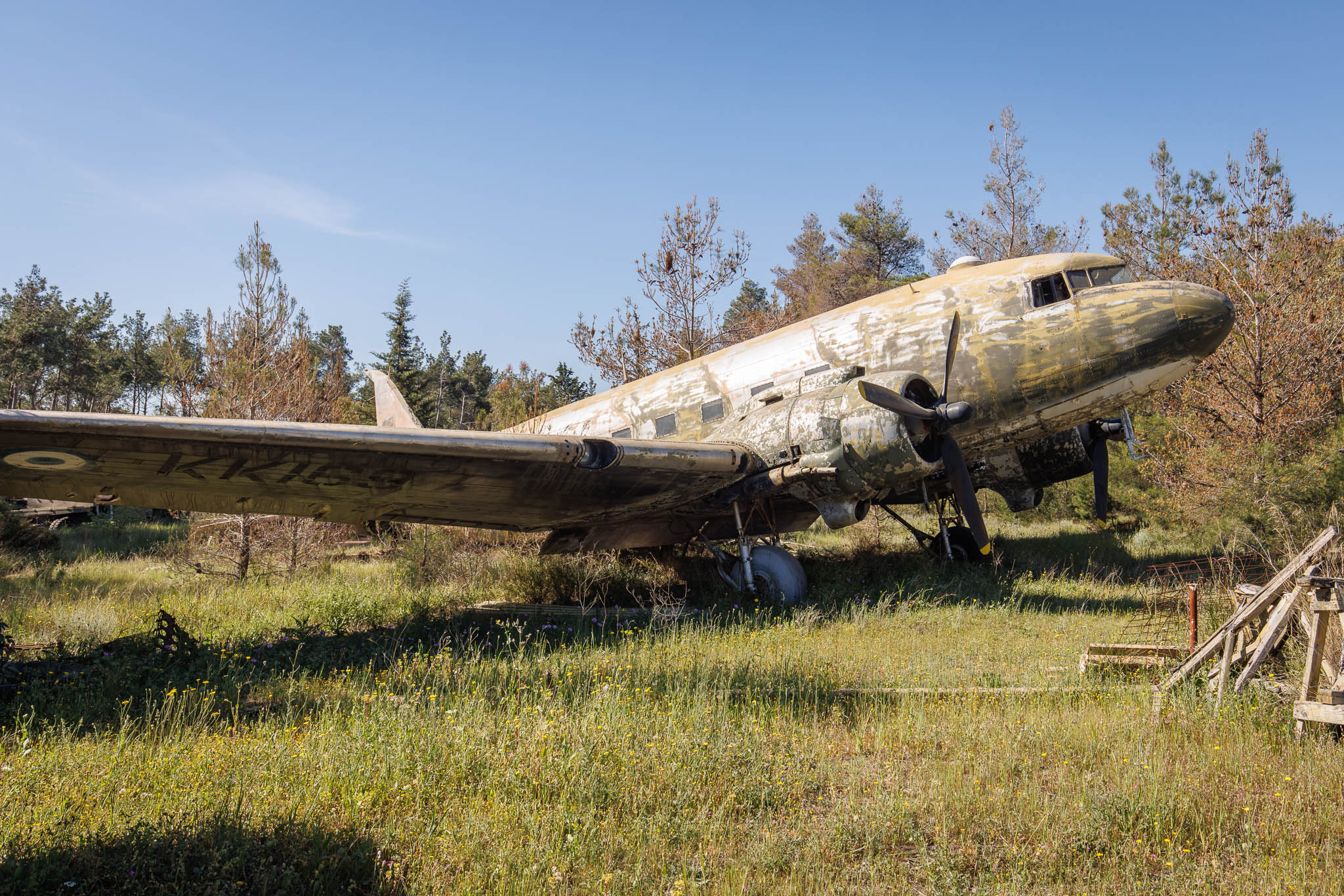
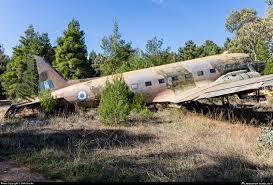
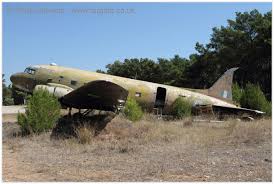
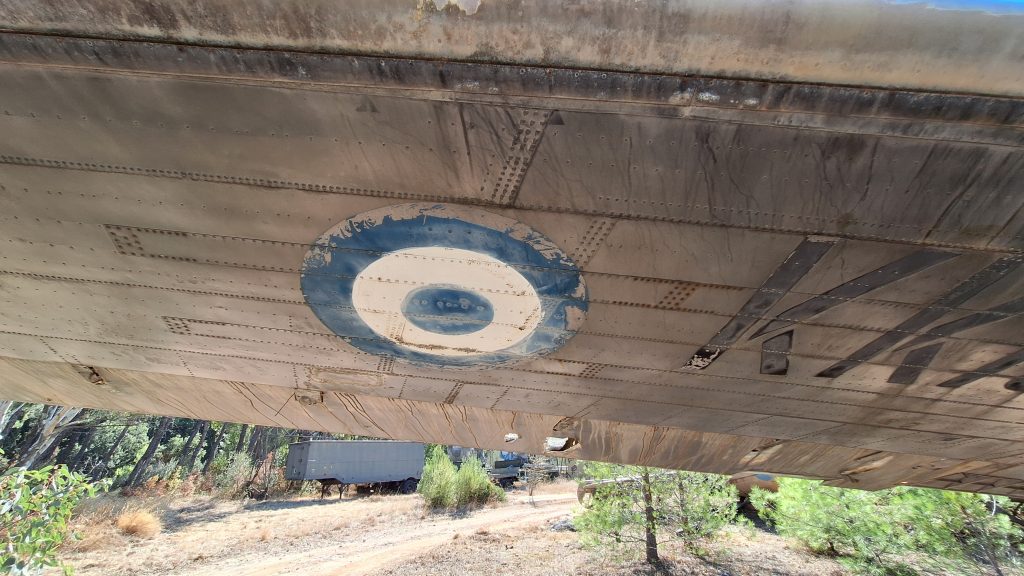
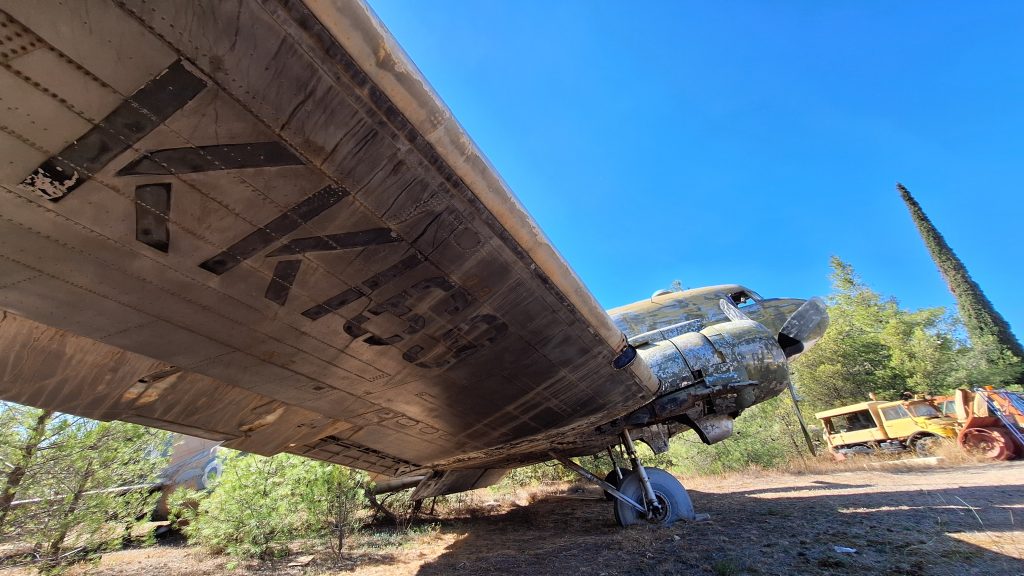
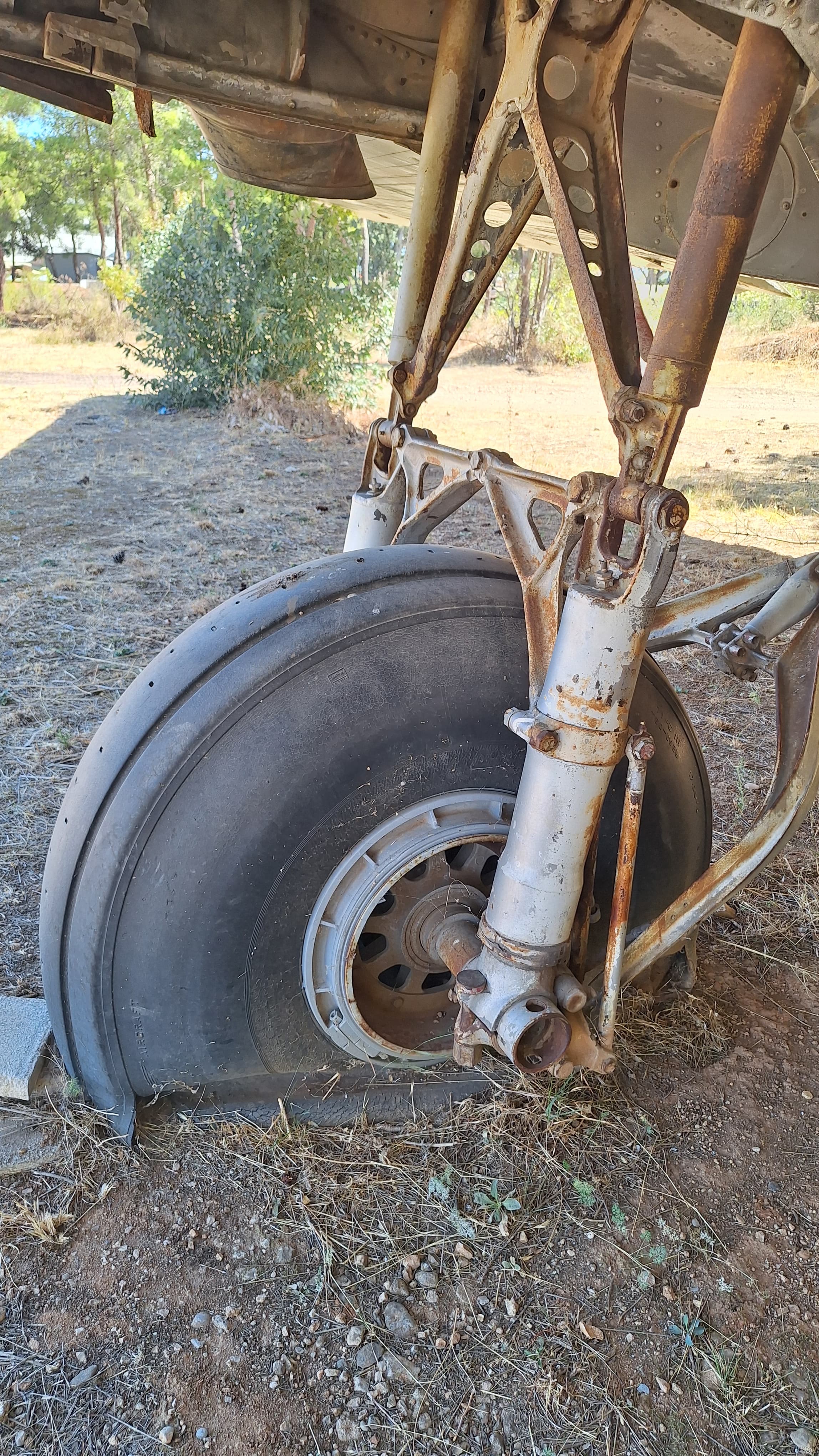
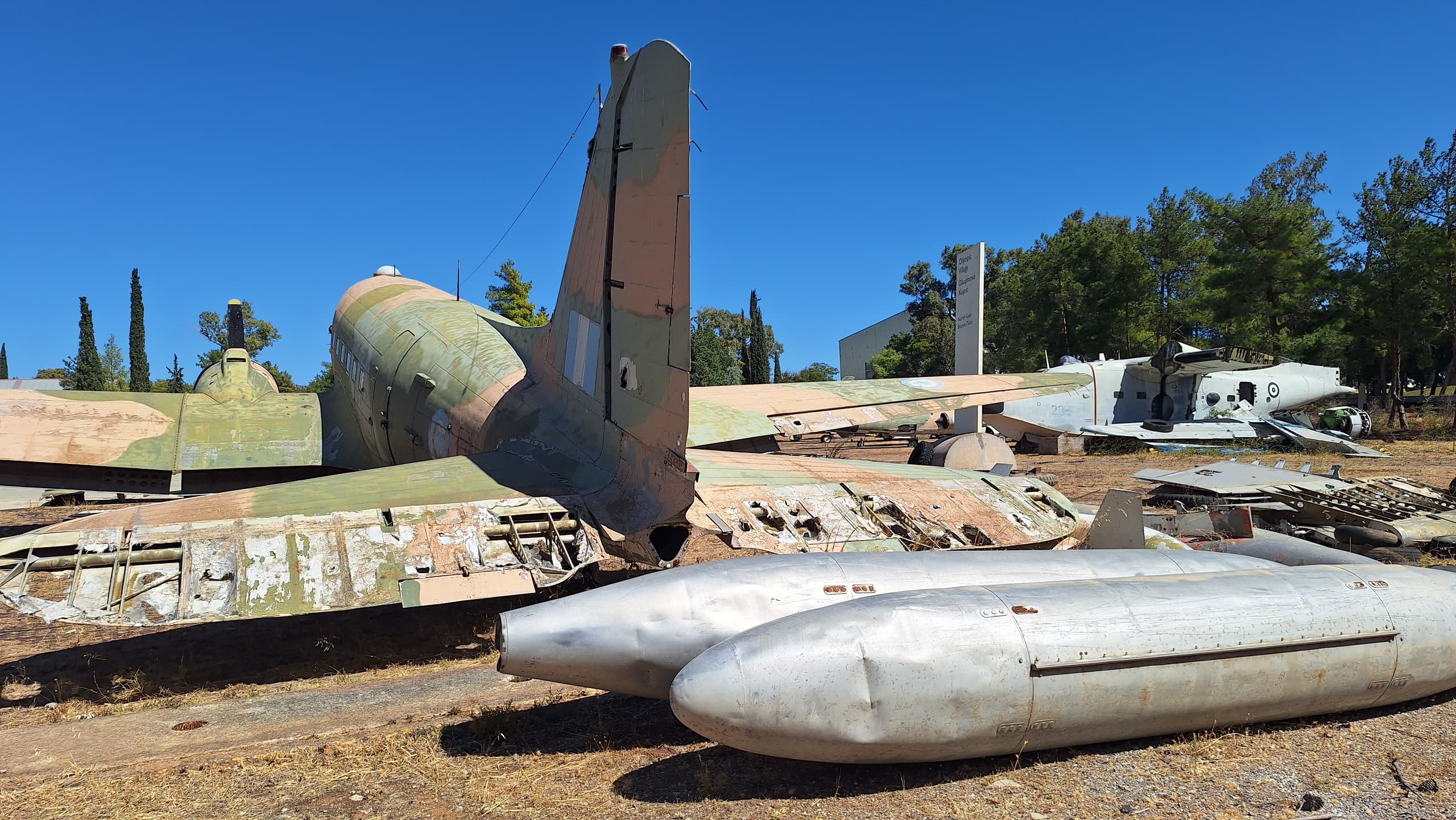
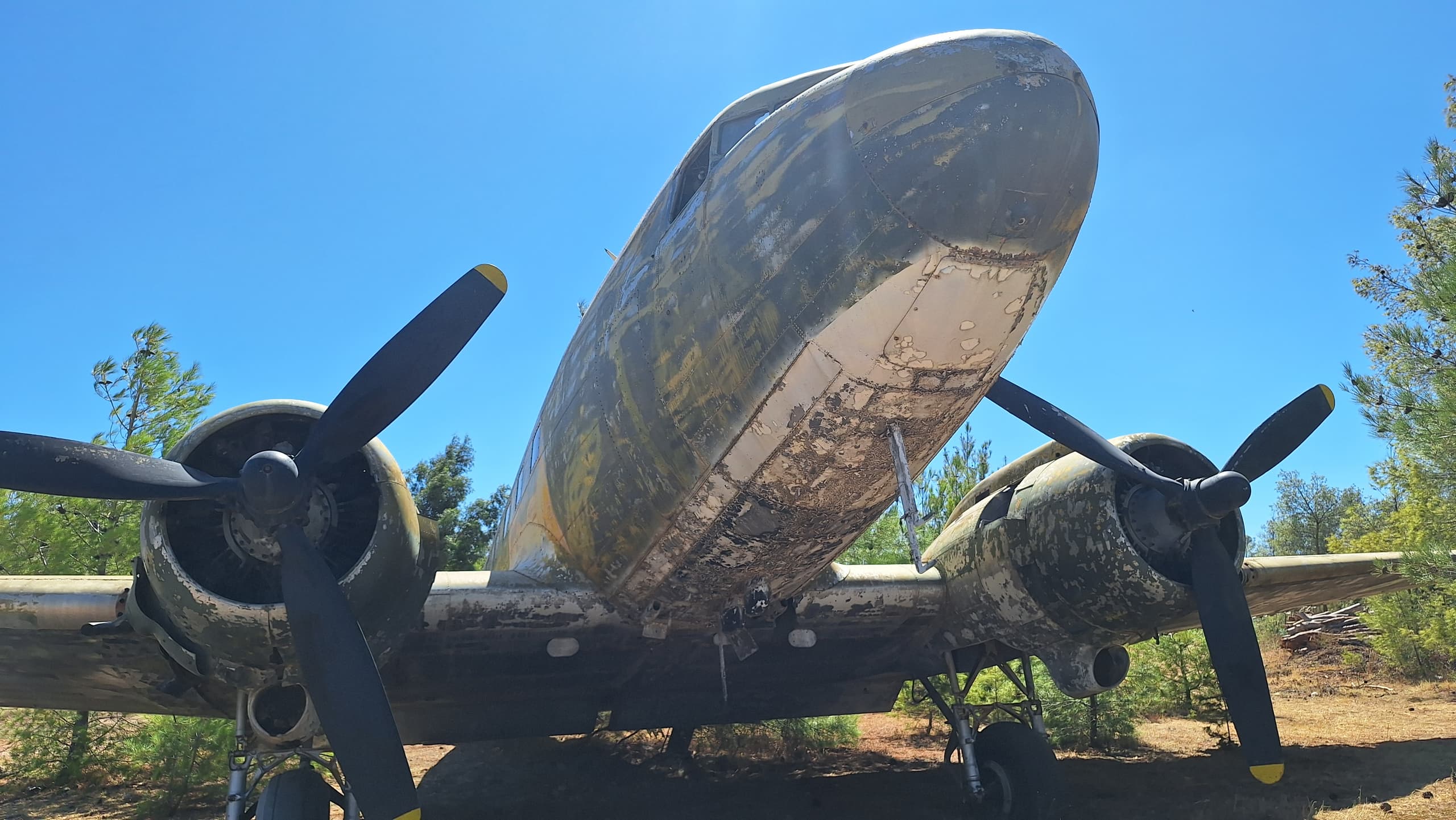
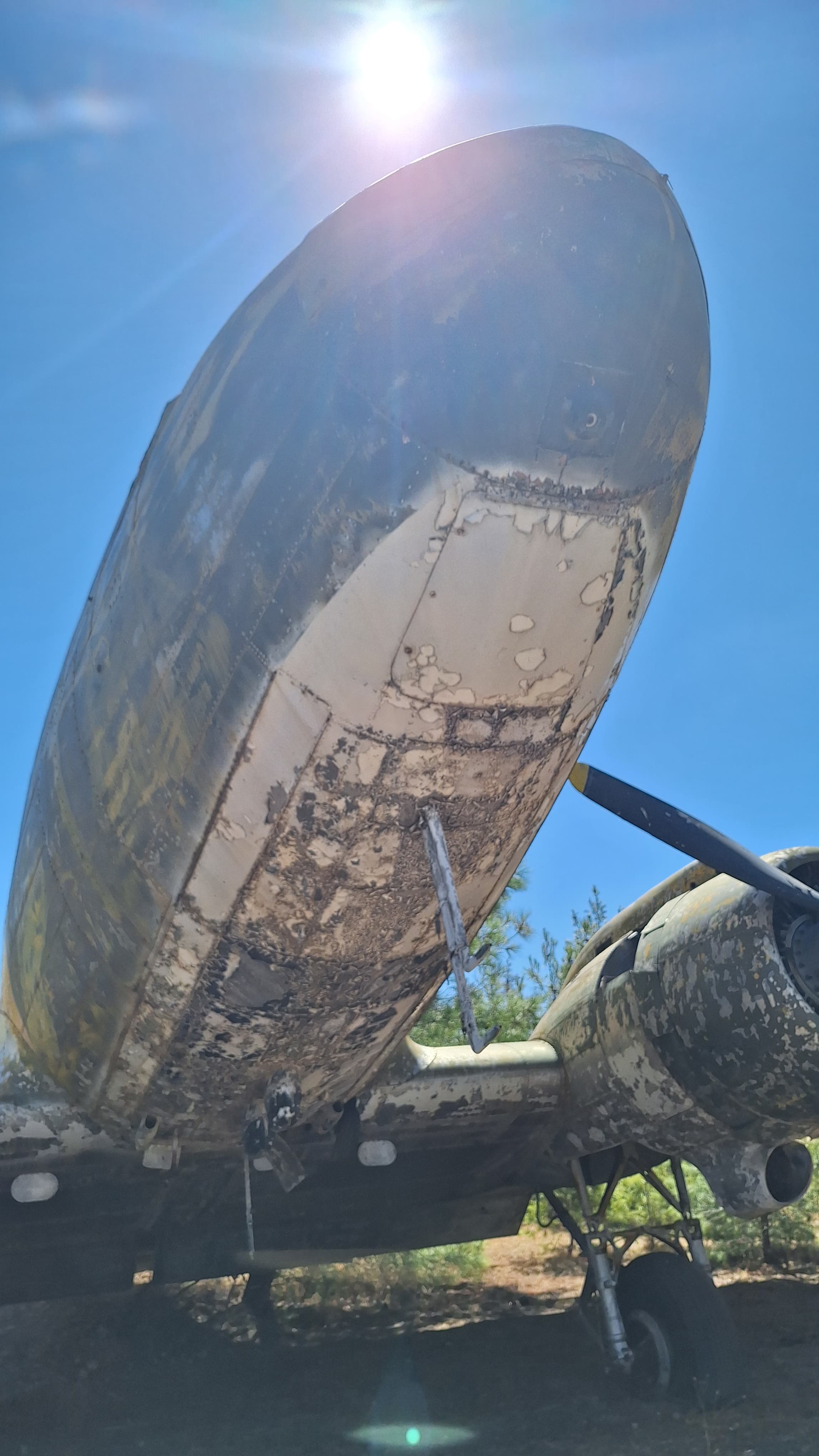
The C-47s arrived during the Greek Civil War and saw immediate intensive use for troop and supply transport. Unusually, several were converted into improvised bombers by the State Aviation Industry (KEA). At least six C-47Bs received modifications for bombing, including bomb racks under the center wing section and downward-looking aiming windows. One surviving example, C-47B KK169 (ex-USAAF 43-49599, delivered to the RAF in 1945 and to Greece in March 1947), was converted in 1948 and remains the only known surviving C-47 bomber conversion of this type. It is preserved (though not on public display) at the Hellenic Air Force Museum storage area at Dekeleia/Tatoi.
Korean War Service
In November 1950, Greece contributed the 13th Transport Flight (or Squadron) to the United Nations effort in Korea. The detachment initially consisted of seven or eight C-47s and about 67 personnel. Operating under difficult conditions, the Greek crews flew 2,916 combat missions until May 1955, logging 13,777 flying hours. They transported approximately 70,568 passengers and 9,243 wounded, while also conducting supply drops, personnel movements, intelligence gathering, and medical evacuations. The unit earned a U.S. Presidential Unit Citation for its performance.
One notable aircraft, serial 49-2622 (a C-47A often associated with the “Poseidon” name), participated in these operations. It suffered damage after landing in soft ground in Korea, was recovered and repaired (with Greek technicians involved in moving it for U.S. repairs in the Philippines), and later returned to long Greek service.
Long Postwar Career
After Korea, the C-47 fleet continued as the primary tactical transport force. The 356th Squadron transitioned to Lockheed C-130 Hercules in 1975, but the 355th retained C-47s into the 1980s (about 26 still operational at the start of the decade). Roles expanded beyond pure transport to include navigation training, reconnaissance, target towing, agricultural crop-dusting/spraying, VIP flights, and search-and-rescue missions. Some aircraft supported limited firefighting or other utility tasks.
Numbers gradually declined. By 2000 only a handful remained active; the last operational example—a Korean War veteran—was grounded in 2008, ending 61 years of continuous Greek service.
Legacy and Survivors
A few airframes survive in Greece. The unique bomber conversion KK169 is in storage at Tatoi. The Korean War veteran “Poseidon” (49-2622) has been the subject of restoration efforts in recent years (as of the mid-2020s), with plans discussed to return it to flying condition under the “Ikaros” foundation or related programs for historical and ceremonial use. Other examples are preserved as static displays or in storage at air bases and museums.
In Greek service the C-47 proved exceptionally adaptable—serving as transport, improvised bomber, wartime logistician in Korea, and multi-role utility aircraft for decades—cementing its place as one of the longest-serving types in Hellenic Air Force history.
The Transition to a Bomber
During the Greek Civil War the Royal Hellenic Air Force (ΕΒΑ) suffered from a persistent shortage of dedicated medium bombers. Existing Spitfires and the later-arriving Curtiss SB2C Helldivers could not alone meet the demand for sustained bombing of Democratic Army of Greece (ΔΣΕ) positions in the rugged Grammos and Vitsi massifs. In 1948 Air Commodore Emmanouil Kelaidis, Chief of the Higher Air Command (ΑΔΑ), ordered the 202 State Aircraft Factory (ΚΕΑ) at Elliniko to examine whether the newly arriving Douglas C-47/DC-3 Dakotas could be converted, even temporarily, into bombers. American JUSMAG instructors and advisers watched the project with surprise.
Technical Conversion
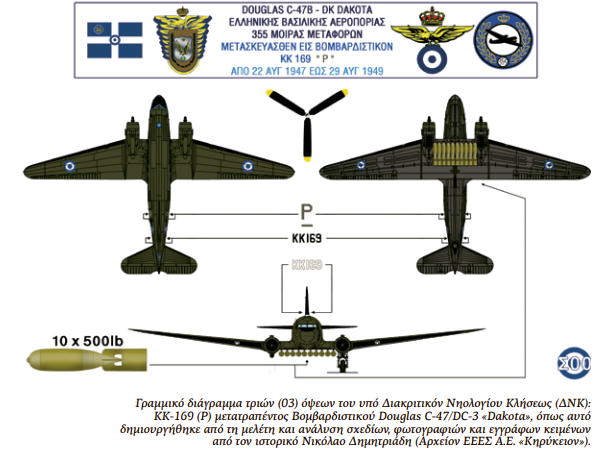
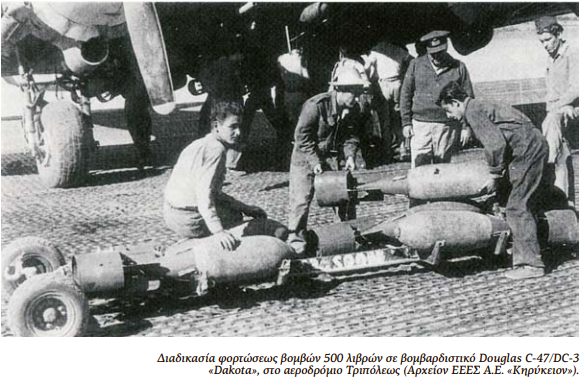
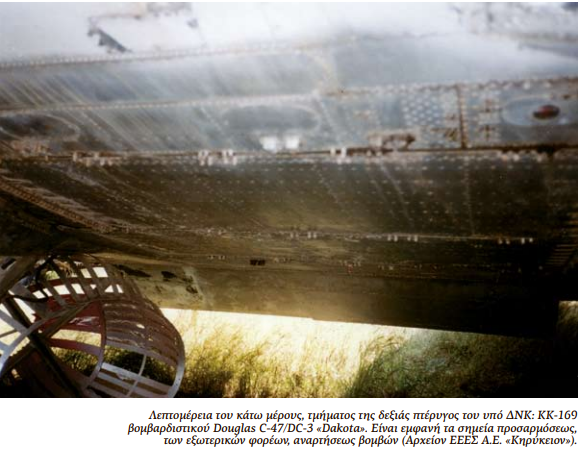
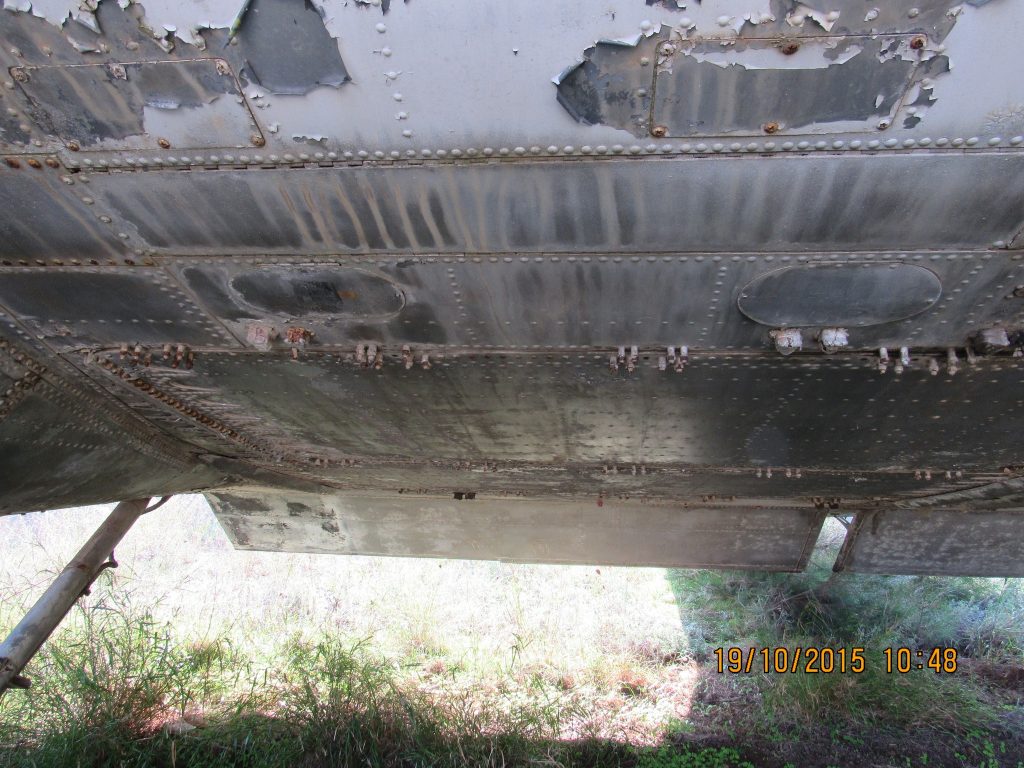
Under the technical leadership of engineers that included Squadron Leader Spyros Georgiou, Squadron Leader Dimitrios Kountouris and especially Squadron Leader Engineer Neronas Platis (Νέρων Πλατής), the KEA team devised a practical field modification. Ten external bomb carriers for 500 lb (≈227 kg) bombs were installed under the centre wing section in the wide space between the two Pratt & Whitney engines; additional racks could also be fitted under the fuselage.
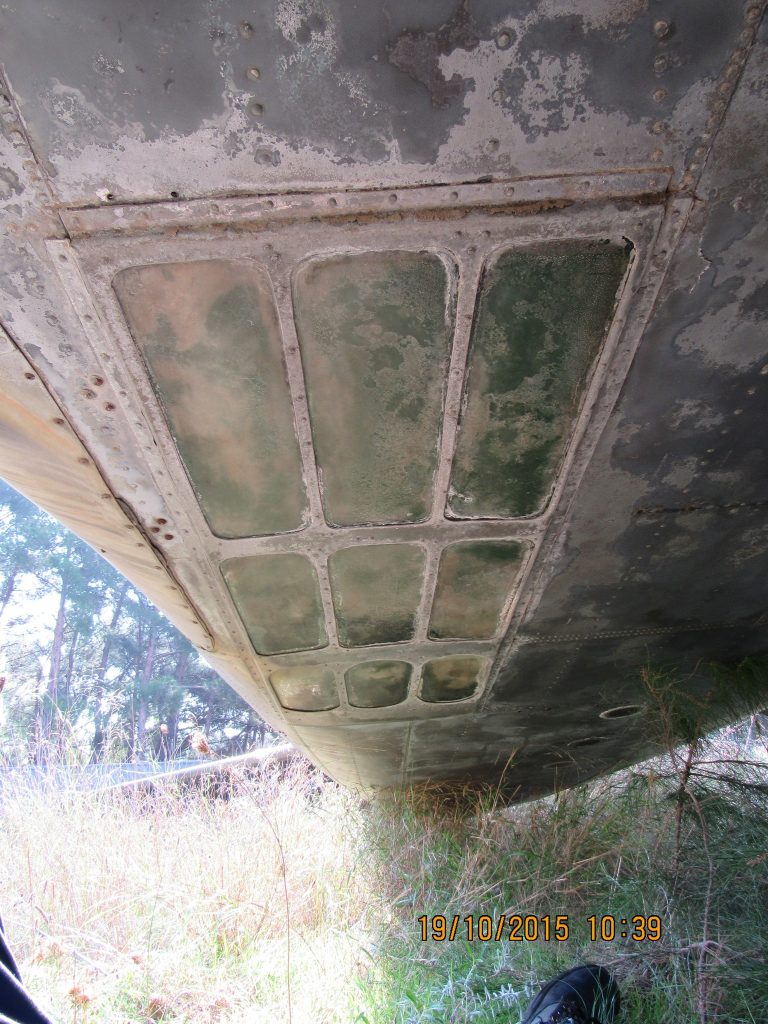
A downward-looking bomb-aimer’s window was cut into the lower fuselage to allow visual aiming.
Early test flights produced a loud, continuous whistling noise caused by the metal racks in the airflow. The solution was simple but effective: specially fabricated aerodynamic fairings (covers) were fitted in front of the loaded carriers, restoring acceptable flight characteristics. Operational bomb loads of approximately 2.5 tonnes were successfully carried and released during trials.
Testing and First Operations
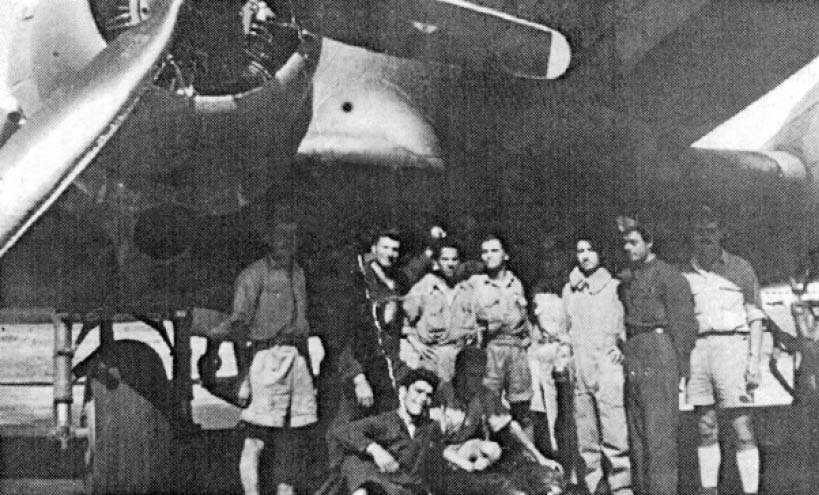
Ground and flight tests took place between 15 and 17 August 1948. On 16 August a fully loaded trial was flown; the following day the first converted Dakota, crewed by Flight Lieutenants Angelos Angelidis and N. Koskinas (with bomb-aimers Zeugolatis, Fermanoglou and Tsagarakis), flew from Elliniko to the forward airfield at Kozani and began combat sorties against Grammos and Vitsi. Between 17 and 18 August it completed five bombing missions before returning to KEA for a thorough inspection that finished on 22 August.
Aircraft Converted and Combat Record
Of an original plan for eight conversions, KEA completed six by the end of the war. Their serials (Διακριτικό Νηολογίου Κλήσεως) were:
- KN-384
- KK-169 (ex-USAAF 43-49599)
- KK-171
- KP-253
- 43-16348
- 43-48604
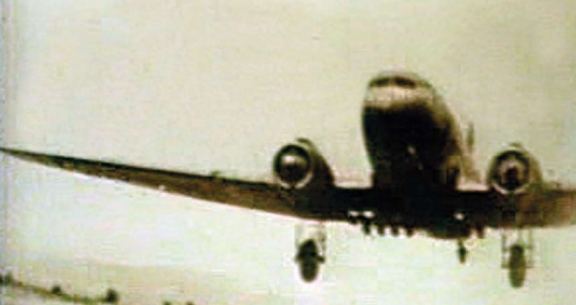
These six aircraft flew a documented total of 347 bombing sorties against ΔΣΕ targets. They operated from bases such as Kozani and Elefsina, often in mixed formations with Spitfires. Contemporary photographs (including one taken from a gun-camera of a preceding aircraft in February 1949) clearly show bombs hanging from the external under-fuselage and centre-section racks as a converted Dakota takes off from Kozani. The aircraft continued to perform their original transport, supply-drop and casualty-evacuation roles when not tasked with bombing.
Greek historical accounts state that the conversion technique proved so successful that it attracted the attention of Douglas Aircraft and that similar field adaptations of C-47s were later employed by American forces in Korea and Indochina. While the claim of direct technological transfer remains difficult to verify independently, the Greek improvisation is well documented in both primary technical records and contemporary operational reports.
The Sole Survivor: KK-169
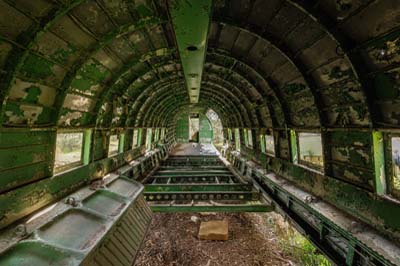
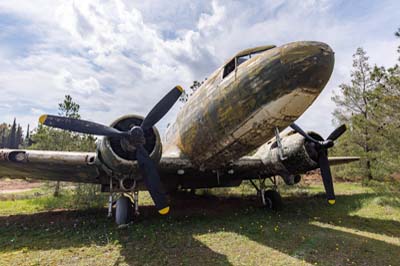
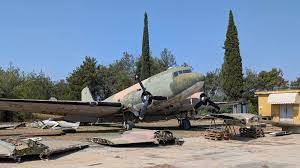
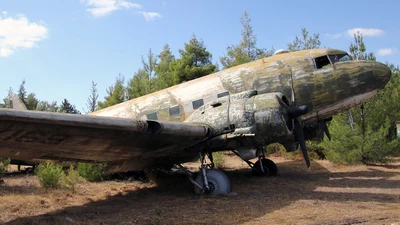
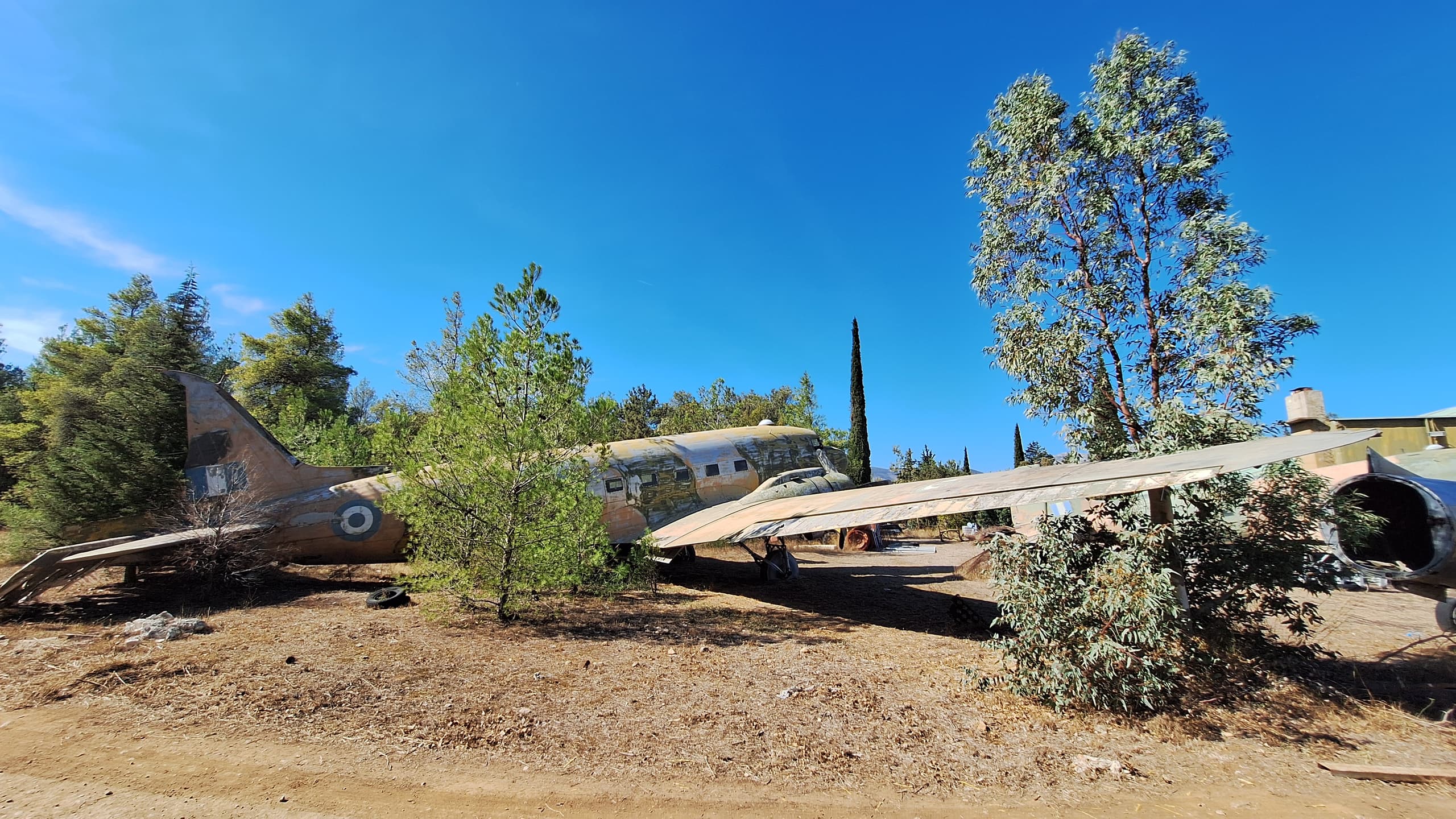
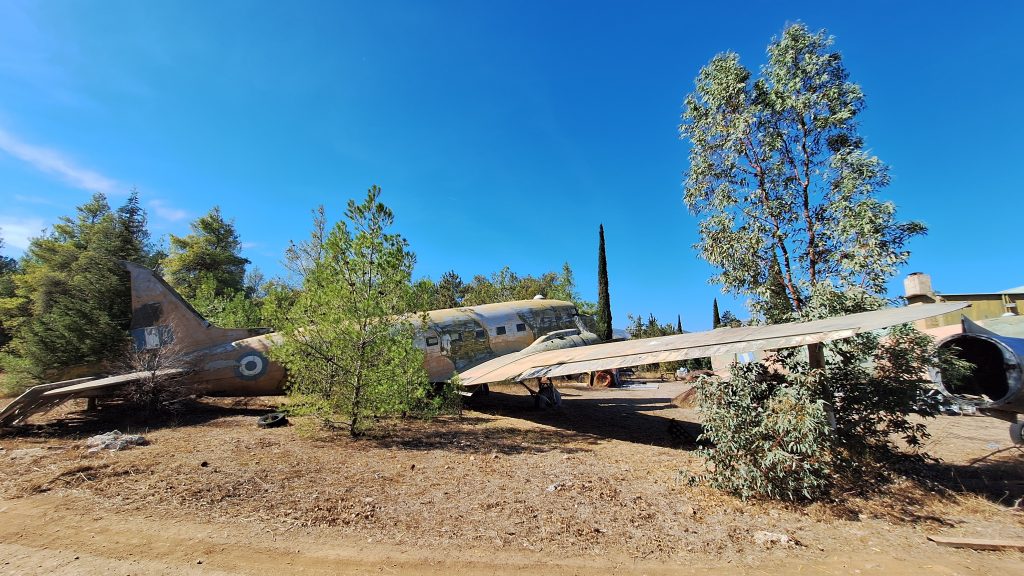
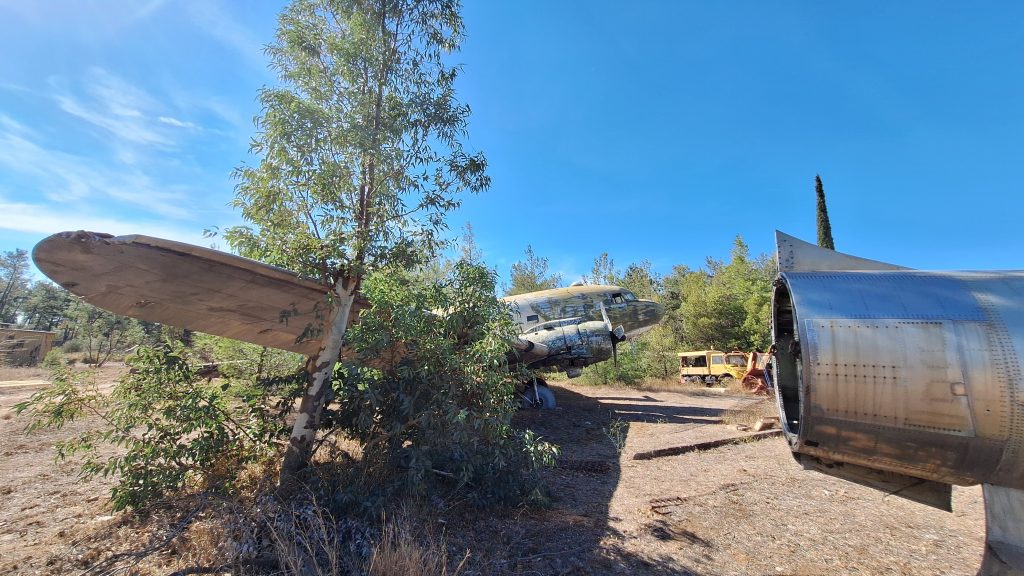
KK-169 was built as a C-47B, accepted by the USAAF on 5 December 1944, delivered to the RAF as KK169 on 12 January 1945, and transferred to the RHAF on 3 March 1947. Converted in 1948, it is the only known surviving example of the six bomber Dakotas. Visible evidence of the conversion remains: the bomb-rack attachment points under the centre wing and the distinctive downward-looking bomb-aimer’s window. The aircraft was retired to Dekeleia (Tatoi) Air Force Base in 1971 and is still stored in the Hellenic Air Force Museum’s storage area there. Aviation historians (including detailed documentation by Pierre Kosmidis with contributions from Themis Vranas and Ioannis Mylonas) regard it as a unique and historically significant airframe.
Wider Context and Significance
The bomber Dakotas filled a genuine operational gap at a critical phase of the war, particularly in the 1948–1949 Grammos–Vitsi campaigns. They flew alongside the more numerous Spitfires and the newly arrived Helldivers, contributing to the intense aerial bombardment that helped break the final ΔΣΕ defensive positions. Their success is frequently cited in Greek Air Force histories as an example of technical ingenuity under wartime constraints—“εκ των ενόντων” solutions that characterised much of the RHAF’s effort during the Civil War.
Today KK-169 stands as the tangible remnant of this brief but remarkable chapter: a standard transport aircraft transformed, in a matter of weeks, into a functional medium bomber by Greek technicians when purpose-built aircraft were simply unavailable.
Technical Specifications
Spoiler
Crew 4-5 (pilot, co-pilot, navigator, radio operator, bomber) Capacity 2.5 tonnes of bombs Length 19.43 m (63 ft 9 in) Wingspan 29.11 m (95 ft 6 in) Height 5.18 m (17 ft 0 in) Wing area 91.7 m² (987 sq ft) Empty weight 8,226 kg (18,135 lb) Gross / Loaded weight 11,793 kg (26,000 lb) Max takeoff weight 14,061 kg (31,000 lb) Engines 2 × Pratt & Whitney R-1830-90C (or -90 / -90B) Twin Wasp 14-cylinder air-cooled radial engines Power 895 kW (1,200 hp) each Propellers 3-bladed constant-speed Key feature Two-speed (two-stage) superchargers for improved high-altitude performance,(Many postwar C-47Bs had the high blower disabled or removed and were redesignated C-47D) Maximum speed 360 km/h (224 mph) at 3,050 m (10,000 ft) Cruising speed 257 km/h (160 mph) Range (normal) 2,575 km (1,600 miles) Ferry range 5,794 km (3,600 miles) Service ceiling 8,050 m (26,400 ft) Rate of climb ≈6 m/s (≈1,130 ft/min) Time to 3,050 m ≈9 min 30 sec
Armament
Spoiler
10x 500ld bombs (were plans for 20)
More Photos and a Video
Sources
Spoiler
- Hellenic Royal Air Force C-47B KK169: A unique military cargo aircraft turned into a bomber – WW2Wrecks.com
- The Greek Civil War, 1944-1949
- https://appelaios.com/wp-content/uploads/2022/08/251588345-ce9fceb9-cebcceb5ceb3ceaccebbceb5cf82-cebcceaccf87ceb5cf82-cf84cebfcf85-ceb5cebccf86cf85cebbceafcebfcf85-cf80cebfcebbceadcebccebfcf85-ce99ceb1cebdcebfcf85ceaccf81ceb9cebfcf82-c.pdf
- Αερομεταφορές στον ανταρτοπόλεμο 1946-1949: Η δράση των C-47 Ντακότα – Pronews.gr
Special thanks to @Nick_Cloud
