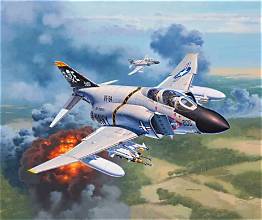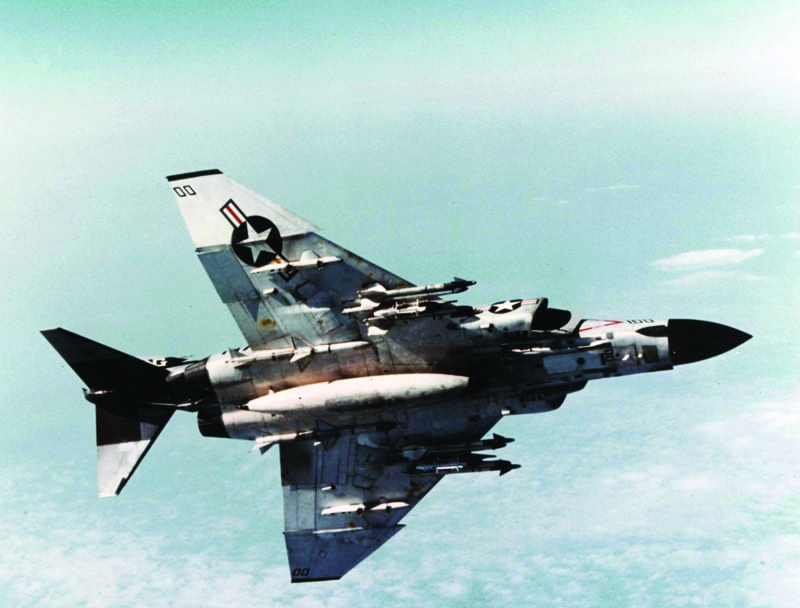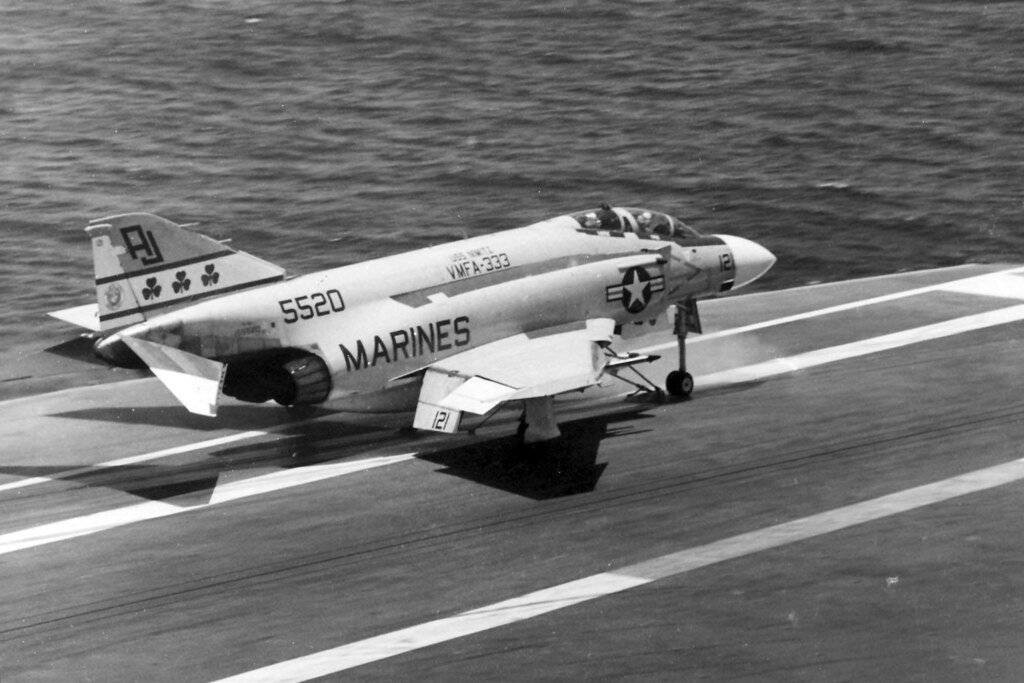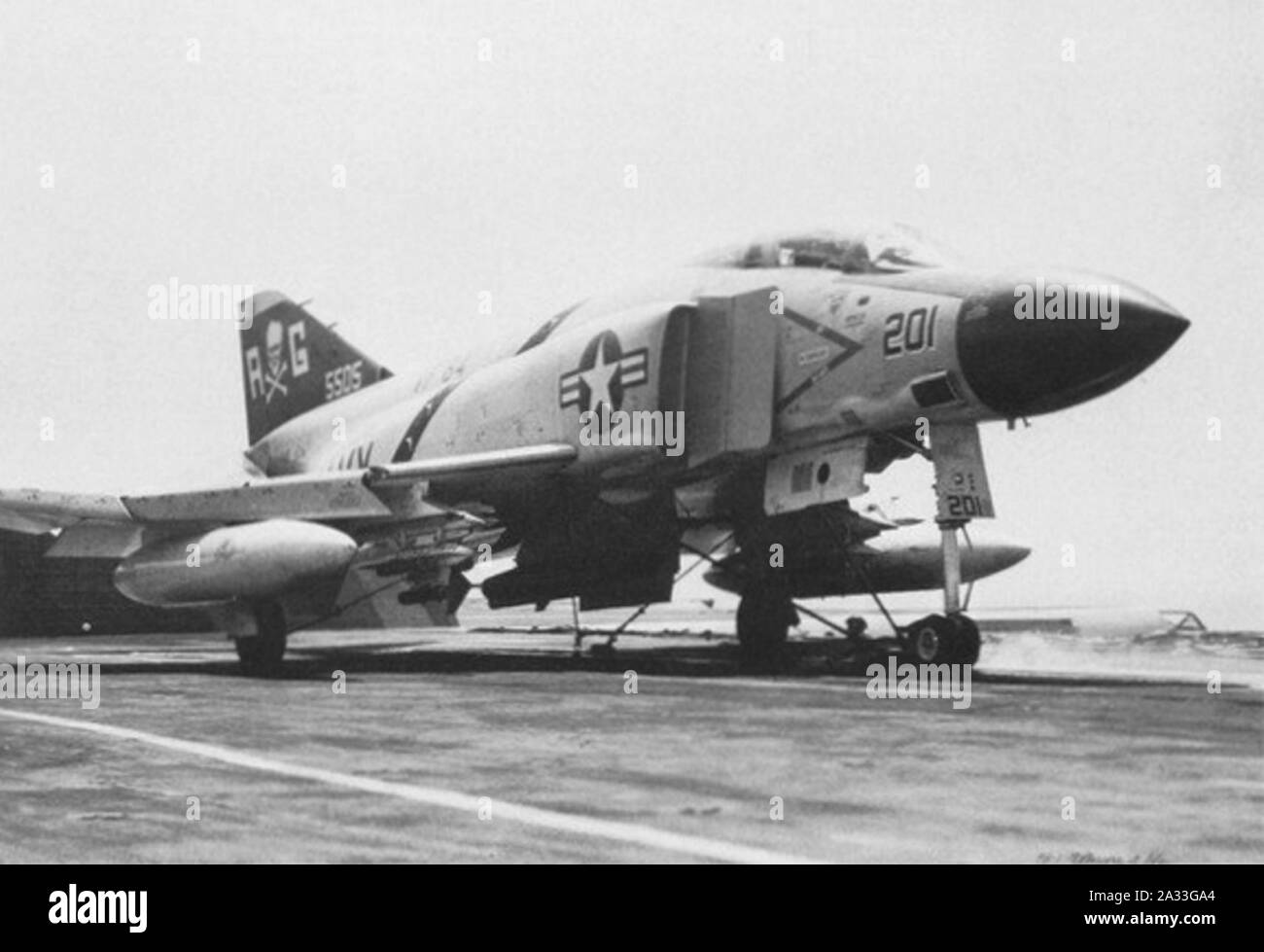
McDonnell Douglas F-4J EARLY (1973)

F-4J Early (1973)


Vietnam was a bloody conflict. However, despite this the unconventional nature of the war compared to at the time conventional conflicts led to the creation of many iconic vehicles.

One such icon was the F4 phantom II. When people think of the F4 and Vietnam they will most likely imagine the camouflage painted F4E, however despite the E’s fame it was far from the only one.

Initially the US Navy operated the F4B during Vietnam, however war leads to innovations. In this case that innovation was the F4J.


While the F4J is currently in game it represents a later iteration of the J armed with potent weaponry that came later in its service life. But today I will be suggesting one of the earlier iterations of the J that actually saw combat during Vietnam.

How it differs:
The F4J seen in game utilizes some features not seen during Vietnam, notably the VTAS (HMS) and the later more advanced missiles. During Vietnam the F4J lacked these, as this innovations did not exist at the time.


History

Designed originally to meet a U.S. Navy requirement for a carrier-based fleet defense interceptor, the McDonnell Douglas F4H-1—later redesignated the F4B Phantom II—entered fleet service in 1961. Powered by two General Electric J79 turbojets, the tandem two-seat aircraft combined its high speed with its advanced radar system that centered around the AN/AWG-10 system and AIM-7 Sparrow missiles. The Navy and Marine Corps quickly adopted the airframe for multiple roles, transitioning it from an interceptor into a strike fighter capable of carrying large ordnance loads.

When the Vietnam War broke out in the mid-1960s, Phantom squadrons operating from carriers in the Gulf of Tonkin formed a central component of naval air operations. Navy and Marine Corps F-4B’s encountered North Vietnamese MiG-17 and MiG-21 fighters over Southeast Asia during missions conducted under Operation Rolling Thunder. Early air combat highlighted the limitations of relying exclusively on missile armament without a built-in internal cannon, leading aircrews to adjust tactical approaches and maneuver strategies to defeat more agile adversaries in close engagements.

To address the problems raised by aircrews and improve performance, McDonnell Douglas developed the F-4J variant, which entered fleet service in 1966. The “J” model incorporated updated J79-GE-10 engines, drooped ailerons, and slotted stabilizer leading edges to refine low-speed handling and carrier approach behavior, additionally the introduction of the Westinghouse AN/AWG-10 pulse-Doppler radar system enhanced target detection capabilities, providing aircrews with improved tracking performance during complex interception tasks and at lower altitudes.

Operating on escort, combat air patrol, and strike missions through the remainder of the conflict, the F-4J served as a primary Navy and Marine Corps Phantom variant in Vietnam. Naval aviators flying the aircraft secured numerous aerial victories, establishing the type’s role as a versatile tactical platform throughout the Vietnam War.


STATS

(fighter loadout with 4 sparrows)
Production: 523 by 1973


Power plants: 2x J79-GE-10
Top speed: 1230kt @ 36,089ft
Max altitude: 54,700 ft
Rate of climb: 41,250 FPM @ SL
Fuel: 1998 lbs (internal)
Crew: 2


Weaponry: (note: Aim-7E includes both the E and E-2)
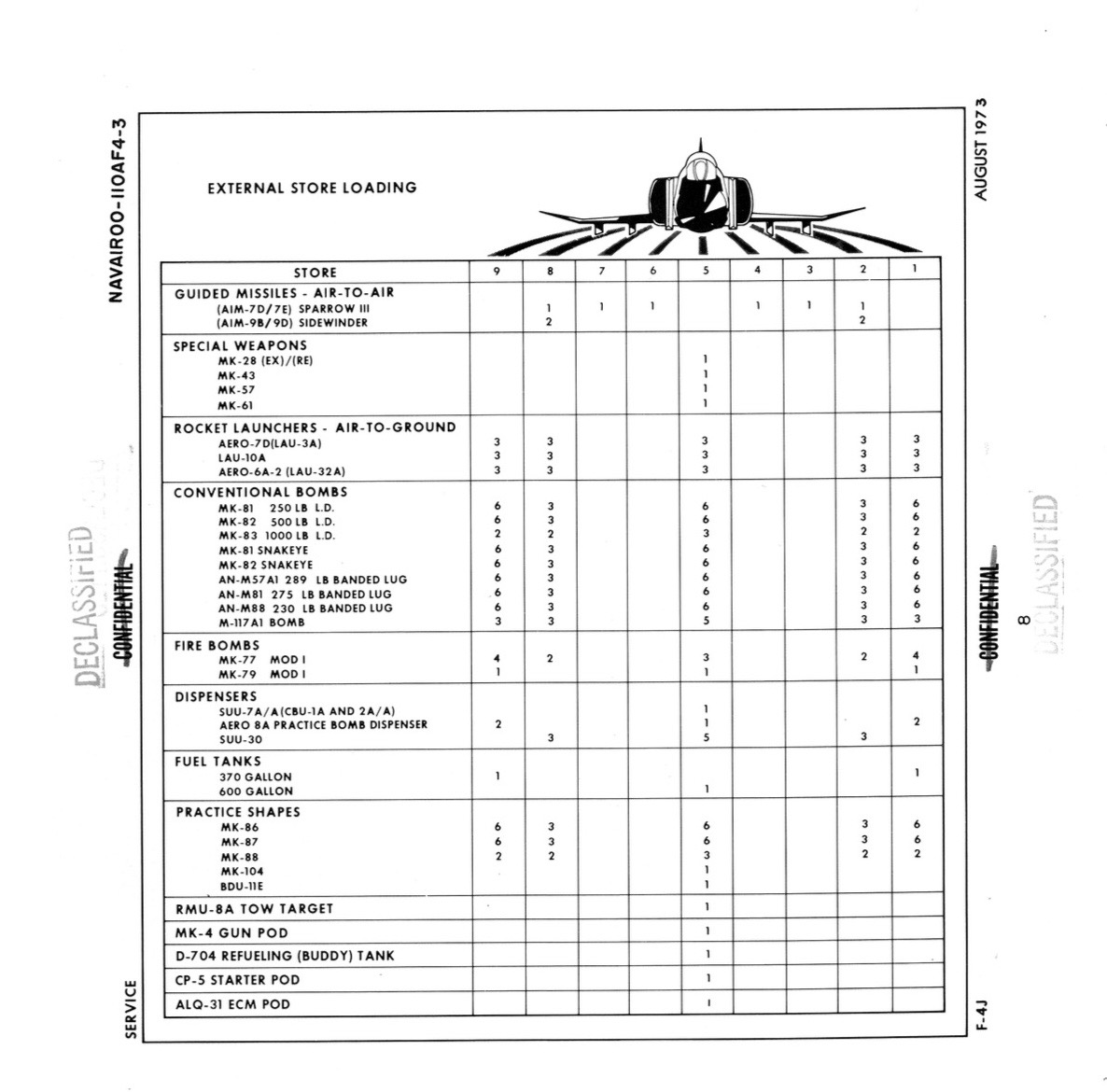
Spoiler


Misc:
Countermeasures: 60 AN/ALE-29
RWR: AN/APR-25
IFF: AN/APX-76
RADAR: AN/APG-59


DIMENSIONS:
Length: 58.3ft
Width: 38.4ft
Hight: 15.8ft
Combat Weight: 41399 lbs


SOURCES

F4J SAC (1973) https://www.aahs-online.org/images/Navy_SAC/F-4J.pdf
F4J flight manual
F-4J Phantom II | Patriots Point Naval & Maritime Museum
AIM-7F Standard Missile Characteristics Sparrow III 1977

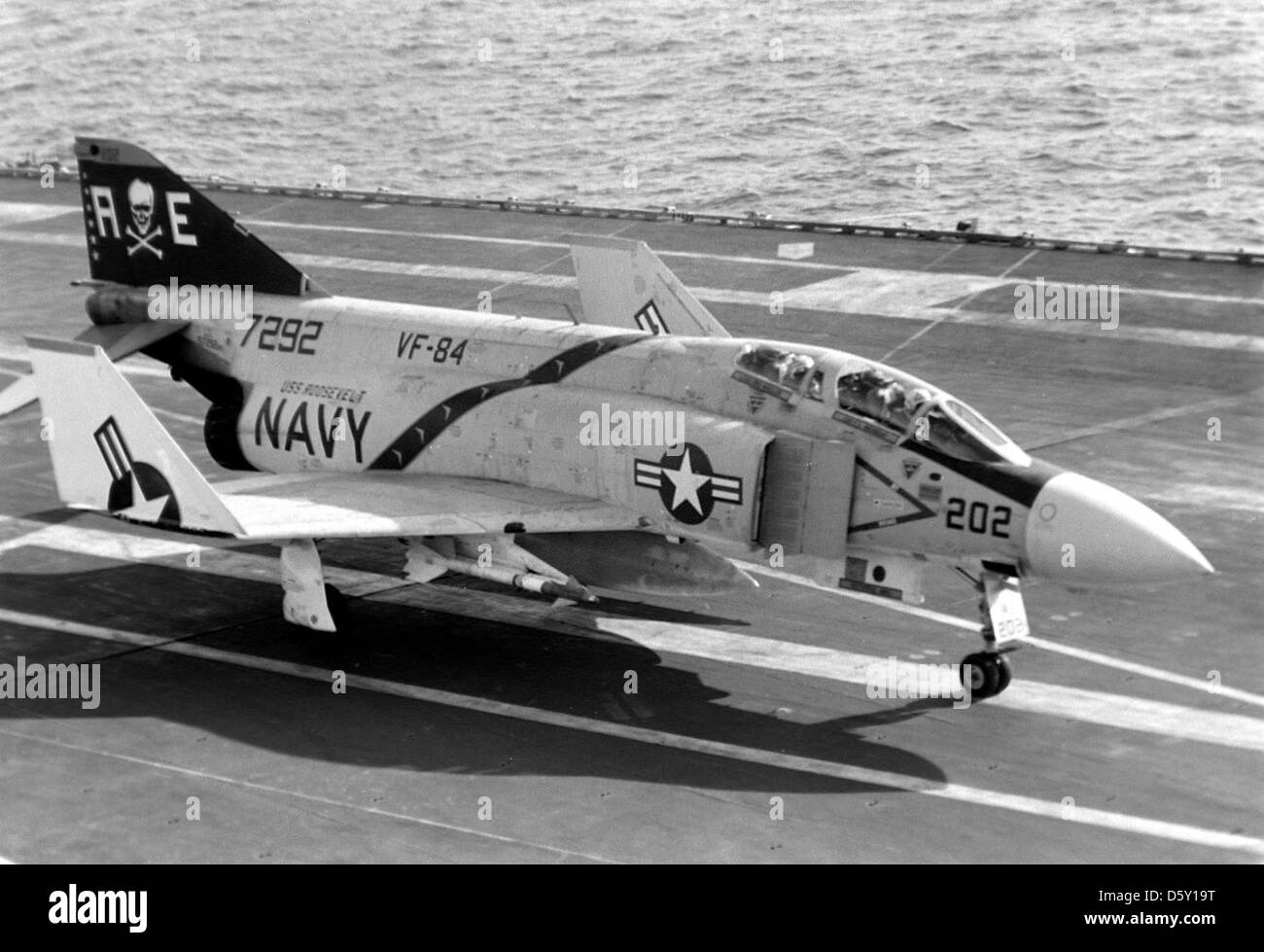
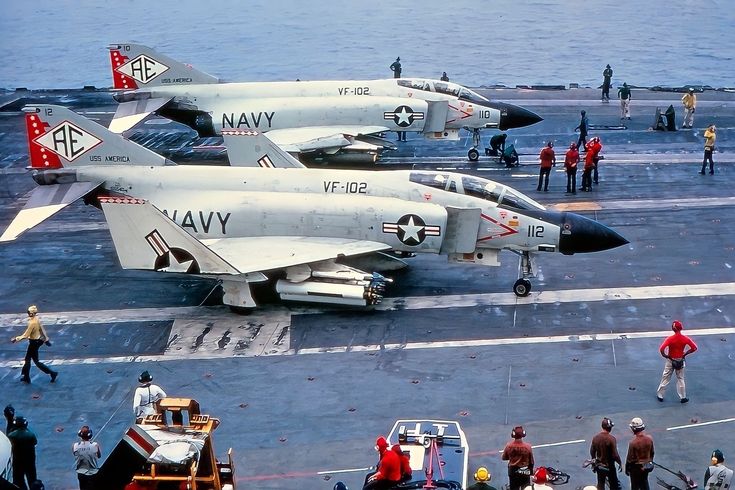
more images

1


IMG_1336
IMG_1342
IMG_1316


At a glance: (compared to F4J)
Pros:
Lower BR (most likely)
PD radar

Cons:
More primitive RWR
Less advanced weaponry


Would you like this in game?
  • Yes
  • No
0 voters
3 Likes

Perfect for 12.0 (if the F-4J(UK) is anything to go by)

That has 9Gs and different engines and avionics, plus an M61 instead of Mk4

-1 between the F-8s, F-4B, and ofc all the AF aircraft I just really don’t see the need for some nerfed super early F-4J

If it gets a lower BR but Phantoms are nice especially with Nuke Mode
tumblr_mui8miDpPO1s5oxc0o1_500 (1)
Anyway its a Phantom a plane that one could argue left service to soon “cheap semi disposable” fighter bombers are kind of relevant again +1

in other words.

F-4J(UK) but US tree. Thats 12.0 in gaijins eyes

Not really, because maintenance costs + logistics overhead play a big part on those decisions. Also, pilots are not “disposable”, countries spend a lot of resources training them, plus, they are human beings :(

1 Like

indeed as maintenance costs go up per year as the airframes age, the phantoms were lucky to get to 1981 in US service with the marines

1 Like

More or less there is right now a bit of a demand to turn human piloted fighters into unmanned sort of like the Chinese have done the Phantom would be perfect for that in theory but there is not a large stockpile like there was. Its disposable because its paid off and holds little to no technological value and if made unmanned and combat capable as a bomber you can do a lot with that.

There was also a bit of a conspiracy by the aerospace corporation to encourage there retirement and to buy newer planes fresh off the production line. (more money on new plane then parts / upgrade kits) Let alone exports.

In practice, you would need to restart or even rebuild a lot of the logistics chain that supported the phantoms, plus is a very inefficient aircraft compared to the F-35.

If keeping phantoms would make any financial sense, believe me, they would still be around somewhere.

1 Like

Greece, Turkiye, Iran

Good thing being unmanned means you don’t have to certify it for human occupancy lol.

The idea is this quantity has a quality all in its own yes you can shoot them down but there is another behind it and if you don’t stop them they will cause you lots of pain. Basically glide bomb trucks.

Are those updated aircraft to today’s standards? I think they are planing to replace them soon. Idk about iran because thats a different situation, they hold what they can get

UAV’s could make some sense if they still have parts to keep them operational, its very dependant on logistics cost if such a thing happens or not.

1 Like

The AUP and T2020 are still in service yeah and plan to be into the 2030s at least (one AUP was involved in a pretty high-profile crash earlier this month…)
Dunno about Iran’s F-4s but considering how many they had at least in 2021 some are probably still active.

Well the US did keep the F-4 in service as a UAV until 2016- the QF-4 target drone. Which also explains why there’s none left to be used for as other types of drones.

That is the issue the bone yards are not full of them like the 80s and 90s. They where fully scrapped unlike the Russians which have what are called engine yards. The planes and engines can be made running but not in a safe form for humans but you could turn them into drones and a benefit being you can bait Anti-Air or use them as bombers where you would not want to send a pilot.

That’s like the ultimate statement for: these ain’t worth keeping no more

Also end of cold war did them in hard. More profitable being cans and razor blades also jet fighter have some nice valuable metals in them. A Phantom jet might have become your Nintendo DS.

However hindsight is 20 20 I’m just saying there is a strange demand for cold war planes to become drones as they have some nice qualities that just work.