- Yes
- No
Hello everyone, and welcome to this new suggestion.
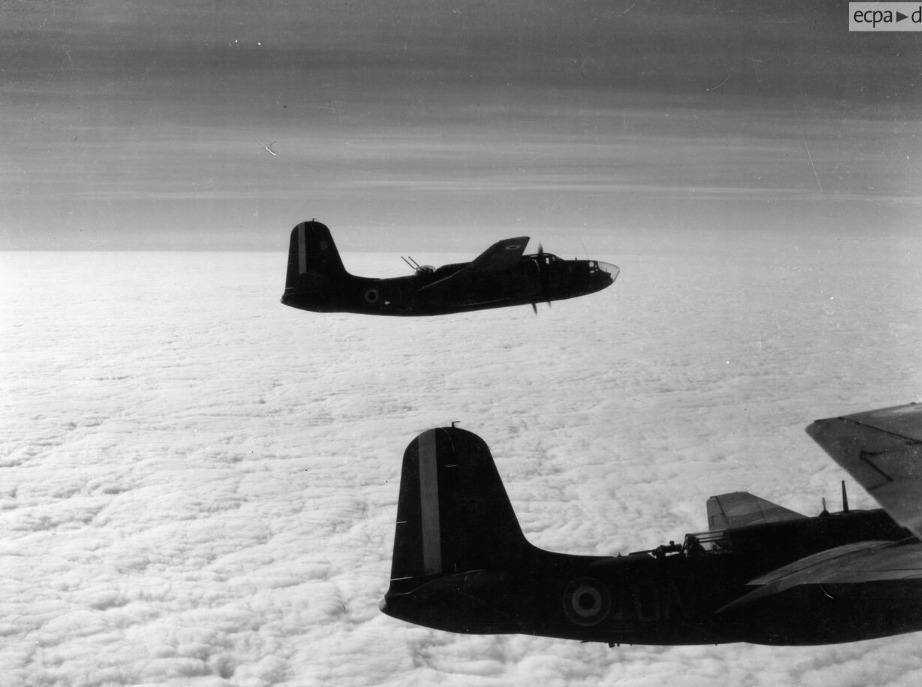
Today, I present the second and final version of the Douglas Boston to see service with French forces: the Boston Mk.IV.
Following the French capitulation in 1940, French military personnel found themselves in an extremely difficult situation. While some continued to serve under the Vichy government, others chose to continue the fight against Germany alongside the Allies. Several groups of soldiers and airmen broke away and joined the Free French Forces, determined to continue the war.
Among these units was a group of French pilots based in Chad. This formation would eventually become the famous “Lorraine” Bomber Group, initially composed of the Metz and Nancy squadrons. Equipped with Bristol Blenheims, the group conducted numerous operations against Axis forces in North Africa before coming under Allied command and being transferred to the United Kingdom.
Once in Britain, the unit was integrated into the Royal Air Force as No. 342 Squadron, also known as the Lorraine Squadron. The French crews were subsequently equipped with more modern aircraft, notably the Douglas Boston. After initially operating the Boston Mk.III, the squadron began receiving the Boston Mk.IV in 1944.
Unlike the earlier Mk.III, the Mk.IV was primarily used to locate and mark targets for the main bombing force. Despite this specialized role, the aircraft took part in many of the squadron’s operations, striking targets such as power stations, armament factories, and German V-1 launch sites. During the Normandy landings, the Lorraine Squadron’s Bostons were also tasked with laying smoke screens ahead of the Allied fleet, helping conceal the invasion force from German observation.
As the war progressed, the squadron continued operating over occupied Europe, with its aircraft attacking increasingly distant targets as Allied forces advanced towards Germany. The Boston Mk.IV remained in service until the final stages of the conflict, when the Lorraine Squadron gradually transitioned to more modern aircraft.
The Bostons were first replaced by B-25 Mitchells, before the squadron eventually adopted the Mosquito, whose performance and capabilities made it better suited to the missions being assigned at the end of the war. This transition marked the end of the Boston Mk.IV’s service with French forces, after several years of operations alongside the Allies.
The FAFL operated two versions of the Boston, the Mk.III and the Mk.IV, which differed in several respects. First, regarding the nose glazing: the Boston Mk.III featured a multi-pane glass canopy, whereas the Mk.IV had a larger Plexiglas nose section. Second, regarding armament: the Mk.III carried two machine guns mounted on either side of the forward fuselage in specially designed fairings, and its defensive armament consisted of 7.7mm machine guns. The Mk.IV, by contrast, lacked fuselage-mounted machine guns; instead, its defensive armament comprised a dorsal turret equipped with twin 12.7mm machine guns.
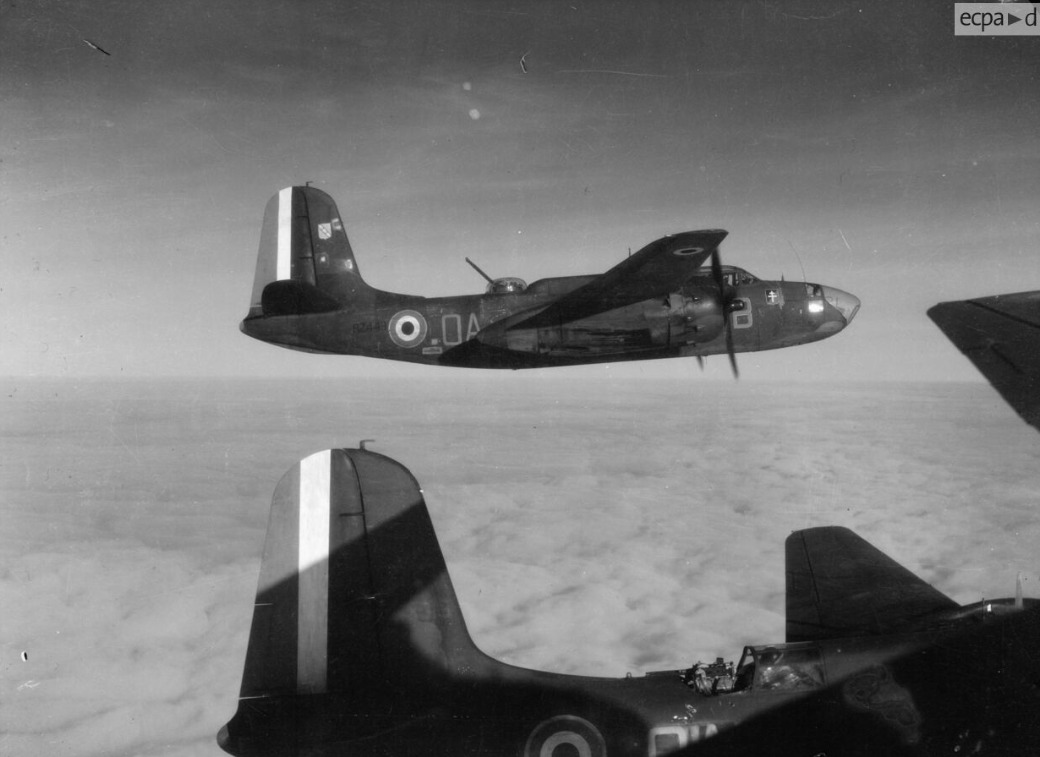
Characteristics
Length : 14.63 m
Width : 18.68 m
Height : 5.52 m
Mass :
- Empty : 7 272 kg
- Full : 10 944 kg
The aircraft is powered by two Wright R-2600-A5B engines, each producing 1,600 hp, allowing it to reach a top speed of 510 km/h and a service ceiling of 7,200 m. Its range at a cruising speed of 450 km/h is 1,520 km.
The crew consists of four personnel: a pilot, an observer/navigator in the nose, a radio operator/gunner in the upper position, and a gunner in the lower position.
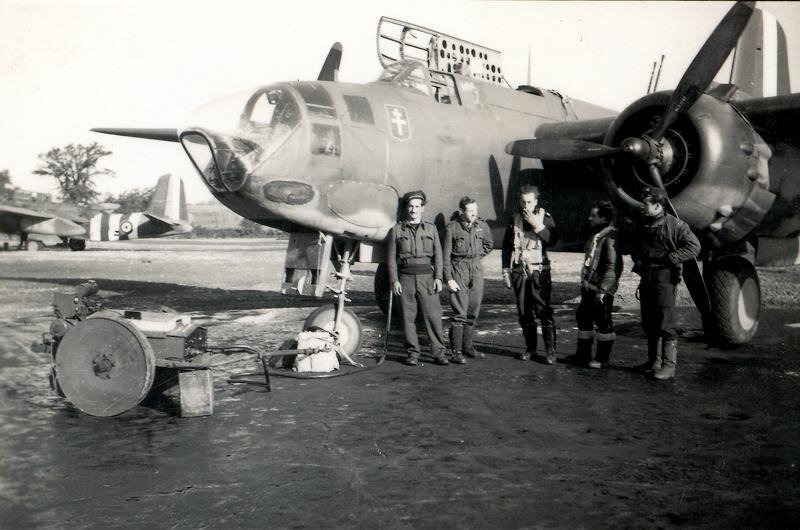
Weapons
The aircraft’s armament is good yet somewhat limited, though still sufficient to defend against various threats.
Defensive armament:
- 2 x 12.7mm machine guns (dorsal turret)
- 1 x 12.7mm machine gun (mounted under the fuselage, aft of the bomb bay)
Offensive armament:
- 4 x 500 lb AN-M64A1 bombs
In-game, this aircraft would be an interesting addition to the French tree, introducing a light bomber with strong flight performance to the early ranks; this would offer a new gameplay style and, above all, provide an iconic FAFL aircraft.
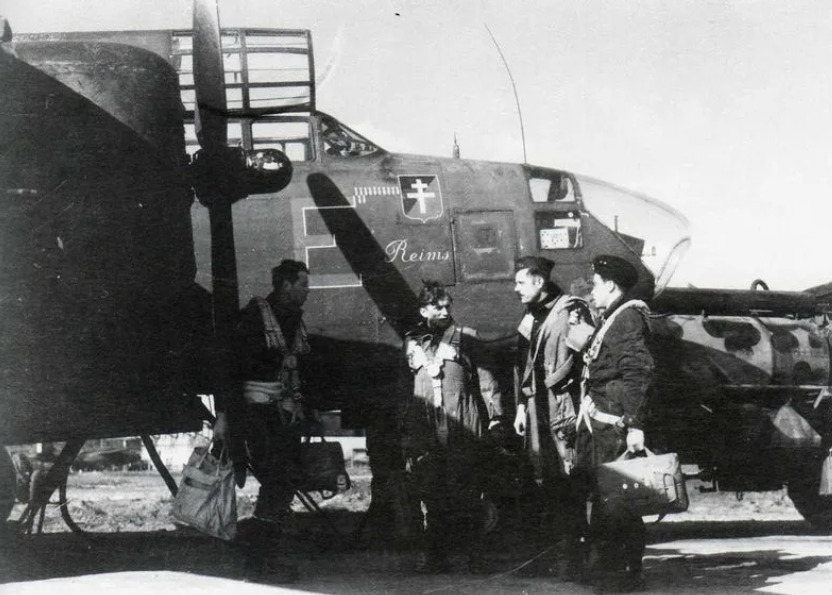
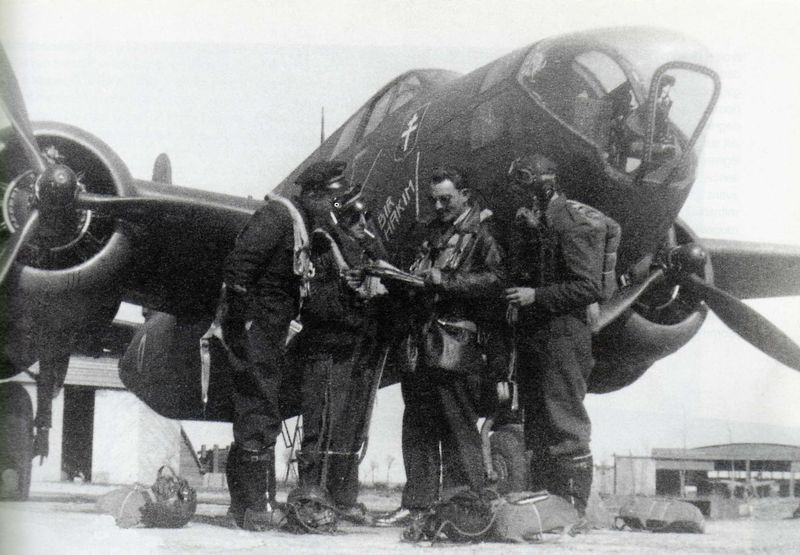
Pictures
Sources
- Consulter les archives en ligne
- Groupe de bombardement 1 « Lorraine », Squadron 342 | Expositions du Service historique de la Défense - Ministère des Armées
- Bernard Canut - Fondation de la France Libre
- Musée de la résistance en ligne
- LES EQUIPAGES DU GROUPE “LORRAINE SQUADRON 342” - HALIFAX GROUPES LOURDS FRANCAIS SQUADRONS 346 et 347 R.A.F