- Yes
- No
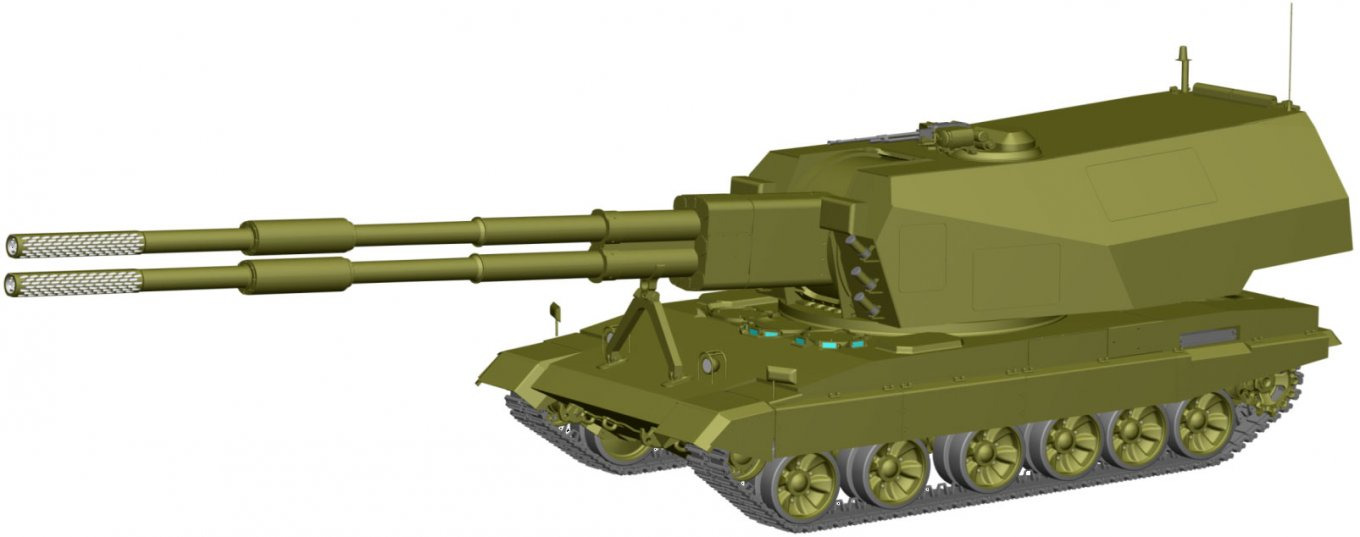
 2S35 Prototype - Colossus of the Artillery Corps
History
Development of the new artillery system began in the early 2000s at the Burevestnik Central Research Institute. In July 2003, engineers began work on a dedicated firing test stand to evaluate the new gun and its loading equipment. The test installation was based around the B-4 towed howitzer and was used to work out the basic operation of the new artillery system before it was installed into a vehicle.
By June and July 2004, assembly and initial debugging of the test equipment had been completed. Testing continued through the summer, and by September 2004 the results indicated that the basic concept was sound and that the proposed artillery and loading systems could work as intended.
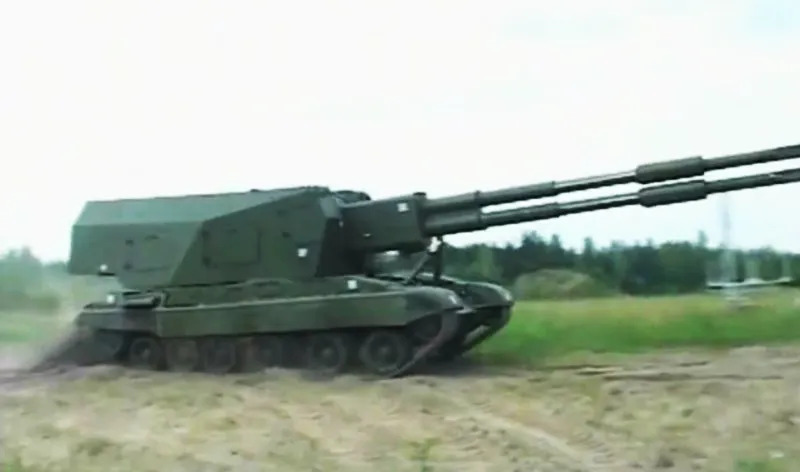
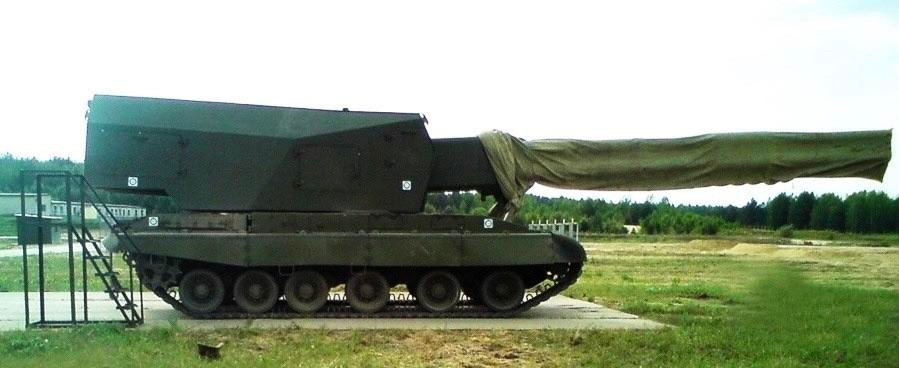
At the same time, a mobile test vehicle was being prepared by the Ural Transport Machine-Building Plant. Engineers took a 2S19 Msta-S chassis and heavily modified it to carry the experimental twin-barrel gun system instead of its standard 2A64 152mm howitzer. This vehicle was essentially a test bed rather than a finished combat vehicle, allowing engineers to evaluate how the new guns and automatic loading equipment performed when installed in a real self-propelled artillery chassis.
The twin-barrel arrangement was particularly ambitious. Instead of relying on a single gun, the system used two 152mm barrels mounted vertically, with the intention of achieving a much higher rate of fire. The automatic loading system was a major part of the project, since manually servicing two large artillery pieces inside a turret would have been impractical.
The project did not remain limited to the twin-barrel configuration. Engineers also worked on a more conventional single-barrel version of the new artillery system. Both approaches were tested and compared as development progressed.
Although the twin-barrel layout was an interesting solution, it also introduced a considerable amount of mechanical complexity. Fitting two guns, their loading mechanisms, ammunition handling equipment and associated systems into a single turret made the vehicle more complicated and expensive to develop and maintain. Eventually, the results of the testing favored the simpler single-barrel arrangement.
The twin-barrel concept was therefore abandoned, while development continued using the single-barrel configuration. The exact transition took place over several years, but the decision ultimately resulted in the 2S35 evolving into the vehicle that is now recognized as the Koalitsiya-SV.
Specification
Armament & Fire Control
- Main Guns: 2x 152 mm L/52 (2A88-derived)
- Secondary: 1x 12.7 mm NSVT heavy machine gun
- Ammo Capacity: 60 rounds total (30 per barrel)
- Fire Rate: 8 rounds/min per gun (16 rounds/min total in alternating fire)
- Reload Time: 7.5 seconds per barrel (3.75-second effective cycle between tubes)
- Gun Traverse: ±180° horizontal at 15°/sec, -7°/+70° vertical
- Targeting Equipment: Laser Rangefinder, Night Vision (NVD), Laser Warning System (LWS)
- Optics: 5.5x gunner sight, 5.0x commander sight
Ammunition & Shell Performance
- 3OF45 (HE)
- 3OF45 FP (HE-VT)
- BR-540B (APHEBC)
- BP-540 (HEAT)
Mobility
- Engine: 1,130 hp diesel
- Weight:** ~50 tons
- Power-to-Weight: 22.6 hp/ton
- Top Speed Forward: 60 km/h
- Top Speed Reverse: -4.18 km/h
Armor & Protection
- Hull Front (Glacis): Composite T-90 layout with heavy multi-layer RHA, rubber, and air gaps
- Turret: 20mm RHA all around (Front, Sides, Rear, Roof)
- Defensive Features: Internal crew capsule, spall liner, 6x smoke launchers, self-entrenching blade