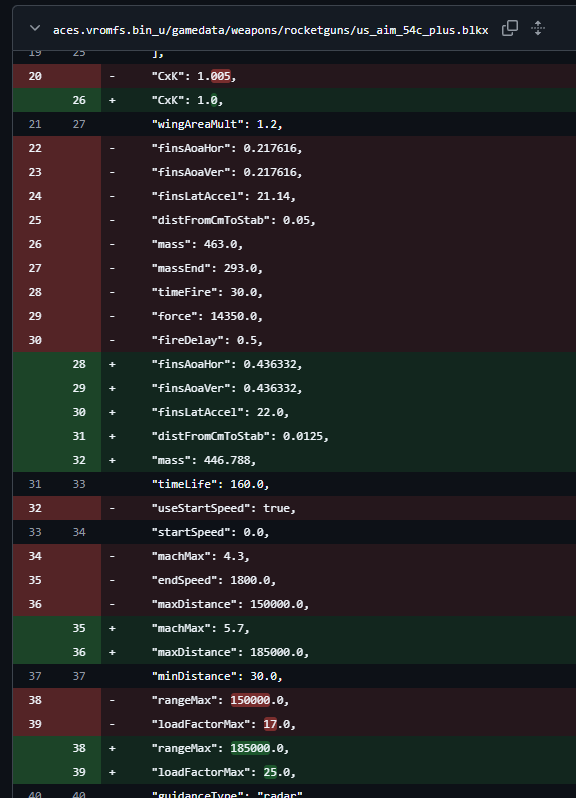
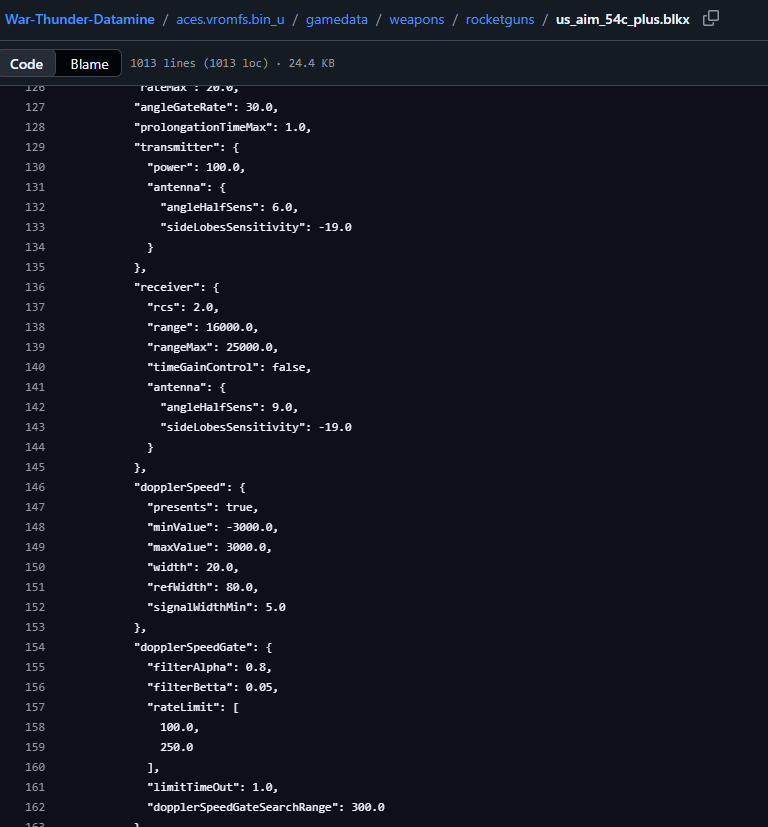
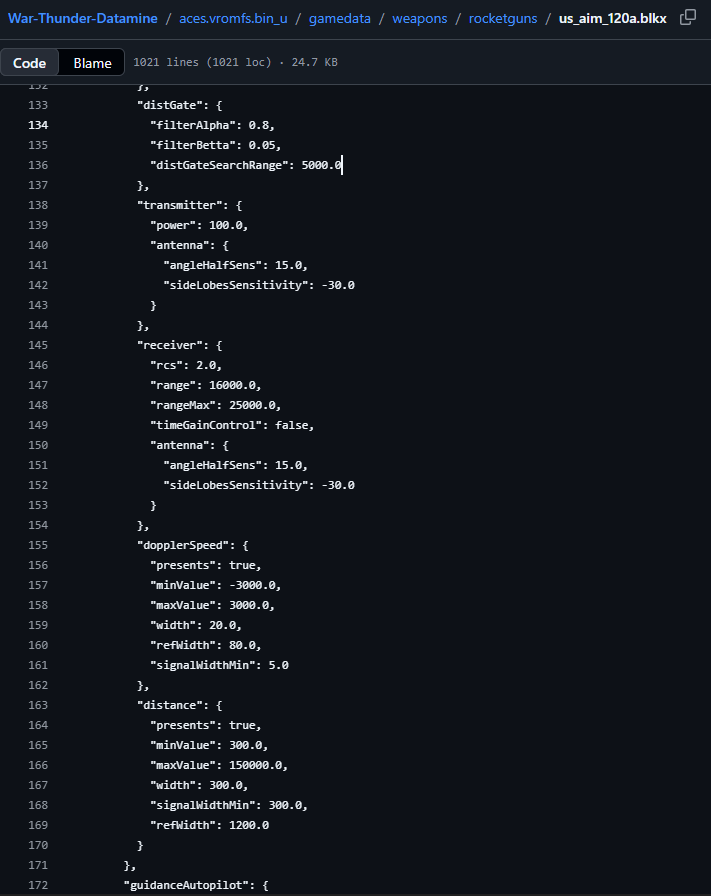
The burn time and thrust differences are minimal and only change drastically with altitude. To utilize the MK60 more effectively you’d likely need to be at a high speed and launch it from a higher altitude IRL.
War Thunder does not model total thrust and burn time changes dynamically - to achieve the same characteristics and launch profiles as the AIM-54A they would give it a similar thrust and burn time and that static number would cause the same issues as the existing Phoenix. Long burn time, slow acceleration, overperformance at sea level, underperformance at high altitude.
The issue is not that the motor could benefit us from a different thrust and burn time, rather that Gaijin’s implementation of it would neuter those advantages.
No, this has nothing to do with the loft profile issue. The AIM-54A overperforms at sea level when launched flat and level as well as when lofted. It is a raw overperformance of total impulse at sea level because it was adjusted to hit a high flying target when launched from medium altitudes at a longer range. It is a specific Phoenix Scenario that they assume took the entire battery lifespan, so the missile is configured for only that scenario.
Likewise, almost all other ordnance in the game is modeled for a little bit lower altitude and with more data, specifically the R-27 series are pretty decently modeled for that and thus overperform at sea level as well. The massive thrust and acceleration makes people feel those a lot more, though. The MK60 equipped Phoenix will not enjoy the same advantages because there just isn’t sufficient evidence that the motor burns for 20s instead of 30 with the same overall impulse as the MK47 in identical conditions.
When testing burn times in static chambers a variety of atmospheric conditions are used for the testing, we would need data showing the max thrust and burn time at a variety of pressures (altitudes) and temperatures. We do not have that.