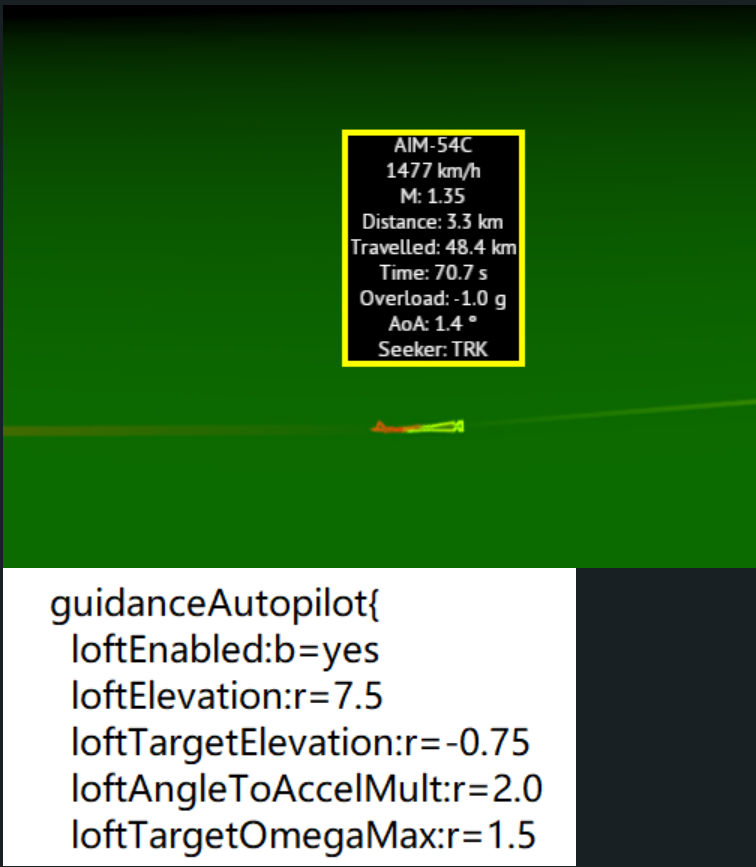
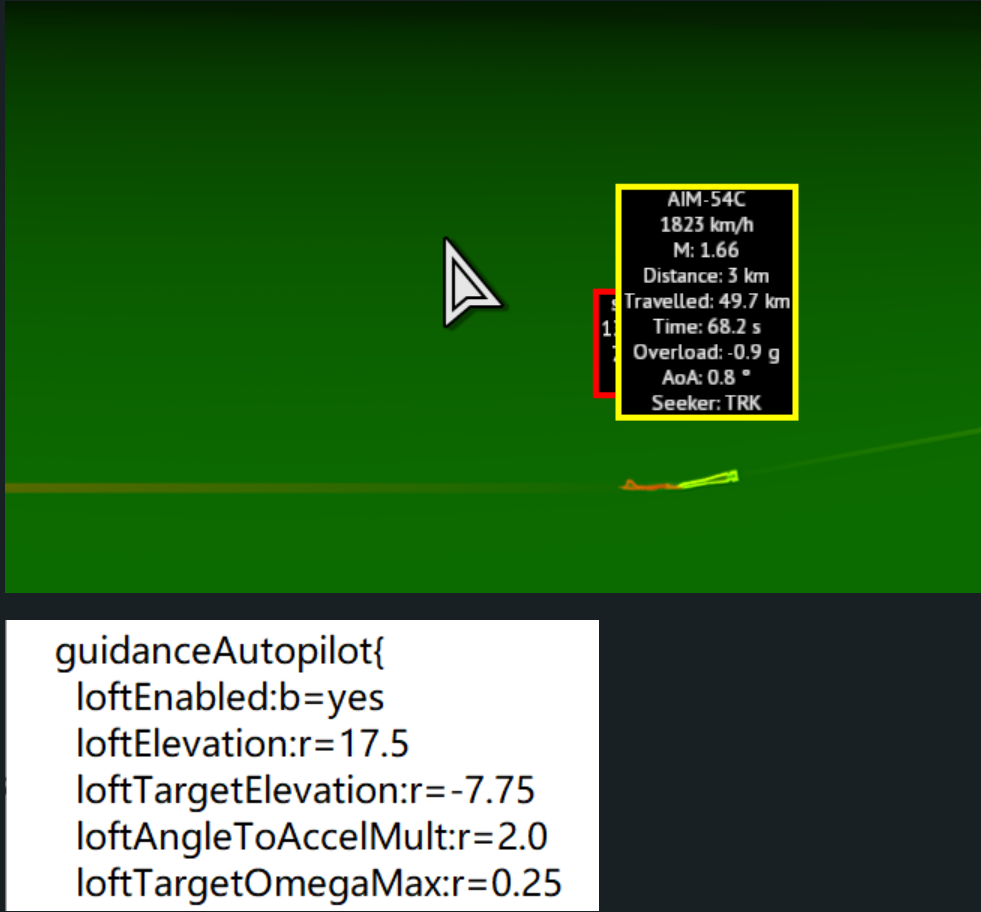
It was the 9km table vs results from;
which Mythic had requested that they be expanded on, and so likely what the subsequent position(s) were based off.
I have? The fact that various properties are not similar limit the potential to draw conclusions based on both of the charts that were presented.
It’s not that it’s underperforming, but non-optimal and thus SSPk / terminal performance could be potentially improved by adjusting the numbers especially considering we lack detail for the actual lofting schedule / shaped trajectory methods that the AIM-54 specifically employs.
Though if it was anything like the Maverick, pulling 3~4G vertically until 20 / 16 degrees of vertical seeker angle was achieved and held until impact would be interesting to see if it could be made work.
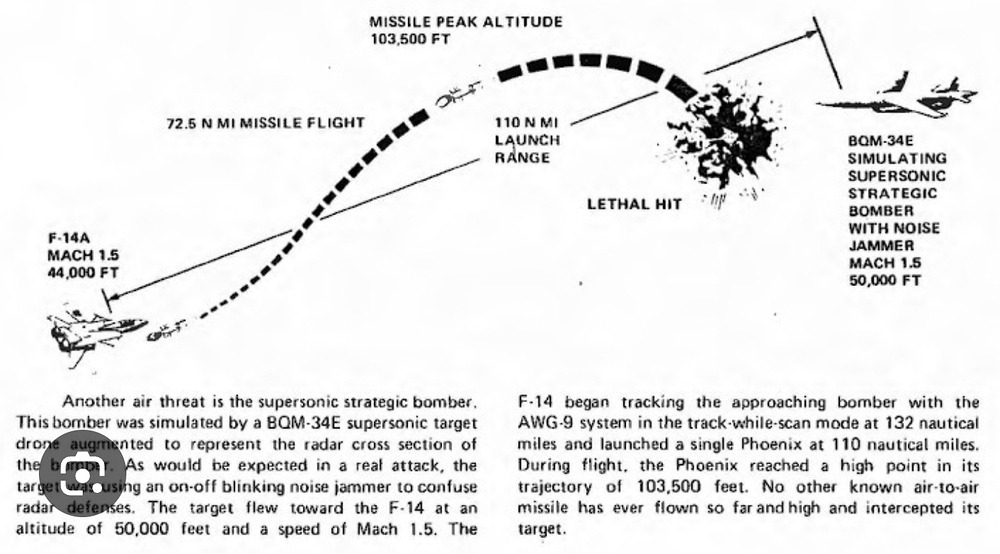
Considering that maximum ranges for the AIM-54 are listed as 52 / 63 nmi [96, 115km], 80 km is somewhat close to the listed maximum range or a multiple release, its not completely without merit.
As any missile with a complex autopilot implementation nailing down the root cause of issues is difficult at best, as the potential to isolate issues and work backwards to suggest improvements can have knock-on impacts elsewhere, which would need to be considered.
Depends how aggressive the loft angle and the details of any potential trajectory shaping constraints are, since with any induced super-elevation effective Net thrust is reduced, due to gravity, and assuming a TWR <1 there will be some profiles where the peak speed is not at end of burn, let alone the impact of non-constant propellant burn.
I’m sure that the details of said impact on optimal terminal performance (range) vs loft angle could be compiled for various launch conditions, but it would be significant work to map all conditions even if interpolation was used to find the relevant points of inflection.
The place to start would be to figure out under what conditions the missile’s G-limit is reached.