Any idea where that comes from? I haven’t seen this document before.1983 is also right around when the AIM-54C would have been in testing.
Yeah lemme see i can dm it to u
1 Like
Bank to turn means there is only one pitch point, similar to a plane having only one vertical plane of maneuver as they are asymmetrical. The AIM-54 can pitch between any point between the control surfaces for combined plane… as well as rolls during pitch / flight as needed to maintain smaller corrective maneuvers and avoid oscillations or instability.
Bank to turn must roll the singular pitching axis towards target before pitching.

1 Like
I assume you mean like the R.511? I thought that was called twist to turn, or something like that?
The Meteor is marketed as bank to turn, but has two sets of ear fins.
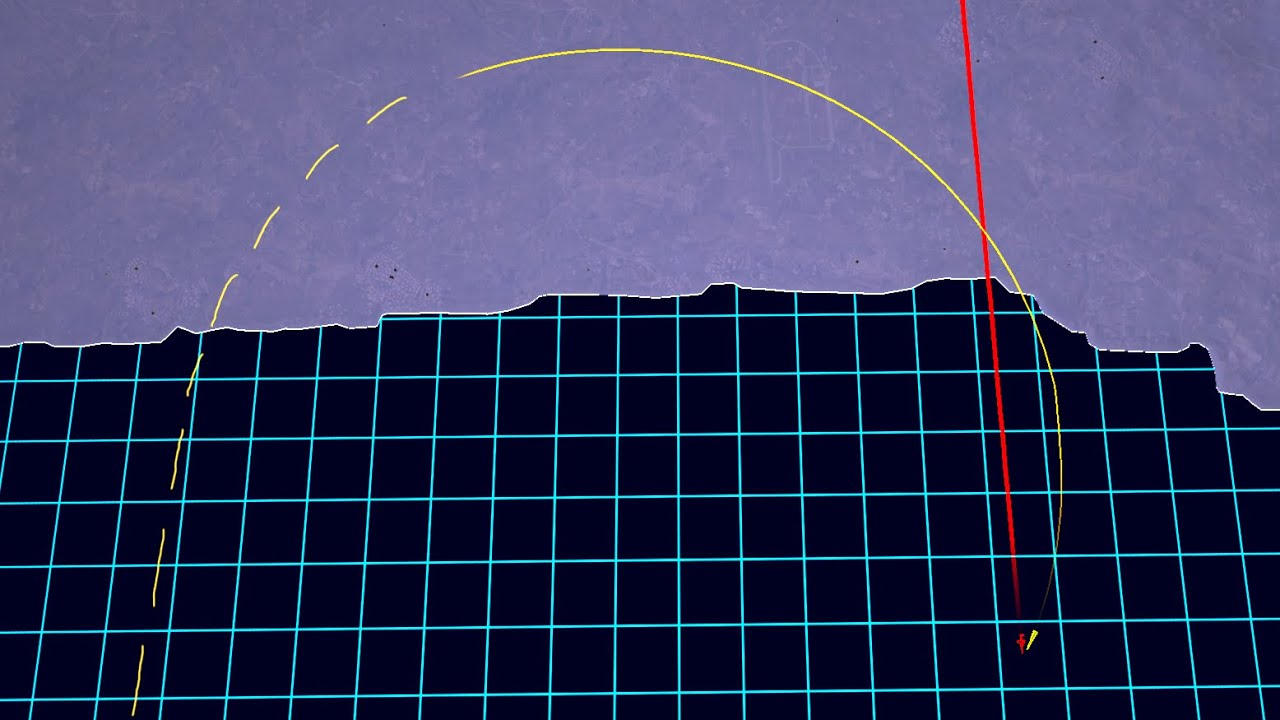
5 Likes
@_David_Bowie said that at the time because I also thought that, and that’s what I had suggested to him. Now I understand the difference better.
R.511 shows a single plane effort utilizing bank to turn, this is less stable as the yaw loses authority at higher angles of attack. Missiles like the Phoenix and meteor can maintain roll at high angles of attack courtesy of combined plane.
The difference between meteor and AIM-54 is that the meteor has only one pitch axis, AIM-54 can pitch in any of the four directions (technically 8) and can roll at the same time.
The turn feels way better. It still struggles against top tier jet, but that’s expected since it still has 17G instead of 25G. But when down tier and against target that is no longer supersonic, phoenix can be used occasionally.
Did a quick math on drag coefficient, please correct me if I’m wrong.
Aim-54 appears to have the drag coefficient roughly of a bullet (without base bleed).


Since the rocket motor is firing, it should be a bit less due to base bleed drag reduction, but it is also pulling AoA so that increases a bit of drag.
CxK is not directly analogue to Cd. It is a modifier that is used in conjunction with the caliber and possibly the length of the missile to find the drag.
Make it loft more and on more cases(lower the minimum angle for lofting, it is set at -7° lower it more and increase the up angle). The terrible lofting mechanics is what mainly sets it back. Velocity just makes it drop like a brick.
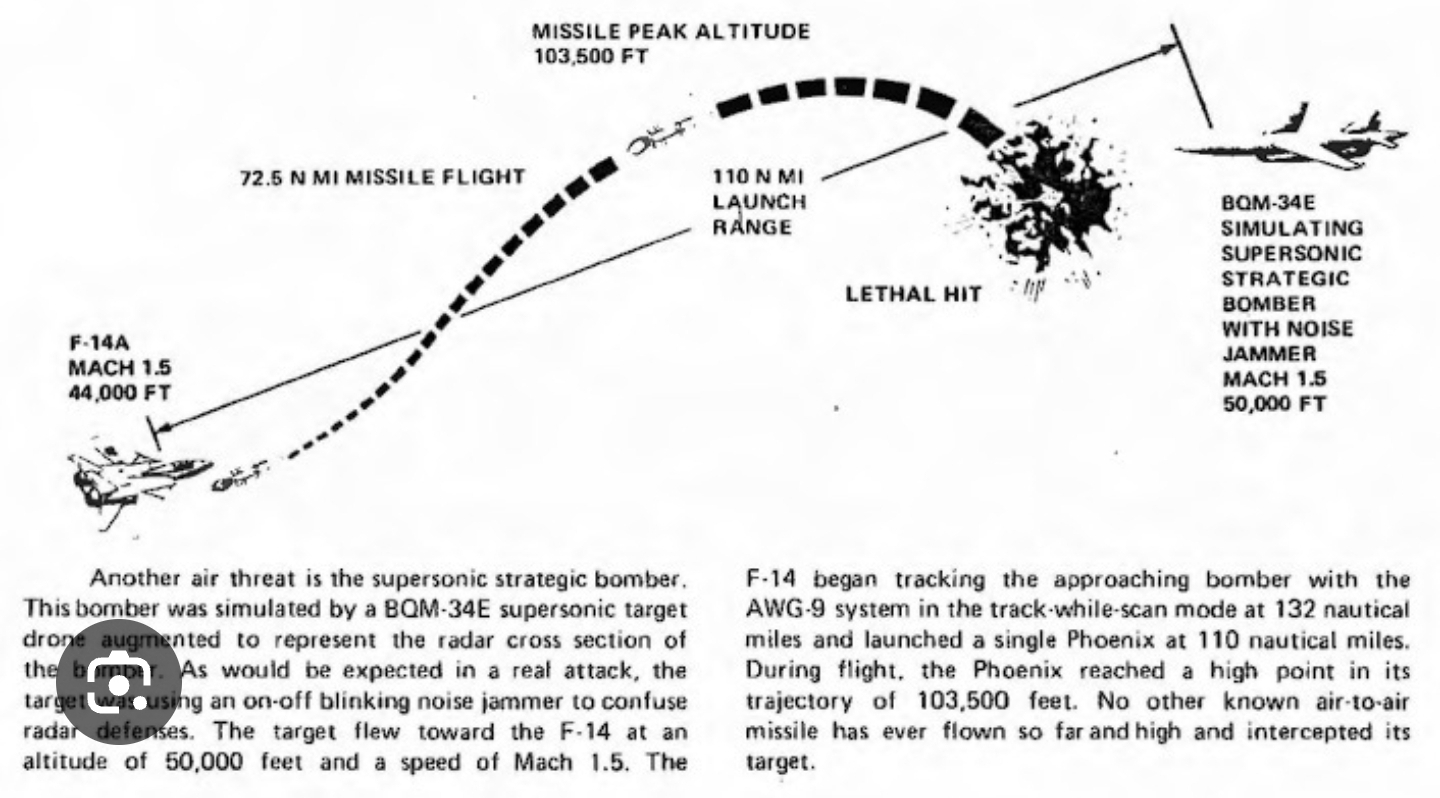
It easiest test to see if it right is just do a 110 Nautical Mile shot, set the F14 at 45k ft at Mach 1.5 against a target at 49kft at Mach 1.5. The Time of Flight of that shot was 160s(exactly the battery life limit). If it takes more then you know it has too much drag and/or it didn’t loft enough. If it takes less then it overperforms.
Its an easy test to do to test the validity of your model.

9 Likes
I know CxK is not analog to drag coefficient. However estimating drag coefficient allow players to evaluate how much excessive drag that phoenix has.
People have already made tools that show this is the case. The top speed by altitude is erroneous, yet the motor performance is fairly close to reality. The top speed by altitude is too low currently… Ergo the drag is too high.
Speaking of drag, I’m trying to figure out a way to compare the NASA sim (reminder its not perfect, its using a basic, likely ballistic, trajectory, and only publicly known info, which they themselves specify isn’t accurate and only served as preliminary analysis for feasibility of using the AIM-54 in the ALSM role).
The issues I’m running into are:
- The loft profile and the fact it needs to be fired with guidance and not in a purely ballistic trajectory in-game makes the missile act differently than the NASA sim likely did
- Setting up the shot is awkward, particularly the high angle (30 and 45 deg) shots at M1.2, 45kft.
I did do some quick testing trying those shots, with some odd/interesting results. iirc, the peak mach numbers achieved by the missile all overperformed the NASA sim (likely from the loft), with the 0 deg shot outperforming the NASA sim the most, likely due to the 15 deg loft. The mach number at impact post-motor-burnout of the 0 deg launch also overperformed the NASA sim, but iirc for the 30 deg and 45 deg launches both underperformed the NASA sim, with the 45 deg shot underperforming the most (iirc impact was around 65-70 seconds from launch but impact velocity was close to Mach 2 instead of above Mach 3 like shown in the sim).
If I were to guess why all shots overperformed in top speed compared to the NASA sim in top speed, it would the loft itself for the 0 deg angle shot, and the straightening/diving of the AIM-54 during motor burn for the 30 and 45 deg launches (as it guided towards the target). As for why 2/3 shots underperformed in sustained mach numbers, that could be related to the trajectory of the ALSM sim leaving the missile in lower drag air for longer, or it could be due to excessive in-game drag.
I’ll correct this post and possibly add the screenshots later if I remember/care enough to do the work later, but thought it to be interesting and an idea for someone who cares more about this than I do and can actually do custom testing.
Once again, the NASA sim are not accurate representations due to only using publicly available info and an unknown flight profile. I just thought it was an interesting thing to try to recreate in-game best I could to try out the new sensor view and to see how NASA’s sim stacked up against gaijins.

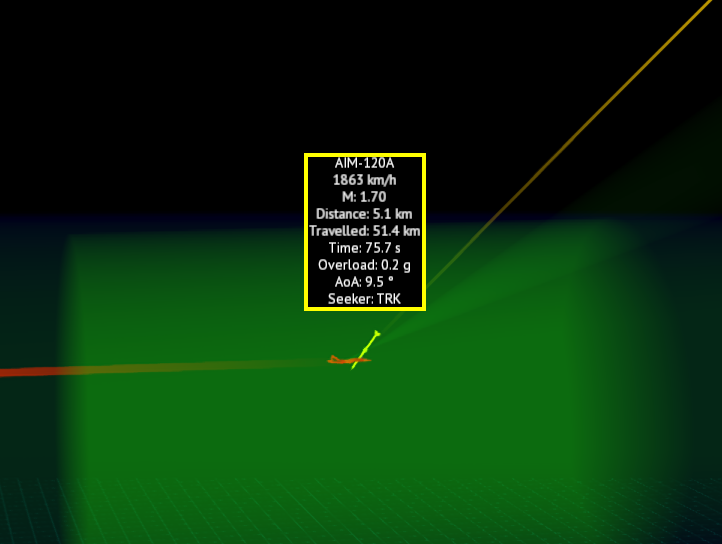
9000m m1.2 vs m1.2 75km launch
The phoenix’s loft code has been changed here, and now its loft route is similar to aim120a.

Changed phoenix performs very well in BVR situations, and its speed drop rate during gliding is similar to the aim120a.The Phoenix hits the target 5 seconds earlier, and its terminal speed is 0.56 Mach faster.
Phoenix drag is currently low enough in the game (maybe even too low), but the lower flight path affects missile performance.
3 Likes
Out of curiosity, have you tried other loft codes, such as the Derby which lofts more aggressively? Or have you though of trying to use not only the AIM-120’s loft code, but also its time to gain code? I’m curious to know how the 54C would perform if it got the full guidanceAutopilot code from the AIM-120 or Derby, not just the loft code.
54C vs 120A guidance code:

Not sure if you seen Jaek’s video, but Derby’s loft code makes it arrive later and also has it overshooting targets, often missing it completely at longer ranges.
Hopefully will be different in June
The AIM-54 may not interact the same way with the Derby’s loft code simply due to its longer burn and higher drag. It should by all accounts work better with more aggressive loft than just about any missile in-game afaik (up to a point obviously).
There’s a reason why irl the missile has in some cases climbed as high as 103,500ft…
Also, as a sidenote, unless gszabi hasnt updated the datamine, or im misunderstanding @dark_claw 's post, the loft code provided to the 54C in his test is in some ways more aggressive than the derby loft code:


i keep hearing this missile got buffed. is it worthwhile taking it in sim now?
1 Like