Would you like to see this T-62 in-game?
- Yes, as a Tech-Tree Vehicle
- Yes, as a Premium Vehicle
- Yes, as a Squadron Vehicle
- Yes, as an Event Vehicle
- No, I don’t want to see this abomination in-game
T-62 (UB-32)
Introduction
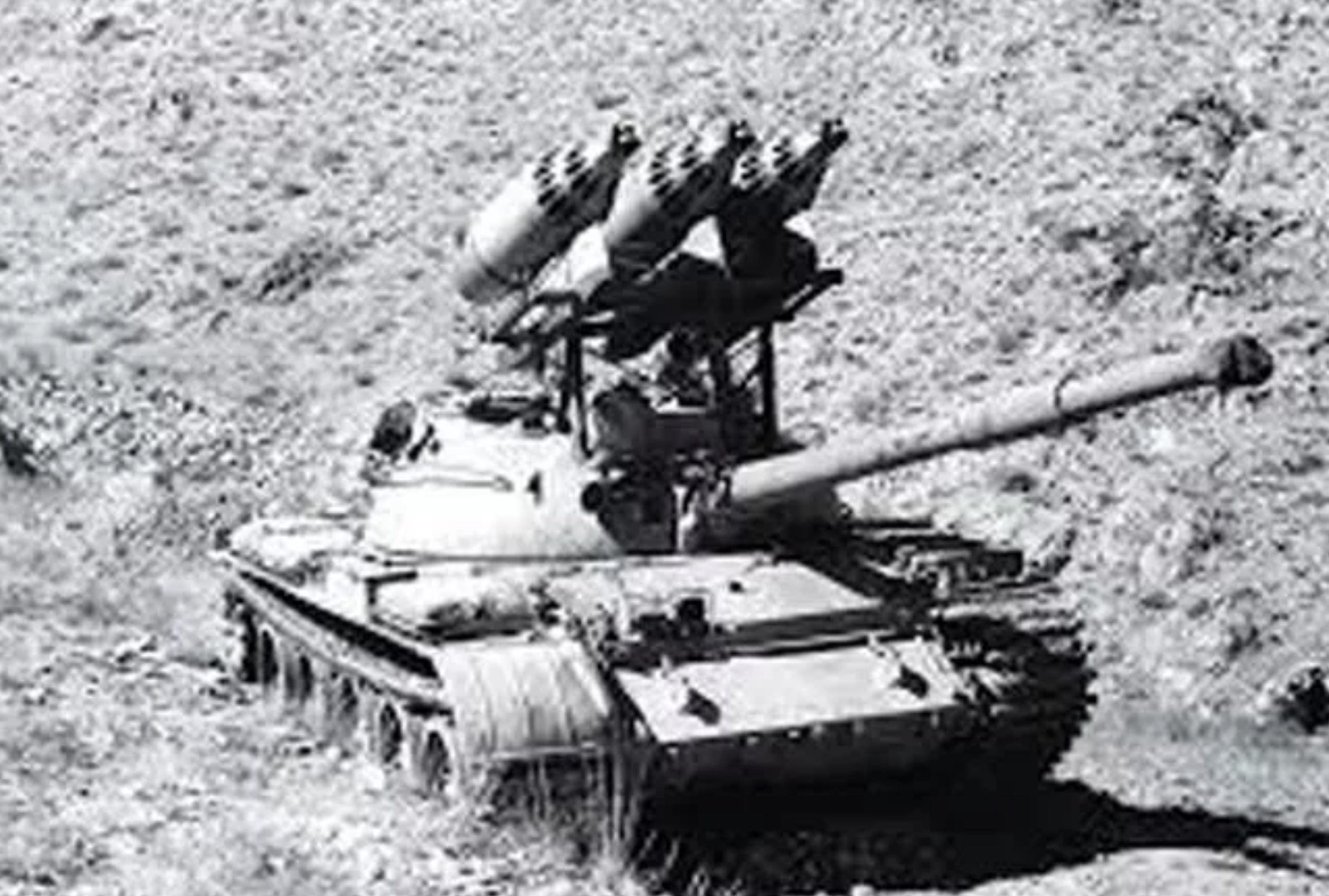
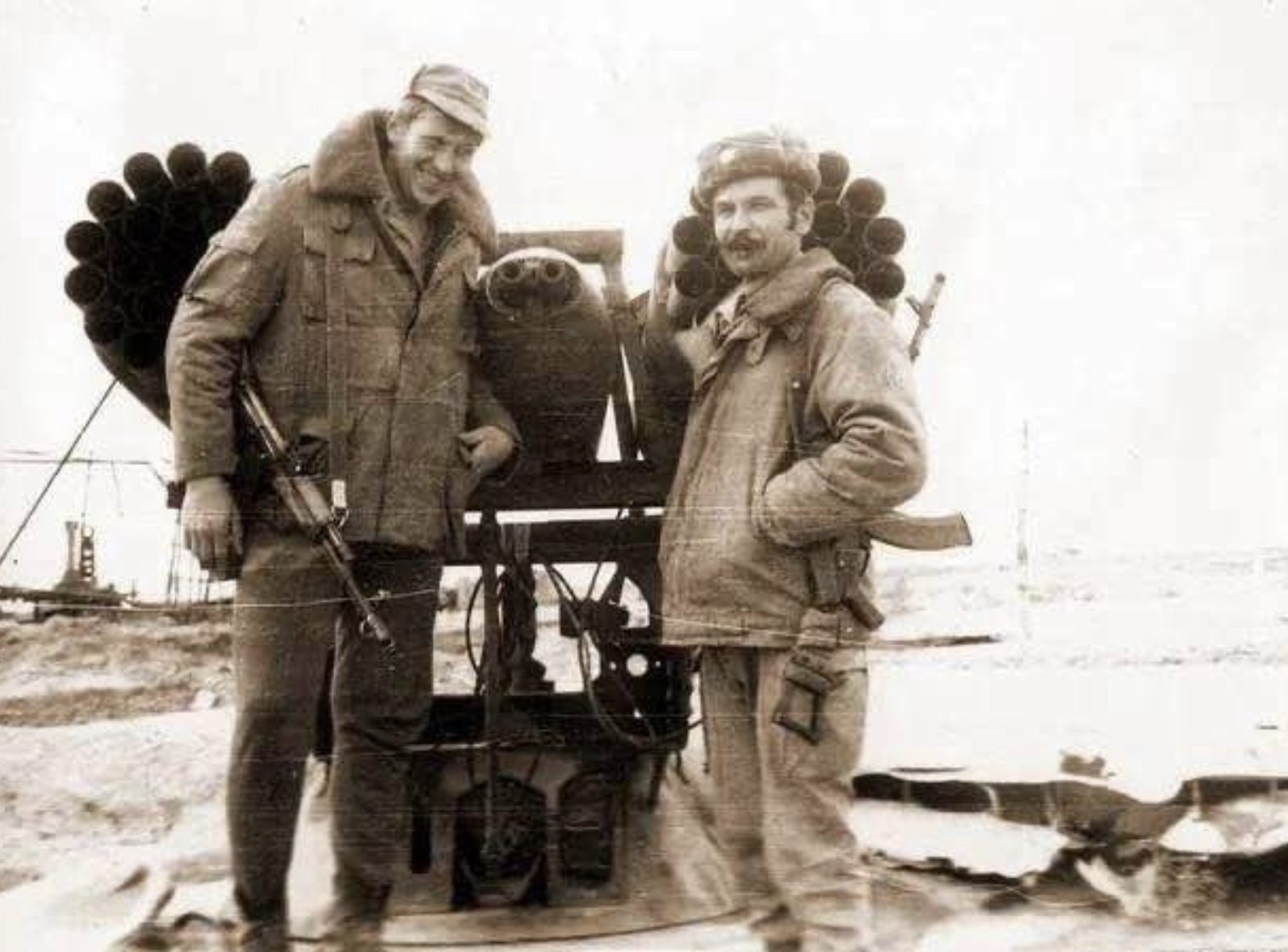
The Soviet T-62 equipped with UB rocket pods was one of the more unusual armored vehicle modifications to emerge from the Soviet-Afghan War and reportedly remained in service long enough to appear in later conflicts in the Caucasus. Effectively transforming a main battle tank into a short-range “mini-MLRS,” the modification was intended to provide Soviet units with a highly mobile source of rapid saturation fire. The concept arose from the unique challenges of Afghan warfare, where Mujahideen fighters operated in small, dispersed groups, made extensive use of cover and concealment, and often occupied positions on steep mountain slopes that were difficult to engage effectively with conventional tank armament. By mounting aviation rocket pods on the T-62, Soviet forces sought to supplement the tank’s direct-fire capability with a weapon capable of blanketing a wide area in seconds, increasing both its suppressive effect and its usefulness in counter-insurgency operations.
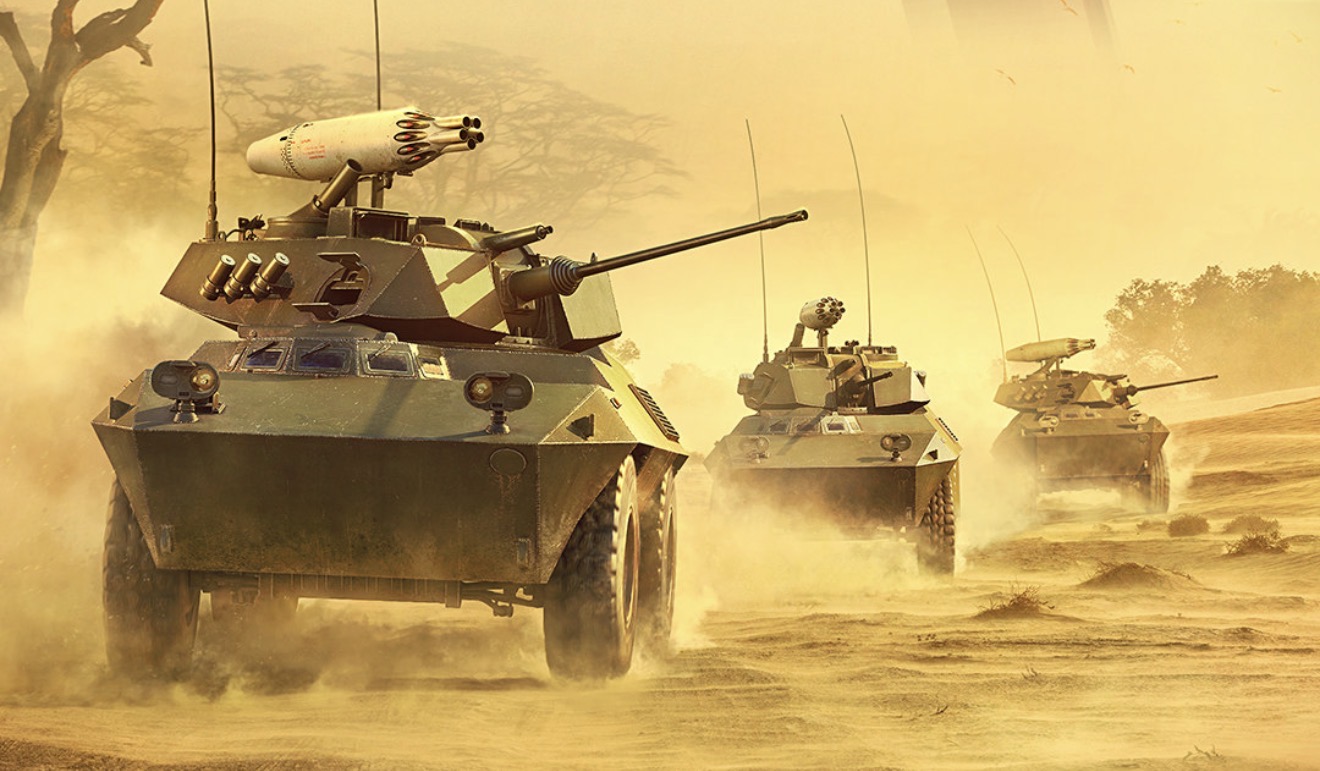
This vehicle could be a very interesting addition to War Thunder, especially since similar rocket-armed vehicles have already appeared in the game. While the base T-62 is already present in the game, the UB-32-equipped version would offer an additional unconventional playstyle. In the hands of skilled players familiar with vehicles such as the Katyusha, this T-62 could become a dangerous and unpredictable battlefield asset. A gem for content creators.
History
Spoiler
The deployment of T-62s, alongside T-55s and even T-34-85s, to Afghanistan was driven by several factors. First, these older tanks were generally considered more rugged and mechanically reliable than newer vehicles such as the T-64 and T-72, particularly in the harsh conditions encountered in Afghanistan. Second, the Soviet Army prioritized its most modern tanks for potential conflicts in Europe, where they were expected to face NATO forces. Third, the simpler design of the T-55 and T-62 made them easier to operate, maintain and repair in remote operating areas with limited logistical support. Finally, from a strategic perspective, the loss of an older T-62 was far less costly than the loss of a newer and more technologically advanced T-64 or T-72.
Nevertheless, it quickly became apparent that conventional tanks were not ideally suited for mountain warfare against dispersed insurgent forces. The tank guns had a relatively low rate of fire, while their limited elevation made it difficult to engage targets positioned high on mountain slopes (a problem so significant that even the much older T-34-85 found renewed utility due to its superior gun elevation). Furthermore, although the tank’s high-explosive ammunition was effective against point targets and fortifications, it was less suited to suppressing small groups of Mujahideen fighters scattered across rugged terrain. Conventional artillery, BM-21 Grad rocket launchers, and air support could provide devastating firepower, but they often lacked the responsiveness required by small Soviet units operating deep in Afghanistan’s rugged terrain. Patrols and convoy escorts frequently found themselves engaged in sudden ambushes far from major bases, where calling for supporting fire could take valuable time. Communication difficulties were also common, with mountainous terrain or enemy action interfering with radio transmissions and complicating coordination between ground forces, artillery batteries, and aircraft.
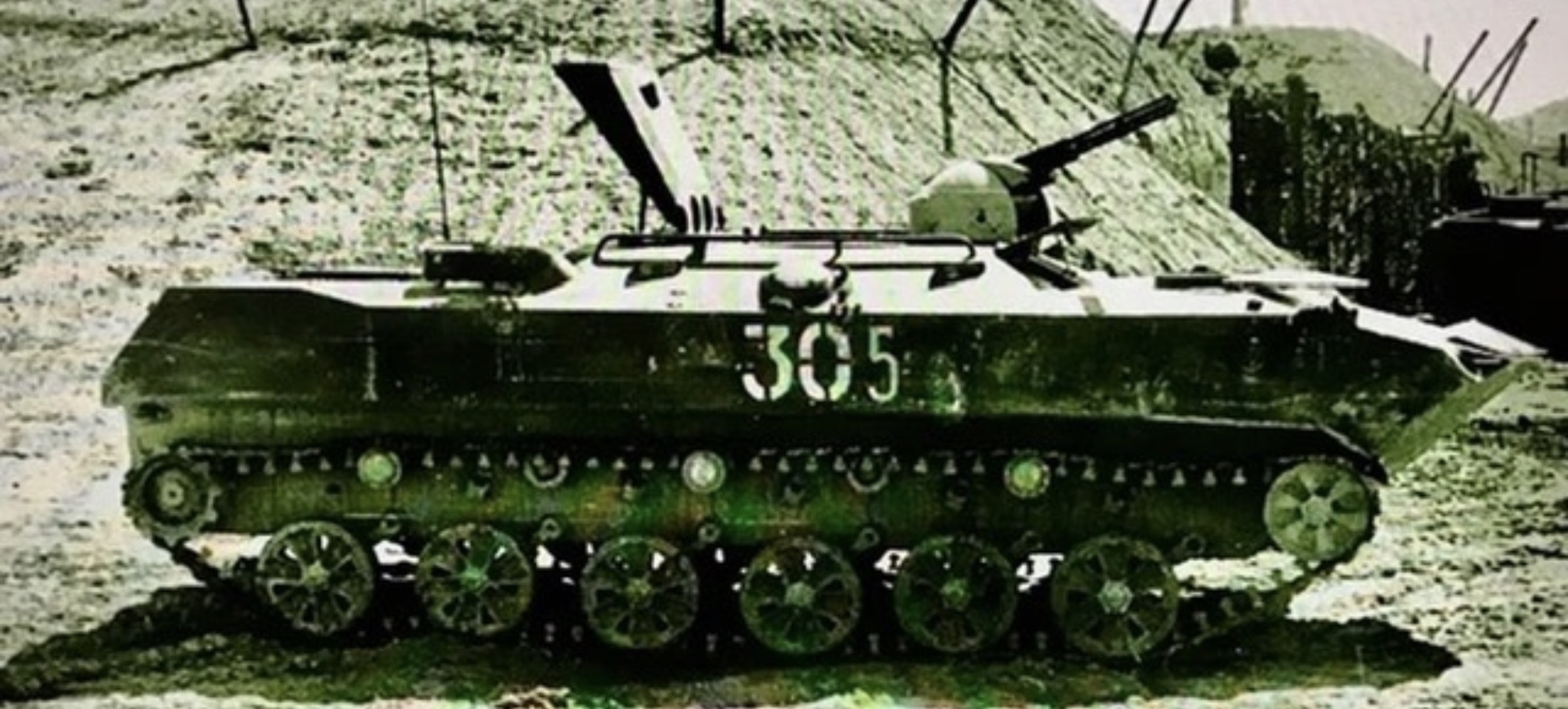
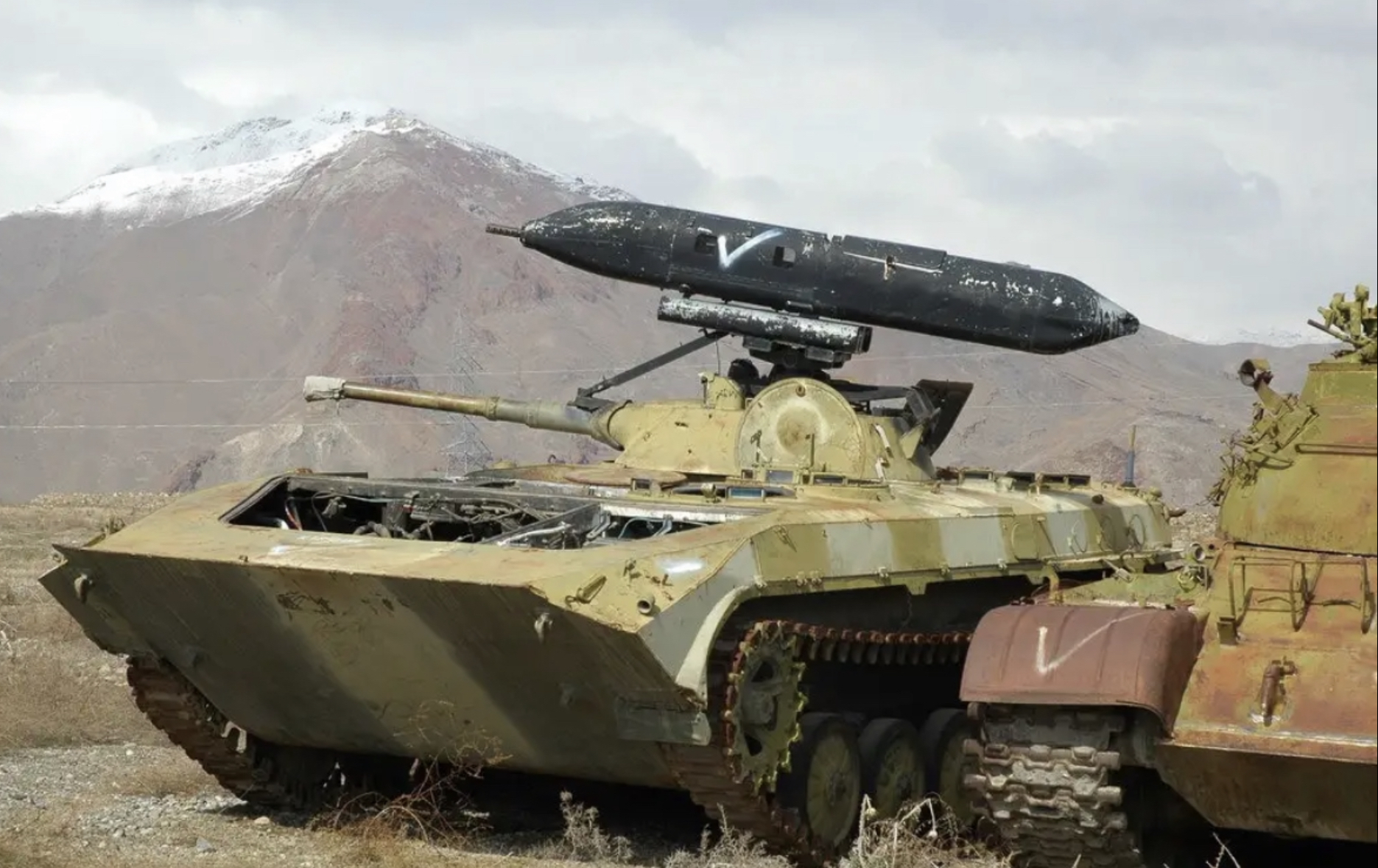
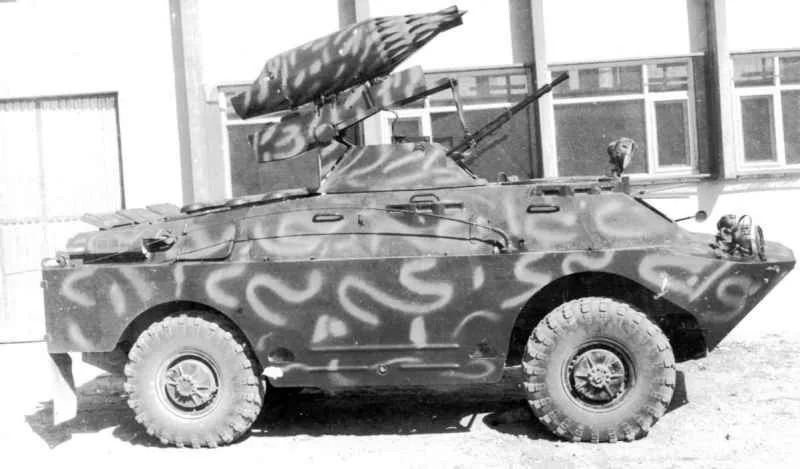
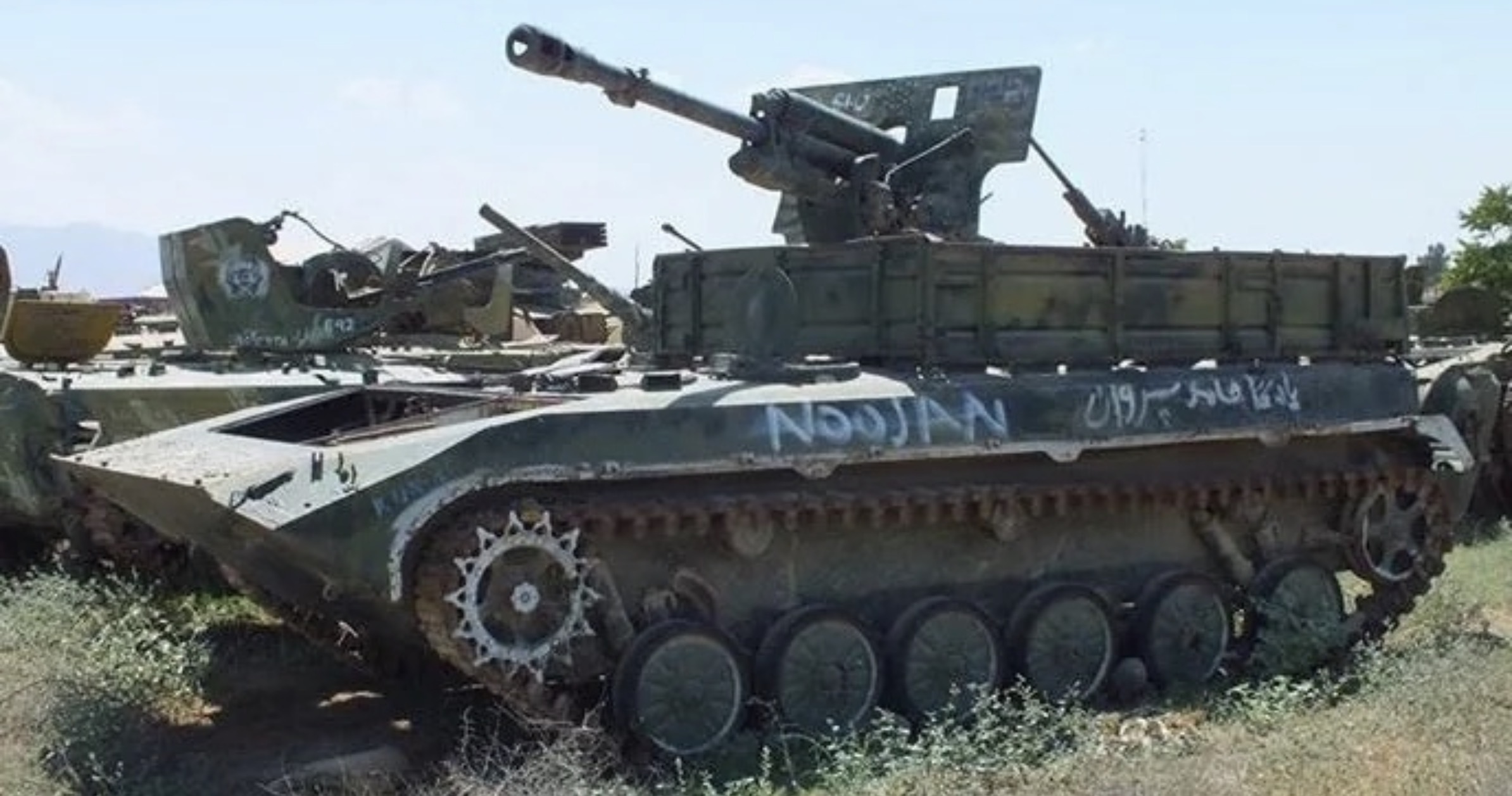
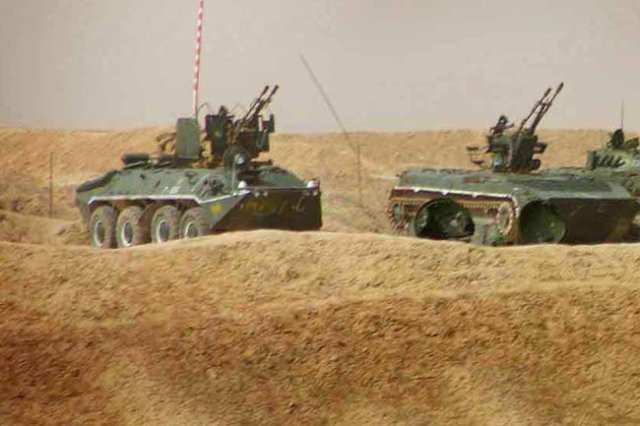
Soviet forces therefore sought a weapon capable of delivering a large volume of fire across a wide area within seconds. Rather than waiting for purpose-built systems, they began adapting existing assets and mounting them on a variety of armored vehicles. Aircraft rocket pods, multiple rocket launchers, high fire rate AA guns and other systems were installed on patrol and fire-support vehicles to provide rapid saturation fire against enemy formations, suspected ambush positions and strongholds.
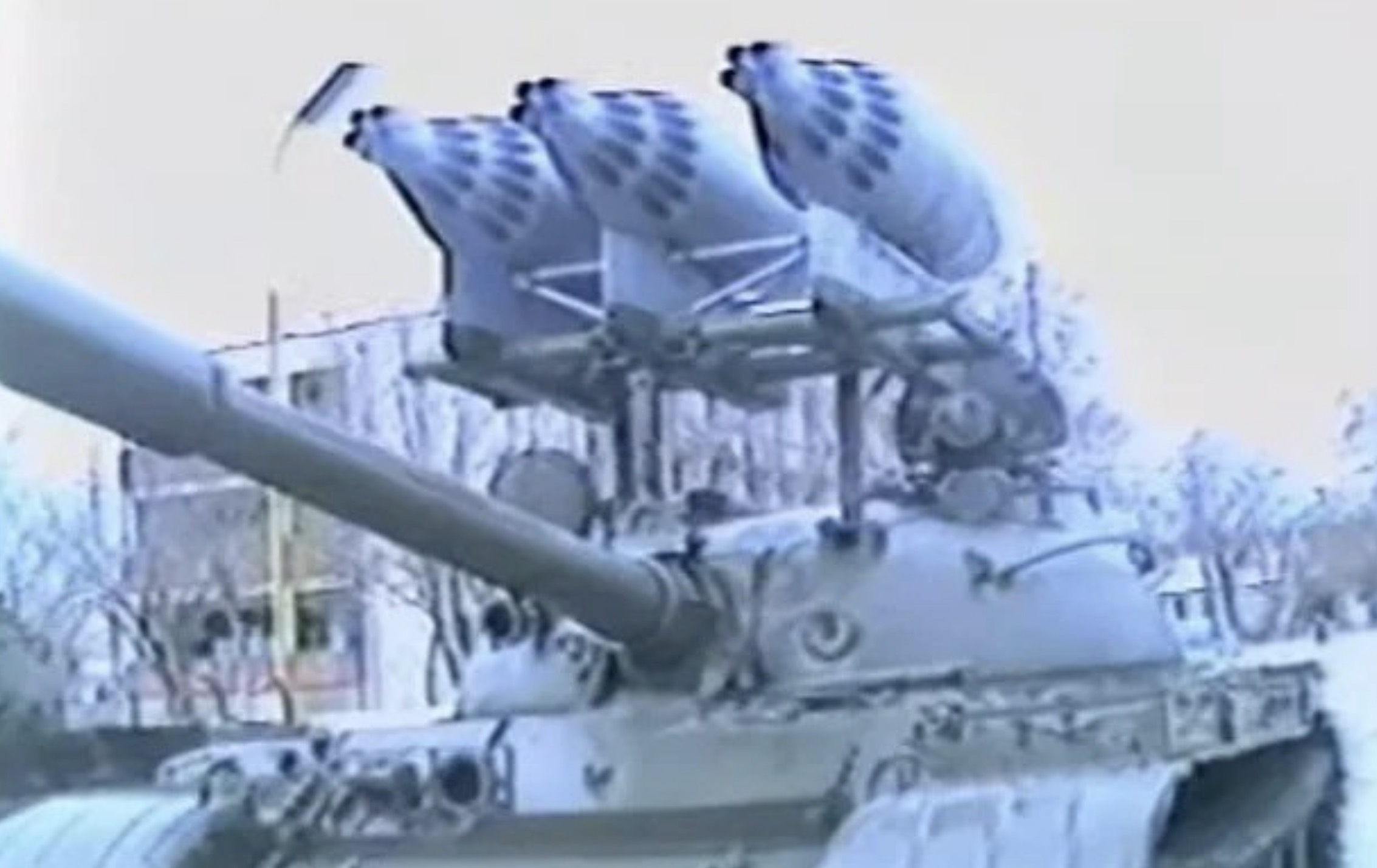
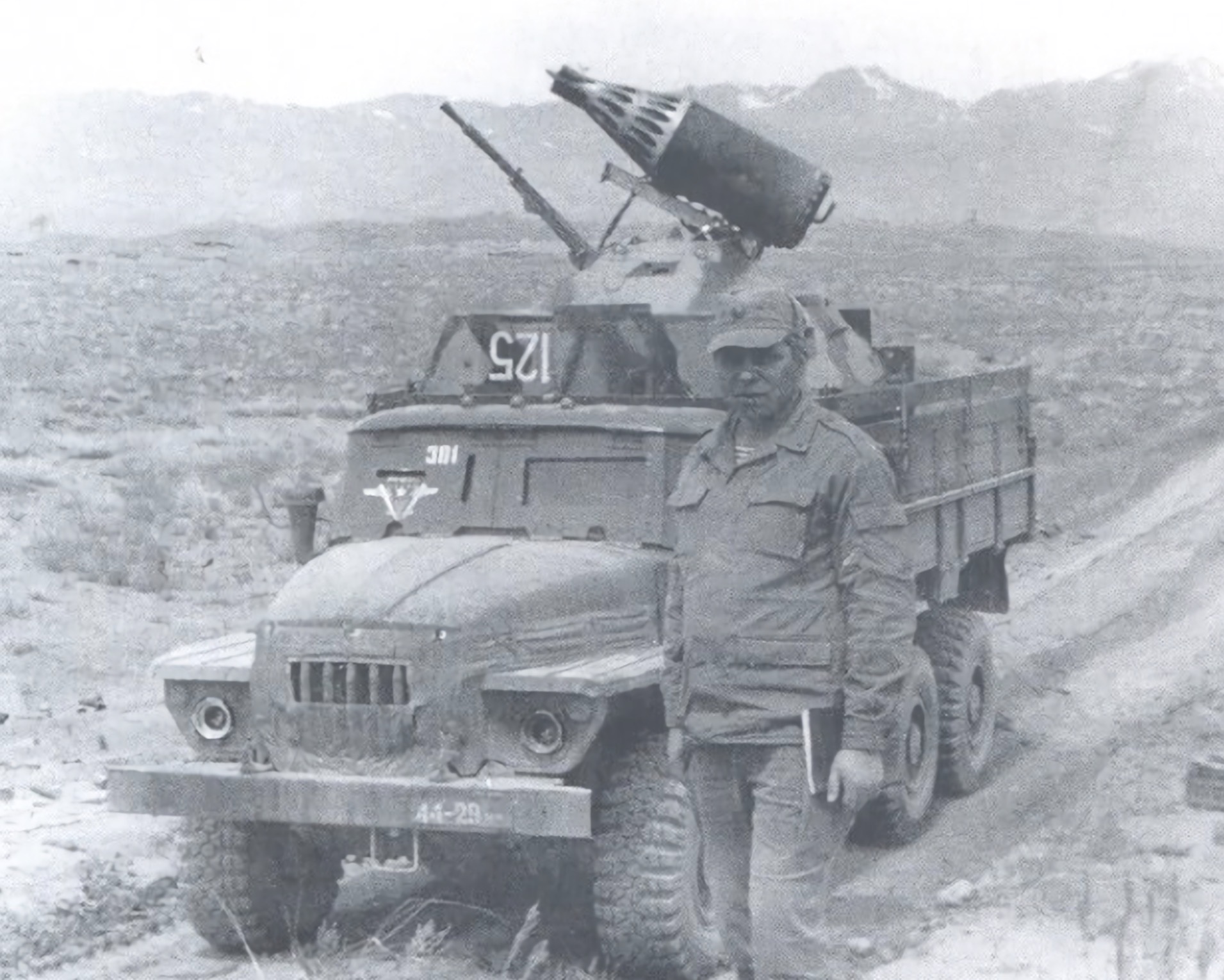
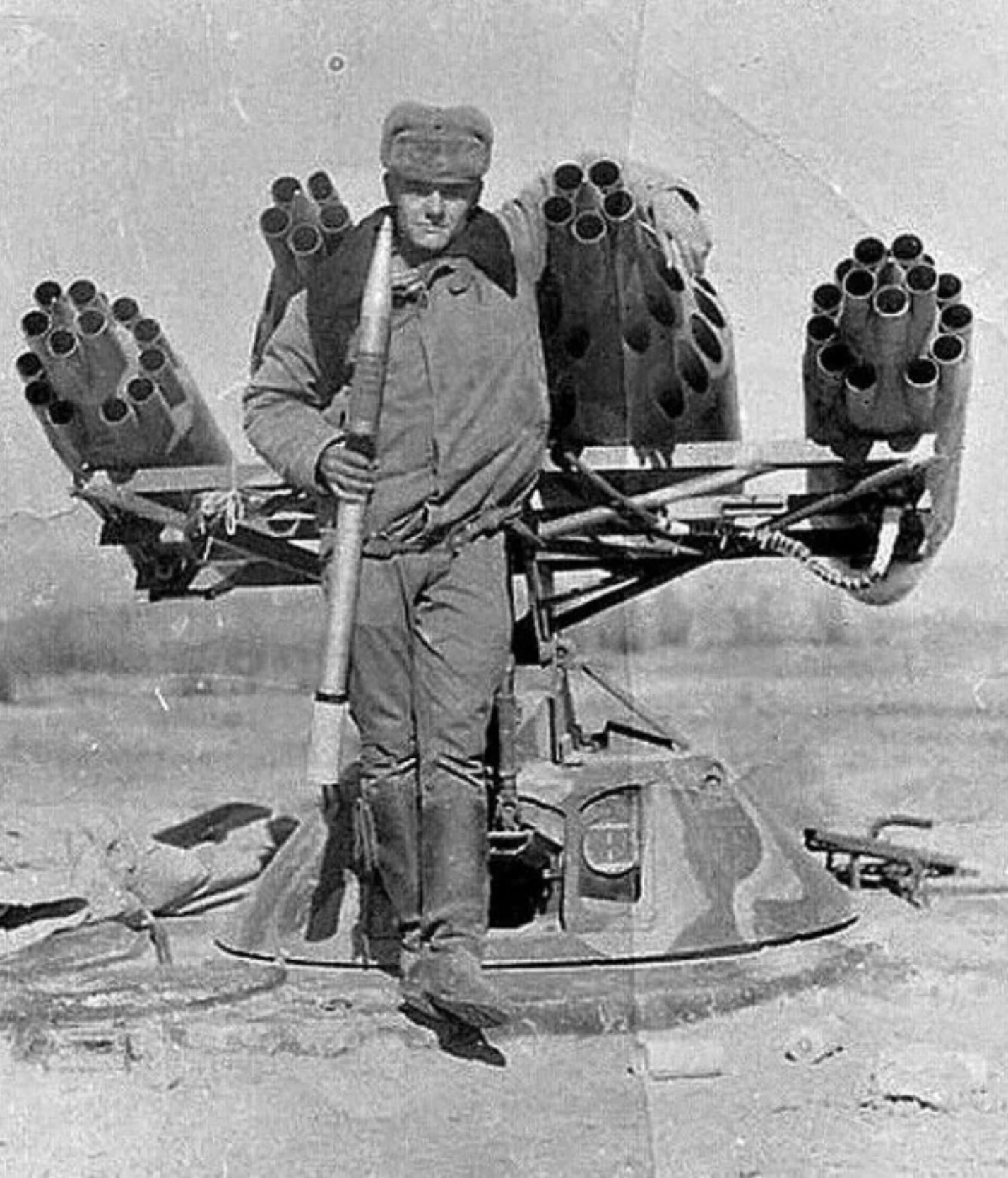
The photograph above was reportedly taken during one of the conflicts in the Caucasus (Dagestan, if memory serves me right), suggesting that this particular vehicle remained in service after the Soviet withdrawal from Afghanistan. If the identification is correct, it indicates that the tank not only survived the Afghan War but also continued to serve within the post-Soviet Russian armed forces.
Overview
Spoiler
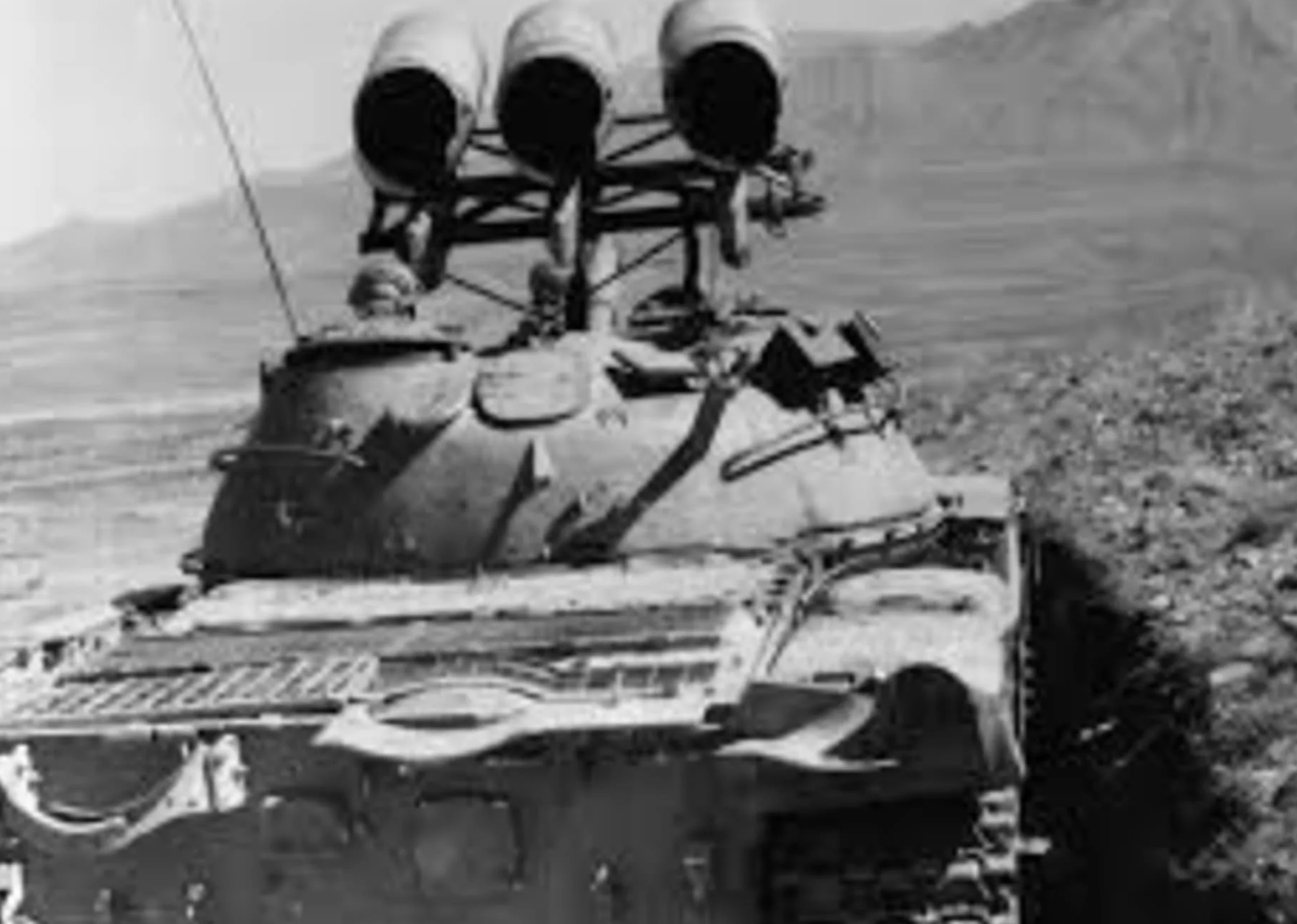
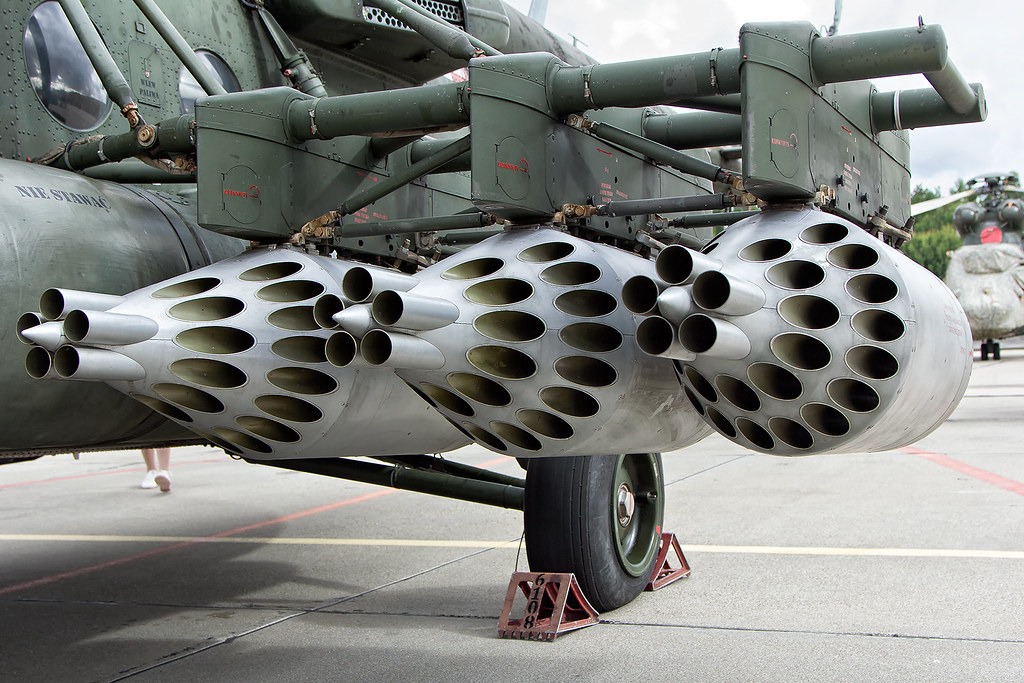
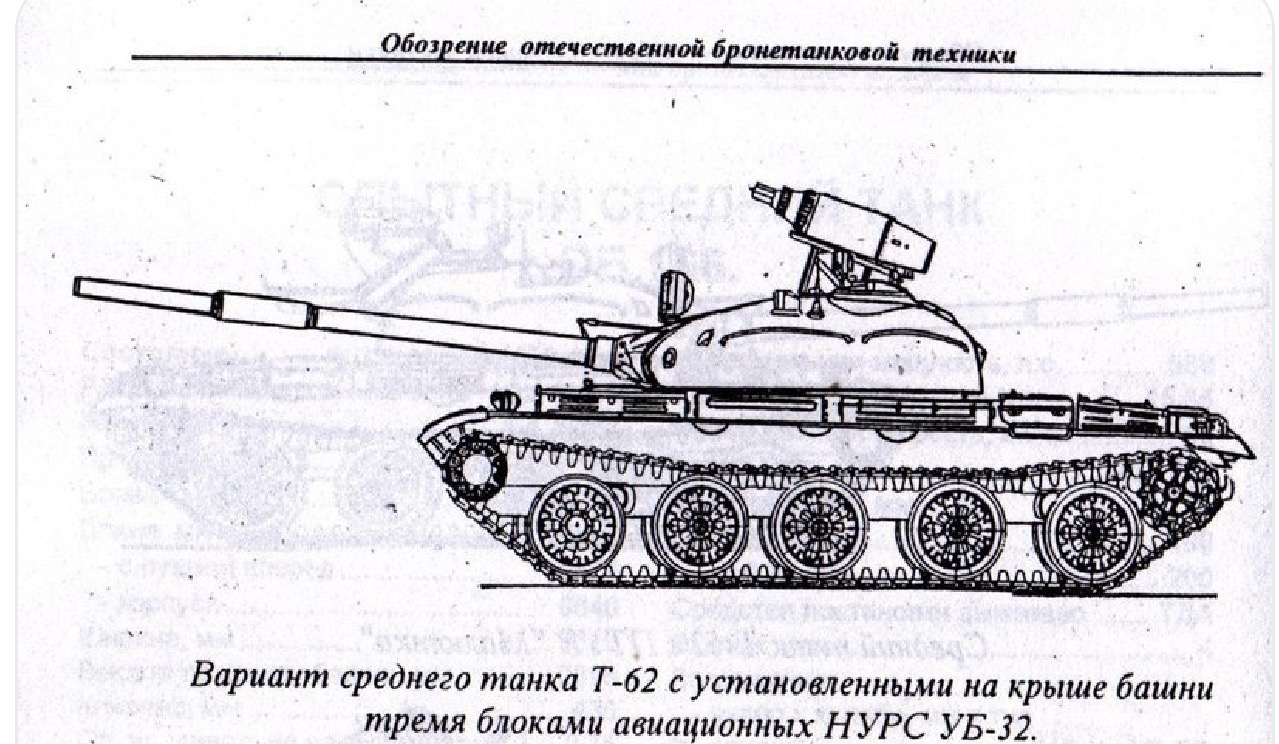
Our example is a T-62 fitted with three UB-32-57 rocket pods above the turret. The vehicle itself appears to be an early-production T-62, identifiable by its characteristic turret features and lack of later upgrades. The rocket launcher assembly appears to have originated from an Mi-4 or Mi-8 helicopter. It was installed in an inverted configuration on adjustable mounting brackets and mechanically linked to the tank’s main gun. This arrangement enabled the launchers to elevate with the gun, allowing the crew to modify the rockets’ trajectory and optimize the angle of attack. Available imagery suggests that the crew was able to fire the rockets from inside the tank. Nevertheless, there is no indication that the vehicle’s optics or fire-control systems were adapted for the employment of the S-5 rockets. Consequently, the crew likely relied on visual estimation when aiming, adjusting fire based on observation rather than precise ballistic calculations or dedicated sighting equipment.
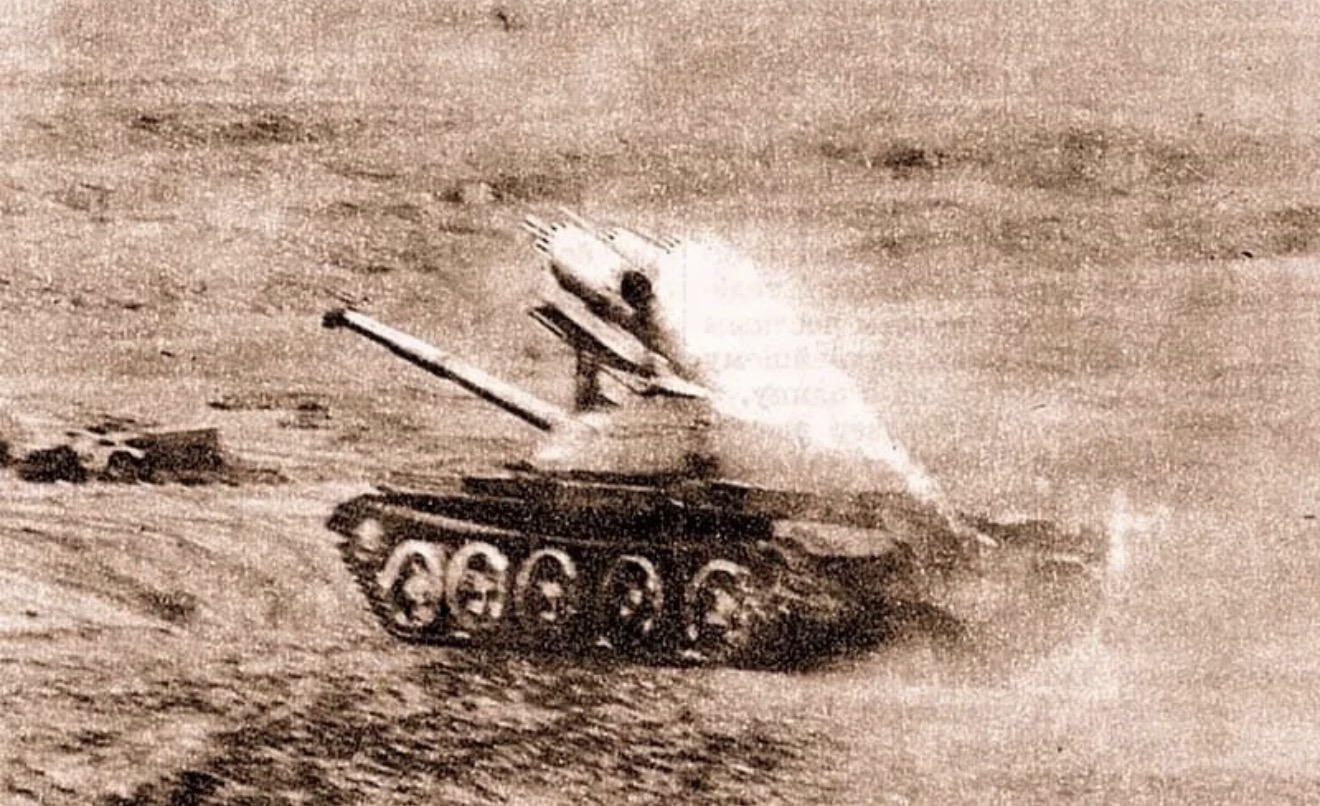
The main capability of the T-62 with UB pods was rapid saturation fire. With three UB-32 launchers, the tank could fire up to 96 unguided 57 mm S-5 rockets. This gave the crew the ability to strike open fields, hillsides, ambush areas, villages, or suspected firing positions with a sudden barrage. The system was useful mainly for suppression and psychological effect (which was truly serious) rather than accuracy. In counterinsurgency mountain warfare, accuracy was less important than volume of fire or suppression. A large rocket salvo could force enemy fighters to take cover, disrupt an ambush, destroy a dispersed formation or force the enemy to retreat.
The rocket pods would almost certainly have been loaded before the vehicle departed on a mission, either at a forward operating base, outpost, or other secure rear position. Once in combat, reloading the UB-32 pods would have been highly impractical, if not impossible. The rockets were mounted externally above the turret, outside the protection of the armor, and each pod contained 32 individual rockets that had to be loaded by hand. Nevertheless, the crew could still operate the system in either single-rocket, burst-fire or salvo mode, much the same like they are used on a helicopter.
P.S A source listed claims that the system “passed trials”. It suggests that the UB-32 installation on T-62 tanks may not have been a completely random battlefield improvisation. While the available evidence does not confirm where these trials took place, or whether the system was developed in the USSR before deployment, the wording implies some degree of organized testing before or during its use in Afghanistan. The concept appears to have been successful enough that the Soviets later developed a more specialized rocket system (БКП-Б812) intended for installation on tanks, which was even displayed for export sale.
Specifications
Spoiler
Vehicle type: Soviet medium/main battle tank
Model: Early-production T-62
Crew: 4
Combat weight: approximately 37 tonnes
Engine: V-55V 12-cylinder diesel
Engine power: approximately 580 hp
Maximum road speed: around 50 km/h
Operational road range: approximately 450 km
Main armament: 115 mm U-5TS “Molot” / 2A20 smoothbore gun
Main gun ammunition: 40 rounds
Main gun elevation: approximately -6° to +16°
Secondary armament: 7.62 mm PKT coaxial machine gun
Coaxial ammunition: approximately 2,500 rounds
Armor: welded steel hull with cast turret
Hull frontal armor: approximately 100
Turret frontal armor: approximately 200
Launcher type: UB-32-57 aviation rocket pod
Function: Reusable launcher for 57 mm unguided rockets
Capacity: 32 rockets per pod
Caliber: 57 mm
Approximate pod length: about 2.08 m
Approximate pod diameter: about 0.46–0.48 m
Approximate empty weight: about 103 kg
Approximate loaded weight: about 264 kg
Spoiler
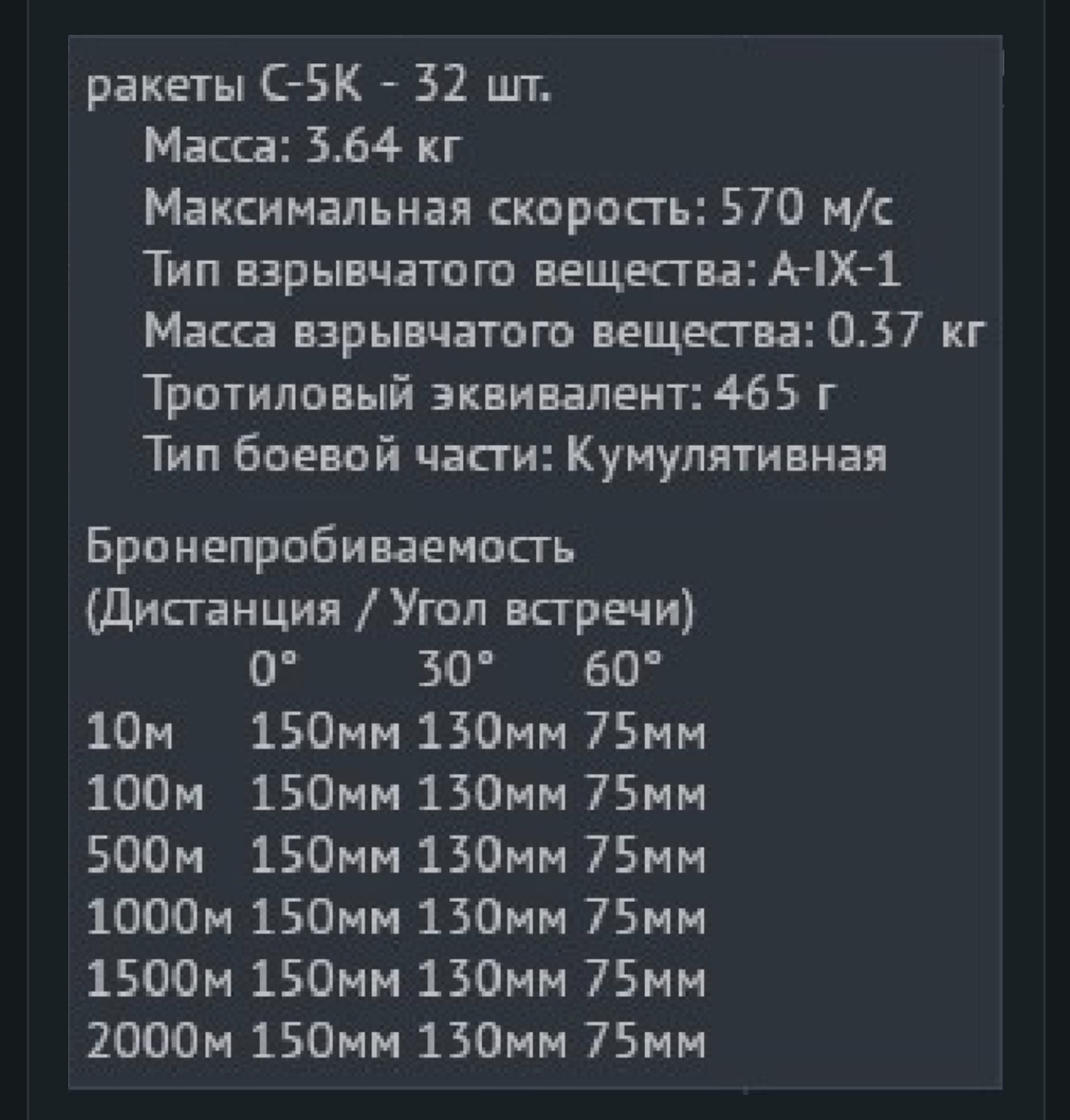
Rocket family: S-5
Type: Unguided aviation rocket
Caliber: 57 mm
Stabilization: Folding fins, spin-stabilized in flight
Propulsion: Solid-fuel rocket motor
Launch system: UB-16, UB-32, and related rocket pods
Typical launch speed: approximately 44.5 m/s at tube exit for some variants
Maximum rocket velocity: roughly 543–725 m/s depending on variant and source
Effective range: approximately 800–1,800 m for the S-5M-type rocket
Approximate rocket weight: about 3.8–5.1 kg depending on variant
Approximate warhead weight: around 0.8–1.8 kg depending on variant
Known S-5 ammunition types included:
S-5M / S-5M1: high-explosive fragmentation
S-5MO: enhanced fragmentation warhead
S-5K / S-5K1: HEAT anti-armor warhead
S-5KO: combined HEAT-fragmentation warhead
S-5KP: improved HEAT-fragmentation warhead
S-5S: flechette anti-personnel warhead
S-5-O: illumination rocket
Sources
Spoiler
Опыт 40-й армии в Афганистане может пригодиться сирийцам для создания ракетных танков
Читать "Ракетные танки" - Коллектив авторов - Страница 8 - Электронная библиотека Литмир
Even T-62 Used to Carry Improvised S-5 Rocket Launchers: Lessons From Afghanistan, Yugoslavia, Syria | Defense Express
https://armamentresearch.com/ares-research-report-no-1-improvised-employment-of-s-5-air-to-surface-rockets-in-land-warfare/
https://rg.ru/2018/06/24/opublikovany-foto-voevavshego-v-afganistane-raketnogo-tanka-t-62.html?ysclid=mq9cq22qiu916810880