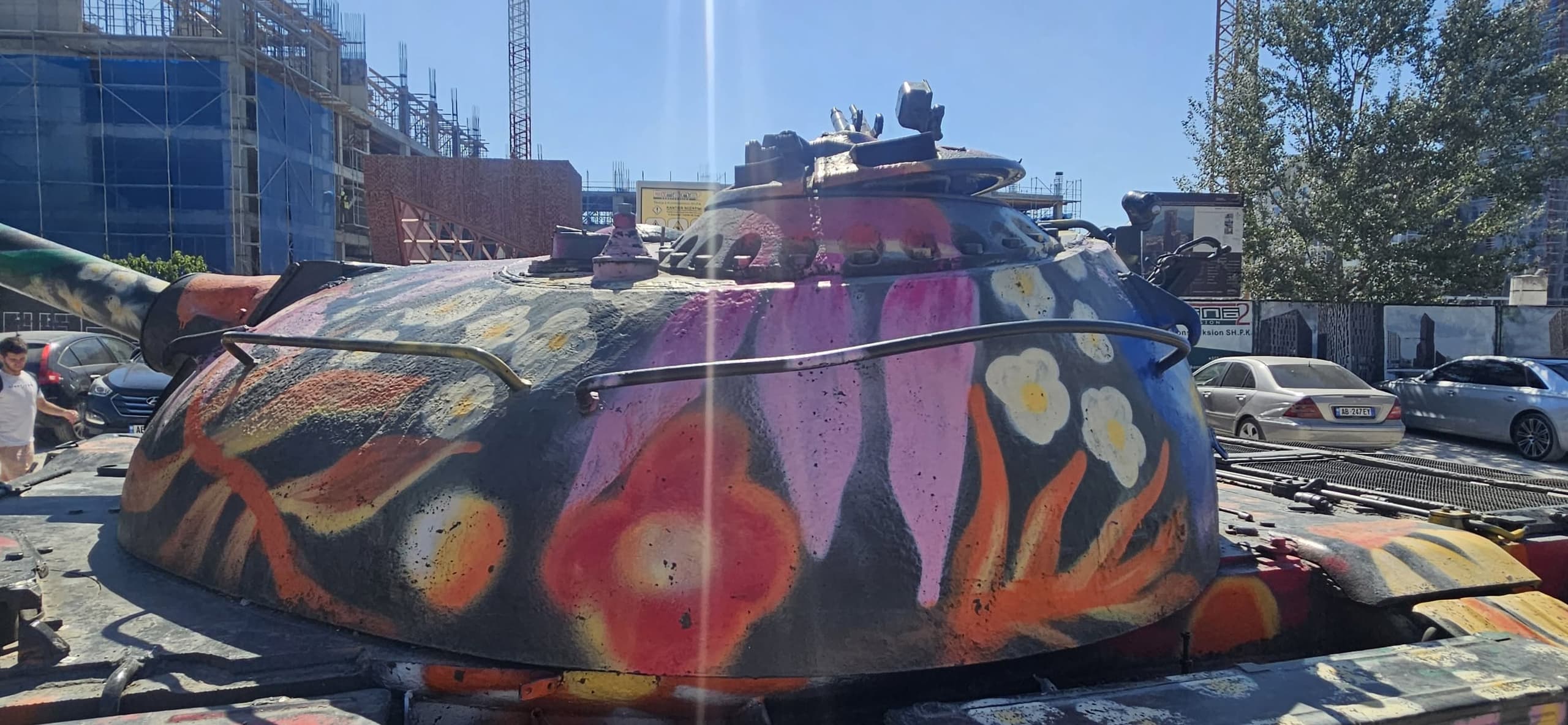
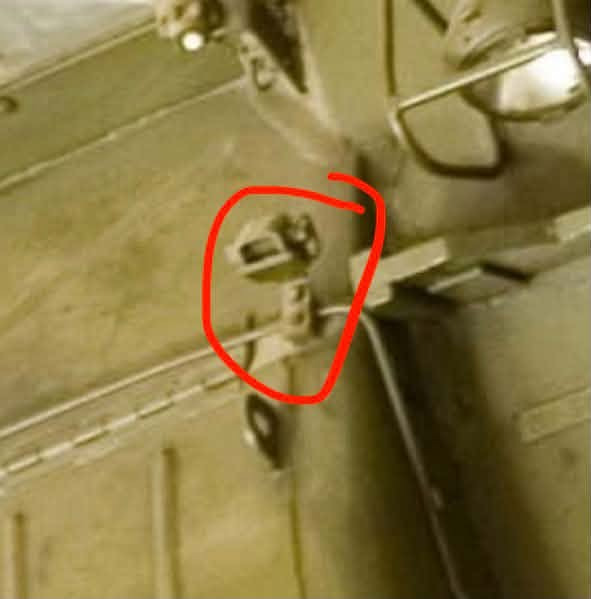
- Yes
- No
Overview
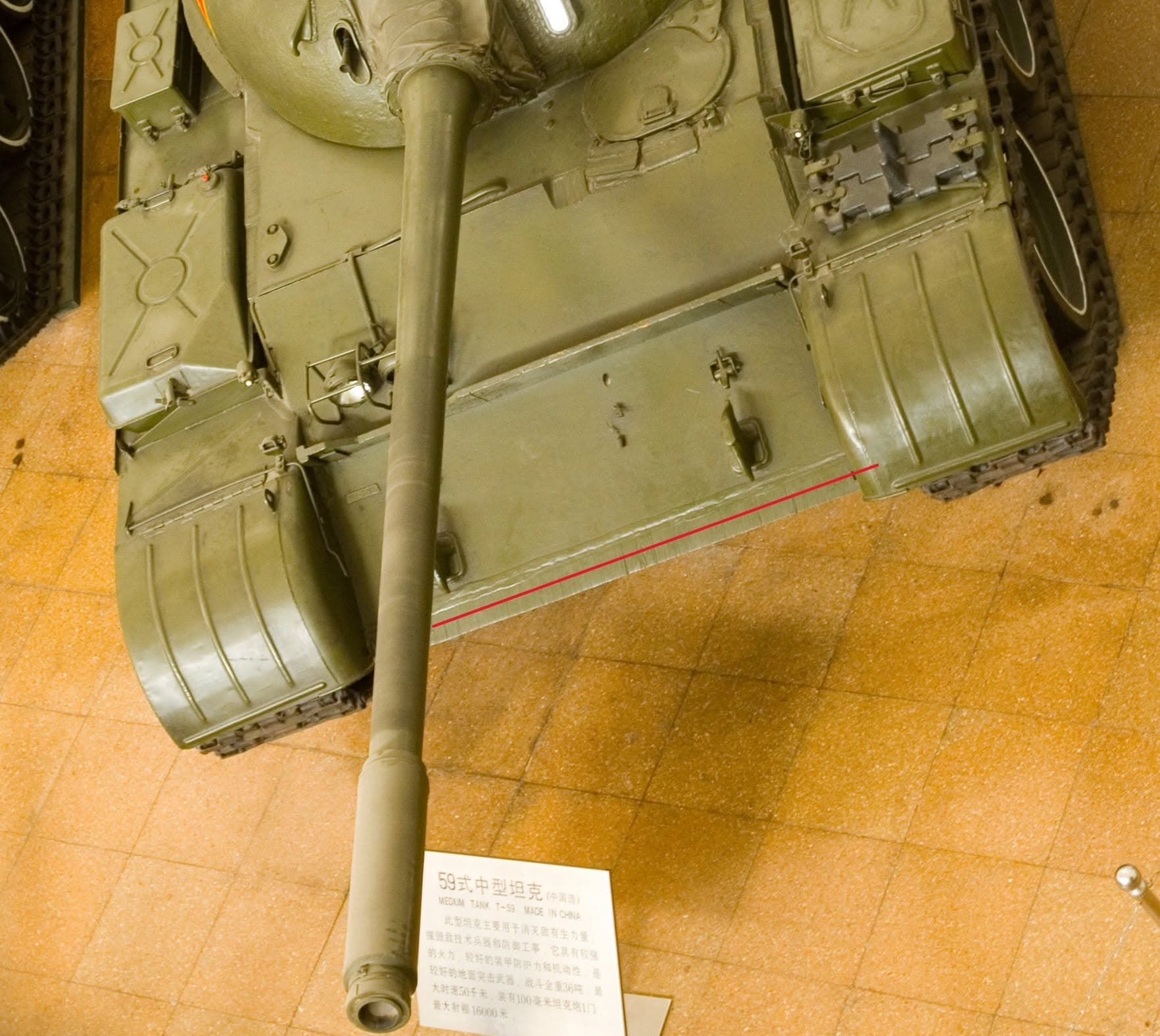
The T-54A was an improved version of the T-54-III (aka T-54 1951) featuring a single-plane gyrospcopic stabilizer. It was by far the most-produced T-54 variant at over 16,000 examples when including Chinese, Polish, and Czechoslovak license-production, and was only exceeded by the T-55A in terms of production numbers for any tank variant ever. As such, it was widely used by over 50 countries including every member of the Warsaw Pact. The T-54A is still in service with several nations today. It is also already found in-game, as the Type 59 in the Chinese tree.

History
Expand
The T-44 and Obj. 137
Development of the T-54 began with the T-44 developed in late 1943 and entering service in late 1944. Intended to replace the T-34, the T-44 was generally a disappointment particularly in terms of firepower. While the ZiS-S-53 was a substancial upgrade over the F-34 of the T-34s at the start of the T-44’s development, by 1944 the T-34-85 was already widely in service. Additionally, the T-44 was cramped and had a number of reliability issues. Attempts to rectify the firepower problem resulted in the T-44-100 of early 1945, but as the war came to an end and the urgent need for an upgraded MBT dissipated, the T-44 was taken back to the drawing board for a redesign. The Object 137 would be based on the T-44 and shared many components, but had a wider hull, much larger turret, 100mm D-10T cannon, and more reliable engine and transmission.
T-54
The Object 137 would enter service as the T-54 in 1948. Around 1,500 of this initial version, later designated the T-54-I to distinguish it from other models, were produced in 1947-1948. In 1948, an in-depth analysis of wartime losses determined that 90% of tanks were knocked out from hits 1m above the ground. To account for this, the T-54 was redesigned with thinner hull armour but a much thicker and also more spacious turret, this version being the T-54-II with around 1,300 produced from 1949 to 1951. The final member of the base T-54 series was the T-54-III, by far the most successful of the three, entered service in 1951 and unlike the previous models saw substantial export success, also being license-produced in Poland. The T-54-III had a new turret similar to the T-54-II, this turret being the basis for all future T-54/55 models. It has better curves and eliminated the rear overhang, which presented a dangerous opportunity for hostiles to wedge mines or grenades there to destroy the tank.
T-54A
The first “major” upgrade of the T-54 ironically had more in common with its predecessor than any other model. The T-54A was developed in 1954 following the 1953 restructuring of Uralvagonzavod. The T-54A featured the STP-1 “Gorizont” vertical stabilizer, the first Soviet tank to mount such a system. With this stabilizer, the cannon was designated the D-10TG. To balance the weight of the Gorizont, a counterweight was added to the end of the barrel. This was later replaced with a distinctive fume extractor. The T-54A also introduced a new gunner’s sight, IR spotlight, driver’s IR night sight, new radio, new engine filters and oil system for improved performance in tropical environments, OPVT wading snorkel, additional fuel tanks, and a few other changes. However, for the purpose of War Thunder, the stabilizer is the only relevant change. The T-54A entered production in 1954 and service in 1955. Poland would begin license-production in 1956, followed by Czechoslovakia in 1958. China began license production of the T-54A as the Type 59 the same year.
Service
The T-54A saw action during the combat debut of the T-54 family during the 1956 Hungarian Revolution, where one example was famously captured and driven to the British embassy. The T-54A has since been involved in nearly every war and conflict in which the Soviet Union participated. These include:
- Invasion of Czechoslovakia, 1968
- Sino-Soviet border conflict, 1969. Interestingly meant T-54As fought T-54As
- Afghanistan, 1979-1989
- Even the Russo-Ukrainian War, 2014-present. T-54As are being used in secondary roles such as improvised SPGs due to heavy tank losses and wear on artillery pieces
T-54As also saw extensive combat information foreign nations. The Vietnam War isn’t known for its tank conflict, but the NVA did operate and deploy a number of T-54As and Type 59s, though with limited success.
Perhaps the most extensive use of the T-54A was in the Middle East. Egypt was equipped primarily with T-54As and T-55As during the 1967 6-Day War, where they proved superior to Israeli armour. By the 1973 Yom Kippur War, this was no longer the case. The Arab nations were still predominantly using T-54/55s, but the IDF had since modernized with Magachs and Sho’t Kals. The T-54A’s lack of NVD equipment for the gunner or commander resulted in the famous Valley of Tears battles on the night of October 6-7th, where two pair of Centurions knocked out dozens of Syrian tanks. T-54As also served with both India and Pakistan through the conflicts of the 70s and 80s. Angola used T-54As extensively during the Angolan Civil War, proving effective against South African armour.
Further Developments
The T-54A was further developed into a number of variants. Most notable were the T-54AK command tank and the T-54B with a twin-plane stabilizer. These were also produced in Poland and Czechoslovakia, with the T-54B designated the T-54AM. The Su-122-54 was also built on a T-54A. The T-54A naturally had a huge number of specialized variants to do all the specialized things an armoured vehicle might do, from mine clearing to bridge laying to recovery.
Specifications
Expand
General
Length excluding gun: 6.45m
Length gun forward: 9.0m
Width: 3.27m
Height: 2.4m
Weight: 36.0 tonnes
Crew: 4
Automotive
V54 V-8 diesel engine
520hp
5 forward gears, 1 reverse gear
51/8 km/h in forward/reverse
14.44hp/tonne
Armour
Hull front: 100mm, 60deg (UFP), 54deg (LFP)
Hull sides: 80mm
Hull rear: 45mm, 16deg
Turret front: 160-200mm (cast)
Turret sides: 115-155mm (cast)
Turret rear: 65mm (cast)
Armament
100mm D-10TG
STP-1 “Gorizont” vertical stabilizer
-5/+18 degrees elevation
Max 8RPM (7.5s)
34 rounds ammunition
BR-412 APHE
BR-412B APHEBC
BR-412D APHECBC
BR-412P APCR
3BM-8 APDS
3BK-5 HEAT-FS
OF-412 HE
7.62mm SGMT, coaxial
3,500 rounds
12.7mm DShK, cupola-mounted
250 rounds
The T-54A in-game
The T-54A would provide a great boost to the Soviet 8.0 lineup. Currently the T-54s struggle especially in an uptier with their poor gun handling. The T-54A with its vertical stabilizer would remedy this without being overpowered as otherwise it’s identical to the '51. It’d obviously be BR 8.0 like its Chinese copy and foldered under the T-54 '51. Personally I’d split the T-54s into two folders, the 47/49 and 51/A, ideally with the 49 losing 3BM8 and dropping down to 7.7 to partner with the 47. The T-54A also has great potential for addition to Germany and Italy (Hungary), two trees sorely lacking well-protected MBTs around the BR. Israel also operated some T-54As as Tiran 4s, though with 5 Magachs, 2 Tirans, and a Sho’t Kal at the BR the tree isn’t as lacking another 8.0 MBT. Beyond its gameplay advantages, the T-54A’s historical significance as the main T-54 variant demands its inclusion in the game in my opinion.
Gallery
Expand


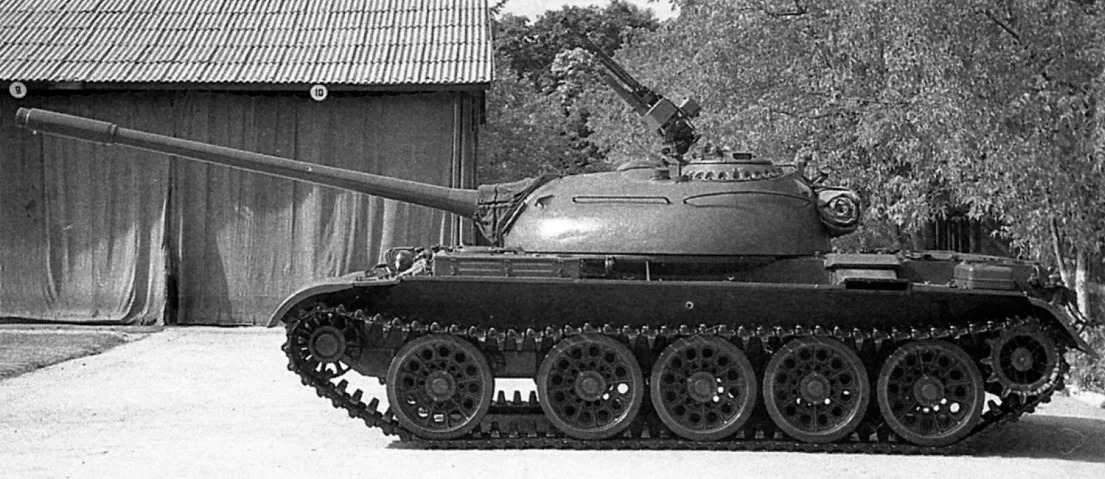
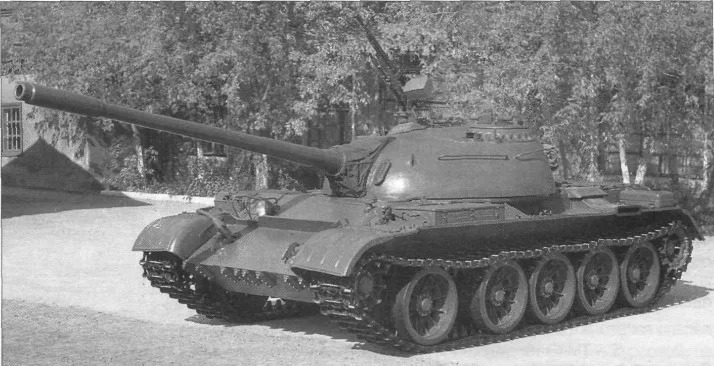
The T-54A can be easily distinguished from the T-54-3 from its distinctive fume extractor. It can be distinguished from the T-55 be the small ventilator dome stop the turret. The T-54A and B are visually indistinguishable


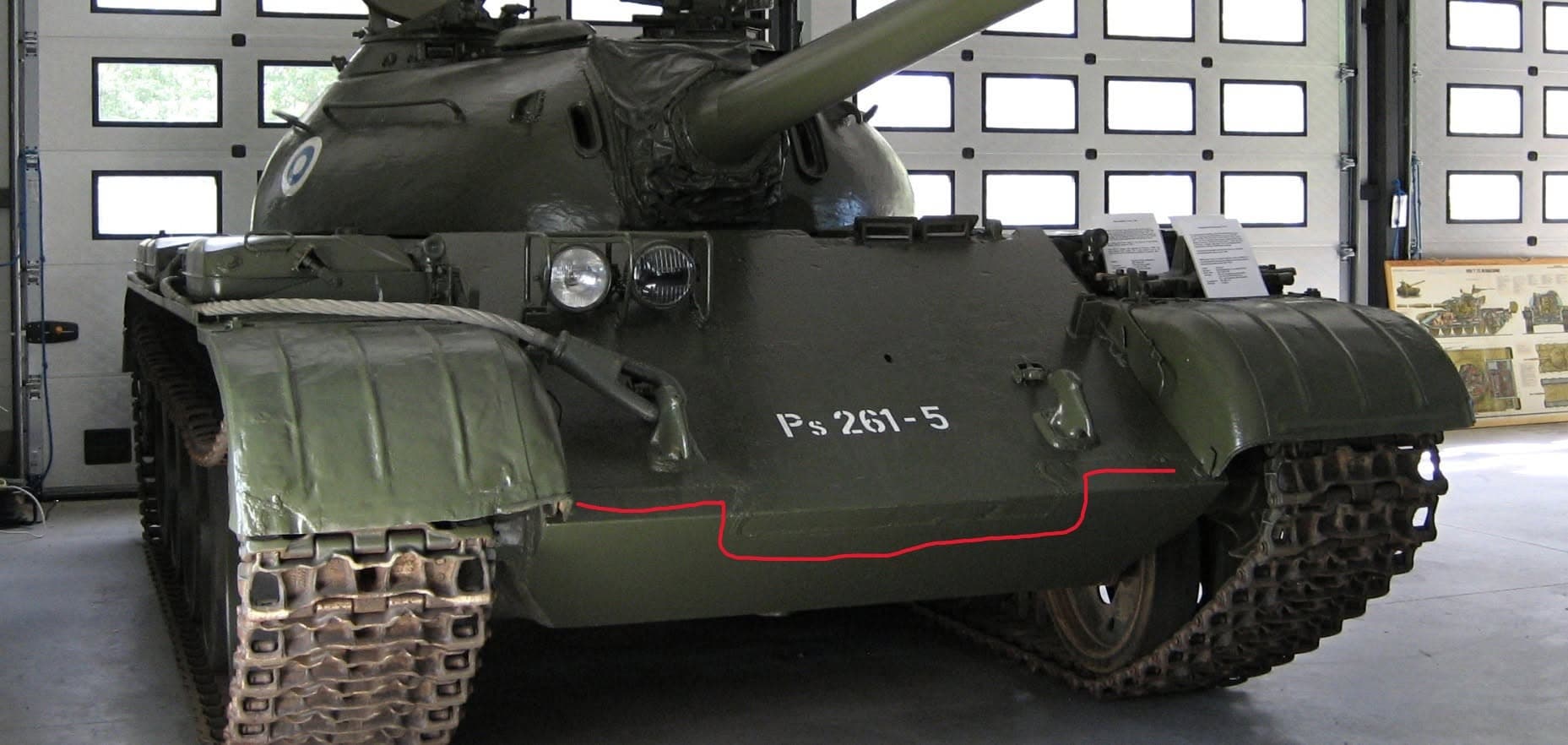
The T-54A was used by every Warsaw Pact, including Germany and Hungary above. Unfortunately, Finland went straight from the T-54-III to the T-55A so the T-54A isn’t available for Sweden

This T-54A was famously knocked out during the 1956 Hungarian Revolution, then repaired and driven to the British Embassy for evaluation. A detailed analysis of this vehicle determined it was superior to the M48 and Centurion Mk 5 of the time, resulting in the development of the ubiquitous Royal Ordinance L7 as well as the M60 and Centurion Mk 10 to mount it

T-54As during the Invasion of Czechoslovakia following the 1968 Prague Spring

While the Soviet-Afghan War is generally better remebered for more modern tanks such as the T-62M, T-55AM, and BMD-1, the T-54A also played a significant role in the conflict

Even today, the T-54A/B continues to see combat in Ukraine (note the use of fume extractor and ventilator to identify the tank!)

North Vietnam deployed both Soviet-supplied T-54As and Chinese-supplied Type 59s during the Vietnam War, where they saw limited success until the end of the war when American forces withdrew


Probably the largest use of the T-54A came during the Yom Kippur War. Many were captured and pressed into service as Tiran 4s
Sources