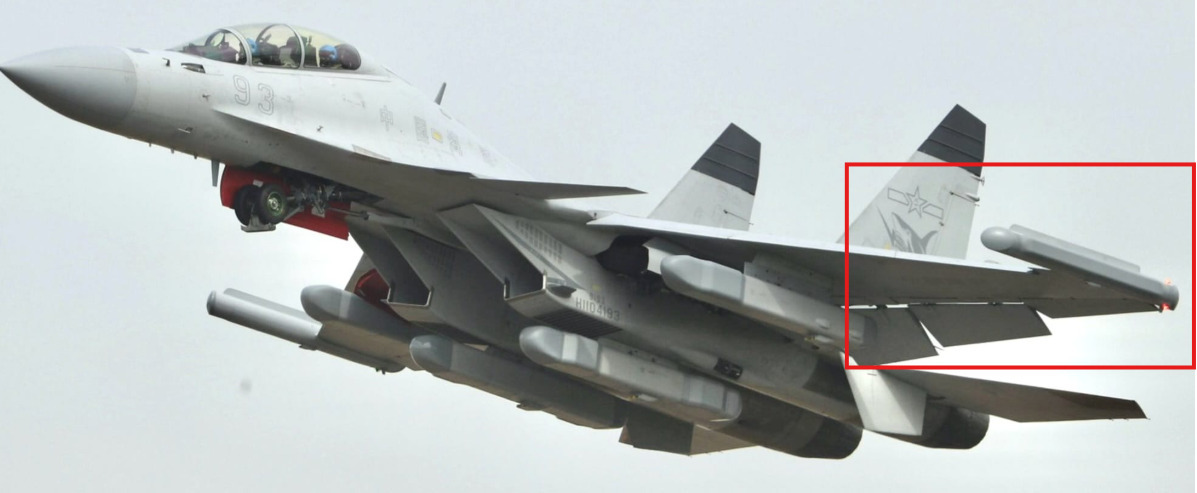
at the front and back of the pods on both the wing tip mounted ones and wing mounted ones
1 Like
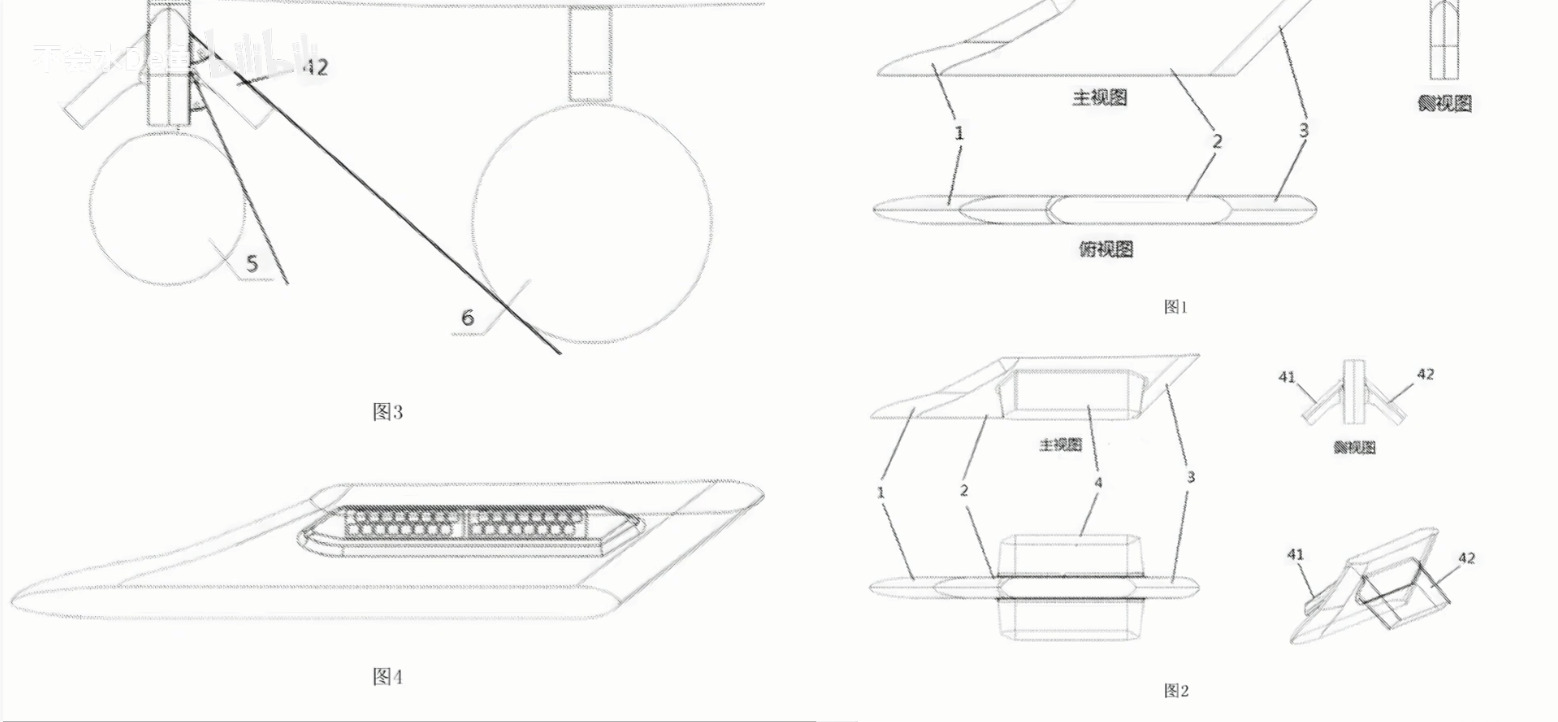
Oh my god, this BOL pylon looks so simple and effective in structure, and it even has three-view drawings. Are there any other details about it? Such as its designation and the number of countermeasures it carries?
Conformal antennas at the roots of the canards and the leading edges of the flaps, an antenna at the tip of the tail sting, antennas on the dorsal spine, and when performing high-power jamming, the AESA radar’s own transmitting antenna is directly used.
1 Like
I must point out that this pod is not removable—it’s hardwired into the J-15D’s onboard electronic warfare system. It’s also not an ECM pod, but rather an ESM system. The ECM pods are those big ones mounted under the wings.
3 Likes
Iirc it’s the N001M, which changes nothing because ground modes don’t work in WT
It seems from the display board introduction that this is a new universal type of equipment integrating rwr and maws, similar to what’s used on the Typhoon and Rafale. Moreover, it can cover 360 and detect more bounds than old one. It would be great if this system could be fitted to the J-10C and J-15T instead of kj8602a.
360 degree coverage doesn’t necessarily mean spherical coverage, it could just be referring to azimuth only

Is it possible that they have a different solution for the J-15T countermeasures issue? This was likely our best chance to get more countermeasures for the J-15. Could we ask on a forum if they’re working on anything for the J-15T?
i mean in a perfect singled out scenario, something like the gripen-e a br step below it could most likely outcompete it…
yes, but the ability to detect more bands is also very helpful for cas
Looking at the patent description, this appears to be more like a mounting pylon, with the jamming system being just one of its functions—a “parasitic weapons bay on the aircraft’s mounting beam.” It’s unclear what specific weapons it can carry, but it is clear that the jammer pod is an integral part of it.
A single mounting beam can carry a total of 64 countermeasure flares. If only one such beam is allocated to each wing, the aircraft can carry an additional 128 countermeasure rounds.

2 Likes
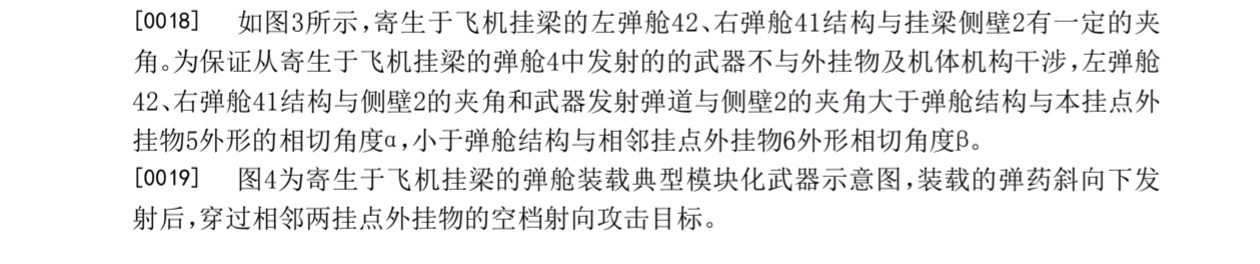
According to the patent report, its name is quite straightforward: “A parasitic weapons bay on an aircraft’s mounting beam.” Among the retrieved patent documents, the images only include some orthographic views as shown above, with no further details provided. Regarding “Figure 4” in the patent, which illustrates the mounting of countermeasures, the patent describes it as follows: “Figure 4 is a schematic diagram of a parasitic weapons bay on an aircraft’s mounting beam loaded with a typical modular weapon. After the loaded ammunition is launched obliquely downward, it passes through the gap between two adjacent external stores on the mounting points and proceeds toward the target.”
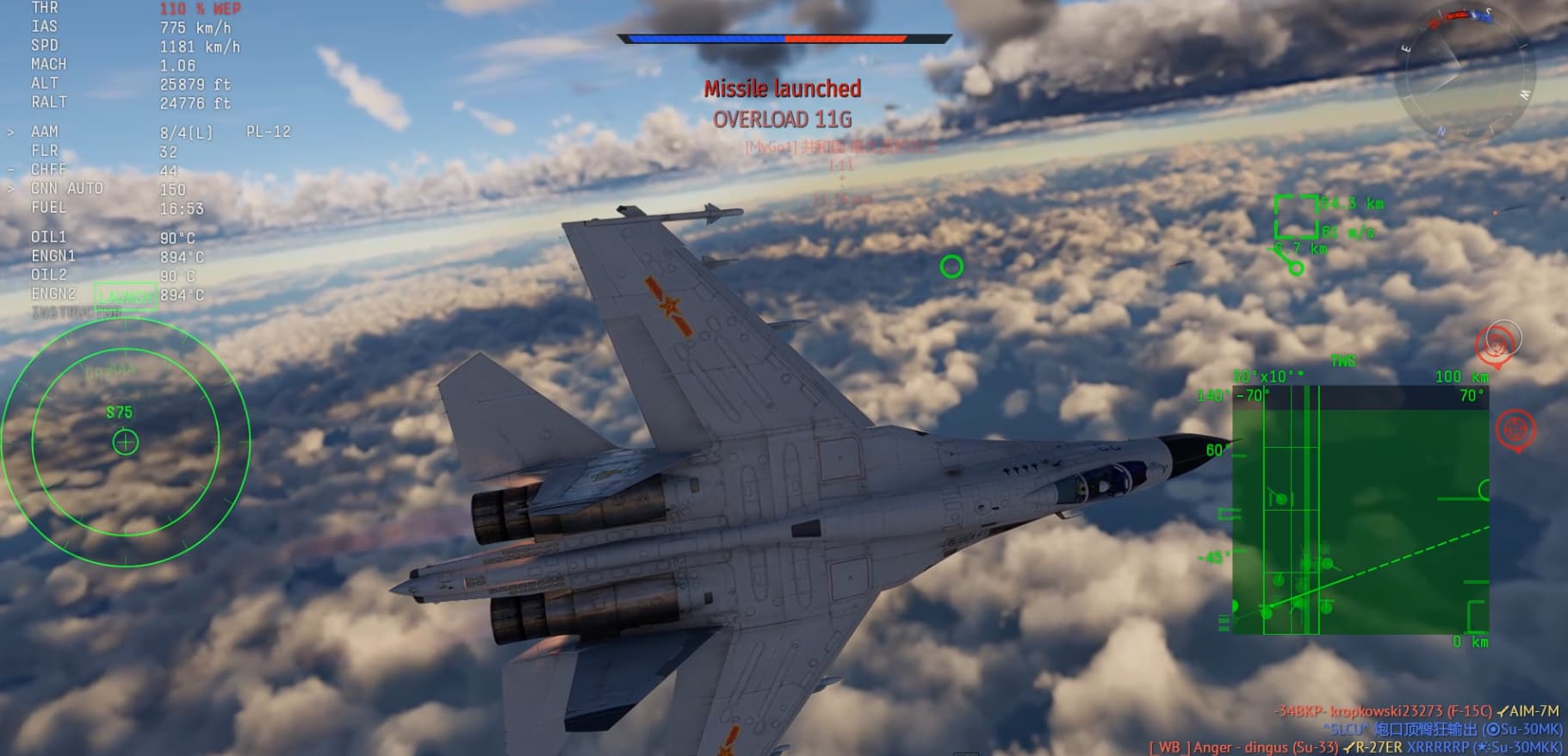
S75 is the fallback that the rwr uses whenever something bugs out, from what i have seen
especially since the S75 would be labeled as a “?” if one pinged you


1 Like
it was going back and forward between “?” and S75 in the engagement
tbh i feel like i see “?” constantly whenever its a Chinese jet
1 Like
Except I’ve never seen datalink work regardless of condition in sim lol I don’t change my radar function very often especially not while actively tracking a plane
7 Likes
i used Yandex, I do not know Chinese.
2 Likes
Should the J-11A have a different RWR? I remember reading that it should on the forums a while ago…
If it’s true, have any bug reports been made?