https://community.gaijin.net/issues/p/warthunder/i/28mUU9e0lu1y
https://community.gaijin.net/issues/p/warthunder/i/XteZVGJvsK41
Looks like gaijin is really serious into making Roma unplayable
4 Likes
Bad news…
Some ship has ‘realistic’ hull flooding compartment and having superiority on survival than others seems not good…
I wish every ships would have flooding compartment of Marat/Kommuna/Nevada one day, in the near future.
1 Like
I think they loopholed you with the second one.
You focused on the compartments but the real problem is that the crew is not in “battle ready” positions like with other ships.
Crew should be manning machinery and such during combat, not strolling around in compartments.
As they don’t know how to code overlapping hitboxes ( see the volumetric hell in GRB ) I suggest you redo the report focusing on the crew position, explaining how they should be linked to the boilers, radio stations, transmissions and ammo modules rather than external compartments.
They did a devblog sometime ago explaining this but I can’t manage to find it.
Right now the crew is litterally on the wrong deck and those colors should be flipped ( as it was IRL)
1 Like
I wasnt the one that made the reports tho, just looking into the reports to see what the status of the bug reports are
Sorry, didn’t notice.
@LafayеtteGPool, I’ll ping you here.
If you’ll ever read this try rewriting your report focusing on crew placement in a “battle ready” state instead of the compartments, I’ll paste a possible solution just below:
If you’ll ever want to redo the report I suggest starting from this point to avoid possible loopholes.
Hi.
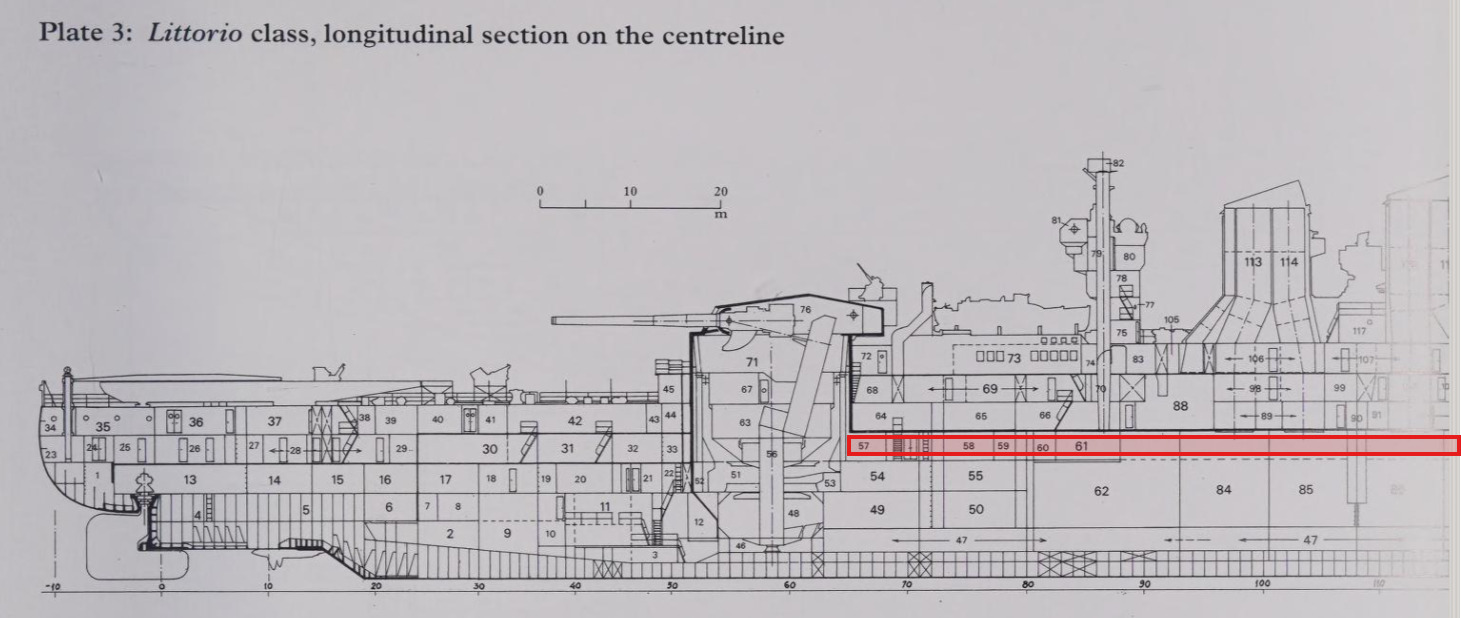
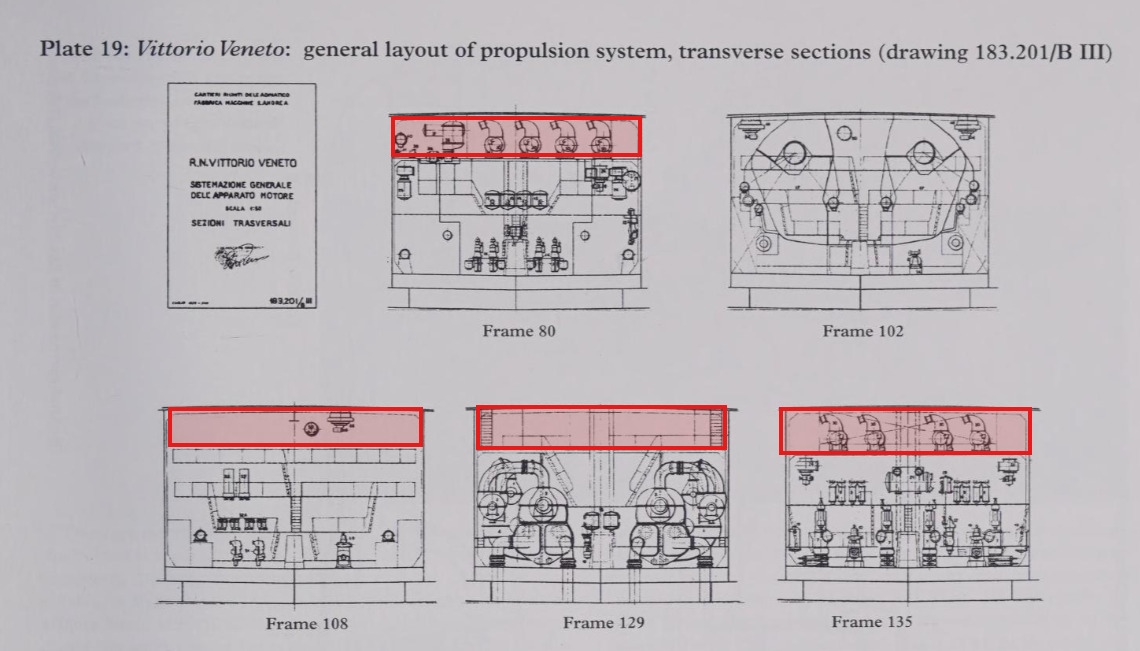
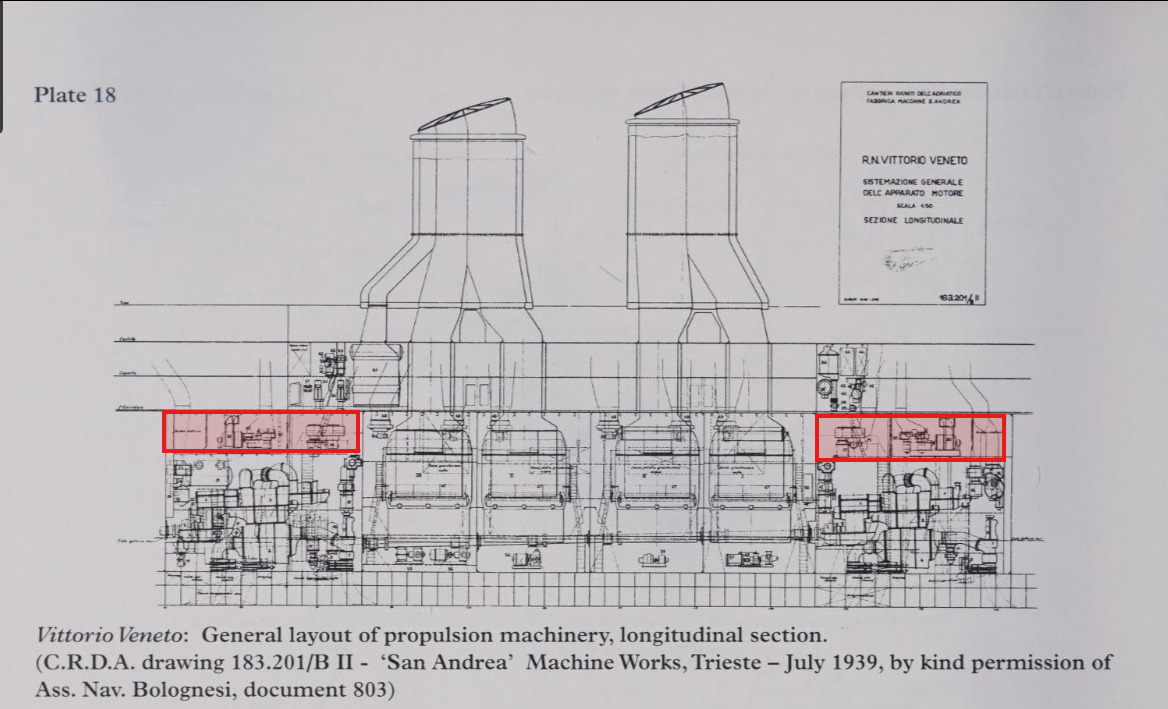
I understand what you are talking about, but there is one catch - the standard for the distribution of the crew across the modules.
For example, there are 20 people in the main guns turret, 70 in the engine rooms, and so on.
Therefore, the excess crew that is not distributed among the modules is allocated into crew compartment.Another problem is the modeling of the module by compartment - even if the boiler takes up less space, in the model it occupies a whole compartment and there is no space left under the armor deck.
Although I can use this space in the engine room.
1 Like
If we can’t move more crew into the engine room for coding issues splitting the mid ship compartment can be a possible solution as you hinted.
It can solve the bizzarre problem where Roma is, right now, the only new BB with the mid compartment above the main armored deck:
Iowa:
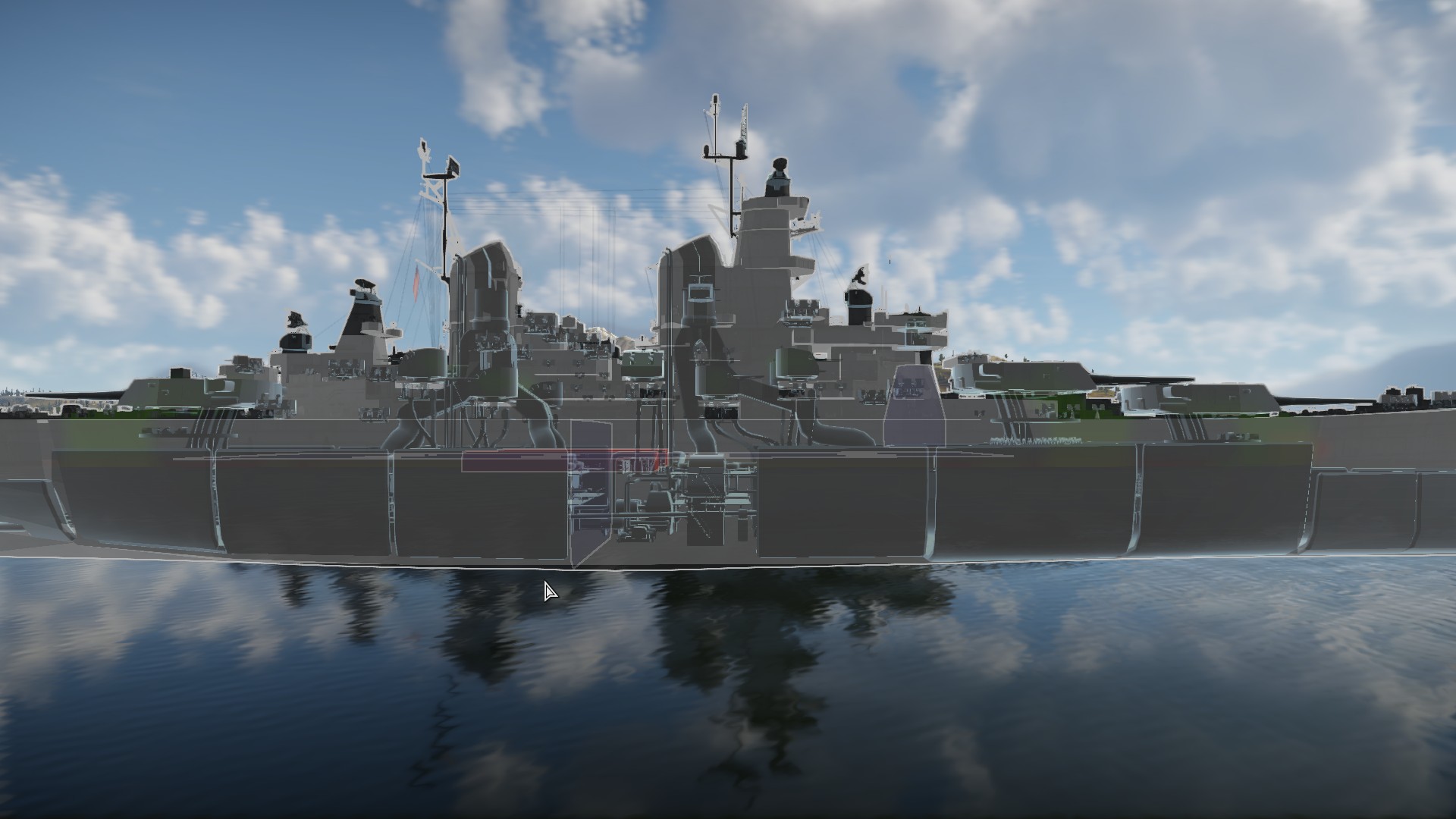
Yamato:
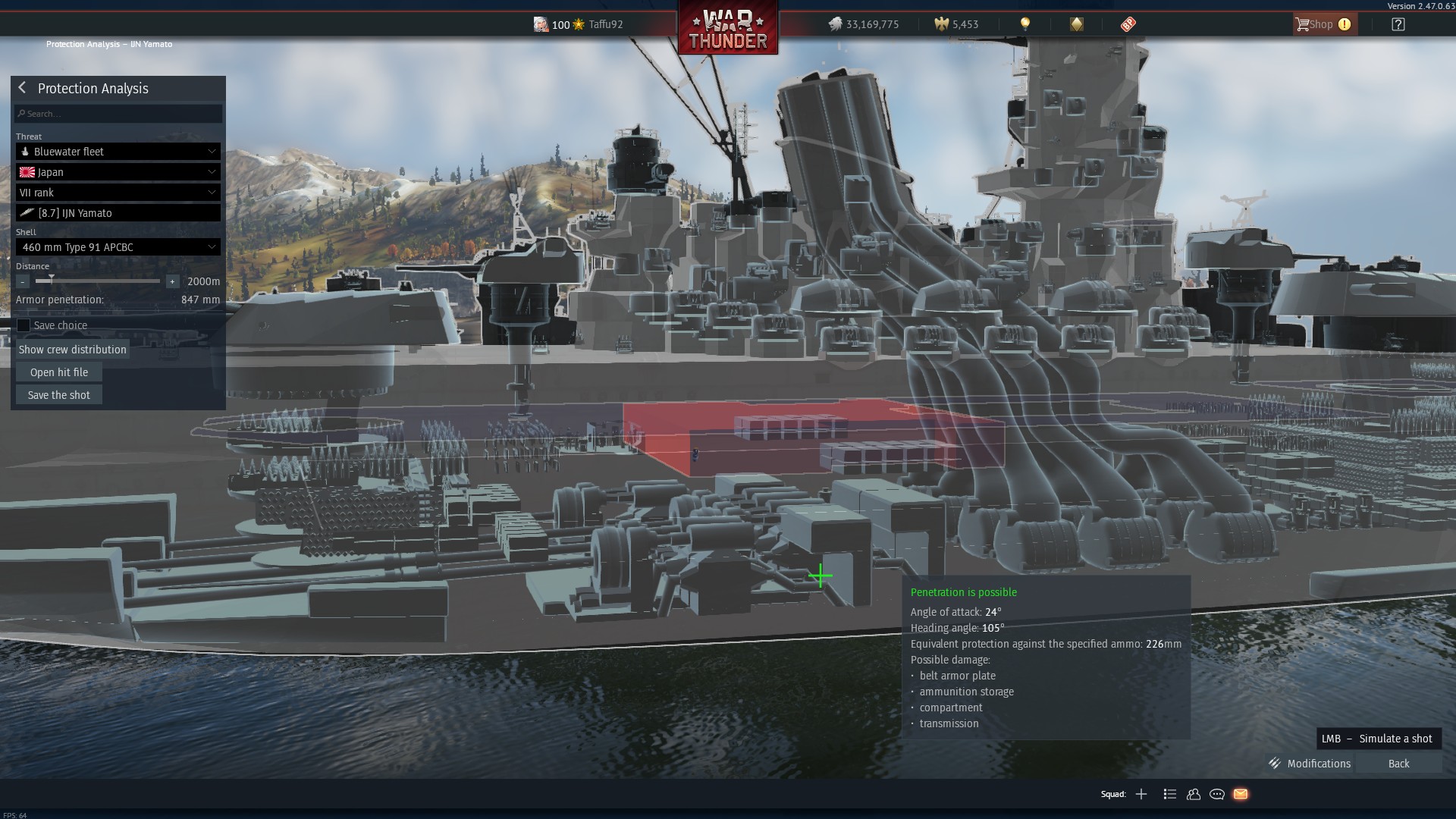
Richelieu:
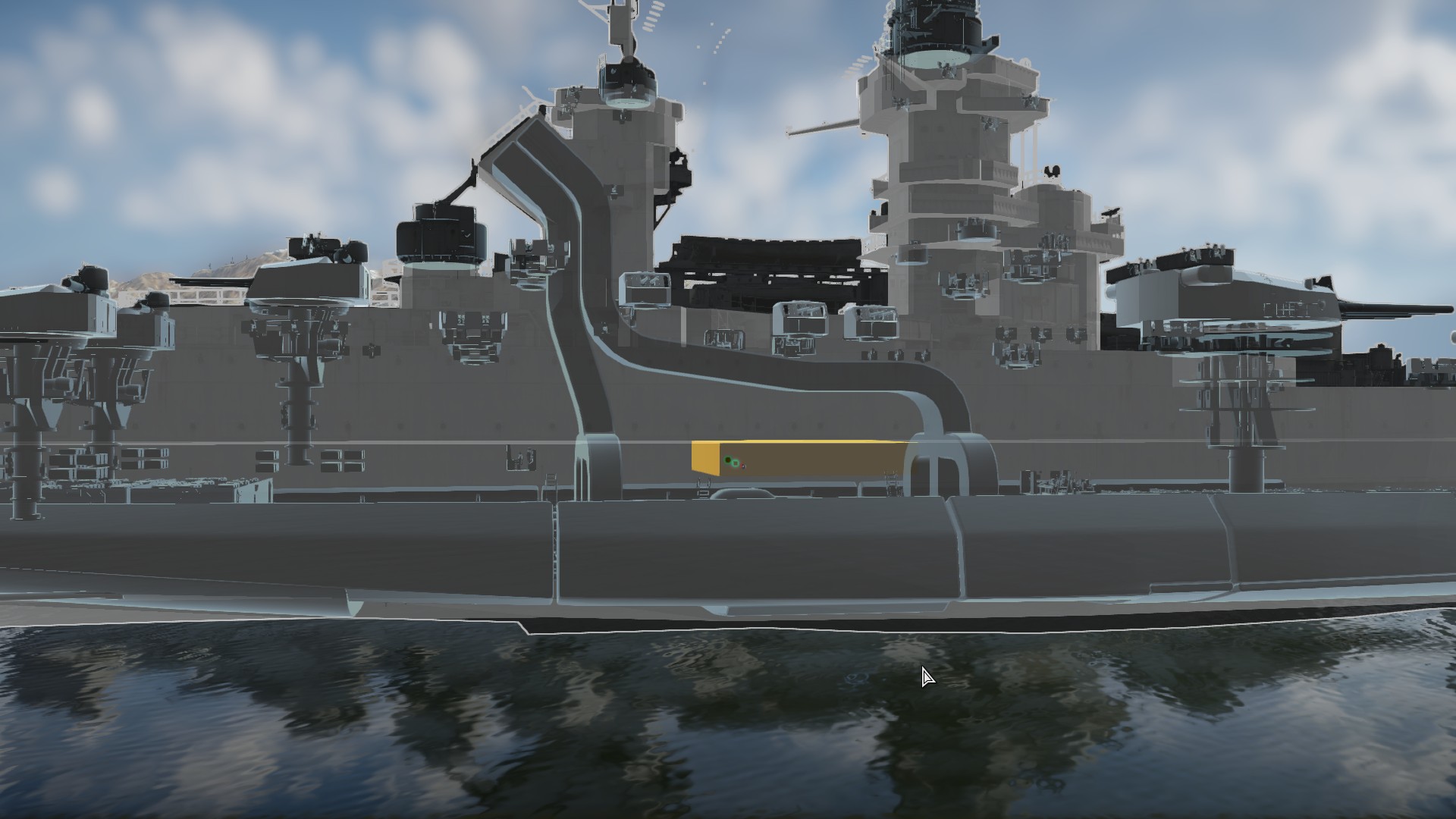
Vanguard:
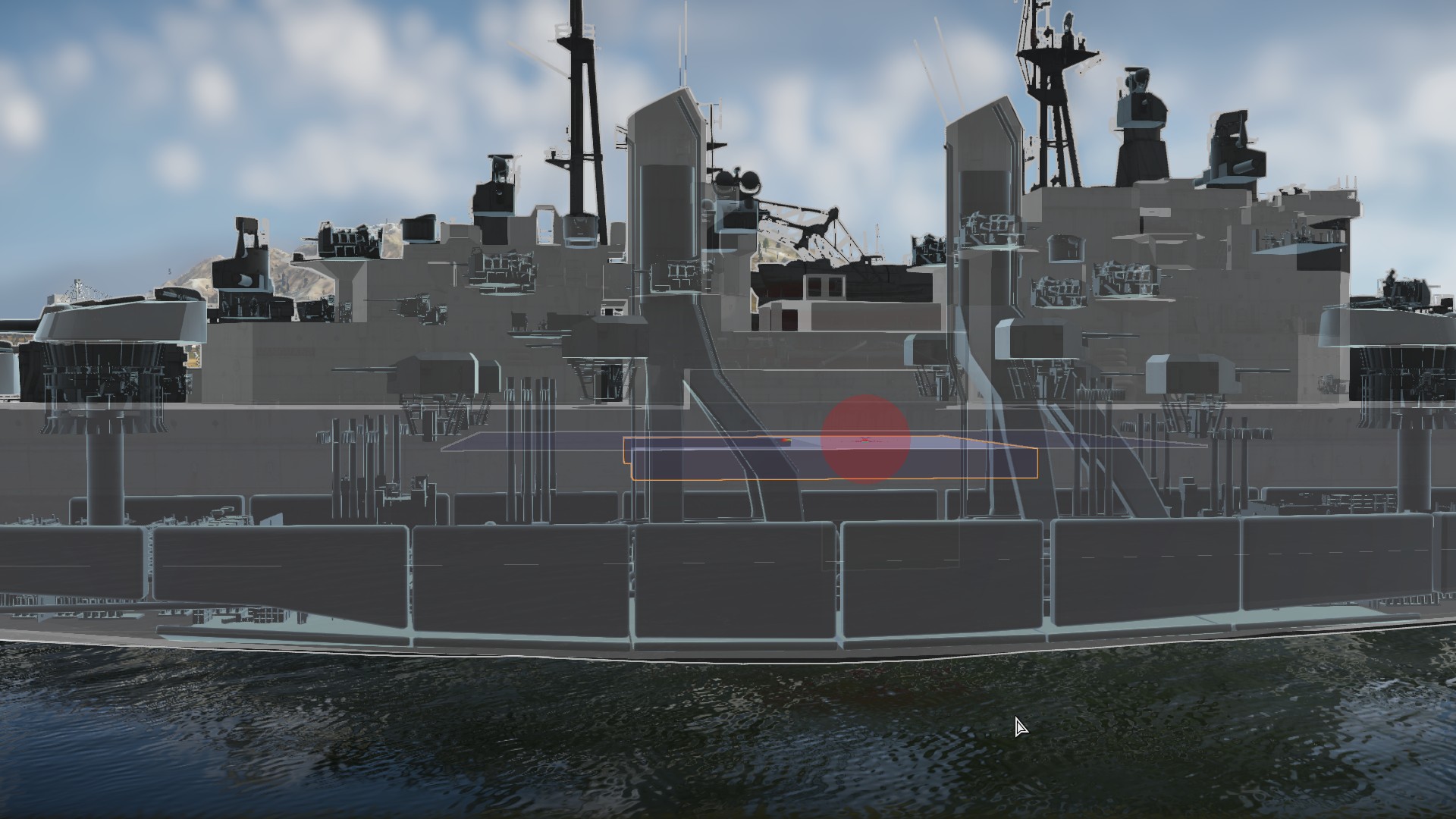
Roma:

Basically a random heavy HE shell or a bomb can take out a good chunk of the crew with no difficulty, not really the safest place to be in a combat scenario.
2 Likes
richielau is only slightly worse than bismarck
she gets better pen for a slightly worse reload and roughly same explosive mass and only slightly worse armor with better AA and similar secondarys
so id say richileu ties for best 8.3 maybe even better since you can ammo it as easy as bismarck with elavator fires not to mention armor belt is thicker but turtle back is thinner so almost same armor wise not to mention you can use all guns while angled giving you a above average salvo from front which is ideal
not to mention that the fire nerf is artficial as powder rooms where subdivied and where flooded when not in use so for example turret dora on has fore and after comparment for powder charges one flooded at a time while other was in use for saftey which gaijin hasnt modeled and they could be unflooded for use within 30-60seconds depeding on rooms
Richelieu
Spoiler
Primary armament
2 × Turret — 4 × 380 mm/45 model 1935 gun
Ammunition832 rounds
Reloadbasic crew → aces
44.5 → 34.2 s
Vertical guidance-5 / 35°
Turret Rotation Speed
Horizontal5 °/s
Vertical5.5 °/s
Available ammunition
Ammunition Type Armor penetration (mm) at a distance:
1000 m 2500 m 5000 m 7500 m 10000 m 15000 m


380 mm OEA Mle 1949 HE HE 112 107 100 93 86 75

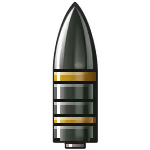
380 mm OPF Mle 1936 APCBC APCBC 712 681 633 589 548 474

380 mm OPF Mle 1943 APCBC APCBC 741 709 659 613 571 494
Secondary armament
3 × Turret — 3 × 152 mm/55 model 1930 gun
Ammunition3,600 rounds
Reloadbasic crew → aces
10.4 → 8 s
Vertical guidance-10 / 85°
Turret Rotation Speed
Horizontal12 °/s
Vertical8 °/s
Available ammunition
Ammunition Type Armor penetration (mm) at a distance:
1000 m 2500 m 5000 m 7500 m 10000 m 15000 m
152 mm OEA Mle 1937 HE HE 42 42 42 42 42 42

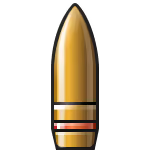
152 mm OPF Mle 1937 SAPBC SAPBC 138 120 93 70 53 39
152 mm OPF Mle 1943 APCBC APCBC 312 277 226 182 145 97
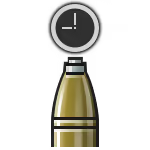
152 mm OEA Mle 1936 HE-TF HE-TF 42 42 42 42 42 42
Anti-aircraft armament
6 × Turret — 2 × 100 mm/45 model 1930 gun
Ammunition4,800 rounds
Reloadbasic crew → aces
4.9 → 3.7 s
Vertical guidance-10 / 80°
Turret Rotation Speed
Horizontal10 °/s
Vertical5 °/s
Available ammunition
Ammunition Type Armor penetration (mm) at a distance:
100 m 1000 m 2000 m 3000 m 4000 m 5000 m
100 mm OEA Mle 1928 HE-TF HE-TF 20 17 16 16 16 16
14 × Turret — 4 × 40 mm Bofors L/60 Mark 2 gun
Ammunition112,000 rounds
Belt capacity4 rounds
Reloadbasic crew → aces
0.5 → 0.4 s
Fire rate156 shots/min
Vertical guidance-15 / 85°
Turret Rotation Speed
Horizontal35 °/s
Vertical28 °/s
Available belts
50 × Turret — 20 mm/70 Oerlikon Mk.II autocannon
Ammunition90,000 rounds
Belt capacity60 rounds
Reloadbasic crew → aces
5.2 → 4 s
Fire rate450 shots/min
Vertical guidance-3 / 65°
Turret Rotation Speed
Horizontal75 °/s
Vertical65 °/s
Available belts
Economy
Repair costBasic → Reference
AB33,325 → 41,856 
RB37,198 → 46,721
Crew training330,000
Experts1,150,000
Aces2,800 
Research Aces1,080,000 
Reward multiplierAB / RB
450 / 600 %
232 %
Total cost of modifications323,000
516,000
Talisman cost2,800
Bismarck
Spoiler
Scout plane
Armour
Citadel220 / 320 / 100 mm
Main fire tower360 / 220 / 320 mm
Hull25 mm (steel)
Superstructure16 mm (steel)
Number of sections9
Displacement50,900 t
Crew2,221 persons
Max speed
Forward57 km/h
Backward20 km/h
Primary armament
4 × Turret — 2 × 38 cm/52 SK C/34 cannon
Ammunition1,008 rounds
Reloadbasic crew → aces
29.5 → 22.7 s
Vertical guidance-5 / 30°
Turret Rotation Speed
Horizontal6 °/s
Vertical5.4 °/s
Available ammunition
Ammunition Type Armor penetration (mm) at a distance:
1000 m 2500 m 5000 m 7500 m 10000 m 15000 m
380 mm Spgr. L/4.6 Kz HE 96 92 84 77 73 73
380 mm Psgr. L/4.4 APCBC 701 666 613 563 517 435
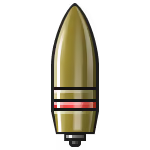
380 mm Spgr. L/4.5 Bdz HE 524 498 458 421 387 325
380 mm Spgr. L/4,6 Zt.Z HE-TF HE-TF 96 90 81 73 73 73
Secondary armament
6 × Turret — 2 × 15 cm/55 SK C/28 cannon
Ammunition2,400 rounds
Reloadbasic crew → aces
9.8 → 7.5 s
Vertical guidance-10 / 70°
Turret Rotation Speed
Horizontal8 °/s
Vertical9 °/s
Available ammunition
Ammunition Type Armor penetration (mm) at a distance:
1000 m 2500 m 5000 m 7500 m 10000 m 15000 m
15 cm Spgr. L/4.5 Kz (m.Hb) HE 37 37 37 37 37 37
15 cm Pzgr. L/3.7 (m.Hb) APCBC 260 228 181 141 109 72
15 cm Spgr. L/4.4 Bdz (m.Hb) SAPBC 124 106 80 60 43 35
Anti-aircraft armament
8 × Turret — 2 × 10.5 cm/60 SK C/33 AA cannon
Ammunition6,720 rounds
Reloadbasic crew → aces
4.7 → 3.6 s
Vertical guidance-8 / 80°
Turret Rotation Speed
Horizontal10 °/s
Vertical8 °/s
Available ammunition
Ammunition Type Armor penetration (mm) at a distance:
1000 m 2500 m 5000 m 7500 m 10000 m 15000 m
10.5 cm Sprgr. L/4.4 Zt.Z HE-TF 21 20 20 20 20 20
8 × Turret — 2 × 3.7 cm SK C/30 mounting
Ammunition32,000 rounds
Reloadbasic crew → aces
2.6 → 2 s
Vertical guidance-8 / 85°
Turret Rotation Speed
Horizontal19.6 °/s
Vertical15 °/s
Available ammunition
Ammunition Type Armor penetration (mm) at a distance:
10 m 100 m 500 m 1000 m 1500 m 2000 m
37 mm Spgr L/4.1 Lh 37 HE 7 7 6 5 5 5
2 × Turret — 4 × 2 cm/65 C/38 automatic cannon
Ammunition16,000 rounds
Belt capacity40 rounds
Reloadbasic crew → aces
5.2 → 4 s
Fire rate480 shots/min
Vertical guidance-10 / 80°
Turret Rotation Speed
Horizontal35 °/s
Vertical25 °/s
Available belts
12 × Turret — 2 cm/65 C/38 automatic cannon
Ammunition24,000 rounds
Belt capacity40 rounds
Reloadbasic crew → aces
5.2 → 4 s
Fire rate480 shots/min
Vertical guidance-10 / 60°
Turret Rotation Speed
Horizontal65 °/s
Vertical55 °/s
Available belts
Economy
Repair costBasic → Reference
AB32,070 → 41,755
RB35,797 → 46,608
Crew training330,000
Experts1,150,000
Aces2,800
Research Aces1,080,000
Reward multiplierAB / RB
450 / 600 %
232 %
Total cost of modifications320,000
508,000
Talisman cost2,800
Research order:
heres side by side comp from gaijin as my evidence
Link leads to nothing.
The Canadian shell scandal of WW1 had nothing to do with naval shells: that was about the politics of early war industrialization and concerned land artillery and fuzes. Your citation in this post above as a result contains NONE of the quotes you’ve given, which you’ve apparently taken from some secondary source without any attribution.
So you picked a couple quotes from randoes off the internet and tried to back them up with a basically fake link, assuming no one here knows anything about Canadian military procurement scandals (wrong!) and could spot the lie on sight. That’s the exact OPPOSITE of what @HK_Reporter does for this community every single day.
Sure sure, and that why after scandal new shells were produced in half a year.
The canadian article you linked doesn’t mention
Jutland
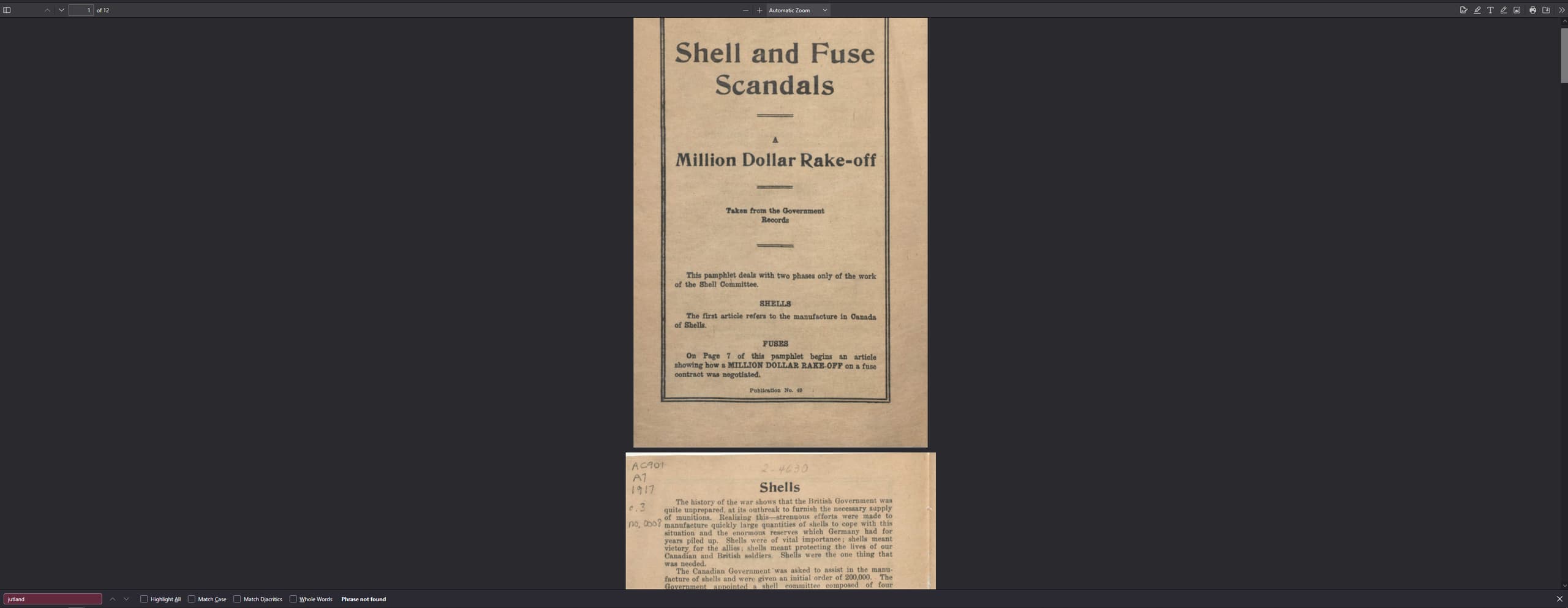
naval
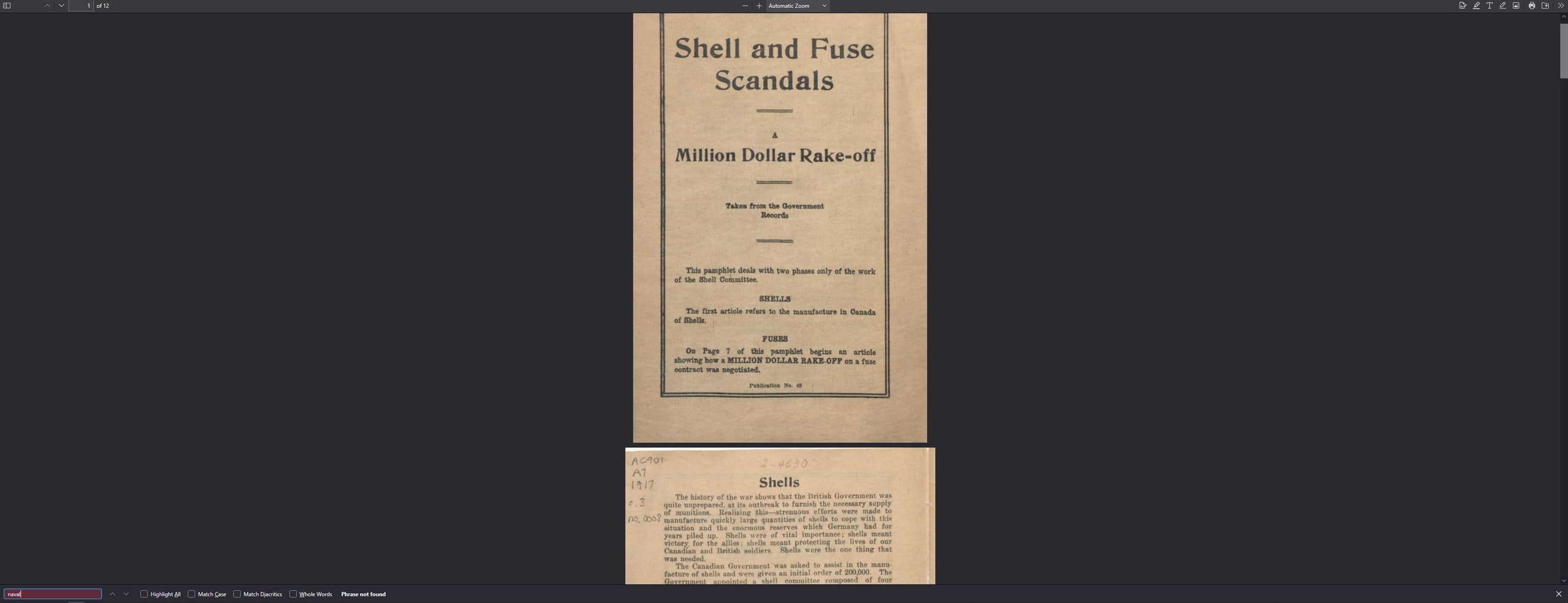
or battleship
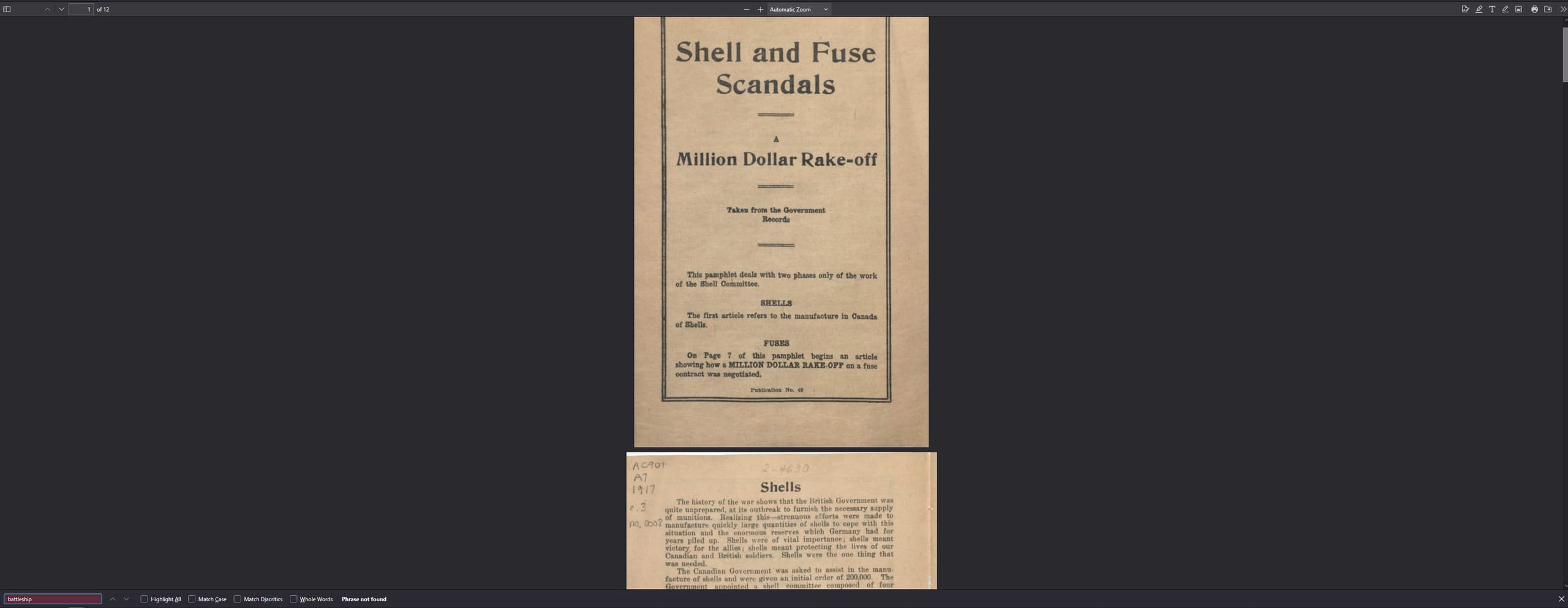
Once
The other quote you posted comes from a blog post Naval Gazing Main/Shells at Jutland
which doesnt cite its sources for the claims made in the article
1 Like
According to Robert K. Massie in his book “Castles of Steel; Britain, Germany and the winning of the great war at sea”, the british first learned about their shells breaking up and exploding upon impact with armour from a swedish naval attaché during a lunch party aboard HMS Lion in August 1916.
This spiked the development of the green boy shells which would not arrive in numbers until April 1918.
(Chapter 34: Jutland: Aftermath; pages 667-668)
Wasn’t the Baden scuttled at Scapa Flow? How can you reliably trial somethig which was rotting on the bottom of the sea for a couple of years? Or was is quickly recovered?
In the first place there would be simply several doors and security walls between a turret’s fighting compartment, the elevator, the elevator shaft and the magazine compartments. There is virtually no way a fire might just spread all the way down to the powder bags.
The only way it might have happened was at Jutland, as all doors were left open on certain ships. To improve the fire rate. With catastrophic results.
The second example would be Gneisenau, which was at a dockyard as RAF bombed the deck. Similar to example #1 there were massive security violations. The battleship was under refit and the work crews left some doors / air vents open and failed to empty the magazines. Which would have been mandatory for any ship under repair in a dockyard. So some fumes ignited the magazine. But it has to be said that Gneisenau suffered internal damage only, kept afloat and next day steamed eastwards to a more secure facility.
1 Like
Baden was scuttled on the 21st of June and refloated on the 19th of July 1919 and then went into drydock
3 Likes
Guys, Naval mode still sucks? Genuine question, was thinking about giving it a chance once again
Give it a chance
Well the gameplay is not ideal (things like map design, server performance and game modes). But it’s definitely playable
1 Like