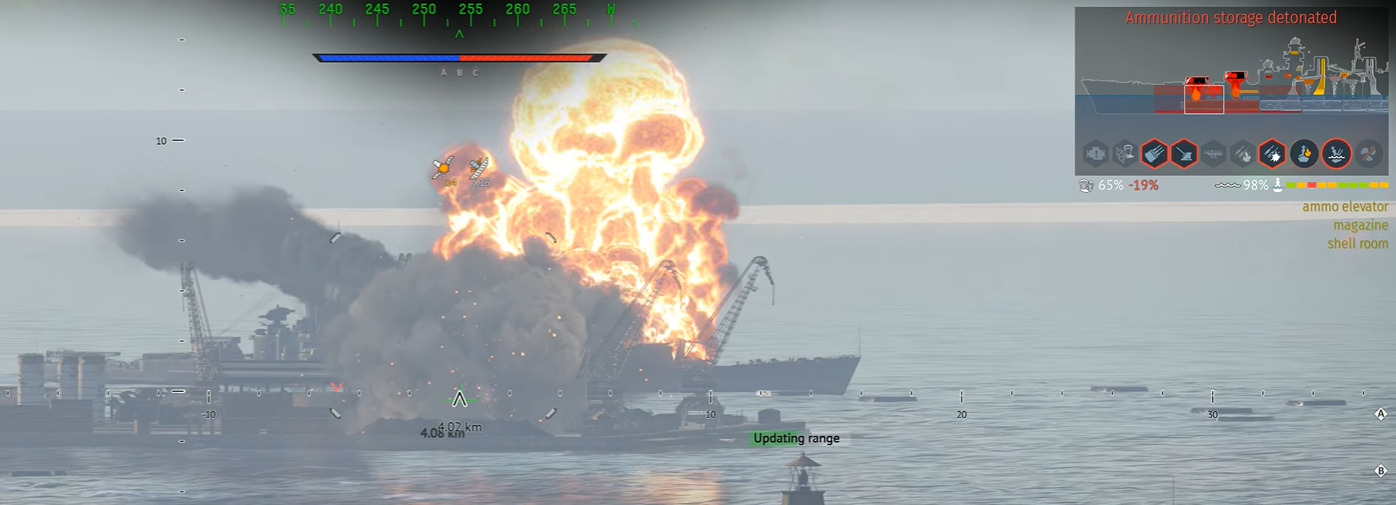
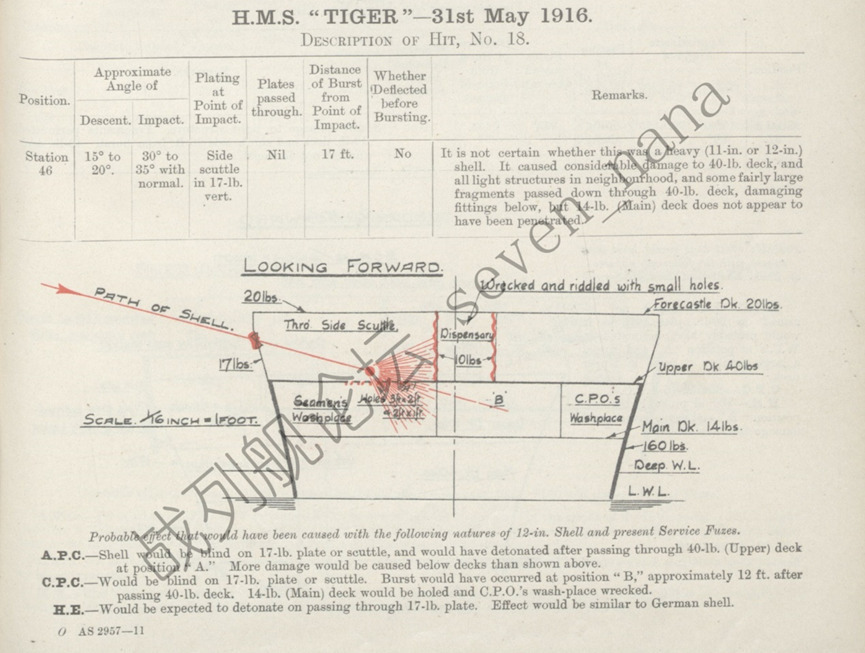
So you took this as a one of the proofs?
Armor Penetration Trials with Baden
In 1921 the British conducted a series of gunnery trials using the last battleship completed by the Germans during World War I, the surrendered Baden. These trials were conducted as a part of the design process for the next generation of capital ships, which were later cancelled as a result of the Washington Naval Limitation Treaty. During these gunnery trials, the monitors Erebus and Terror fired a total of 31 shells using reduced charges in order to obtain striking velocities equivalent to the expected battle ranges. Two primary striking velocities were used, 1,550 fps (472 mps) simulating a range of 15,500 yards (14,170 m) and 1,380 fps (421 mps) simulating a range of 21,800 yards (19,930 m).
Tests at 1,550 fps (472 mps) with 4crh “Greenboy” APC showed that these projectiles could penetrate turret face armor of 35 cm (13.8 in) when struck at an angle of 18.5 degrees and penetrate barbette armor of 35 cm (13.8 in) when struck at an angle of 11 degrees, but that this same armor thickness on the conning tower successfully defeated an APC striking at an angle of 30 degrees. Another test at this velocity saw an APC striking at an angle of 14.5 degrees penetrating the upper armor belt of 25 cm (10 in) and this shell then traveling some 38 feet (11.6 m) before bursting on the funnel casing and damaging two boilers, having first penetrated a 3 cm (1.2 in) splinter bulkhead and the 1.2 cm (0.5 in) main deck.
Five rounds of APC were fired at 1,550 fps (472 mps) at the 10 cm (3.9 in) turret roof armor, with four of these failing to penetrate.
Tests at 1,380 fps (421 mps) with CPC projectiles showed that armor of 17 cm (6.75 in) could be penetrated, but that these shells could neither penetrate nor significantly damage the 35 cm (13.8 in) barbette armor when striking at a 12 degree angle.
There is a cautionary note in ADM 186/251 that may apply to these trials:
Unsteadiness of shells at plate proof - When firing shells with reduced charges to obtain the required S.V. [striking velocity] for the proof or trial of shells or armour, particularly with the larger natures, there is a tendency for shells to be unsteady in flight, as shown by the shape of the hole made in a jump card erected in front of the armour plate. This unsteadiness tends to vitiate the result of the trial. As each round at thick armour may cost as much as £2,000 or more, it is a serious matter to reject the evidence of a round and to repeat it on the score of unsteadiness, although this has sometimes to be done.
The Admiralty’s overall conclusion from these trials was that the new “Greenboy” APC projectiles had satisfactory penetration characteristics, although their fuzing was not considered successful. Neither the experimental SAPC nor the older CPC used in these trials was considered to be effective. The penetration of the SAPC was disappointing and showed no advantage over APC. The CPC projectiles had considerable blast effect, but the fragments created by their thin walls were too small to cause significant damage.
Data in this section is primarily from “Washington’s Cherrytrees: The Evolution of the British 1921-22 Capital Ships” articles by John Campbell, from excerpts of ADM 186/251 provided to me and from “The Baden Trials” article in “Warship 2007” by William Schleihauf.

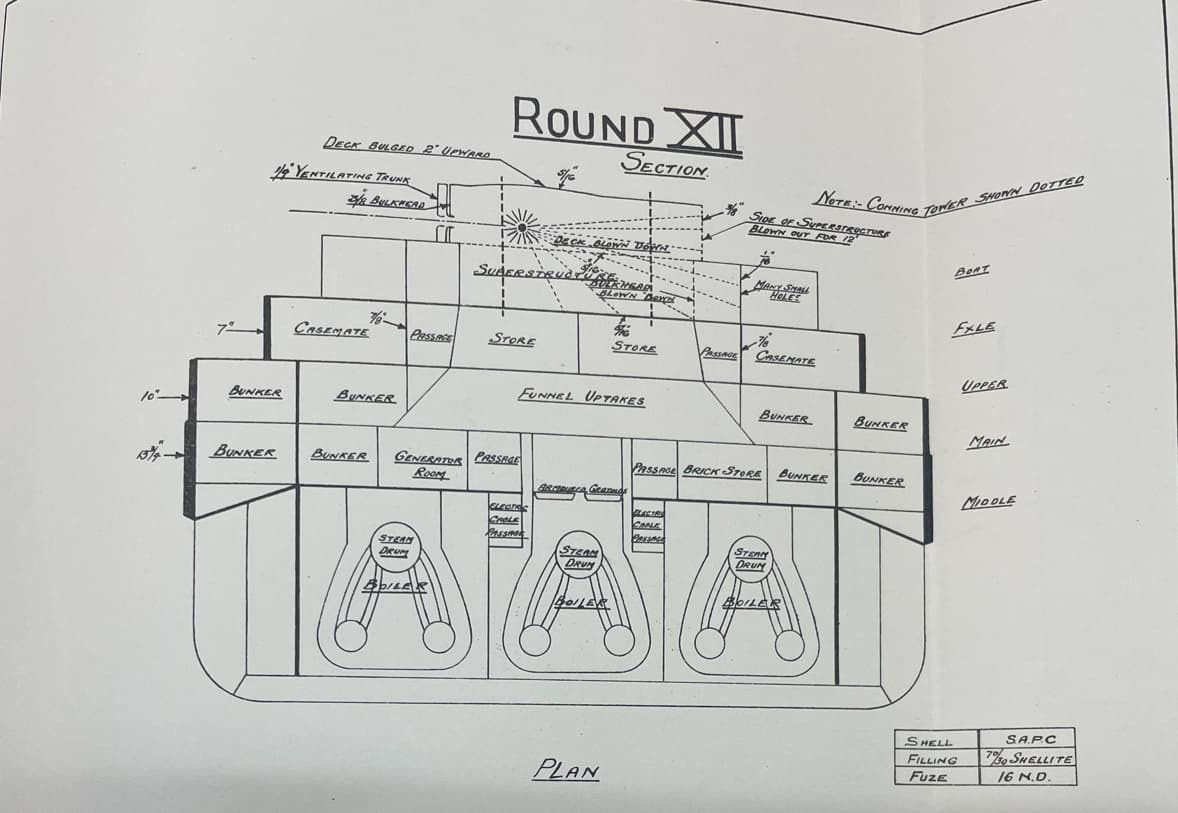
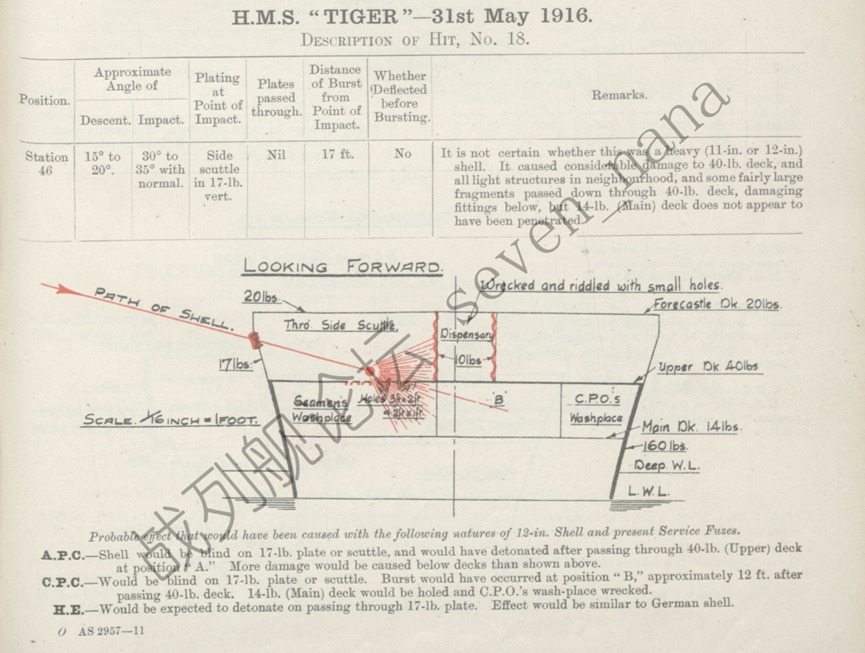
“Deck blown down” doesn’t concern you? Holes in 40lbs deck too?
Could you provide link on that exactly document?
btw. what is “lbs” cant find that it is the measure of thickness, is it inches, if so 320 inches barbet really? 8 meters of thickness not even Yamato have that?
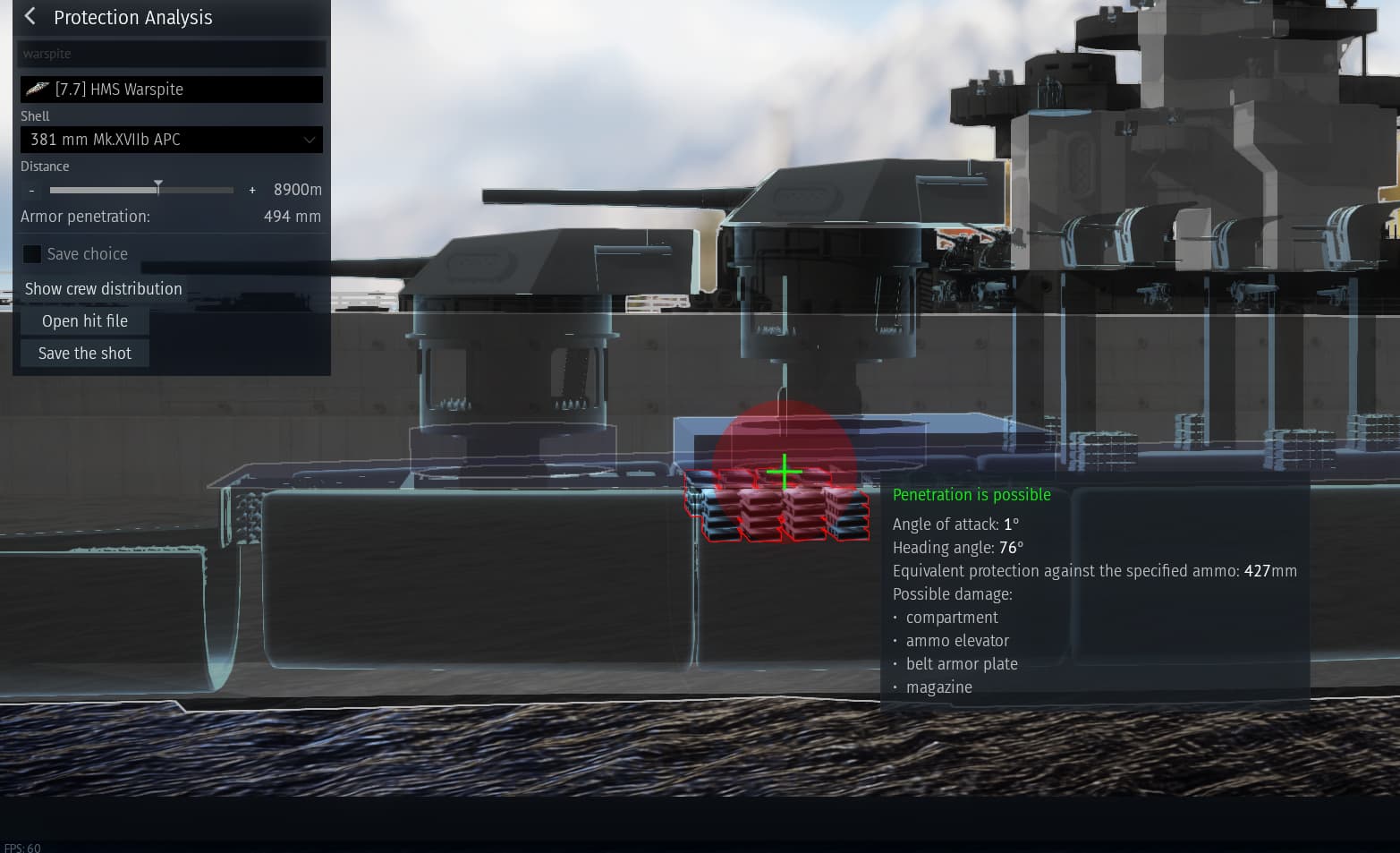
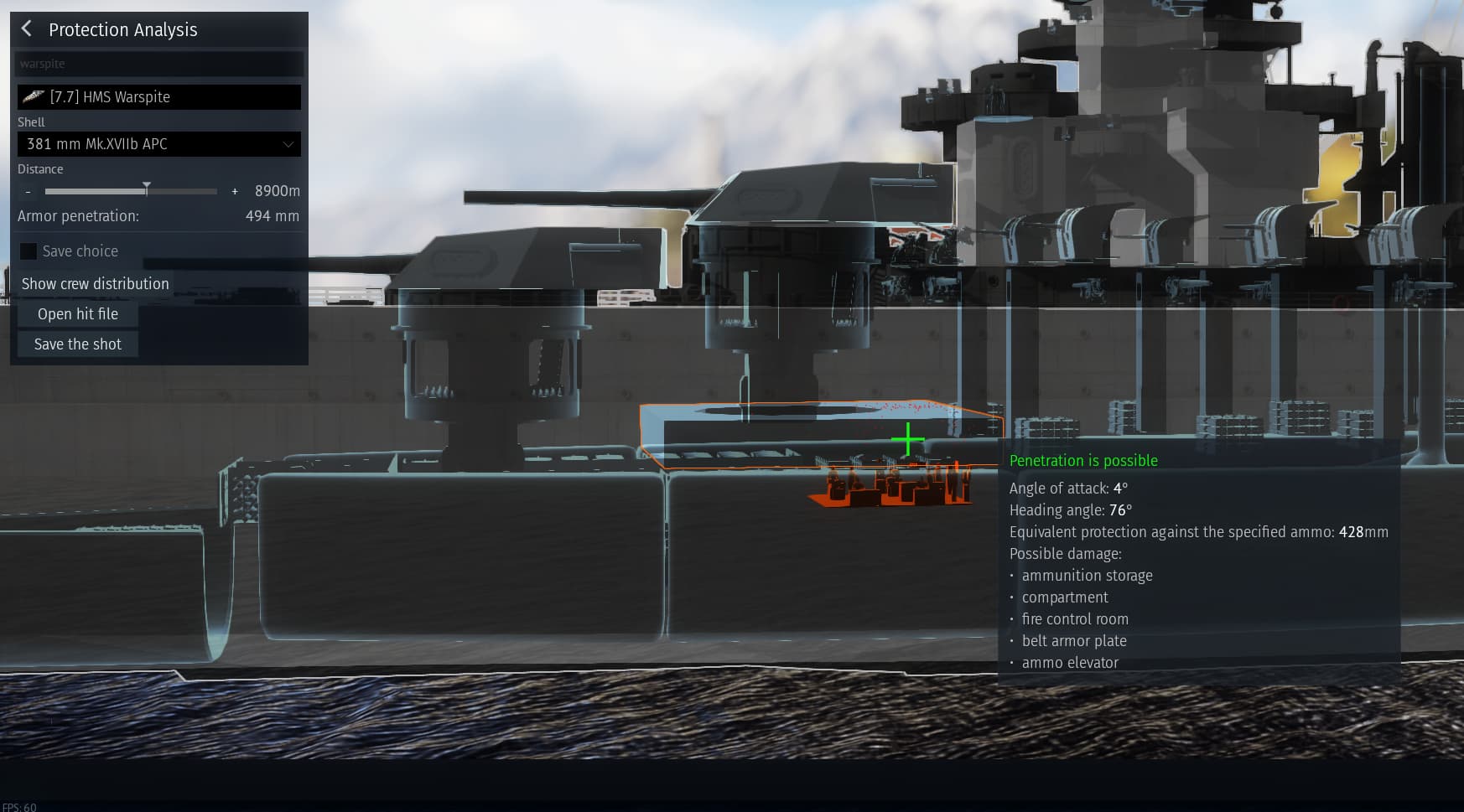
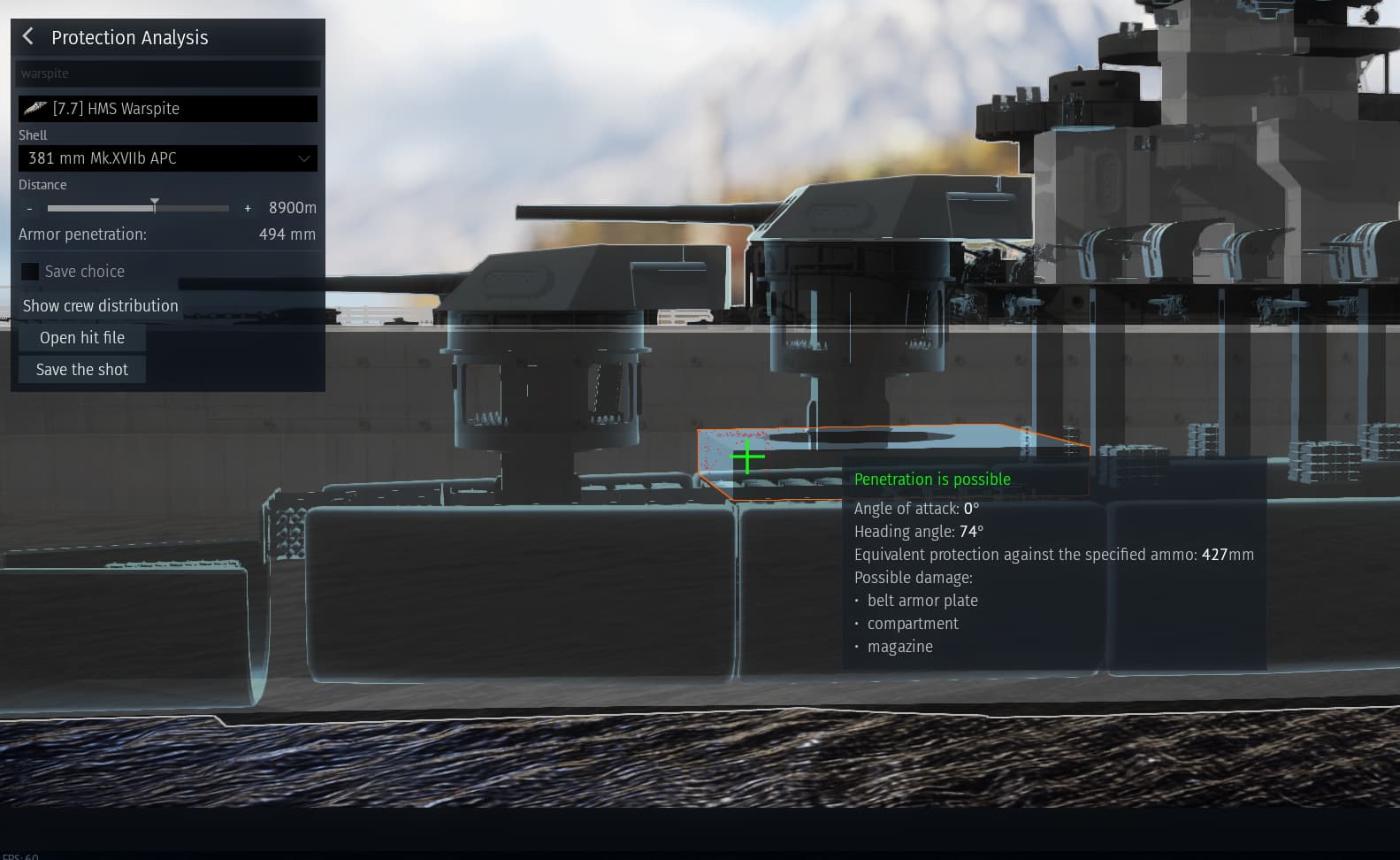
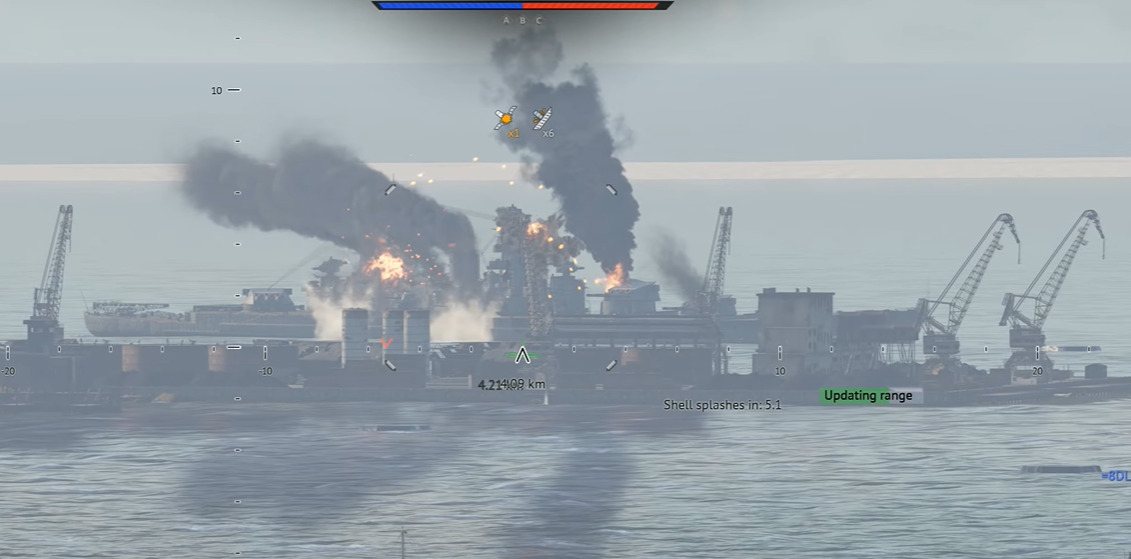
ps. All my shells that got no damage literally exploding near the bulkhead or deck is right on it, so not even the distance form explosion could be considered. Just like this shot