The calculated static thrust for runway would need to include calculations for auxiliary inlet losses. The static thrust given in the installed thrust chart likely does not account for this iirc. I’d have to go look again but I am pretty sure it does not consider the aux doors being the primary inlet for runway operations. I.e. the thrust may overperform at low speeds anyway.
This is likely why Gaijin may have made such a decision as I mention above, choosing the installed thrust curve for normal flight down to 0 airspeed - because it would be unfair to give it additional intake losses for air speeds below takeoff speed even when it is in flight.
I think he intended to mean within the margin of ~20%, not +/-.
That has nothing to do with why the thrust is so much less.
This F-16? The inability to compete with the F-16 has nothing to do with the MiG-29’s modeling.
I’m using F2 ADTW and trust me, 13.0 is as bad as 13.3. In fact F2 ADTW might be the first jet I struggle to reach 1.5/2K/D ratio in my entire service record.
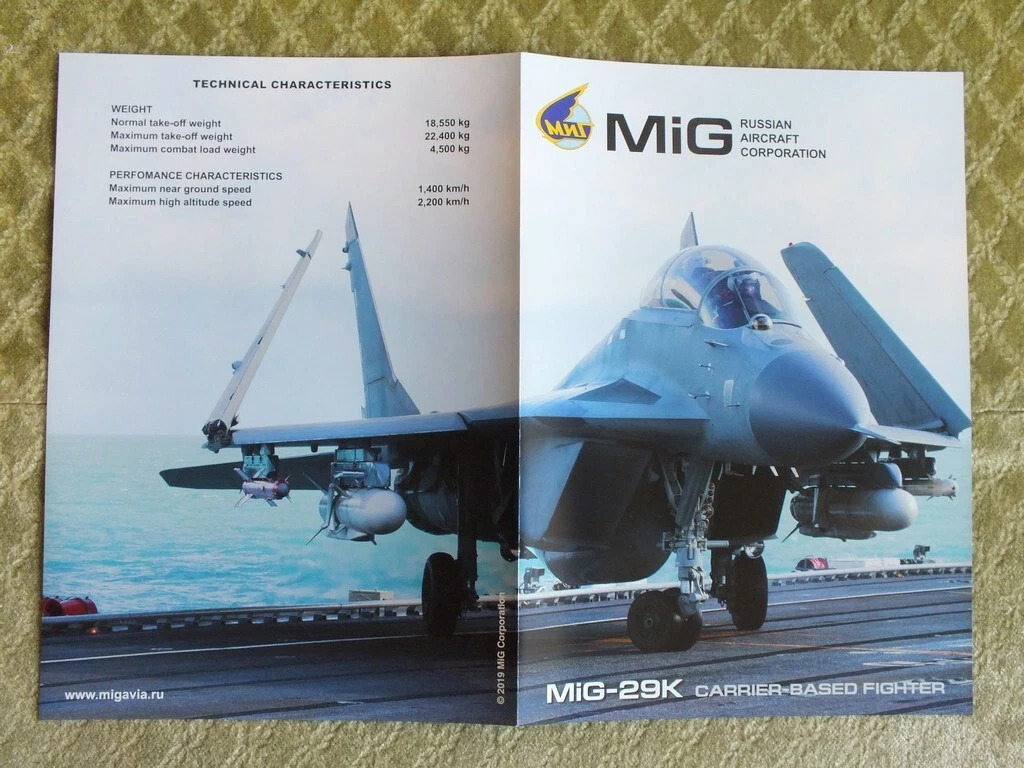
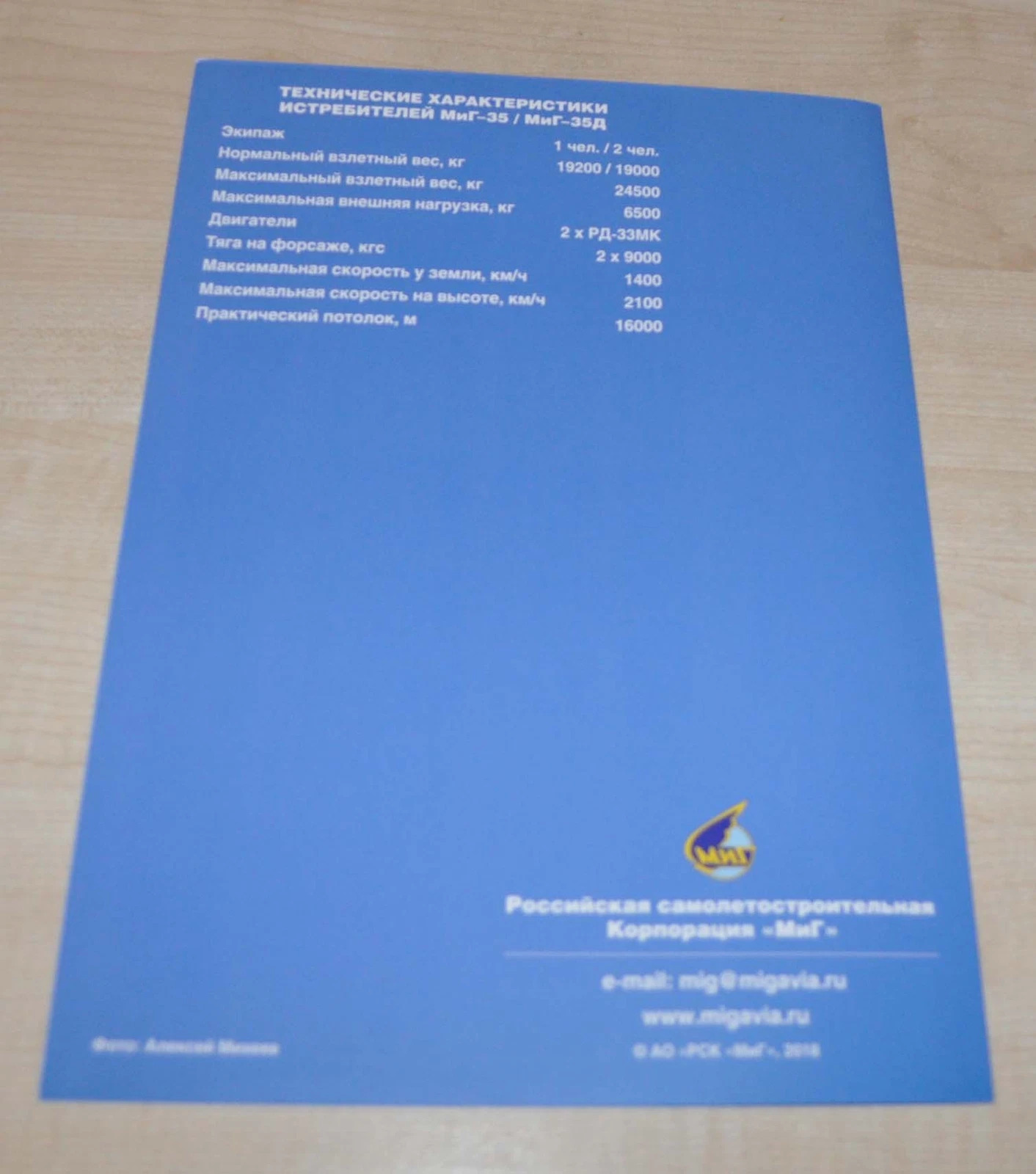
its literally the manufacturer of the planes website (mikoyan) so its A PRIMARY SOURCE.
its just web archived because it no longer exists today http://www.migavia.ru/
@Gunjob https://community.gaijin.net/issues/p/warthunder/i/JY0RF5YEspMs
could you take a look of the source for this bug report and explain to bug reporting manager 1 that it is literally the product page from the manufacturer themselves for that plane…
heres a press release confirming that that is the official website
Because there is nothing here that states there is no technical compatibility. We don’t add weaponry based only on what the manufactures website states. Otherwise we would need to remove about 40% of all ordinance in game.
If a weapon is technically compatible with a platform, its possible for the devs to consider adding it into the game.
If you want to report it, it must be with evidence that its not compatible somehow.
However its well established that the N019ME is compatible with RVV / R-77 and nothing in your report proves it is not or challenges this. So its not a sufficient thing to report.
Please do not spam tag multiple members of staff. This is not sufficient information to prove the aircraft is not compatible.
Is it known what is meant by technical compatibility? For example the Thai F-16A OCU could in theory integrate AIM-120 AMRAAM, and the airframes upgraded to eMLU standard got that modification, but their base OCU models are not capable of using it and instead used in a ground attack role.
In game this really harms the aircraft since it lacks the other eMLU upgrades such as the AN/APG-68 radar and thermal targeting pod, but also doesn’t benefit from the lower BR the OCU could have without Fox 3s.
Is it possible to get some attention to this issue, or is it denied a fix?
when everything is abstracted to the only variable then what’s the point of making any comparison? just say it’s only up to the pilot and end it there (:
we have an objective way to compare them without the variable, and, while staring at charts and numbers won’t always give us the full picture, it’s still the most complete and objective way we have to compare these aircraft. we can talk all about the maintenance, the logistics, the excellencies and failures alike of the human element of both sides as well but this is beyond the scope of looking at how the aircraft itself performs.
curiously it’s traditionally limited to 26 degrees without overriding the limiter, very similar to the f-16… because when exceeding those limits its control surfaces have severely degraded lateral stability, but this is common across most aircraft at high aoa, this is still something to note as the f-15 has a limiter of up to 30 units of aoa. whether this truly maps up to 30 degrees of aoa is unlikely, this is probably something closer to the mig-29’s limits in true degrees of aoa, with the loss in lateral stability being mainly past 30 units of aoa.
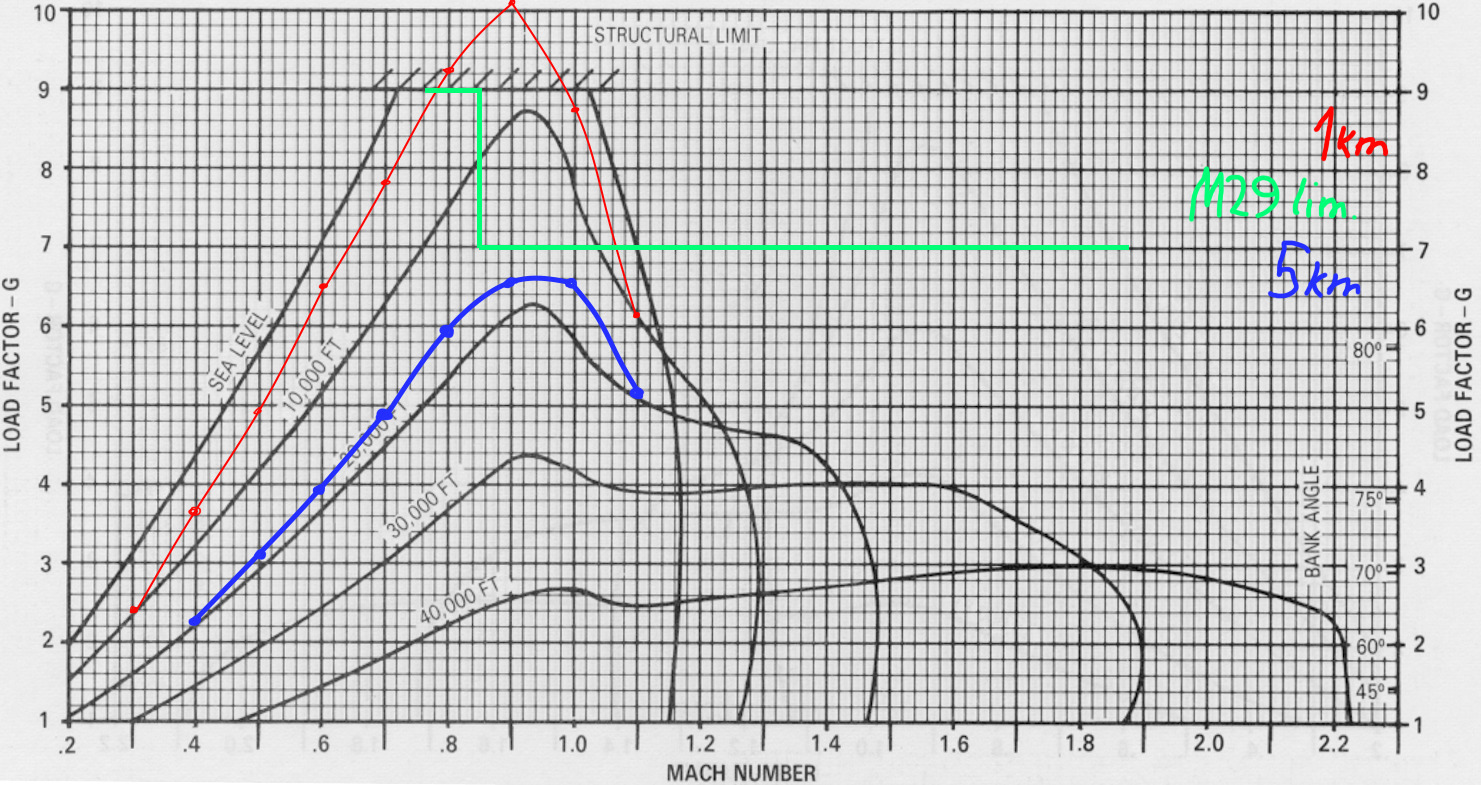
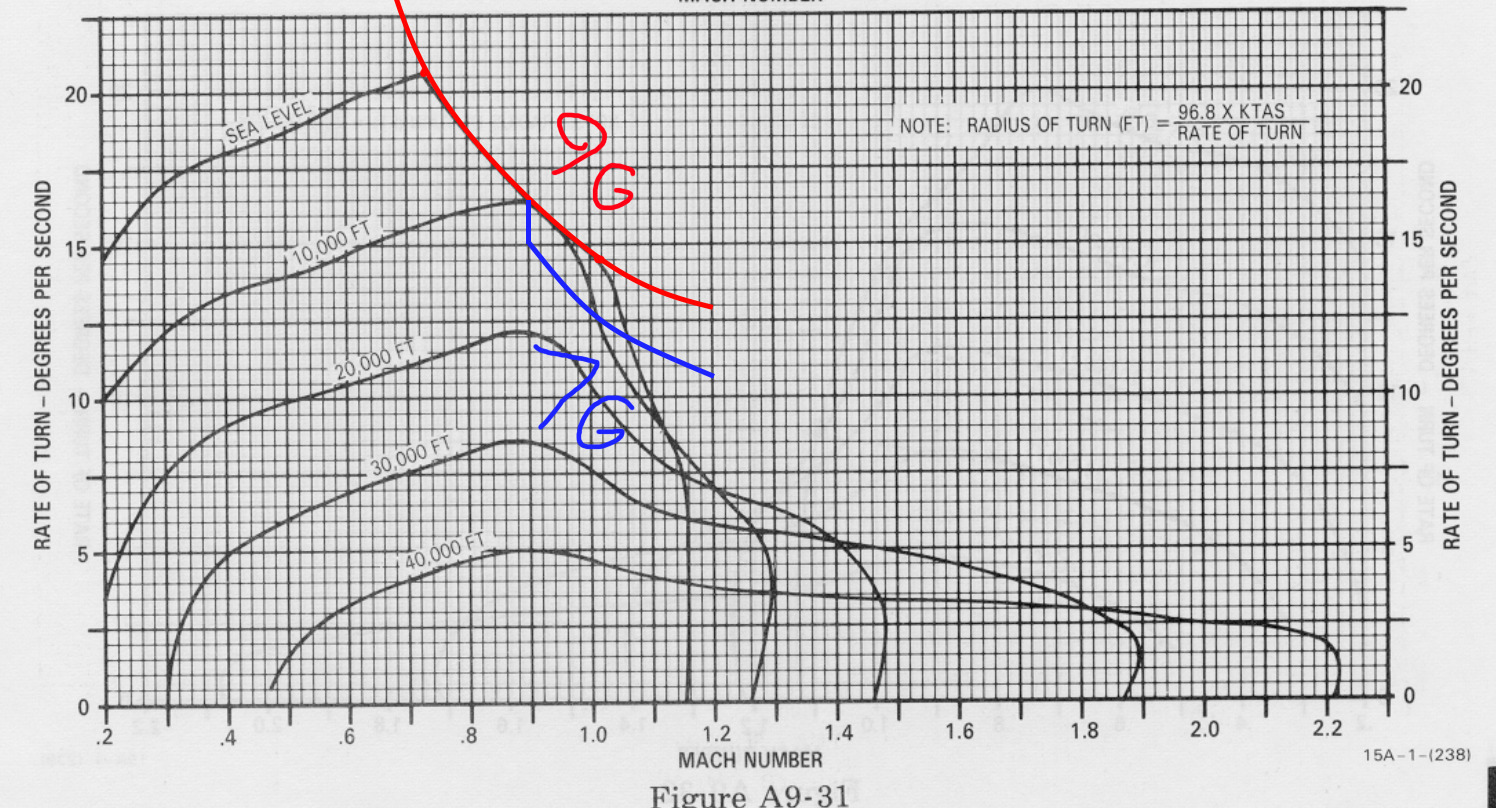
seems to be possibly be capable of around 10.5 g at around 750 at 1.5km (if we extrapolate the 24deg aoa line, not exactly realistic but it’ll be the closest we have to a proper approximation without any of the limits i suppose), converting to roughly 28-30 deg/s so pretty similar from fig. 6.14. in the russian aerodynamics manual, depending on how you decide to extrapolate it, so likely similar within limits but more if exceeding the limiter, true.
except… it’s not better at sustained turns? the lowest available chart for the f-15 is at 35k lb gw, which would be roughly 3.3t of fuel and it already shows overall superior sustained turn rates (up to over 1g from M0.7 onwards, margin decreasing the slower you go at sea level) to the clean mig-29 on 1.5t of fuel which it’ll likely drink through in about three minutes if it’s going through all of it only on burner, versus roughly six minutes for the f-15, assuming relatively similar and slower speeds on the deck. this is also, again, on 97.7% trim for the f-15 which gimps its available power by some not fully determined amount… what would it look like on 102% trim?
unless i’ve misread and this is all for the -29m variant in which case i apologise, but i have no information or documents on its performance so i can’t really say anything concretely there.
Thanks for the answer, hope it gets reviewed at some point. Right now it seems to take up the role of both OCU and eMLU which is a bit sad for those hoping to see the eMLU in game.
Yeah I could’ve worded it better.
What I meant was if this counts only weapons that were specifically integrated and can be used without additional modifications, or if it allows systems integrated on an equivalent type (DASH HMD for Thai F-16B OCU, but not F-16A OCU) or even just systems integrated on the same family of aircraft (ADF and MLU models of F-16 carrying AMRAAM)?
These would be down to the devs to decide at their own discretion. Generally if something is technically compatible with a spesific variant in game, then its open to consideration. Providing the technical compatibility can be shown.
If its from an entirely separate variant (one that would usually be a separate aircraft in game), then its more possibly an issue.
Neither the F-15 or MiG 29 has a hard AoA/G limit; they have various systems that notify the pilot when they have reached a high degree of AoA or G-force, and attempt to restrict it, but the pilot can exceed it.
Most Soviet and Warsaw Pact MiG-29 pilots did not fly above 26 AoA. There were exceptions, but practically only display pilots and test pilots flew above this limit. However, the MiG-29 can reach 40 AoA quite nicely and can do even more, but this requires significantly more skill. Although the Fulcrum has similar handling limitations at higher AoA than the Eagle, compared to the F-15, its flight characteristics are more predictable and safer.
30 units of AoA on the F-15 is roughly equivalent to 20 true AoA.
Above 20 AoA, the ailerons are no longer effective on the Eagle, and above 25 AoA, the rudder is ineffective. The aircraft has significant buffet. Around 25 AoA, moderate wing rock occurs. However, similar to the MiG 29, the aircraft can reach higher AoA, usually around 40 AoA, and even higher at very low speeds (below 100 knots).
The F-16 cannot safely exceed 25-27 AoA; it has a hard limit, which unfortunately can be exceeded in certain flight configurations, altitudes, and speeds, but in most cases this has not ended well.
9 G can be reached up to about 15 AoA, then with increasing AoA, the available G decreases with CAT I ( 25 AoA max 1G) CAT III further restricts the aircraft and is designed for carrying heavier equipment and fuel tanks.
102% trim is 100% of the PW 100 engine’s power; this is not excess power, but the power that the engine was supposed to achieve normally, but due to major problems, the engine’s power was reduced.
In sustained turns, the Eagle is usually the same or worse (1-2 degrees worse) than the MiG 29, except at high altitudes.
The best sustained turn of the Eagle with 97% trim is 20.5 degrees. Clean, Sea Level.
For the F-15 with a PW 220 engine, the value is the same - 20.5 degrees.
The most maneuverable on paper is the F-15A with 102% trim, but in the real world, it would be worse than later versions due to engine problems.
No, I was describing the 9-12/9-13 variant. I’m not that proficient in English. Which is a pity.
The MiG 29 M was something like the MiG 23 MLD for the MiG 23, and yes, let’s imagine the MiG 29 9-12 as the MiG 23S, yes, that’s exactly how it was. The 9-12 was accepted into the air force with the understanding that it would quickly be replaced by the main version, which was supposed to be the MiG 29M.
It had better parameters in almost everything, very modern, but it also had its weaknesses: the collapse of the Soviet Union led to a lack of funds, and it had some problems with the fact that the aluminum-lithium alloys used for the airframe coating were not fully mastered.
caveats here being that 1 km is higher than sea level, obviously, so some performance degradation is expected; but at the same time, the 20k ft line is also a whole kilometer higher.
to also re-iterate previously: the fuel margins are also different. if you’d adjust them to either wt-style percentage-wise fuel masses or dcs-style equivalent time on afterburner fuel times, or even just flat out the same fuel masses then i’m sure you can tell what kind of difference a ton and a half of fuel can make to one or the other aircraft… and which is a more fair comparison in your eyes?
this is G limited, and as you already know, it can be pushed past. the same restrictions can also be applied to the mig-29 and it’ll be ± the same, except there’s also now the m0.85 7g limitation for the mig-29.