9.12
but it dosent matter since they have the weight of the aircraft
so if you adjust the fuel on the 9.13 accordingly, you will get the same result
9.12
but it dosent matter since they have the weight of the aircraft
so if you adjust the fuel on the 9.13 accordingly, you will get the same result
that is a general issue with alot of planes in WT where they start overperforming in STR at speeds near mach 1
a lot, but not all, for example the f16 adf is fairly close to its em graph at high speed at 5kft which is the closest analogue to this, f15s also seem to check out… the main unicorns in this category are deltas and delta canards but there’s very little info available besides m2k em graph
The loss of thrust in the F-15 C with the PW 220 engine is approximately 19%.
If the uninstalled thrust of the RD-33 engines is 16,600 kgp and the installed thrust is approximately 13,000 kgp, the loss of power is approximately 22%.
Yes, there are not many performance tables for the Mirage 2000.
But we can say that its characteristics are roughly as follows: excellent instant turn rate, excellent characteristics at higher altitudes. Weaker in sustained turn rate (because it has a weaker engine).
If we compare it with the F-16, Viper is better at lower altitudes, while the Mirage is better at higher altitudes. F-16 is SEP monster ( but today they are better, like Rafale and EF).
“excellent characteristics at high altitudes” is very much wrong if we look comparatively at basically anything contemporary, but i digress. the point is in-game supersonic behavior of deltas and delta canards is way too understated and poorly modeled, from the one public m2k em graph we do have the loss in sustained turn performance (and consequently induced drag) is roughly equivalent to the f-16’s (that is, about a loss of -4 deg/s in turning performance from m0.9 to m1), except in game this is not the case, it barely undergoes shift by mach which causes it very incorrectly to have of up to 1-2G better sustained turn performance past mach than an f-16.
Even at 50,000 ft, the Mirage 2000 was able to turn very well and comfortably for the pilot. Even the F-15 with PW 220 engines did not achieve level of confidence, and its performance at such high altitudes was not as good as that of the Mirage 2000. At altitudes above 30,000 ft, the F-16 began to lag behind the Mirage more significantly than the Eagle.
The delta wing loves high speeds and altitudes, and FbW compensated for its shortcomings at subsonic speeds.
The Mirage engine is weaker (even so, the -2000 has nice sustained maneuverability), but it performed better than the PW 220 at higher altitudes, which is interesting.
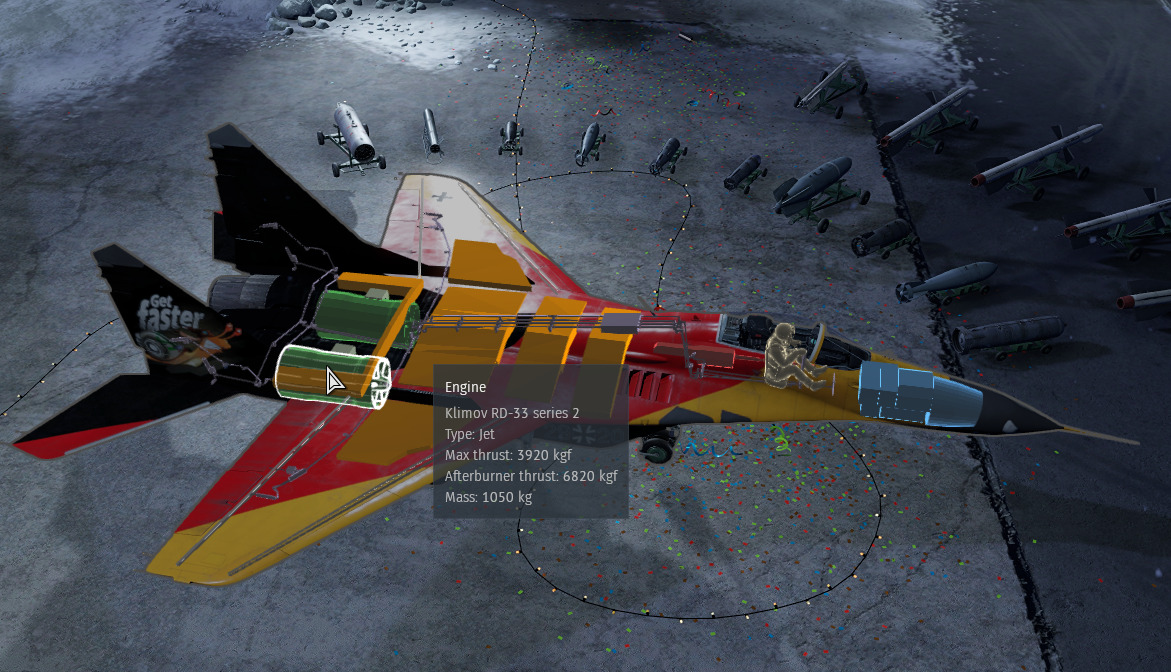
The Klimov RD-33 (Series 2/3) produces 81.3 kN (8300kgf) of force.
I have done more research. The first RD-33 version is pretty much correct.
The upgraded RD-33’s have overall better quality and reliability than the others which clearly now explains why the MiG-29G for example has 8200Kgf in the documents and the MiG-29A 6800Kgf.
But you guys forgot one detail. “Series 2/3”. Belive it or not.
The upgraded RD-33 Engines should have more power and reliability then its original production model.
So yes the 9-13/12a most likely has very accurate stats on the engine but one more thing.
The MiG-29 9.19 SMT2 Has the Series 3
The MiG-29 9.12G/N has the Series 2
Upgraded more modern Fulcrums that should meet the what mark? 81.3 kN.
I do belive the more Modern MiG’s should respectfully be able to perform the way they should. Like they do in real life. Russia has a bad reputation with early models like the MiG-21/23/25/29 etc.
They 100% added the fix to the issue in the later models like all manufacturers do.
This does not explain why the MiG-29 cant do the maneuvers it is supposed to do.
Yes I agree above mach performance is slightly too good. But I belive the under mach performance is worse than it should be.
RD-33 = 6800KGF (Original Engine)
RD-33 (Series 2) = 8300KGF
RD-33 (Series 3) = 8300KGF + (even higher quality and reliability)
So switch your focus till the newer MiG-29’s in game and fix those instead. Drop the old ones cause they are old and old things be olding.
And if you wanna be like nato pro.
The F-16A has one more degree in rate.
The F-16C is almost identical.
The F-15 has 2 degrees less.
The MiG-29G should beat the F-16C in instantaneous turn and nose authority while keeping up.
The MiG-29G should beat the F-16A in instantaneous turn and nose authority while slowly falling behind after a long minute in the rate.
MiG-29 Bleeds faster but that does not mean you need to bleed any speed either.
Pilots don’t kick rocks and pull the stick to 100% all the time. Maybe its better in game after the correct engines.
And how you guys are talking about the MiG-29 versions is like saying the Su-30sm and Su-30sm2 is identical.
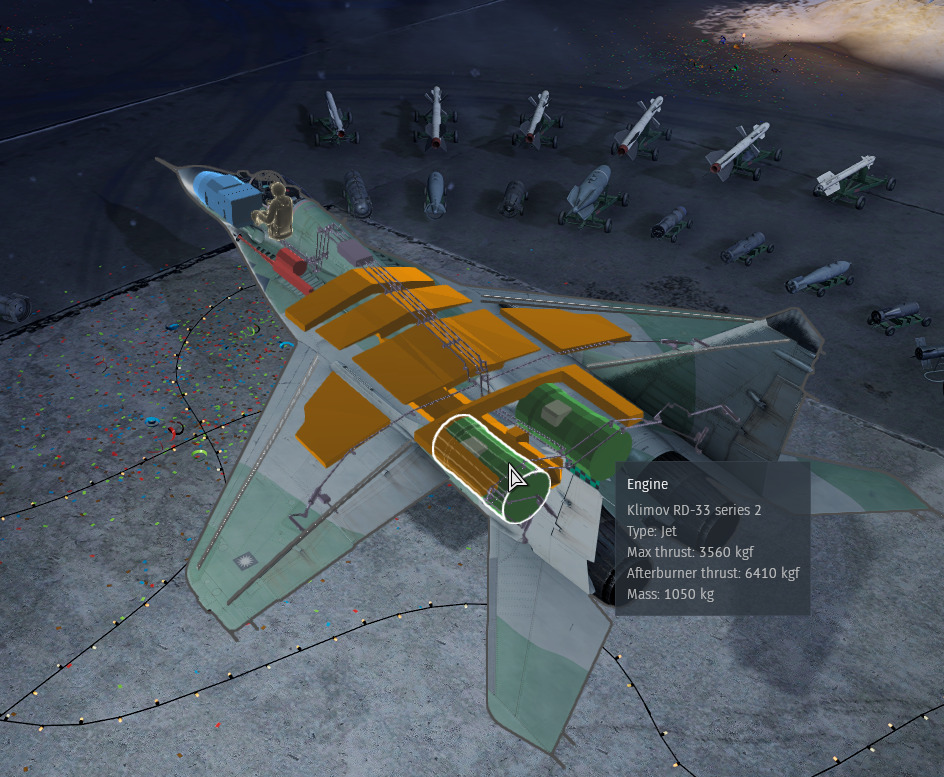
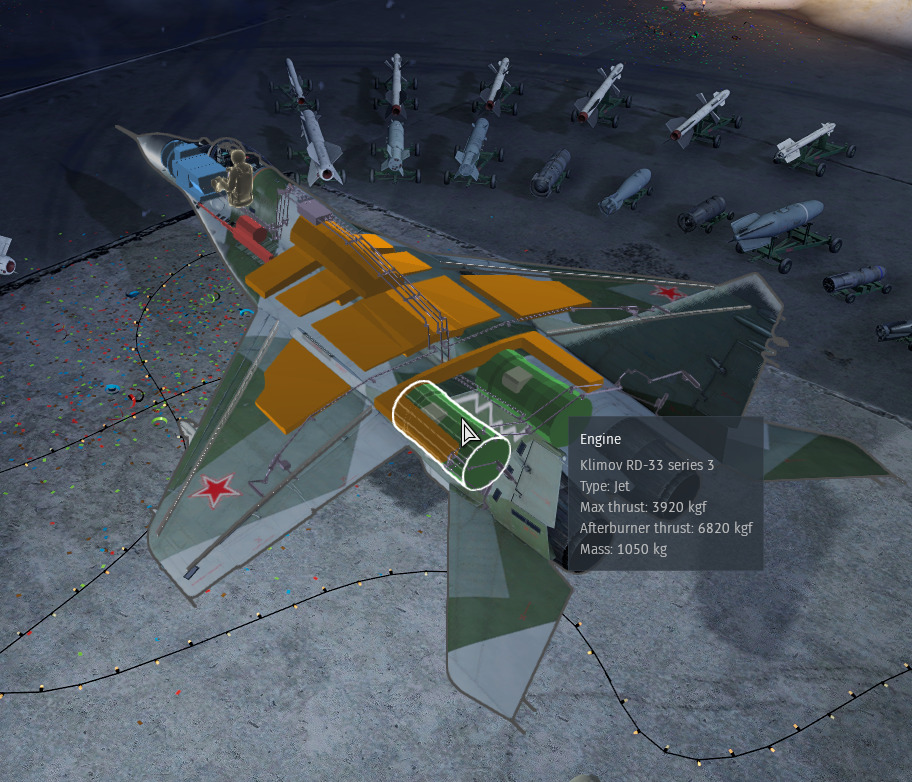
But its not right to attack gaijin or any others with these insults. This is a place we should conclude not fuel fire with fire but that probably wont reach you guys. The only thing I see in this forum is: Spamming of the same low quality pictures with no proof. No explanation of what type/model/engines whatever you want to call it. How about we throw up some solid proof on the MiG’s instead of bringing out the oldest worn out donkey over and over. I would like to know respectfully why you disagree with proof as well. Don’t brain rot me with copy pasta. Be for real.
You are doing exactly what you are asking others not to do. Re-hashing something that was well put to bed long ago. The MiG-29’s motor has a bench thrust (uninstalled, on a test bench) of ~8300kg. What we get in-game is the result of the unique intake losses of this motor and inlet. The data in-game matches the manual in the same conditions until the in-game model actually starts to overperform slightly (within margins of error for the game).
This is an arcade game, the flight models will never be sim-worthy. They are “close enough” as the developer sees it currently and the thrust will not likely be adjusted by any meaningful amount - especially not upwards. If there are corrections, it will likely reduce the thrust at higher speeds.
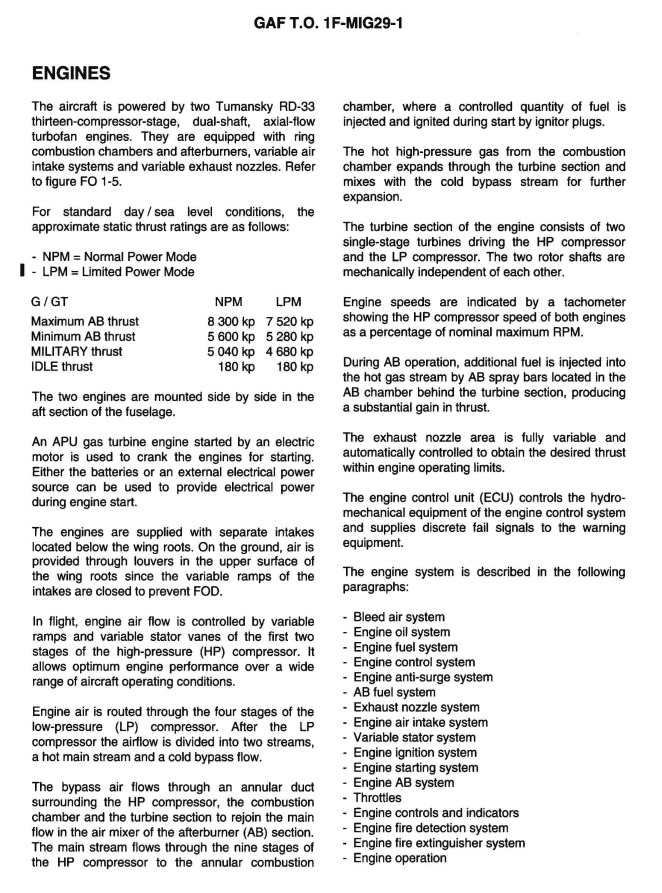
I see you continue to share the Germans translated manual for the MiG-29, while it clearly states 8 300 kp for standard day / sea level conditions, that just does not follow. It does not list standard day according to what metric, nor does it state installed or uninstalled. What it shows us is a thrust number that aligns with the uninstalled thrust given in the various Russian manuals available.
That being said, the installed thrust is also given in Russian manuals. The in-game model follows that chart deliberately, and the energy chart follows very closely as well. If you want to prove it is missing thrust, you will need to support that claim with a legitimate installed thrust chart from a more reputable source or another flight performance chart that demonstrates the aircraft is missing performance by way of energy.
Now can we please put this to bed? Y’all arguing on a holiday. Also… if you’re going to be a puppet for another user so as to evade reprimand… find something better to do with your time.
Calling me a puppet is crazy for another person. I came here myself.
Thought the game was hyper focused on realism?
Also its taken from THE FLIGHT MANUAL. Flying at sea level in standard conditions which is most likely everything but a thunderstorm.
I strike up a point and you’re talking about puppets and other things like arguing. You’re getting pressed by a different opinion in a war thunder forum😭😭
w ragebait
Yeah no I totally understand his point hes just coming at me. The engines themselves ingame arent bad at all. And if its true they’re correct amazing. Still dosent explain why it dosent keep up with the f16 in a dogfight tho.
The RD-33 was an excellent engine. People somehow fail to see its strengths. Carefree engine operation, including high AoA, almost immediate response to throttle movements, low weight for high performance. Good fuel consumption. For the USSR, it was a huge leap forward.
One circle and acceleration from slow speeds should be an advantage of -29 over -16.
I read Valery Menitsky’s autobiography, which described training battles between MiG-29s and Su-27s in the 1980s, and the Fulcrum was able to defeat the Su-27 in both BVR and WVR. According to him, the MiG-29’s lower RCS was decisive in BVR.
so you are saying that gaijin took the thrust from the series 1 on a test bench
and then somehow when put into a jet it produces more thrust than on a test bench
while also providing no source at all for the thrust of the series 1
and ffs it says in the manual static thrust you know what the mig29 will do when it is static?
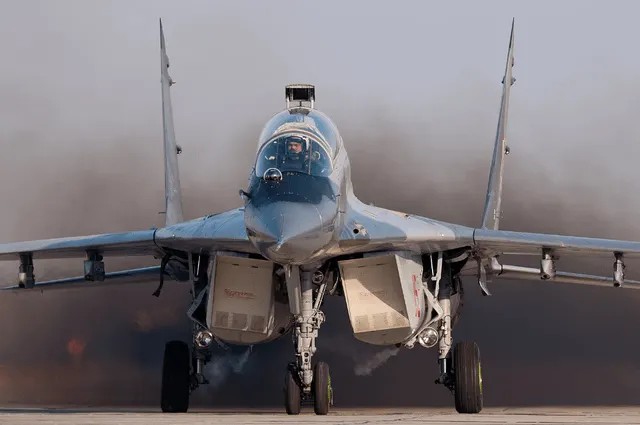
The manual very probably refers to uninstalled thrust (8,300 kgf); static thrust is height 0, speed 0, i.e., the aircraft is standing on the runway. Thrust changes with height and speed, i.e., it also increases.
the rd33 will never produce 8300kgf static installed in a mig29
because a static mig-29 will close the intake doors
Does WT count for that during low speed maneuvers? In the air MiG-29 doesn’t close intake doors iirc
Yeah, it doesnt. Funny enough it does open the vents (or how to properly refer to them) on low speed