All MiG-29’s RD-33 Are Severely Underperforming Thrust
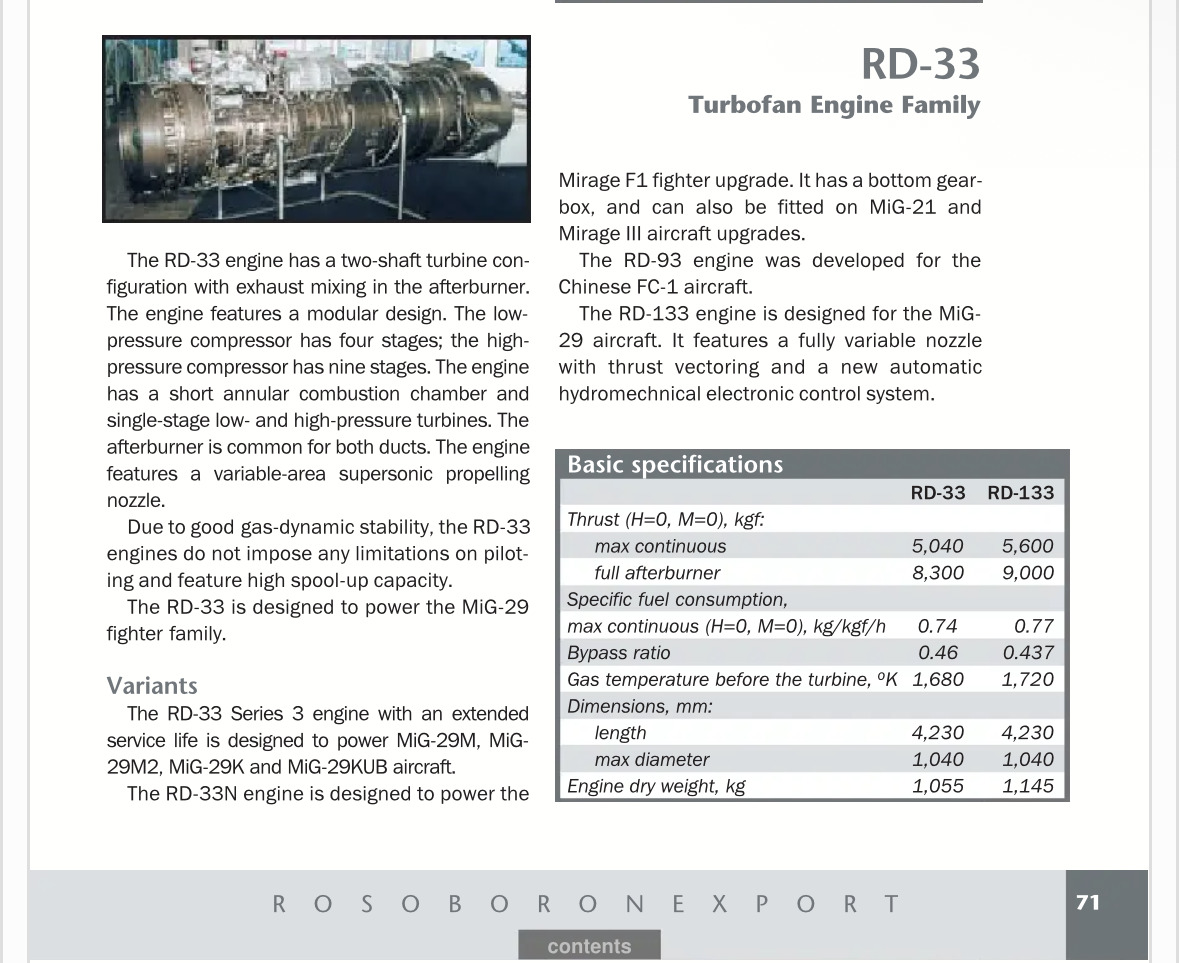
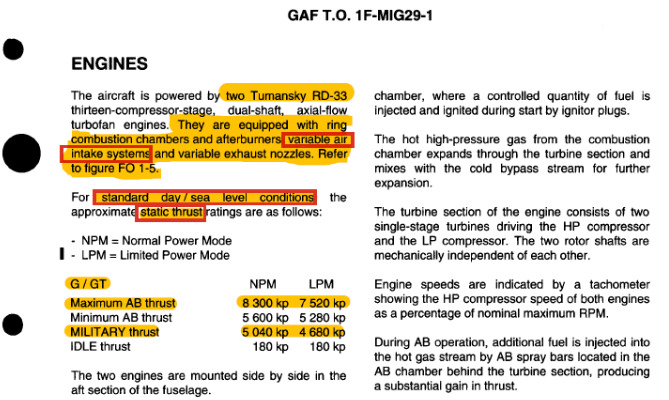
"For standard day/sea level conditions the approximate static thrust ratings are as follows:
G/GT: NPM (Normal power mode) Maximum AB thrust: 8,300kp"
Source: GAF T.O. 1F-MIG29-1 Pages, 1-2 (MiG-29G/GT FLIGHT Manual)
These are not raw thrust values from the aircraft manufacturer’s engine vendor as it makes no logical sense to do without specifically stating so in the flight manual. To carelessly place only uninstalled thrust would kill many pilots at take-off operating under a multitude of varying gross weights/payloads during ground operations such as take-off. That is why static thrust @ sea, standard day serves as the universal certified baseline that is guaranteed by the aircraft manufacturer. This is to ensure that aircrews do not perish in a ball of flames at the end of the runway, of course.
Please note how in GAF T.O. 1F-MIG29 the engines are described being equipped variable geometry intakes giving the reader a hint that the thrust ratings that follow are regarding installed thrust.
The Definition of Static Thrust At Sea level, Standard day
“Take-off thrust is commonly considered to be the static thrust quoted by the manufacturer. The static thrust is the thrust measured with the engine stationary, as would be the case when the aircraft is initiating the take-off roll.”
“Note that the take-off thrust is usually taken to mean the sea-level static thrust and is equal to the gross thrust at sea level…”
“This relation is reasonably accurate up to Mo=0.3. Note that the take-off thrust Fto is usually taken to mean the sea-level static thrust (Vo=0) and is equal to the gross thrust at sea level. The take-off thrust determines the take-off characteristics of an aircraft.”
Source: Theory of Aerospace Propulsion 1st Edition - Pasquale M. Sforza Pages 395-396 & Theory of Aerospace Propulsion 2nd Edition Pasquale M. Sforza Page 475.

All installation losses imposed by the air vehicle have already been mathematically corrected and adjusted with correction factors applied by the aircraft manufacturer to represent operational use. This is regulated and certificated in airworthiness trials. There is no such thing as “channel loss” in aerospace propulsion engineering or in airworthiness certification. I suppose the Gaijin was attempting to refer to duct loss or air inlet distortion, which would still be covered under installation loss whichever is the case.
To verify aerospace propulsion engineering textbooks, international civil & military industry standards all one needs to do is simply calculate the aircraft’s thrust to weight ratio (TWR) using the operational manual’s static thrust @ sea level, standard day & gross weight.
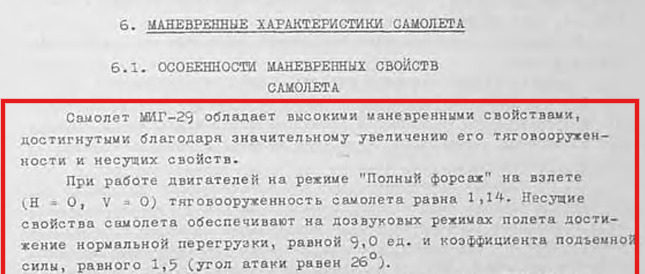
The MiG-29 Product Index 9.12 (VVS) Thrust-to-Weight Ratio ≈ 1.14
"When the engines are operating in the “Full afterburner mode during takeoff. (H=O, V=0), the thrust-to-weight ratio of the aircraft is 1.14.”
Source: ПРАКТИЧЕСКАЯ АЭРОДИНАМИКА САМОЛЕТА МИГ-29 Страница 179 (PRACTICAL AERODYNAMICS OF THE MIG-29 AIRCRAFT Page 179)
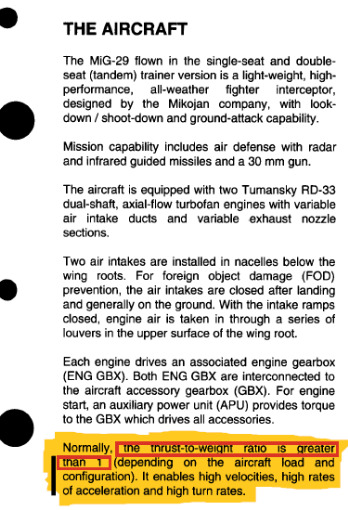
The MiG-29 Product Index 9-12G Thrust-to-Weight Ratio ≈ Greater than 1
“Normally, the thrust-to-weight ratio is greater than 1 (depending on the aircraft load and configuration). It enables high velocities, high rates of acceleration and high turn rates.”
Source: (MiG-29G/T Manual) GAF T.O. 1F-MIG29-1 Pages, 1-4 Change 4
Thrust to weight ratio is determined by take-off thrust (static thrust @ sea, standard day) & gross weight (operating weight & full internal fuel). Take-off thrust is critical in determining baseline flight characteristics.
Using product index 9.12G’s gross weight from the manual:
Index 9.12G Gross Weight = 14,454 kg
RD-33’s Static Thrust @ Sea, Standard day (take-off thrust) = 8,300kgf × 2 = 16,600kgf

Index 9.12G Gross Weight = 14,454 kg
RD-33’s Static Thrust @ Sea, Standard day (take-off thrust) = 8,300kgf × 2 = 16,600kgf
Thrust-to-Weight Ratio (TWR)
Take-off Thrust / Gross Weight = 16,600kgf / 14,454 kg ≈ 1.15
This aligns with both operational/flight manuals of the Soviet (VVS) MiG-29 Index 9.12 & the Luftwaffe (NATO) 9.12G.
The 8,300kgf thrust rating of the RD-33 is 100% installed thrust.
That 0.01 difference is not a performance distinction in reality. it’s simply a reflection of how manuals round gross weight figures. The MiG‑29 product index 9.12G was essentially the same aircraft, but NATO documentation may have used slightly different baseline weights (MiG MAPO carried out the update to NATO standard using different avionics, equipment, measurement standards etc.).
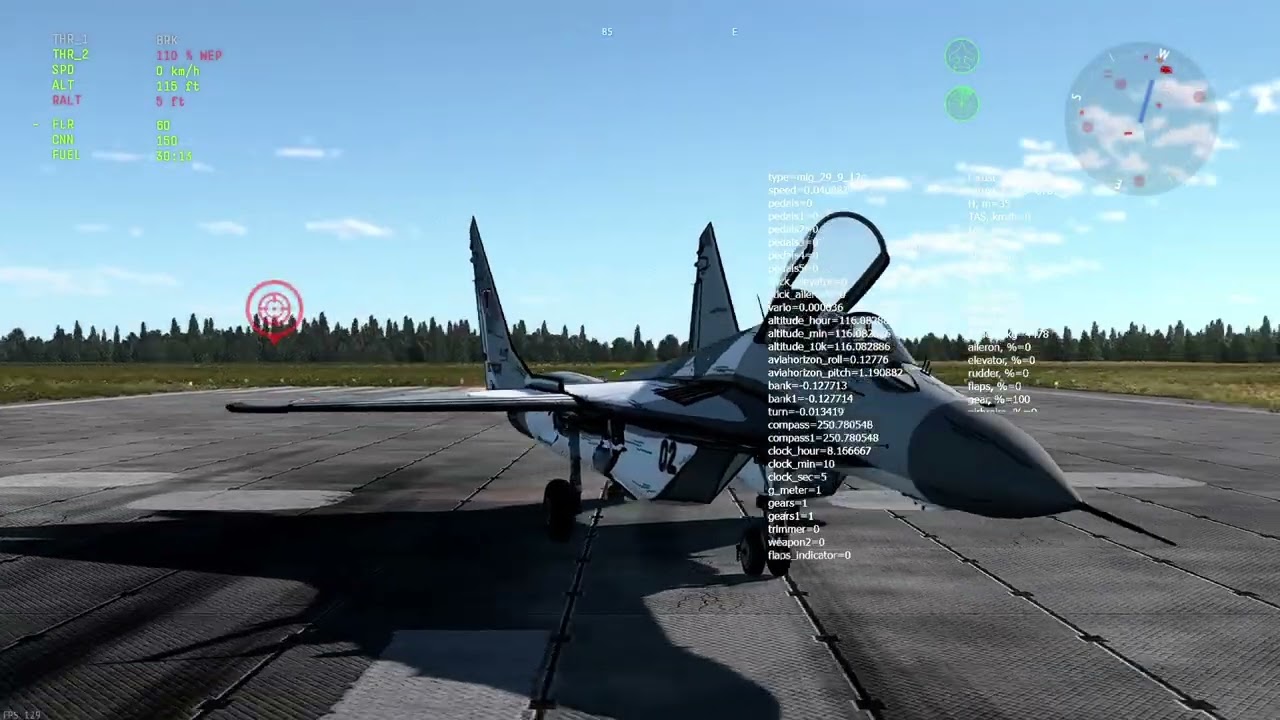
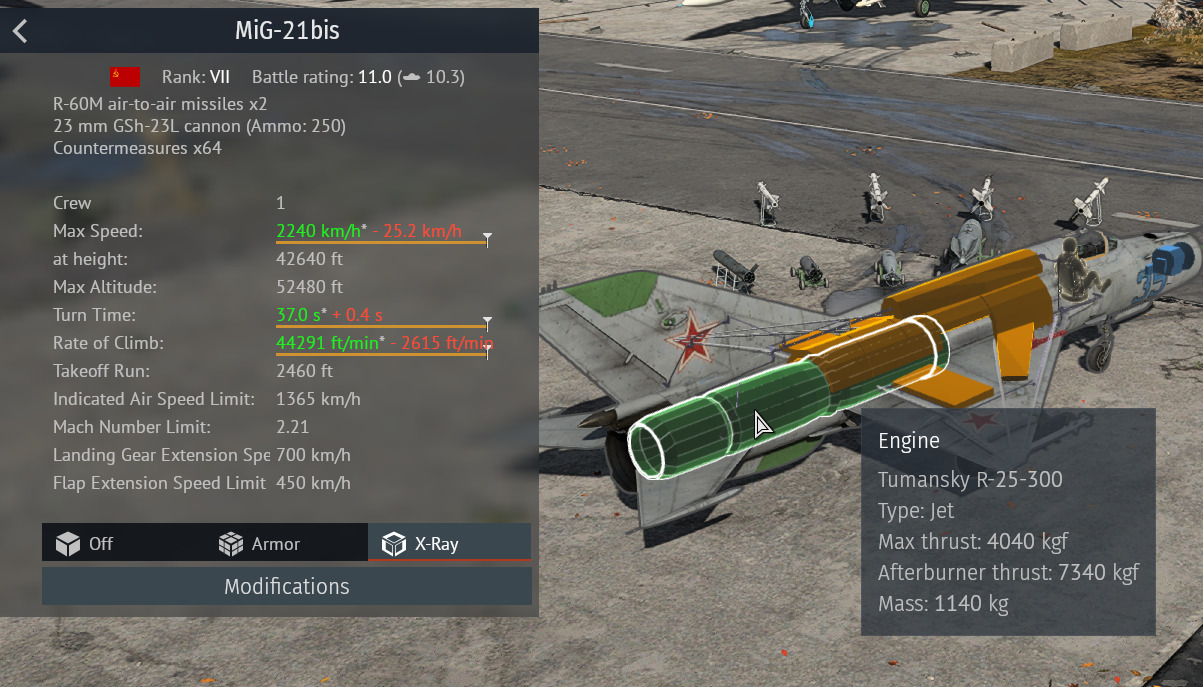
Now, please refer to the take-off thrust of the MiG-29G in-game at this very moment & calculate TWR using the aircraft gross weight (operating weight & full internal fuel).
Each RD-33 is underpowered at take-off @ 6,787kgf for each RD-33.
6,787 kgf x 2 = 13,574 kgf
The thrust-to-Weight Ratio (TWR) of the War Thunder MiG-29 product index 9.12G:
Take-off Thrust / Gross Weight = 13,574 kgf / 14,454 kg ≈ 0.94
All MiG-29 in-game are severely underpowered the moment they spawn on the runway & since take-off thrust determines overall flight characteristics thus setting the baseline for an aircraft’s entire performance envelope directly governing acceleration, climb rate, turn capability, and maneuvering limits, it is inappropriate for us to state that these aircraft are performing anywhere near a historical reality.
MiG-29 9-12G (All MiG-29) Severe Lack of Operational Thrust // Gaijin.net // Issues
Completely ignored 3 aerospace engineering textbook definitions for static thrust, seal level standard day
Lol now we are not allowed to calculate thrust to weight! Or any calculations I should say. Lol…