Thanks for the answer, hope it gets reviewed at some point. Right now it seems to take up the role of both OCU and eMLU which is a bit sad for those hoping to see the eMLU in game.
Yeah I could’ve worded it better.
What I meant was if this counts only weapons that were specifically integrated and can be used without additional modifications, or if it allows systems integrated on an equivalent type (DASH HMD for Thai F-16B OCU, but not F-16A OCU) or even just systems integrated on the same family of aircraft (ADF and MLU models of F-16 carrying AMRAAM)?
These would be down to the devs to decide at their own discretion. Generally if something is technically compatible with a spesific variant in game, then its open to consideration. Providing the technical compatibility can be shown.
If its from an entirely separate variant (one that would usually be a separate aircraft in game), then its more possibly an issue.
Neither the F-15 or MiG 29 has a hard AoA/G limit; they have various systems that notify the pilot when they have reached a high degree of AoA or G-force, and attempt to restrict it, but the pilot can exceed it.
Most Soviet and Warsaw Pact MiG-29 pilots did not fly above 26 AoA. There were exceptions, but practically only display pilots and test pilots flew above this limit. However, the MiG-29 can reach 40 AoA quite nicely and can do even more, but this requires significantly more skill. Although the Fulcrum has similar handling limitations at higher AoA than the Eagle, compared to the F-15, its flight characteristics are more predictable and safer.
30 units of AoA on the F-15 is roughly equivalent to 20 true AoA.
Above 20 AoA, the ailerons are no longer effective on the Eagle, and above 25 AoA, the rudder is ineffective. The aircraft has significant buffet. Around 25 AoA, moderate wing rock occurs. However, similar to the MiG 29, the aircraft can reach higher AoA, usually around 40 AoA, and even higher at very low speeds (below 100 knots).
The F-16 cannot safely exceed 25-27 AoA; it has a hard limit, which unfortunately can be exceeded in certain flight configurations, altitudes, and speeds, but in most cases this has not ended well.
9 G can be reached up to about 15 AoA, then with increasing AoA, the available G decreases with CAT I ( 25 AoA max 1G) CAT III further restricts the aircraft and is designed for carrying heavier equipment and fuel tanks.
102% trim is 100% of the PW 100 engine’s power; this is not excess power, but the power that the engine was supposed to achieve normally, but due to major problems, the engine’s power was reduced.
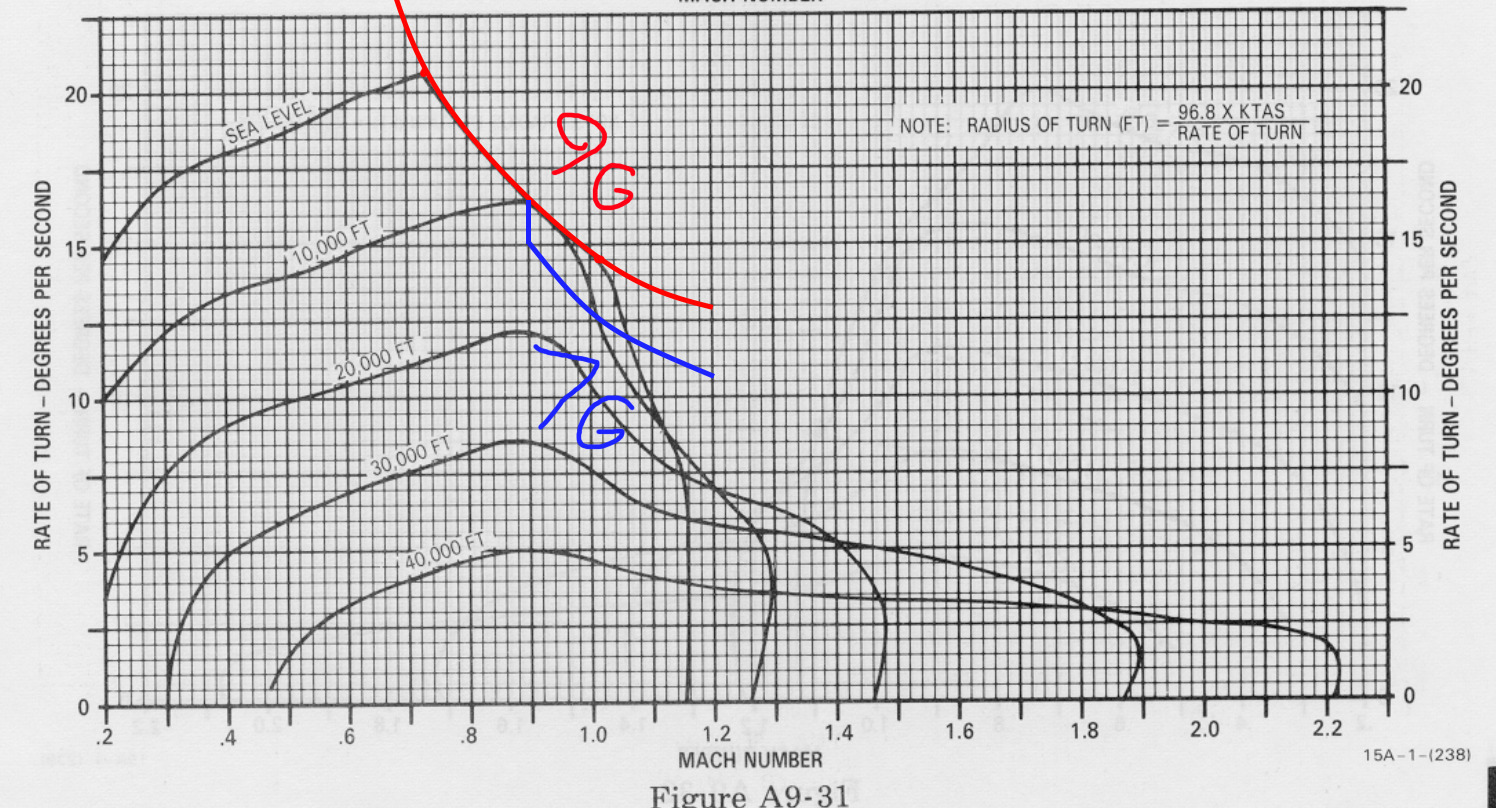
In sustained turns, the Eagle is usually the same or worse (1-2 degrees worse) than the MiG 29, except at high altitudes.
The best sustained turn of the Eagle with 97% trim is 20.5 degrees. Clean, Sea Level.
For the F-15 with a PW 220 engine, the value is the same - 20.5 degrees.
The most maneuverable on paper is the F-15A with 102% trim, but in the real world, it would be worse than later versions due to engine problems.
No, I was describing the 9-12/9-13 variant. I’m not that proficient in English. Which is a pity.
The MiG 29 M was something like the MiG 23 MLD for the MiG 23, and yes, let’s imagine the MiG 29 9-12 as the MiG 23S, yes, that’s exactly how it was. The 9-12 was accepted into the air force with the understanding that it would quickly be replaced by the main version, which was supposed to be the MiG 29M.
It had better parameters in almost everything, very modern, but it also had its weaknesses: the collapse of the Soviet Union led to a lack of funds, and it had some problems with the fact that the aluminum-lithium alloys used for the airframe coating were not fully mastered.
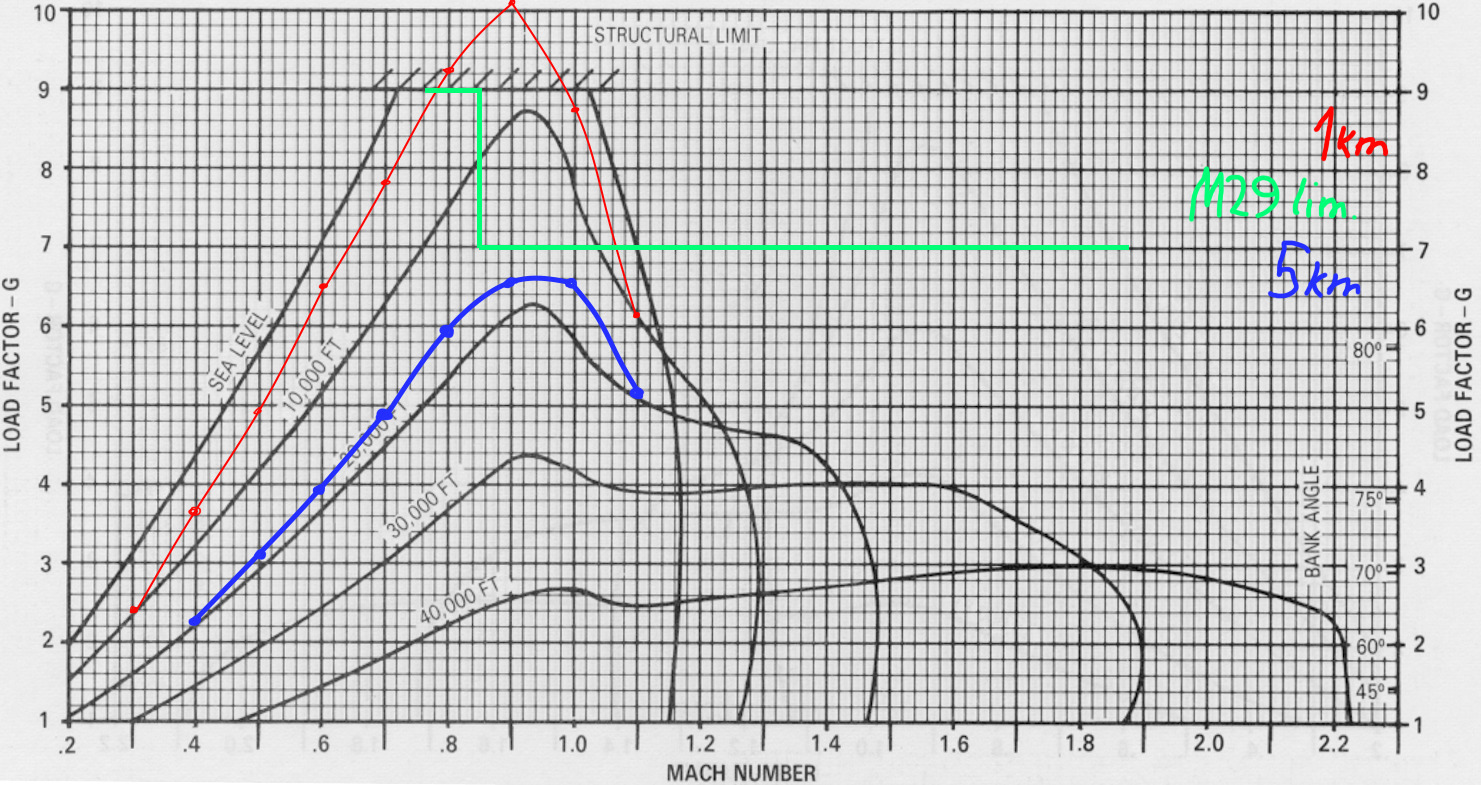
caveats here being that 1 km is higher than sea level, obviously, so some performance degradation is expected; but at the same time, the 20k ft line is also a whole kilometer higher.
to also re-iterate previously: the fuel margins are also different. if you’d adjust them to either wt-style percentage-wise fuel masses or dcs-style equivalent time on afterburner fuel times, or even just flat out the same fuel masses then i’m sure you can tell what kind of difference a ton and a half of fuel can make to one or the other aircraft… and which is a more fair comparison in your eyes?
this is G limited, and as you already know, it can be pushed past. the same restrictions can also be applied to the mig-29 and it’ll be ± the same, except there’s also now the m0.85 7g limitation for the mig-29.
well 6.4 has it both super underperforming at lower speeds and overperforming at the same time at the higher end - the WT performance vs that chart is atrocious
the only line i can’t meet properly is the 5g ln at 500 ias (seem to only be able from around 540 and onward), the others seem to be pretty close and roughly within acceptable margins of error. it’s going to be far harder to compare the bleed rates when accelerating so the sustained turn rates are the references i’m going to be looking at here for in this context, at least.
it’s worth a note that the load factor given in localhost is in the wrong reference frame, if you compare actual turn time from heading change it’s going to be underestimating low speed turn proportional to how much aoa you’re pulling by quite a bit (in 500km/h case there’s a .3g diff, 1deg/s off). you can correct for it by just Ny/cos(aoa)
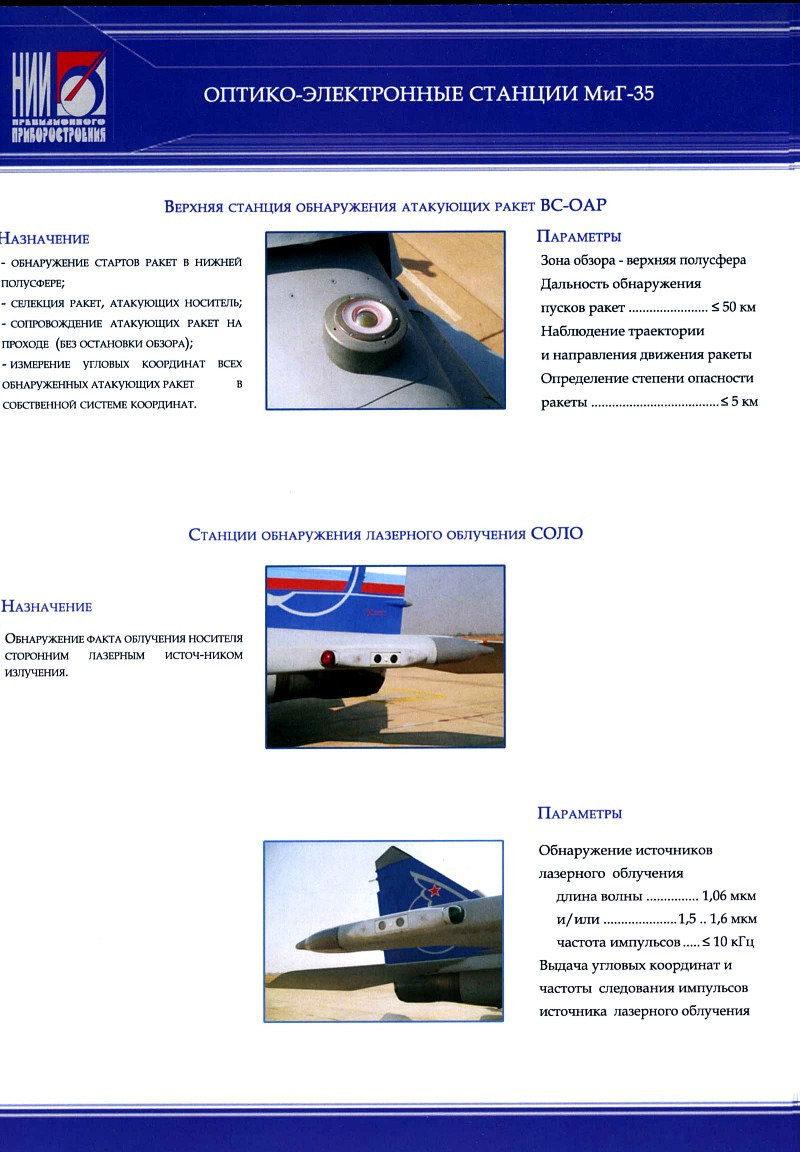
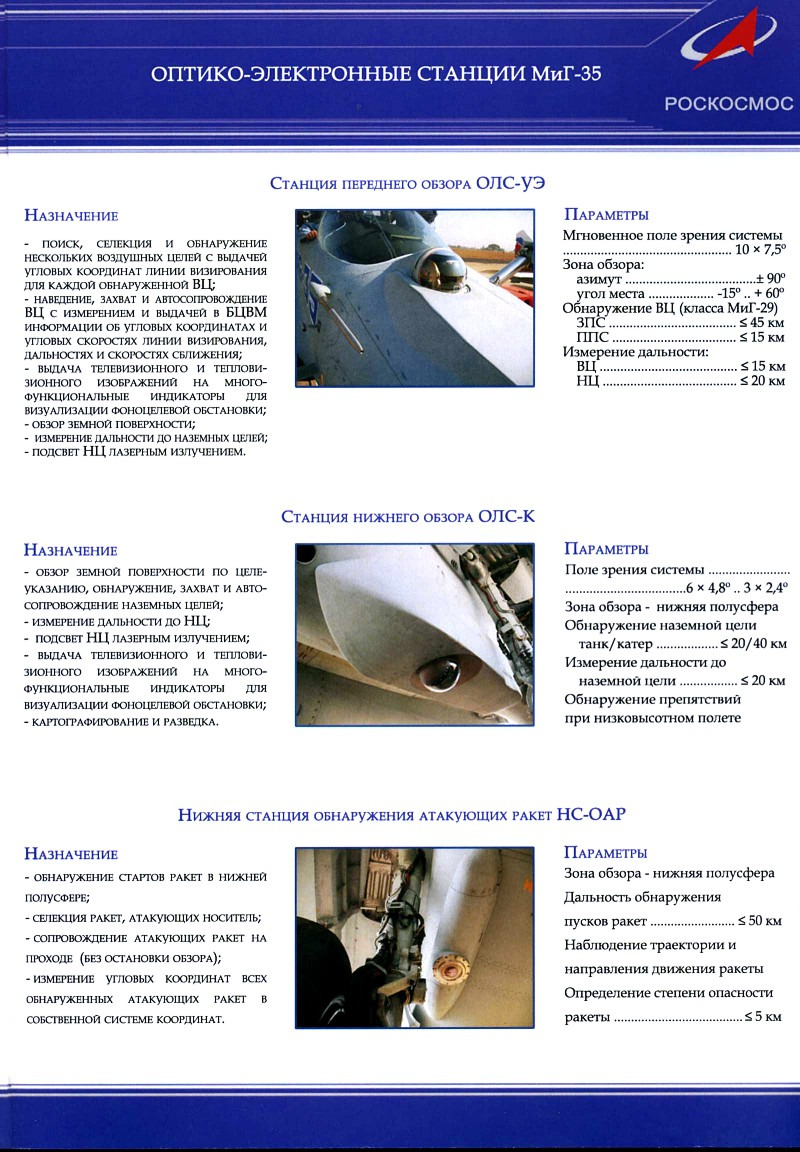
does anyone have an account on secret projects uk forum site with an verified email?
i cant verify my email there for some reason and i need to have that to view some images for the MiG-35 from the post on the bottom of the thread on the page there, if anyone could get those for me that would be appreciated.
The pilots who participated in DACT exercises have the most real-world experience with aircraft performance and know the strengths and weaknesses of their own aircraft and those of their opponents in training combat.
To sum it up, I would just be repeating myself: compared to the F-15, the MiG 29 has slightly better characteristics in high alpha, which allows it to safely exceed 26AoA, and it also has slightly more thrust, meaning it can defeat the Eagle in sustained maneuvering.
The Eagle is a very good, well-balanced dogfighter, but the MiG-29 is slightly better.
Compared to the F-16, the MiG-29 simply has much better instant turn rates and alpha capabilities. The MiG-29 pilot will want to pull the F-16 down to low speeds.
The Hornet, on the other hand, is very good as an AoA fighter, but it lacks the thrust that the MiG-29 has.
So the -29 is slightly better in sustained maneuvering.
As I always try to write, the pilot is the decisive factor in a dogfight, so a MiG-29 pilot can win in sustained turning against an F-16. All it takes is one bad decision or a bit of bad luck.
The question of range is irrelevant because each aircraft has its intended use.
The MiG-29 9-13 already had a longer range than the 9-12, and subsequent versions increased it further.
you misunderstand; bringing up fuel margins isn’t a question of range but rather a question of aircraft gross weights and their performance when adjusting for equal fuel margins for a proper comparison. similarly, endurance will play a part in how long they can stay in that fight.
Yes, weight affects performance. An empty F-15 will be better than a fully loaded MiG 29. The power-to-weight ratio changes. These are the more complex things that are also important.
also the APG-66S that the OCU has in game is completely fake and something gaijin created themselves. Ive looked at countless F-16 documents, articles, brochures and manuals, and there has not one mention of an APG-66"S" model.
There is a saying that fits this situation: ’ A man must use his head.
I have a friend who was at Constant Peg, but I don’t want to ask him about something like that…
What do you think about the performance and maneuverability of the MiG 29?
Constant peg pilots often quoted absurdities about the performance and maneuverability of the MiG-23 because that was all they were told and followed strict guidelines on wide turn circles and primarily using only the acceleration from the engine to fight. These strict guidelines kept them from actually experiencing the planes, and the reasoning was not because that is all they could do… it was because they did not have the parts to maintain them if something broke.
The maneuverability of the MiG-23MLD as quoted by an F-16 pilot from Europe who fought against them was only slightly inferior in two circle than the F-16. It was said to have better vertical energy retention and zoom capability, though.
All of this anecdotal evidence means nothing though, we have the flight manuals and they have been configured as such in the game… for the most part. The F-16 is certainly far from realism and so is the MiG-23 series --not due to the EM charts, but because the aerodynamic model itself is rubbish.
I mean, we are talking about the game that cannot model instability and has F-16’s doing cartwheels on demand and recovering in a quarter turn.
So what do I think of the MiG-29? I think it matches the charts but falls short doing the actual listed aerobatic maneuvers in the other manual. It cannot maintain the speeds suggested for basic loops or turns at safe but low altitudes for airshow displays. Something is clearly off, most likely the energy loss at low to medium AoA range. They have no way to model the slight instability during pitch up.
Only the best pilots made it to Constant Peg, don’t judge by a few videos.
The MiG 23s at Constant Peg were BT and S types, basically old clunkers. Logically, they were unreliable.
Otherwise, the -23 was an excellent aircraft for its time. I like the ML and MLD versions, but the MF is also nice-looking. Now, I’m sure a lot of people will say that the Flogger was bad because… but that’s a longer story.
I was thinking more about what your opinion is on the -29 in the real world.
FM in WT is more like an arcade game…
I do not underestimate the MiG 23 ML/MLD at all; when piloted correctly, it was very maneuverable and powerful. Its avionics were also good for its intended use, which was guidance by personnel from ground stations.