Would you like to see this Hip in-game?
- Yes
- No
0
voters
Mi-8MT Berkut-M26: The Experimental Belly-Turreted Hip
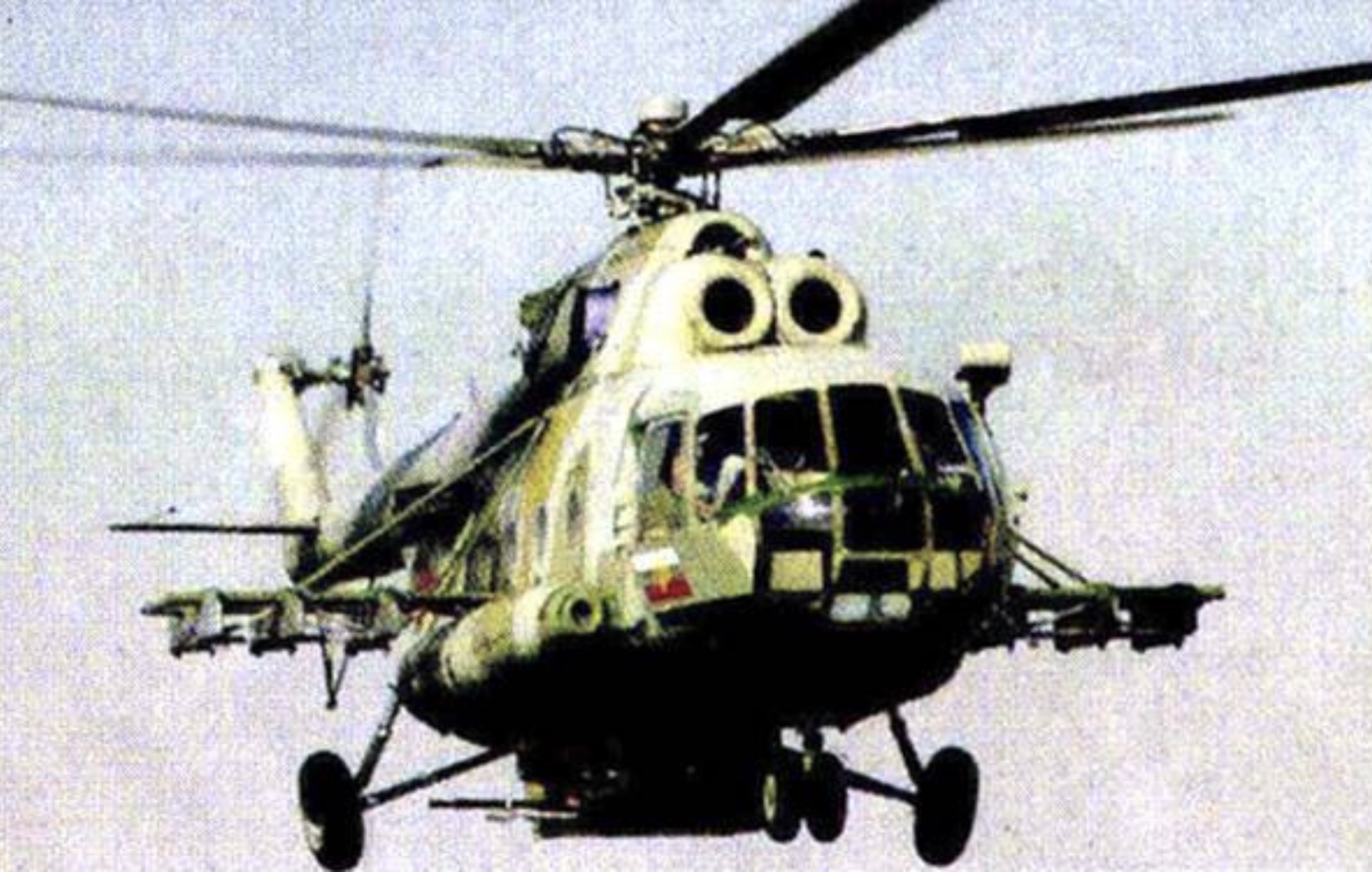
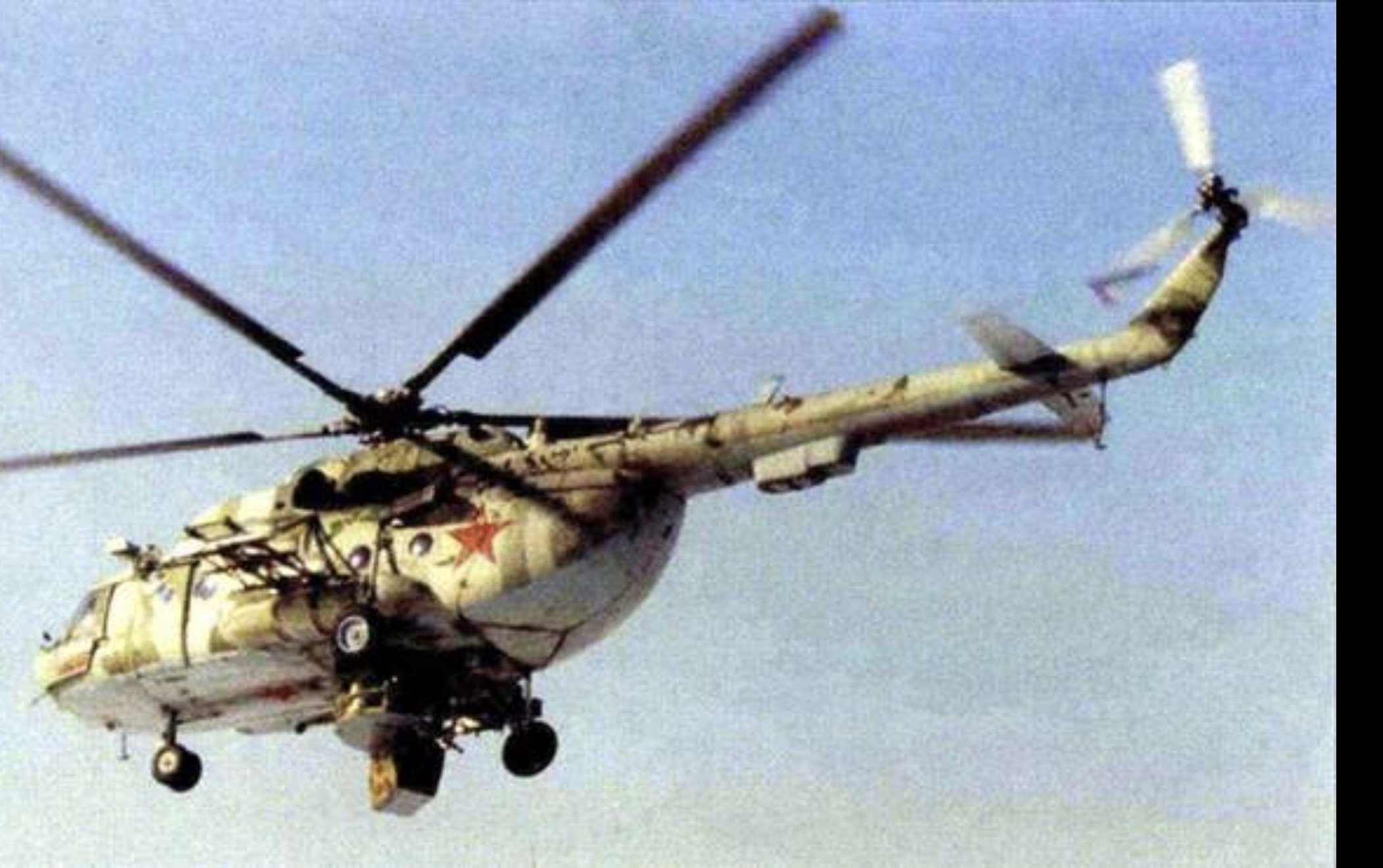
The helicopter in the photograph above bears a Russian flag, making it highly likely that it is the Berkut M26. This specific helicopter is the subject of the suggestion. It is an Mi-8MT equipped with countermeasures, wing pylons for its standard armament, and the Berkut turret, which is fitted with a single KPVT heavy machine gun. The EVU exhaust suppressors, used to reduce the helicopter’s infrared signature, and the forward-firing cockpit machine gun are both absent from this helicopter.
Introduction
The Mi-8 Berkut was an experimental attempt to give the Mil Mi-8 transport helicopter an unusual form of all-round defensive and suppressive firepower. Rather than redesigning the helicopter as a conventional gunship, the project centered on a removable weapon installation suspended beneath the fuselage. The defining feature of the system was a telescoping, rotating gunner’s cabin fitted through the Mi-8’s central floor hatch. Once lowered beneath the helicopter, the installation could rotate through 360 degrees in azimuth and engage targets around the aircraft’s lower hemisphere.
The project originated in the mid-1980s, underwent several stages of development and testing, and continued in modified form after the collapse of the Soviet Union. Despite promising aspects, no military or security organization placed the system into series production. Because photographs of the project are extremely scarce, this suggestion will focus on the Berkut-M26 configuration i.e the one equipped with the KPVT heavy machine gun. Nevertheless, the suggestion will still cover the development and history of the entire Berkut project.
Two variants of the Mi-8 were used during the Berkut project’s development: the unarmed Mi-8T (Hip-C) and the later, more powerful Mi-8MT (Hip-H). If the vehicle were to be introduced to War Thunder, it should be represented by the Mi-8MT configuration shown in the image above. In addition to the distinctive Berkut belly turret, the Mi-8MT could also carry a variety of unguided weapons, including rockets, bombs, and gun pods, giving it greater versatility in combat. In my opinion, the Berkut project would be an excellent addition to the game, particularly for the infantry mode.
History
Spoiler
Origins
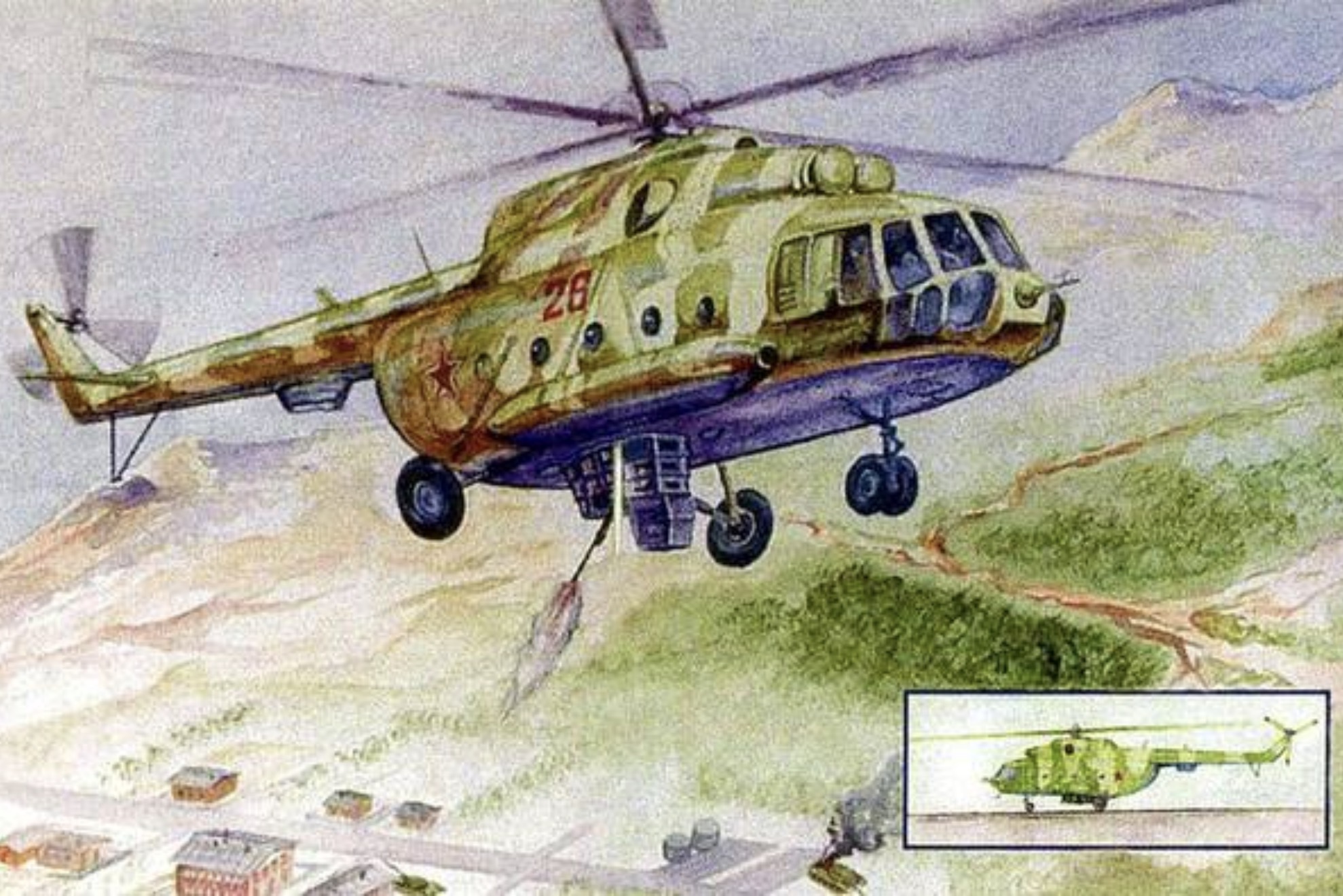
The Berkut concept emerged from Soviet combat and internal-security experience during the 1980s. Mi-8 helicopters were widely used to transport troops, conduct insertions and extractions, and support security operations. However, the helicopters available to some Soviet Internal Troops formations reportedly lacked sufficient integral armament. Conventional door-mounted weapons offered only restricted fields of fire, while fixed forward-firing armament required the pilot to turn the entire helicopter towards the target. This was particularly limiting during landings, troop extractions and departures from contested areas. In 1984, a group of officers associated with the Soviet Ministry of Internal Affairs and the Dzerzhinsky Internal Troops Division proposed fitting the Mi-8 with an all-round weapon installation. The intention was to allow the helicopter to suppress hostile positions without having to point its nose towards them. The name Berkut, meaning “golden eagle”, was applied to the experimental installation.
Early development
The basic concept involved placing a rotating weapon station beneath the helicopter. The installation was mounted through the central floor opening normally used for the external-load suspension system. A structural frame was fitted inside the cargo cabin above the opening. Beneath it was a telescoping gunner’s compartment that could be lowered after take-off. This allowed the weapons to clear the landing gear and gave the gunner an unobstructed field of fire around the lower part of the helicopter. The gunner entered the compartment through the floor hatch. Once in position, he operated the weapons from inside the suspended cabin. The first major trials took place in 1986 at the 344th Combat Training Centre at Torzhok. These trials included live firing and comparisons with other experimental helicopter defensive installations. The project subsequently evolved into a revised version known as Berkut-2, which underwent further testing in the late 1980s.
Continued development
The programme did not end immediately after the 1989 trials. A heavier cannon-armed version was reportedly proposed, but it failed to receive the necessary funding. Development and promotion of the basic idea continued after the dissolution of the Soviet Union. A later industrial prototype known as Berkut-M26 was constructed in 1996. Nevertheless, the system failed to attract a firm production order from the Ministry of Internal Affairs, the armed forces, the security services or another government customer. As a result, Berkut remained an experimental installation.
The Berkut In-Depth
Spoiler
General arrangement
The basic Berkut concept was a removable, telescoping ventral gunner’s position suspended through the Mi-8’s existing cargo-hook hatch. In developed versions, the rotating structure used components/mechanisms derived from the BMP-2 turret, placing the gunner in the ventral capsule. This allowed essentially circular coverage of the lower hemisphere without major modification of the helicopter itself.
The installation consisted of:
- an internal support structure fitted over the central floor hatch;
- a telescoping under-fuselage gunner’s cabin;
- a rotating weapon mounting;
- ammunition containers and feed systems;
- aiming and control equipment;
- mechanical and electrical systems for lowering, raising and rotating the installation.
When the helicopter was on the ground, the cabin was kept in a raised position to provide adequate clearance. After take-off, it could be lowered beneath the fuselage. This lowered position allowed the installation to rotate through a full circle in azimuth. Its principal field of fire was directed into the lower hemisphere, making it suitable for engaging ground targets during hovering, low-level flight, landing approaches and departures.
Gunner’s position
Unlike a remote weapon station, the Berkut required a dedicated gunner to occupy the suspended cabin. This arrangement offered a wide field of view and allowed direct control of the weapons, but it also created several disadvantages. The gunner was positioned beneath the helicopter, where the compartment would have been particularly exposed to ground fire, obstacles and damage during an emergency landing. The system also occupied the Mi-8’s central floor hatch and required internal support equipment, ammunition storage and access space. Although the main cargo compartment remained available, the installation would have reduced usable payload and troop-carrying capacity.
The Original Berkut
The exact armament fitted during every developmental stage is not completely clear. Available sources describe several configurations. The installation was modified repeatedly during testing.
Six-gun configuration
The configuration consisted of two removable weapon containers. Together they reportedly carried:
- 2 × YakB-12.7 four-barrel 12.7 mm machine guns
- 4 × GShG-7.62 four-barrel 7.62 mm machine guns
The combined theoretical rate of fire of all six weapons was reported as approximately 32,000 rounds per minute. The purpose of the arrangement was to produce an extremely dense concentration of fire. Rather than relying entirely on precision, the system was intended to saturate hostile positions and suppress enemy personnel over a wide area. The designers reportedly suggested that such a volume of fire might also be capable of disrupting or destroying an approaching shoulder-launched surface-to-air missile. However, this appears to have been a proposed defensive concept rather than a demonstrated operational capability.
Some sources describe a different developmental sequence. These accounts mention installations armed with:
- a single 14.5 mm KPVT heavy machine gun;
- a single YakB-12.7;
Berkut-2/M26
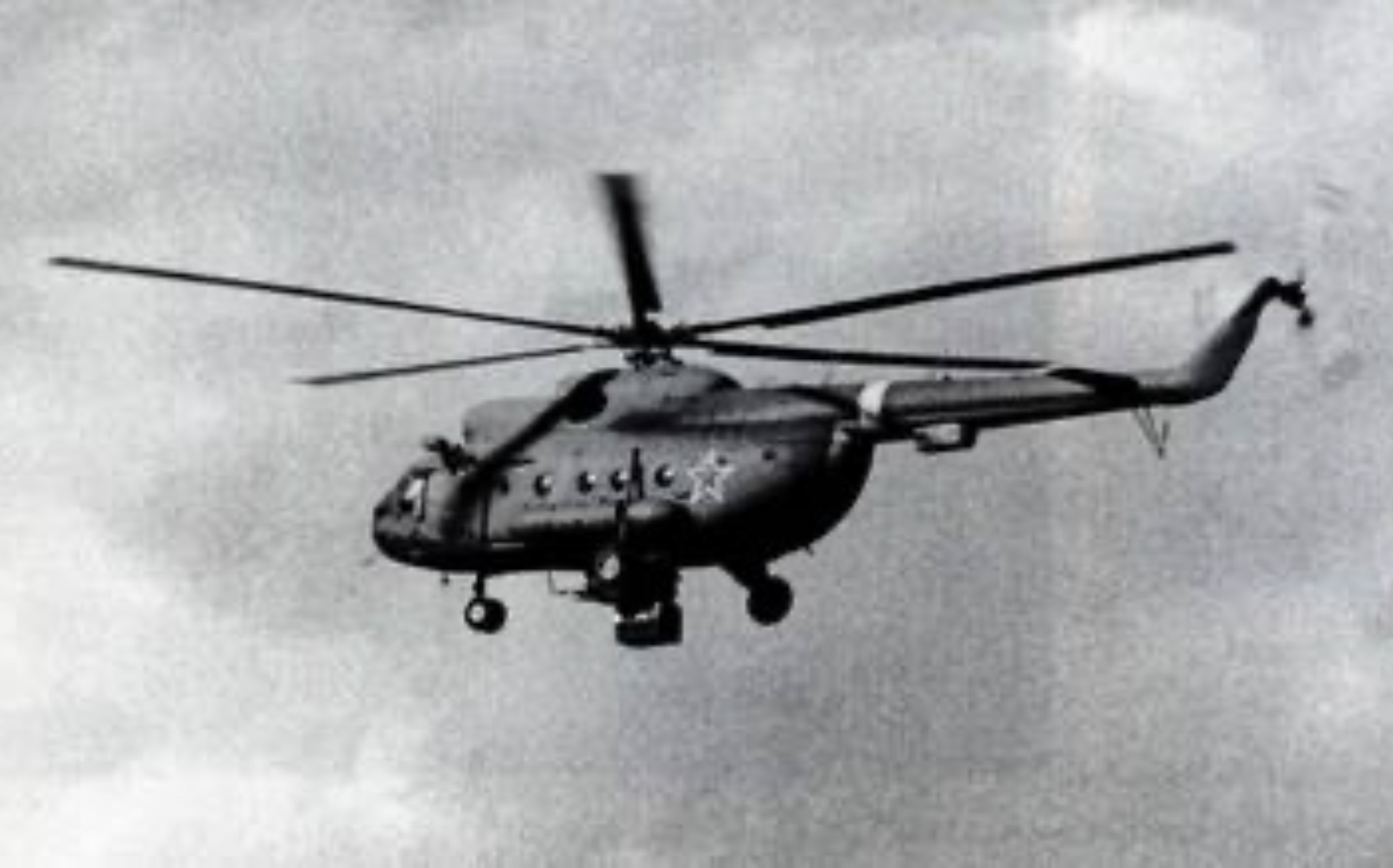
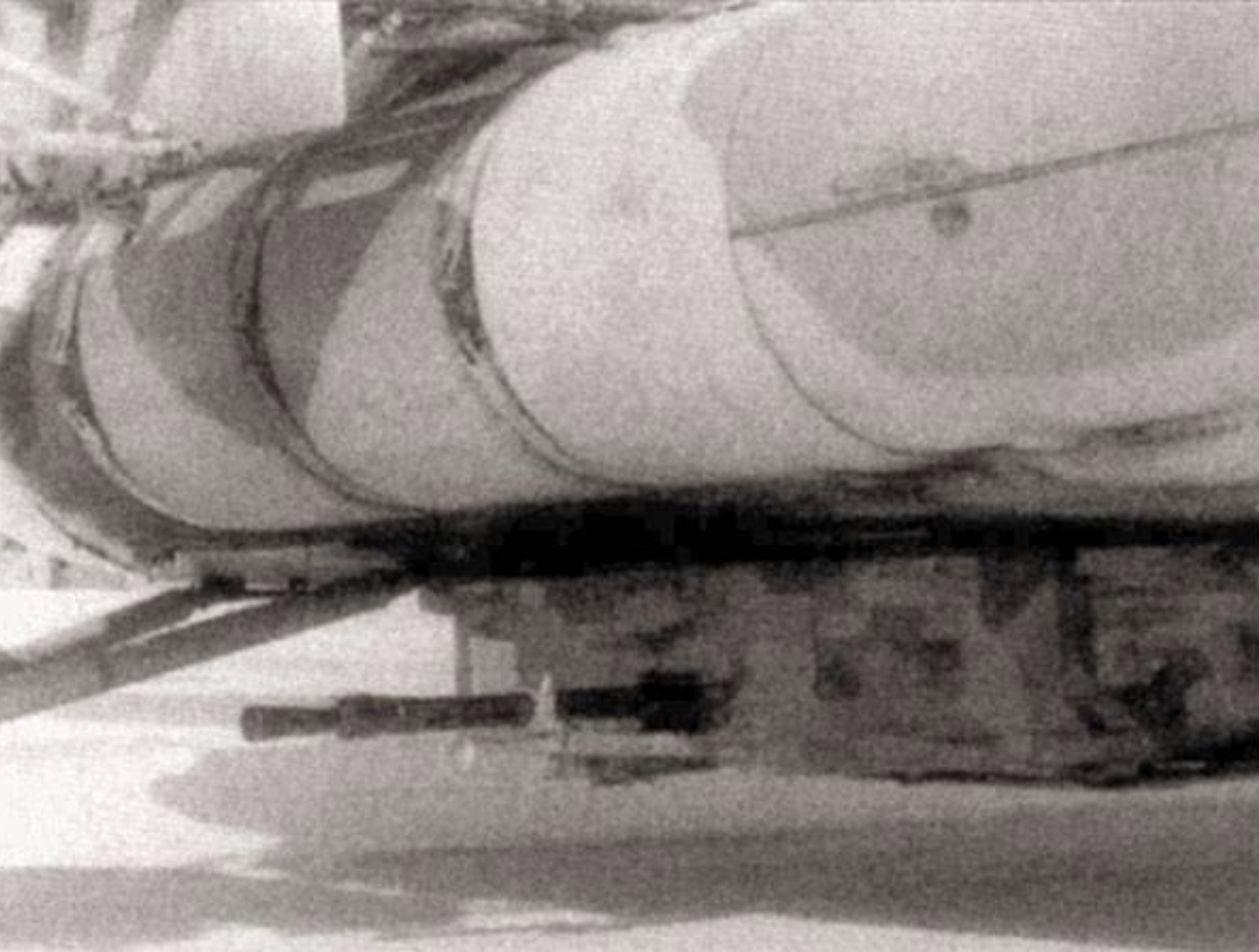
The photograph above features an Mi-8T, identifiable by its tail rotor being mounted on the right side of the tail fin. This is highly likely to be the only known photograph of the Berkut-2. The remaining photographs, aside from the drawing shown in the history section, depict the Berkut-M26.
Berkut-2 represented a revised attempt to improve the system’s accuracy, range and usefulness during both day and night operations. Where the earlier high-rate-of-fire configuration emphasized suppression, Berkut-2 has placed greater emphasis on engaging individual ground targets with heavier-caliber weapons. Berkut-M26 is a further development of the Berkut-2 and is the 8th prototype.
Armament
Because the surviving descriptions are inconsistent, the exact number of KPVTs fitted to the tested Berkut-2 cannot be stated with complete certainty. Based on available images, Berkut-2 and M26 were armed with a single KPVT machine gun.
Berkut-2 and M26 were armed with one 14.5 mm KPVT heavy machine gun.
The KPVT offered considerably greater range, penetration and destructive effect than rifle-caliber and 12.7 mm weapons. It was suitable for engaging personnel, light vehicles, firing positions and other lightly protected ground targets.
Sighting equipment
Berkut-2 reportedly included:
- a daylight optical sight with 12× magnification;
- an A-4A infrared searchlight for night operations.
Some descriptions refer to the sight as stabilized, but this is not firmly supported by the available evidence.
Reported engagement distances were:
- up to approximately 4 km by day;
- up to approximately 2.2 km at night.
Testing and Limitations
Spoiler
Berkut-2 reportedly underwent firing trials at Torzhok in January and February 1989. Some accounts describe the results positively and state that the installation could engage small ground targets from different directions without seriously affecting the Mi-8’s handling. Other aviation histories mention that the trials generated numerous criticisms. The exact evaluation appears to have been mixed.
Positives
According to the available documentation, the Berkut offered several advantages over conventional helicopter armament. Its most significant feature was a full 360-degree field of fire, allowing the gunner to engage targets regardless of the helicopter’s heading, including while the aircraft was departing the target area. Because the installation was designed as a removable module, it required only minimal modifications to the helicopter and could reportedly be installed or removed in field conditions by two trained technicians in approximately three hours. The system was intended to improve the helicopter’s effectiveness during ambushes, troop insertions and extractions, and other missions where threats could emerge from any direction. The documentation also identified it as being particularly well suited for border security, internal security, and counter-terrorism operations.
Negatives
Exposed gunner
The most obvious weakness of the Berkut system was the gunner himself. Although he operated from within an enclosed cabin, the compartment was suspended beneath the helicopter, leaving him significantly more exposed than the rest of the crew. This made the gunner particularly vulnerable to small-arms fire, shell fragments, collisions with obstacles, damage during hard landings, and structural failure of the installation itself. In the event of an emergency, evacuating the suspended cabin would also have been considerably more difficult than escaping from the main fuselage. Unlike a remotely operated weapon station, where the operator remains safely inside the aircraft, the Berkut required its gunner to occupy one of the most exposed positions on the helicopter.
Weight and drag
The suspended cabin, weapons, ammunition and supporting structure added considerable weight. The lowered installation would also have created additional aerodynamic drag. No reliable Berkut-specific performance figures are available, so it is not possible to establish precisely how much the system reduced speed, range, climb rate or payload.
Reduced transport capacity
Berkut used the central floor hatch and required internal structural support, access space and ammunition storage. Although the Mi-8 remained capable of carrying personnel or cargo, the standard transport capacity cannot be assumed to have remained unchanged. The installation almost certainly reduced the aircraft’s usable payload.
Complexity
The Berkut installation also introduced a significant level of complexity to what was intended to be a removable supplementary weapon system. Its operation required an additional crew member dedicated to manning the turret, specialized training, the handling and storage of large quantities of ammunition, and regular maintenance of the mechanisms responsible for raising, lowering, and rotating the installation. Effective use of the system also depended on close coordination between the gunner and the flight crew to ensure safe operation during all phases of flight. Collectively, these additional logistical and operational demands may have been considered disproportionate to the tactical advantages offered by the system, particularly when compared with more conventional helicopter armament.
Limited customer interest
The project lacked a committed institutional customer. Even if the installation performed adequately, no major Soviet or Russian organization was willing to fund large-scale development, certification and production. This absence of procurement support was probably more important than any single technical defect.
A cannon-armed successor was reportedly proposed in 1989, but funding was not approved. The idea survived beyond 1991, and the later Berkut-M26 installation showed that development had not ended completely. Nevertheless, no production order followed. The fate of these systems is unknown.
Specifications
Spoiler
General characteristics
| Category | Information |
|---|---|
| Name | Berkut |
| Type | Experimental supplementary helicopter weapon installation |
| Carrier aircraft | Mi-8T; later Mi-8MT |
| Intended role | All-round defensive and ground-support fire |
| Origin | Soviet Internal Troops initiative |
| Development began | 1984 |
| Main trials | 1986 and 1989 |
| Later development | Berkut-M26 built in 1996 |
| Production status | Experimental only |
| Number completed | Uncertain; at least several experimental installations or configurations existed |
Crew
| Category | Information |
|---|---|
| Standard flight crew | 2 pilots and 1 flight engineer |
| Additional Berkut crew | 1 gunner |
| Total operating crew | At least 4 |
| Troop capacity | Not reliably documented; probably reduced from the standard Mi-8MT capacity |
Dimensions of the Mi-8
| Category | Measurement |
|---|---|
| Overall length | Approximately 25.35 m |
| Fuselage length | Approximately 18.22 m |
| Main rotor diameter | 21.29 m |
| Tail rotor diameter | 3.91 m |
| Height | Approximately 4.75 m |
Powerplant
| Category | Specification |
|---|---|
| Engines | 2 × Klimov TV3-117MT turboshafts |
| Output | Approximately 1,900 shp each |
Weight
| Category | Information |
|---|---|
| Maximum take-off weight | Approximately 12,000 kg |
Performance
| Category | Mi-8MT performance |
|---|---|
| Maximum speed | 250 km/h |
| Cruising speed | 230 km/h |
| Range | Approximately 495 km (internal fuel) |
| Service ceiling | 5,000 m |
Armament
Berkut-M26

General:
- 1 × KPVT 14.5 mm heavy machine guns
- 12× daylight optical sight
- A-4A infrared searchlight
- Reported engagement range of up to 4 km by day
- Reported engagement range of up to 2.2 km at night
Dimensions:
- Length: 1800 mm
- Width: 1800 mm
- Height: 3100 mm
Weight:
- Approximately 600 kg without ammunition
Ammunition:
- 2000 rounds
Mi-8MT
| Category | Armament |
|---|---|
| Door and window guns | 7.62 mm PK or PKM machine guns could be fitted at cabin doors and firing ports |
| Forward-firing machine gun | Some armed Mi-8MTs could carry a flexible or fixed 7.62 mm PKT in the nose position |
| Rocket armament | Up to 6 × UB-32A-24 pods, each carrying 32 × 57 mm S-5 rockets |
| Gun pods | Up to 2 × UPK-23-250 pods, each containing one 23 mm GSh-23L twin-barrel cannon with 250 rounds |
| Bombs | FAB-series bombs in 100, 250, or 500 kg classes; total bomb load commonly limited to approximately 1,500 kg |
| Countermeasures | SPO-10 “Sirena-3M” (S3M) radar-warning receiver; ASO-2V / ASO-2V-02 26 mm flare dispensers, commonly 4 × 32-round units; optional L-166V1A / SOEP-V1A “Lipa” infrared jammer; EVU exhaust suppressors for reduced infrared signature |
| Other stores | Incendiary tanks, mine dispensers, cargo containers, and other mission-specific stores |
| Suspension points | Up to 6 external hardpoints |
| Maximum external combat load | Approximately 1,500 kg in normal armed configurations; some references quote a structural carrying capacity of up to 4,000 kg, but this should not be treated as the normal weapons load |