- Yes
- No
Hello everyone and welcome to this new suggestion.
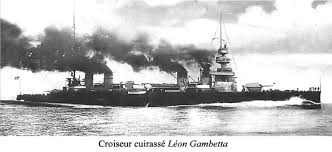
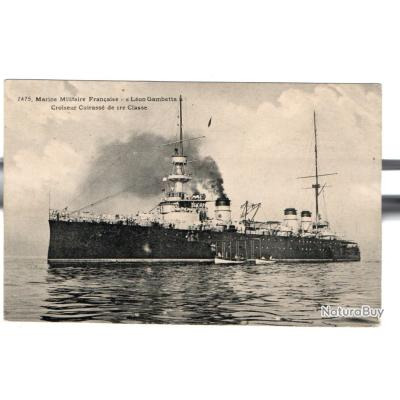
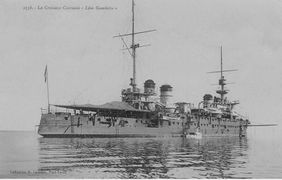
Today I’m presenting a new ship of the French Navy, the Léon Gambetta.
The Léon Gambetta was the first of a class of French armored cruisers (the class name being Léon Gambetta) from the beginning of the last century. Commissioned in 1905, the ship was assigned to the Northern Squadron, where it served as the flagship. During this period, it participated in diplomatic and naval missions, such as the visit to Portsmouth for the Entente Cordiale between France and the United Kingdom, and later transported high-ranking officials on state visits.
In 1910, it was transferred to the Mediterranean, to the Mediterranean Squadron, and became the flagship of the 1st Light Division (later renamed the 2nd Light Division).
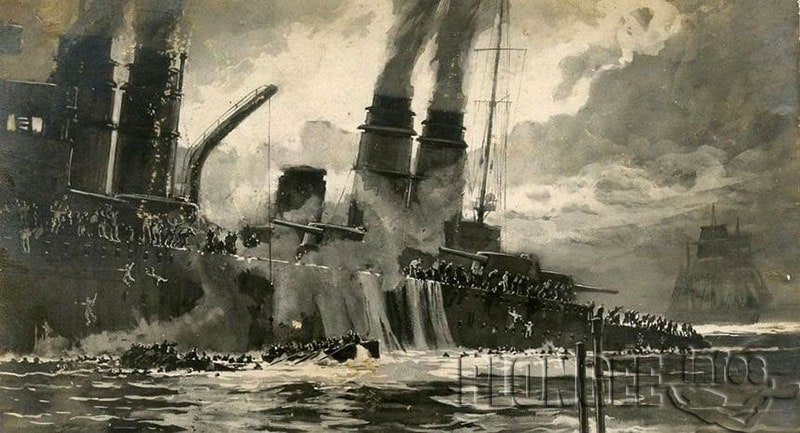
At the outbreak of the First World War, the French Navy mobilized its armored cruisers for various tasks: convoy escort, escorting battleships, patrols, and blockades of the Austro-Hungarian navy in the Adriatic Sea. The Léon Gambetta, based in Malta as part of the 2nd Light Squadron under the command of Rear Admiral Victor Senes, participated in this blockade, particularly in the area of the Strait of Otranto—a strategic point for controlling the Austro-Hungarian fleet’s exit. On the night of April 26-27, 1915, while patrolling approximately 14 nautical miles off Cape Santa Maria di Leuca (Apulia, Italian coast), the Léon Gambetta was torpedoed twice by the Austro-Hungarian submarine U-5, commanded by Lieutenant Commander Georg von Trapp. The first torpedo struck the dynamo room, destroying the communication equipment (wireless radio antennas), thus preventing a distress call from being sent. The ship quickly listed and sank very rapidly, in about ten minutes. On board were the commanding officer and Rear Admiral Sénès. Of the 821 officers and sailors, only 137 survived. The losses were massive: approximately 684 men, making this sinking one of the worst tragedies in the history of the French Navy. This disaster marked the end of the Léon Gambetta and raised questions about the vulnerability of armored cruisers to the submarine threat. The Léon Gambetta and its class illustrate a period of transition in the French Navy: the last large armored cruisers designed before the emergence of new naval doctrines. Upon their commissioning, they represented a formidable force, combining artillery, armor, and range—but submarine warfare revealed their limitations. The sinking of the Léon Gambetta in 1915 tragically highlighted the vulnerability of battleship-like vessels to submarines, foreshadowing a tactical and strategic upheaval: battleships and armored cruisers would gradually become obsolete in modern warfare, giving way to new approaches (light squadrons, escort vessels, submarines, naval aviation). For the French Navy, the loss of the Léon Gambetta remains one of the heaviest human losses of the First World War. It also marked a turning point in the growing awareness of the submarine threat and the need to rethink naval warfare.
The ship was named in honor of Léon Gambetta, a 19th-century French politician who proclaimed the Third Republic after the fall of Napoleon III and escaped the Prussians by fleeing Paris in a hot air balloon. He later held important positions in French politics.
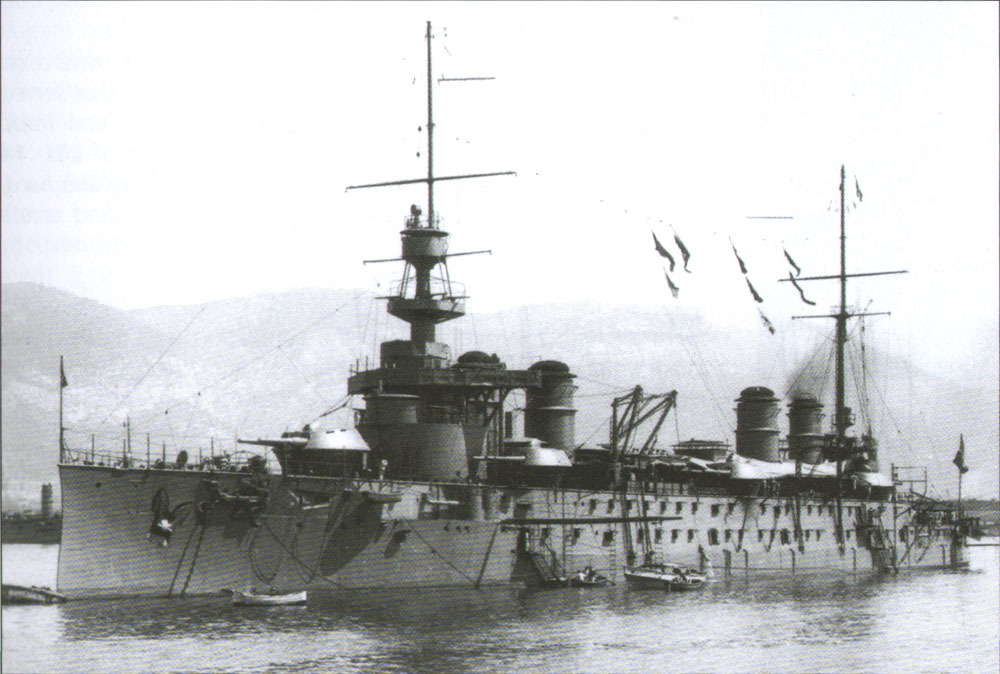
Characteristics
Length: 146.75m
Width: 21.41m
Draft: 8.05m
Mass: 12,400 tons
The ship is propelled by three steam engines generating 20,226kW of power, enabling it to reach a maximum speed of 22 knots and a range of 7,500 nautical miles at 10 knots.
Weapons
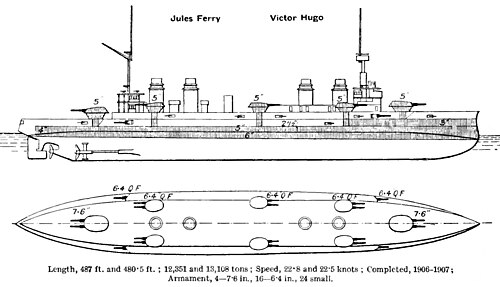
The ship is fairly well armed for its time, including:
Guns :
- 2 x 2 194mm Mle1893/93
- 6 x 2 164mm Mle1893/96
- 4 x 1 164mm Mle1893/96
- 24 x 1 47mm Mle1902
Torpedo :
- 5 x 450mm torpedo tubes
Other :
- 10 mines
Armor
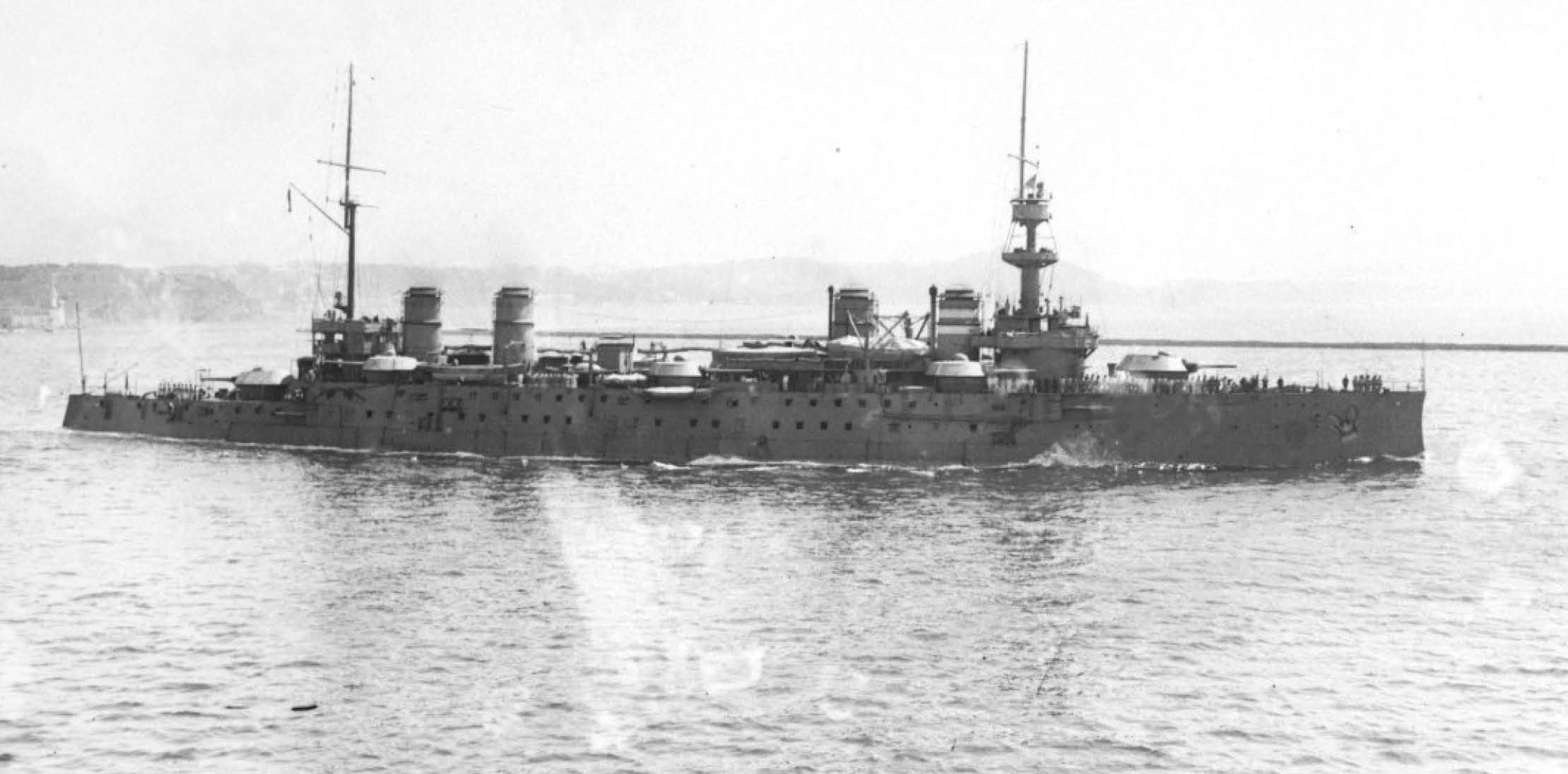
The ship possesses considerable armor, allowing it to withstand a certain number of hits.
- Waterline Belt: 80-150 mm
- Deck: 33-57 mm
- Turrets:
- Main: 138 mm
- Secondary: 102 mm
- Conning Tower: 174 mm
In this game, the first ship of the Léon Gambetta class would be a particularly interesting addition to the French tech tree, bringing a powerful ship with substantial armament and whose history has marked the French navy.
Pictures