Would you like to see KSP-76 in-game?
- Yes
- No
0
voters
KSP-76 (GAZ-68)
Introduction
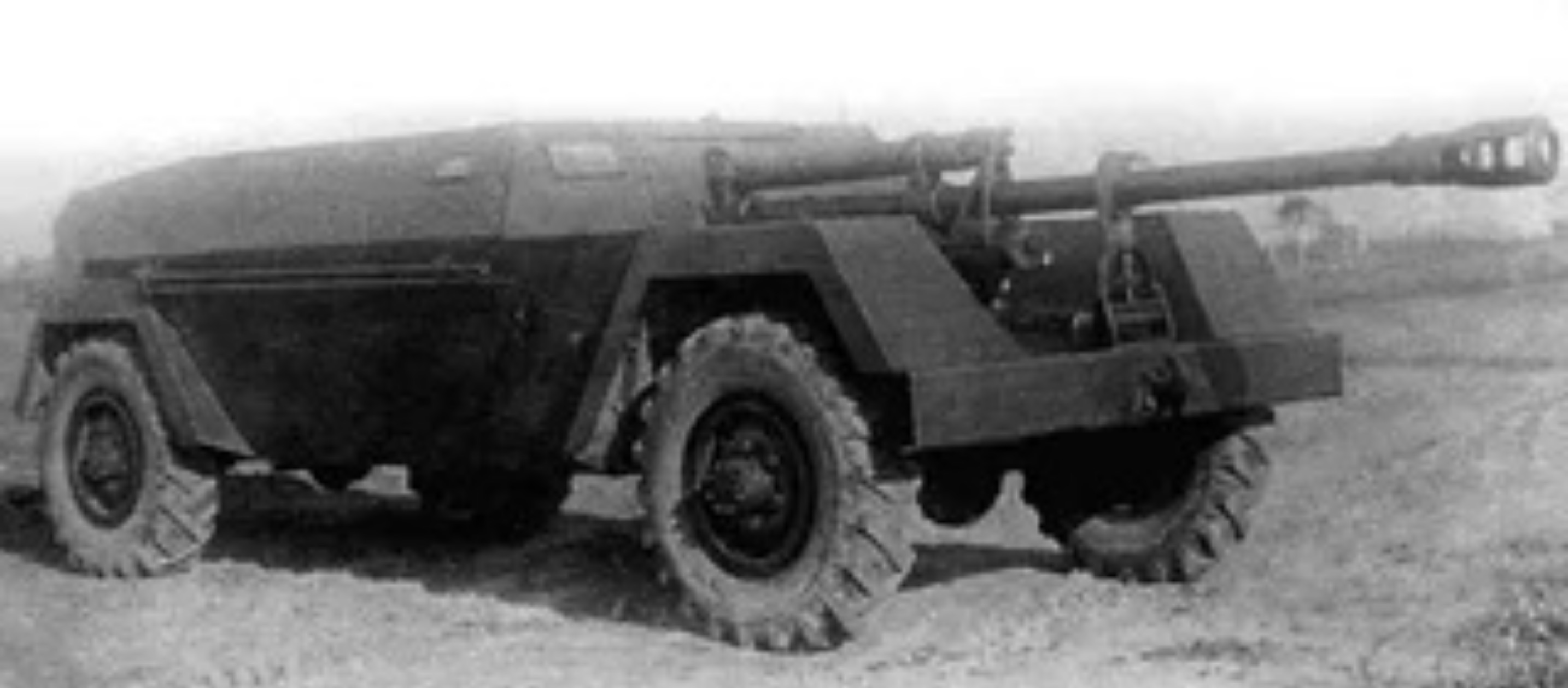
The KSP-76, also known by its factory designation GAZ-68, was an experimental Soviet wheeled self-propelled gun developed during the Second World War. The KSP-76 was unusual because Soviet self-propelled guns of the Second World War were almost always tracked vehicles, while this project attempted to place a 76 mm gun on a wheeled armoured chassis. It was designed at the Gorky Automobile Plant as a compact and mobile vehicle armed with the 76.2 mm ZiS-3 gun. It was not intended to replace medium or heavy assault guns, but to serve as a fast, low-profile fire-support and anti-tank vehicle.
One of the primary reasons this prototype was ultimately abandoned was its poor off-road mobility. In the context of War Thunder, however, this drawback is largely irrelevant at the time of writing. This is precisely why I would like to suggest the vehicle for inclusion in the game. Similar vehicles have already been introduced for other nations, and their strengths, weaknesses, and overall gameplay impact are now well understood. In my opinion, this vehicle would be significantly more enjoyable to play than the Su-76.
History and Dvelopment
Spoiler
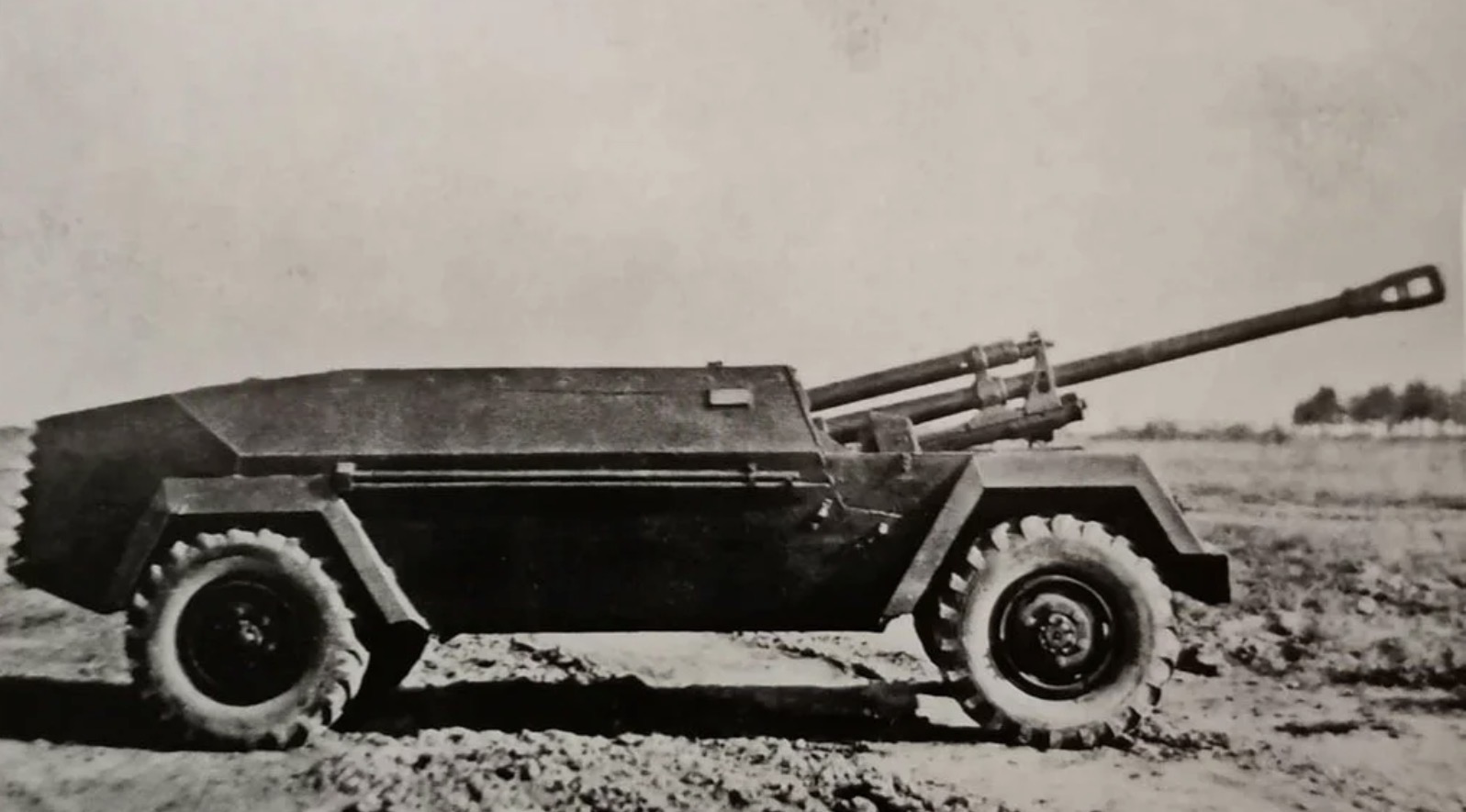
The vehicle was created in 1944 by the design bureau of the Gorky Automobile Plant under the direction of Vitaly Andreyevich Grachev, one of the Soviet Union’s most important designers of wheeled military vehicles. The first concept was even simpler than the final prototype: it involved mounting the ZiS-3 on a stripped-down 1.5-ton truck chassis, but this was later developed into a purpose-built armoured vehicle. The full name stands for: “колёсная противотанковая САУ” or “колёсная самоходная пушка,” meaning a wheeled anti-tank self-propelled gun. Its intended role was that of a mobile or “roving” fire weapon, able to move quickly between firing positions and provide direct fire support where needed. Only one prototype was completed, and the vehicle never entered serial production.
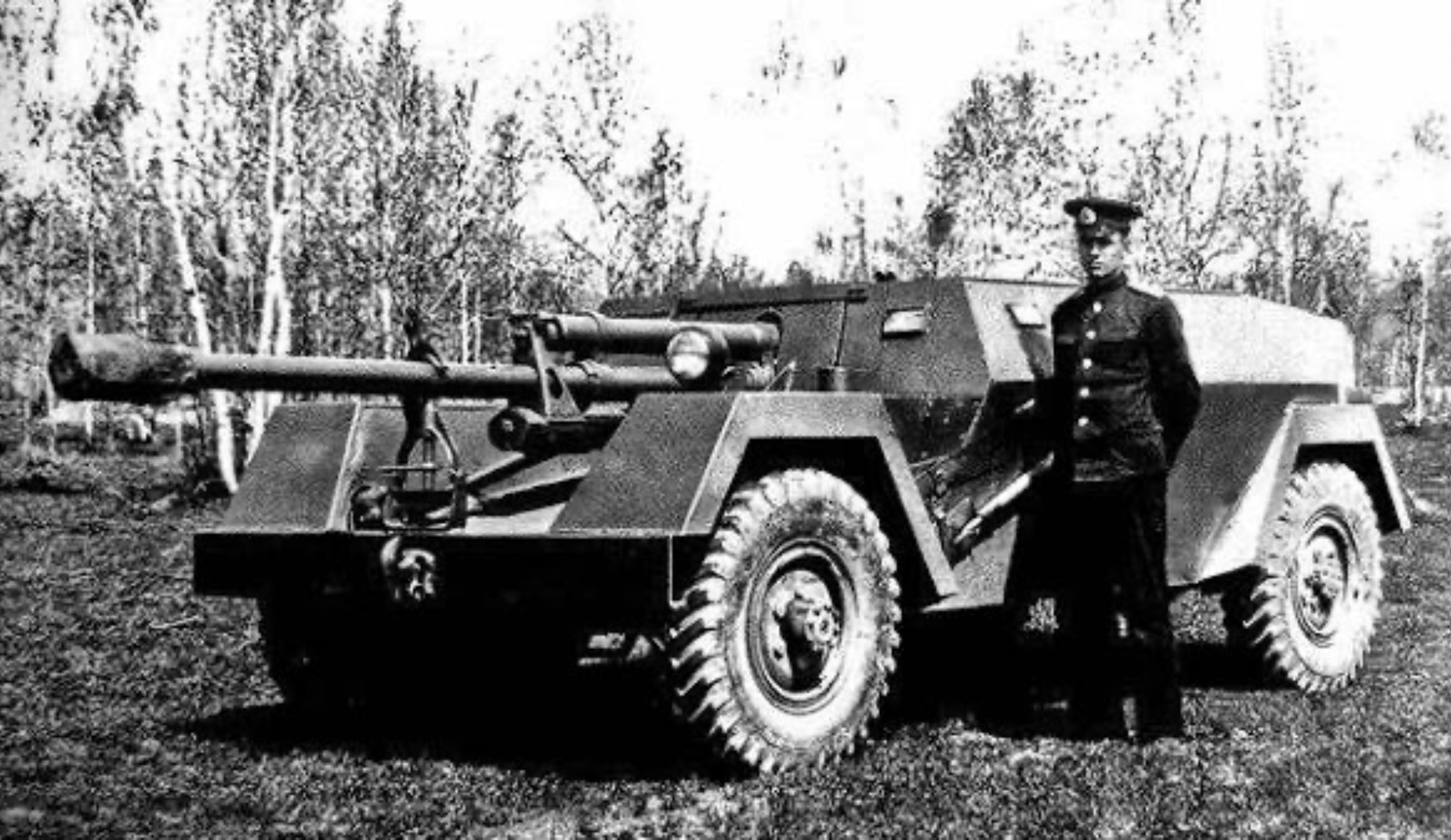
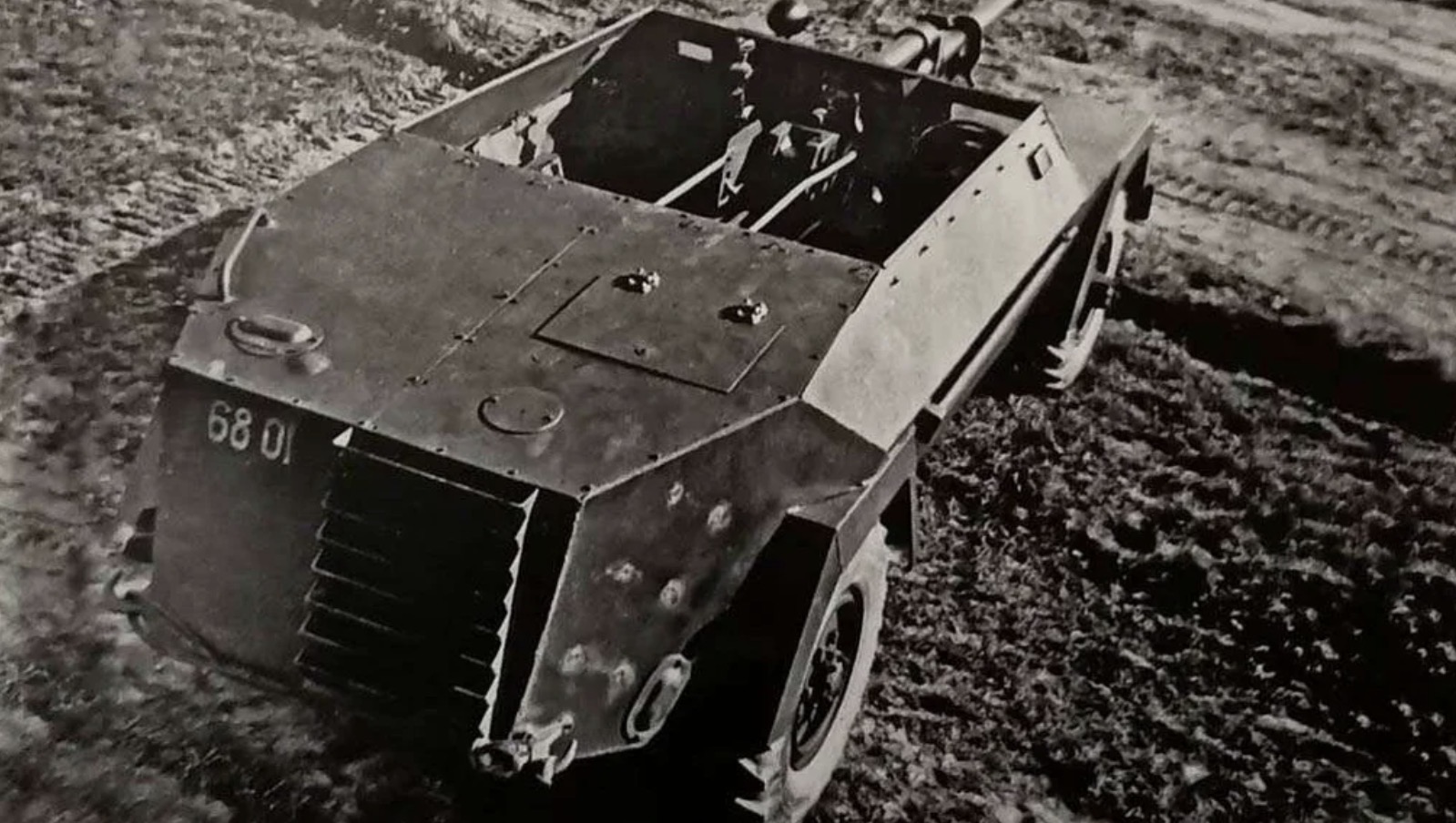
The KSP-76 was based on the components of the experimental GAZ-63 all-wheel-drive truck, serial production of which began only after the war. This gave the vehicle a 4×4 layout, with both axles driven. The use of automotive components helped keep the design light, simple, and fast on roads. The designers used a rear-engine layout, but arranged the transmission in an unusual way: the main drive went to the front wheels, while the rear axle could be engaged when needed. The armoured hull was welded from rolled steel plates and had an open top. One practical advantage of the open fighting compartment was reduced gas build-up after firing, while also improving communication between the crew and nearby infantry. Protection was light, with armour thickness ranging from roughly 3 mm to 16.5 mm, enough only against small-arms fire and shell splinters. The main weapon was the 76.2 mm ZiS-3 divisional gun. This gave the KSP-76 the same general firepower as many other Soviet light self-propelled guns of the period, while allowing it to use existing ammunition stocks. The vehicle carried 54 rounds. The crew consisted of three men: the driver, the commander-gunner, and the loader. The driver sat in the front right of the hull, the commander-gunner was placed to his left, and the loader worked behind the gun.
Rejection
Spoiler
Compared with the SU-76, the KSP-76’s main advantage was mobility on roads. Its wheeled chassis allowed it to reach much higher road speeds than a tracked light SPG, and its low silhouette made it easier to hide in ambush positions. It was also lighter than the SU-76 and mechanically simpler in some respects, which made the concept attractive for rapid redeployment and support of mobile units. Its lack of tracks also reduced movement noise, giving it an additional stealth advantage over tracked vehicles. However, the SU-76 was far more practical on poor ground. Its tracked chassis gave it better cross-country mobility, especially in mud, snow, soft soil, and damaged battlefield terrain. The KSP-76’s speed advantage was most useful on roads or firm ground, while the SU-76 remained more reliable as a general frontline vehicle. In firepower, both vehicles were broadly comparable because both used 76 mm Soviet guns, but the KSP-76 sacrificed armor protection and terrain performance in exchange for speed and a smaller profile.
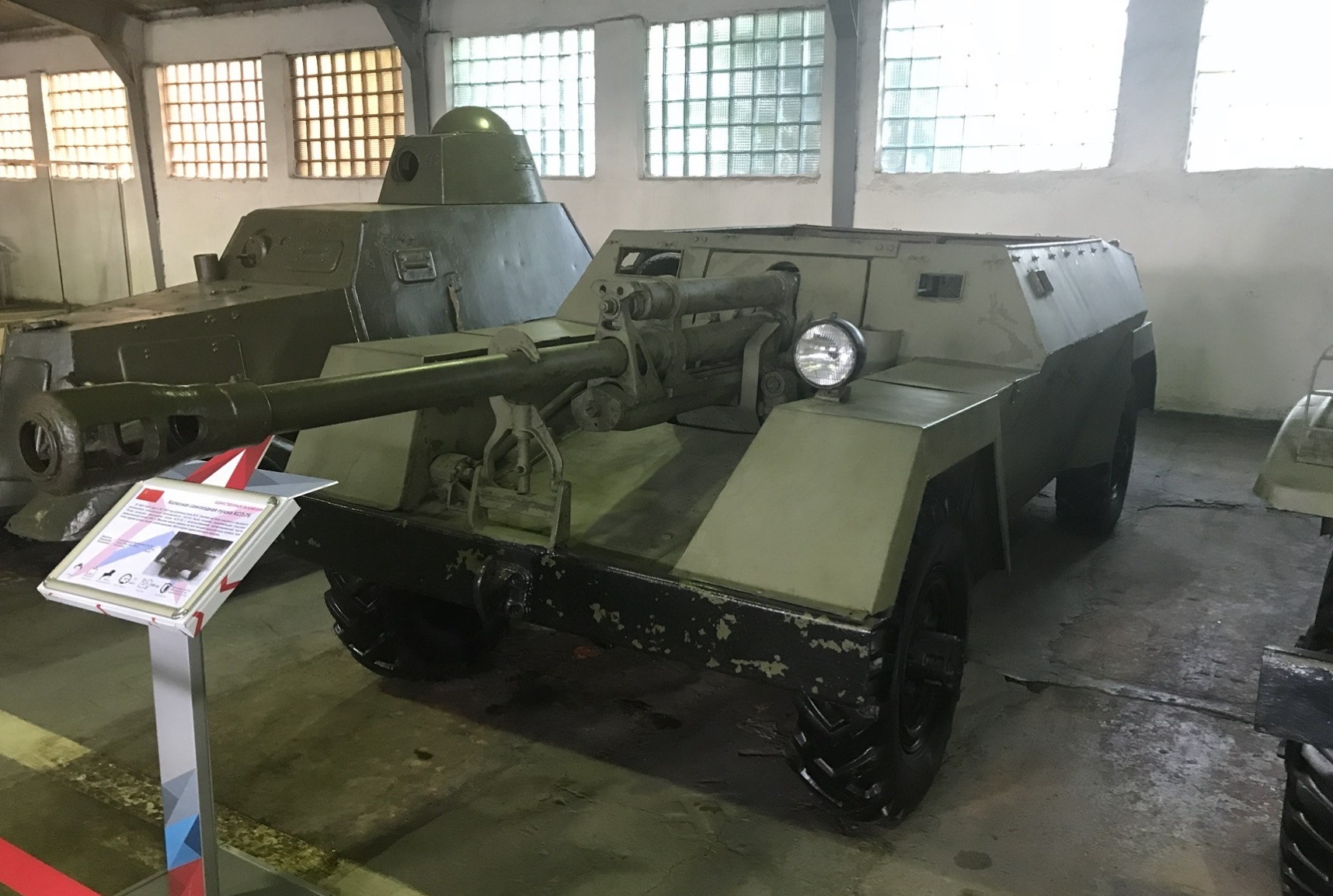
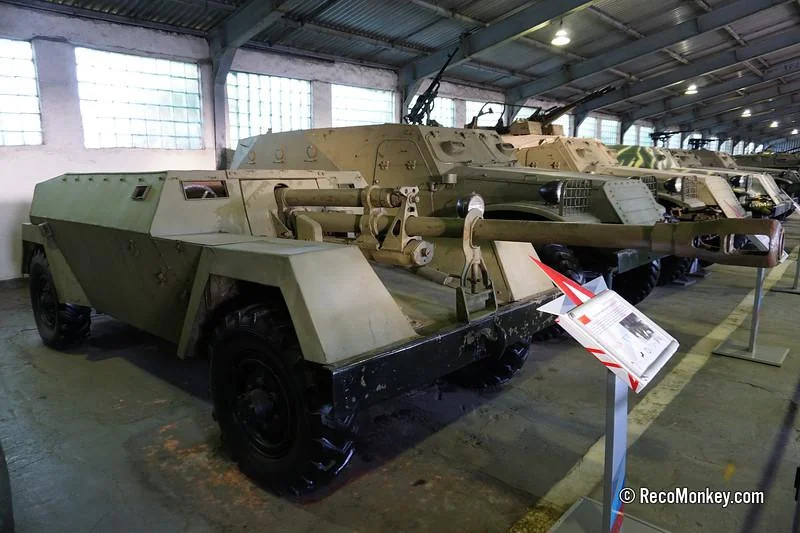
Factory trials began in late spring 1944; the vehicle showed excellent road speed, but early testing was troubled by failures of the front axle, gearbox, and driveshafts. The KSP-76 was not accepted for service because testing showed that its wheeled chassis could not provide the necessary battlefield mobility under frontline conditions. One specific weakness noted for the wheeled design was difficulty crossing trenches, a natural limitation for a vehicle without tracks. While the vehicle was fast and compact, it could not match tracked vehicles when operating away from roads (For context, well-maintained roads remained a luxury in the USSR for a considerable period, even after World War II). These weakness reduced the value of the design. By 1944, the Red Army already had tracked self-propelled guns such as the SU-76 in production and service. Introducing a new wheeled SPG with limited off-road performance would have brought additional production and logistical complications without offering enough combat advantage. By 1944, the ZiS-3 was no longer reliable against the frontal armour of heavy German tanks. As a result, work on the KSP-76 was discontinued after trials, and the project remained at the prototype stage. The sole prototype is now preserved at the Kubinka Tank Museum, where I took the photo above.
Specifications
Spoiler
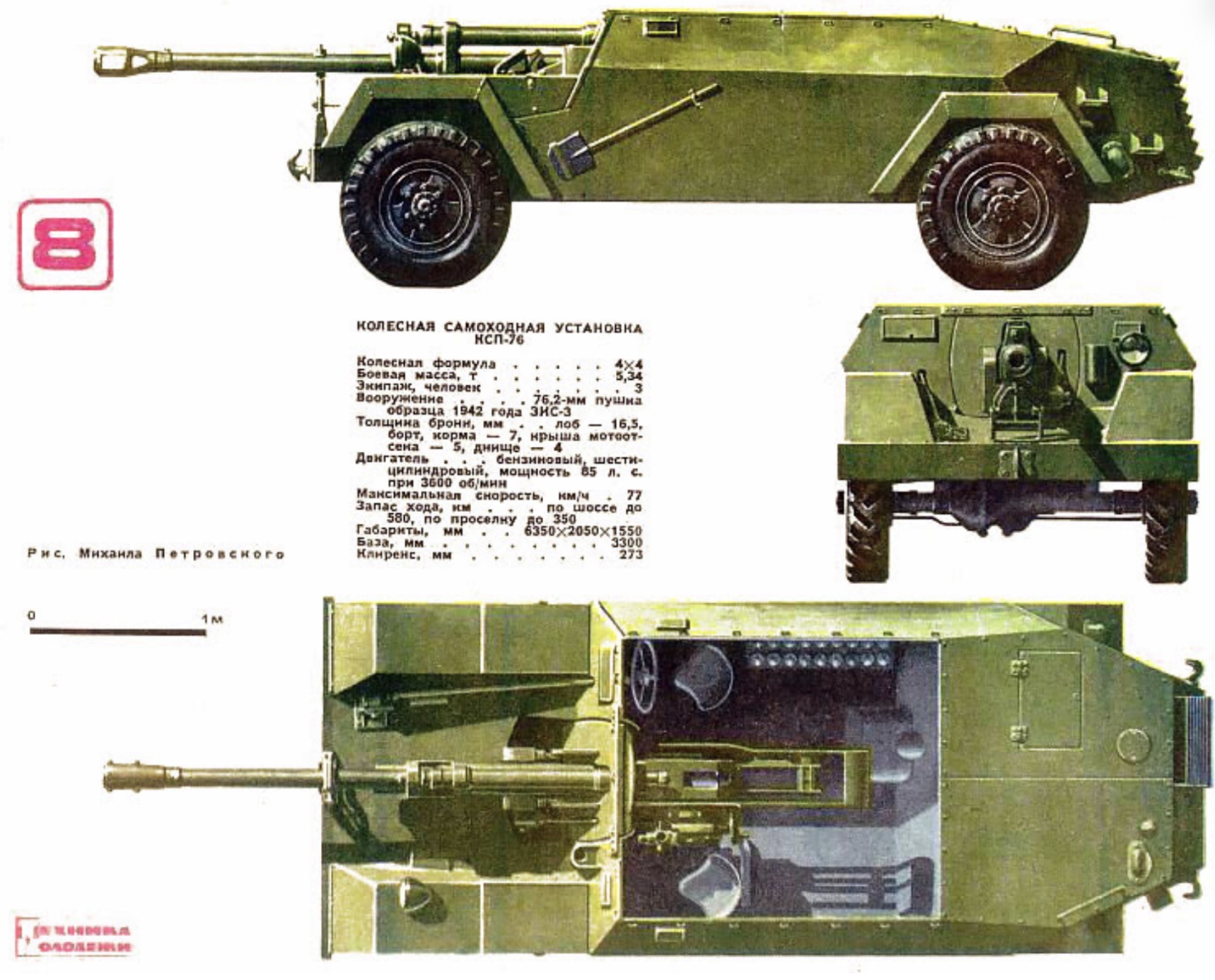
General Characteristics
| Parameter | Value |
|---|---|
| Official Designation | KSP-76 (Колёсная Самоходная Пушка-76) |
| Factory Designation | GAZ-68 (68-SU during early development) |
| Type | Wheeled self-propelled gun / anti-tank SPG |
| Country | Soviet Union |
| Designer | V. A. Grachev, GAZ Design Bureau |
| Manufacturer | Gorky Automobile Plant (GAZ) |
| Year Developed | 1943–1944 |
| Year Tested | 1944 |
| Production | 1 prototype |
| Status | Prototype, not accepted for service |
| Crew | 3 |
Dimensions
| Parameter | Value |
|---|---|
| Length (overall) | 6.35 m |
| Width | 2.05 m |
| Height | 1.55 m |
| Wheelbase | 3.30 m |
| Ground Clearance | 273 mm |
| Combat Weight | 5.34 t |
Armor Protection
| Location | Thickness |
|---|---|
| Front Hull | 16.5 mm |
| Hull Sides | 7 mm |
| Hull Rear | 7 mm |
| Engine Deck Roof | 5 mm |
| Floor | 4 mm |
| Roof | Open-topped |
Protection was intended primarily against small-arms fire and shell splinters rather than anti-tank weapons.
Armament
| Parameter | Value |
|---|---|
| Main Gun | 76.2 mm ZiS-3 Model 1942 |
| Ammunition Carried | 54 rounds |
| Secondary Armament | 2 × PPSh submachine guns |
| PPSh Ammunition | 12 magazines |
ZiS-3 Performance
| Parameter | Value |
|---|---|
| Maximum Range | 13.3 km |
| Practical Rate of Fire | Up to 15 rounds/min |
| APCR Muzzle Velocity | Up to 965 m/s |
Gun Angles
| Parameter | Value |
|---|---|
| Traverse | 37° total |
| Elevation | −3° to +15° |
Mobility
| Parameter | Value |
|---|---|
| Chassis | Modified GAZ-63 |
| Drive Configuration | 4×4 |
| Engine | GAZ 6-cylinder gasoline engine |
| Power Output | 85 hp |
| Engine Speed | 3,600 rpm |
| Power-to-Weight Ratio | 15.9 hp/t |
| Maximum Road Speed | 77 km/h |
| Road Range | 580 km |
| Cross-Country Range | 350 km |
Crew Layout
| Position | Location |
|---|---|
| Commander/Gunner | Front left |
| Driver | Front right |
| Loader | Rear of fighting compartment |
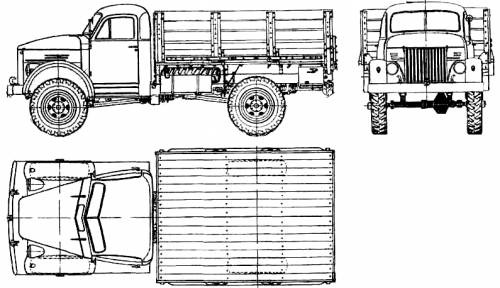
The schematic above depicts the GAZ-63 truck.