yeah it shows you can midigate the effects of channel loss by designing properly in a plane with TVC
1 Like
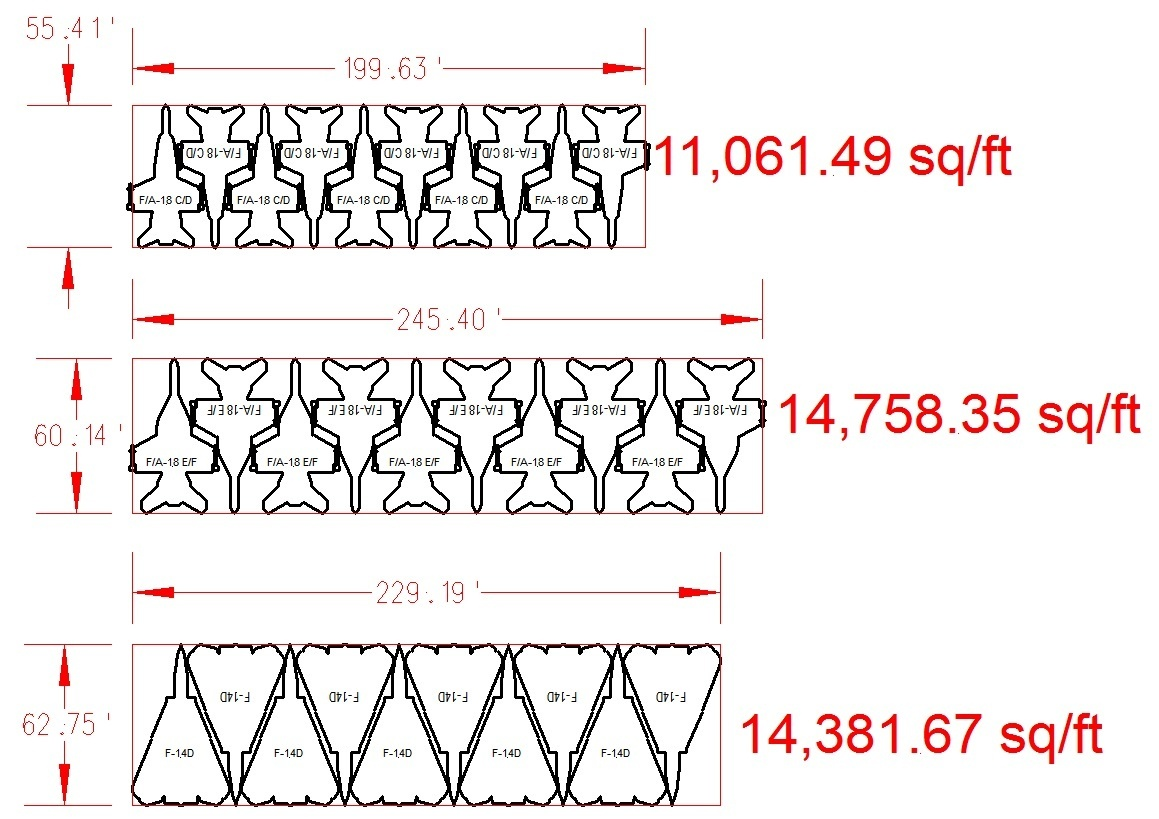
Cats can squeeze into the tiniest gaps— That’s true for both the F-14 fighter jet and the animal kind
1 Like
bring back upgraded legacy hornet as an A-4/A-7 type and replace F/A-18E with F/A-XX, then use upgraded F-35C’s like F-4J’s
3 Likes
You can’t have multiple planes in the same message you need to make separate messages for each one. Otherwise it won’t count.
1 Like
this for F-14A early.
and this for F-14B
Thank you now im make it sperarated.
f-15 same br as the f-14a r we deadass vro
I make that suggess now.
1 Like
Tbh I don’t think we need compression as more of we need decompression also giving the F-14A aim7m with aim9L and F-14B aim7mh or aim7P with aim9m
3 Likes
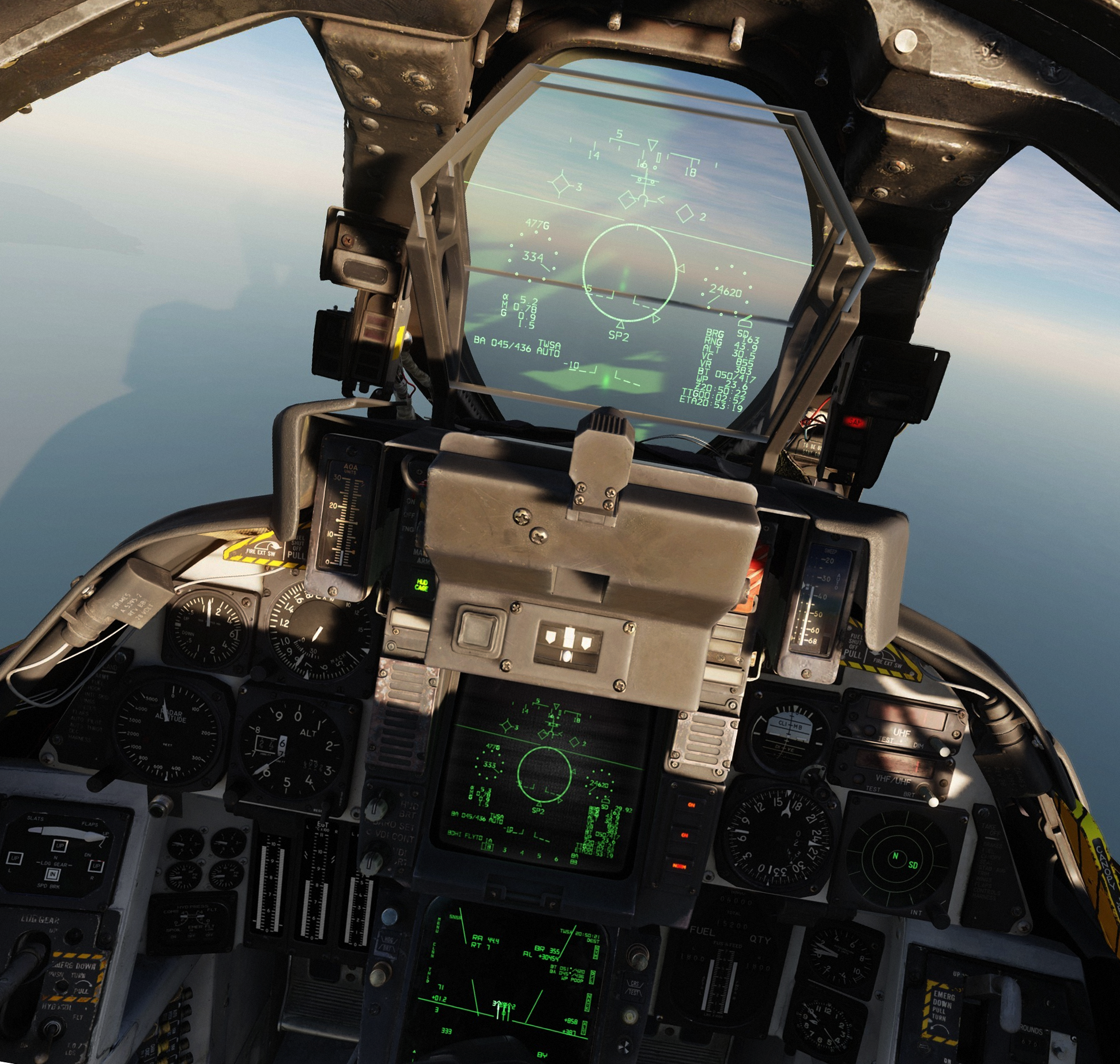
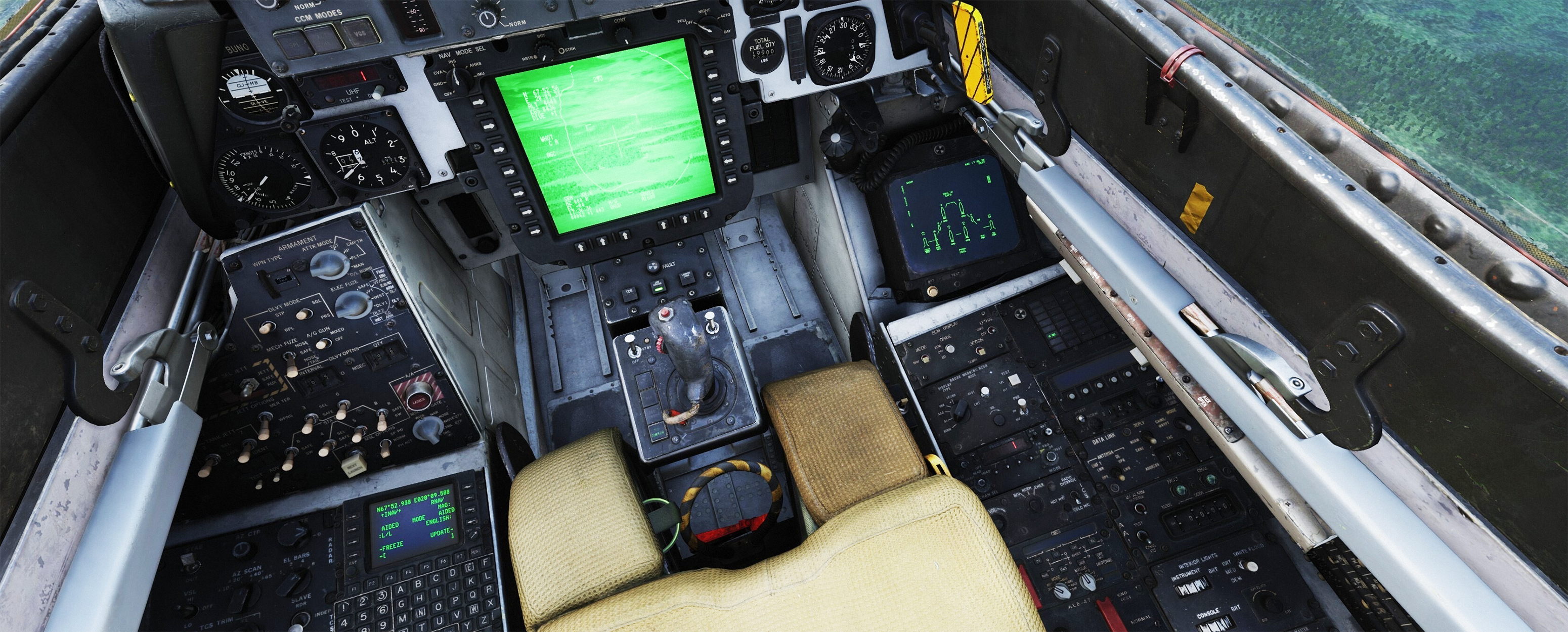
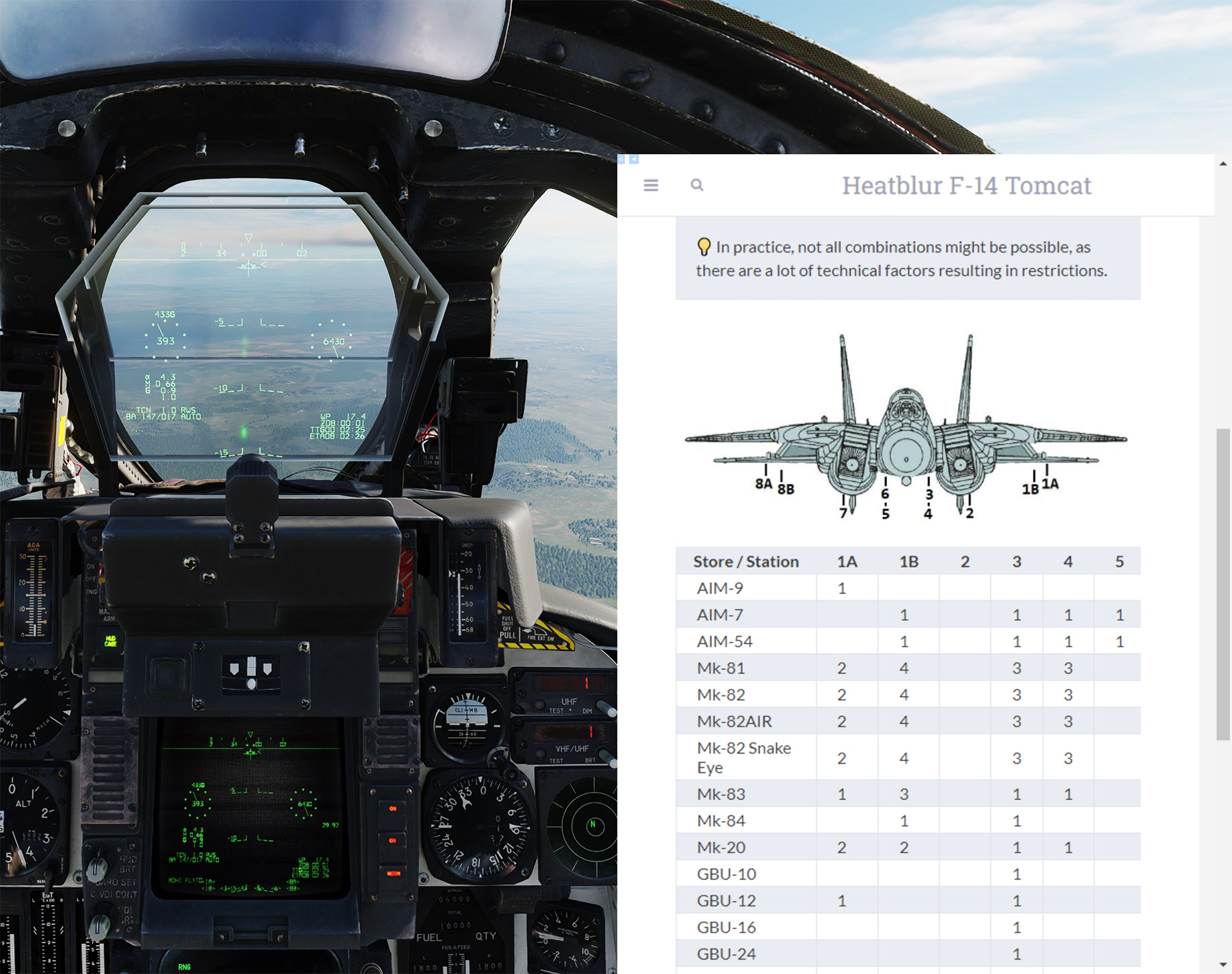
Hope we will get F-14D in DCS and war thunder.
In warthunder is way easier to implement F-14D , because the planes from the get go are realistic but not 100% , same with weapon system. So minor - convinient errors are acceptable if there is logic behind it.
You have 14B flight model , make it +1 volume more stable because of the modern/digital flight controls while also give it a cobra button (it had button that could give you maximum maneuvering capability -not exactly a FBW override , but still…) . Give it IRST and APG-71 (in game you take APG-70, give it more range and have a better look-down capabity/clutter resistance) . It doesn’t have to be 1:1 adaptation for the moment and you can use approximate values by comparison with other systems (better/worse) and have the general effect it would provide.
For example it had better ECCM than APG-70…ok , if APG-70 have ECCM a 5, give it a 7 , 9/10 being AESAs and their suits…
It’s not 1:1 accurate, but we’ve seen worse adaptations in game already.
Imagine most of the 4,5 gens are currently highly classified anyway. Their values are already approximate or generic data.
If they do it on DC’s , however , people will get mad because it’s a SIM… in a realistic game though, they already pull those things . They even buff/nerf for balance, which wasn’t possible IRL or for SIM. In a SIM if it was bad , it was bad…let it be bad.
Also , you can see they relesed Tomcats and left them unfinished ,which makes me believe it was totally controlled because they understood it was too good for its time of implementation in the game. They will probably refurbish/fix them when some things are settled, but they see high demand (Sales) in more modern stuff.
6 Likes
Well well well
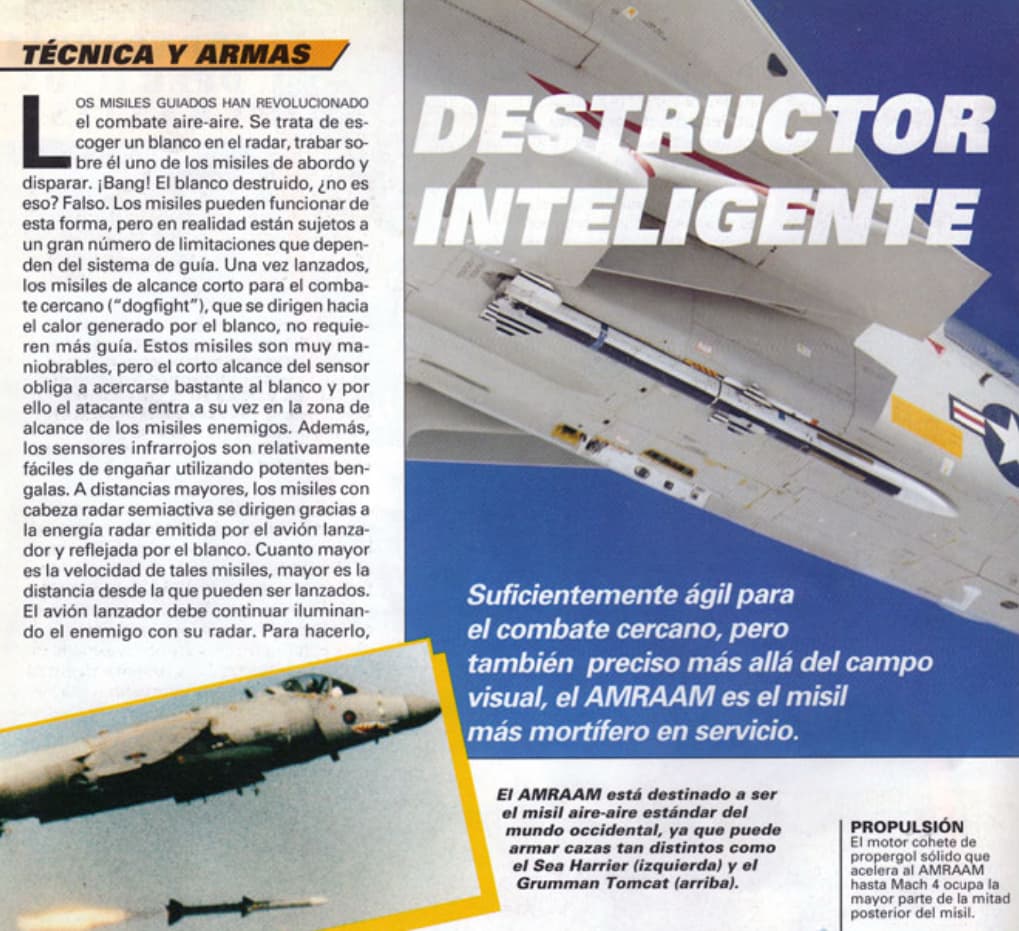
Actual test AMRAAM on the belly pylons. Fits snugly.
Funny thing I wasn’t even trying to find this. I was looking for information on AMRAAM’s seeker and found this.
9 Likes
Has a good RWR and Radar
While flight performance is poor.
The weapons are good for the BR.
Good cms.
The IR F-14s Radar and RWR are horrendous.
Fakours are good against AFK players
Aim9P is an insult for a 13.0 aircraft
And like Harriers F-14s are as hot as the sun.
6 Likes
Its mean techniquely Its can carry 6.
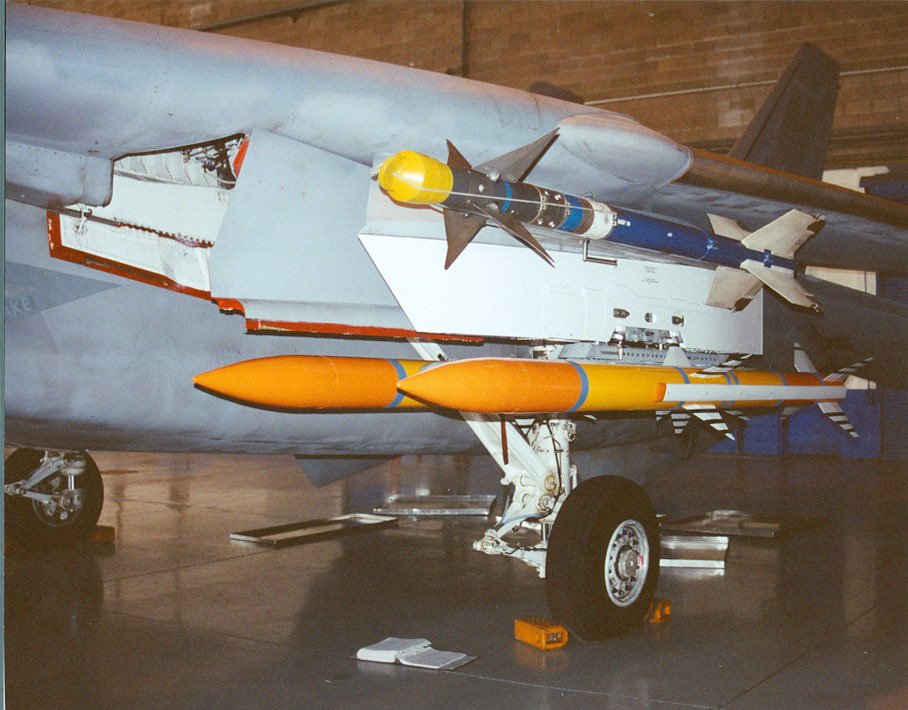
8 hopefully:)
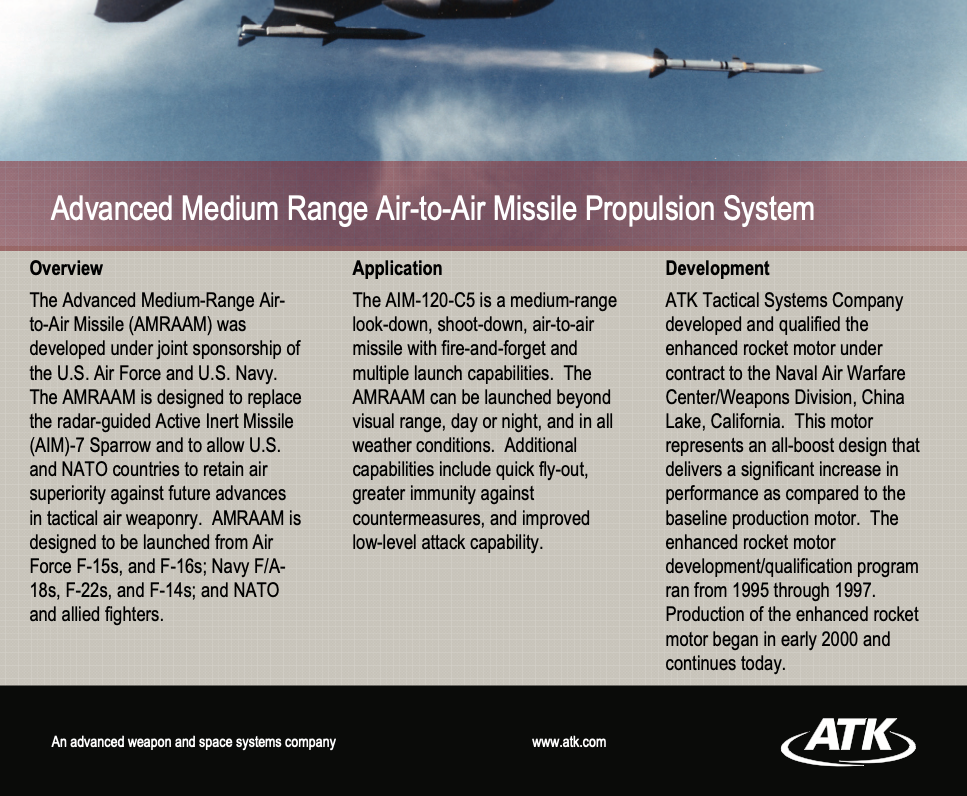
Also found this lmao.
5 Likes

4 Likes
Hell yeahhhh!!!
Another Excerpt from Aviation Week:
Here
The Navy is not using afterburner power for takeoffs with the GE engines yet, primarily because testing of one engine in afterburner and one with less power at takeoff critical speed has not been completed. With a 9-ft. distance between the centerline of engine exhausts, the asymmetric thrust could be difficult to control, Miles said.
“This testing does not have a great priority because the reliability of the FI 10 engines has been excellent,” he said.
The maximum power of the Pratt & Whitney TF30 engine in afterburner is close to 21,000 lb. of thrust, while its FI 10 counterpart has a rating slightly in excess of 27,000 lb. in the same mode.
Miles rotated the nose of the F-14D at 135 kt. and the aircraft became airborne at close to 142 kt. The landing gear was retracted immediately after liftoff. Miles kept the power in the military range until reaching Mach 0.89, below 5,000 ft. and until we were clear of an altitude restricted area. He then selected afterburner and we climbed at Mach 0.9 at a 55-deg. pitch attitude to 35,000 ft. We had traveled less than 7 naut. mi. over the ground to reach that altitude.
The F-14D was held at 35,000 ft. so we could perform a speed run at supersonic levels. Miles again selected afterburner and we rapidly achieved Mach 1.5. The F-14’s operational limit is Mach 1.88, but the aircraft is capable of speeds near Mach 2.3. Miles then retarded the throttles to military power and the F-14D maintained supersonic cruise at Mach 1.1.
An idle speed lockup feature in the engine fuel control does not allow the pilot to drop below military power at this speed, to prevent a potential engine stall. The Navy, Grumman and General Electric are evaluating this feature to determine if it can be modified to allow the pilot to slow down faster.
Miles made a sharp turn and pulled gforces to slow the aircraft to a subsonic speed. The Navy has achieved supercruise in a clean F-14D with a slightly uprated FI 10 engine, without the use of afterburner.
At this point, Altman’s F-14A went in the opposite direction and I had time to start performing the radar intercept oflicer’s function in the rear seat. There were several instances when I forgot the RIO’s mission and I tried to fly the aircraft with the radar control stick. It does not work. There is no aircraft control stick in the rear cockpit.
The F-14D is equipped with a Hughes AN/APG-71 radar, replacing the previous Hughes analog system with highspeed digital processing. Much of the D’s avionics upgrade involves the replacement of the A’s analog systems with programmable digital controls and displays, a digital stores management system and digital inertial navigation system. Pilots and RIOs also welcome the D’s multifunction displays, which greatly increase situational awareness in both cockpits.
“For the first time, the pilot is able to see what the RIO is looking at in the back seat,” Miles said.
I placed the radar range selector at 200 naut. mi. and immediately received more than 15 separate targets on the tactical information display. We were flying along the eastern shore of Maryland and picked up many of the air transports on northsouth tracks.
The AN/APG-71 can track more than 24 targets simultaneously. We were flying at 25,000 ft. and the radar was in a trackwhile-scan mode. The closest target was 20 naut. mi. away and the farthest was almost 150 naut. mi. distant. The 400naut.-mi. range provides less than 200naut.-mi. coverage, however, because of the antenna limits. But it is used for tracking long-range aircraft provided by data link from other aircraft. The F-14D has fighter-to-fighter data link capability.
The radar system’s digital processors label the targets with priority numbers for weapons firing, based on proximity, closing velocity and threat analysis. The system is equipped with noncooperative target recognition, allowing rapid target identification. Miles said the D is able to operate in a much more severe electronic countermeasures environment than the A, although this factor was not evaluated during our flight.
At this point, we rejoined the F-14A so Miles could demonstrate the D’s acceleration. Starting at a speed of 245 kt. at
10.000 ft., he selected military power as Altman did the same in the A. We quickly accelerated away from Altman, reaching 420 kt. in 30 sec. and 500 kt. in 46 sec. The A lagged at 400 kt. at the same 46-sec. mark.
Miles and Altman then slowed to 250 kt. and went into afterburner power. The D accelerated through 350 kt. in 10 sec., 400 kt. in 15 sec., 450 kt. in 19 sec. and achieved 500 kt. in 21 sec. The A was indicating 400 kt. at the last point.
Miles also demonstrated some of the improved maneuverability afforded by the added thrust of the FI 10 engines. At 11,800 ft. and 180 kt., he went into burner and pulled a 4g loop. We topped out at 15,700 ft. at a speed of 140 kt. The F-14D was back level at 12,000 ft., at a speed of 220 kt. He said that on almost any maneuver, the F-14A would have to begin 50 kt. faster than the D to achieve comparable performance.
He then pulled 6.5g in pitch to the near-vertical, starting at 300 kt. and at
15.000 ft. in military power. He was able to pull the aircraft over at 70 kt. and
point the nose at a predetermined target on the ground.
“The F-14 has excellent pitch response, although its roll response is not the best,” Miles said. “With this added thrust, the F-14D is better able to fight in the vertical with added hang time and better nose pointing.”
He kept the nose on the ground target as the aircraft accelerated through 450 kt. The simulated ground attack was smooth, with no tendency of the nose to wander.
Snyder would like to install a single piece windscreen in the F-14, to replace the existing thick center plate. He also is discussing with General Electric the possibility of putting an F110-GE-429 engine in the F-14D. The 429 version would have a digital engine fuel control and would provide 30% more power in the military setting at low altitudes, he said.
The F-14 is supposed to be configured for the Hughes/Raytheon advanced medium-range air-to-air missile (AMRAAM) around 1994. The fighter also will be the main Navy platform for the long-range advanced air-to-air missile (AAAM).
The F-14D is a big aircraft with a longrange intercept mission. Its combination of increased thrust, more capable radar, digital avionics, additional passive sensors and better situational awareness makes it a formidable fighter in any arena. Soviet test pilots have told me over the past year that they would prefer to fly the F-16 or the F/A-18. But when our discussions have turned to combat capability, especially in a longer range combat scenario, the Soviet pilots most respect the F-14.
Hughes officials claim the AWG-9 still has the most powerful radar transmitter of any allied fighter—detecting adversaries beyond 115 naut. mi.—and will simultaneously track 24 separate targets while also scanning a large airspace volume along a 150-naut.-mi. front. As a result, the AWG-9’s radar transmitter, power supply and aft-cockpit tactical information display (TID) have been retained in the new APG-71 system. New features include digital signal and data processors, a frequency synthesizer, revised antenna scan control, a digital display and a multichannel receiver. The composite APG-71 system provides significantly improved radar performance over the current AWG-9 system, including:
■ Better overland performance, with provisions for future upgrades to a medium pulse repetition frequency (PRF) mode that will add even more look-down improvements.
■ Expanded velocity search coverage,
which enables the radar to detect targets over a very broad speed range—from very slow to very fast. From a crew standpoint, this feature eliminates the need for separate nose-tail switch settings that adapted the radar’s performance to the target’s aspect.
■ Larger target engagement zone that permits the radar to track targets outside the antenna’s scan volume, then engage or lock on to the target while continuing to scan the surveillance zone.
■ A new beyond-visual-range target recognition or passive identification mode that enables crewmembers to identify targets before they can be seen visually.
■ A raid assessment mode to determine how many closely spaced target aircraft are in a group. This will be the first time a U. S. Navy fighter-type aircraft has this capability, according to Hughes officials.
■ Programmable electronic countermeasures and clutter control features that can be adapted to varying threats and environments.
These advanced features are achieved through new antenna system elements, advanced signal and data processors, an analog signal conditioner, a digital frequency synthesizer and an updated radar receiver.
The APG-71 antenna is a composite of the old AWG-9 gimbal system and a new array that adds a monopulse capability while producing very low sidelobes. A new digital electronics package also provides more antenna scan flexibility, eliminating some geometry constraints of the AWG-9’s discrete scan patterns. The older system cannot always detect two targets that are widely separated vertically, because its twoand four-bar scan patterns are fixed.
For each bar, the antenna beam sweeps across the area at a certain elevation angle, then drops down a predetermined an-
gle and sweeps the other direction before repeating. The new digital scan control will interrupt a fixed scan pattern and continue to track a target—even if the target is outside the normal pattern—then automatically return to scanning. This upgrade effectively enlarges the radar’s scanning and tracking area, improving flight crew ability to handle simultaneous high/ low attacks.
Advanced Signal Processor
The advanced radar signal processor in the APG-71 uses many of the same assemblies as the newest F-15 radar (86% common), but features four processing elements, whereas the APG-70 has three. Operating at 40 million complex operations per second (MCOPS), these elements give the F-14D radar a throughput rate about 25% higher.
Similarly, the APG-71 digital radar data processor—which converts preprocessed signals into target track information—has about 59% of its assemblies common with the Air Force’s APG-70 radar, but features a dual central processor unit operating at 3.2 million instructions per second (MIPS). All data are received and transmitted to other units over a MIL-STD-1553B communication bus.
The only significant differences between the APG-70 and APG-71 processors are in their interface circuits, a consequence of different specifications and the need to communicate with different auxiliary avionics on their respective aircraft.
The newest element of the F-14D’s upgraded radar is the digital frequency synthesizer, also called the radar master oscillator (RMO). It features a “very wide frequency spectrum, rapid frequency hopping and excellent electronic countercountermeasures capabilities,” according to Chernick. A new digital cockpit display in the F-14D aft cockpit was actually developed under an earlier AWG-9 Block 5 upgrade effort, but never transitioned to production because of funding cuts. The display features a digital memory, raster or stroke writing, and a larger, brighter screen.
3 Likes