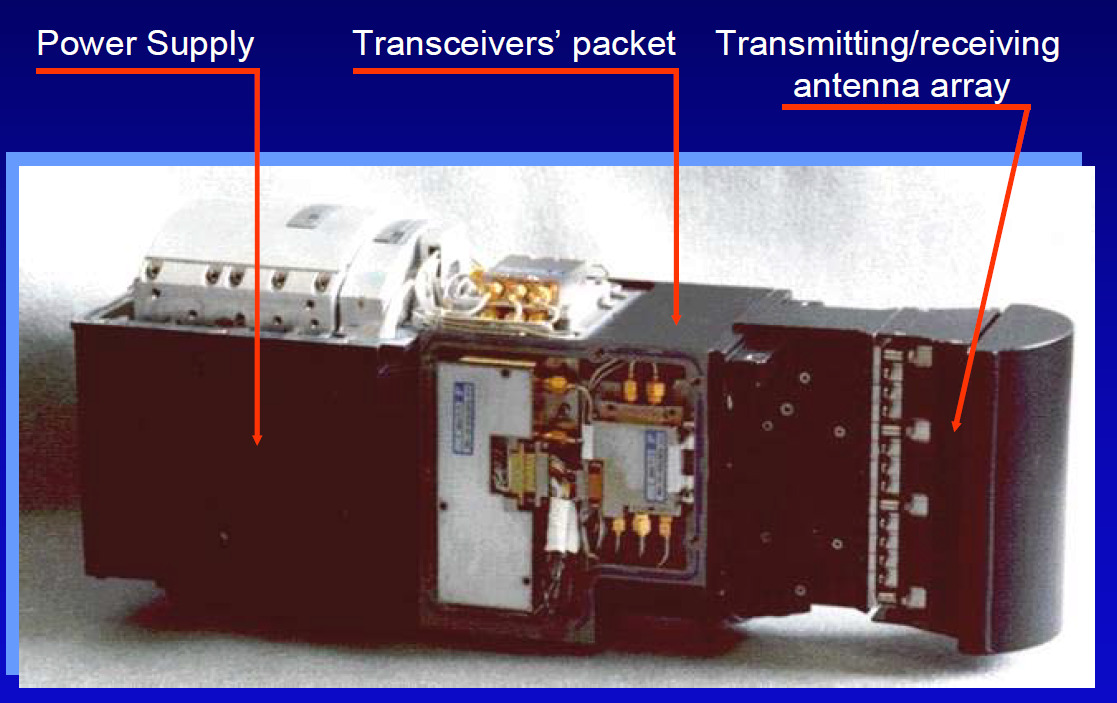
Tbf, we know ESA antenne could get quite small, by the example of the Typhoon ECM antenne (only antenne part, not the rest)
The limiting factor of size would be the technology used to split the signal over all of the P S
Tbf, we know ESA antenne could get quite small, by the example of the Typhoon ECM antenne (only antenne part, not the rest)
No idea where you got this but it’s been patented back in 1975, so it’s nothing new really.
https://patents.google.com/patent/US3921177A/fr
PESA as a concept is even older.
No it isn’t. Look at the link I linked.
I linked it particularly so that you can see the ratio of area to thickness, which is very low.
That particular array from the article is a few millimeters thick.
Let me clarify: the first commercial flat panel array in the style being discussed in that article was made in 2017.
If we possessed the ability to Electronically Steered Array radars out of three stacked PCBs back in the early 1990s don’t you think we might have seen them used a bit more? Isn’t it strange that literally every single airborne PESA / AESA radar is way bigger and more complicated than that?
The connectors in that box are almost certainly SMA connectors (or one of SMA’s very close relatives). If we are really generous and assume the actual antenna is only between the joint and the start of the curved cover that is about 5 SMA connectors long. An SMA connector is ~8 mm across the flat faces of the hexagon, so that is 40 mm / 4 cm.
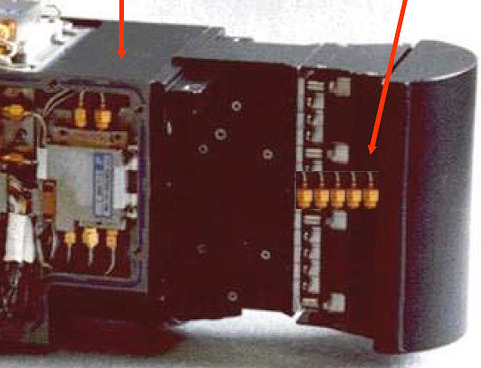
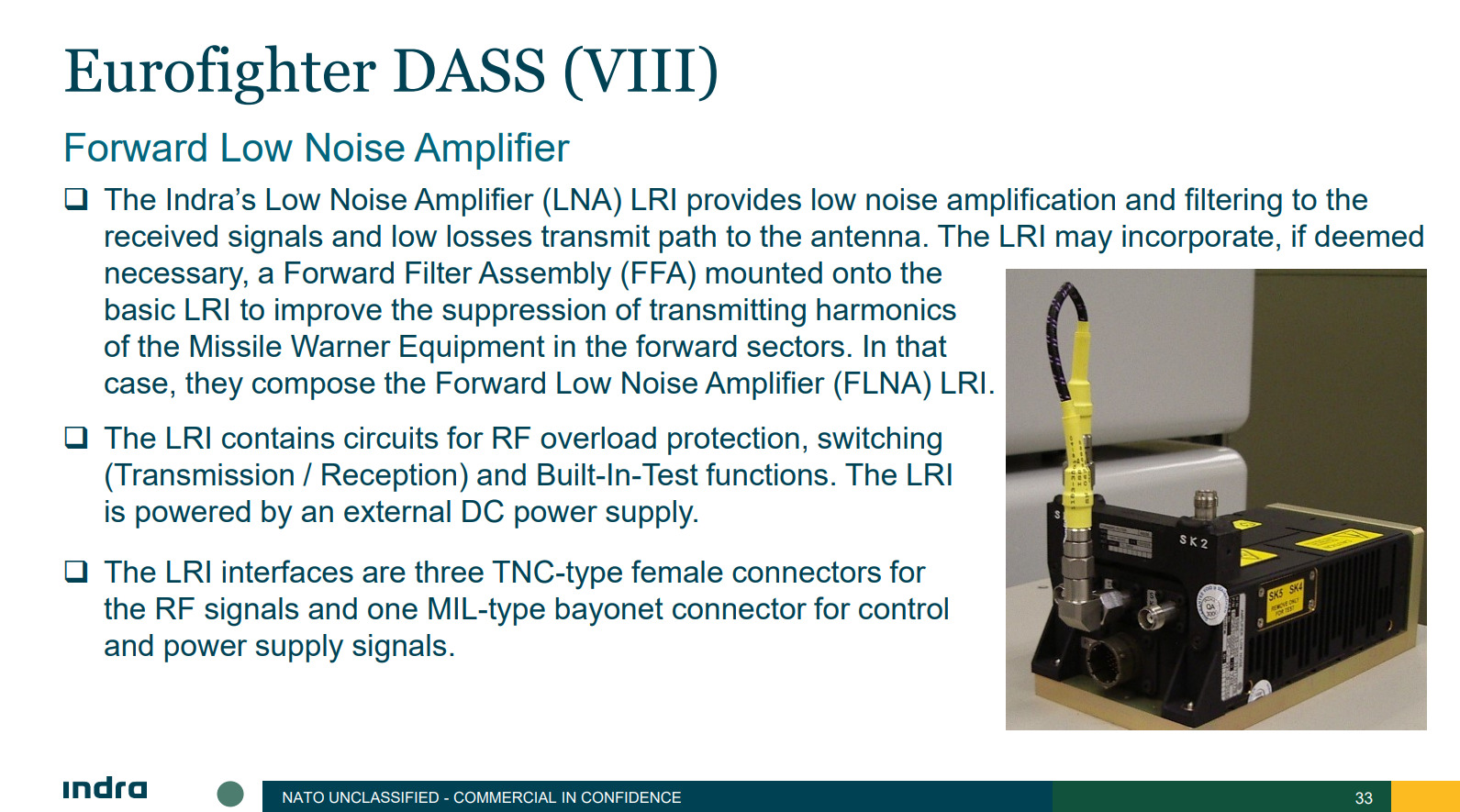
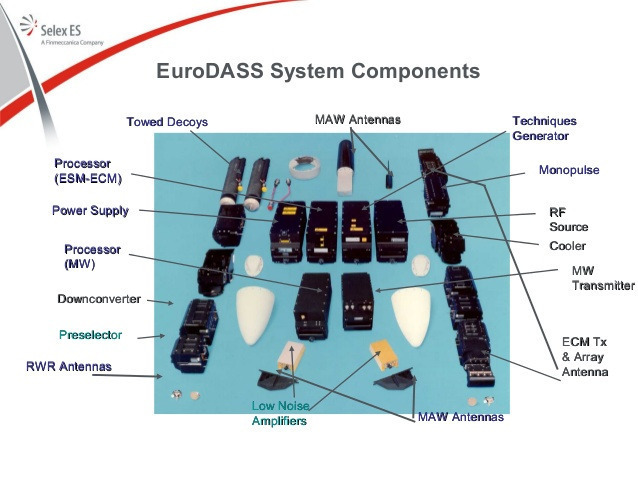
Meanwhile in this image the connectors on the low noise amplifier are almost certainly TNCs. The connectors are 20px across, while the MAWS antenna is at best 100 px tall. That’s 5 TNC connectors, and a TNC connector is 10mm across. So the MAWS antenna is about 5-6 cm tall at it’s widest point.
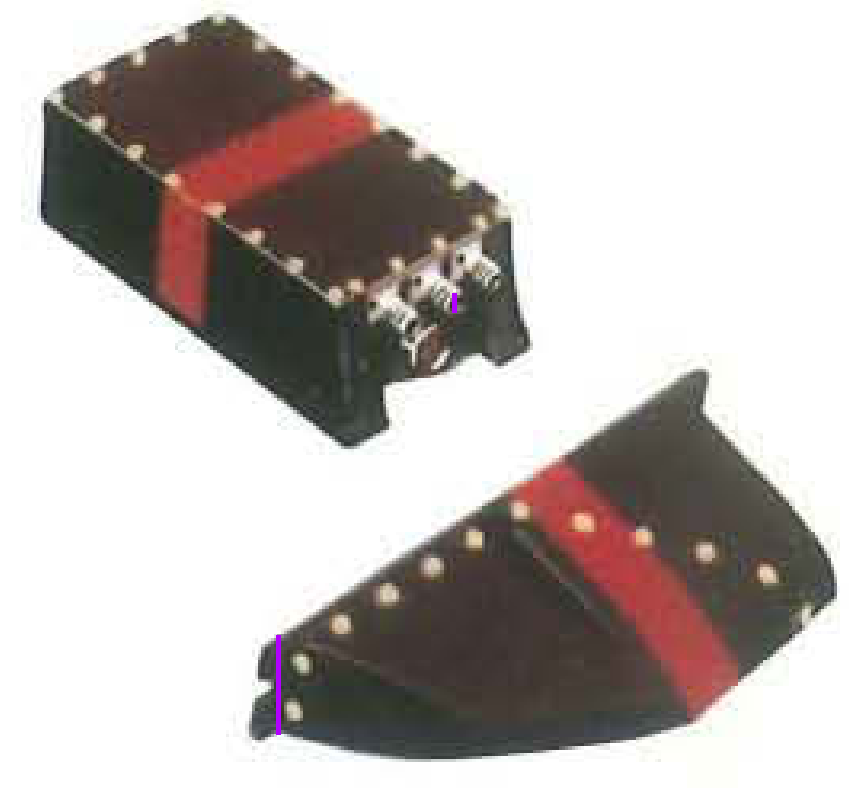
So we have an ECM antenna which is being 4 cm long (at the absolute minimum) and a MAWS antenna which is 5-6 cm tall at best. Can you start to see why I am dubious about two electronically scanned antennas fitting back to back in such a small package? And that ignores the fact that there is clearly a whole load of electronics I’m not counting in that 4cm, which would also have to fit in that wedge.
Also as a side note: TNC connectors, like those used on the low noise amplifier, have a maximum operating frequency of 18 GHz at absolute best (for the high performance TNCA version), so can we please put an end to claims that the MAWS operates at 35 GHz @GJ04 ?
Ok, but we’re not talking about commercial panels.
Radar isn’t on PCBs. It’s a way different power requirement.
You can’t possibly compare 1kW MAWS array with 20kW radar array.
Sure. It just isn’t 1000 elements, but 400 for 18GHz.
Plenty to go round for the job.
0.04 lol
This is gonna sound really stupid but:
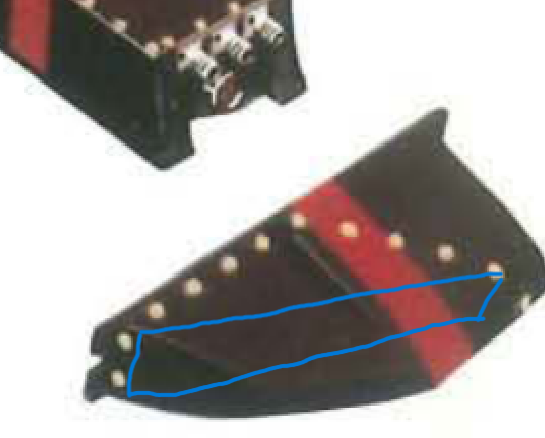
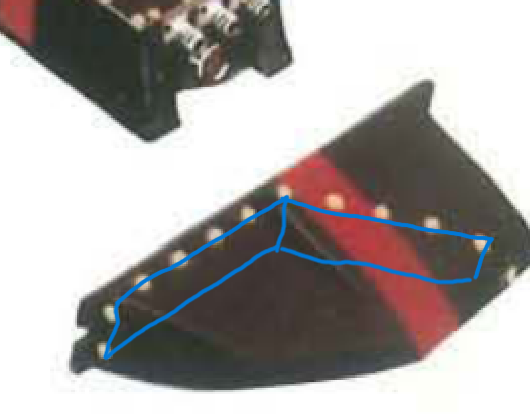
-Do we know which of these it’s more likely to be
-Does it matter?
Hey, its said ECRS Mk2 uses both GaN and GaAs, GaN allows for more energy density and temperature, which translates into longer range, better EW capability, and maybe better LPI characteristics(?); So, anybody has any idea where GaAs would actually be used?
GaA’s are easier to cool if I recall, and for alot of jobs the GaA is just as good as a GaN while being a much lower thermal budget. And the GaA’s have better low noise sensitivity so better for the passive location abilities found on ECRS Mk.2 having a mix of both is really required for the SEAD roles the ECRS MK2 has.
Not quite: GaAs has a much lower power density (10-20% of GaN) and less efficiency. So if a GaAs transceiver operates at the same power as a GaN, the thermal losses are higher and therefore the cooling requirements additional to the much lower thermal conductivity of GaAs (0,46 W/cmK vs. 1,3 W/cmK for GaN).
Where GaAs does have an advantage is frequency stability and sensitivity (especially over varying temperature ranges, even though GaN is more robust at higher operating temperatures), so ESM and ECM benefit from it (even though newer GaN developements are slowly closing this gap). The transmission power of GaAs modules is also limited by their lower breakdown voltage (0,6 MV/cm vs 3,3 MV/cm), so you have to up the current to achieve higher transmission power causing more losses and additional heat. Additionally GaAs is much cheaper as it’s much more mature than GaN.
My guess is that the Mk2 uses the GaN modules for everything that needs raw power in transmission (radar, SAR, jamming, etc.) while the GaAs modules are used for targeted EW, ECM, SEAD, etc. where frequency precision and signal quality is valued above raw power. Could even be a combination of GaN transmitting and GaAs receiving for some usecases.
That GaN is already quite usable for EW too is proven by its exclusive usage in the Gripen AREXIS suite wing pods as AESA ECM antennas (I still would like to know if these antennas are multi-useable as radar MAWs aside from their EW functionality as their placing would enable full spherical 360° coverage).
Fun fact for everyone
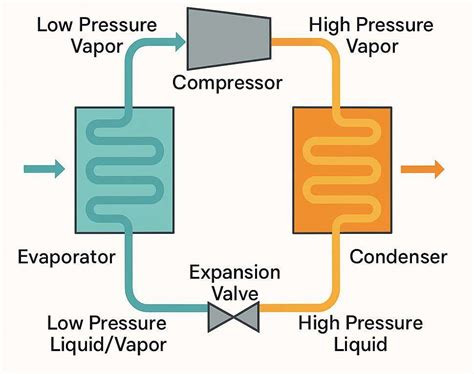
To work on DASS system IRL, you have to do training and get a qualifications that’s pretty much the same as those who are qualified to work on a car’s air conditioning system - the entire course is about how a car’s air conditioning system works
The Wing tip pods have what’s essentially an Air con coolant system to keep them cold (hence the “cooler”)
They can be a right pain in the arse when they start leaking
I keep getting a bug on the typhoon where if I use the Spice 250’s, the laser designator gets locked to my cursor and does not stay on the aiming point, making it impossible to use brimstones or other laser guided weapons.
using “sight stabilisation” or “activiate target point” keybind doesnt work to stop it when it normally happens when you have just laser guided weapons installed
Also the spice250’s do not play well with firing at a target point, or the new multi target point bombing system at all.
First one works, but the rest just have no target at all
which are basically the same if you want to work on a A/C unit for a building
the Refrigeration Cycle is everywhere
Sry, this flew under the radar yesterday…why would LNA have TNC jacks, if the aircraft already sports SMA tech?
Any particular reason, considering LNA may actually utilize SMA’s bandwidth?
That’s a question for EuroDASS to answer, I would speculate it’s due to TNCs being more rugged and easier to work with on the flight line. All I know is that having worked with TNCs, SMAs, and various other RF connectors for years I know what they look like.
However I doubt you’ll take my word for it, so I’ve double checked, and they are indeed TNCs.
There’s also one other thing I completely forgot … downmodulation https://testequipmentconnection.com/specs/Amplifier_Research_CFE1840.PDF#1#1
Not sure where I’d stuff it in the root module, but then again, EADS may have not have shown all the components.
Ok, let’s go…
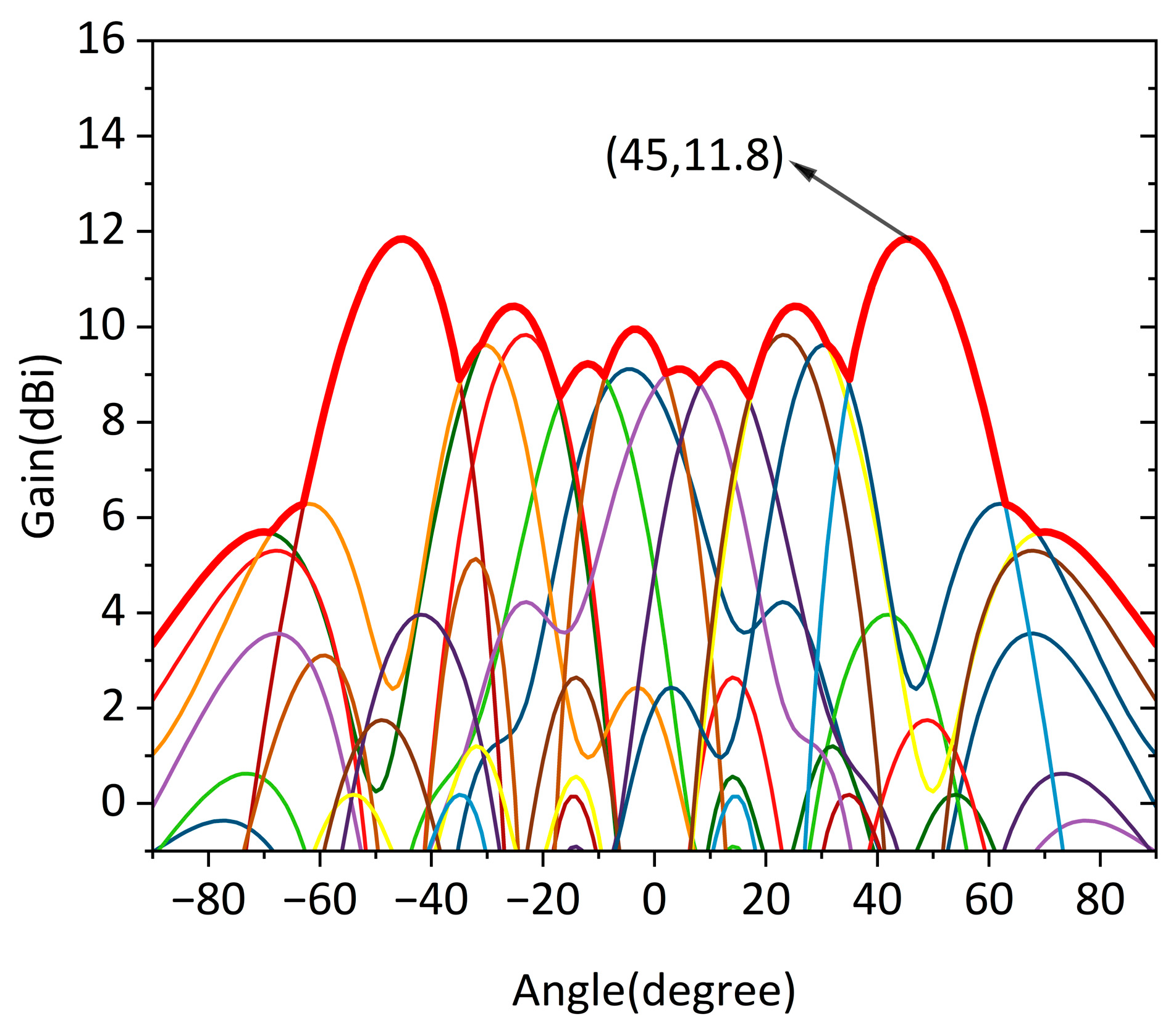
So, even if your supposition is, somehow, true, it doesn’t make any sense for an array of <=18GHz, in vertical installation to have +/- 45° coverage. It just doesn’t fly in any kinda simulation.
Here’s a run of the mill “low cost” PESA in band we’re talking about.
https://www.mdpi.com/2079-9292/14/15/3111
So, even in vertical installation it still runs a +/- 57° scanning 3dB beamwidth, which by no means mean that it can’t pickup the missile past 57°, just a bit closer.
How did you, or GJ, came up with +/- 45°?
Also, it’s 2mm thick.
±45° is the default value when no other info is given
It is likely that the true value is around 50-60° . But with no primary sources to that effect, all MAWS defaults to 45° vertical for now.
You could try arguing that ALL PD MAWS (or at least all ESA MAWS) should be set to something like 55° instead of 45°, but Typhoon specifically wont change unless you actually find documentation for it and it alone (That isnt classified)
For now though. Its not even that major of an issue, the coverage is good enough in most cases imo.
Id focus way more effort on:
etc etc etc.
I think this is an unnecessary hill to die on.
But why 45°?
It doesn’t make any sense, particularly with fixed ESA installations.
I have no problems with the rest, apart from Brimstones and PIRATE tracks getting into ATCK/DASS/PA formats.
CAPTOR-M was deliberately nerfed, as it was initially modeled ok, but was then nerfed, because “bugs”…it ain’t coming back, it’s a balancing measure, same as HARMs. When GJ declines OEM’s pictures, you know it ain’t coming.