- Yes
- No
- (independent) BeNeLux tree
- France: BeNeLux subtree
- other
- no/negative
- 2 × 2 12.7 mm Browning M2 HMG
- 2 × 12.7 mm Browning M2 HMG
- other (please comment)
- no/negative
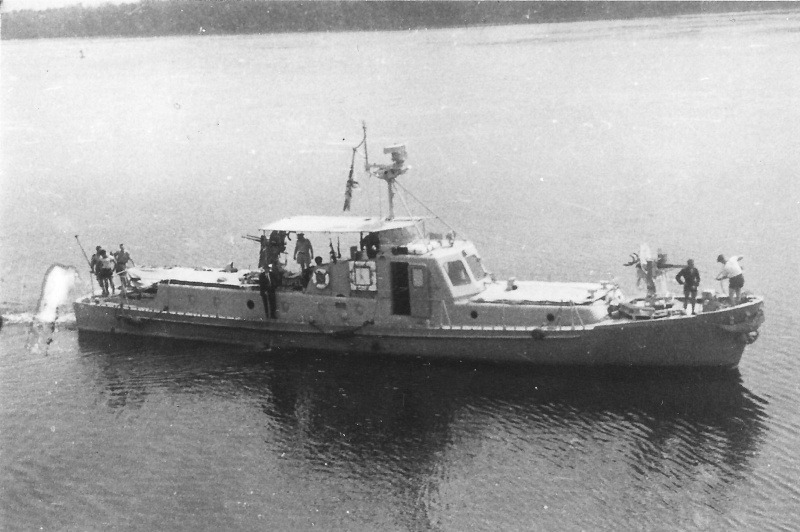
The P907 Rupel was a Congolais-class river patrol boat, one of three in this slightly modified derivative of the Leie-class vedetten. Designed for shallow-water operations, these vessels combined speed, light displacement, and operational flexibility. Unlike the earlier Leie-class, the Congolais-class saw extended service overseas in the Belgian Congo, performing patrols, transport, and liaison missions along the Congo River and its tributaries during the late 1950s and early 1960s.
In addition to their European deployments, the Congolais-class vedettes were uniquely adapted for tropical operations: they carried similar armament to their European sisters, but modifications to deck height, cockpit access, and ventilation improved their performance in Congo’s riverine environment.
History
Service History of P907 Rupel
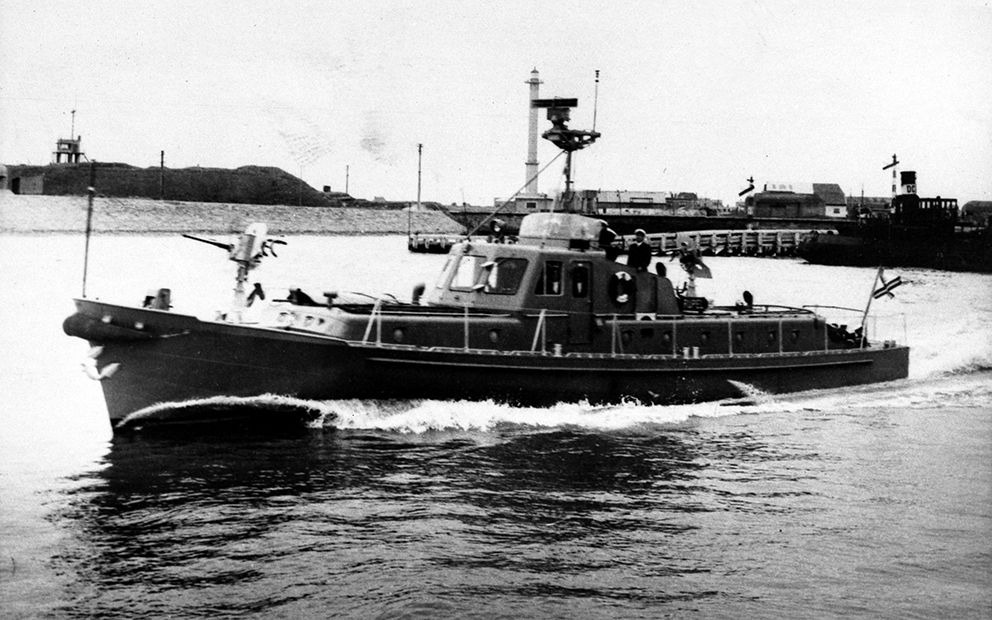
The Rupel was built at the Theodor Hitzler shipyard in Regensburg, Germany. She was laid down on 27 March 1954, launched on 18 November 1954, and commissioned a few days later on 24 November 1954. At 24.25 meters in length with a beam of 3.8 meters and a draught of only 0.9 meters, she was capable of navigating narrow rivers and shallow harbors with ease.
The three vessels of the so-called Congolais-class differed from the Leie-class in several ways: the deck had less camber, raising the hull by 25 cm at the stern; the wheelhouse windows were taller; and the aft crew compartment featured round portholes instead of large rectangular windows. From the cockpit, a ladder provided access to the upper deck. The engines operated with intercooling, while below the waterline the hulls were identical to the Leie-class.
Soon after commissioning, Rupel and her sister ships were deployed to Belgian Congo, joining the Ourthe and Dender in operations from the ports of Boma and Thysville. From 1956 onward, these vessels conducted river patrols, escorted convoys, and maintained Belgian authority along key waterways. They were instrumental in logistical support for Belgian forces, providing fast transport for personnel and critical communications between inland bases.
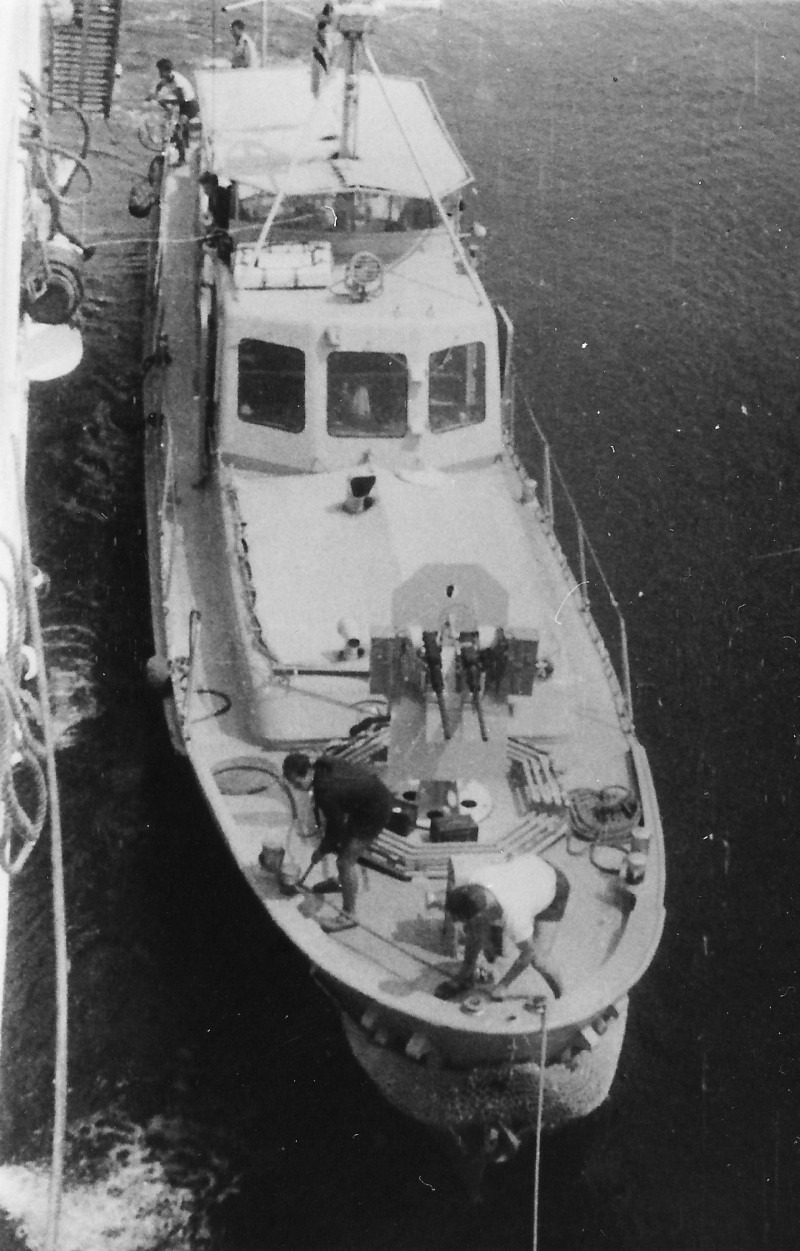
Rupel at Boma, Belgian Congo, late 1950s (note: Aft twin mount 12.7 mm, fore single 12.7 mm.Following her Congo deployment, the Rupel returned to Europe and was assigned to the Rijnsmaldeel at Niehl near Cologne, performing NATO river patrols along the Rhine from Koblenz to the Dutch border. Her shallow draft allowed rapid response and maneuverability in riverine environments. She could cover 2,300 nautical miles at 10 knots and carried a crew of seven: a petty officer and six sailors.
Armament Changes
The Rupel saw two main historical weapon layouts:
two single 12.7 mm Browning M2 HMG mount
Dual 12.7 mm mount + Dual 12.7 mm HMG mount
Detail of the fore Dual 12.7 mm HMG mountIn later years, Rupel was used by the Brussels section of the Corps Royal des Cadets de Marine from 1964 to 1983, training cadets in navigation and small-boat operations before being sold to a private owner, Cécile Marit, in October 1983. She remained on the canal de l’Ourthe near Terwagne, Liège, where she concluded her service.
Unlike her sister ships preserved in museums, the Rupel exists only in photographic records and the memories of her crew.
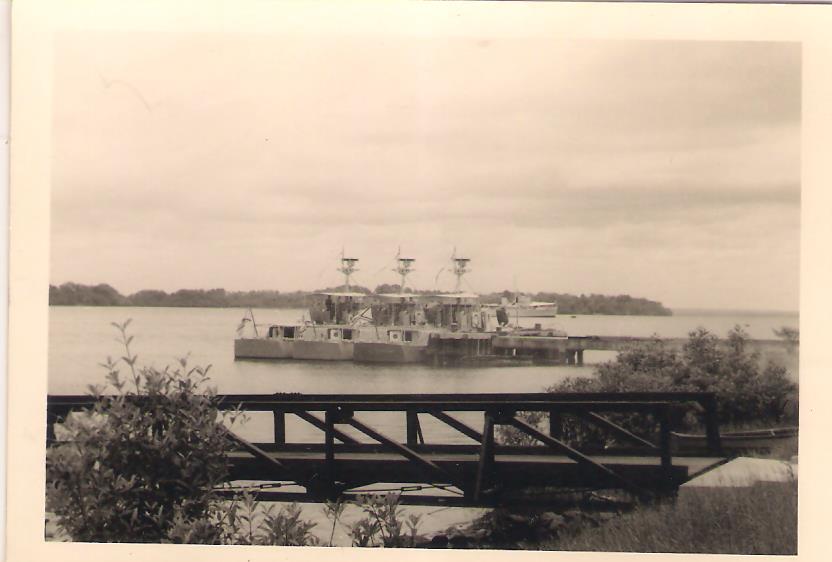
Dender, P908 Ourthe and P907 Rupel at the Naval Base of Banana in 1956
Specifications
Displacement: 25 tons
Length overall: 24.25 m
Length between P/P: 23.0 m
Beam: 3.8 m
Draught: 0.9 m
Range: 2,300 nm at 10 knots
Speed: 19 knots
Propulsion: 2 × MWM RHS 418 A 8-cyl diesels (220 hp each), 2 shafts
Radar: DECCA 707
Crew: 1 petty officer + 6 sailors
Radio call sign: ORJIArmament Layouts
Variant Weapons Placement Notes Dual single-mount HMG 2 × 12.7 mm Browning M2 HMG Fore & aft Original fit, used in both Congo and European river operations. Dual twin HMG 1 × 2 12.7 mm Browning M2 HMG + 1 × 2 12.7 mm Browning M2 HMG Aft (twinHMG), fore (twin HMG) Later configuration, giving more effective firepower for patrols.
Place in War Thunder
The Rupel would fit into a BeNeLux naval tree or a French subtree, offering:
- Dual HMG version – early patrol boat, BR 1.0–1.3
- Mixed 20 mm + HMG version – more capable gunboat, BR 1.3–1.7
Her deployments in Congo add unique historical flavor, highlighting Belgium’s Cold War riverine operations abroad. Both variants allow players to explore fast, shallow-draft riverine craft with differing firepower, rounding out early postwar Belgian naval forces in-game.
Sources
Sources
- Coulier, F. (2008–2009). Het Belgisch maritiem Rijnsmaldeel I–IV, Neptunus
- Anrys H., De Decker de Brandeken J.-M., Eygenraam P. (1992). De Zeemacht
- Van Ginderen L. & Delgoffe C., Fotoboek Belgische Zeemacht 1946–1996
- MAS Antwerp archives — for sister ship data
- Jane’s Fighting Ships (1950s–1960s editions)