I am not sure how effective drag reduction would play at very high alt where max ranges are usually tested.
C5 when given good launch conditions already self detonates before stalling itself out.
2 Likes
I mean I agree to a large extent what you said, since C5s from the start should not be added to any other aircrafts other than hornets. However like many people said 1. the amraam Cs, unless it somehow by a massive extent outperforms R-77-1 (probably 30% better performance) otherwise it won’t fix the problem. 2. What does that mean for the rest of the AMRAAM carriers?
But if it’s already really slow then it’s useless. For max range shots they usually have to hit an actual target to count
Feel free to provide sekrit documents showing missile is still mach 10 after travelling 999km.
Going by statshark, launch at 1500kmh TAS at 10km alt, so not all that premium launch conditions, against stationary target at 10km alt and 100km horizontal separation, 120C5 self destructs after 120s with still 1970kmh/1.8mach speed to it.
In more practical terms, Superhorny/Golden Egg radars don’t have enough range even when using HPRF/Head On to even try to make use of this extra reach. As extra insult to injury, Superhornet launched 120C5, at 1300kmh TAS, 10km alt and 90km launch distance against incoming Yak-38 at ±480kmh TAS (recon aircraft in Rocky Canyon EC custom battle) still had 1655kmh/1.47mach of speed just before impact, after expending 112/120s of battery time, traversing 78.4km with constant Snail Server grade overcorrections needlessly wasting speed.
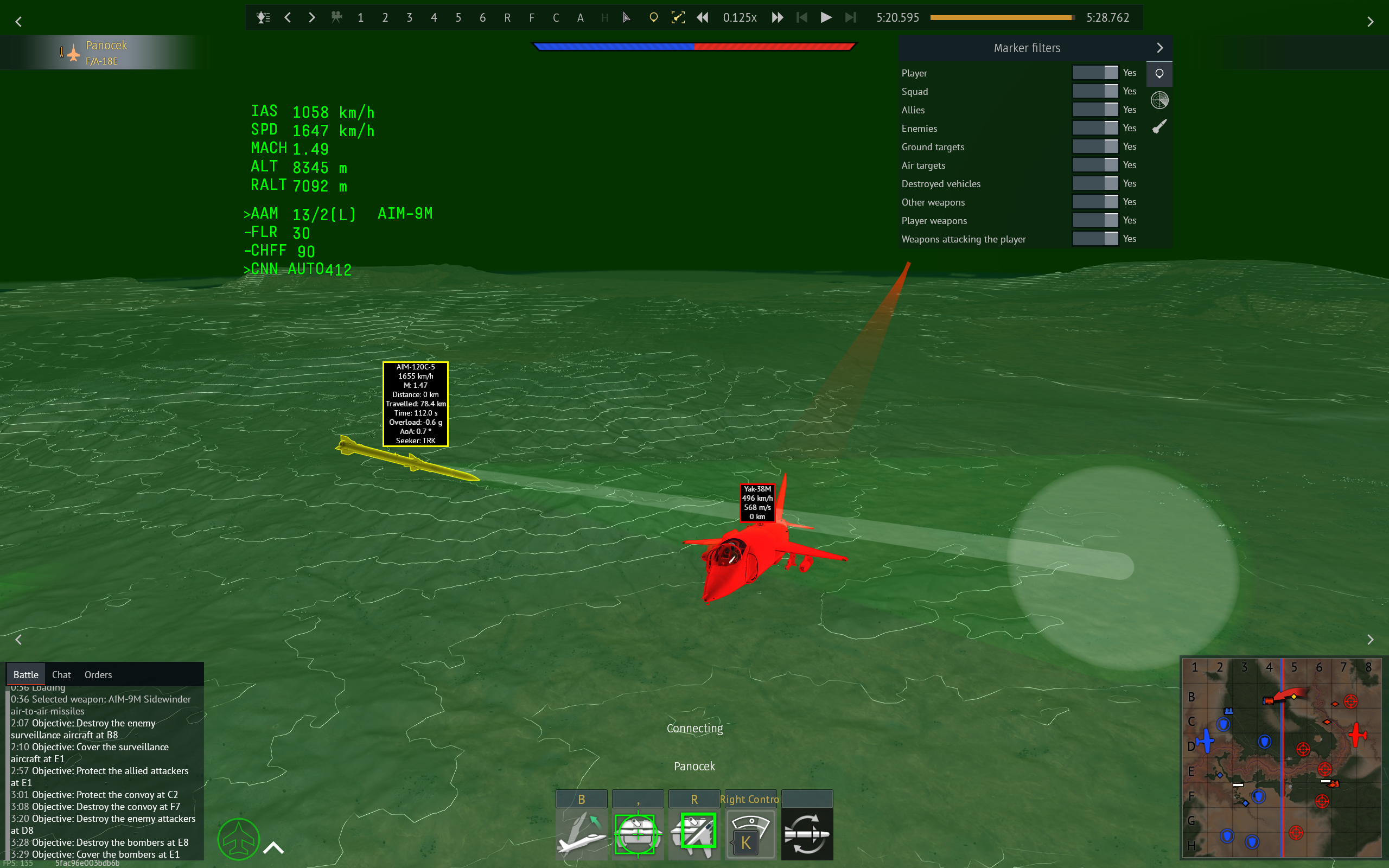
Bonus points why missile switched to IOG few seconds before impact (white beam and cloud markers) which already started drifting off target, despite supposedly still tracking.
EDIT
I’ve redid this “BVR” attempt with F-15I, giving missile the best launch conditions I could muster:
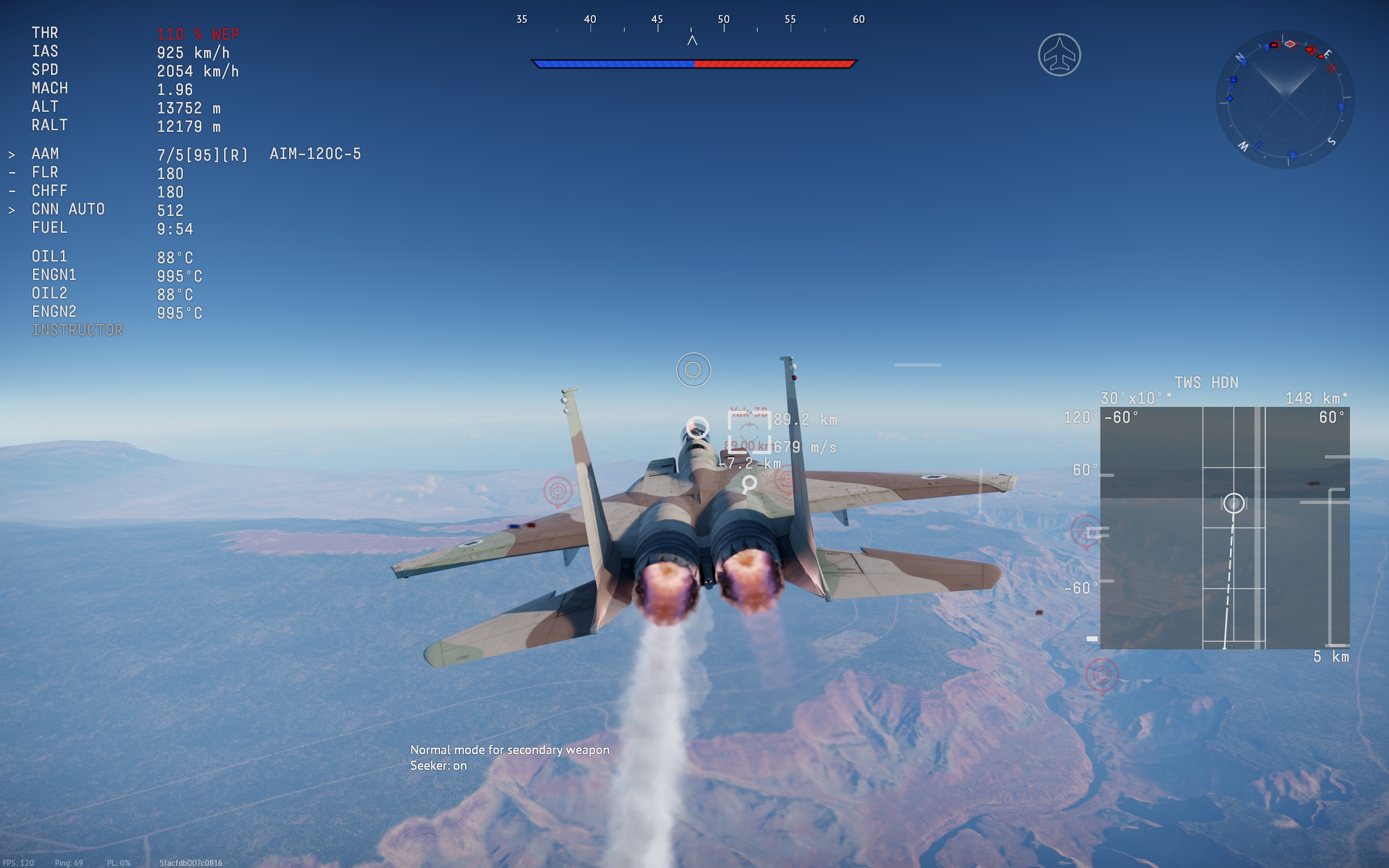
2050kmh TAS, 13.7km alt.
All this effort resulted in… drum roll missile barely hitting the target, with 1256kmh/1.12mach speed before impact. Missile also completely ignored lofting and flew straight at the problem, shortening time to impact at expense of terminal speed
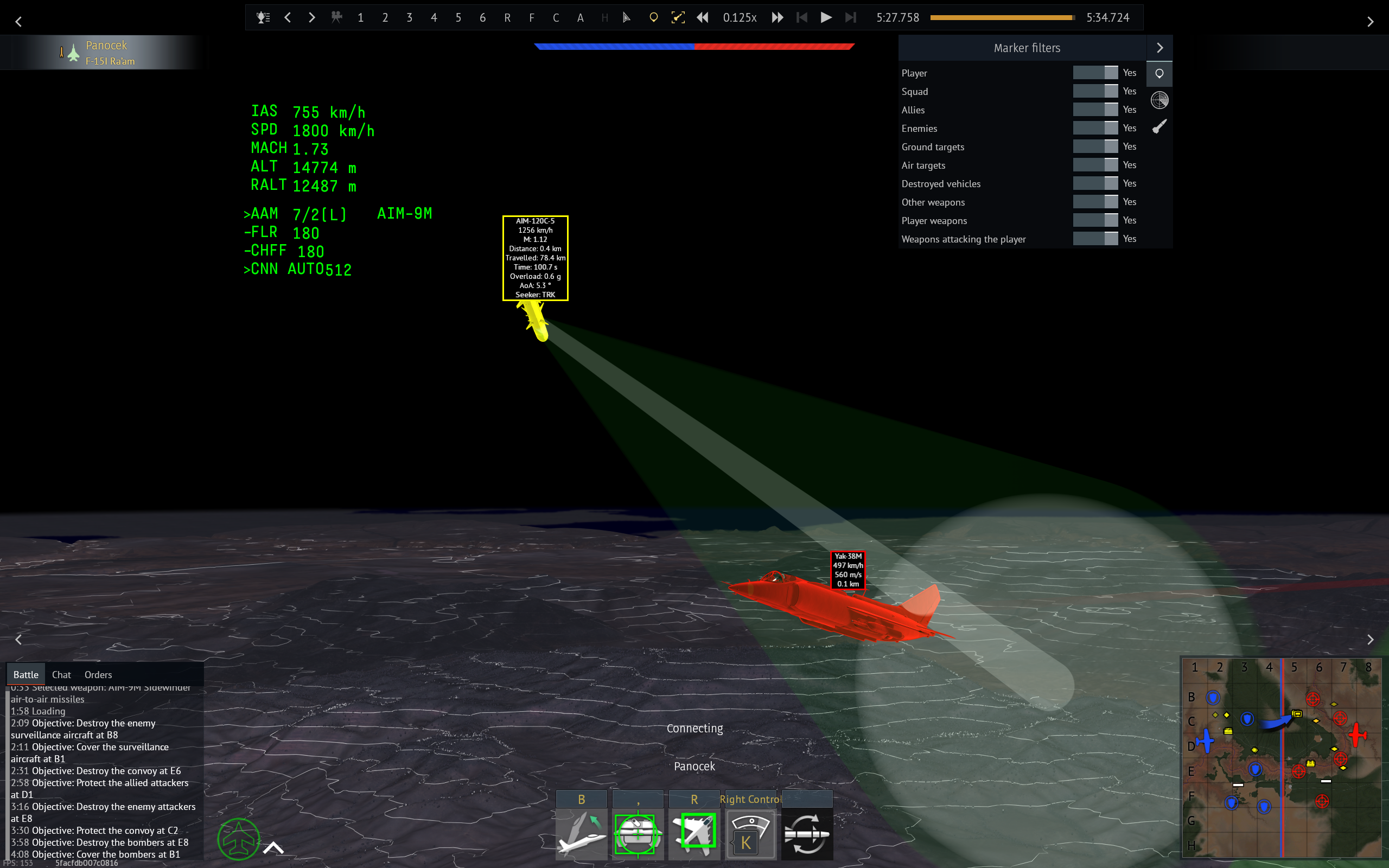
And switched to IOG again.
Did another try, but at similar altitude to the target instead low orbit, missile lofted correctly and self detonated before impact.
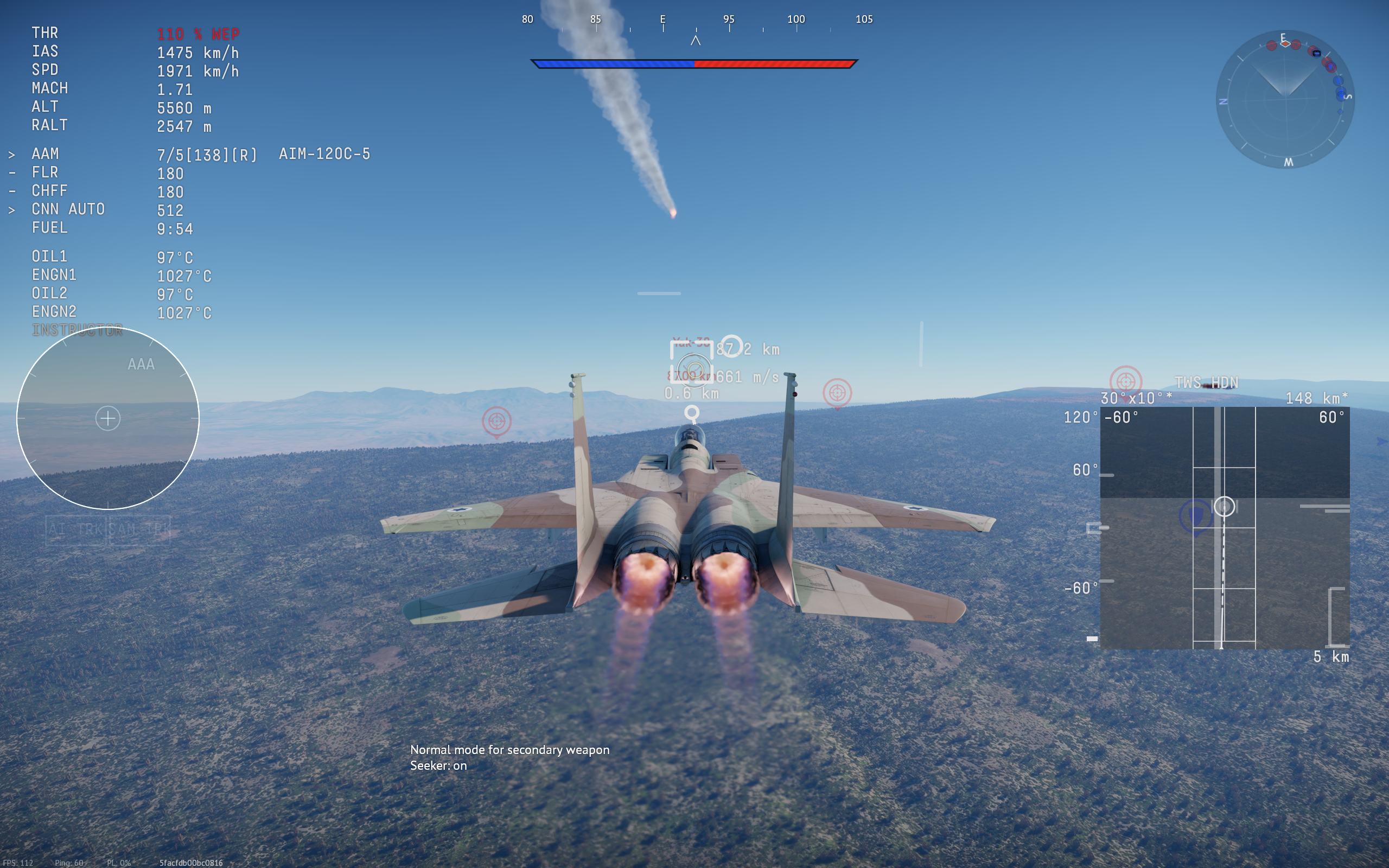
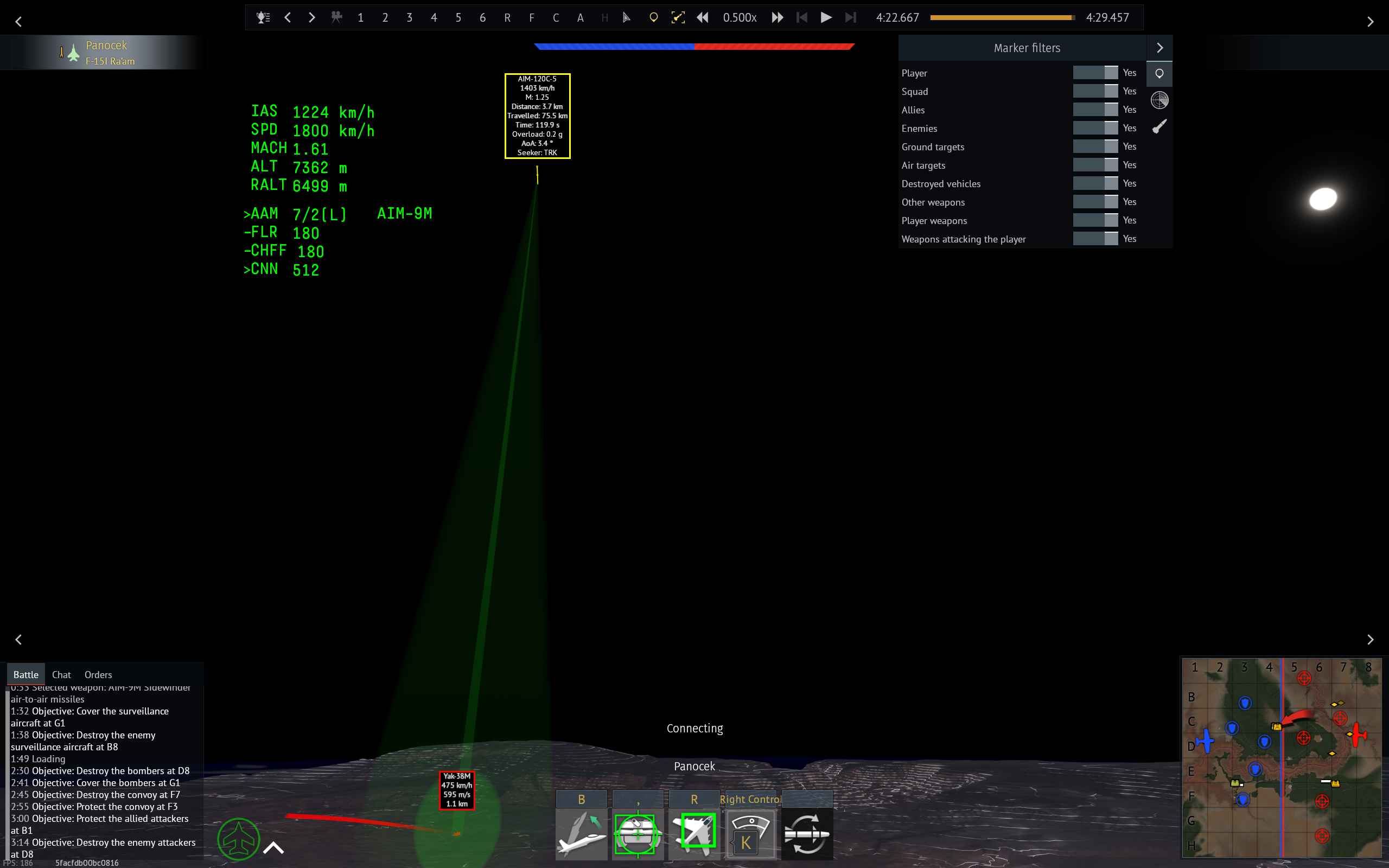
Marginally better.
So, lofting coding falls apart when there’s significant altitude difference between attacker and target?
Does the missile need to loft though?
If the missile is fired from significantly above the target, is it not better to fly straight, as it can instead convert altitude into energy instead of needing to convert thrust into alt for use later in the flight?
iirc, battery life is actually quite a common range limiter IRL. Though I cant recall whether the AMRAAM is range is based upon the target flying towards it or not.
When you have significant (80km+) horizontal separation, but one launch lofts, but other doesn’t it is kinda not normal, when only difference is less than 1km in vertical separation.
Wanted to make quick Vietnam EC test… and it took longer than anticipated as lofting in inconsistent, either it has a lot of variables (attacker speed, altitude, target speed, altitude, distance between these two, amount of prayers to the snail today etc) or it is just dice throw.