- Yes
- No
- (independent) BeNeLux tree
- France: BeNeLux subtree
- other
- no/negative
- 2 × 20 mm autocannon
- 1 × 20 mm autocannon + 1 × 12.7 mm HMG
- 2 × single 12.7 mm HMG
- 1 × single 12.7 mm HMG
- other (please comment)
- no/negative
TL;DR: small Belgian PBR-type patrol boats, armed with different layouts of 12.7 mm HMGs and 20 mm autocannons.
History
History
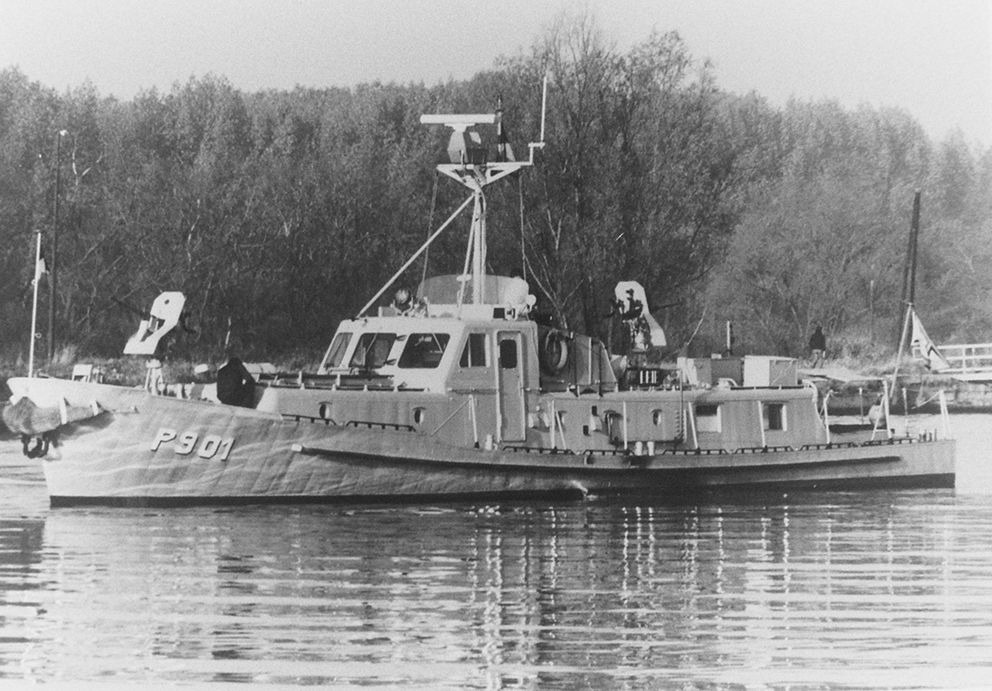
After WWII, Belgium received a zone of responsibility along the Rhine as part of the Allied occupation of Germany. To patrol this river zone, the Rijnsmaldeel/ Rijnescadrille (Rhine flotilla) was established in 1953. Ten river patrol boats were ordered from the Theodor Hitzler shipyard in Regensburg, Germany: six standard vessels forming the Leie-class (P900 IJzer, P901 Leie, P903 Meuse, P904 Sambre, P905 Schelde, P906 Semois), three modified variants known as the Congolais-class, and the larger command vessel Libération.
The Leie-class boats were optimized for river service: only 25 tons displacement, narrow beam, long hull lines, shallow draught, and light aluminum superstructures. They could reach high speeds thanks to dual 180 hp MWM diesel engines, each driving its own screw.
Initially armed with a 20 mm autocannon and a 12.7 mm M2 Browning HMG, armament was sometimes reduced to a single 12.7 mm or two singles depending on operational needs. Their role was not to fight large vessels but to secure river routes, inspect traffic, and provide a Belgian naval presence on the Rhine during tense Cold War years.
In 1960 the flotilla was dissolved, and the ships were brought back to Belgium, where they served in various support roles such as training, hydrography, and pollution control. Some were even shipped to Congo to patrol the Congo River. The vessels remained active in secondary roles until the 1980s, with several preserved as heritage ships or transferred to cadet organizations.
History of the Belgian Rijnsmaldeel
History of the Belgian Rijnsmaldeel:
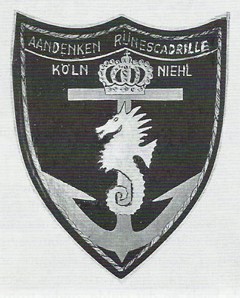
The Belgian Maritiem Rijnsmaldeel (Rhine Flotilla), often called the Rijnescadrille, was a unique postwar naval formation tasked with securing Belgium’s zone of responsibility on the River Rhine during the Cold War. Its emblem — a seahorse — reflected its dual identity as a riverine but unmistakably naval force.
Early background
Belgium’s presence on the Rhine as part of an occupation force stretched back to the aftermath of World War I. Then, Belgian crews patrolled the river with seized German craft and a handful of their own vessels, sharing responsibility with the French. This interbellum flotilla was disbanded by 1925, but it provided a precedent for Belgian riverine operations in Germany.
The Cold War revival
After the end of World War II, Belgium was again assigned a sector in occupied West Germany, but initially the country had no navy to enforce river control. The modern Zeemacht (Navy) was only founded in 1946 from Belgian veterans of the Royal Navy. By 1949, as the Cold War hardened and Belgium became a founding member of NATO, the need for a permanent presence on the Rhine became clear.
In 1951, a Belgian advance party was attached to the British Rhine Flotilla at Krefeld. Belgian sailors trained alongside the Royal Navy, even manning ex-German and British patrol craft under Belgian flag. They quickly proved their worth during the catastrophic 1953 North Sea Flood, when Belgian-crewed landing craft from Krefeld raced to the Netherlands and rescued stranded civilians from rooftops in Zeeland — earning gratitude directly from Queen Juliana of the Netherlands.
Establishment of the base at Niehl
A permanent Belgian flotilla was authorized soon after. With German reparations funding the project, a brand-new naval base at Cologne-Niehl was built between 1952 and 1953. This modern facility featured heated accommodation blocks, a floating dock, workshops, and a 300 m quay with an ingenious floating pier that rose and fell with the Rhine’s shifting water levels.
By mid-1953, the first six purpose-built Belgian patrol boats (later known as the Leie-class) were delivered from the Theodor Hitzler yard at Regensburg. They were small, fast, shallow-draught craft of only 25 tons, ideal for inland waterways. Each was named after a Belgian river: Meuse, Schelde, Leie, Sambre, IJzer, and Semois. In 1954, three further slightly modified boats followed — Ourthe, Rupel, Dender — often called the Congolais-class due to their later deployment to the Congo. Finally, the larger Libération arrived as command ship in August 1954.
On 16 November 1953, the Belgian Rhine base was officially inaugurated with great ceremony, attended by high-ranking Belgian, British, French, and American officers. A parade of Belgian, British, French, and US river patrol boats underlined the multinational character of NATO’s Rhine security effort.
Duties and operations
The Rijnsmaldeel patrolled a 250 km stretch of the Rhine from Koblenz to the Dutch border. Duties included:
- Routine patrols and flag-showing in the Belgian sector.
- Escort of VIPs (such as Field Marshal Montgomery in 1955).
- Joint training with allied flotillas (notably cruises to Strasbourg, Basel, and even Paris for ceremonial duties).
- Disaster relief (notably the 1953 Netherlands flood).
- River control and inspection missions during heightened Cold War tensions.
Belgian sailors trained as Rijnloodsen (Rhine pilots) alongside the French to master the complex navigation of the upper river.
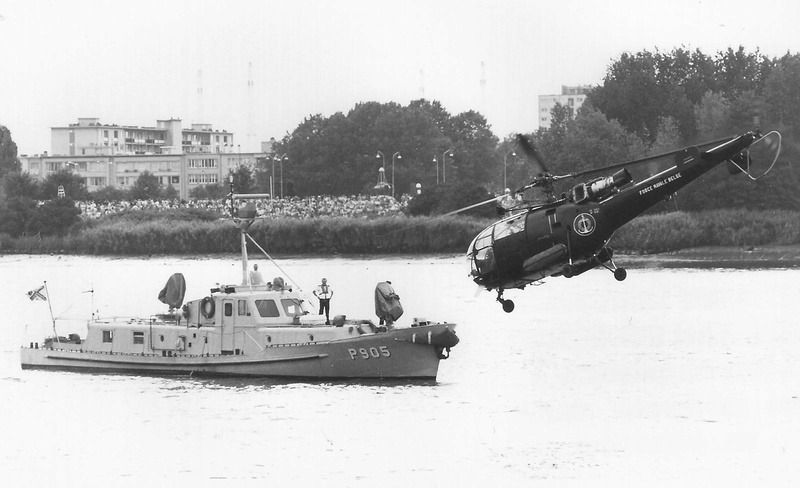
P905 Schelde during traing in Belgium
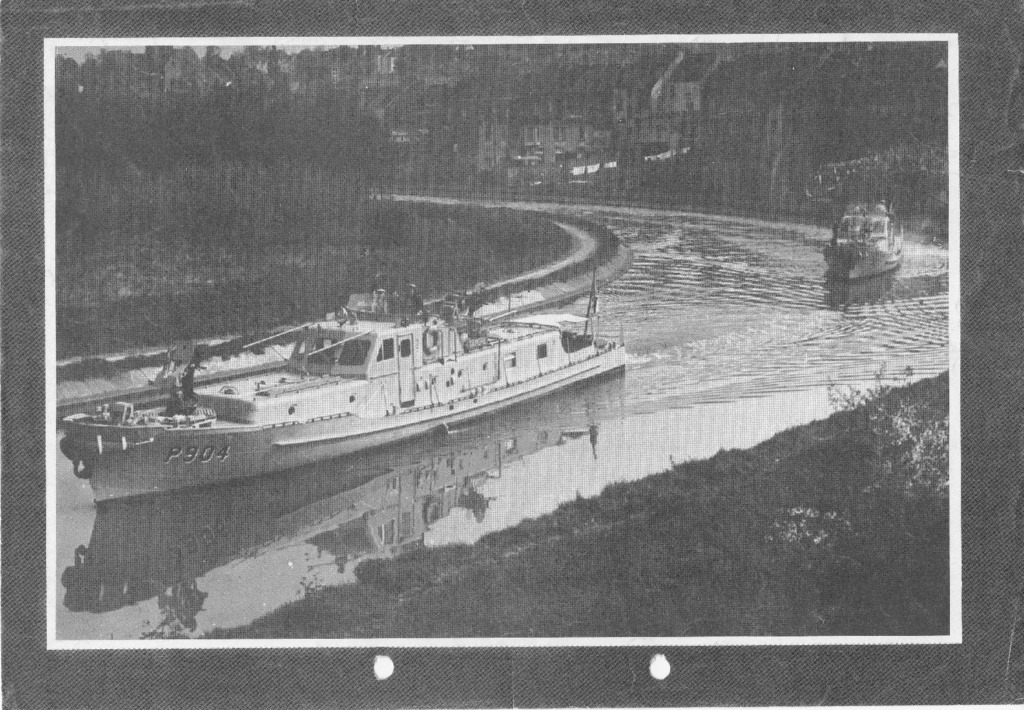
P905 Schelde as a Heritage vessel in the Steen in AntwerpToday, Leie (P901), Sambre (P904), and Libération (P902) survive as protected floating heritage in Belgium.
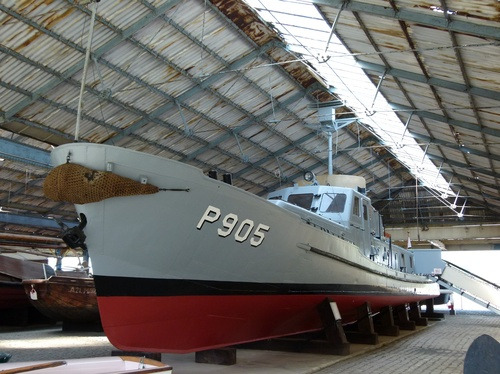
Specifications (Leie-class river patrol boat)
Displacement: 25 tons
Length: ~20 m
Beam: ~3.5 m
Draught: ~1 m
Propulsion: 2 × MWM RHS 418 A 8-cyl diesel engines (180–220 hp each)
Speed: up to 20 knots
Crew: 7 (1 helmsman, 1 telegraphist, 3 deckhands, 2 mechanics)Armament variants:
Variant Weapons Location Dual autocannon 2 × 20 mm autocannon Fore & aft Mixed autocannon + HMG 1 × 20 mm autocannon + 1 × 12.7 mm HMG Aft (20 mm), fore (HMG) Dual HMG (initial version) 2 × single 12.7 mm HMG Fore & aft Single HMG 1 × single 12.7 mm HMG Fore or aft Construction: steel hull, aluminum deck and superstructure.
Distinctive open second steering position on upper deck.
Place in War Thunder
In War Thunder, these boats would represent a Belgian Cold War equivalent to the American PBRs or German KS-boats — nimble, lightly armed, and well-suited for close combat in rivers and coastal waters. Multiple armament fits make them versatile candidates for different BR brackets in the coastal fleet tree.Regarding nations
BeNeLux
As Belgium has been confirmed under France’s BeNeLux subtree, the Leie-class would make an ideal low-tier coastal vessel, comparable to German KS-boats or US Vietnam-era PBRs. They could also form part of a future independent BeNeLux coastal tree.
Their multiple weapon fits allow placement across several BRs (likely 1.0–1.7), giving progression variety.
Pictures
Pictures
P900 Ijzer, armed with a single 12.7 mm Browning mount
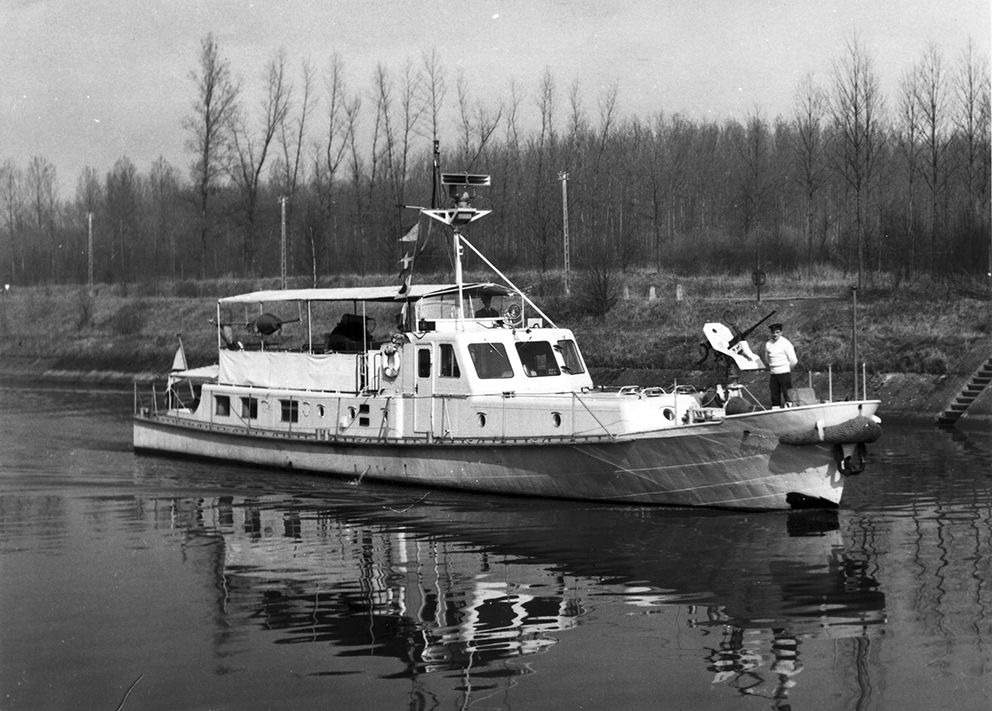
P901 Leie on Belgian inland waters, armed with two 12.7 mm browings.
P903 Meuse in the Scheldt river with a single 12.7 mm mount
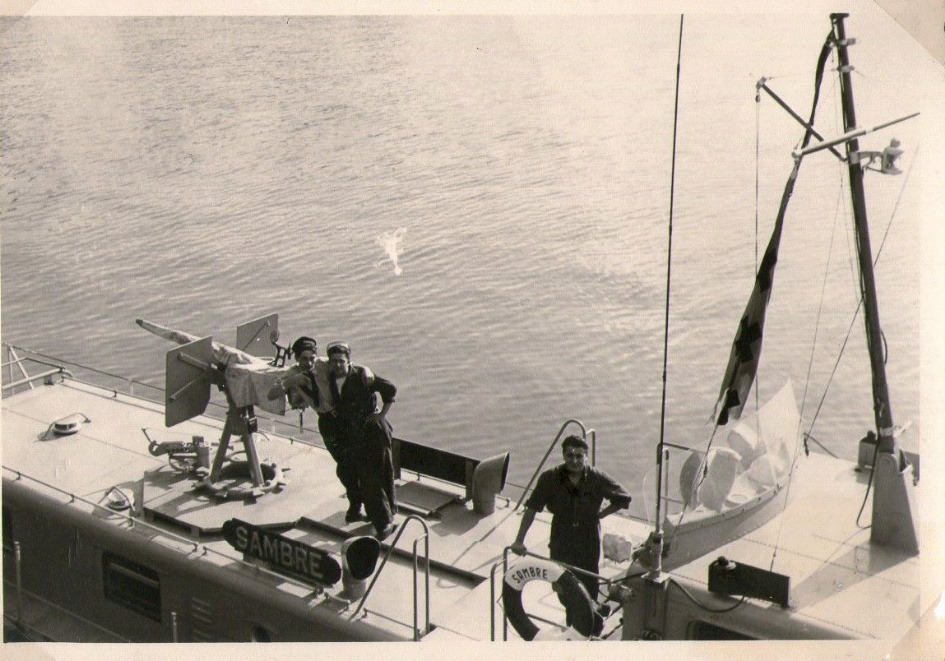
The rear 20 mm mount on the P904 Sambre
P904 Sambre, later preserved by the Belgian Navy Cadets, here with the frontal 20 mm mount.
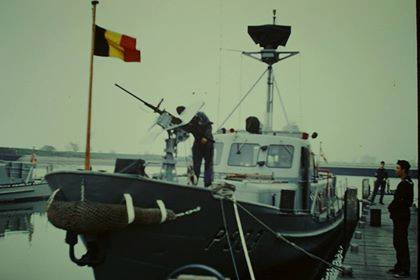
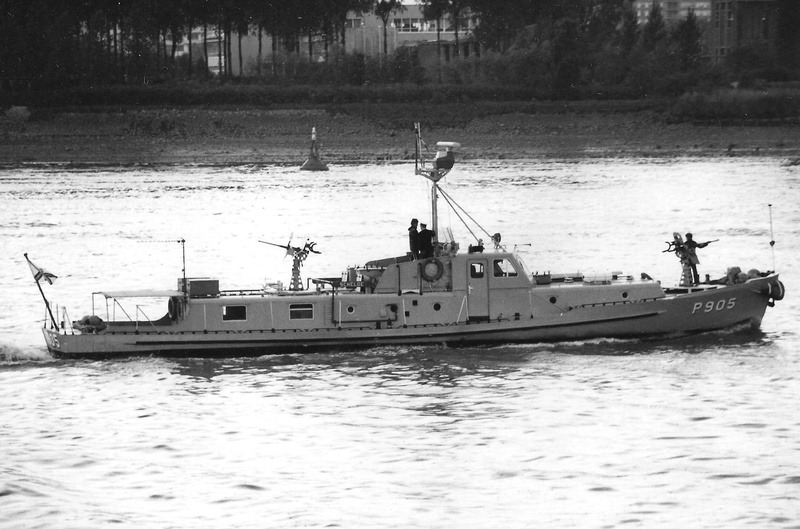
P905 Schelde with an aft 20mm and a fore 12.7 mm
P906 Semois


Sources
Sources
- Agentschap Onroerend Erfgoed (2013). Inventaris Onroerend Erfgoed: V901 Leie https://id.erfgoed.net/erfgoedobjecten/99062
- Agentschap Onroerend Erfgoed (2013). Inventaris Onroerend Erfgoed 2025: P905 Schelde [online], P905 Schelde | Inventaris Onroerend Erfgoed
- Agentschap Onroerend Erfgoed (2013). Inventaris Onroerend Erfgoed 2025: P904 Sambre [online], P904 Sambre | Inventaris Onroerend Erfgoed
- Coulier, F. (2008–2009). Het Belgisch maritiem Rijnsmaldeel (I–IV), Neptunus.
- Anrys H., De Decker de Brandeken J.-M., Eygenraam P. (1992). De Zeemacht: van de admiraliteit van Vlaanderen tot de Belgische zeemacht. Tielt.
- S.N. (1980). 150 ans de marine militaire belge. Brussel.
- Van Ginderen L. & Delgoffe C. (s.d.). Fotoboek Belgische Zeemacht 1946–1996.
- Jane’s Fighting ships 1960-61 p. 101-102.