Avoiding Future Mistakes: A Logical & Balanced Roadmap for 5th-Gen Stealth Aviation US & Other Nations

First off, I really like the proposed options here. It’s nice to see that, at least for some nations, 5th gen aircraft could fill out our (for the time being) final rank quite nicely, rather than being stuck with just 2-3 options.


Only thing I’m a bit torn on is things like the YF-23, YF-22, X-35 and X-32. I don’t mind these aircraft in general, but I am a bit worried about the implementation these would have, since in reality all of these were unarmed test aircraft.

Basically what I am worried about is that these could be added in fictional configurations. By this I don’t just mean that they weren’t built / completed, but that they would be set up in a way that was never intended.

What makes a configuration "fictional"?

Since anything that wasn’t built or completed is sometimes labelled as fictional, I think I should explain what I mean when I say “fictional” and “real” here:

What makes a configuration “fictional”?

  • A component (e.g. radar) was never fitted to the aircraft.
  • There was no built-in provisions to fit said component at a later point in time.
  • There was no intent on retrofitting the component, including the necessary modifications
    → If all the above is true, that component on the aircraft is fictional

However, I personally do support the concept of “incomplete prototypes”, which are currently the standard needed for consideration* to be added to the game, and directly enforced by suggestion guidelines.

*

*Consideration doesn’t mean something is automatically added, just that it isn’t immediately disqualified. Other factors like missing information or a simple lack of need can still get in the way.
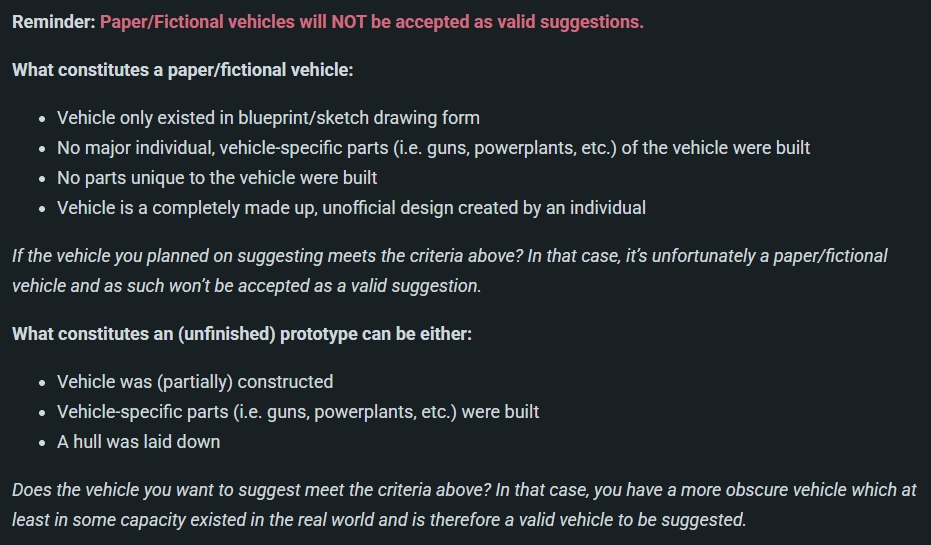
What is an "incomplete prototype"?

image_2026-11-21_221408276

Taken from the official suggestion guidelines


So to get back on the topic, if these had provisions / intent to fit systems like radar, countermeasures, RWR and live missiles, then I don’t think any of these would be problematic and would really like to see them in game.

However if some or all of these are missing from an aircraft I wouldn’t support them simply making things up, which could leave them in a weird spot for balancing. If this makes the real aircraft impossible to balance, I think it’s most reasonable to replace them with the intended final combat aircraft.

What would that mean for each of these aircraft?
  • YF-23 → F-23 (as “unfinished prototype”)
    → While the F-23 itself does not technically meet the criteria for an unfinished prototype, instead remaining a paper aircraft, they might consider this compromise as the closest to a real combat capable YF-23. A somewhat similar precedent is the Kikka, which is actually the never-built Kikka Kai in game since the variant that was built would not have cannon armament, as well as weaker engines.

  • YF-22 → F-22 (skipped)
    → Since the F-22 is a complete aircraft already, an unfit YF-22 would simply be skipped.

  • X-32 → F-32 (as “unfinished prototype”)

  • X-35 → F-35 (skipped)

If you know more about these aircraft than me, and I think you probably do, some more info on what they were equipped with and what they had provisions for that’d be really nice to see.


But this is a really nice write up and I do agree that having more unique techtree options is really important, especially since the US otherwise relies quite heavily on mass-exported F-35A/B that can be found in the air forces of most other nations in game, seeing something like a YF-23 or X-32 would make the techtree as a whole more appealing.

As long as these aircraft can be faithfully represented in game, I’d like to see them all eventually.


These would be really interesting to see as well.

I mostly just looked into the Japanese options myself, and it’d be really nice to get some insight into the lesser known options there is for other nations that I don’t actually know much about. For example the many variants of Chinese 5th gen aircraft, Russian projects and even things like EADS Mako (Germany/Italy) or BAE Replica (UK) that I know were being developed but don’t actually know how far these went.
5 Likes

Fair point-adding pure “paper” setups isn’t ideal. However, just like the Yak-141 in-game (which flew trials with ballast in place of its radar and weapons), all four demonstrators had dedicated internal bays, flight-tested engines, and AESA hardware undergoing concurrent flight and ground range trials during their respective Dem/Val programs

General

YF-23A PAV-1 (s/n 87-0800)
Engine: 2× General Electric YF120-GE-100 (variable-cycle turbofan, ~35,000 lbf class)
Radar: Westinghouse / Texas Instruments ATF AESA (~1,500 GaAs T/R modules, AN/APG-77 prototype)
Armament: 4× AIM-120A + 2× AIM-9L/M (single central internal bay) + internal provision for 1× 20mm M61A1/A2 Vulcan

YF-22A PAV-1 (s/n 87-0700)
Engine: 2× General Electric YF120-GE-100 (variable-cycle turbofan, ~35,000 lbf class)
Radar: Westinghouse / Texas Instruments ATF AESA (~1,500 GaAs T/R modules, AN/APG-77 prototype)
Armament: 4× AIM-120A (main bay) + 2× AIM-9L/M (side bays) + internal provision for 1× 20mm M61A2 Vulcan

Boeing X-32A (s/n 00-01)
Engine: 1× Pratt & Whitney F119-PW-614 (JSF119-614, ~37,000 lbf class)
Radar: Raytheon JSF AESA (GaAs T/R modules, direct predecessor to AN/APG-79)
Armament: 6× AIM-120C (3 per side bay) / 2× AIM-120C + 2× 2,000-lb GBU-31 JDAM (internal) + 2× AIM-9X (wingtip pylons) + provision for 1× 20mm M61A2 Vulcan

Lockheed Martin X-35B (s/n 301)
Engine: 1× Pratt & Whitney F119-PW-611 + shaft-driven Rolls-Royce LiftFan (29,000 shp drive shaft, ~18,000 lbf cold thrust) & 3BSM swivel nozzle
Radar: Northrop Grumman MIRFS JSF AESA (direct predecessor to AN/APG-81)
Armament: 4× AIM-120C / 2× AIM-120C + 2× 1,000-lb GBU-32 JDAM (shortened internal bays) + 2× AIM-9X (wingtip pylons); no internal gun

Documented Test & Hardware Basis

Engines (Flight-Tested on Airframe):
YF-22 PAV-1 (first flight Sept 29, 1990) and YF-23 PAV-1 (first flight Aug 27, 1990) both flew with GE YF120 engines at Edwards AFB (PAV-2 airframes of both designs used P&W YF119 engines).

X-32A (first flight Sept 18, 2000; 66 flights total) flew on the P&W F119-PW-614.

X-35B (converted from X-35A s/n 300; first STOVL hover June 23, 2001; Mach 1.07 STOVL mission July 20, 2001) flew on the P&W F119-PW-611 with the Rolls-Royce LiftFan.

Radars (Concurrent Flight & RCS Range Trials):

During flight trials, prototype nose cones housed telemetry and ballast matching the exact mass and CG of the respective AESA units.

ATF Array (YF-22 / YF-23): Flight-tested by Westinghouse / TI aboard their BAC 1-11 (N164W) avionics testbed in Baltimore, MD in 1989-1990 alongside the Common Integrated Processor (CIP) before becoming the AN/APG-77.

X-32A Array: Raytheon’s JSF AESA aperture, radome, and EW/CNI suite were mounted and tested on Boeing’s Full-Scale Pole Model at the Boeing Compact RCS Test Range in Seattle starting March 2000. Following the October 2001 JSF decision, Raytheon transitioned this architecture directly into the F/A-18E/F’s AN/APG-79.

X-35B Array: Northrop Grumman’s MIRFS array underwent airborne testing on Northrop’s BAC 1-11 testbed in Baltimore prior to entering EMD as the AN/APG-81.

Weapons Bays & Live Ordnance Trials:

YF-22 & YF-23: Sized for the 25-inch-span AIM-120A (the cropped 17.6-inch-span AIM-120C did not enter service until 1996), limiting the YF-22 main bay to 4× AIM-120A instead of six. In Nov-Dec 1990 at China Lake / Edwards AFB, YF-22 PAV-2 executed live internal bay launches of both an AIM-9M (at Mach 0.7 / 20,000 ft) and an AIM-120A.

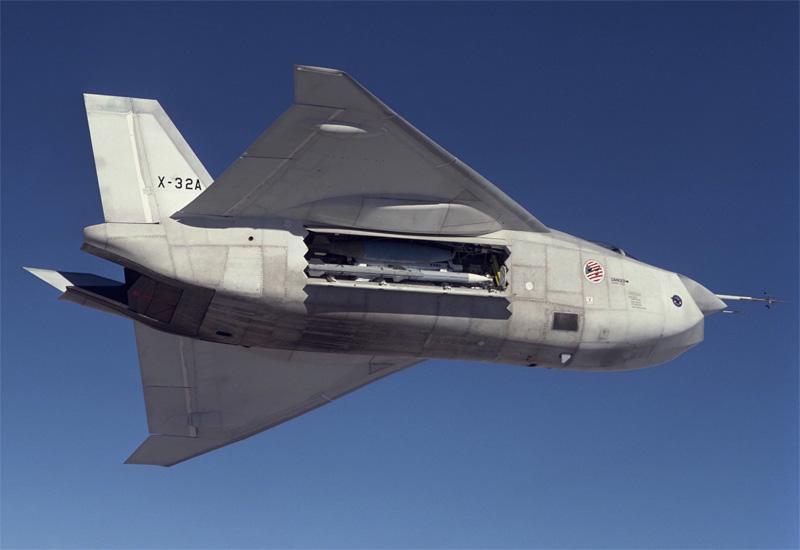
X-32A: Equipped with functional side-mounted bays; on January 26, 2001 (Flight 61) at Edwards AFB, it flew with an instrumented AIM-120 and JDAM installed and cycled the bay doors in flight to record acoustic and structural vibration loads.

X-35B: Internal bays were shortened around the LiftFan ducting, retaining full length for 4× AIM-120C (143.9 in) while restricting internal bomb loads to 1,000-lb GBU-32 JDAMs (vs. 2,000-lb GBU-31s on X-35A) and omitting the internal cannon for STOVL weight limits.

w97ysgn9kkqd1

Boeing X-32A internal side weapons bay during its 61st test flight at Edwards AFB (January 25, 2001), carrying an instrumented AIM-120 AMRAAM and a JDAM.
Source: Official Boeing press release / Boeing Images Archive

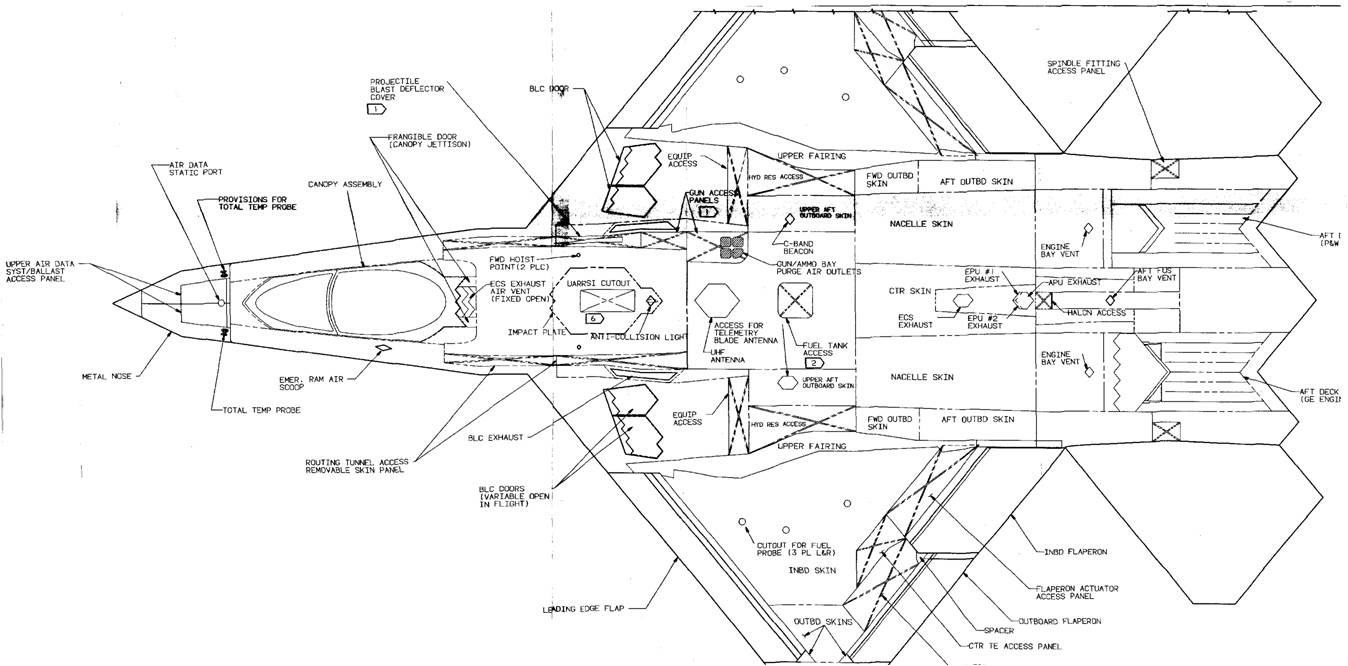
Northrop/McDonnell Douglas YF-23A top-view access panels, sensors, and airframe layout diagram (1990). Shows locations of gun access panels, UARSSI cutout, antennas, BLC doors, and engine/APU vents.
Source: Northrop Corporation ATF technical documentation / YF-23A Utility Flight Manual (NTM 1F-23(Y)A-1)

3 Likes

I don’t mind paper setups as long as these are still real, I only have an issue with fictional setups. If there was provisions for radar for example, even if it wasn’t mounted, I think it’s fair to add it since it was still intended to have / be able to have radar. This is what was done for the Yak-141 too.

With that in mind, unless I missed something, it seems YF-22/23 wouldn’t be problematic, since it seems they had structural provisions for radar, RWR, countermeasures and even cannons, alongside the necessary systems to support them. They are pre-production fighter (YF) aircraft, so this seems about right to me.
These could be added, and I’d even suggest PAV-1 / PAV-2 of both the YF-23 and YF-22 as separate aircraft in game with their different engines, that could give us premium / event options without taking away from the techtree.


The main thing here that I’m confused about now is the X-35B, since I just can’t find its weapon bays at all. It seems like it lacks the panel lines and even space to fit them. It also makes me question other things like RWR and countermeasures for both X-planes here that wouldn’t serve any purpose on pure demonstrators, as well as radar on the X-35 (On the X-32 I can at least see a purpose to test the weapons bays, but I’d still want to know if provisions were there since it seems none was fitted).

If you have anything to clear that up, it’d be appreciated.

3 Likes

Splitting PAV-1 and PAV-2 into separate tech-tree and premium/event slots for both the YF-22 and YF-23 is something I considered and immediately ruled out. In War Thunder, Gaijin follows a strict rule of keeping top-tier premiums, squadron vehicles, and event rewards at least 1.0-1.3 BR below the actual ceiling (for example, 13.7-14.0 vehicles against a 15.0 top BR) specifically to prevent unexperienced players from flooding top-tier brackets and tanking national win rates.

If you ignore that rule and put full-fat 5th-gen fighters like PAV-2 into premium, event, or squadron slots, top-tier Air RB immediately turns into a mess of level-15 players in bought Su-57E, YF-23, and J-35A / FC-31 packs crashing on the deck in the first two minutes-dragging down 4.5-gen jets a full BR below into a black hole while players who actually ground out tech-tree F-22A, Su-57, and J-20 get stuck with teams that have zero idea how to notch or manage BVR. A PAV-2 with P&W YF119 engines has virtually identical top-tier flight performance to PAV-1-you cannot artificially drop it 1.0 BR lower without completely breaking matchmaker balance.

On top of that, PAV-1 is the obvious choice for the base model for two major reasons:
Iconic Default Liveries: Both PAV-1 airframes wear the most famous, recognizable schemes of the ATF competition-the dark charcoal “Black Widow II” livery on YF-23 PAV-1 (87-0800) and the classic two-tone gray scheme on YF-22 PAV-1 (87-0700). Putting PAV-2’s “Gray Ghost” (87-0801) livery as an unlockable or marketplace camo on a single tech-tree YF-23A solves that cleanly without creating redundant top-tier clones.

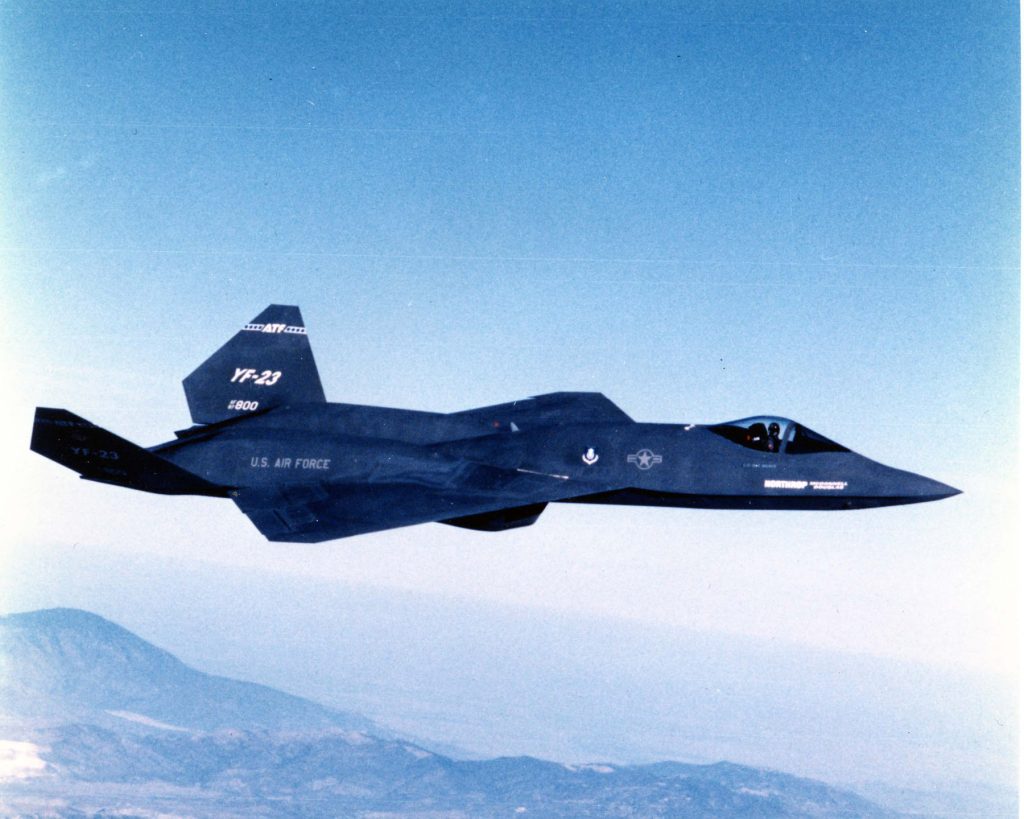
YF-23A PAV-1 (“Black Widow II”, s/n 87-0800) during a flight test mission near Edwards AFB, California, 1990.
Source: U.S. Air Force / Air Force Flight Test Center photo via Wikimedia Commons

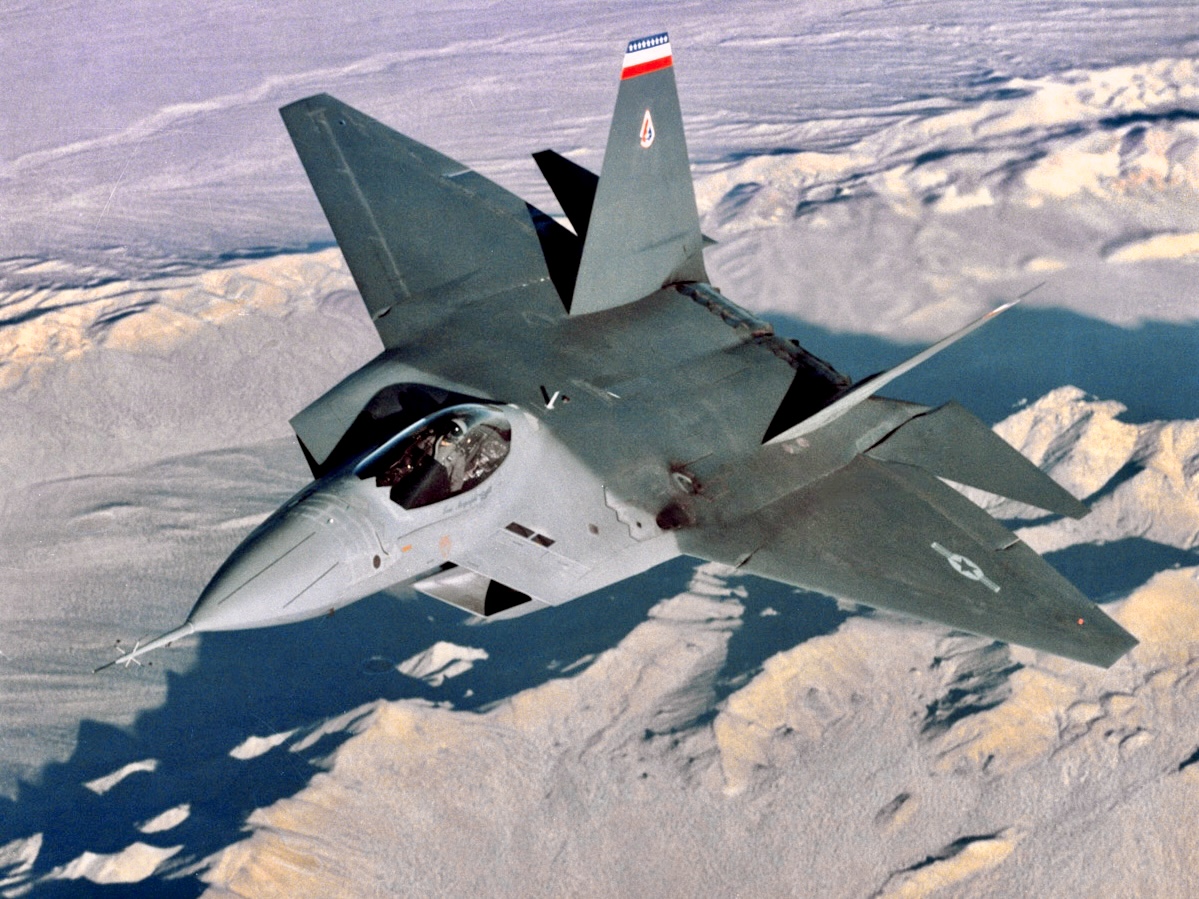
YF-22A PAV-1 (s/n 87-0700, equipped with GE YF120 engines) during a flight test mission over the Mojave Desert near Edwards AFB, California, late 1990.
Source: U.S. Air Force / Air Force Flight Test Center photo via Wikimedia

More Interesting Engine Mechanics (GE YF120): Unlike PAV-2 (which used the P&W YF119 that simply evolved into the production F-22A’s engine), PAV-1 flew with the General Electric YF120-the world’s first flight-tested variable-cycle turbofan, capable of shifting between high-efficiency turbofan mode for subsonic cruise and high-exhaust-velocity turbojet mode for Mach 1.5+ supercruise. That gives PAV-1 a genuinely unique thermodynamic and supercruise profile in-game rather than feeling like a copy-paste F-22A powerplant.

Unified Designation & GE YF120 Engine: Because both the P&W YF119 and GE YF120 were built to identical mounting points and airframe interfaces under USAF ATF requirements, both airframes could physically accommodate either powerplant without structural changes. This means Gaijin can simply add them as YF-22A and YF-23A without tying them strictly to a “PAV-1” or “PAV-2” suffix-giving players the iconic PAV-1 liveries by default with the PAV-2 skins (like “Gray Ghost”) as unlockables, while equipping both with the far more interesting General Electric YF120. As the world’s first and only flight-tested variable-cycle turbofan, the YF120 delivers exceptional thermodynamic efficiency, reduced IR signature, extended range, and superior Mach 1.5+ dry supercruise performance-making the gameplay far more unique than a copy-paste F-22A engine and removing any reason to split them into two separate vehicles.

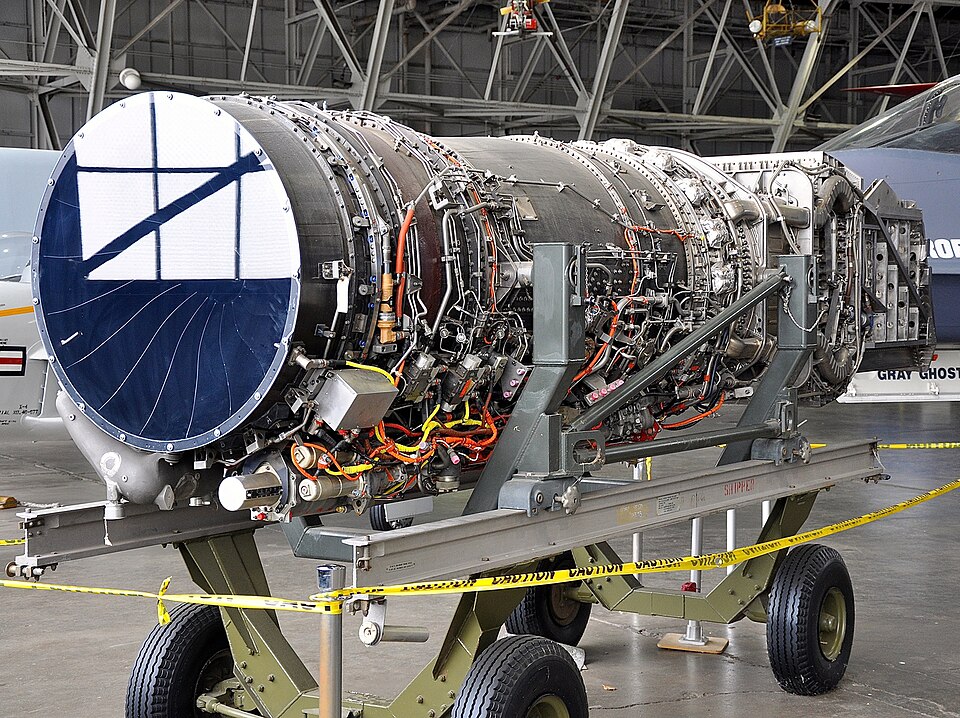
YF120

General Electric YF120 variable-cycle turbofan on display at the National Museum of the U.S. Air Force, Wright-Patterson AFB, Ohio.
Source: Photo by Rollie Puterbaugh / Wikimedia Commons

As for the X-35B, you actually make a very fair point-and looking strictly at the forum’s incomplete-prototype guidelines, I agree with you here. Unlike the X-32A (which had functional side bays, cycled its doors in flight, and carried instrumented AIM-120/JDAM shapes), the X-35B demonstrator (s/n 301) had solid, non-cutout belly panels with no bay doors, no internal launch trapezes, and no live ordnance trials—its internal volume was strictly filled with flight-test instrumentation and ballast alongside the LiftFan hardware. (Funny enough, I also tried digging up close-up photos of the YF-22’s open weapons bays, which is nearly impossible due to ATF-era secrecy and search algorithms endlessly flooding results with production F-22A airshow shots-though at least the YF-22 actually conducted live internal AIM-9M and AIM-120A launches during trials) which really disappointed me, as I myself would have liked to include more detailed and illustrative information.

Because of that, forcing the X-35B into the game with modeled internal bays would stretch things too close to a “paper” loadout.

1 Like

The YF-23 should be an F-15C/GE successor. It only handles the air superiority role in such a strict manner that it has no a-g munitions whatsoever. The F-22A seems like a good F-15EX or F-16 PoBIT successor (prior to the F-35A) given that it holds both air superiority and A-G capability, much like the F-15EX. They would play quite similarly but with the drawback of the F-22A having less weaponry to carry at once.

That, or the YF-23 should be an event vehicle as a point blank option.

1 Like

The Yak-141 did have a radar mounted and ready for testing on its 2nd airframe, which was a ground development testbed. I see that alone as synonymous with a bench test of a radar or engine, granting prototype aircraft that struggled with development the systems that were intended to be installed but couldn’t due to constraints.

3 Likes

Idk, F-22 even if it has some a2g is clearly an air superiority jet at heart. Either F-15EX remains end line (maybe another for newer lots with further upgrades) or they add bigger bombers

It being an air superiority fighter as a baseline is much the same as the F-15E and F-16G lineage. Both airframes were made explicitly for air superiority yet were granted air to ground munitions, and as of now a line like the F-15A - F-15C - F-15C/GE is far more fitting for aircraft that have no other option but air superiority.

If the F-15EX remains end-line then there isn’t much diversity in lines for remaining 5th gen prototypes and production aircraft. The F-35A is the acting successor to the F-16 in almost every way, thus it demands a spot behind it. The F-35B is best fit for the naval attack line, and the F-35C would do well behind the Hornets. The F-22A has no better place to be than behind the F-15EX if the YF-23 were to be added to the tree, as it fills the multirole air superiority / ground strike role in a way that the YF-23 is completely incapable of doing. It’s proven itself to be a good platform for delivering precision strikes with bombs, so depriving the YF-23 of a spot behind the F-15s would put it in a bad spot.

1 Like

The F-22 is the F-15C replacement, and anyways, the F-15C ingame gets guided weapons so the a2g thing doesn’t make sense.

The F-22 is not close to the a2g firepower of F-15EX

2 Likes

I do agree that I think it’s best to not sell direct top tier vehicles. Even now with 15.0 top tier, the highest BR vehicles players can buy are 14.0, and I don’t think they would even want to sell top tier directly when the main selling point for them is to research the techtree vehicles.

That said, I don’t think YF-23 or YF-22 would be top tier. They would still be stuck with limited loadouts of AIM-9M and AIM-120C while production F-22 or F-35 would get access to a lot more missiles, more advanced types like AIM-9X, AIM-120D, AIM-260, systems like HMD and once the mechanics are added to the game also things like ECM/EW.

Of course compared to current top tier the YF-22/23 are powerful, but they will not be the end of the line when it comes to actual 5th gen aircraft. And with this considered and the fact that no matter what Gaijin will end up wanting to sell new premiums, I think taking a version of a techtree aircraft with a different engine is better than directly making the YF-23 airframe for example exclusive to the premium section. There can be both a premium and a techtree option, not just premium.


I’d also much rather have both engine configurations represented in game than to have it limited to one with two camos. If you really want the PAV-2 color scheme on the PAV-1 that’s not an issue, but it shouldn’t limit what vehicles can be added to the game.

You might not personally care for F119 equipped YF-22/23, but it would be a shame to completely skip that option for players that do want to see it. And, like I said earlier, if you’d see this as something that can be skipped anyways, then it’s not hurting anyone by being a premium, event or squadron vehicle option.

I meant that the configuration in game wasn’t completed like that, not the radar specifically. But for example iirc Yak-141 was never functionally armed or fit the IRST, but did have the provisions to.

And I do support stuff like that, it’s been in the game since the start with things like the Ho 229 V3 that didn’t have the guns fitted but had provisions for them for example. This was only ever on paper, but it was partially built and the game essentially “completes” the aircraft.
The only thing I’m against is inventing things that weren’t intended, like for example an EAP with Eurofighter loadouts / systems would be fictional, because there was no provisions or intent to equip it like that.

2 Likes

ATF was the F-15C replacement, even if it’s the spiritual successor the YF-23 is a far better fit for a post-F-15C aircraft.

Nor is the F-111 to the F-15EX? It doesn’t need to be a direct scale of "this aircraft carries more and more and MORE!.

The F-22A can carry bombs, the YF-22 cannot. With the rudimentary folders we have now it would make little sense to deprive the YF-23 of a proper TT placement if it were to ever be implemented there.

1 Like

its not like the F-22 where its an order of magnitude less a2g payload than the EX or E

I mean, the BR gap between the F-22A and the YF-23A won’t be nearly as big as you might think. In the actual top-tier meta, the YF-23A would be far more dangerous than the YF-22A in both BVR and high-speed energy fights-and it’s in a completely different league compared to the X-32, which is why you simply cannot put it 1.0-1.3 BR below the F-22A.

I also just don’t see the point in holding back the P&W YF119-equipped PAV-2 as a separate aircraft just to sell it as a squadron, event, or premium jet-that would still completely devalue grinding out the tech-tree “Black Widow,” while folder-grouping two identical YF-23 airframes in the main tree over a minor engine swap would look pretty redundant too.

The YF-23A is a true apex predator for air superiority and high-speed interception-featuring an exceptionally low wing loading thanks to its massive effective lifting area, unique variable-cycle engines, unmatched dry supercruise performance and endurance across flight profiles, and extreme low observability across the radar, infrared, and ultraviolet spectra. It is a core part of the U.S. 5th-generation identity, standing right alongside the F-22A in both status and significance for players.

Given the strict balance constraints explained above, its raw performance, and its historical stature, it clearly belongs as one of the signature exclusives at the top of the U.S. tech tree. This matters even more when you look at the future of nations like Japan, Sweden, or Italy, whose 5th-gen lineups will largely revolve around export F-35A/B variants-making truly unique, nation-exclusive stealth aircraft essential for long-term variety and balance.

With the “Black Widow” sitting as an earned capstone in the main tree, the U.S. gets an apex fighter worthy of that title, and the entire journey leading up to it-full of iconic aircraft worth flying-retains its purpose. Allowing players to bypass the entire tree with cash or squadron points strips those vehicles of their meaning. When someone actually puts in the effort to grind through the U.S. aviation tree to reach a jet like the YF-23A, flying it feels genuinely rewarding. So I’m standing firm on the tech-tree placement not out of gatekeeping or hostility toward anyone, but because from a game balance and progression standpoint, it is ultimately the healthiest choice for everyone

This is exactly why the old unspoken rule of relegating experimental flying prototypes and demonstrators strictly to event or squadron slots starts losing its relevance when we reach aircraft like the MiG 1.44 (which will be a major highlight of my next post) or the YF-23A. The 4th generation had dozens of unique production fighters to fill out tech trees, whereas the 5th generation simply doesn’t have that luxury.

Given that quite a number of subsytems for 26DMU were built, and how surprisingly there is enough information on hand, I wonder if this could be introduced to the game as another unique aircraft among the sea of F-35s. It would also serve as a capstone for Japanese aviation before 6th gen as a whole is possibly introduced.

https://forum.warthunder.com/t/mitsubishi-26dmu-japans-f-3-prototype

GJ will be able to balance it by limiting loadouts. CAS capability will be very limited if there are any at all, while air-to-air loadouts can be tweaked to a reasonable degree to allow for a balanced implementation.

4 Likes

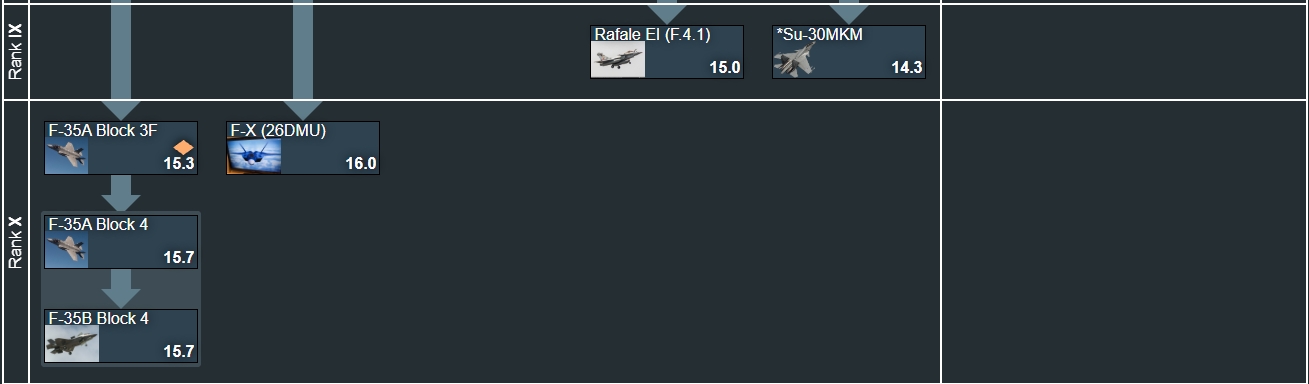
I tried to create a depiction of what top tier for the Japanese techtree would look like up to 5th gen aircraft.

Additional notes
  • I didn’t include aircraft that are still on order or under development like the F-15JSI, Indonesian Su-35 or Thai Gripen E.
  • I decided against new F-15J, since we already have the latest service variants and these can get new weapons though variable BRs for the games current state. But with expanded EW/ECM mechanics there could be potential to maybe add another F-15J fitted with IEWS. I also made the same decision for other aircraft that could receive more advanced weaponry.

The F-35s are placed after the F-15Js, keeping the theme of US-import JASDF fighter aircraft.
They have been split into two standards here, the Block 3F and Block 4. Though more accurate would be TR-2 / TR-3 since while the hardware upgrades are done, full Block 4 software is still under development and not implemented. Still for the sake of the game I propose for them to be split like this:

  • F-35A Block 3F; The Japanese F-35A with TR-2 standard as these were initially delivered. This would be pretty much identical to other Block 3F aircraft and is mainly armed with AIM-9X and AIM-120C/D.
  • F-35A Block 4; The first TR-3 standard F-35s have been delivered to Japan in 2025. Because of the planned Meteor compatibility for Block 4, I suggest that in game this variant could receive the prototype JNAAM missile, which was a joint British-Japanese project with the Meteor missile body and a Japanese AESA seeker, intended for these nations fleets of F-35s and ongoing 5th generation fighter development. It’s a separate aircraft from the Block 3F here, so that ongoing Block 4 capabilities and upgrades might be added to it as they appear, while the earlier model can stay the same.
  • F-35B Block 4; Same as the A variant, but this one can hover.

F-X (26DMU) is placed following the F-2 in the domestic JASDF fighter aircraft line. While the BRs are just rough estimates, I decided to go for a BR similar to what my estimate for the latest F-22 variant would be, but this might be lower considering how restrictive the confirmed loadouts for it would be.

Confirmed loadouts


Potentially it could get ASM-3 Kai on the wings with their secondary air-to-air role, but it still lacks the extensive external weapon loads that other 5th gen aircraft could carry.

Additionally, it might be limited by not having any drop tank options, and instead only relying on shoulder CFTs that can’t be discarded for combat.

I think if they wanted they could also swap F-35 and F-X placement, since role-wise F-X would be better suited in the more air-to-air focused F-15J line, while the F-35s fit in as multirole aircraft behind support fighters like the F-2. It’s really up to the devs to decide here and both could work.

I didn’t put any thoughts into the premiums, but throw in a twin-seat variant like a Rafale DI and it’ll probably be enough. I think not selling any F-35s at this point is also important considering it will be the main end of the line for a lot of nations, so I’d skip 5th gen premiums here completely.

4 Likes

Seeing this pleases me, really hoping this becomes a thing in-game

3 Likes

Excellent visualization; I love this kind of thing!

1 Like

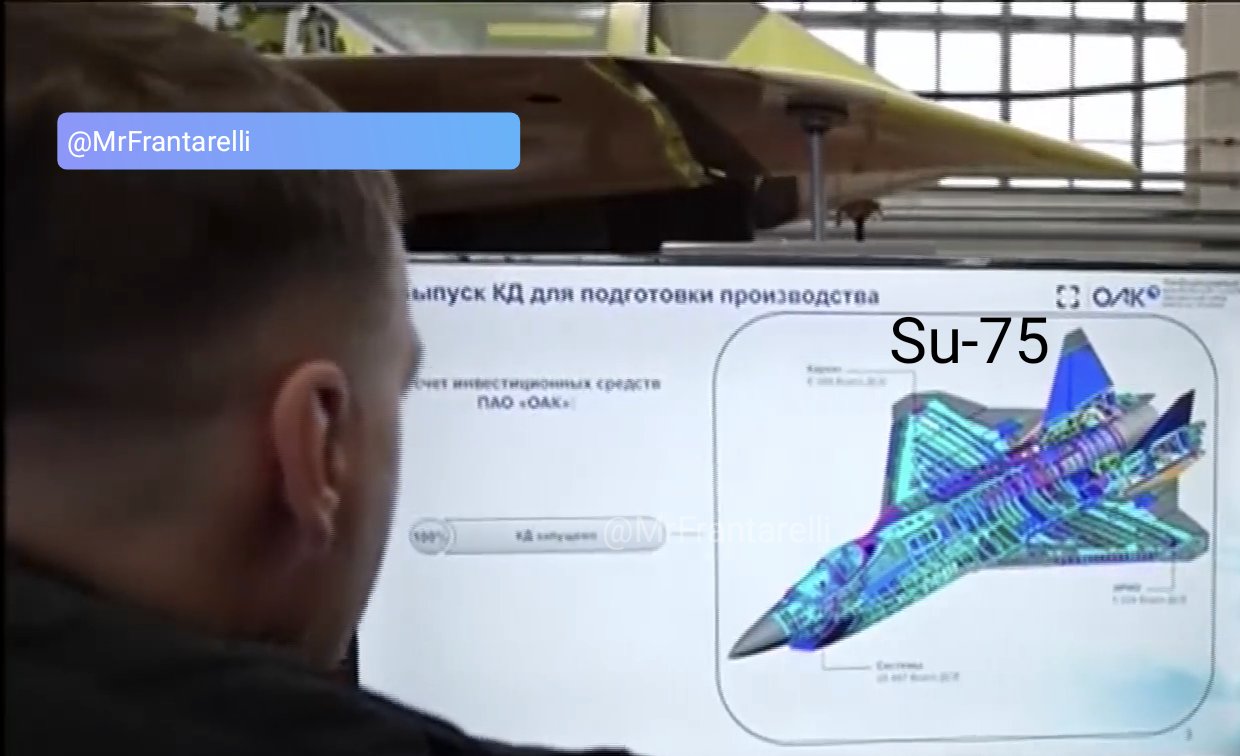
Su-75 prototype currently being manufactured

1 Like

Wow 3 JNAAMs?

1 Like