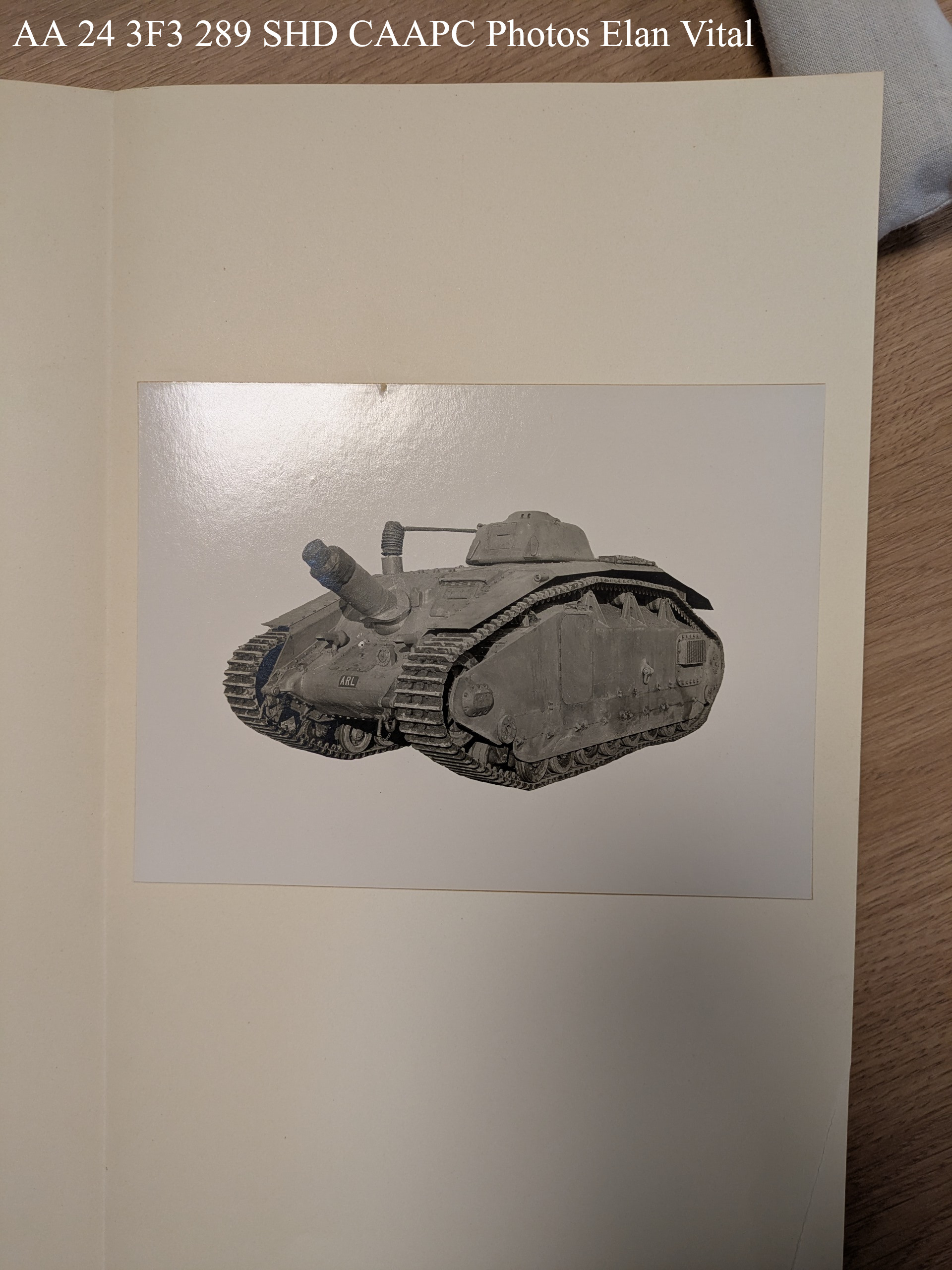
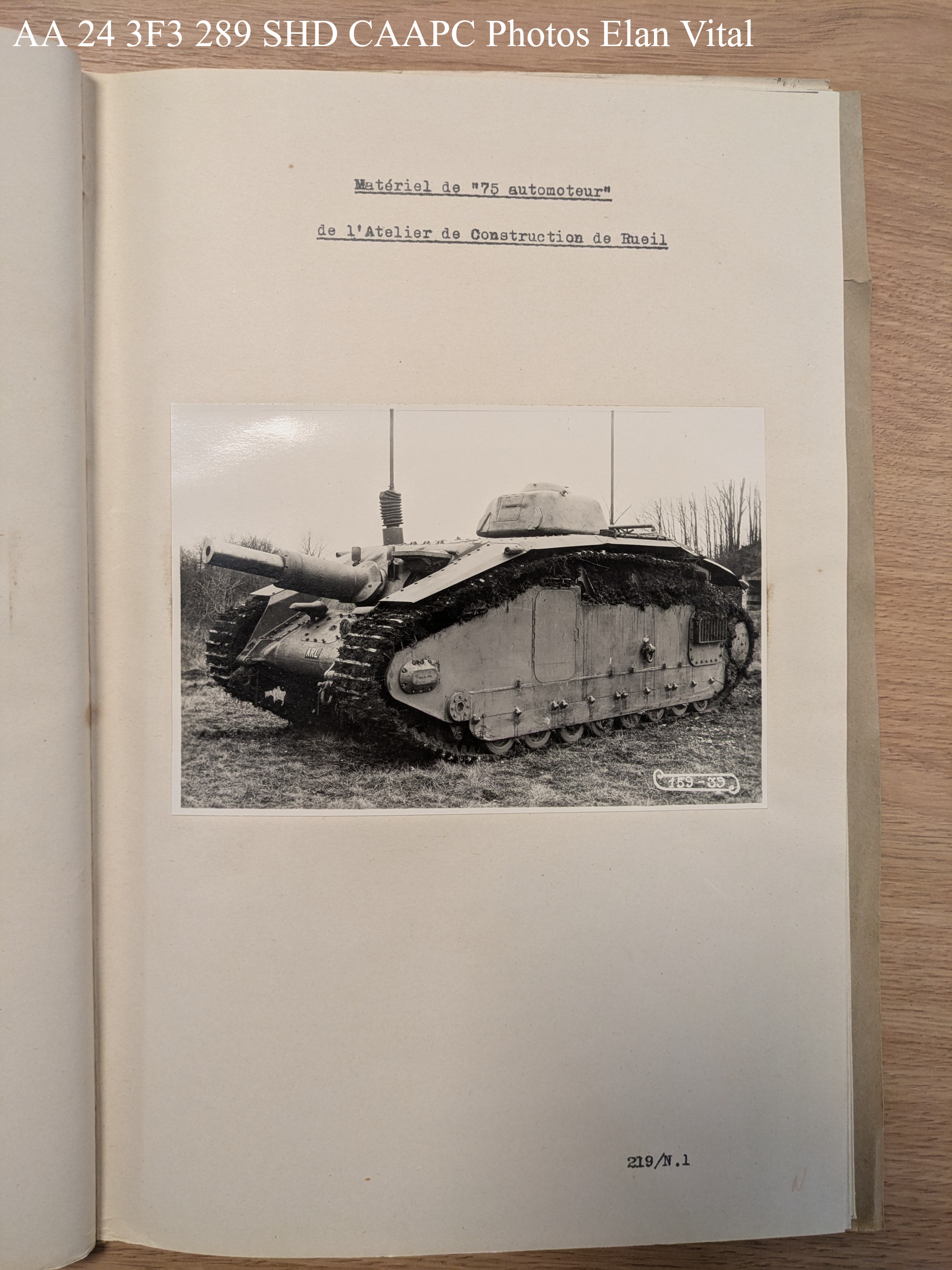
This needs to be added, far too cool to not be introduced. And i can see im not the only one who thinks it looks like it came crawling straight out of 40k. Although i think it looks more like a plagueburst crawler.
2 Likes
Would be nice for France +1
1 Like
Yes, I want this one, I hope it will pierce more than the SaU 40, it will be great to have a French tank piercing more than 100mm.
1 Like
Very cool, more French WW2 stuff
2 Likes
If you’re talking about armor penetration of the gun, it can’t pen more than 100mm, at least not with conventional rounds, it can probably pen around that using APCR rounds.
It would be implemented as a low br tank, a sort of improvement over the SAU 40 so around 2.0 to 2.7. And it will not have a insane APHE round, if you’re wondering. It’s the same gun as the SAu 40
I’m currently drafting an addendum to this suggestion with the approval of OP using additional primary sources and documentation he wasn’t aware of when making the suggestion.
What I’ll say for now is that, even with experimental ammunition, it has sub-90 mm of penetration, which could justify a BR of 2.7.
There is theoretically nothing stopping it from using the Char 2C’s overpressure APHE round since it was the same cartridge. It’s just an older round that would be non-standard by the time the ARL was tested.
1 Like
+1 Weird French thing.
France please don’t change with your strangely forward thinking designs that are a bit too raw and problematic.
(FYI this is an issue with some French engineering development jumps way to early on something has issues and rest of the world leap frogs them a few years later when it’s baked) the French car industry is infamous for this
battle loaf
+1 this would be an excellent TD for france 🤩
I didn’t forget about this. I just have poor work ethic :P
Soon™
I’ve looked through digitized documents and reports on the SAu 40, ARL V39, and experimental ammunition. I’ve found lots of northworthy information to discuss. I’ve already discussed this information with @Nostalgistic. This reply could be treated as an addendum to the initial suggestion. I’ve included the linked sources at the bottom.
I’m not deeply familiar with French, and have been dependent on Google’s image translator to analyze source material, so I might have misinterpreted some information. I have discussed some of it with native French speakers, but far from all of it, so take my post with a grain of salt. There’s also lots of information I didn’t touch on or might have overlooked. Feel free to look through the linked sources for yourselves, all of which are also publicly accessible through links found on the Tank Encyclopedia’s Discord server.
Name
The ARL V39 is referred to mainly as “75 Automoteur ARL” in most documentation, from the trial report to manuals. I’m not sure where the ARL V39 name even came from, though apparently it also went by ARL V1, according to Elan Vital, the individual responsible for scanning most of the sources I’m using.
The SAu 40 is a somewhat similar case, going by “75 Automoteur SOMUA”, though I do know that the SAu 40 designation was to be its designation once it was standardized as during production.
I would encourage the use of the “75 Automoteur *X” (or shortened to “75 Au *X”) for both vehicles, since this is how the prototypes were largely referred to as during testing. Many major changes were requested before the vehicles could be adopted for service, which is when new designations like “SAu 40” would have come into play.
For the sake of avoiding confusion, I will just use the most well-known name for the duration of this post.
Crew Composition
The ARL V39 had a crew of 5. A commander, two loaders, a driver, and a radio operator.
The role of gunner was divided between the driver and radio operator. The driver and radio operator had their own 4x gun sights, gun elevation and traverse controls, and firing levers. The driver is actually noted as being the primary gunner, while the radio operator was only the assistant gunner. The driver’s gun controls had to be disengaged to let the radio operator aim the gun. In-game, the dual gun controls would allow the driver to quickly take control of the gun if the gunner is killed, similarly to commander override on modern vehicles.
The loaders are positioned on both sides of the gun. The loader to the right of the gun was designated as the assistant loader, as his job was to remove rounds from the rack and prime cartridges. The loader to the left was responsible for loading the rounds into the gun, which was facilitated by the automatic breech mentioned earlier.
The commander was in the turret, and was responsible for coordinating fire and guiding the vehicle. He had access to a rangefinder with a magnification of 14x and a binocular periscope with a magnification of 8x.
Layout and Armor
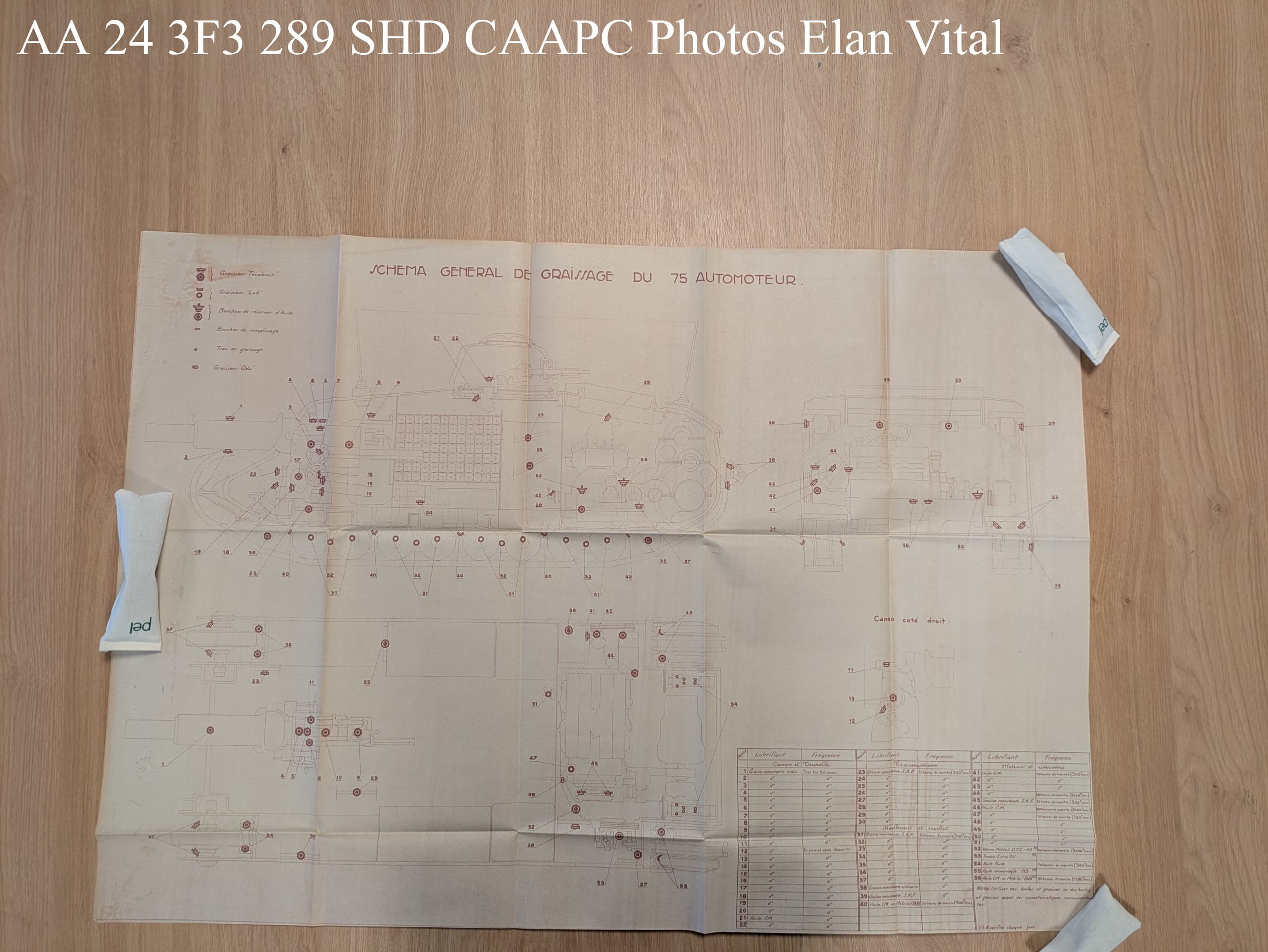
The crew compartment was divided from the engine compartment by a wall, 15 mm thick according to earlier drawings, which I’m fairly sure was referred to as being made of duralumium in the trial report. The crew compartment was noted as being less workable than the SAu 40’s. It was narrower and placed the commander at greater risk to ejected shell casings. The floor was made of 10 mm thick sheet metal, with the gun pedestal mounted on it at the front of the vehicle According to the comparative trial report, the prototype carried 184 rounds of 75 mm ammunition, split between 92 round racks on each side, giving it a very large ammunition reserve. They do round up to the 200 in the same report, and other documentation mentions 200 rounds, so it’s unclear if they actually altered, or intended to alter, the ammunition racks to achieve this quantity.
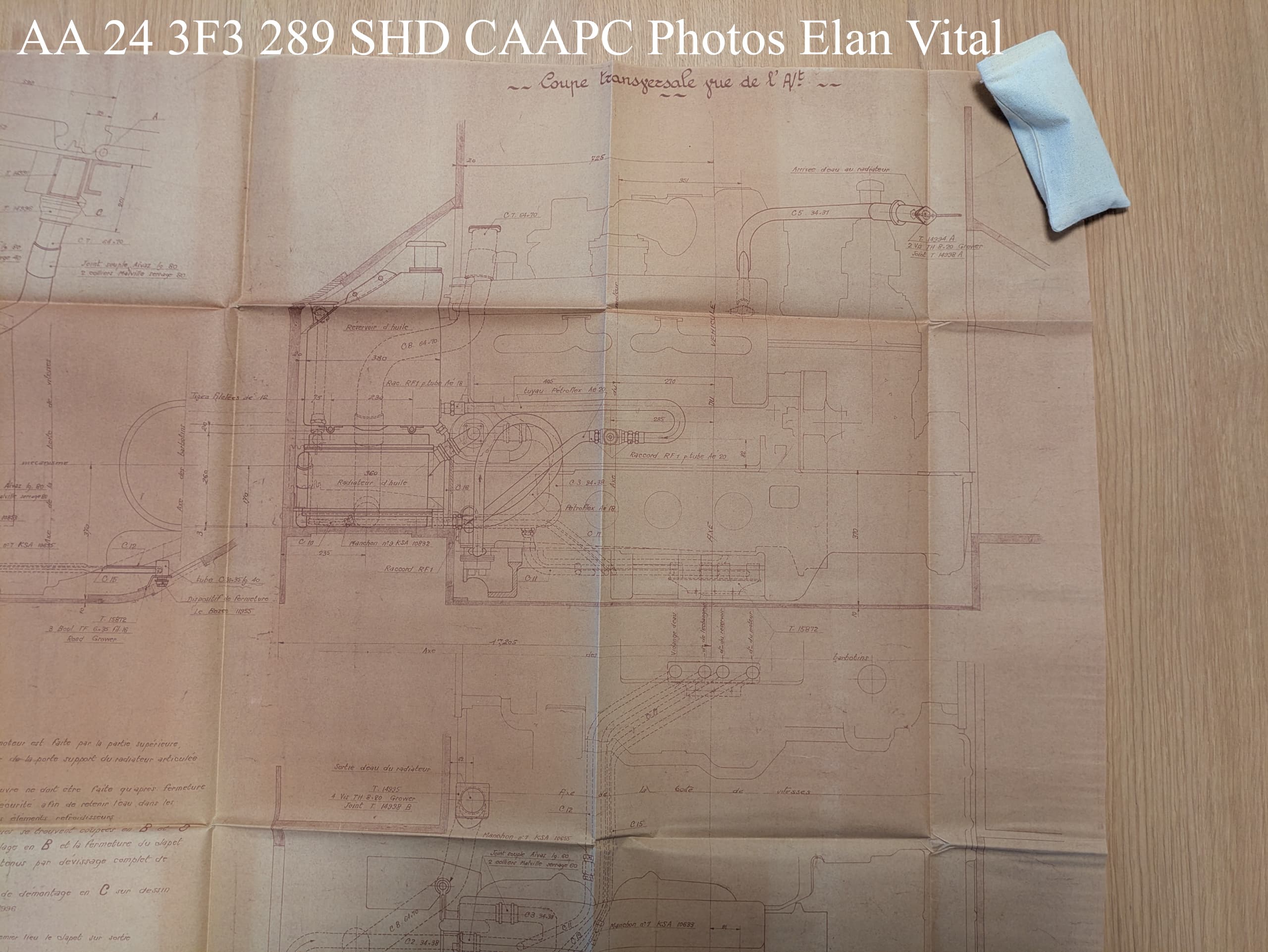
Most of what Nostiglic has listed is accurate for the armor, though I have some more up-to-date drawings to give a more accurate picture of where the hull transitions from 40 mm to 50 mm on the front. While the specified side thickness is 30 mm, drawings seem to suggest that all but the sponsons were just 20 mm thick, with additional ~15 mm screens extending from the bottom and front of the sponsons. It’s unclear if this remained the case in the actual prototype. Post-trial documentation only ever states the side armor is 30 mm.
APX Gun and Standard Ammunition
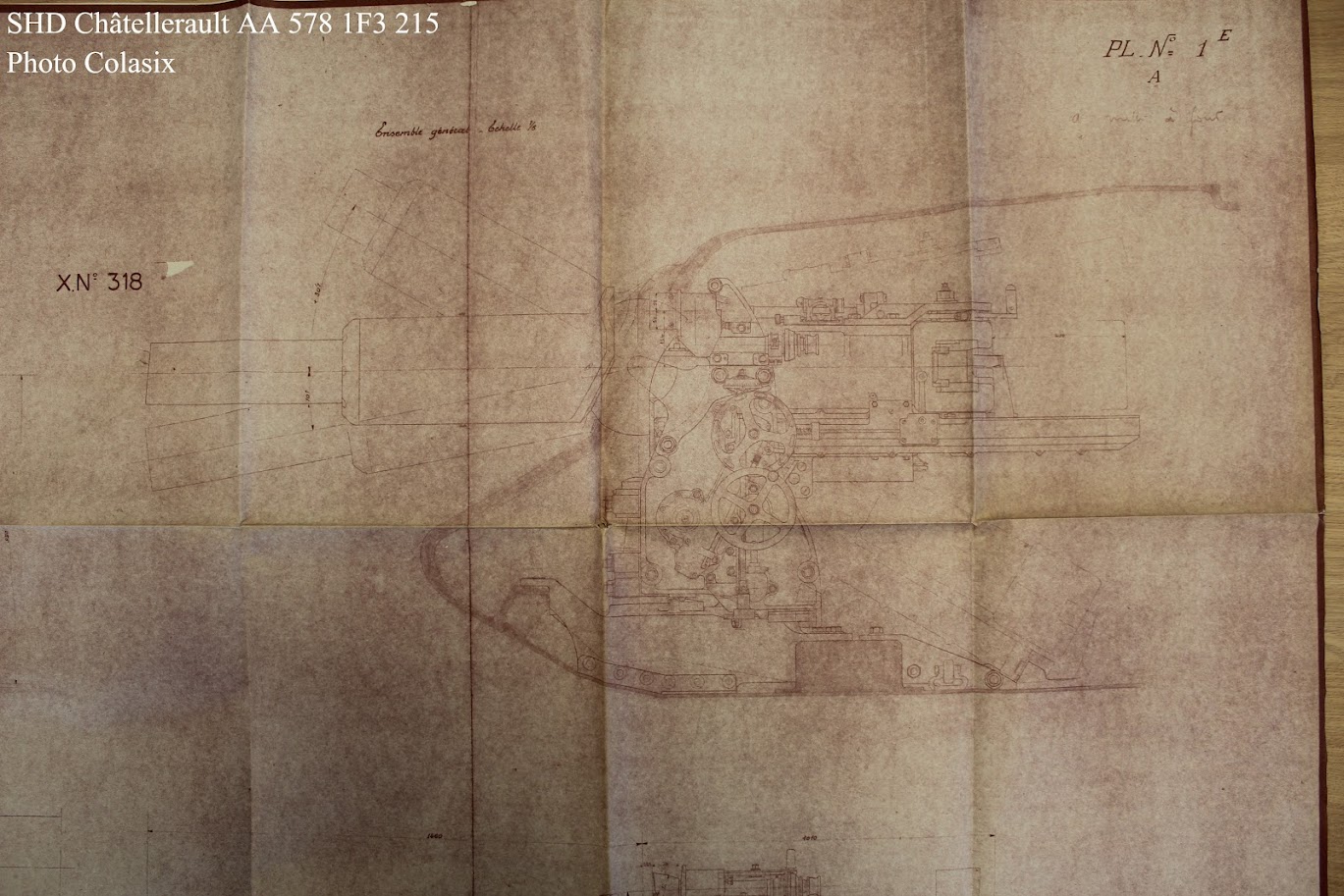
The ARL V39 and SAu 40 used the same gun, which was removed from the ARL V39 and fitted to the SAu 40 during trials. It is described as a variant of either the Mle.1929 fortress gun, or the subsequent Mle.1932 or 1933 casemate guns. These latter are variations of the Mile.1929, which is itself a direct descendant of the Mle.1897. The Mle.1933/32 featured shortened L/32 barrels instead of L/36 barrels to reduce vulnerability to enemy fire when mounted into casemates on the Maginot Line. These guns received new breech blocks in 1939, but this modernization was noted as being absent on the APX gun, likely due to the presence of an automatic breech. This enabled the crew to achieve a maximum rate of fire of 10 rounds in 39 seconds during trials while it was mounted in the ARL V39, which the was still noted as being poor. The APX gun featured an even shorter barrel than the casemate guns, at L/30.

This gun used the same cartridge as the Mle.1897. It was intended to fire two ammunition types, Mle.1910M APHE and Mle.1915 HE. The Mle.1910M was the standard antitank shell at the, and is already found in-game SAu 40, B1 Bis, and St-Chamond. The velocity was slightly inferior when fired from the shortened APX gun, at 555 m/s instead of 570 m/s (meaning the SAu 40 is overperforming atm).
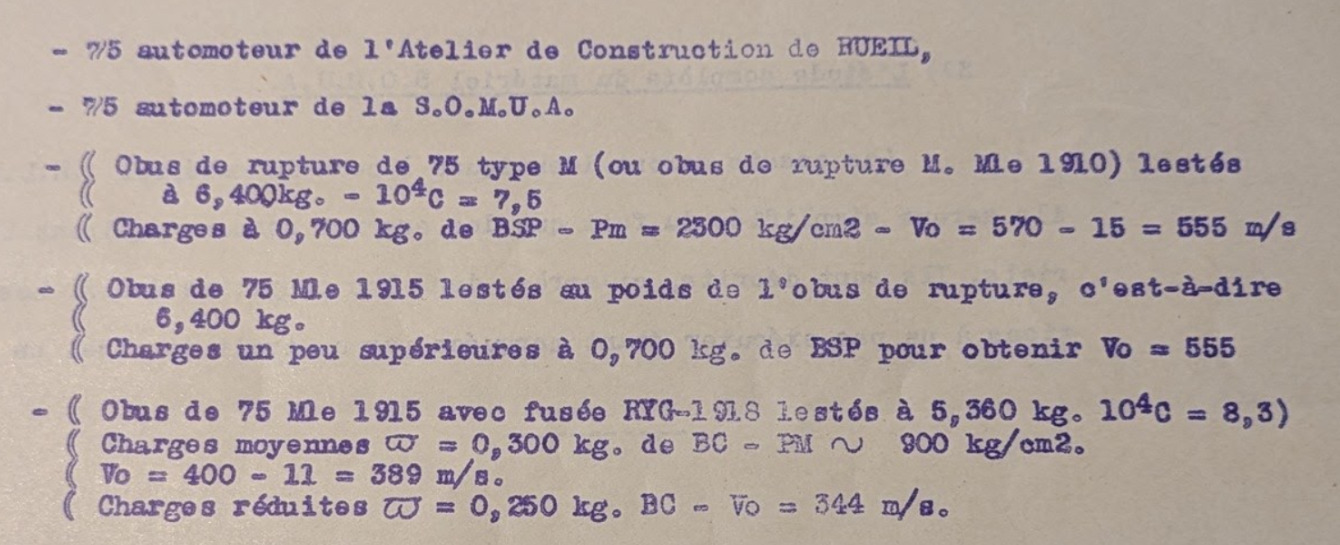
The Mle.1915 HE is the same as the HE round found on the B1 Bis’s 75 mm gun, but with a seemingly different fuze, resulting in a lower weight of 5.15-5.37 kg instead of 5.55 kg. It has a lower velocity of 344 m/s and 389 m/s with the reduced and normal charges respectively. While they did want to use the lower charge to facilitate indirect fire, the lower charge was often insufficient for engaging the loading mechanism during trials, so they planned on sticking to the higher charge.
Since it shares the same cartridges, most Mle.1897 rounds should theoretically be compatible with this gun, so there are many more rounds that could be added, though their velocities would need to be determined through calculation rather than historical data.
Canon-obusier de 75 mm modèle 1929
Brandt 75/58 APDS
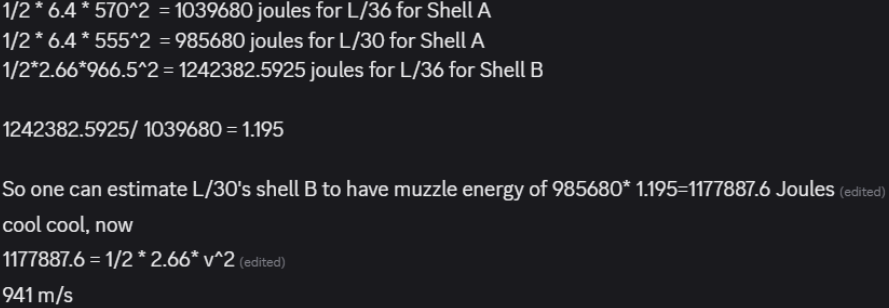
Some new documentation on Brandt ammunition has recently come to light, including some material on the 75/58 APDS. The round weighs 2.66 kg with the sabot. In flight, the 58 mm projectile weighs 2.12 kg, The core weighs 1.855 kg and is 53 mm in diameter. It achieved a velocity of 966.5 m/s when fired from the Mle.1897. While the in-flight projectile does seem to closely resemble ABCBC, the notable difference in diameter between the core and cap makes it more accurate to model as APCR. French documentation only reports an average of about 96 mm flat pen at point blank, but calculating it as full caliber APCBC in-game yields much higher performance of 116 mm. Calculating it as APCR yields about 88 mm of penetration, which is still a bit off, but much closer.
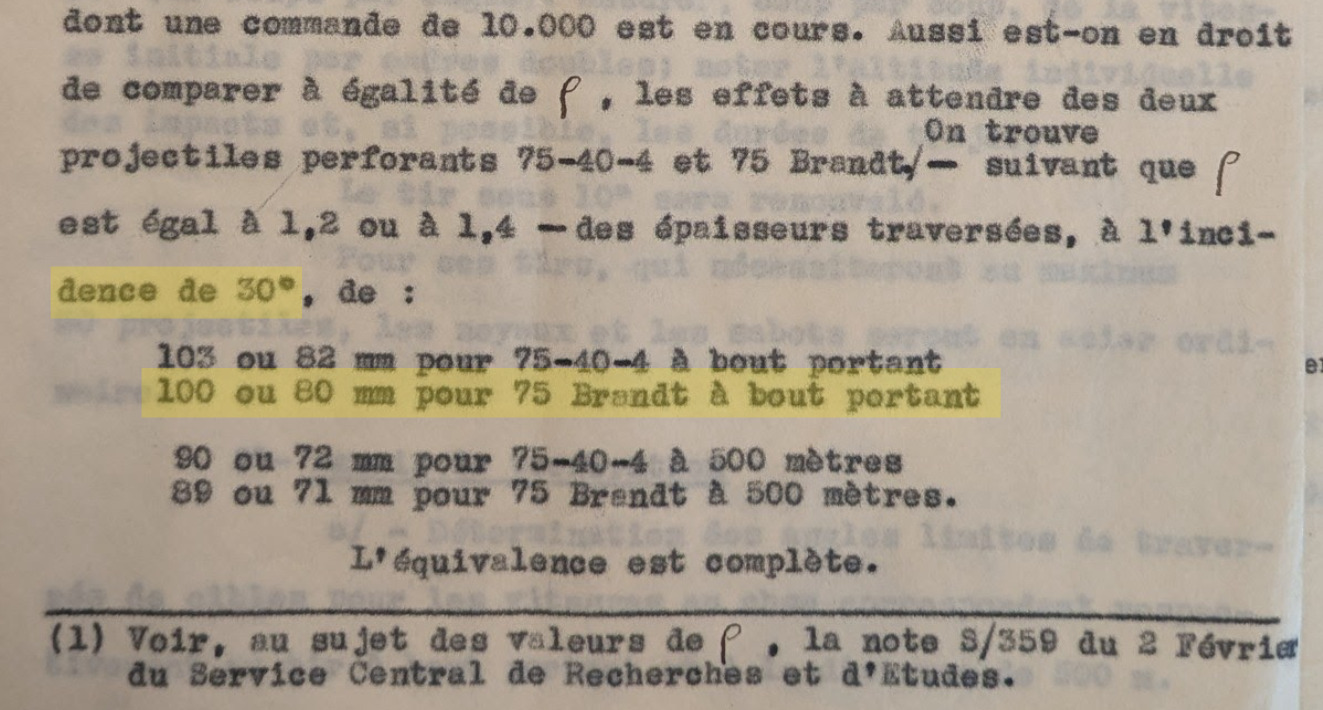
From the APX cannon, the velocity would be reduced. According to a more ballistically inclined friend of mine, @minibaul , the muzzle velocity would be approximately 941 m/s using the known Mle.1910M velocities, and the velocity of the APDS from the Mle.1897. This is, of course, just on-paper, but should be about right given the reduction in velocity the APHE and HE experience when fired from this gun. Using the calculated muzzle velocity, the penetration would be about 84 mm at 10 m according to the DeMarre calculator.
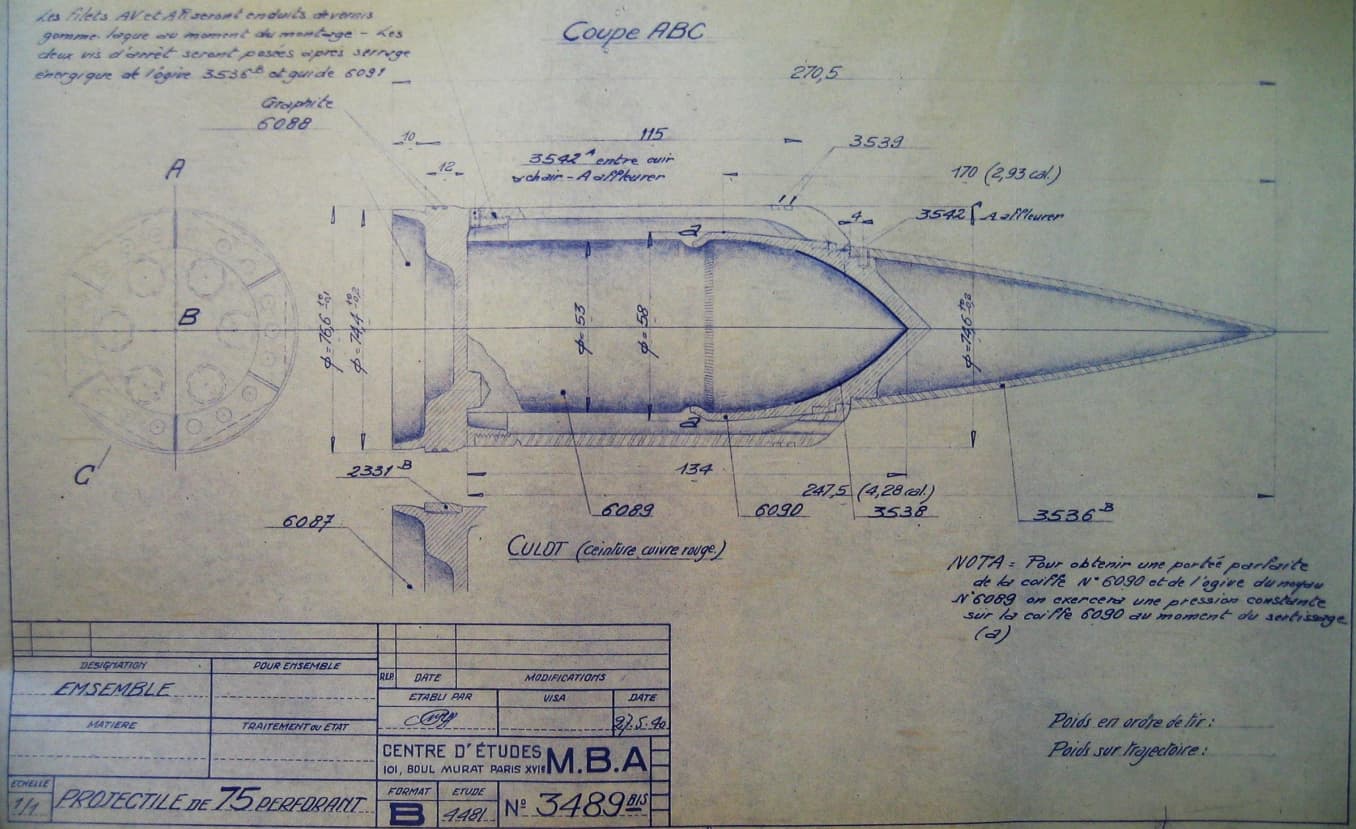
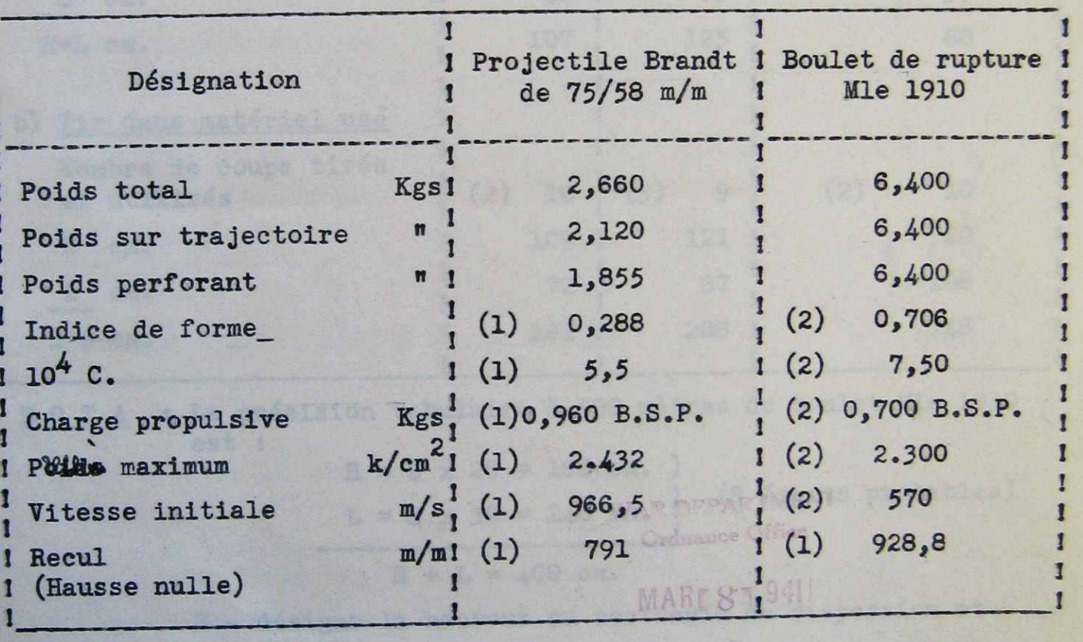
https://drive.google.com/drive/folders/1cJcnoslsL4tlnM6WIgu9CeI0MXUoUO0A?usp=sharing
https://drive.google.com/file/d/19tsAcnfDfqeipKknKJlAk3D2MCaPugqO/view?usp=sharing
https://drive.google.com/file/d/1hWdRqnkn-jgq28c0pg5cM7odiycNQufo/view?usp=sharing
https://drive.google.com/file/d/1w4ro536UsYc7DALWCcmMfF40fOkbWhlV/view?usp=sharing
Mle.1940 (PCOT-40) APCBC
The designation “PCOT-40” seems to be a post-war designation for the round. The war-time designation seems to be “Mle.1940”, which is in-line with most French ammunition designations of the era. From what I’ve been able to find, it was meant to be a replacement to the Mle.1910M APHE round. 50,000 rounds were ordered, though I’m unsure if this was fulfilled in any capacity. At minimum, earlier experimental versions of the round were trailed, which is good enough for them to be added to the game.
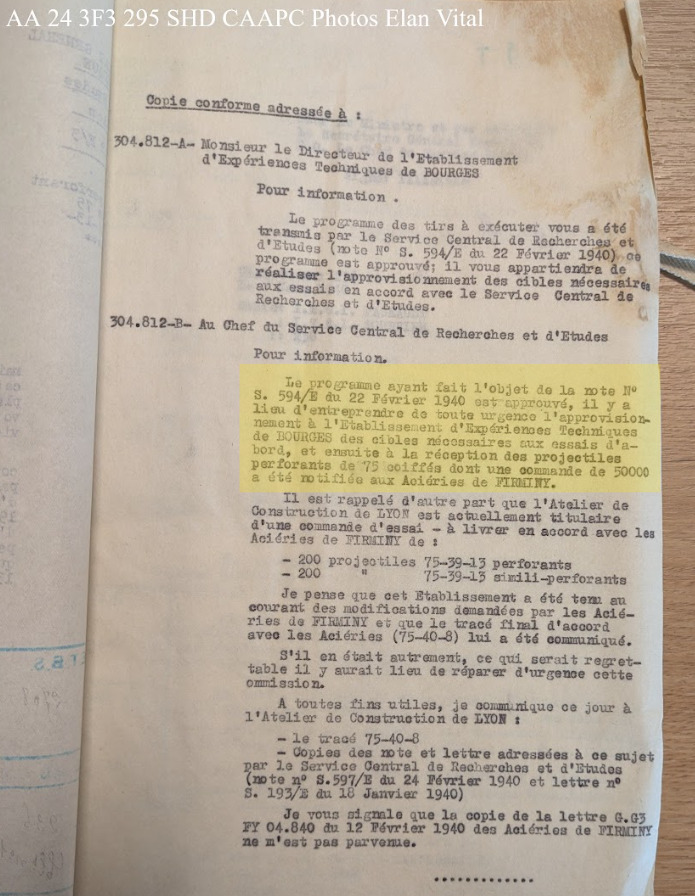
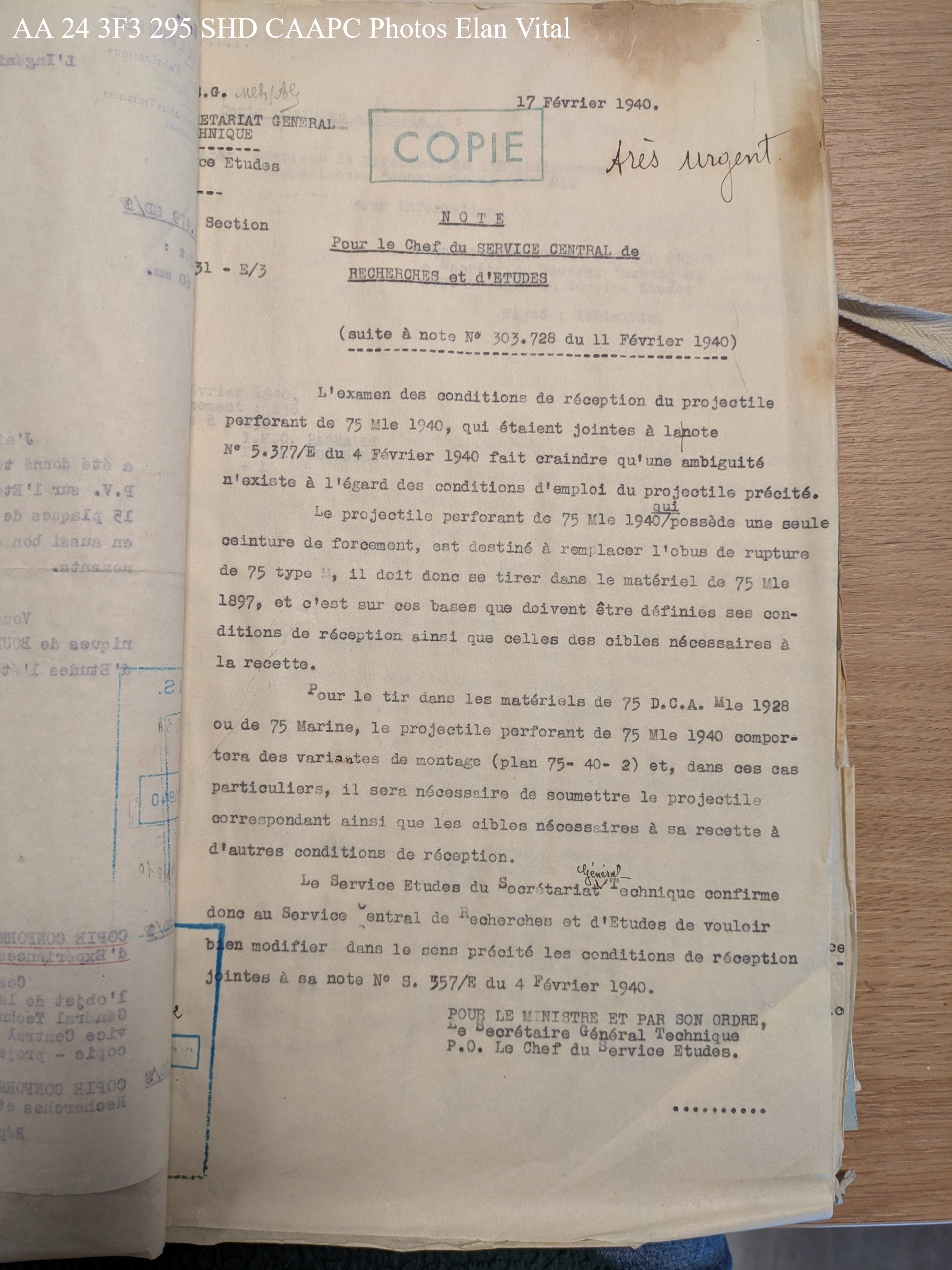
As a round of similar weight with similar propellant, it did have roughly the same velocity as Mle.1910M, at around 570 m/s when fired from the Mle.1897. They would likely not want to have to roll out new gunnery instructions, ballistic tables, or updated sight markings for one of their most ubiquitous guns, hence why they would try to keep the ballistics similar between the old and new round.
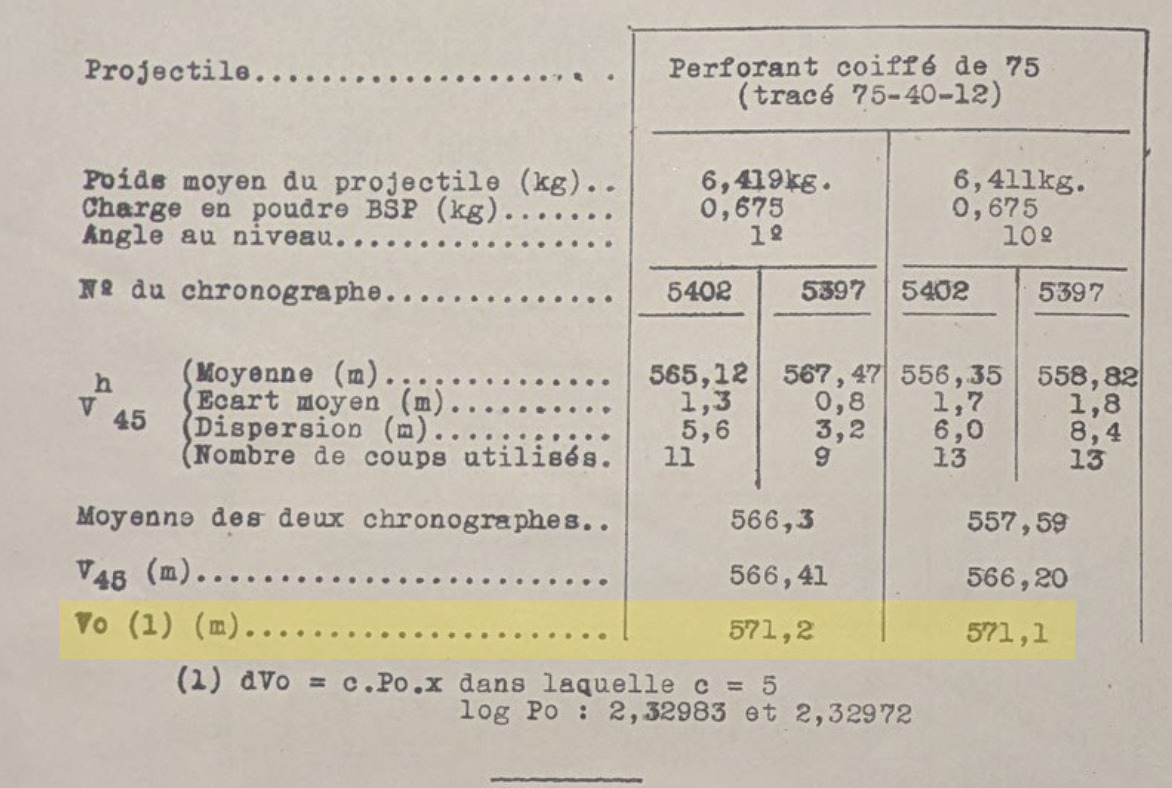
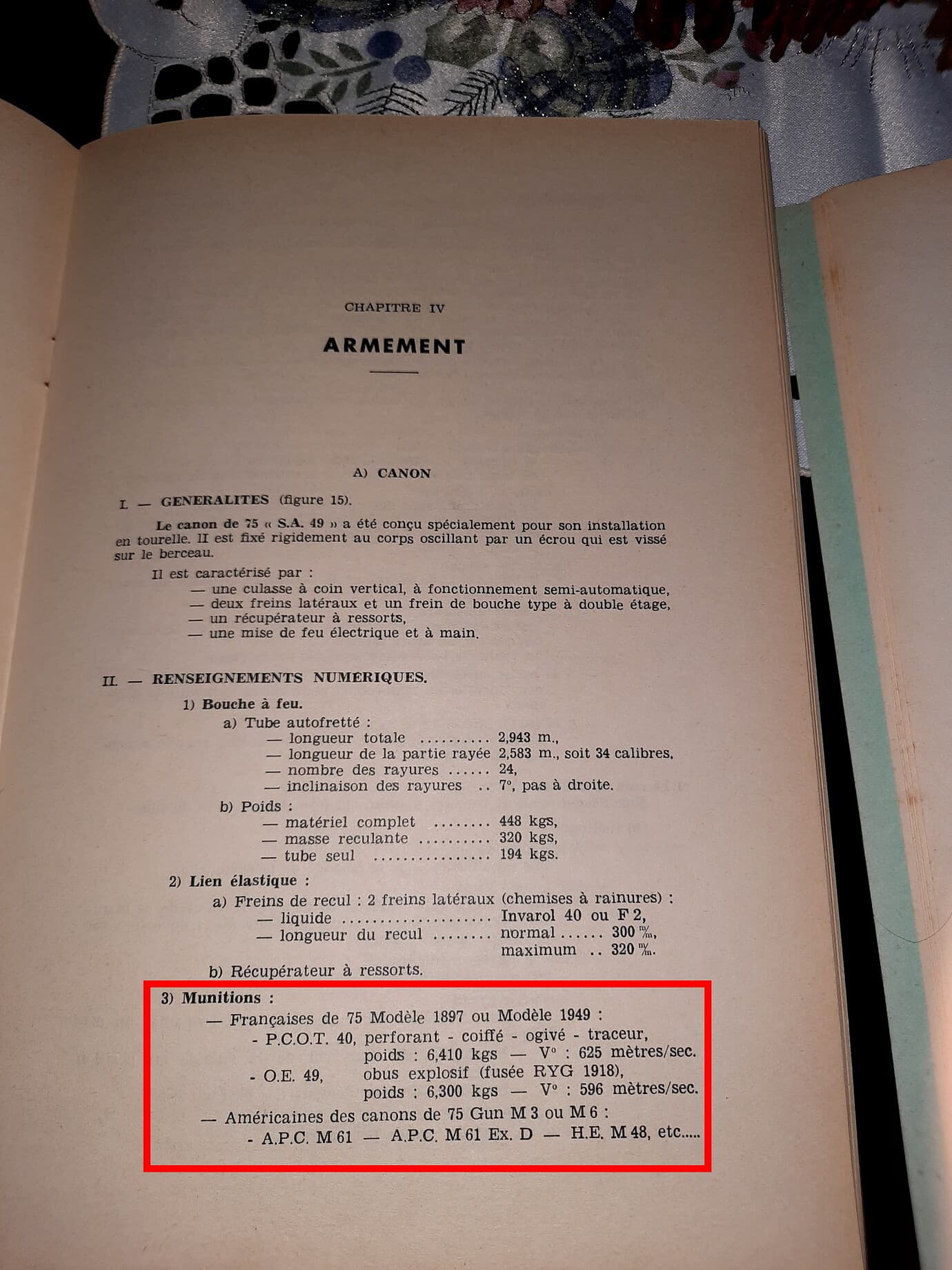
The 625 m/s figure likely only applies to the post-war PCOT-40 when fired from the SA49, which is functionally just a 75 mm M3 clone, much like the OQF Mk.V 75 mm. The 75 mm M3 (and the SA49 by extension) was longer than the Mle.1897, and used a heavier propellant charge for its ammunition. This would explain why this round achieved higher muzzle velocity than the Mle.1897.
Since Mle.1940 has more or less identical muzzle velocity to the Mle.1910M round, we could expect it to have about 555 m/s when fired from the APX gun of the ARL V39 and SAu 40, yielding about 87 mm of penetration at 10 m according to the DeMarre calculator.
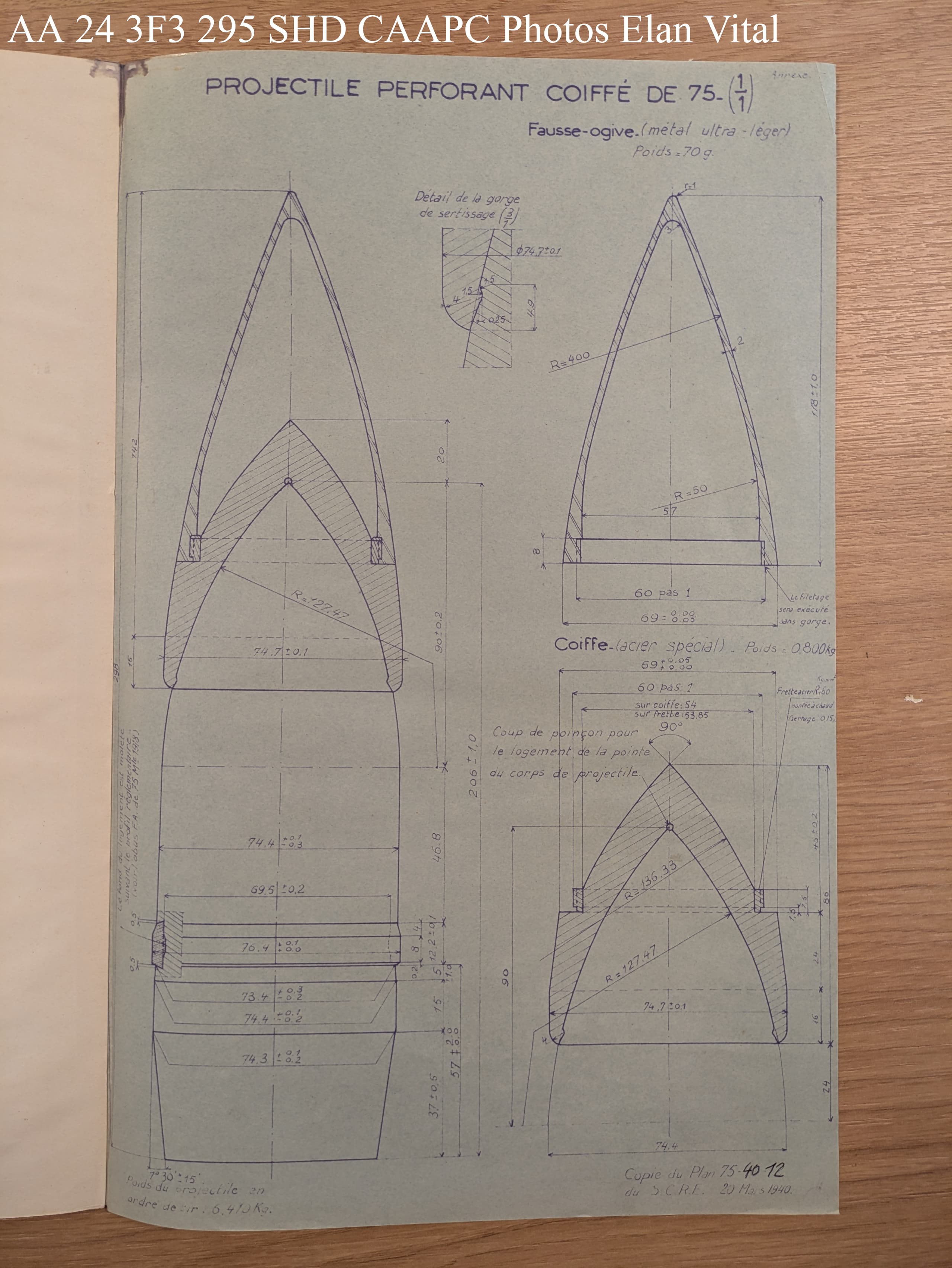
AA 24 3F3 295 - 75,90,105mm antitank ammunition research - Google Drive
-
Various documents related to the development and testing of the round
-
640 m/s figure applies only to when fired with a higher charge from a longer 75 mm gun being developed
AA 24 3F3 293 - 640_700 ms 75mm gun projects - Google Drive
- 640 m/s gun mentioned above is discussed here
AA 102 2F2 3 - 75, 47 and small arms AP ammunition testing - Google Drive
- Additional ballistic testing of the Mle.1940 round as well as some other shells
The ARL V39 is a very interesting and capable SPG overall, but there are some hang ups we have to bear in mind. The gun can’t achieve over 100 mm of penetration, even with experimental rounds, and it’s possibly not even .50 cal proof from the sides. It has some tricks up its sleeve, such as the dual gunners, high RoF, and rangefinder, but these features only take it so far. I’d argue a BR of 2.7~3.0 would be logical, as it’s essentially an early StuG with bells and whistles at the expense penetration.
SAu 40 Note
With all this in mind, I’m sure the SAu 40 does look rather underwhelming in comparison, but many of the features I’ve discussed also apply to the SAu 40. I’ve recently filed a number of bug reports on it, which I intend to bring more attention too very soon in a separate post elsewhere on the forum.
Sources
I won’t list the other ammunition-related documents I’ve already linked in their respective spoilers here because I don’t feel like it :P
AA 24 3F3 289 - ARL V1 and SOMUA 75mm SPG - Google Drive
-
“75 Automoteur ARL - Notice Provisoire Sur La Description, Le Fonctionnement Et L’entretien Du Matériel - (canon non compris) - Photos”
-
ARL V39 Schematics
-
“Question No.219.1 - Note No.1 - 75 Automoteurs”
-
Comparative trial report
-
Misc related stuff
https://drive.google.com/drive/folders/1B43STgFGCV5aLMOQLWDbHOxJbzEg1dAt?usp=drive_link
- “Matériels De 75 Automoteurs Étude”
https://drive.google.com/drive/folders/1NRXiZqM7daaCB-llQcXUHMwL3lFyN8mS?usp=drive_link
-
“Commission Des Matériels De 75 Automoteurs. - Procès-Verbal De La Séance Du 27 Septembre 1939.”
-
Plans for adopting the SPGs into service
https://photos.app.goo.gl/6KvGTT6BNf9mbsd88
-
ARL V39 Schematics
-
“Notice Sur Le Matériel De 75 Automoteur - Texte” [AA 578 1F3 215]
- Note that the first page states the incorrect muzzle velocities, only to correct this on a later page. This documentation error was even brought up in the trial report.
-
You have to scroll down a little to find the relevant scans
Credit goes to Elan Vital and @Colasix for digitalizing the relevant documents.
7 Likes