- Yes
- No

History
History
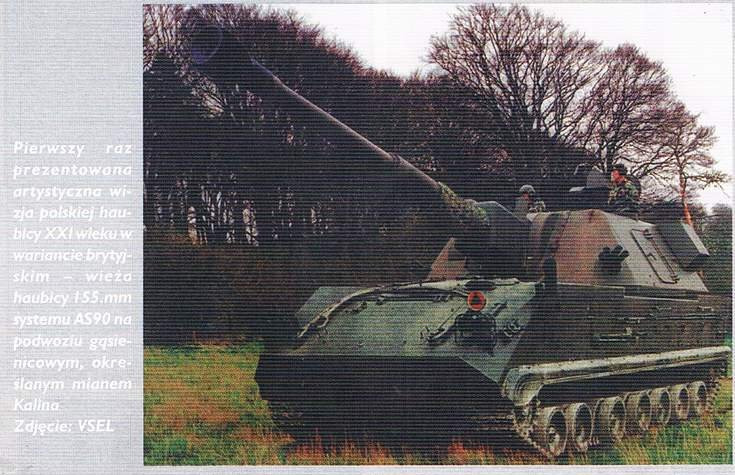
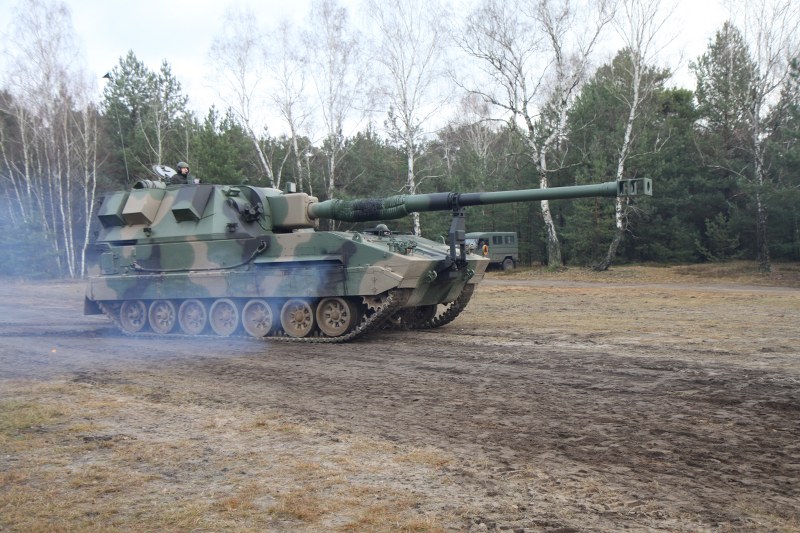
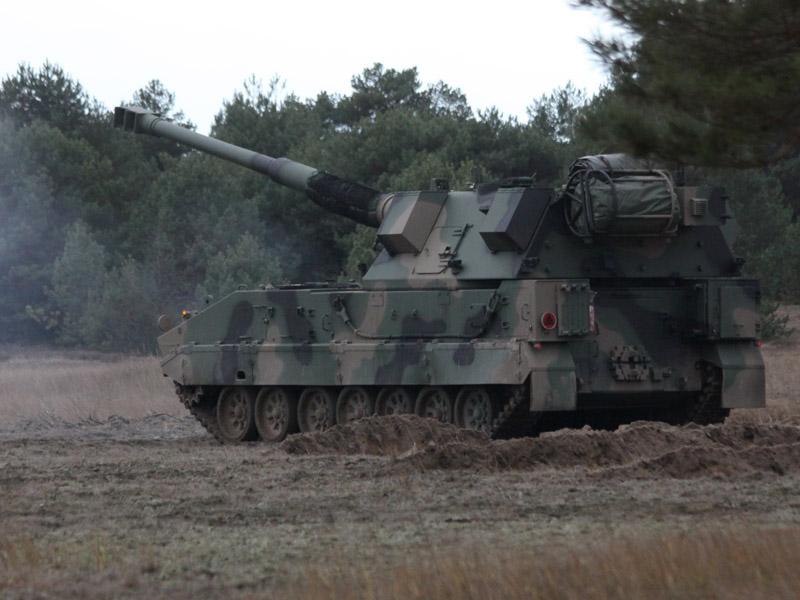
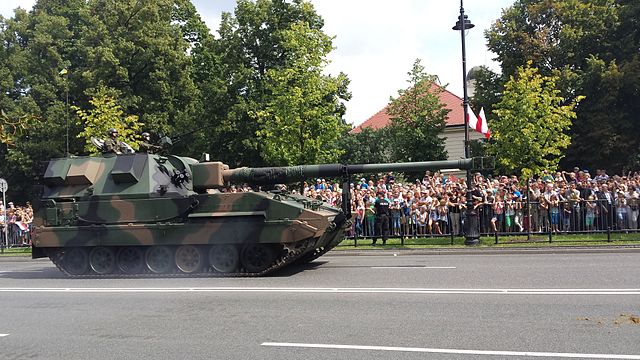
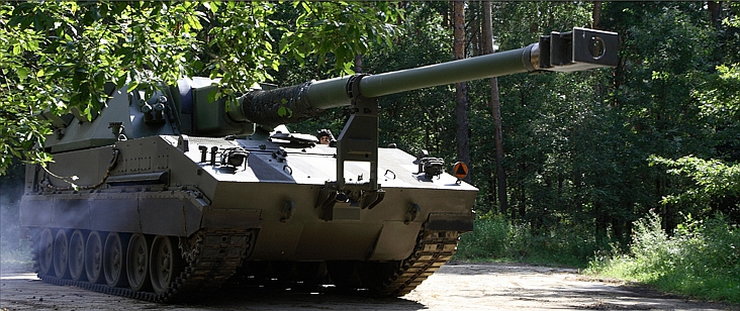
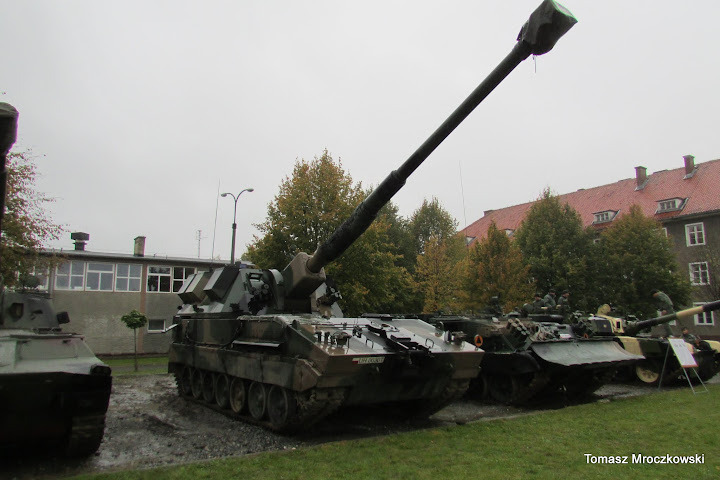
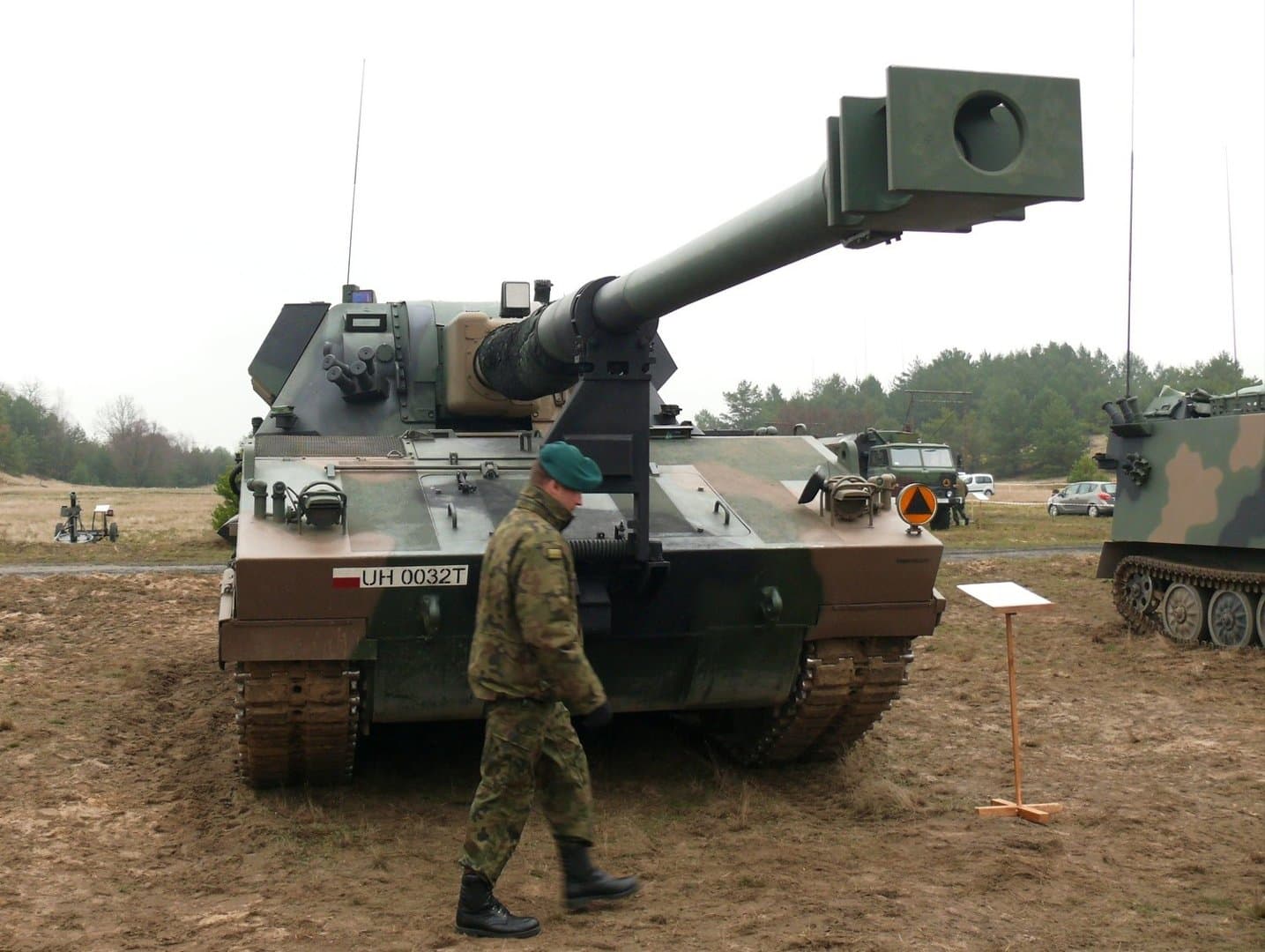
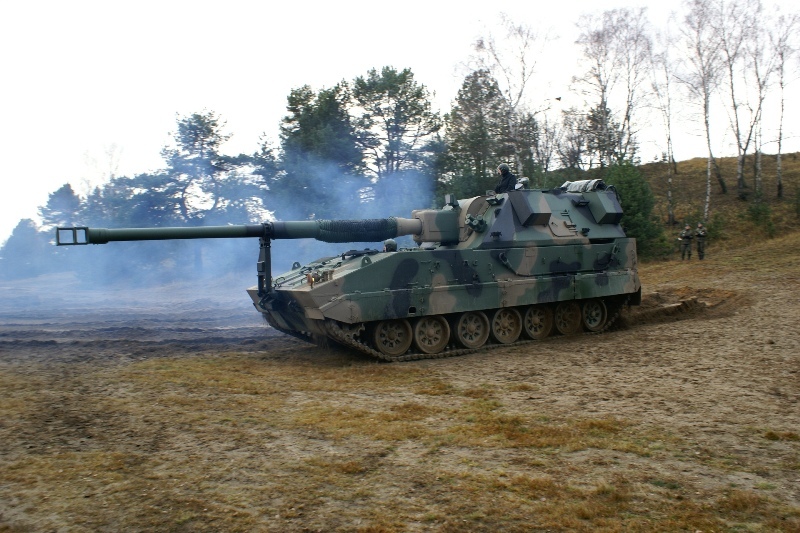
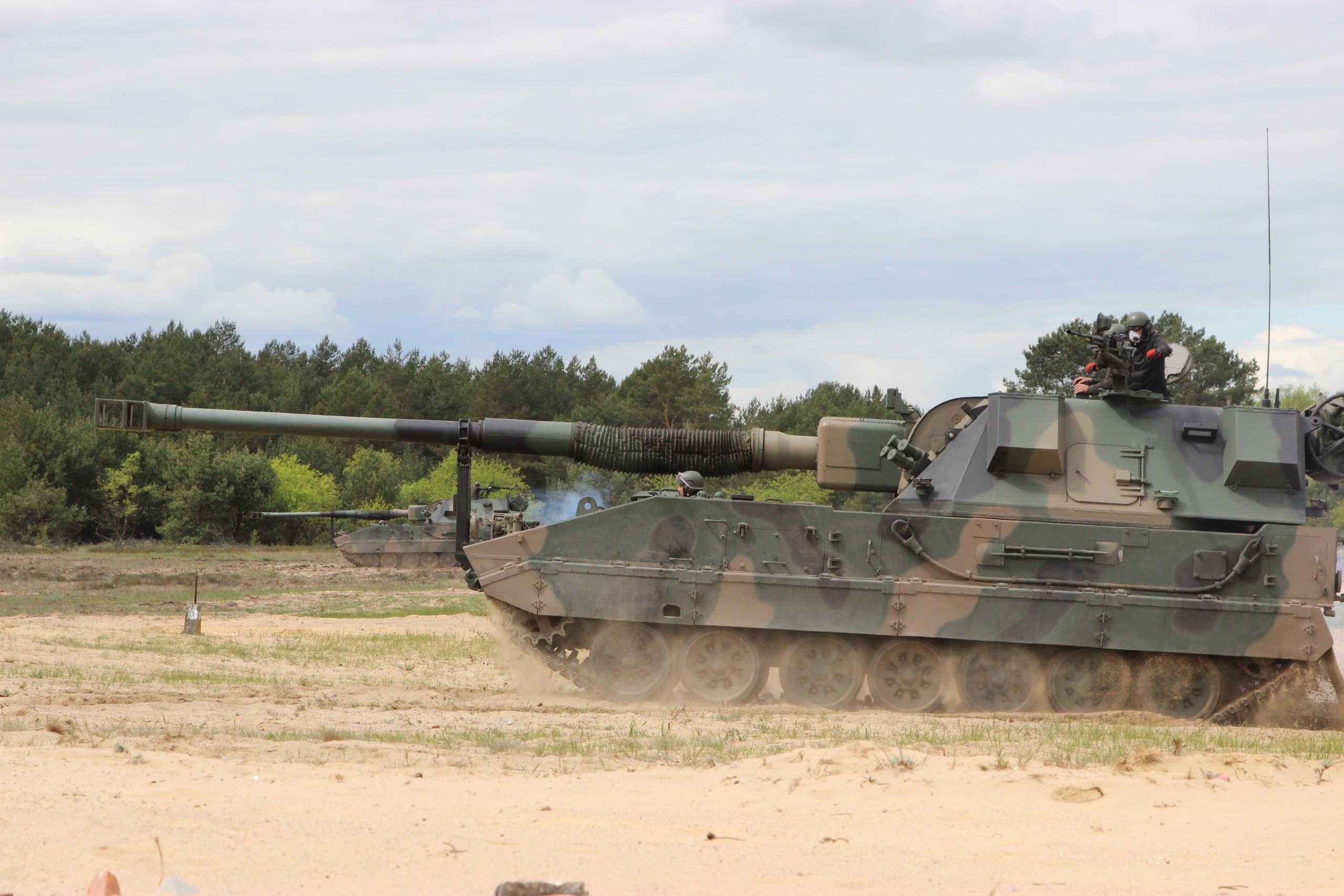
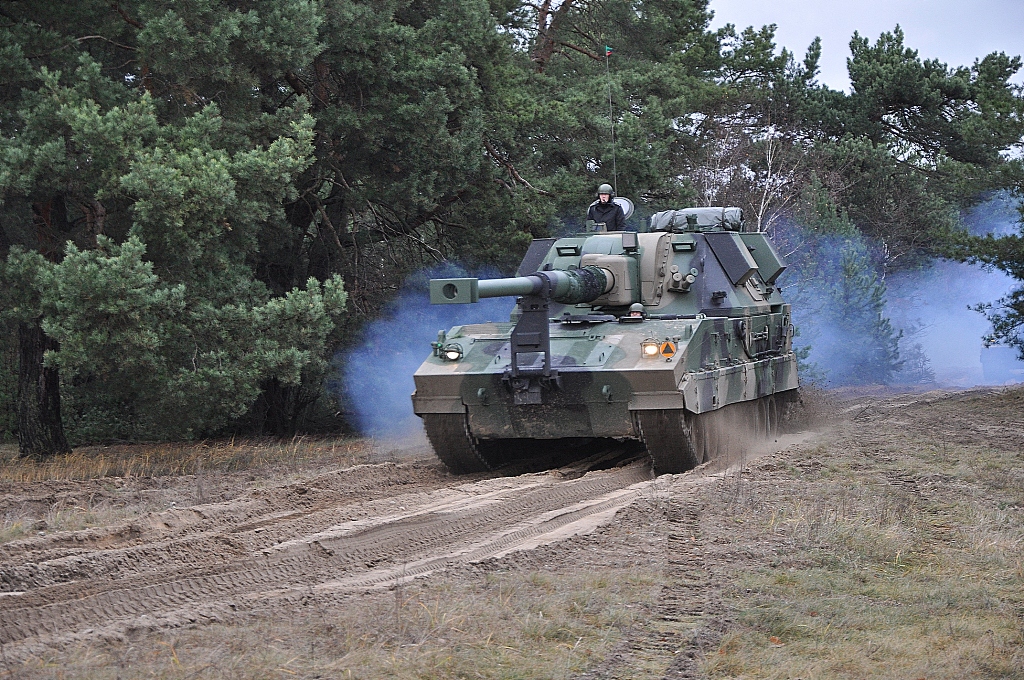
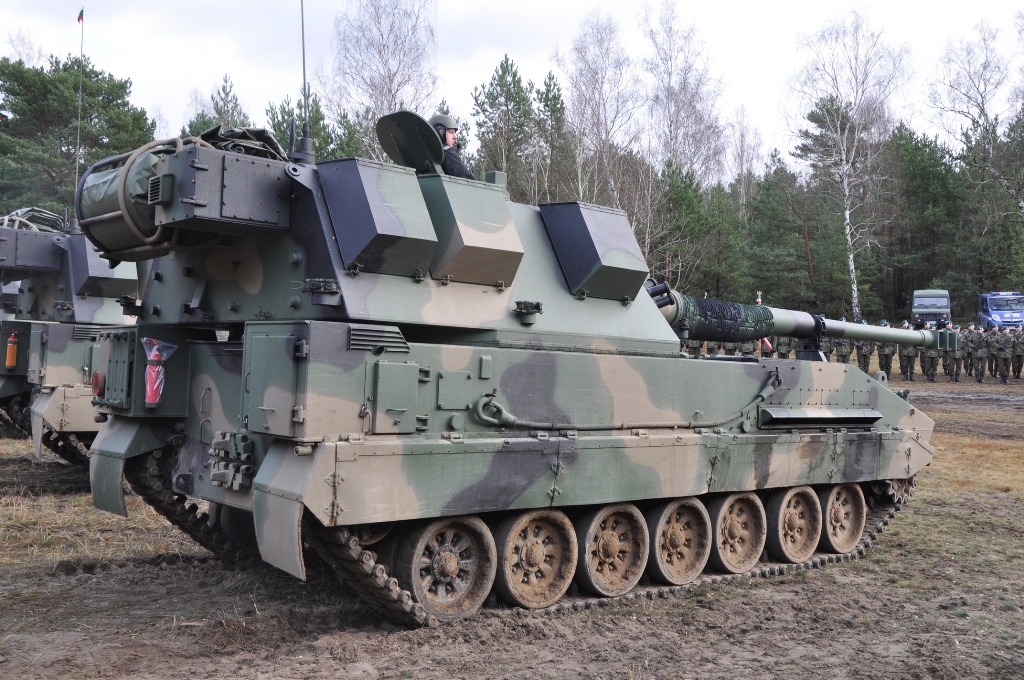
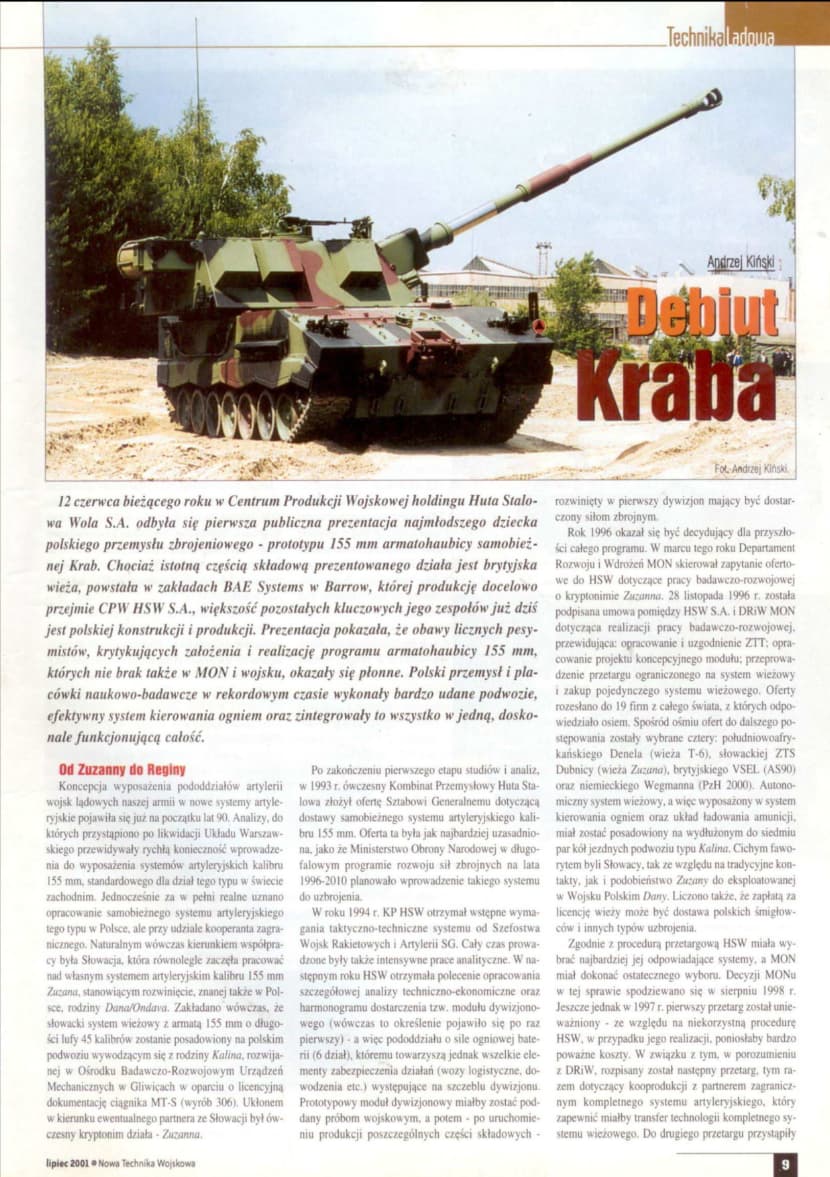
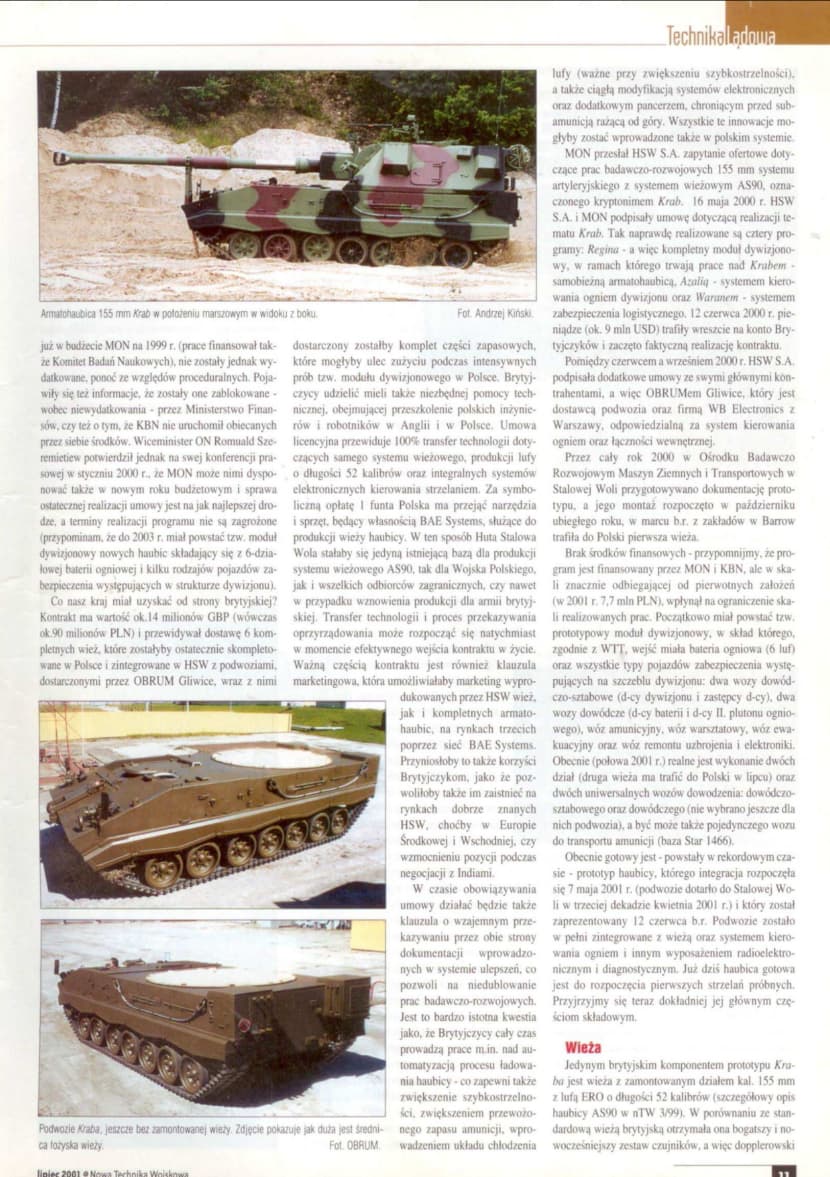
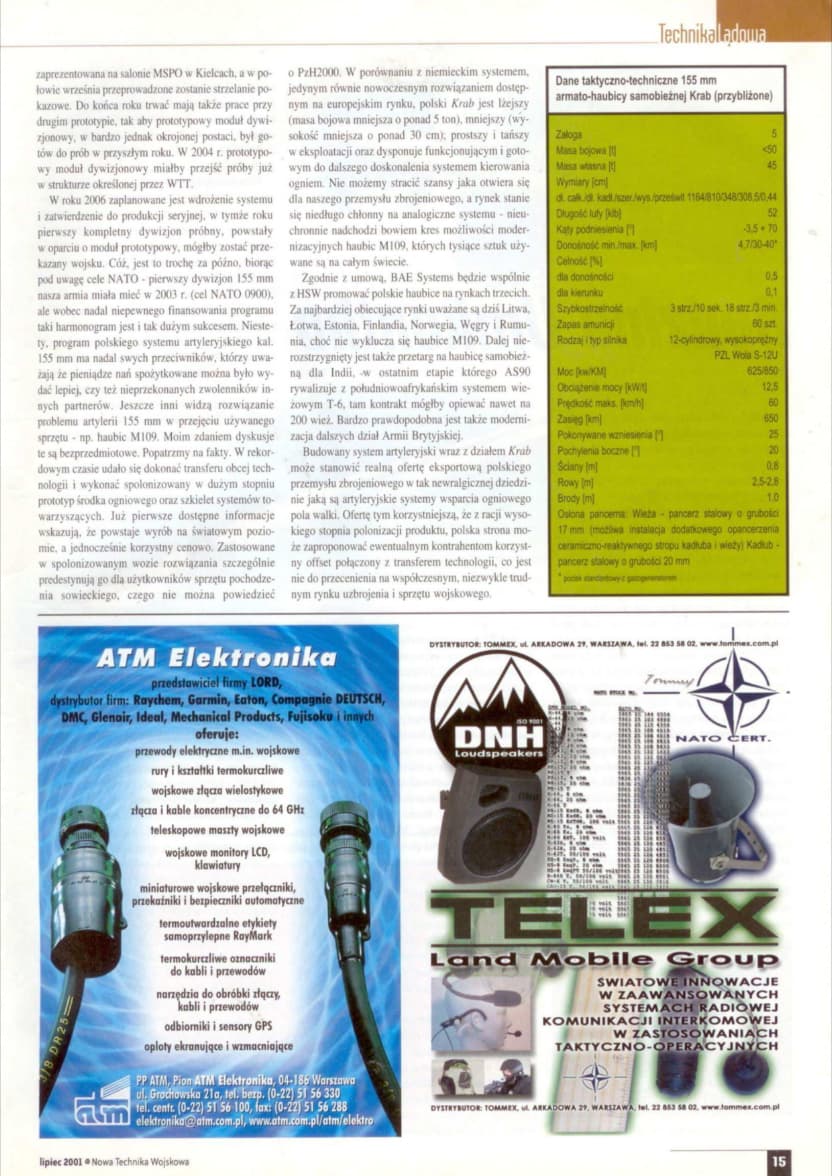
The AHS Krab on the UPG-NG chassis was born from Poland’s efforts during the 1990s to develop a modern NATO-standard self-propelled artillery system under the Regina program. The Polish Army sought a replacement for aging Soviet-derived systems such as the 2S1 “Goździk”, but rather than adopting a complete foreign vehicle, Poland pursued a hybrid solution combining imported technology with domestic industry. Huta Stalowa Wola was selected as the program leader, while the British AS-90M Braveheart turret and 155 mm L/52 gun design were chosen to provide NATO-compatible firepower.
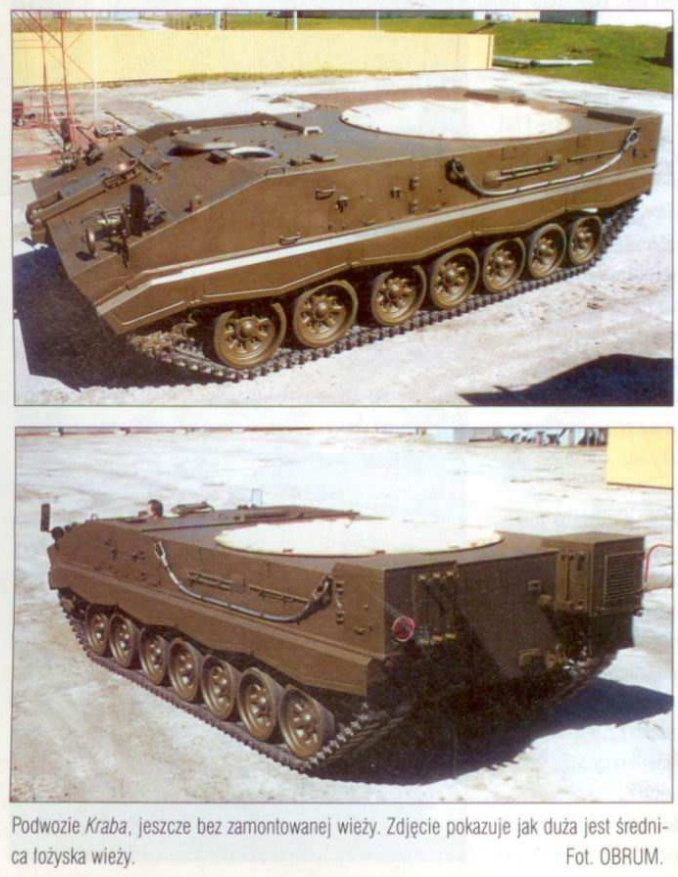
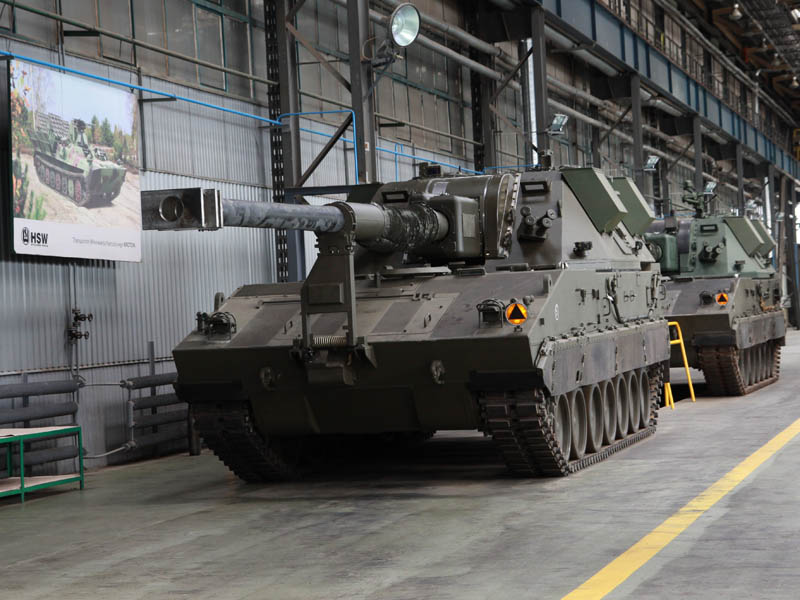
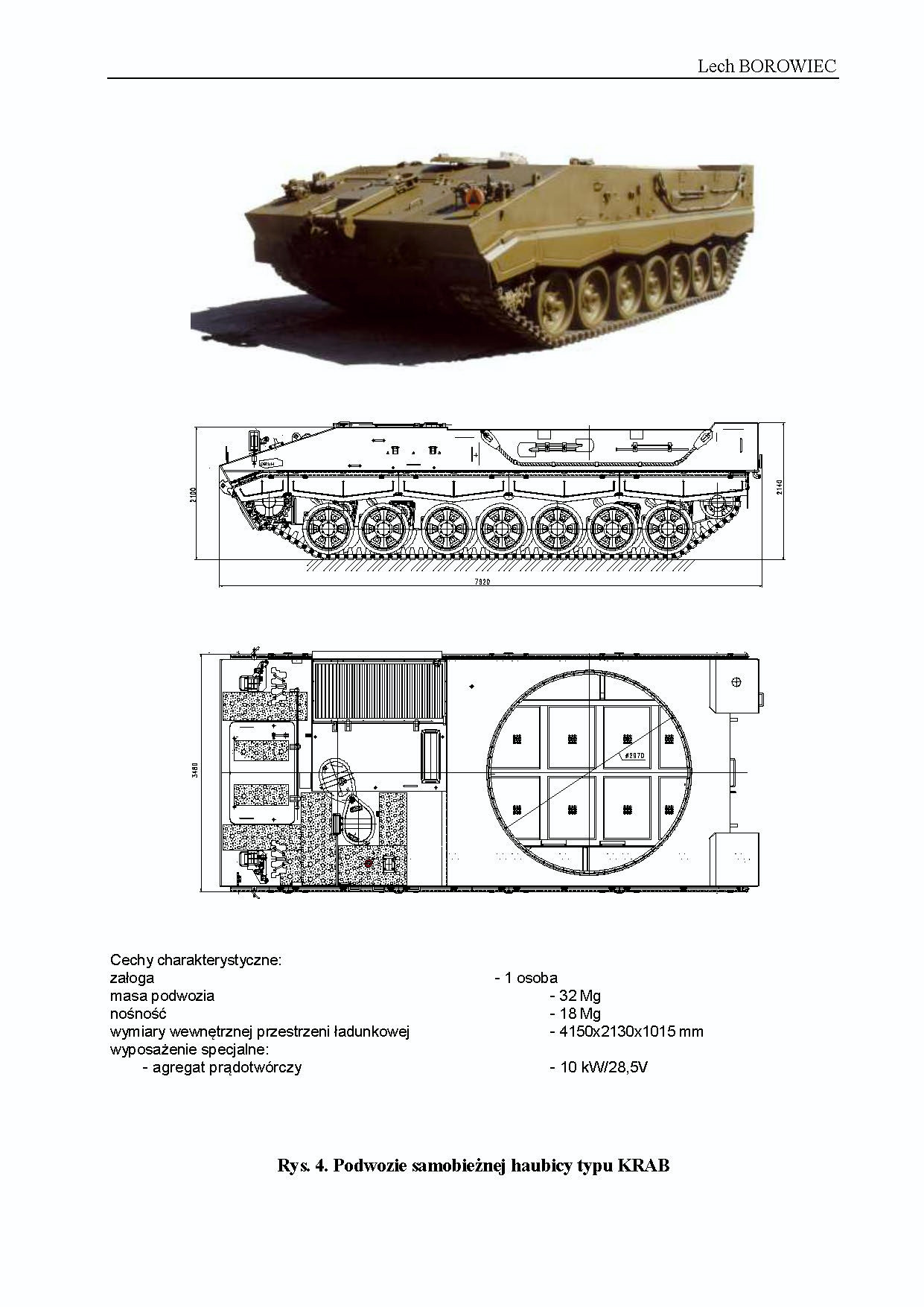
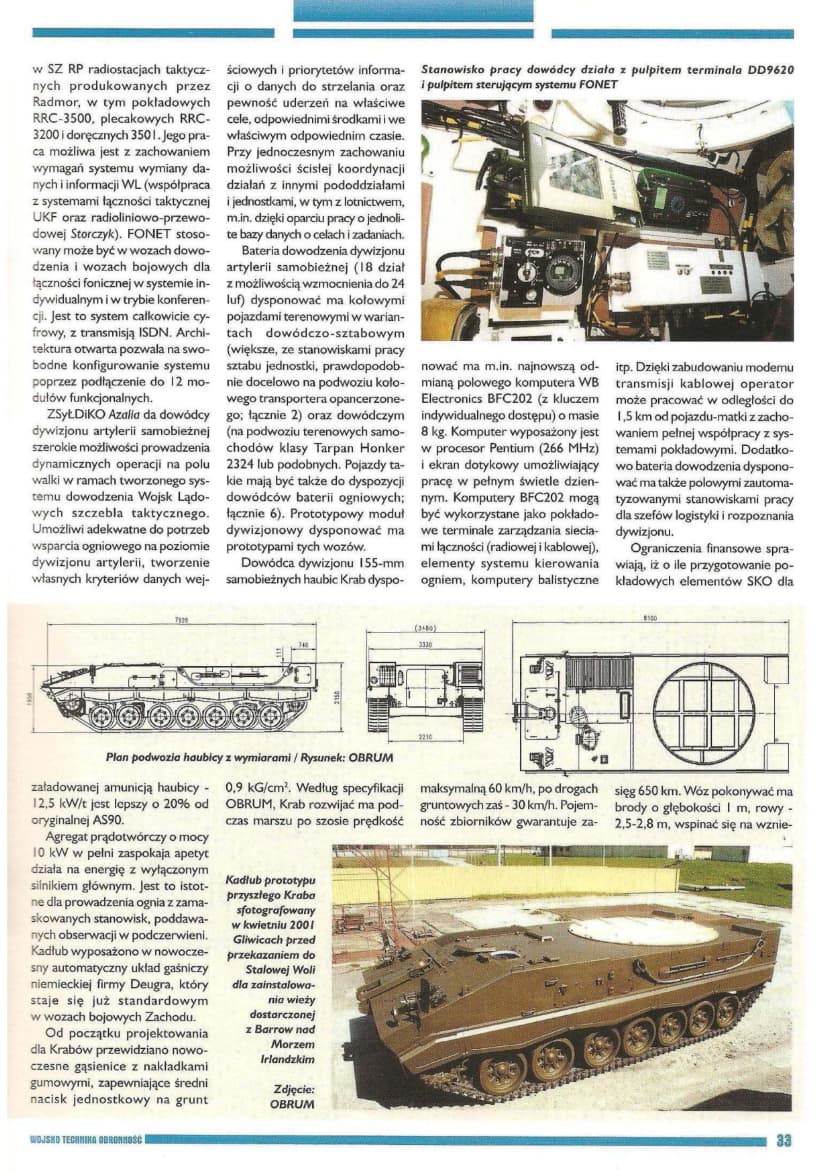
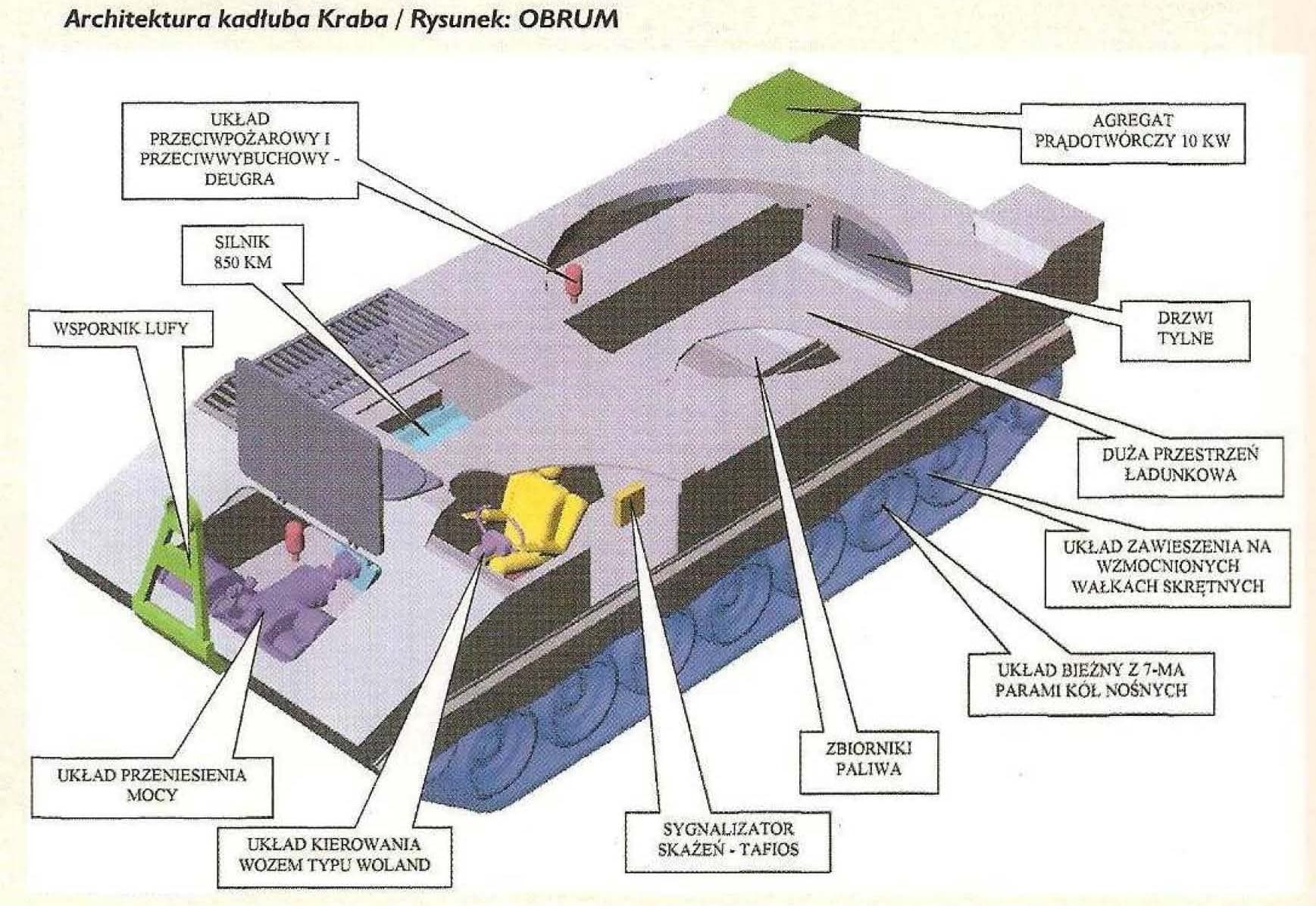
For the chassis, Poland opted for a domestic design developed by OBRUM. This became the UPG-NG (Uniwersalne Podwozie Gąsienicowe – Next Generation), a new universal tracked chassis intended not only for the Krab program but potentially for a wider family of future Polish armoured vehicles.
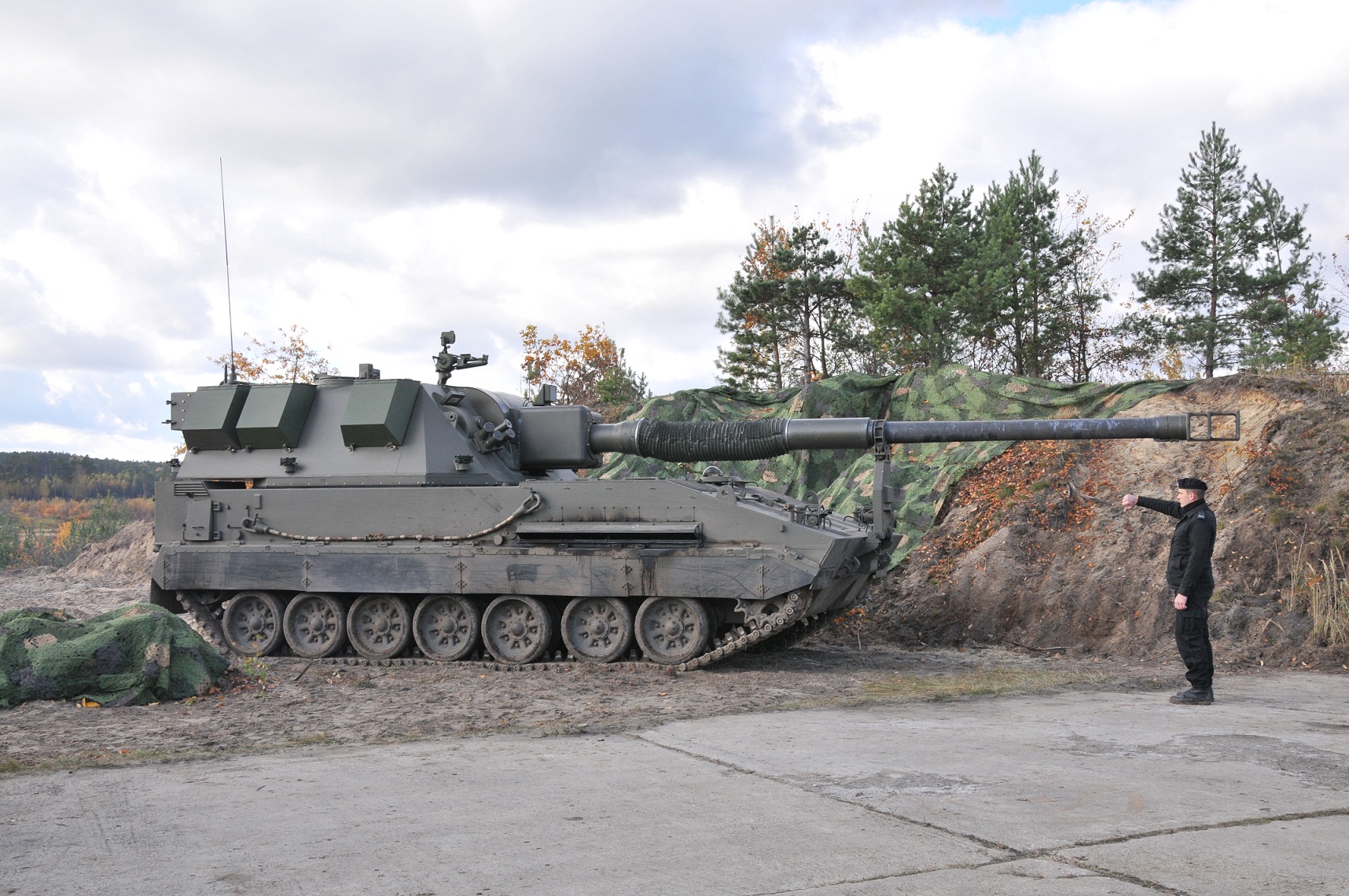
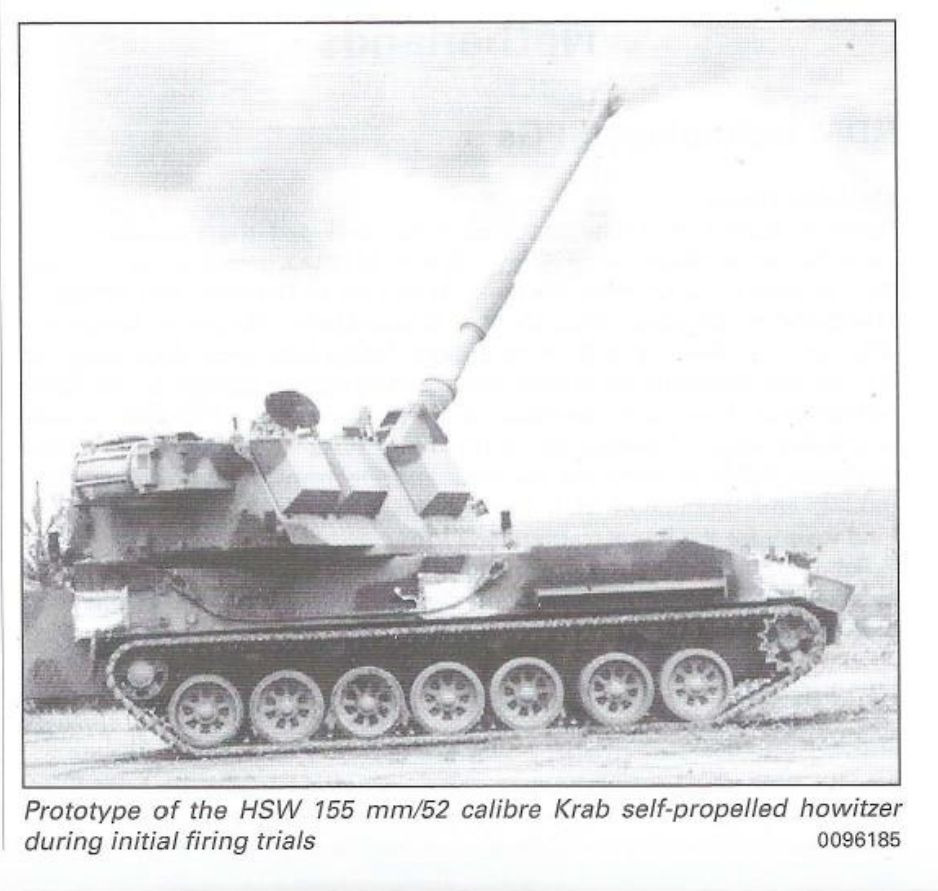
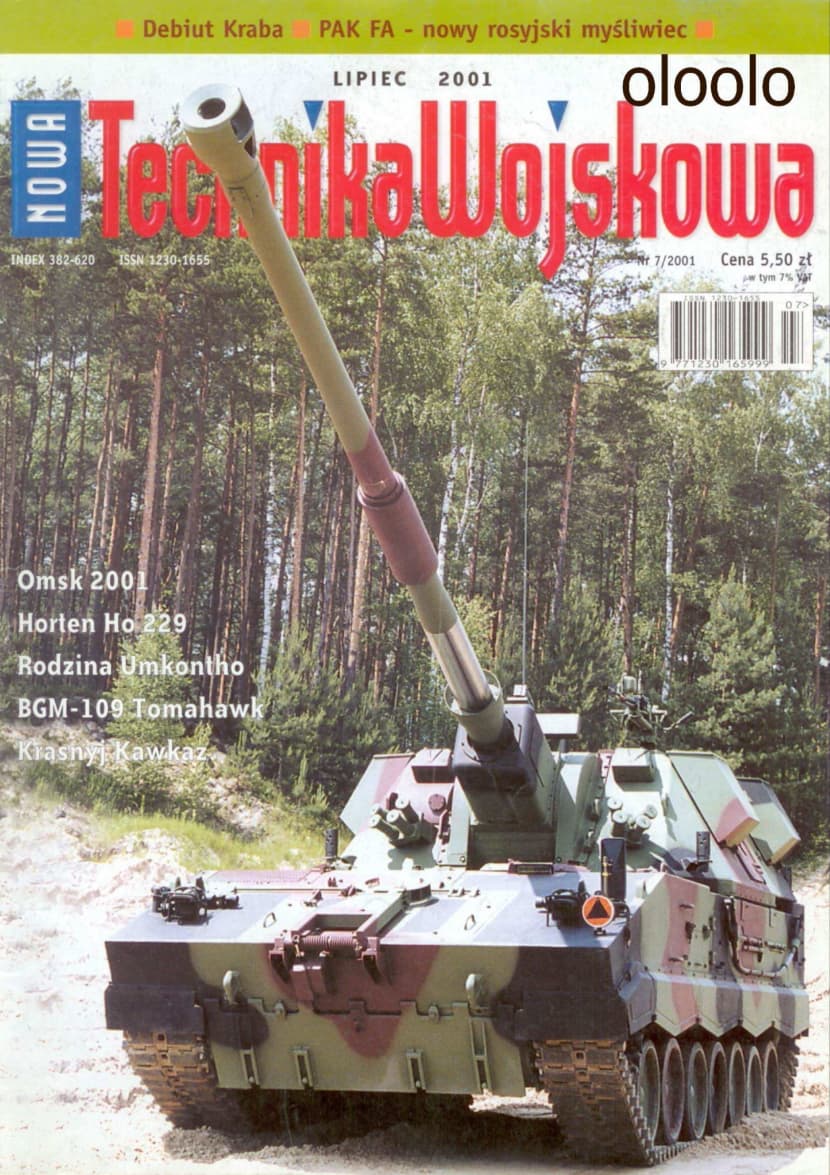
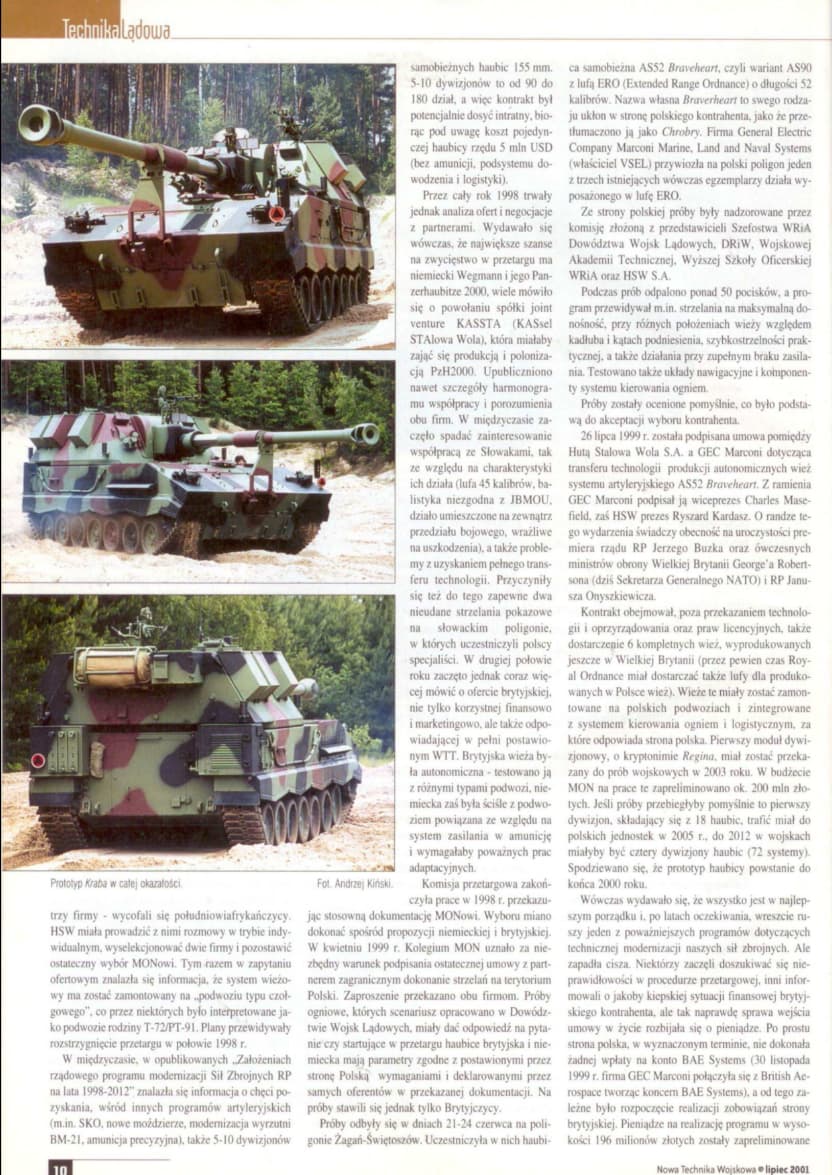
The first prototype Krab mounted on the UPG-NG chassis was completed in 2001, followed by a second prototype in 2002. These early vehicles represented one of the most ambitious armored vehicle projects undertaken by the Polish defense industry after the collapse of the Warsaw Pact. The combination of a British turret, Polish chassis, and domestic electronics created a uniquely hybrid design intended to maximize industrial independence while maintaining NATO interoperability.
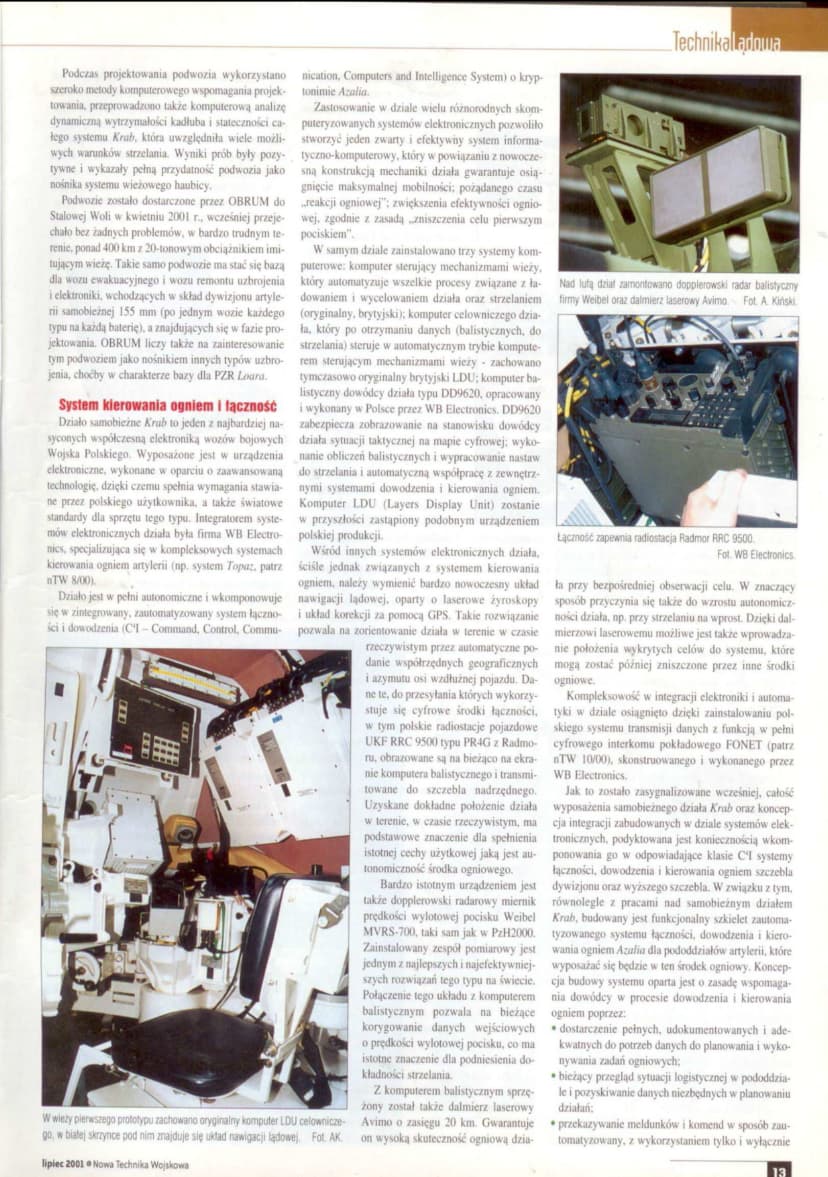
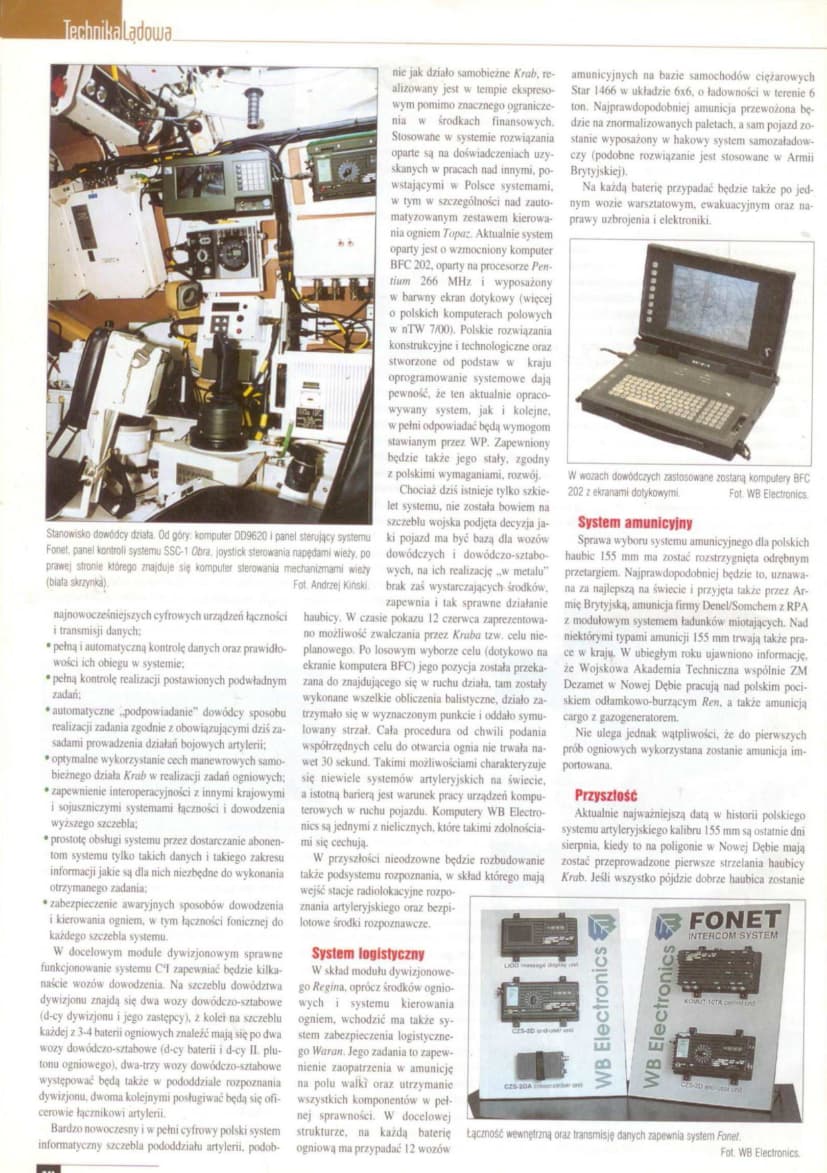
Development throughout the 2000s proved difficult and lengthy. The original British barrel arrangement was eventually replaced by French-produced Nexter 155 mm gun barrels, while the vehicle received increasingly advanced Polish electronics, including the WB Electronics TOPAZ digital fire control system. Despite delays, the Krab gradually grew into a capable artillery platform featuring automatic laying systems, modern battlefield networking capability, and a firing performance comparable to other Western Artillery systems that it would operate along side with.
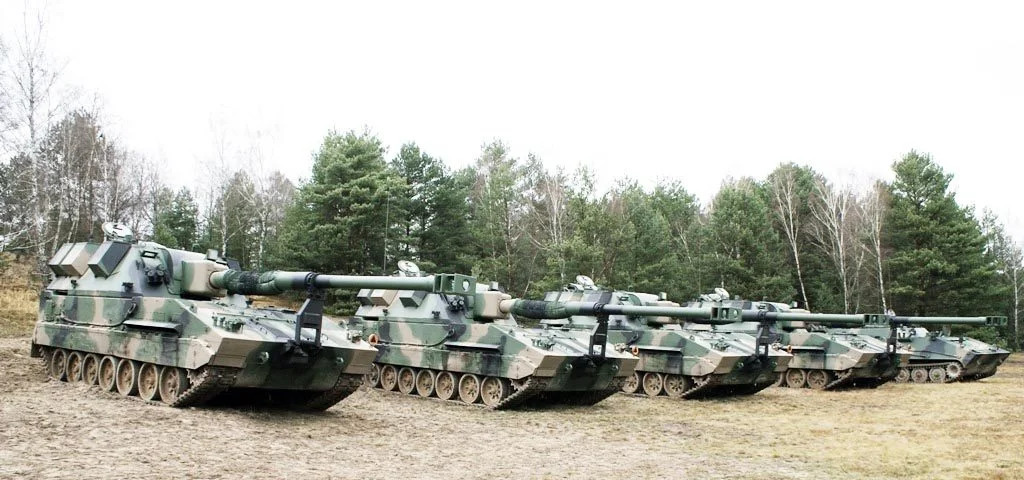
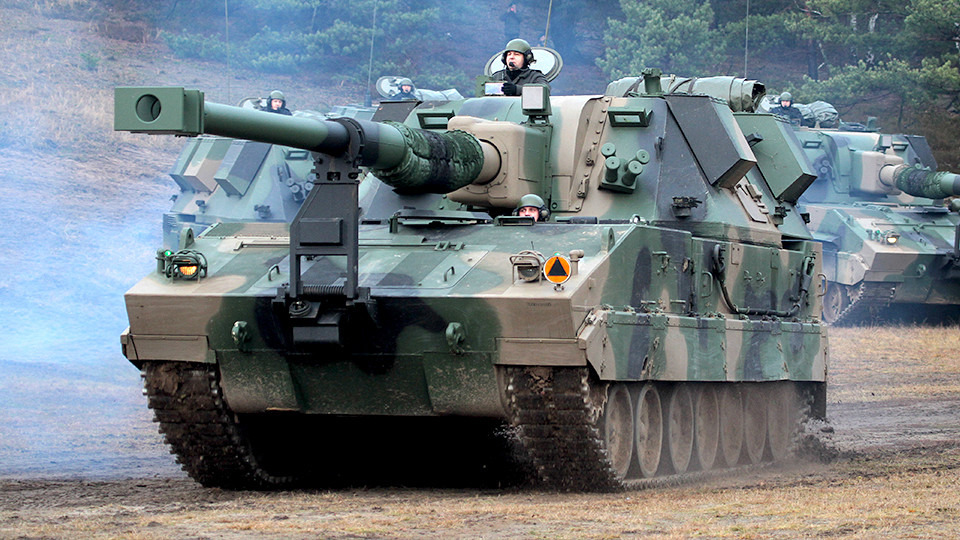
The UPG-NG chassis itself, however, became the program’s weakest point. Although the design offered acceptable mobility and shared logistical commonality with existing Polish vehicles, reliability problems increasingly emerged during testing. The first operational batch of eight Krabs built on UPG-NG chassis was delivered to the Polish Army in 2012 as part of the initial Regina fire module, but intensive military trials soon exposed serious flaws in the platform.
During testing, the chassis developed structural microcracks and suffered from a range of technical issues. These problems raised concerns about the platform’s long-term durability and operational suitability. Attempts were made to resolve the deficiencies, but the scale of the issues ultimately convinced the Polish Ministry of Defence that continuing development of the domestic chassis was no longer practical.
Rather than abandoning the Krab program entirely, Poland chose to preserve the successful turret and combat systems while replacing the troubled chassis. In 2014, an agreement was signed with South Korea’s Samsung Techwin (later Hanwha Aerospace) for the licensed acquisition of the K9-Thunder chassis (later modified into the K9PL). The Korean platform offered significantly greater reliability and was more well proven, allowing the Krab program to live on.
Summarised Characteristics
Details
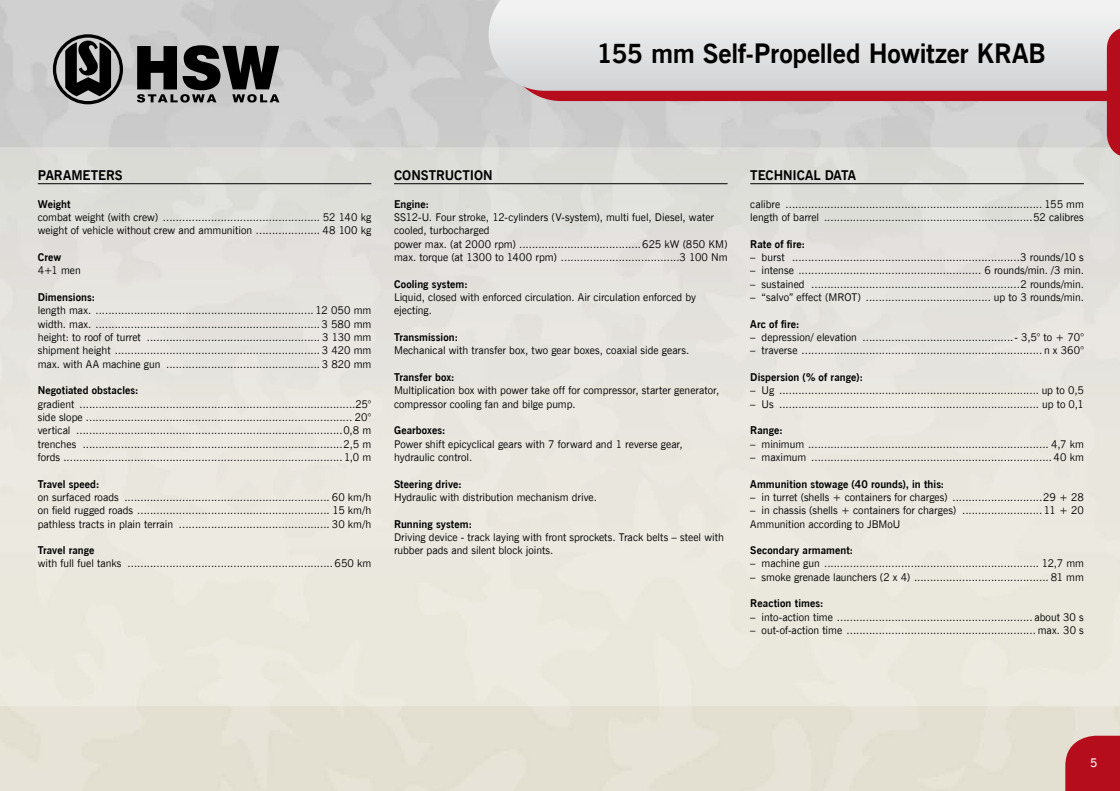
- Crew (5)
- Driver, gunner, commander, loader, loader
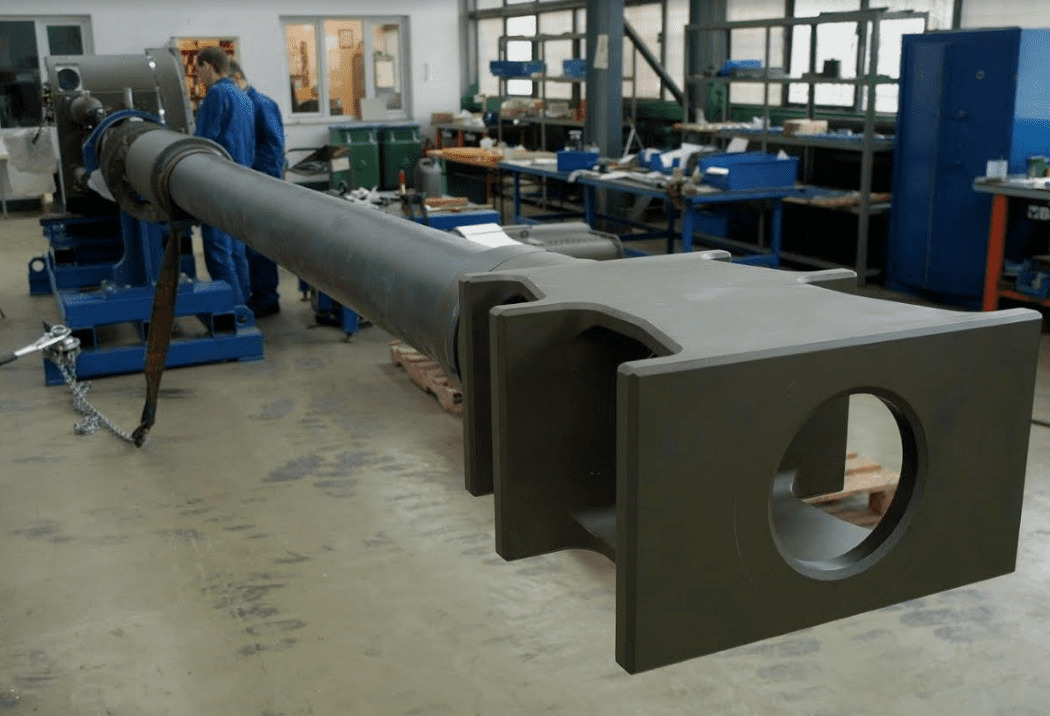
- 155 mm L/52 gun-howitzer
- Ammo:
- 155 MM NABÓJ ODŁAMKOWO-BURZĄCY EOFDMK
- 155 MM NABÓJ ODŁAMKOWO-BURZĄCY Z GAZOGENERATOREM EOFDMKM DV
- Elevation: -3.5° to +70°
- Fire rate:
- burst: 3 rounds/10 s
- intense: 6 rounds/min
- sustained: 2 rounds/min.
- “salvo” effect (MROT): ~3 rounds/min.
- Gunner sight
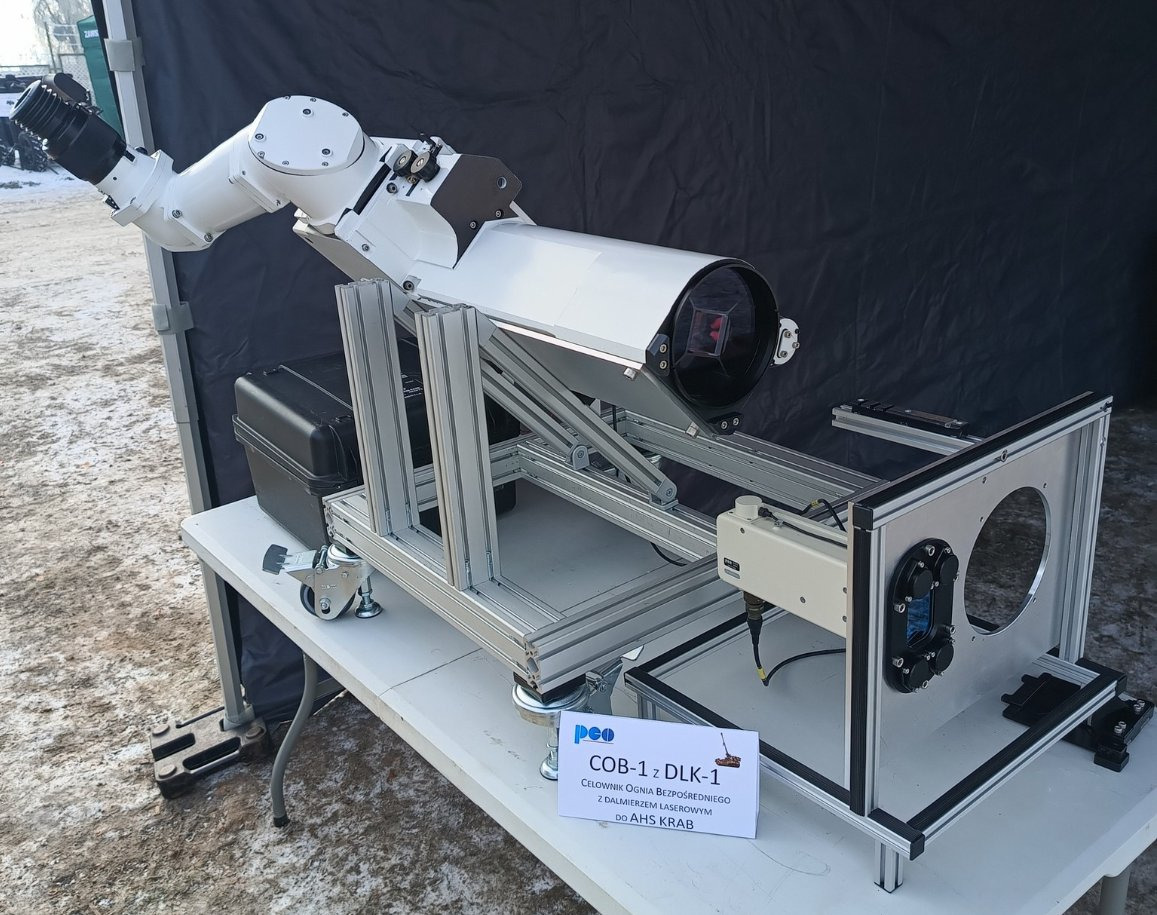
- COB-1 day-night, magnification x6
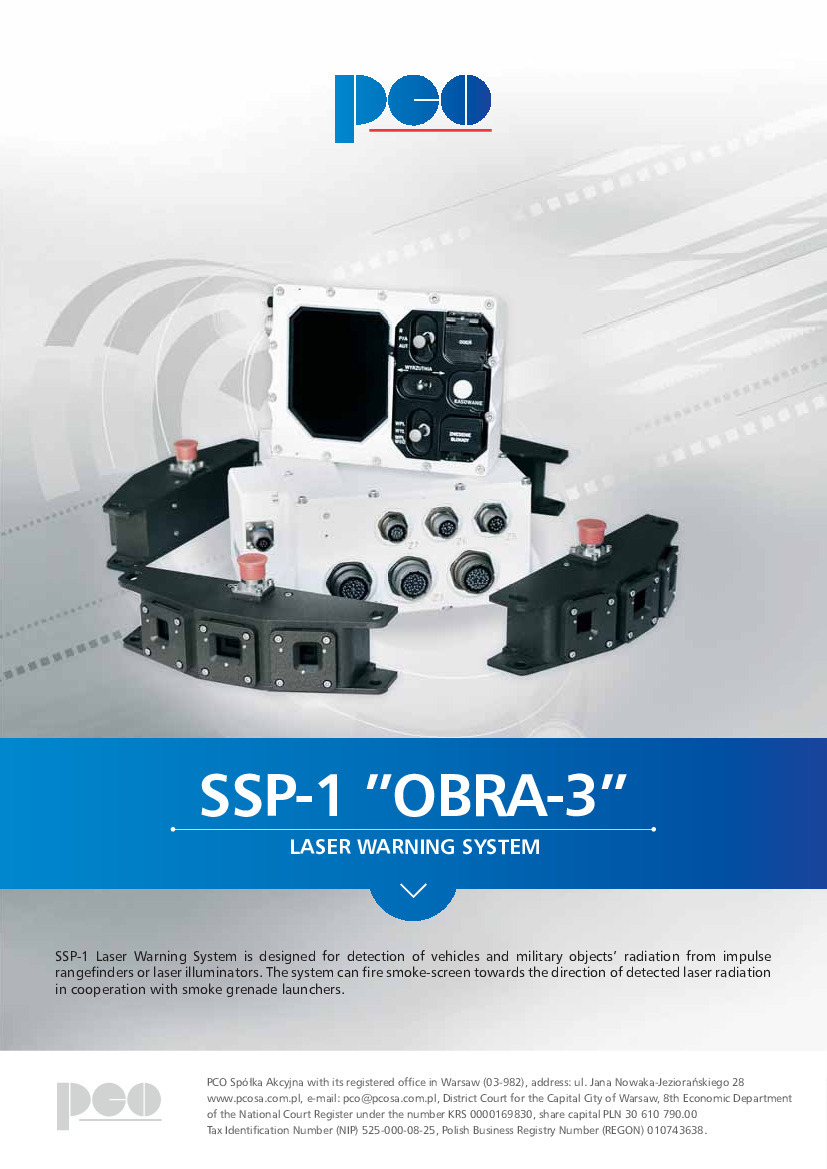
- LWS Obra 3
- Laser Rangefinder
- 8x 81mm Smoke Grenade Launchers
- Combat weight: 52 t
- Engine: SS12-U (850 hp)
- Max speed: 60 km/h
Armament
Details
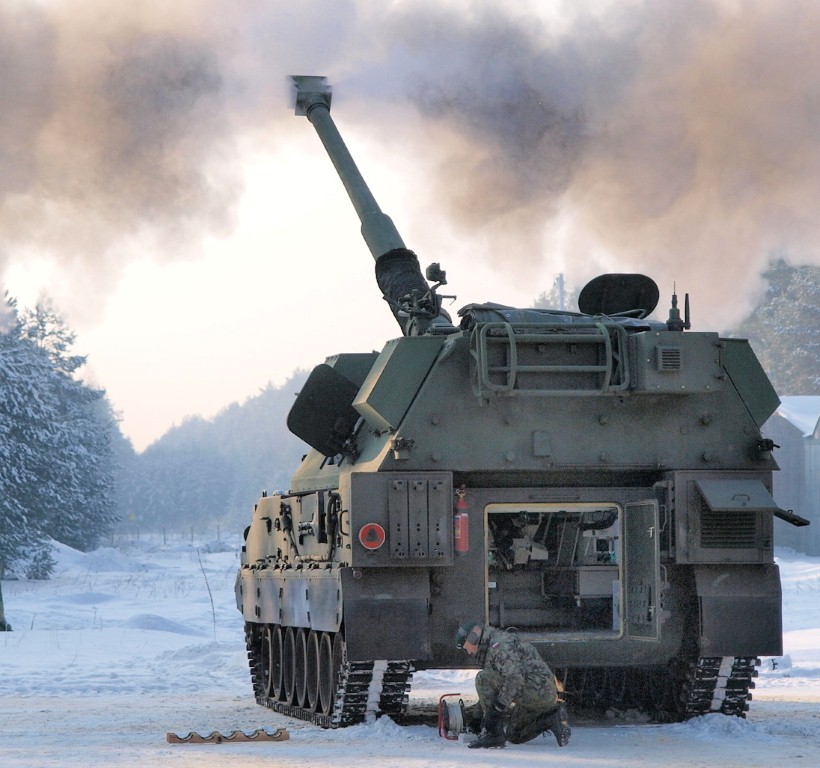
- 1 x 155 mm L/52 gun-howitzer
- Elevation: -3.5° to +70°
- Fire rate:
- burst: 3 rounds/10 s
- intense: 6 rounds/min
- sustained: 2 rounds/min.
- “salvo” effect (MROT): ~3 rounds/min.
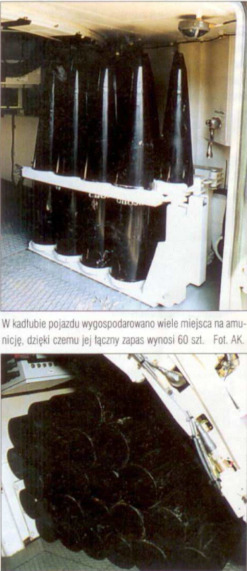
- Ammunition capacity: 40 rounds in turret (shells + containers for charges) 29+28
- Additional ammunition capacity:in chassis (shells + containers for charges) 11+20
Footage of the reloading system in the Krab taken from wikepidia
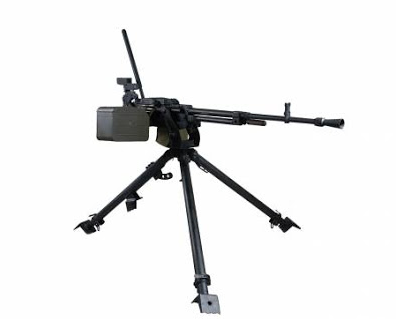
- Anti-aircraft machine gun: 12.7 mm WKM-B machine gun
Ammunition
The Krab utilises the 155 mm L/52 gun-howitzer, which can be found in-game, where it used by vehicles such as the German PzH 2000 and the Norwegian VIDAR meaning that it can easily gain access to the same rounds used by these vehicles, but these are also domestic Polish rounds which these vehicle can choose from.155 MM NABÓJ ODŁAMKOWO-BURZĄCY EOFDMKM
- Type: high-explosive long-range
- Projectile weight with fuse [kg]: 40.30
- Projectile length with fuse [mm]: 904.70
- Explosive charge: TNT (trinitrotoluene)
- Explosive mass [kg]: 10.00
- Igniter: KZ984 mechanical shock
- Lower fuse arming limit [m]: min 80
- Minimum/maximum speed [m/s]: 337 for 1 x BC-E / 968 for 6 x TC-F, 337 for 1 x BCME100 / 949 for 6 x TCME10.
- Propelling charges: BMCS EXPLOSIA (BC-E and TC-F modules),BMCS EURENCO (BCME100 and TCME101 module
- Maximum range [m]:30,000 (6xTC-F), 28,000 (6xTCME101)
- Igniter type: M 82 G
155 MM NABÓJ ODŁAMKOWO-BURZĄCY Z GAZOGENERATOREM EOFDMKM DV
- Type: high-explosive long-range with gas generator
- Projectile weight with fuse [kg]: 43.55
- Projectile length with fuse [mm]: 914.00
- Explosive charge: TNT (trinitrotoluene)
- Explosive mass [kg]: 10.00
- Igniter: KZ984
- Lower fuse arming limit [m]: min 80
- Minimum/maximum speed [m/s]: 569 for 3xTC-F/956 for 6xTC-F, 523 for 3xTCME101/940 for 6xTCME101
- Propelling charges: BMCS EXPLOSIA Bi-Modular Propellant Charge System (TC-F modules), BMCS EURENCO Bi-Modular Propellant Charge System (TCME101 modules)
- Maximum range [m]: 40,000 (6xTC-F), 38,000 (6xTCME101)
- Igniter type: M 82 G
Ammunition stowage

Mobility
Details
- Engine: SS12-U (850 hp)
- Transmission: Mechanical transmission system (inherited from PT-91)
- Gears: 7 forward, 1 reverse gear,
- Top Speed: 60 km/h
- Weight: 52140kg
- Supension: Torsion Bar

Armour
Details
- The turret is welded from 17 mm thick steel plates.
- The hull of the tank is 20mm thick on the sides, front, roof, and rear. While the bottom is made up of a 13mm thick plate.
Other
Details
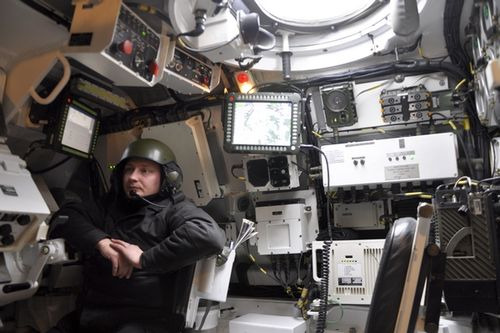
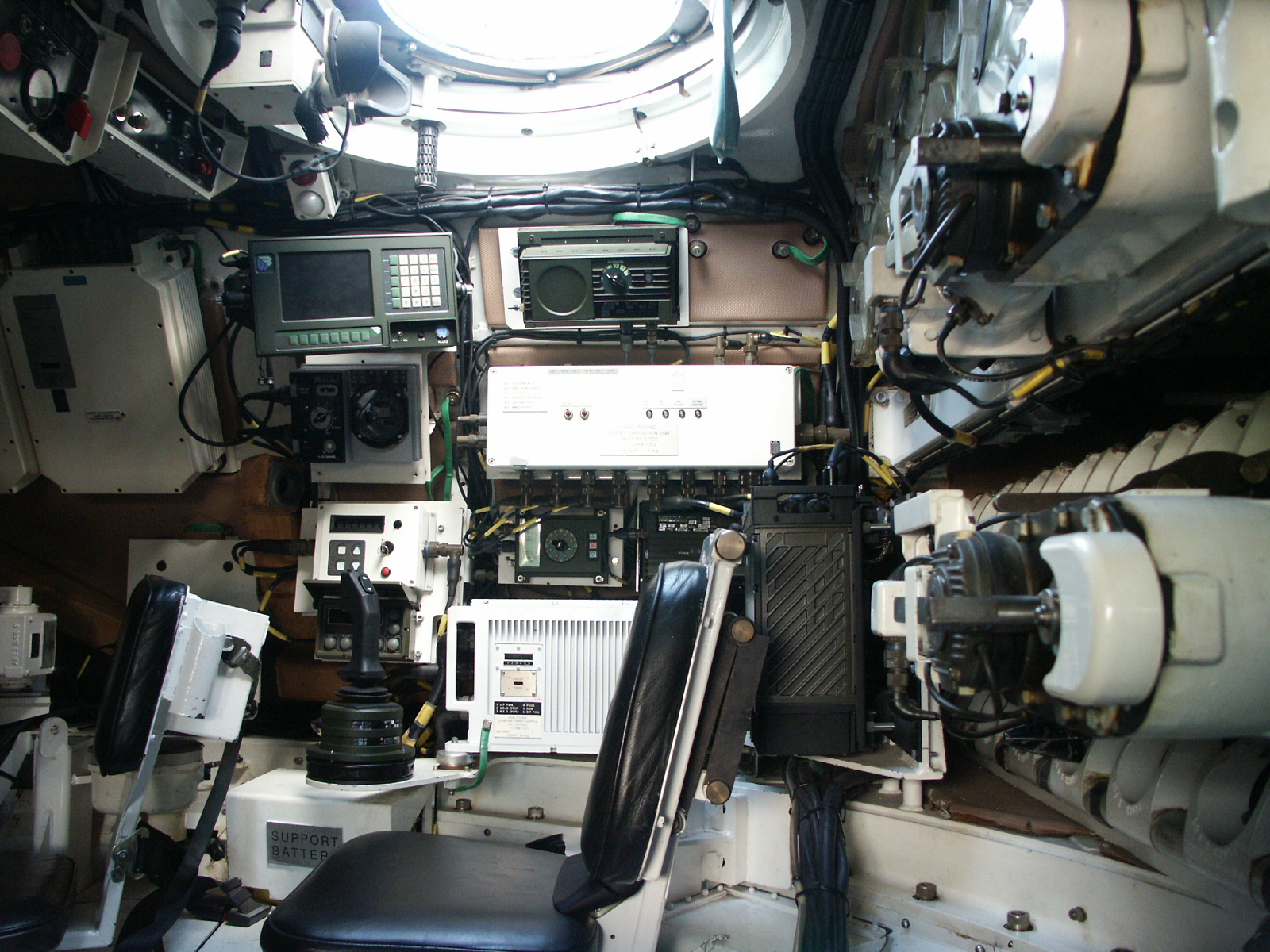
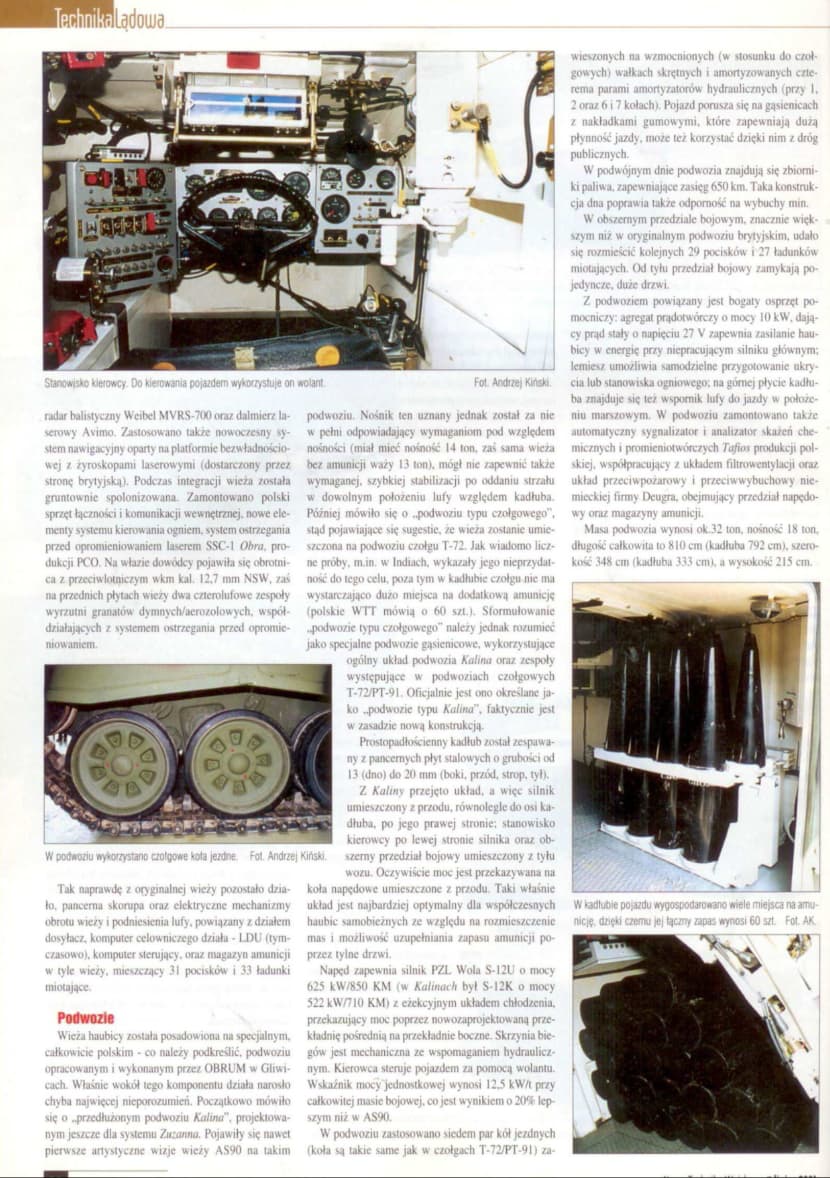
Interior of the AHS Krab
Day & night vision device for driver
Day & night vision device for commander
Direct fire sight - COB-1 day-night, magnification x6, vision field 1-17 (6,5°)
Laser range finder
Laser warning system: OBRA-3
- Detection angular range in vertical plane: -6°/+30°
- Detection angular range in horizontal plane: 360°
- Dange of detected radiation: 0.6 μm – 11 μm.
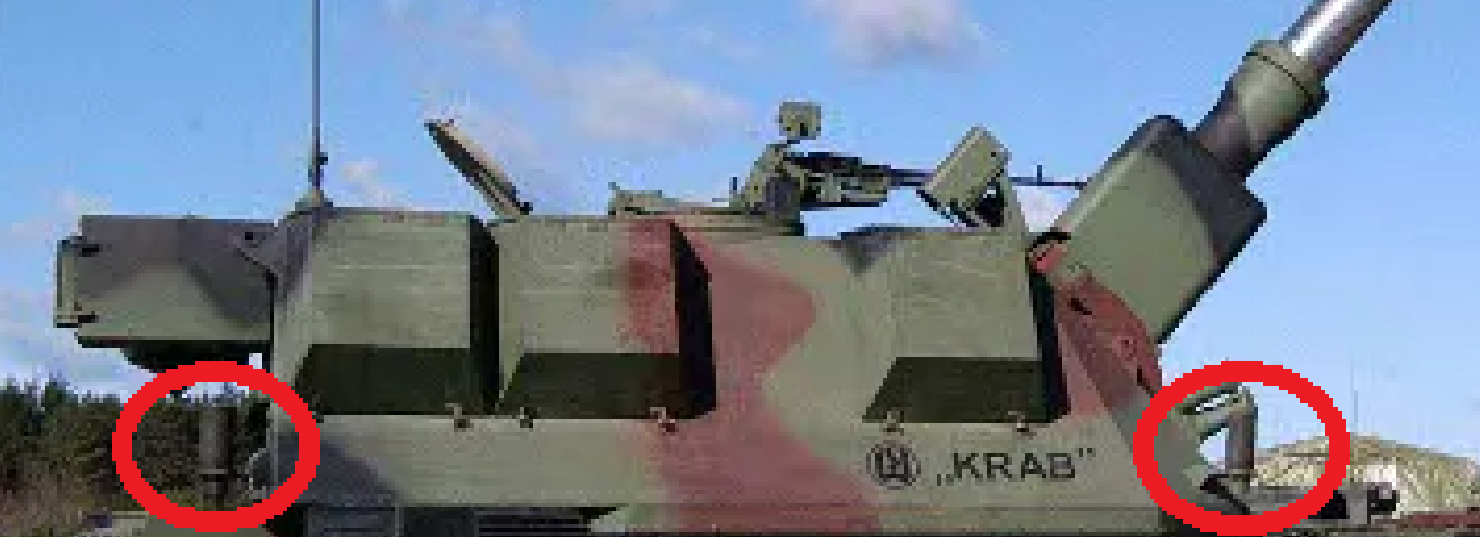
It can also be observed that the Krab was at first equipped with the SSC-1 Obra-1
(2x4) 81mm Dezamet Smoke Grenade Launchers
Crew: 5
Weibel MVRS-700 SCD Doppler ballistic radar
Length (with gun forward): 12.05 Metres
Width: 3.58 Metres
Height: 3.31 Metres
Sources
HSW Catalogue Of Products ( 2013) : Free Download, Borrow, and Streaming : Internet Archive
Frag Out! Magazine - Frag Out! Magazine #14
AHS Krab – Wikipedia, wolna encyklopedia
Krab z koreańskim podwoziem - Altair Agencja Lotnicza | Altair