Straussler V-4 /40 - Hungarian Bofors

[Would you like to see this in-game?]
  • Yes as a Tech Tree vehicle
  • Yes as a premium
  • No i don’t
0 voters

image

Straussler V-4/40

Hello, today i’d like to introduce and present the Straussler V-4/40 to the Hungarian Sub Tree in the Italian Tech Tree. This tank is the second prototype of the V-4 with an enlarged turret, an addition mg in the hull and a 40mm Bofors gun.

History of the V-4/40 - The first V-4 prototype was completed in 1937.The general staff was satisfied with the results of the tests of the V-4 in 1937, though the high silhouette, making the vehicle unstable, and the poorly angled armor layout was criticised. In addition, it was proposed to place another machine gun in the turret and an extra crew member, which involved the enlargement of the turret. In the spring of 1938, the Manfréd Weiss factory in Csepel finished the second prototype of the V-4. The front of the hull was heavily modified, and the turret was enlarged as much as possible with a cupola with observation prisms on top. Compared with its predecessor, it featured a completely redesigned hull, a new hexagonal turret, a more powerful eight-cylinder engine built by Manfréd Weiss, and a 40 mm Bofors-derived cannon. The V-4/40 underwent extensive military testing during 1938 alongside foreign designs, including the Swedish Landsverk L-60. Although the Hungarian prototype impressed evaluators with its powerful armament and innovative engineering, persistent mechanical problems, poor reliability, and disappointing mobility ultimately outweighed its advantages. The vehicle’s increased weight reduced the effectiveness of its suspension and engine, while its tall profile remained a significant tactical disadvantage. By the conclusion of the trials, Hungarian military authorities judged that the Swedish L-60 offered a more practical solution despite its lighter armament. The L-60 was subsequently adopted under license as the 38M Toldi. After that, the vehicle’s weapons were removed and it was used as a towing tractor until 1944. In 1945, the V-4/40 ended up with the Red Army as a trophy. The tank’s further fate is unknown.
image

Specifications - The V-4/40 measured approximately 3.64 metres in length, 2.31 metres in width, and 2.01 metres in height, wuth the tank weighing approximately 12 tonnes and having a four-man crew consisting of a commander, gunner, loader/radio operator, and driver. The enlarged turret included a commander’s cupola. However, this also made the vehicle taller. The V-4/40 was powered by a Manfréd Weiss V8 petrol engine producing approximately 180 horsepower, giving it a top speed of 35–40 km/h on roads. Its primary armament was a 40 mm 37M cannon. Secondary armament consisted of 8 mm Gebauer machine guns. Armour thickness ranged from 9 to 23 mm.

Full specifications

Mass 6–12 t (5.9–11.8 long tons)
~10 t (9.8 long tons) (V-4)
~12 t (12 long tons) (V-4/40)
Length 3.64 m (11 ft 11 in)
Width 2.31 m (7 ft 7 in)
Height 2.01 m (6 ft 7 in)
Crew 4 (V-4/40)

Armor 9-23 mm
Main armament 40 mm 37M
Secondary armament 2 × 8 mm Gebauer 34/37M twin machine gun
Engine Manfréd Weiss 8-cylinder
100-180 hp
Suspension leaf spring
Maximum speed 35-40 km/h
image
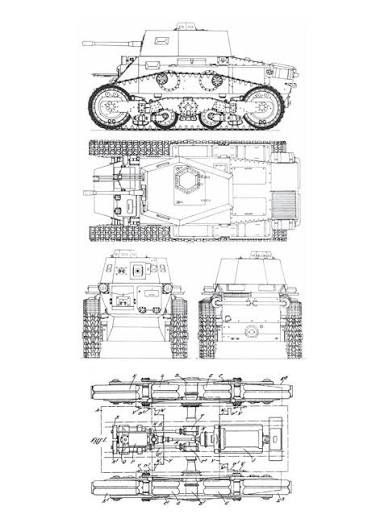
The image above is a technical drawing of the V-4/40

Sources

Straussler V-4 - Wikipedia
https://tanks-encyclopedia.com/ww2/hungary.php
Straussler V–4/40: review, characteristics, comparison

12 Likes

+1, cute tank, should’ve been added with the introduction of Hungarian subtree!

3 Likes

I knew about the existence of this vehicle, but i thought it was already suggested, good to see it here, +1 i’d love to see this little guy in war thunder

2 Likes

Since it was tested, you think to suggest it too (the right variant obv) for the normal italian tt?

4 Likes

A nice low tier battle box people will enjoy it as it is what it is.

2 Likes

+1 for more domestic Hungarian tanks!

4 Likes

Huge +1 from me as a researchable tech tree tank after the Csaba.

In fact, I myself was literally just in the process of writing a suggestion for this very tank, but you beat me to it!
I suppose my contribution can now be in the form of extra supporting information regarding this tank from my research.

Firstly, I will start by saying this suggestion contains a lot of mistakes and inaccuracies, as it seems to have used unreliable sources like Wikipedia.

  1. The 40 mm 37M gun of this tank was NOT a Bofors gun, nor was it Bofors-derived. It was a Hungarian developed gun specifically designed for this tank. I believe this confusion stems from the fact that Hungary had another 40 mm gun, that being the 40 mm 36M gun, which was a licence-built 40 mm Bofors L/60 AA gun. Also, the Toldi IIA’s main gun was a modification of the V-4’s 40 mm 37M gun, called the 40 mm 37/42M gun, and that new gun was modified to be compatible with the 40 mm Bofors ammunition used by the AA gun. People must have conflated these two completely unrelated guns and then unreliable sources just parroted the mistake all over the internet. I suggest fixing this and removing it from the title too. The title could read “Straussler V-4/40 - First Hungarian Tank” instead.
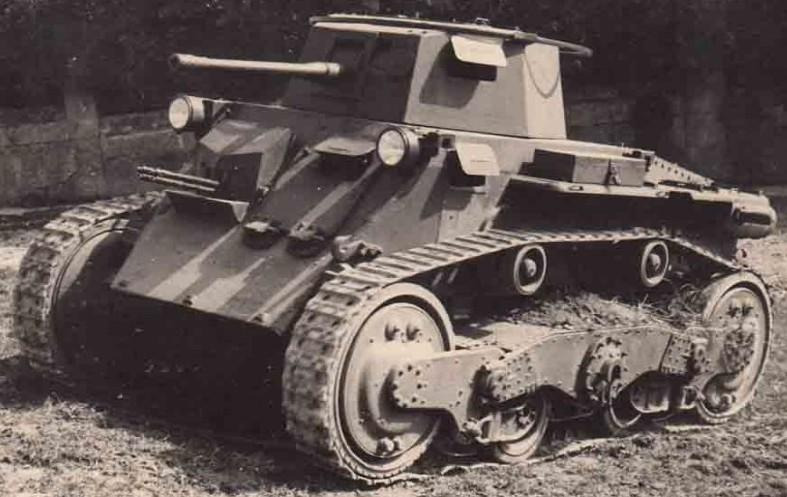
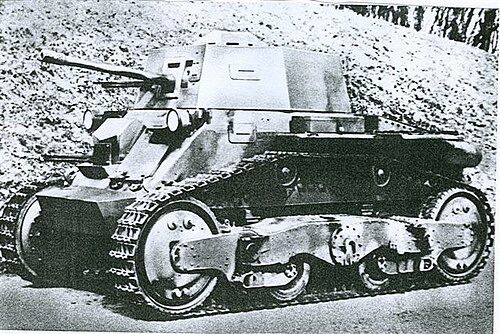
  2. The first and last pictures are not even showing the right vehicle. They are showing the early Straussler V-4 from 1937, while the suggestion is about the later Straussler V-4/40 from 1938. The differences between the 1937 Straussler V-4 and 1938 Straussler V-4/40 are an enlarged turret, a new coaxial twin machine gun in the turret, a cupola, the lack of the circular radio antenna seen on the top of the turret (R/5 radio’s antenna, this was replaced by an R/5a radio with a conventional antenna), a fourth crew member (placed in the turret), and a “beak” protruding from the front of the hull where the upper and lower plates join. You mentioned an additional MG being placed in the hull; that’s not the case, both the old and new versions of the V-4 had that machine gun there.
  3. Where you said “the front of the hull was heavily modified” and “featured a completely redesigned hull”, I don’t think that’s true since the only change seems to be the aforementioned “beak” being added, which isn’t a huge change. Although the sentence “Compared with its predecessor, it featured a completely redesigned hull, a new hexagonal turret, a more powerful eight-cylinder engine built by Manfréd Weiss, and a 40 mm Bofors-derived cannon.” may have been copied from Wikipedia and was probably referring to the changes between the V-3 and V-4, thus it isn’t relevant here.
  4. The L-60 was not exactly adopted under licence as the 38M Toldi - the Toldi was a Hungarian further development based on the L-60, and was a new vehicle.
  5. This is a bit of a nitpick, but it’s not “Manfréd Weiss”, it is Weiss Manfréd (shortened WM, not MW). This is the name of the biggest Hungarian industrial conglomerate of the era, and it was named after a person… in Hungarian, a person’s name is written surname first and forename second, while it is the other way around in English, so many places just switch the name treating it like the name of an individual rather than the name of a company.
  6. Your specifications are copied from Wikipedia, which wrote an article lumping together 3 different tanks, the V-3, V-4, and V-4/40, so the specification section is a mess combining stats from all three. I’ll try and provide some more accurate specifications for the V-4/40:

Weight: ~12 t
Dimensions: Uncertain, but 3.64 x 2.31 x 2.01 m seems too small and is almost certainly the dimensions of the V-3, and is associated with it. 5.00 x 2.70 x 2.75 m is another set of dimensions I’ve found, which seems more realistic, but it isn’t clear whether it’s describing the V-4 or V-4/40. Either way, the V-4/40 wasn’t much bigger than the V-4.
Crew: 4
Hull armour: 23 mm / 16 mm / 10 mm (other sources give 26 / 13 / 9 mm)
Turret armour: 13 mm / 10 mm / 10 mm (front, sides, rear)
For a detailed 3D armour model you can look at the armour of the V-4/40 in World of Tanks here: World of Tanks - tanks.gg (although I don’t know how trustworthy it is or whether they used accurate sources)
Main armament: 40 mm 37M Hungarian tank cannon
Secondary armament 2 × 8 mm Gebauer 34/37M twin machine gun (2 installations, 4 gun barrels)
Engine: Weiss Manfréd 7.24 L V8 OHC (180 hp)
Top speed: 40 km/h (tracks, probably ideal conditions like on roads)
I’ve seen the top speed given as 46, 45, 40, 35, and 32 km/h, but 40 km/h seems to be the most reliable figure. It could drive on wheels as well to go faster (if you remove the tracks) and was amphibious, capable of floating and propelling itself to independently cross rivers (if you attach separate pontoons to the sides), although I doubt these features would be modelled in-game.

Interestingly, this tank seems to be the most Hungarian of all Hungarian tanks, and might even be 100% Hungarian (in terms of not using any foreign components). The main gun, machine guns, radio, engine, I believe even the transmission, suspension, hull, turret, amphibious equipment, and the entire design/development as a whole are all domestic Hungarian designs, with nothing being foreign. Evidently, it wasn’t even inspired by a foreign design (I mean just look at it, it doesn’t resemble anything else), so the entire concept is unique. This all makes sense though, since it was designed by Hungarian inventor and engineer Nicholas/Miklós Straussler, who designed it around his own patented design for a suspension that allows a vehicle to drive on both wheels and tracks, and he even integrated another of his inventions, the amphibious system, into the design. On top of this, Hungary was politically and economically isolated during this period because of the harsh punitive restrictions imposed on Hungary in the Treaty of Trianon following the end of WW1, which meant Hungary couldn’t just import stuff, especially since they weren’t even allowed to have or develop tanks, and so the whole program was a secret… you can’t exactly be importing foreign tank components while hiding your tank program! The unique conditions at the time resulted in practically everything about the tank being domestic, making this the most uniquely Hungarian tank. And to think many people believe this tank is German because in WoT it was added to the German tree and the surname “Straussler” is Germanic… ironic.

But anyway, thank you for making this (long overdue) suggestion! I’m hoping we see it in the game soon, because the Hungarian subtree really needs something better than the Csaba to introduce players, and the Italian tech tree as a whole lacks a decent rank I starter light tank, discouraging many new players from the entire Italian tree! It has the Csaba and L3/33 CC (both very weak and neither are actual light tanks), AB 41 and AS 42 (again, cars and armed with 20 mms), L6/40 (mediocre, only 2 crew, only 20 mm gun), M11/39 (the main gun is in the hull, effectively turretless, mediocre), and the 47/32 L40 (slow turretless open-topped tank destroyer). This is all from 1.0-1.3. Even if you go to the top of rank I, up to 2.0, you still won’t find an actual light tank with a 37+ mm cannon. The V-4/40 would fix that by being the first, would help provide new players with something decent and easier to play, and would represent the most unique Hungarian tank design. It would also have the highest penetration of all rank I Italian vehicles (excluding the 100 mm HEAT and HESH artillery shells of the Lancia). A very nice addition that I’m hoping comes soon!
6 Likes

I don’t agree with this idea, and it might not even be allowed anyway, since the variant the Italians tested was not some Italian export exclusive model, but actually the same one Hungary originally built and tested, the older Straussler V-4 from 1937, and that exact vehicle was converted/rebuilt into the newer Straussler V-4/40 from 1938 suggested here, so you would be suggesting the exact same physical vehicle but in an earlier form, which Gaijin usually doesn’t allow since they are the same vehicle being represented twice at two different times.

Therefore, we can probably only get either the V-4 or the V-4/40, but probably not both. I think it makes more sense to get the improved and latest “final design” V-4/40 than to get an earlier iteration that got changed later down the line.

Also, if we do somehow get the older 1937 V-4, then it should be under a Hungarian flag, since it’s a domestic Hungarian design and has a lot more to do with Hungary than Italy who merely tested it and rejected it (because it wasn’t suited for mountain warfare and the Italians thought the coming war would be a repeat of WW1 and would be fought in the mountains… oh how wrong they were!). I hate the idea of nations getting vehicles they tested or purchased from abroad with no intention of actually using those vehicles in service, it’s kind of ridiculous to be using those in combat in War Thunder. Besides, since both Italy and Hungary are in the same research tree, I don’t see the need to add it under an Italian flag when it ends up accessible to Italy players either way. This request would only make sense if it would result in a different tech tree getting said vehicle. The thing is, the UK, USSR, Japan, the Netherlands, and Poland all tested different variants of the Straussler tanks, but none of them accepted it for service, and none of them were the actual V-4 and V-4/40. Only Italy tested the V-4, but if it were to be added, it should be added to the same tree under a Hungarian flag.

5 Likes

Thank you for correcting my mistakes. I will make sure to be more careful in the future. It was pretty hard to find information on this tank, especially the V-4/40 variant. The gun mistake is very embarrassing, thanks again for clearing everything up for me and other readers.

1 Like

No problem :)

Indeed it is hard to find accurate information on pretty much any Hungarian military technology from this era. Not only is it a minor nation, so often is overlooked and forgotten, but also Hungary lost most of their wartime documents due to being bombed heavily by the U.S., then the Germans invaded and took control of the government, and under their orders/control they destroyed many more documents, then the Soviets truly invaded and occupied Hungary, so more were lost during the fighting, and once they won they ransacked the country taking home anything they found interesting, including many archives and paperwork. Even the archives that Hungarians attempted to evacuate to save were largely destroyed or simply lost in the chaos (a whole boat carrying a huge archive belonging to the HTI was sunk). Then after the war, Hungary found itself behind the iron curtain, where for the next 40 years it was strictly forbidden to talk about, research, or be associated with the events of the WW2 era, so many more documents were simply lost to time, forgotten about, or erased to avoid persecution.

It was only in the late 80s and 90s when serious research about Hungarian WW2 era military technology could/did begin, and by then many who had actually worked on these projects and had any memory of them had passed away, and much of the info went with them. As the information was slowly pieced together over the years, a lot of mistakes, bad assumptions, or straight up deliberate misinformation was mixed in and resulted in all sorts of mistakes spreading. On top of that, we have only a small proportion of the original information even surviving to work with, so it makes it difficult to discern facts from fiction.

I don’t blame you at all, the published information available should be a lot better and really needs a “deep clean” to dispel any mistakes that we have become aware of and keep the info up to date and as reliable as possible, because unfortunately most people are just presented with a mix of fact and fiction, and only by diving deep into the subject and researching it a lot is it possible to make some sense of what is trustworthy, and what is rubbish.

The Straussler tanks are especially a mess since they were experimental, top secret at the time, and were created in a lot of different variants (V-3, V-4, V-4/40, exported British Alvis-Straussler variants, export variants to other countries) which constantly get conflated with each other.

2 Likes

Hungary had some pretty good tech development though a lot of this stayed in the prototype stage or in the university. They also had a good industry around glass products like optics so bits and bobs where good. For example small arms where very good and well built.

2 Likes

Yes, exactly. Hungary had some very good and innovative scientists, pioneering advancements in radar technology, early helicopters, inventing the turboprop, being one of the first to develop anti-tank rocket weapons, discovering the shaped-charge/HEAT warhead effects and utilising it extensively, and even developing stuff as crazy as an acoustic proximity-fused air to air rocket. The unique track/wheel tank suspension and pioneering amphibious tank technology seen here on the Straussler V-4/40 is tame compared to some of the other impressive technology developed in Hungary during this era. As you say, small arms were also very good such as the Danuvia and Gebauer machine guns which were world class.

Unfortunately this was all lost when Hungary’s industry was annihilated during the war and many scientists fled the postwar communist regime installed by the USSR, which also shut down the HTI that had developed most of Hungary’s weaponry and during the cold war Hungary was forced to be reliant on Soviet technology and wasn’t allowed to have their own domestic self-sufficient industries. After the fall of the USSR and transition towards the west, many more domestic companies/industries were shut down or went defunct, so today almost nothing remains of what Hungary had achieved back then.

2 Likes

This could also be traced back to Austria Hungary having a good industrial base but had a lot of self sabotage in priorities let alone natural resources. WW2 Hungary though having great industry was just being asked to do a lot with very little.

But reading though Hungarian small arms captured tests there was never any complaints they where made poorly just they where not ideal or being to complex for there own good. Very similar with Italian weapons well built but why is it this way or why so complex?

1 Like

Austria-Hungary’s industrial base was mostly located in and inherited by the Czechs, but yes, Hungary had started to build their own as they tried to be more independent of Austria. They lost the vast majority of their access to natural resources when 2/3 of Hungary was taken away after WW1. Had Trianon never happened, with a much larger economy, population, and plenty of natural resources, I think WW2 Hungary could’ve industrially matched or even outperformed the likes of Italy…

On the topic of overcomplicating their technology, to me, it seems that Hungary almost acted like a smaller Germany in many ways, including this. They certainly both prioritised quality over quantity, but I suppose they both realised they wouldn’t be able to out-produce their enemies.

2 Likes

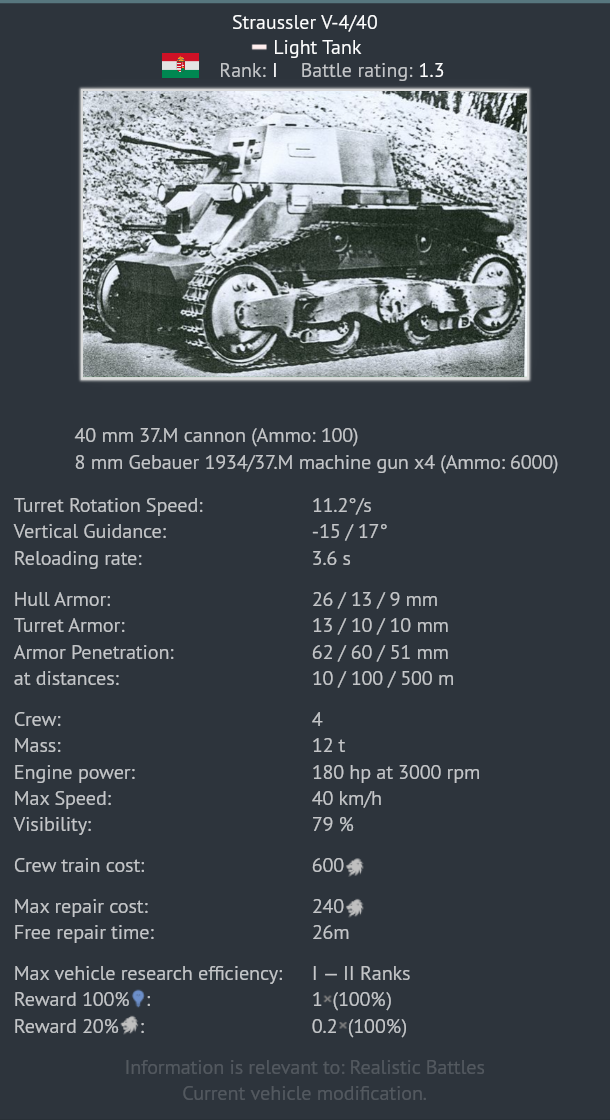
I created this statcard for the V-4/40 suggestion I was working on, I thought I’d share it here, feel free to use it:

I’ll be honest; I’m not 100% certain about every single stat, but this is the best I could do with the information available to me.

2 Likes

Looks amazing, how did you make it?

1 Like

Thanks! I used this WT statcard maker tool: wt_statcard

1 Like

This could be a fun reserve vehichle

1 Like