- Yes
- No
- BeNeLux subtree (in France)
- Independent BeNeLux naval tree
- Dutch (sub) tree
- Other
- No/negative
- Tech Tree
- Premium/Event vehicle
- Either
- No/negative
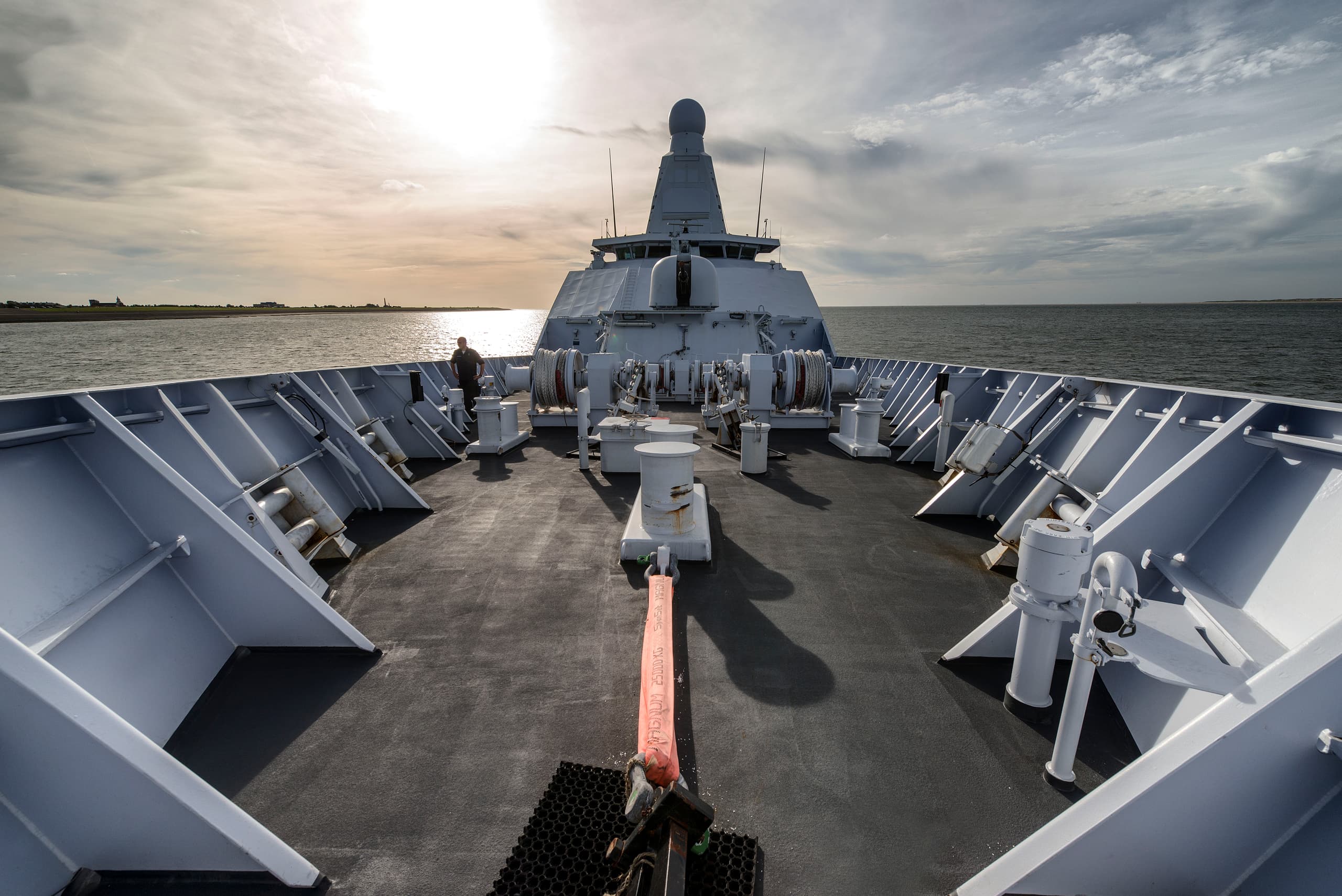
The Holland-class ocean-going patrol vessels (OPVs) are a class of four modern patrol ships operated by the Royal Netherlands Navy (Koninklijke Marine). Designed primarily for maritime security, patrol, counter-piracy, counter-drug and coast-guard duties, the class combines a relatively large 3,750-ton hull with an unusually advanced sensor suite for an OPV. Their distinctive Thales Integrated Mast combines air and surface-search radars, electro-optical systems and communications into a single integrated sensor complex.
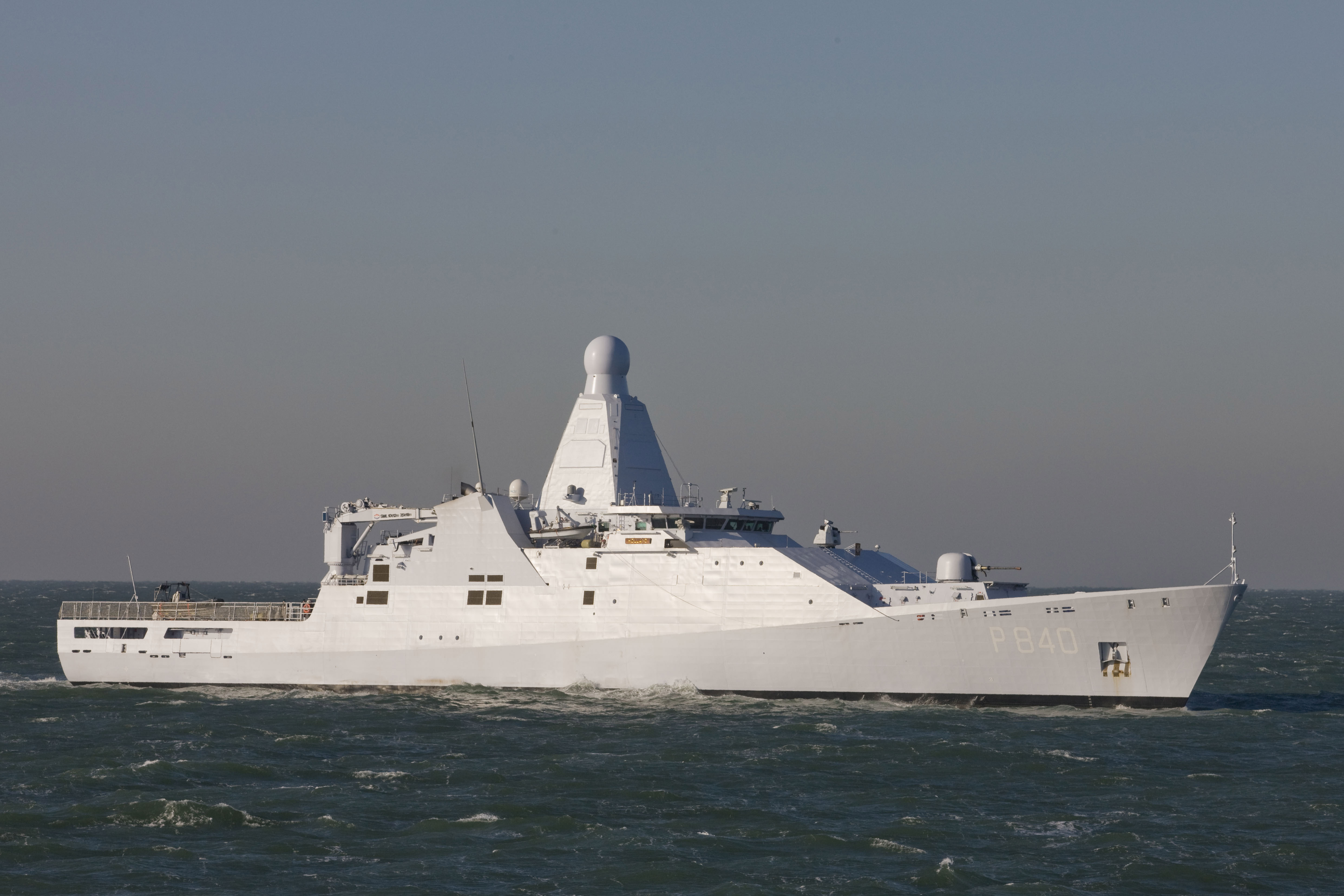
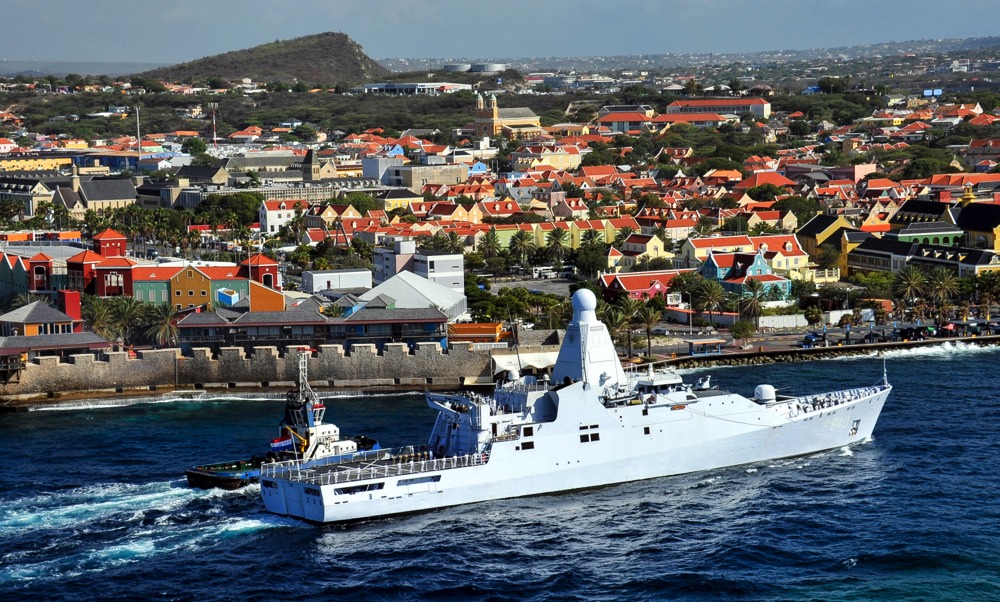
Four ships were constructed: HNLMS Holland (P840), HNLMS Zeeland (P841), HNLMS Friesland (P842) and HNLMS Groningen (P843). Built by Damen Schelde Naval Shipbuilding, with construction of the hulls carried out in Romania and final fitting-out in Vlissingen, the ships entered Dutch service between 2012 and 2013.
TL;DR: Modern Dutch ocean-going patrol vessel with a 76 mm gun, 30 mm autocannon, advanced phased-array radar and an NH90 helicopter.
History
Spoiler
Following the end of the Cold War, the Royal Netherlands Navy increasingly required vessels capable of performing maritime security and constabulary duties without deploying expensive frigates for relatively low-intensity missions. Operations against piracy, drug trafficking and other forms of maritime crime required ships capable of remaining at sea for extended periods, while still possessing sufficient sensors and armament to deal with lightly armed threats.
This led to the development of the Holland-class ocean-going patrol vessel, or OPV. Rather than being designed as conventional frontline warships, the vessels were intended for missions at the lower end of the spectrum of force, including coast-guard duties, counter-piracy, counter-drug operations, maritime security, humanitarian assistance and search-and-rescue. The Royal Netherlands Navy also retained the ability to deploy the ships in international task groups when required.
The class consists of four ships named after Dutch provinces: Holland, Zeeland, Friesland and Groningen. The lead ship, Holland, was laid down on 8 December 2008, launched on 2 February 2010, and commissioned on 6 July 2012. Zeeland, Friesland and Groningen followed between 2012 and 2013.
HNLMS Holland (P840), the lead ship of the class.Construction and Entry into Service
Construction was undertaken by Damen Schelde Naval Shipbuilding. The hull of Holland was constructed in Romania before the vessel was transported to Vlissingen for completion and fitting-out. The same general construction method was subsequently used for the later ships of the class.
The four vessels entered service between 2012 and 2013 and became an important component of the Royal Netherlands Navy’s maritime-security capabilities. Their relatively small crew, long endurance and large accommodation capacity allowed them to undertake extended patrols without the manpower requirements of a conventional frigate.
The ships were designed to accommodate approximately 50 permanent crew members and 40 additional personnel, such as a helicopter detachment or medical team. They can additionally accommodate up to 100 evacuees, making the class suitable for humanitarian and evacuation operations as well as conventional maritime patrols.
Design and Capabilities
At 108 metres long, with a beam of 16 metres and a displacement of approximately 3,750 tonnes, the Holland class is considerably larger than the small patrol boats normally encountered in naval combat. Propulsion is provided by a CODELOD combined diesel-electric/diesel system, with two MAN 12V28/33 diesel engines producing approximately 5,400 kW each. The ships can reach approximately 20–21.5 knots.
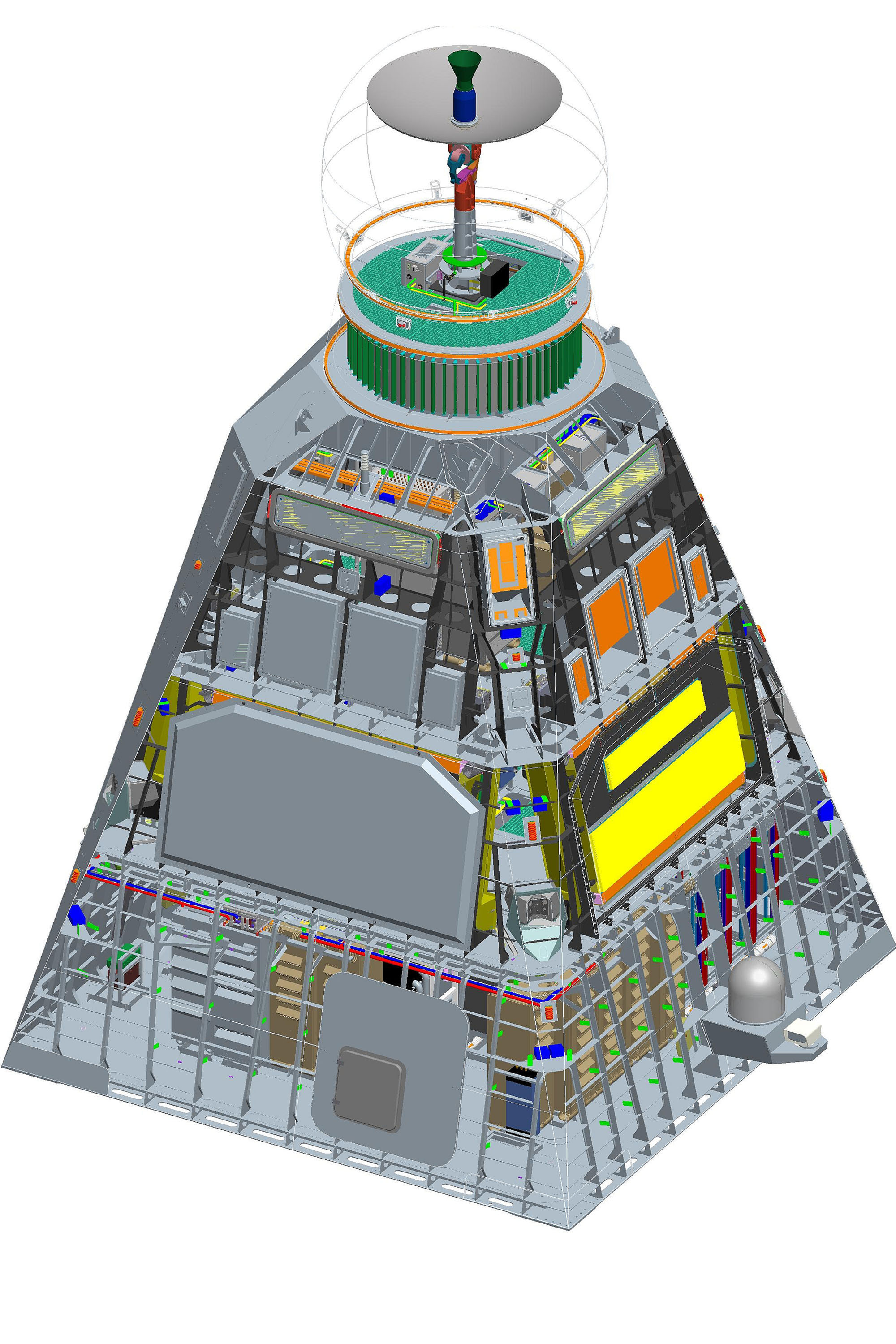
One of the most distinctive aspects of the class is its Thales Integrated Mast. Instead of distributing individual radar and electro-optical systems around a conventional superstructure, the major sensors are concentrated into a single integrated mast. The system incorporates the SeaMaster 400 (SMILE) phased-array air-warning radar, SeaWatcher 100 (SEASTAR) active phased-array surface-search radar, and GateKeeper electro-optical/infrared surveillance system.
Thales Integrated Mast
This gave the Holland class an unusually sophisticated situational-awareness capability for an OPV. The SeaMaster 400 provides air surveillance, while the SeaWatcher 100 is optimised for detecting and tracking small surface targets, including difficult low-profile targets in littoral environments. The GateKeeper system provides 360-degree electro-optical and infrared surveillance.
Armament
Despite its sophisticated sensor suite, the Holland class is deliberately lightly armed. Its primary weapon is a single OTO Melara 76 mm Super Rapid naval gun mounted on the bow. The weapon has a high rate of fire and provides the ship with a substantial surface-engagement capability despite the vessel’s patrol-oriented design.
30 mm OTO Melara Marlin WS
Secondary armament consists of a 30 mm OTO Melara Marlin WS remotely operated autocannon and two remotely operated 12.7 mm OTO Melara Hitrole NT weapon stations. The ships also have positions for six manually operated FN MAG 7.62 mm machine guns. Unlike Dutch frigates of this era, the Holland class carries no anti-ship missiles, SAMs or dedicated CIWS.
The Holland class’ 76 mm OTO Melara Super Rapid main gun.Aviation Facilities
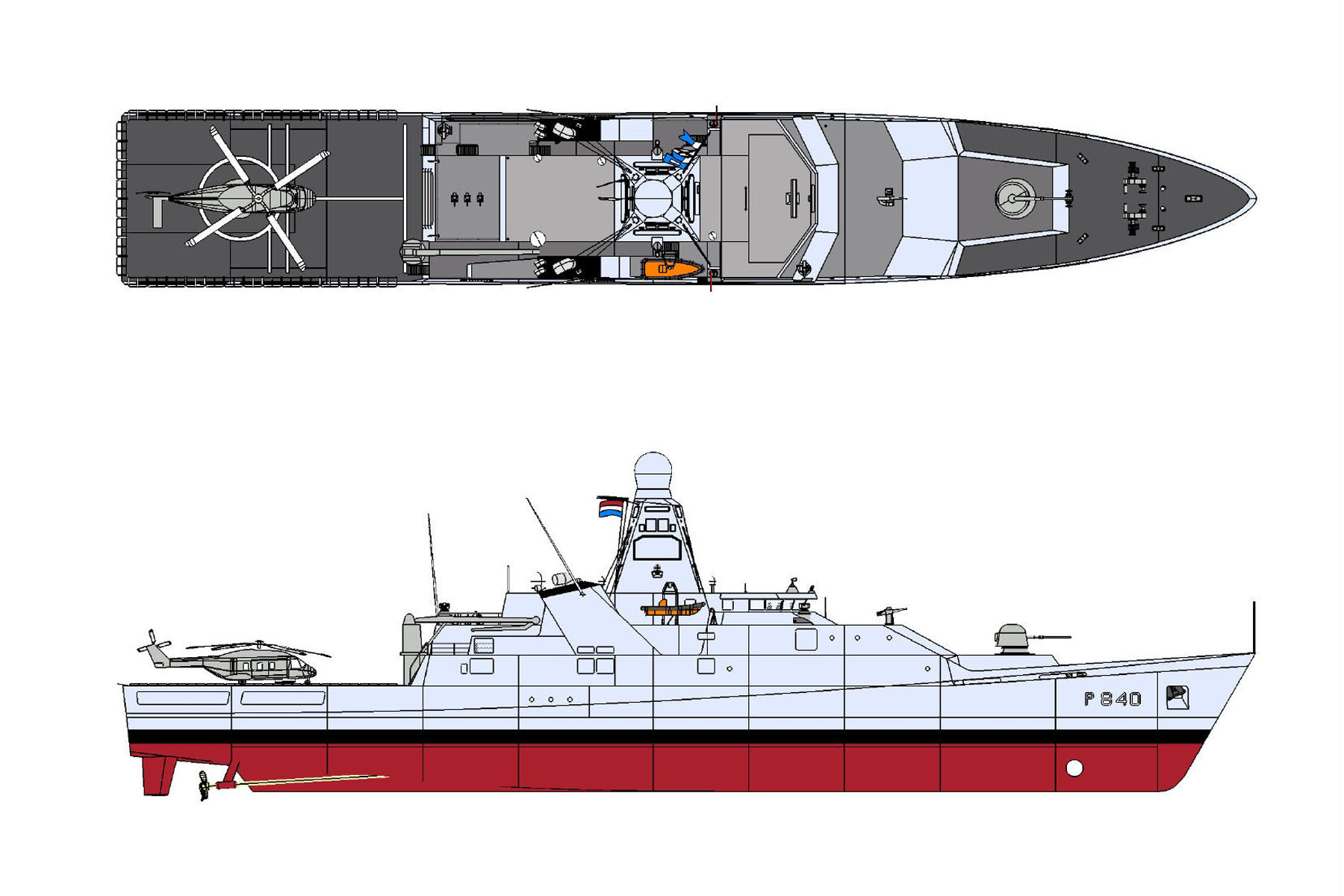
A major advantage of the design is its aviation capability. The Holland class possesses a large flight deck and hangar capable of supporting a NH90 NFH maritime helicopter. The helicopter significantly expands the ship’s reconnaissance, search-and-rescue and maritime-interdiction capabilities, allowing the vessel to operate well beyond the effective range of its own guns.
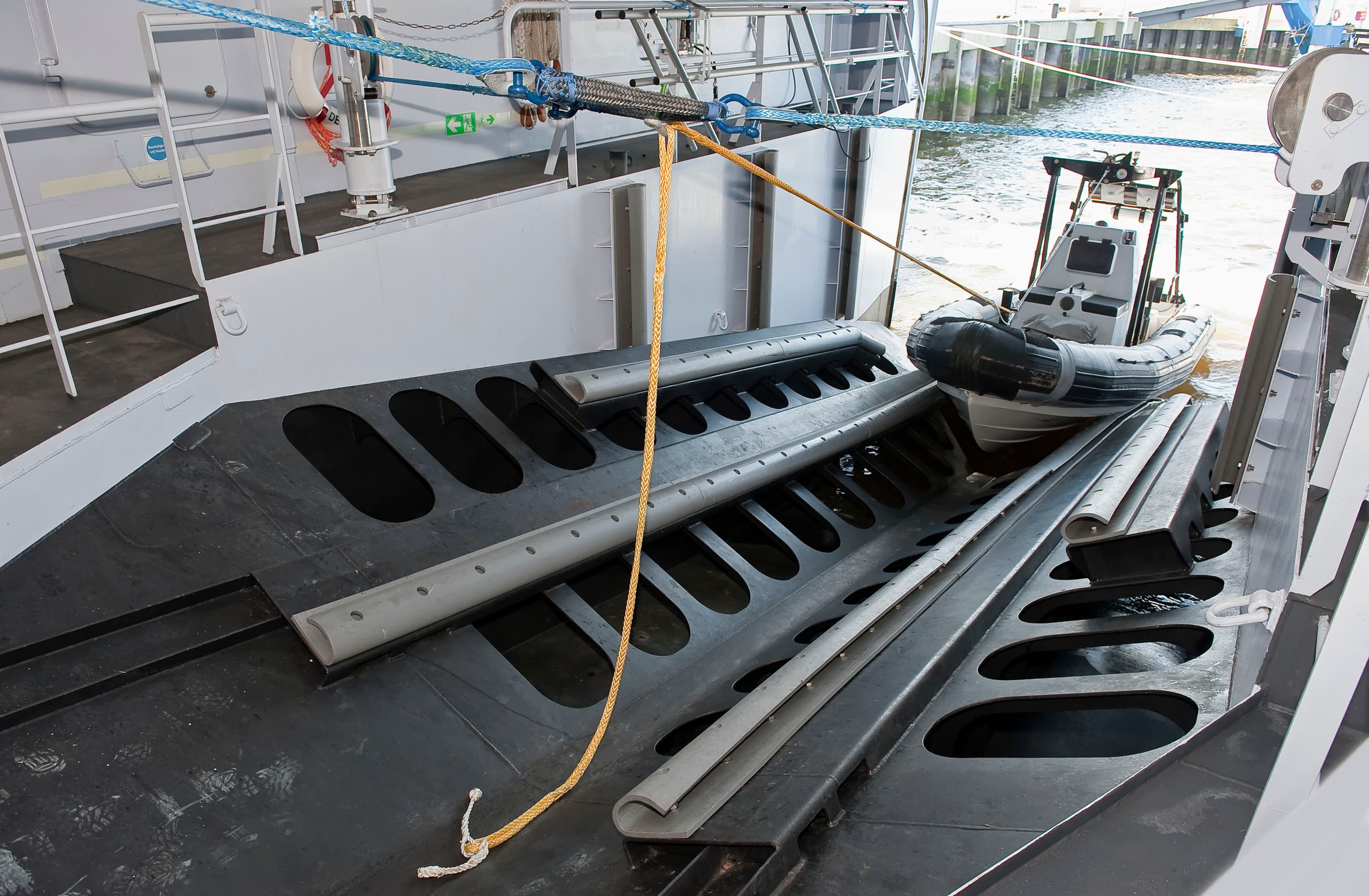
The vessels can additionally carry two FRISC fast interception craft, which can be deployed for boarding operations, interception and special-forces tasks. This combination of helicopter and fast boats makes the Holland class particularly well suited to maritime-interdiction gameplay.
In Dutch service, the class has therefore occupied a rather unusual position: despite being considerably larger and more technologically sophisticated than a conventional patrol boat, its relatively light armament reflects its intended use for maritime security rather than high-intensity naval warfare.

Specifications
Characteristic Detail Class Holland-class Ocean-Going Patrol Vessel (OPV) Displacement ~3,750 tonnes Length 108 m Beam 16 m Draft 4.55 m Speed ~21 knots Range ~5,000 nautical miles at 15 knots Crew 50 + 40 additional personnel Propulsion CODELOD combined diesel-electric/diesel Engines 2 × MAN 12V28/33 diesel engines Power 2 × 5,400 kW Radar Thales SeaMaster 400 + SeaWatcher 100 Electro-optics Thales GateKeeper Integrated Mast Thales Integrated Mast Sonar Mine-detection sonar Main Gun 1 × OTO Melara 76 mm Super Rapid Secondary Armament 1 × OTO Melara 30 mm Marlin WS Machine Guns 2 × 12.7 mm Hitrole NT + 6 × 7.62 mm FN MAG Aircraft 1 × NH90 NFH maritime helicopter Boats 2 × FRISC fast interception craft Missiles None SAM / CIWS None
Place in War Thunder
The Holland-class would provide a very different type of Dutch vessel for roughly rank V Coastal gameplay. Rather than attempting to compete directly with missile frigates, it would occupy the space between the smaller coastal patrol vessels and the heavily armed (missile) frigates: a large, fast-enough patrol ship with an excellent sensor suite but relatively limited direct firepower.
Possible Configuration:
- Holland-class OPV: High-tier coastal vessel with the standard Dutch armament and NH90 helicopter.
Gameplay Role:
- Medium-range surface combat using the 76 mm gun.
- Close-range defence with the 30 mm and 12.7 mm weapons.
- Helicopter-supported reconnaissance and anti-surface operations.
Strengths:
- Powerful and fast-firing 76 mm Super Rapid main gun.
- Effective 30 mm secondary autocannon.
- Advanced phased-array radar and electro-optical sensor suite.
- Large hull with substantial survivability compared with small patrol boats.
- NH90 helicopter and two FRISC boats.
Weaknesses:
- No anti-ship missiles.
- No surface-to-air missiles.
- No dedicated CIWS.
- Relatively low top speed for a modern combat vessel.
- Large hull makes it an easy target for heavier naval guns.
- Light armament compared with contemporary frigates and destroyers.
The Holland class would consequently be a sensor-focused patrol vessel rather than a conventional frontline warship, which is currenlty not a gameplay that’s implemented. Its main advantage would be its excellent situational awareness and versatile gun armament, while its lack of missiles would prevent it from simply becoming another modern missile combatant.
Pictures
Sources
References
Army Recognition. (n.d.). Holland class. https://www.armyrecognition.com/military-products/navy/patrol-vessels/holland-class
Ministerie van Defensie. (n.d.). Patrouilleschip (OPV). https://www.defensie.nl/onderwerpen/m/materieel/schepen/patrouilleschepen
Ministry of Defence. (2022, April 1). Ocean-going patrol vessel (OPV). https://english.defensie.nl/documents/2022/04/01/ocean-going-patrol-vessel
Marineschepen.nl. (n.d.). Hollandklasse patrouilleschepen. https://marineschepen.nl/schepen/holland.html
SeaForces Online. (n.d.). Holland class offshore patrol vessel OPV. https://www.seaforces.org/marint/Netherlands-Navy/Offshore-Patrol-Vessel/Holland-class.htm