- Yes - In the Tech Tree.
- Yes - Event/BP.
- Yes - Premium.
- No - I would not like to see HMNZS South Sea in game.
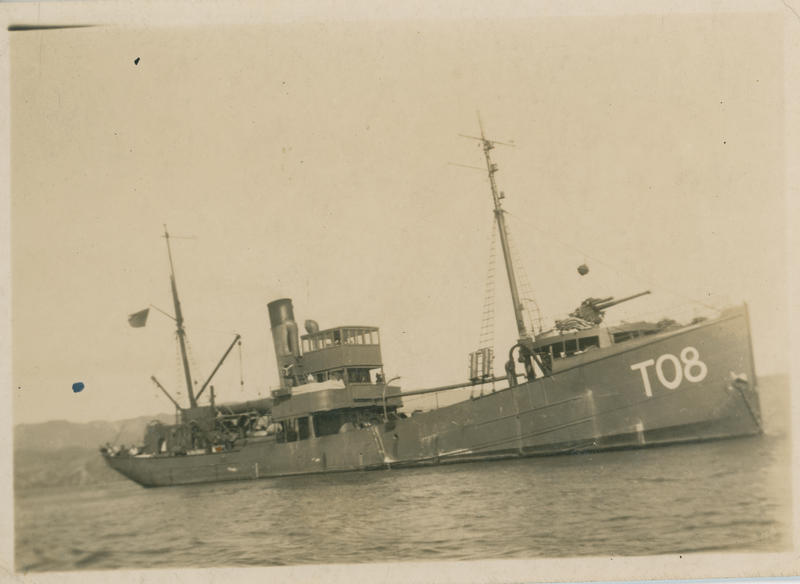
HMNZS South Sea at anchor, (n.d)
Description:
HMNZS South Sea was one of many requisitioned fishing trawlers transformed into minesweepers for the Royal New Zealand Navy (RNZN) during the Second World War. Like a few other requisitioned vessels, Such as the HMNZS Nora Niven, she served in the Royal Navy (RN) as a minesweeper during the First World War.
This suggestion is for her 1942 fit, when she was rammed by the Ferry, TSS Wahine and sank.
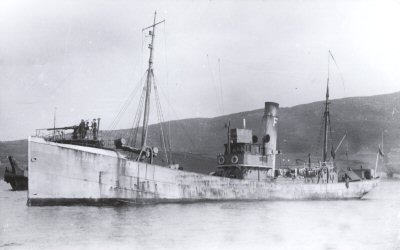
The future HMNZS South Sea as the HMT Ferriby during her WW1 service (1915)
History:
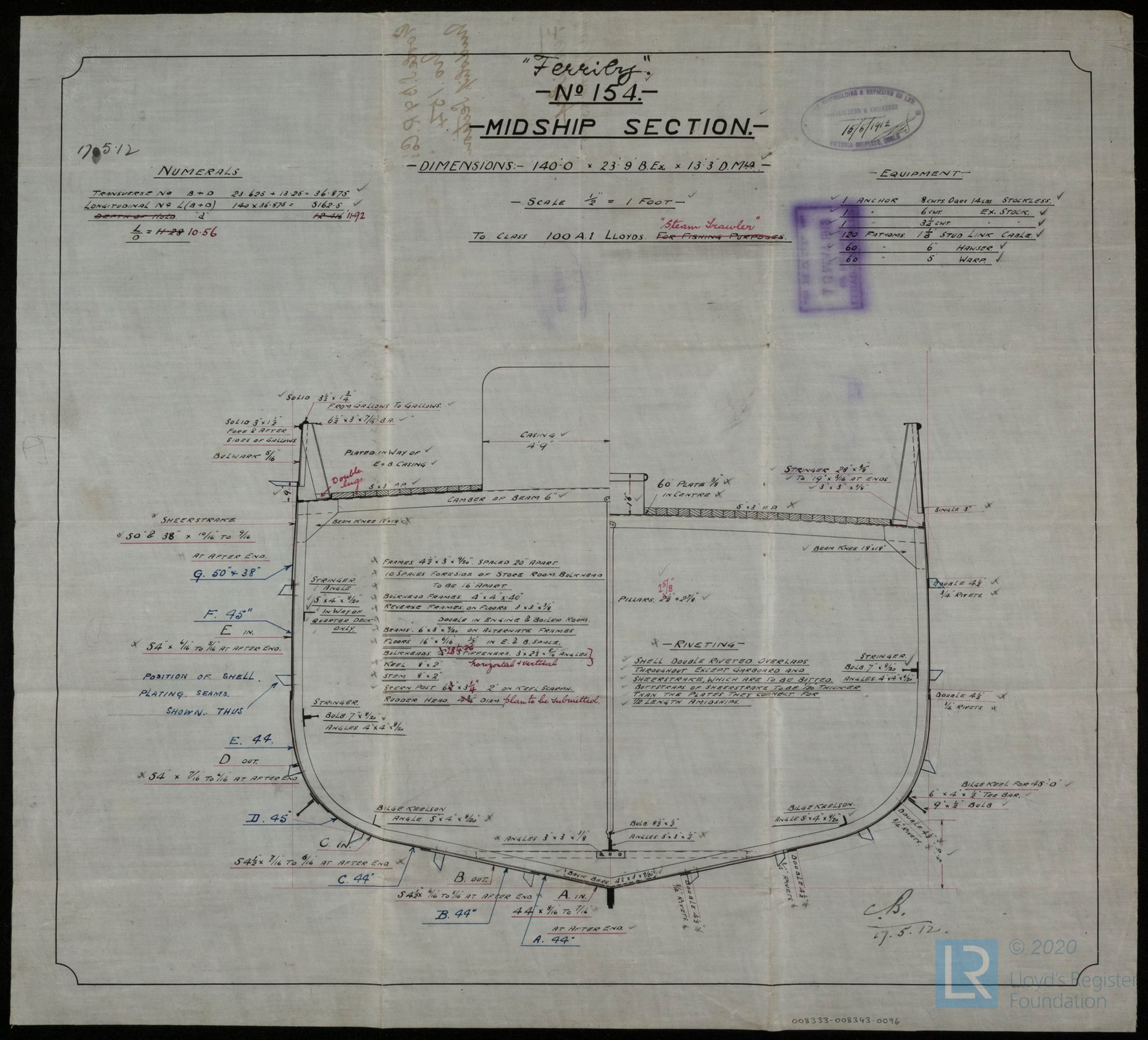
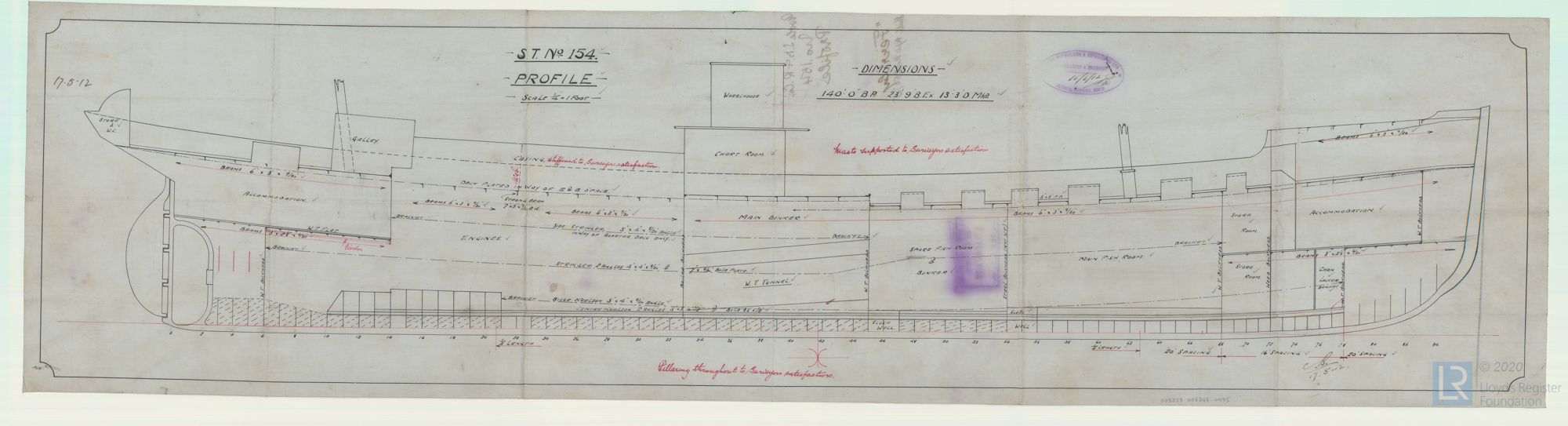
Laid down as the FV. Ferriby by Goole Shipbuilding and Repair Pty Ltd, at Goole, England in 1912, fitting out and completing at Goole in 1913. She would be used within the civilian British trawling fleet, being owned by one James Collingson, at St.Andrews Dock, Hull. During her time here she would also use a ketch rig as to assist her engine.
She would fish around Hull for about two years before being requisitioned for use as an armed trawler by the Royal Navy, where she would gain the prefix HMT, a single 12pdr 12cwt main gun, and depth charges in 1915. She would serve through WW1 patrolling around Liverpool, only being returned to her original owners in 1919.
Upon her return, and after her armament was stripped by the Navy, she would continue operating under James Collingson out of hull. Her ownership would be transferred to Stanley Collinson in 1923, but would continue operating out of Hull as a fishing trawler. She would be sold to P.J. Dowell of the South Seas Fishing Co Ltd, Christchurch, NZ, in 1932, and would be renamed to the FV South Sea. She would sail to New Zealand the same year.
During her service in New Zealand as a trawler, she would operate from the Chatham Islands, often sailing to Lyttelton and Wellington to offload her catch. She would be accidentally stranded in Wellington Harbour on the 30th of April 1933, and again in the Chatham Islands on the 21st of October 1935.
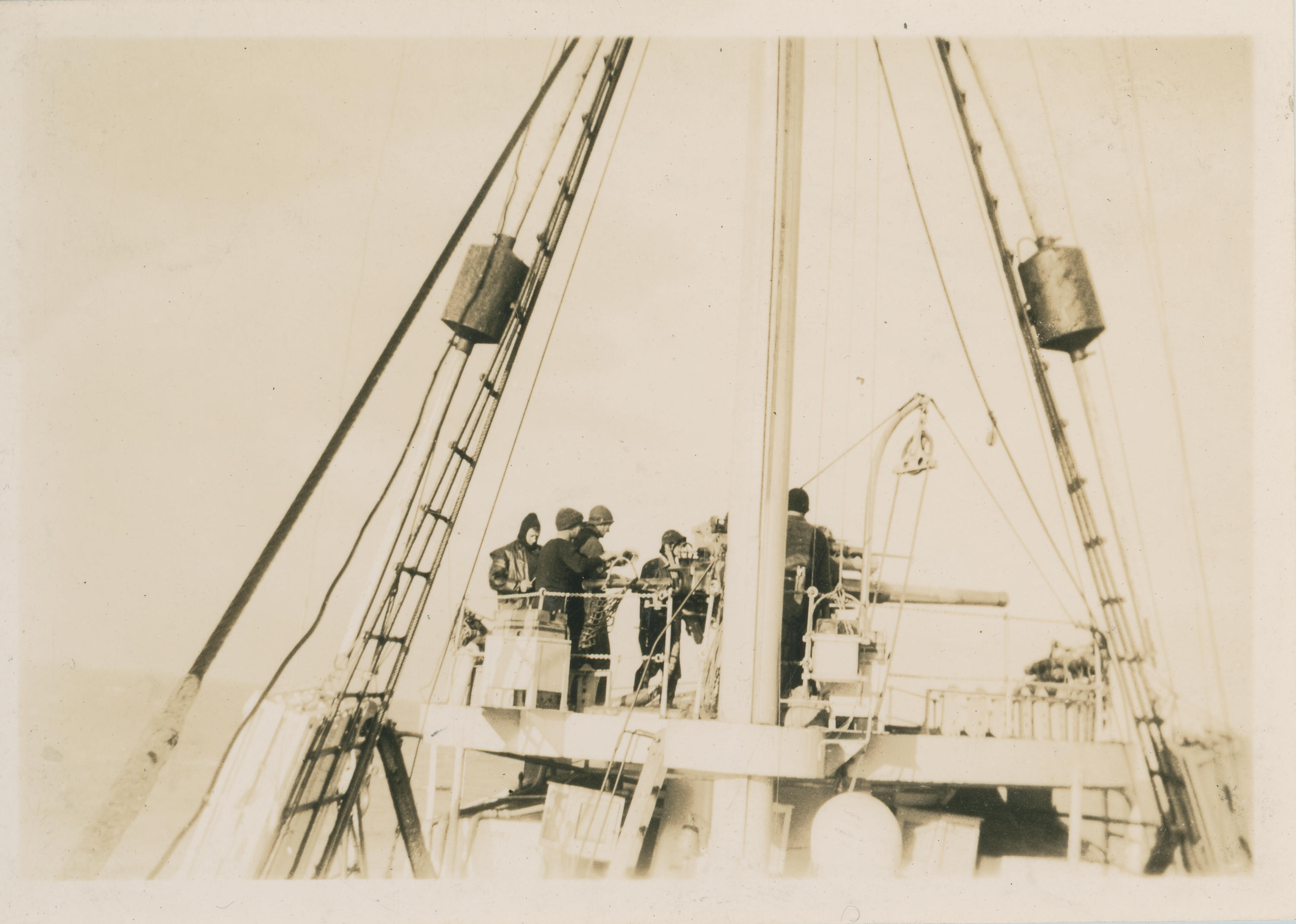
HMNZS South Sea’s QF 4-inch gun, (n.d).
Unlike some other vessels, which had been shortlisted for conversion into minesweepers prewar, and whose conversion started immediately as war was declared, FV South Sea was only requisitioned when a German minefield was discovered in the approaches to the Wellington Harbour, and the NZ Naval Board, (NZNB) realised that more mine sweeping capable vessels were needed for the fleet while purpose built vessels were being acquired.
For this she was placed into refit at the Patent Dock, Wellington, on the 25th of July 1940. This refit included the fitting of a single QF 4-inch Mk.V on a high angle mount to her fo’c’sle, two .303 Brens to her bridge wings, two depth charge rails, two depth charge throwers, and mine-sweeping gear astern. She would commission from these works on the 12th of August 1940. Once she commissioned from these works she gained the prefix HMS, as the RNZN did not exist, still being apart of the Royal navy.
She would patrol around the Wellington area, as a ASW/Raider patrol vessel, stopping vessels as part of operations to stop German merchant raiders in the area, such as the Orion, but also ASW patrols to find and destroy any potential U-boats in the area. She would also participate in mine sweeping operations with other requisitioned vessels in the 2nd Minesweeping group of the 1st Minesweeping Flotilla (later 25th Minesweeping Flotilla) with the other trawler at Wellington, the HMS (later HMNZS) Futurist, but also the port minesweeper Nova Niven and Rata.
Her prefix, along with all other ships controlled by the New Zealand Naval Board, would be changed to HMNZS on the 1st of October 1941, as the RNZN had finally been established.
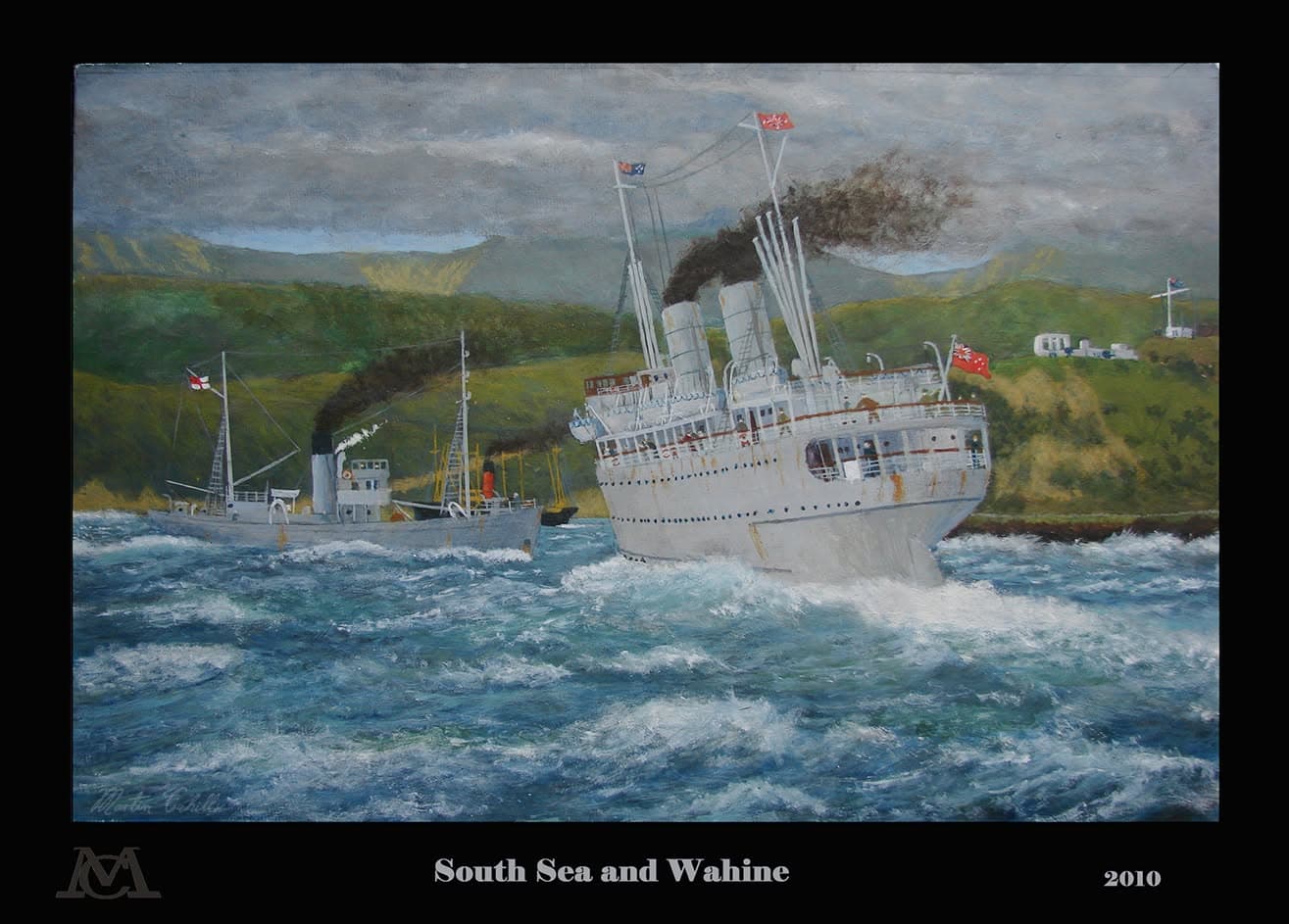
On the 19th of December 1942, HMNZS South Sea, under command of Temporary Lieutenant Peter Bradley, and the HMNZS Rata were patrolling from Halswell and Matiu/Somes Island, when at 8.30 she failed to give way to the Inter-Island Ferry, TSS Wahine, as Temp. Lt Bradley believed he could clear the Wahine’s bow in time. The laws of the sea dictated that the larger ship did have right of way, but the HMNZS South Sea did not change course nor speed on approach.
The captain of the Wahine, Capt. A Howie, saw this and tried to avoid disaster at the last second, ordering the engines astern and turn to starboard, however the Wahine’s bow still rammed the South Sea amidships at 8.34, knocking the helmsman unconscious, being thrown into the sea with two other men, the helmsman would drown but the other two would surivive. The survivors were picked up by HMNZS Rata, and the Scow The Portland, who was nearby. HMNZS South Sea was taken in tow by the tug Toia and HMNZS Rata, in an attempt to tow her to Evans Bay, but she sank at 9.20am as she had taken on too much water. The Wahine was cleared to continue to port, after her bow was inspected by a diver.
The captain of the South Sea was found at fault for not having taken adequate bearings off the Wahine, and not giving way as required under Articles 22 and 23 of the Regulations for Preventing Collisions at Sea, when an inquiry was placed as to her sinking.
Her wreck would be partially salvaged by the scow Vesper in 1943, recovering the 4" gun, the two bren guns, 13 depth charges, radio gear, and her winch. The masts were also removed. In 1944, an old depth charge and 1.25lbs of TNT were used to blow off her upperworks, including the wheelhouse and funnel, as they increased the height of the wreck, and thus were dangerous to shipping.
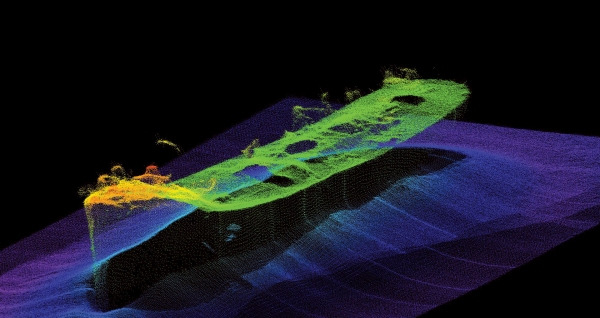
Her wreck was rediscovered in 1974, by Ian Francis of the Cook Strait Divers Club, who was given salvage rights. The Portholes, binnacle, nav lights were recovered, however the aft superstructure, gun platform, and engine room skylights remain. She lies on an even keel at 21m, where she remains to this day.
| General Characteristics: | |||||
|---|---|---|---|---|---|
| Name: HMNZS South Sea | |||||
| Country: New Zealand | |||||
| Type: Minesweeping trawler | |||||
| Class name: Ferriby | |||||
| Year of commission: 1941 | |||||
| Refit: 1942 | |||||
| ----------------------------------------------------------------------------------------------------------------------------------------- | |||||
| Dimensions: | |||||
| Length: 140ft (42.7m) | |||||
| Beam: 23.7ft (7.25m) | |||||
| Draught: 12.4ft (3.78m) | |||||
| Displacement: 324grt | |||||
| ----------------------------------------------------------------------------------------------------------------------------------------- | |||||
| Propulsion: | |||||
| Powerplant: 1x coal fired boiler driving 1x triple expansion steam @ ~550ihp (84nhp) | |||||
| Speed: 10kt | |||||
| Endurance: unknown | |||||
| ----------------------------------------------------------------------------------------------------------------------------------------- | |||||
| Armament & sensors: | |||||
| Compliment: ~30 | |||||
| Primary armament: 1x1 QF 4-inch Mk.V on HA mount | |||||
| Secondary armament: 1x2 .303 Bren | |||||
| Tertiary armament: 2x DCR, 2x DCT, minesweeping | |||||
| Radar: -nil | |||||
| Sonar: -nil |
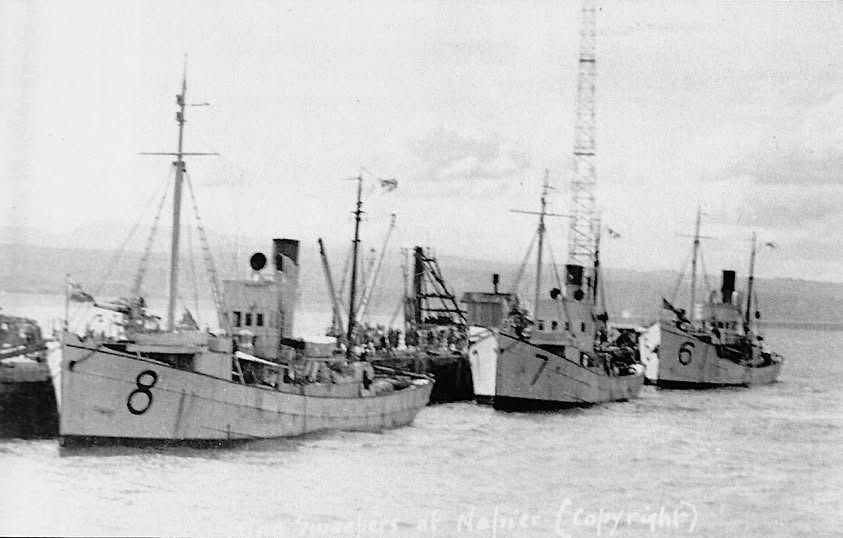
HMNZS South Sea (8) sitting at Napier
Extra Photos:
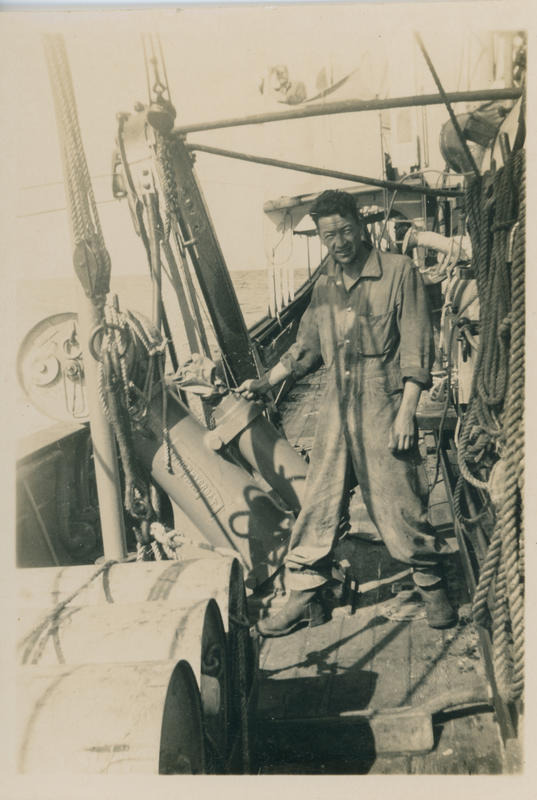
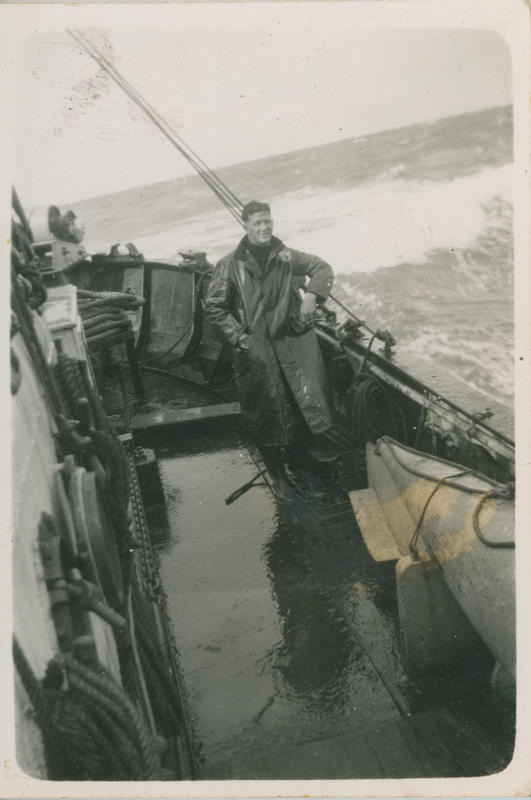
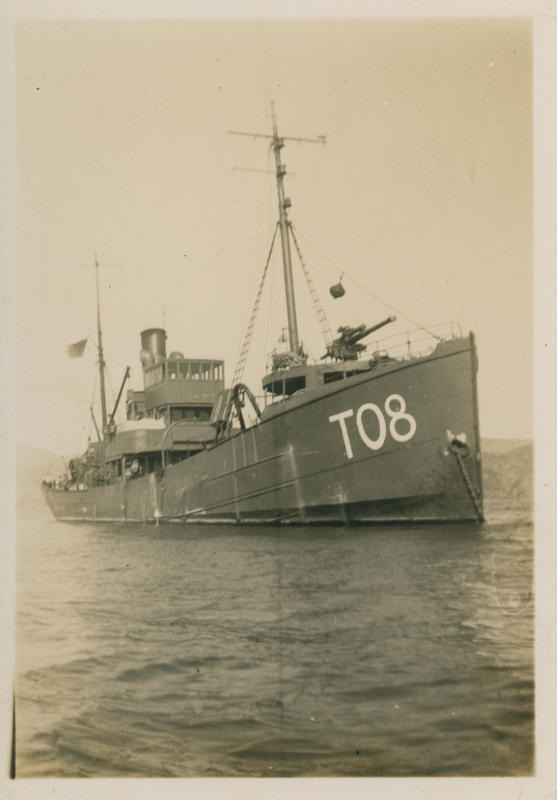
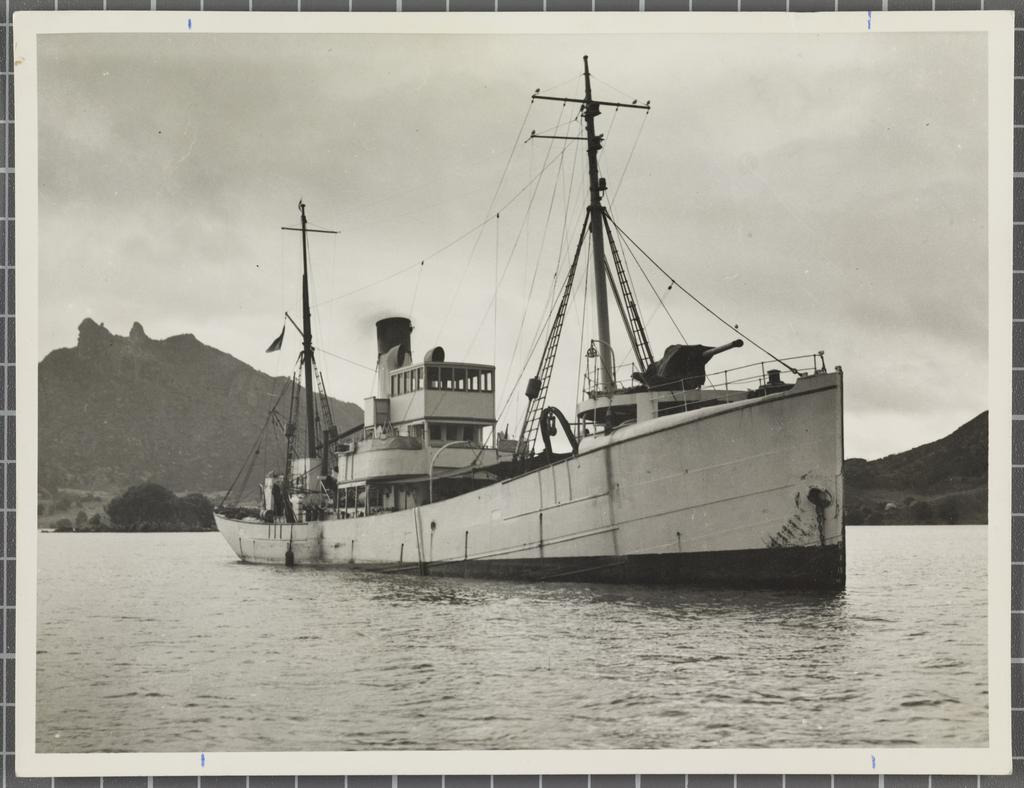
Sources:
Gillett, R. (1983). Australian and New Zealand Warships 1914-1945 (p.294)
Harker. J (2000). The Rockies, New Zealand Minesweepers at War (pp.40, 56-59, 64-69)
Mercantile Navy List, 1915, (p.208)
R.Robinson (2019) Fishermen, The fishing industry and the great war at sea (p.71)
A. Dodd (2013) Coastal & Underwater Archaeological sites of the Wellington region (pp.223-234)
Deep reveal | Earth Sciences New Zealand | NIWA
WRECK WRAK EPAVE WRACK PECIO
Royal Navy Auxiliary Patrol ships of World War 1, based on British Warships, 1914-1919 by Dittmar and Colledge
General Question 3 – RNZN Communicators Association