- Yes
- No
- In the French BeNeLux sub-tree
- In a future Belgian/BeNeLux tech tree
- I said “No” in the first question
- Other (Please explain in the comments)
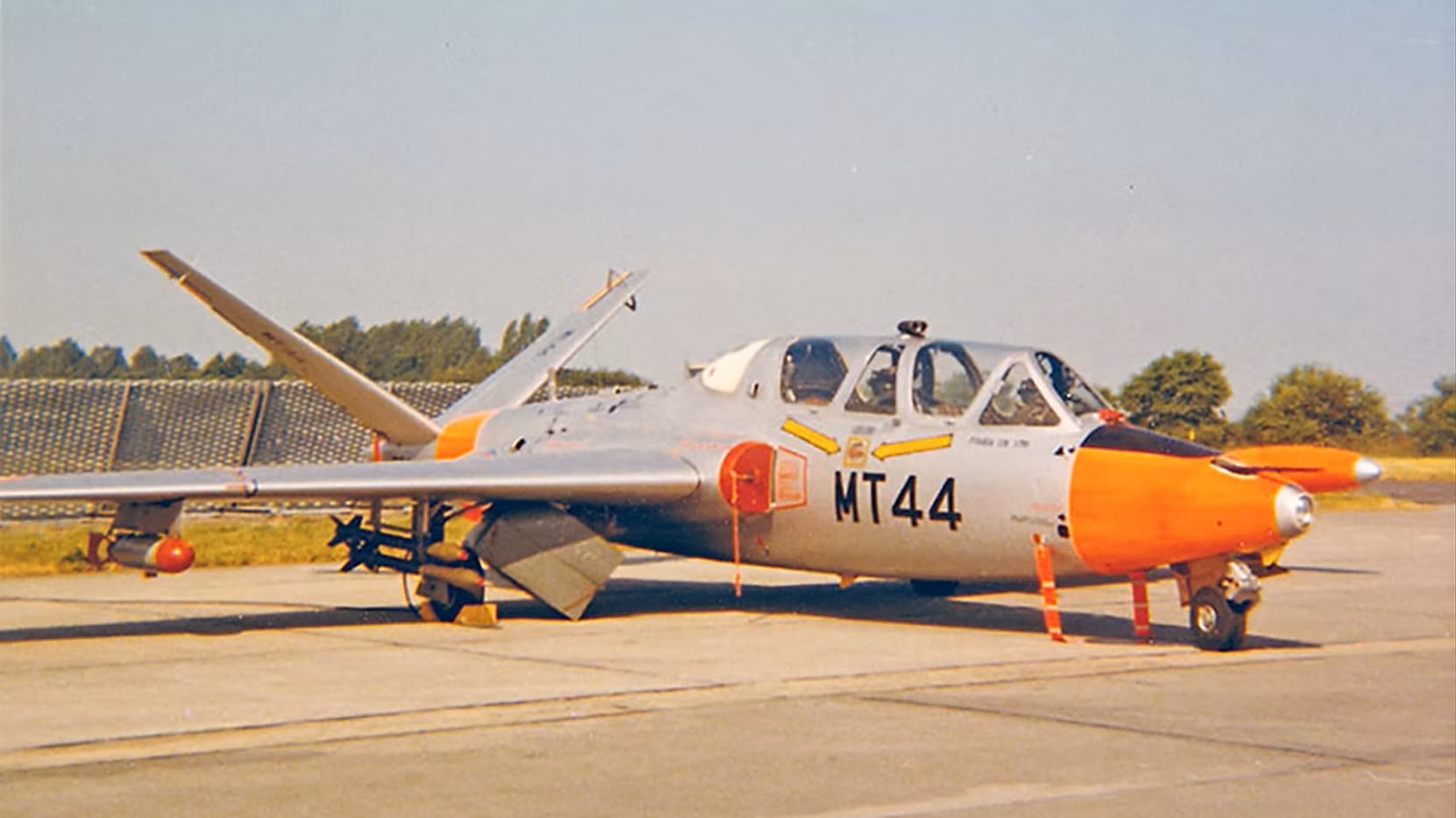
TL;DR: Belgian CM.170-1 Magister featuring twin Marboré II turbojets, nose-mounted 7.5 mm machine guns and underwing rockets as used during the Congo Crisis.
History
History
Origins
The Fouga CM.170 Magister was developed during the late 1940s as France’s first purpose-built jet trainer. Derived from the aerodynamic research conducted on the Fouga CM.8 and CM.88 gliders, the new aircraft combined excellent low-speed handling with the performance expected of a modern jet aircraft. Powered by two Turbomeca Marboré turbojet engines and featuring its distinctive butterfly (V-)tail, the prototype first flew on 23 July 1952.
Unlike many contemporary trainers, which were converted from existing fighters, the CM.170 was designed from the outset as a dedicated advanced trainer. Its forgiving handling characteristics, excellent visibility, and economical operation quickly made it one of the most successful jet trainers of the Cold War. Production began in 1953. A total of 929 Magisters were eventually produced, including licence-built aircraft manufactured in Germany, Finland and Israel, making it one of the most successful dedicated jet trainers of the Cold War.
Although primarily intended for pilot training, the Magister could also be fitted with nose-mounted machine guns, rockets, bombs and other light stores. Several operators employed it as a light attack aircraft, most notably during the Six-Day War, the Salvadoran Civil War, and the Congo Crisis.
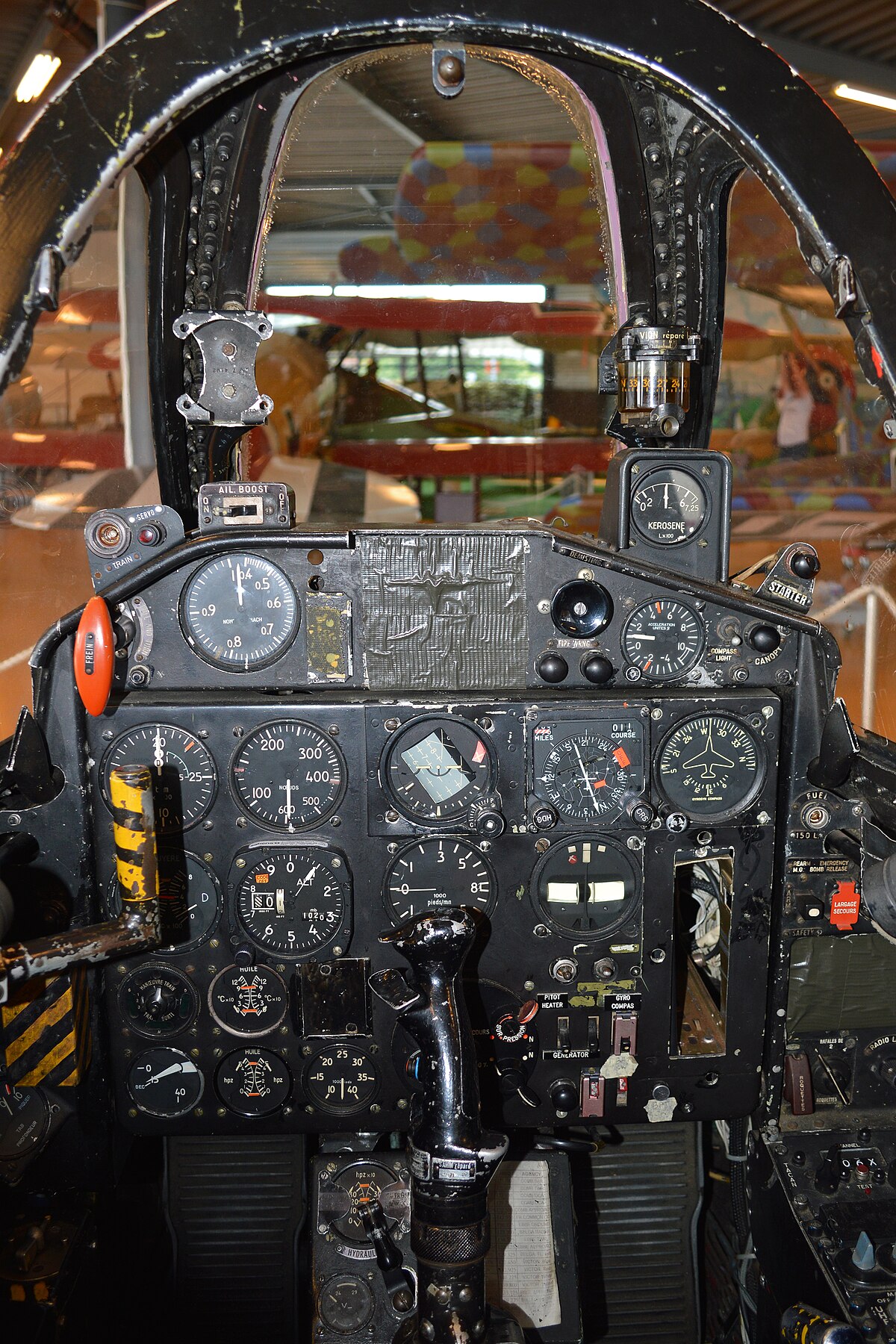
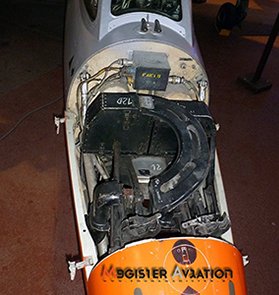
Front cockpit of Fouga CM.170R Magister MT13 at Stampe & Vertongen Museum, Deurne (credit: @Nijntje94 )
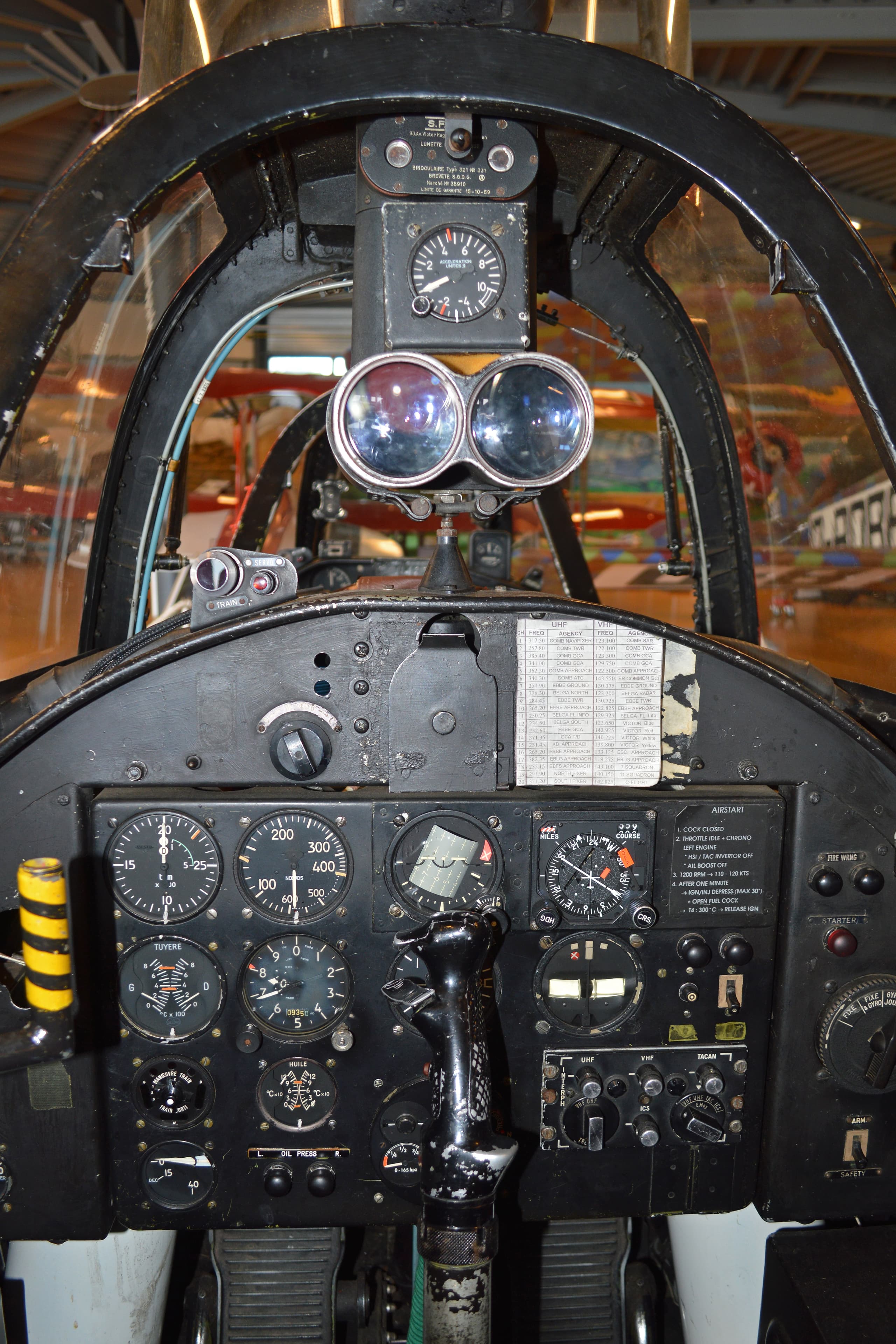
Rear cockpit of Fouga CM.170R Magister MT13 at Stampe & Vertongen Museum, Deurne (credit: @Nijntje94 )Belgian Procurement
In 1959, Belgium ordered 45 Fouga CM.170-1 Magisters, partially financed through Belgian-Dutch cooperation, to replace the aging North American Harvard at the Advanced Flying School (Voortgezette Vliegschool).
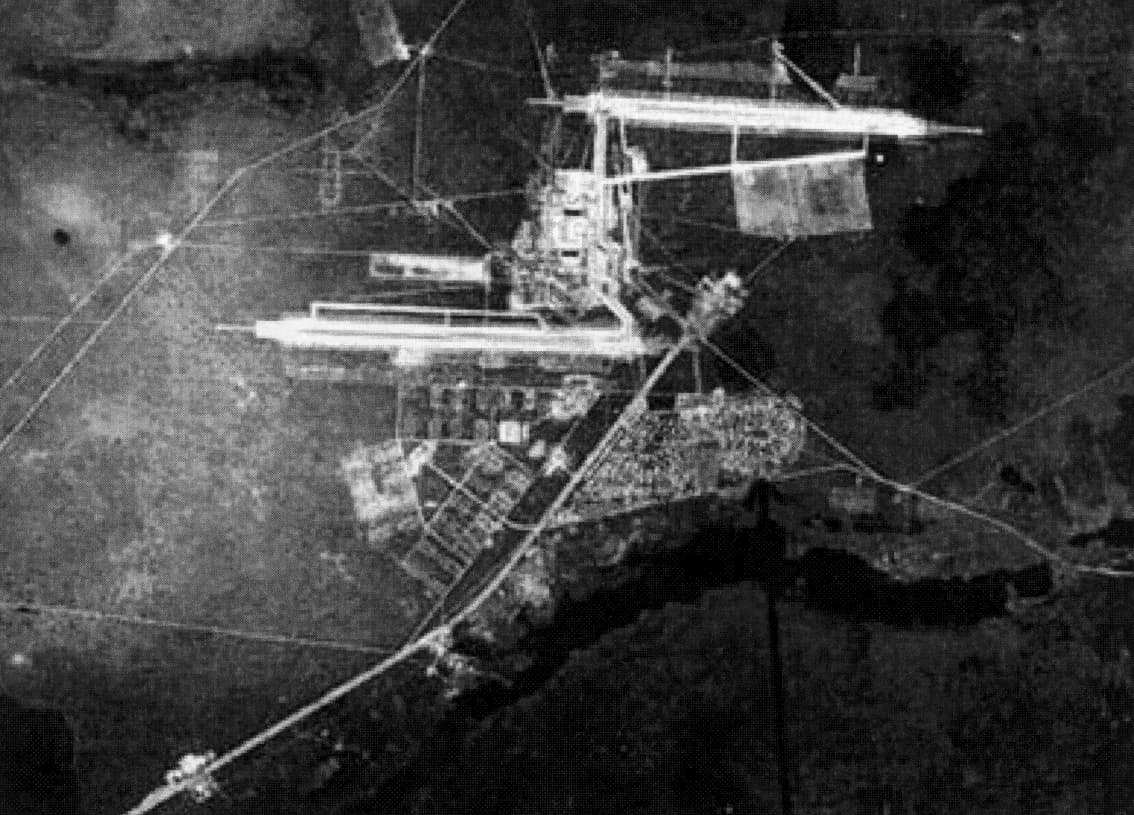
Kamina Air Base (BAKA)The aircraft were intended for use at Kamina Air Base (BAKA) in the Belgian Congo. Since 1949, Kamina had become the Belgian Air Force’s principal overseas training establishment. Located in central Africa, Kamina offered excellent year-round flying weather while also occupying a strategically important position in the event of a wider Cold War conflict. By 1953, Kamina had received a modern runway, new maintenance facilities, a control tower, and infrastructure specifically built for advanced jet training.
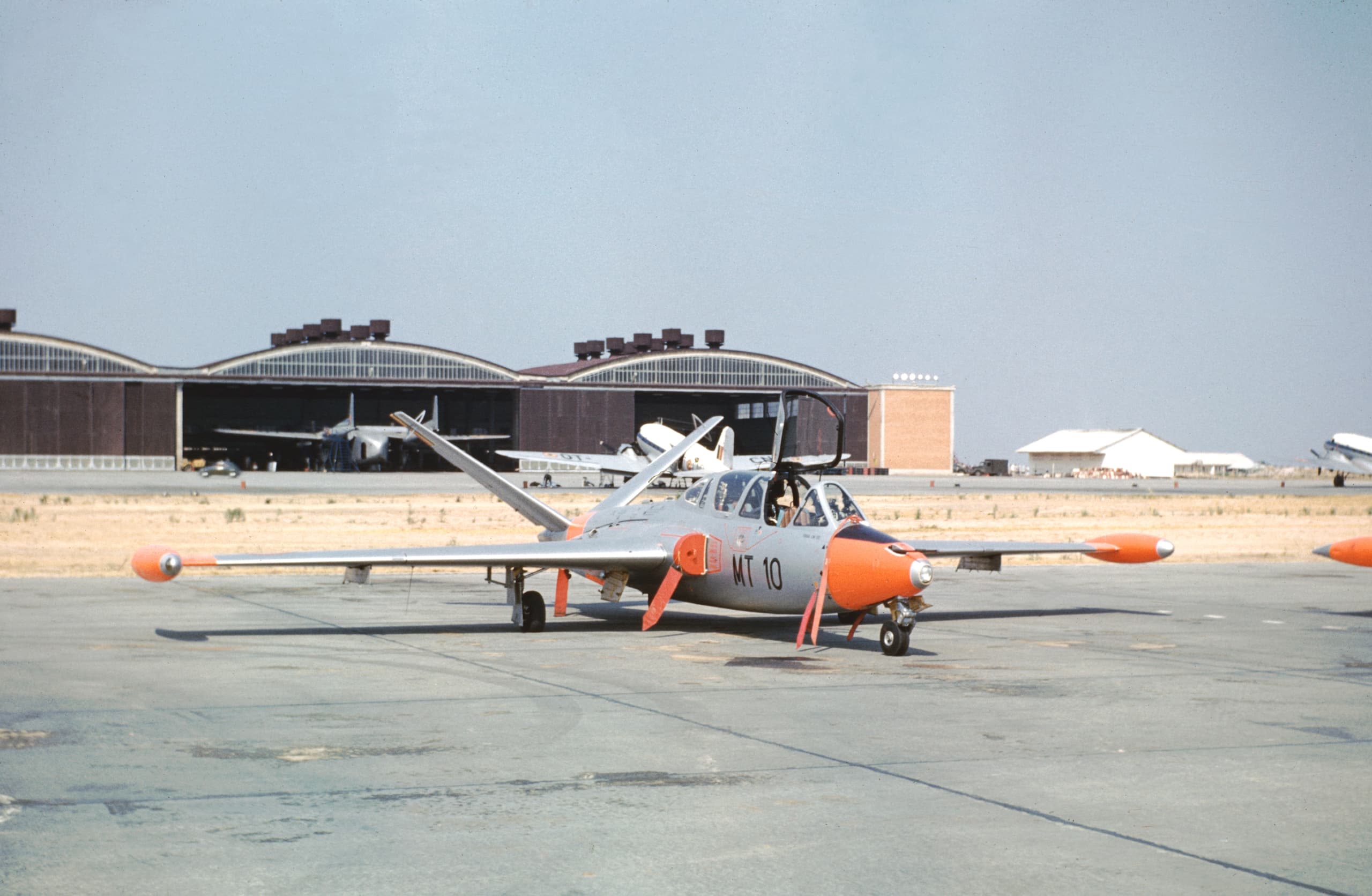
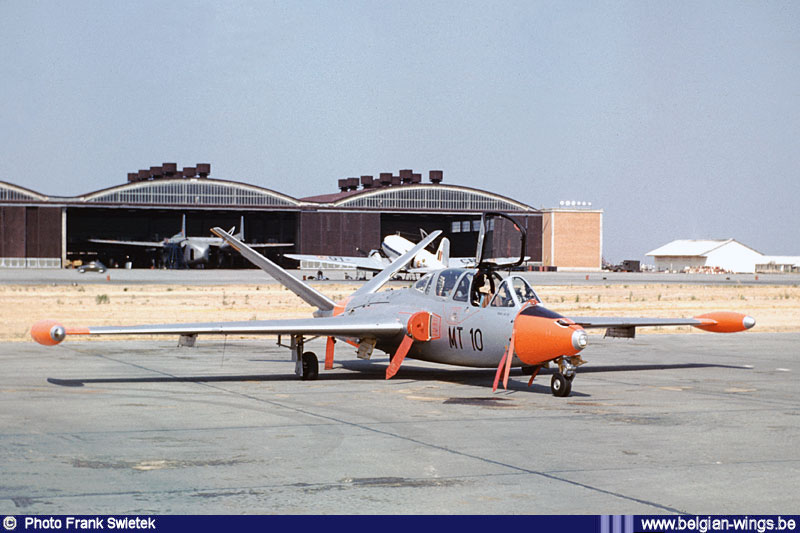
MT-10 at Kamina in 1960The purchase of the Fouga was partially financed through cooperation with the Netherlands, whose student pilots would also receive advanced jet training at Kamina. The first Belgian Magister, MT-1, arrived on 18 January 1960, transported aboard a Fairchild C-119 Flying Boxcar. Over the following months additional aircraft arrived directly from the Fouga factory in Toulouse. By June 1960, twenty Magisters (MT-1 through MT-18, together with MT-23 and MT-24) were operating from Kamina, replacing the Harvard as Belgium’s advanced jet trainer.
The Congo Crisis
Only months after the Fouga entered Belgian service, events in Central Africa dramatically changed its intended role.
On 30 June 1960, the Belgian Congo became independent as the Republic of the Congo. What had been expected to be a relatively orderly transition rapidly descended into chaos. Mutinies erupted within the Force Publique, widespread violence broke out across the country, European civilians became targets of attacks, and the provinces of Katanga and South Kasai declared independence.
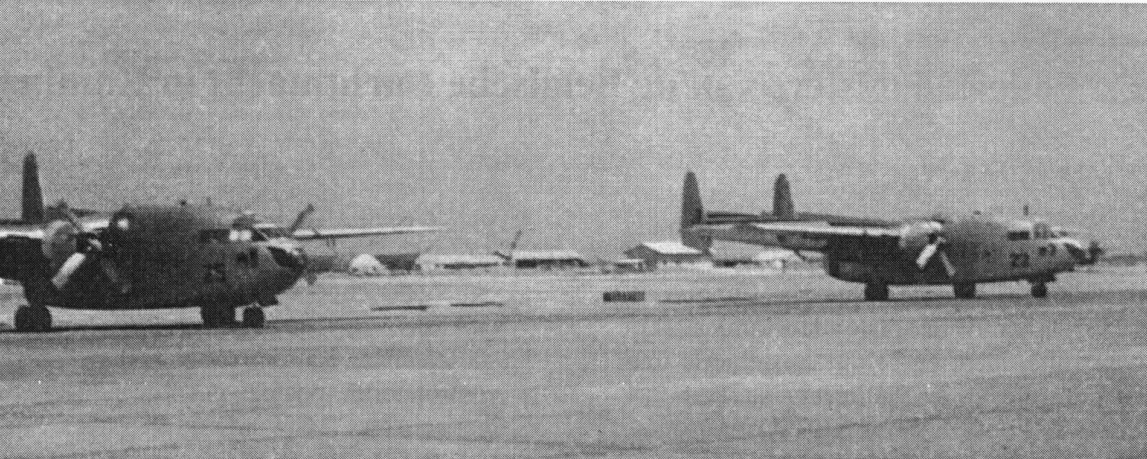
Belgian Air Force C-119 Flying Boxcars at Kamina, ready to transport civilians to safety.In response, Belgium launched an emergency evacuation operation to rescue Belgian and other European civilians trapped throughout the country. Belgian Air Force C-119 Flying Boxcars, Douglas DC-3s, and Alouette II helicopters were tasked with transporting civilians to safety.
The Fouga Magisters, originally intended purely as trainers, suddenly found themselves performing operational missions.
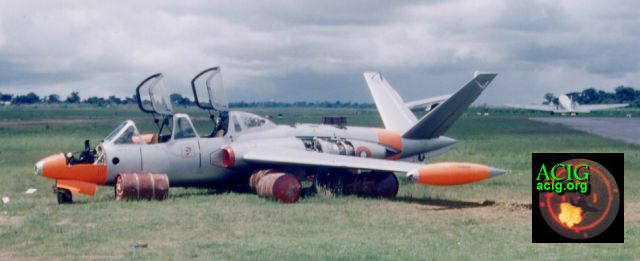
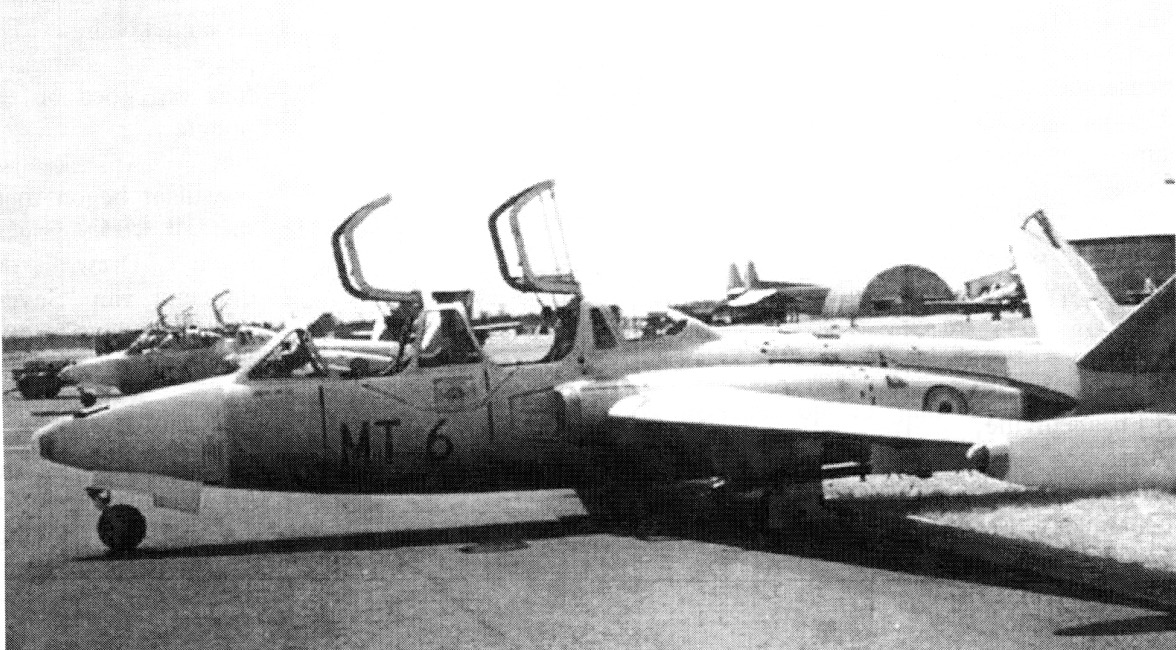
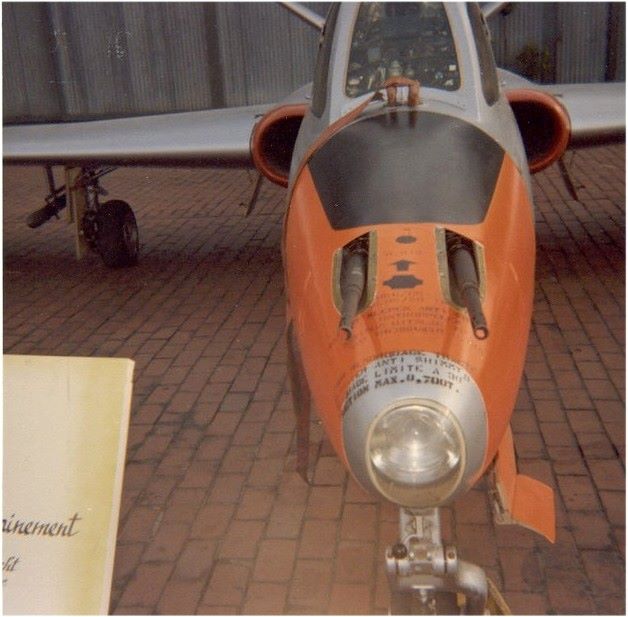
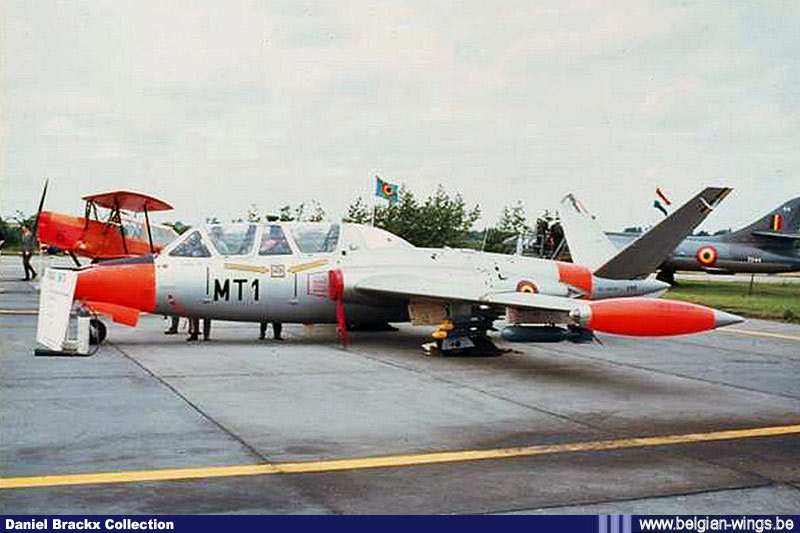
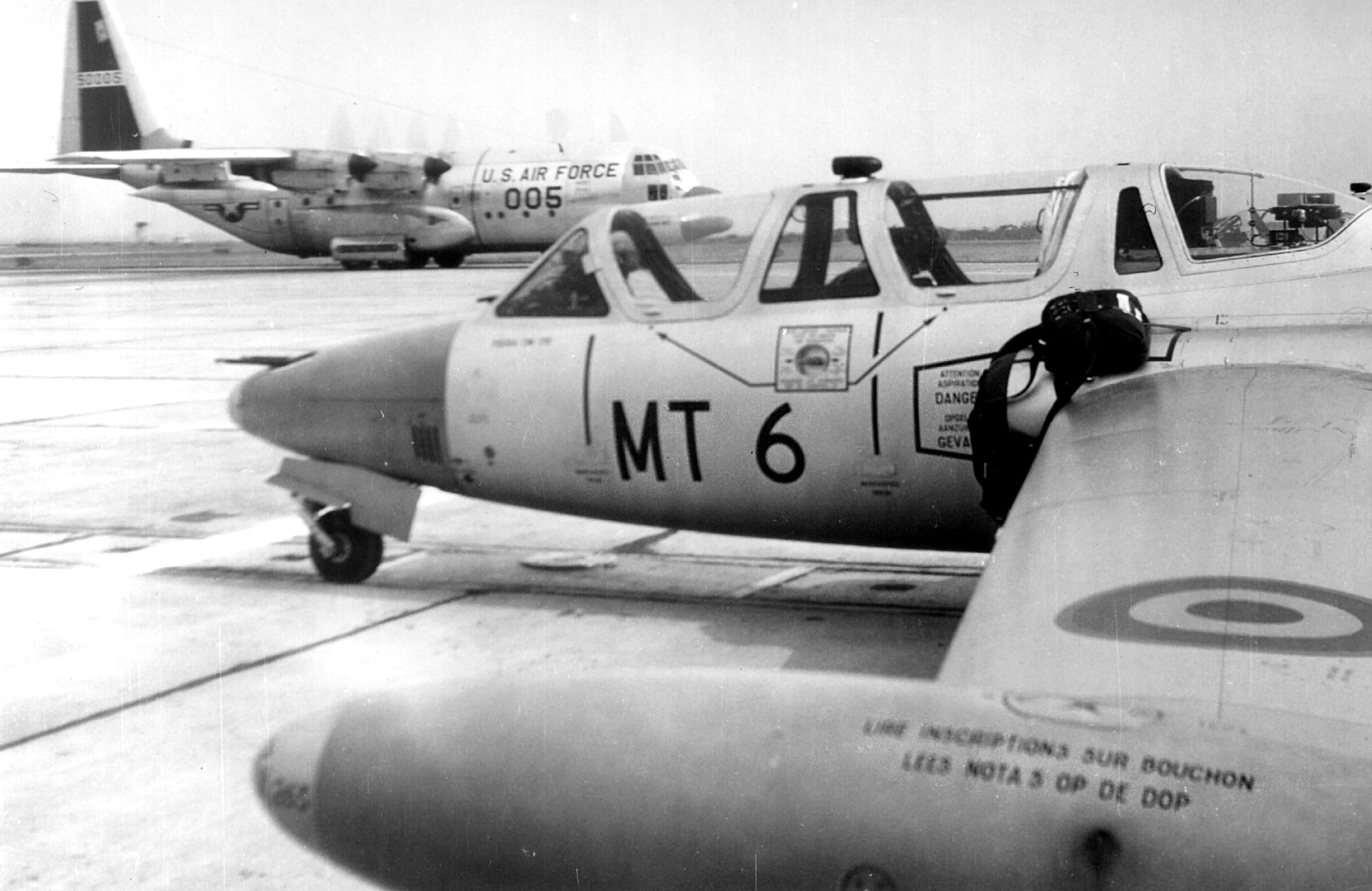
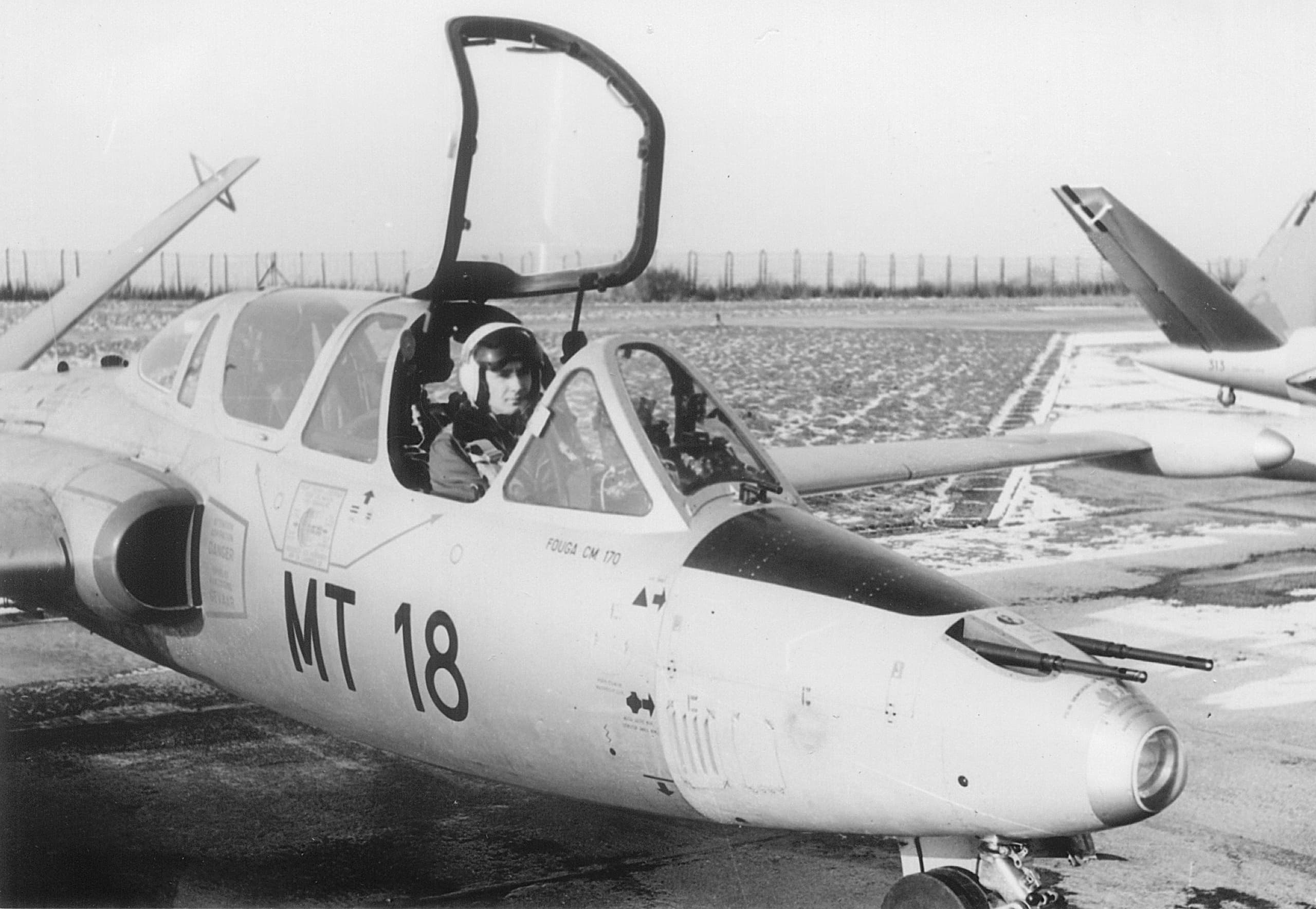
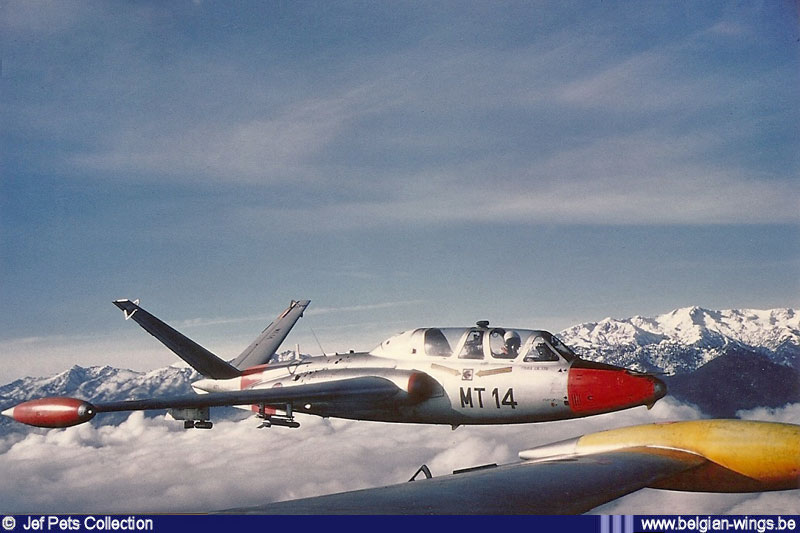
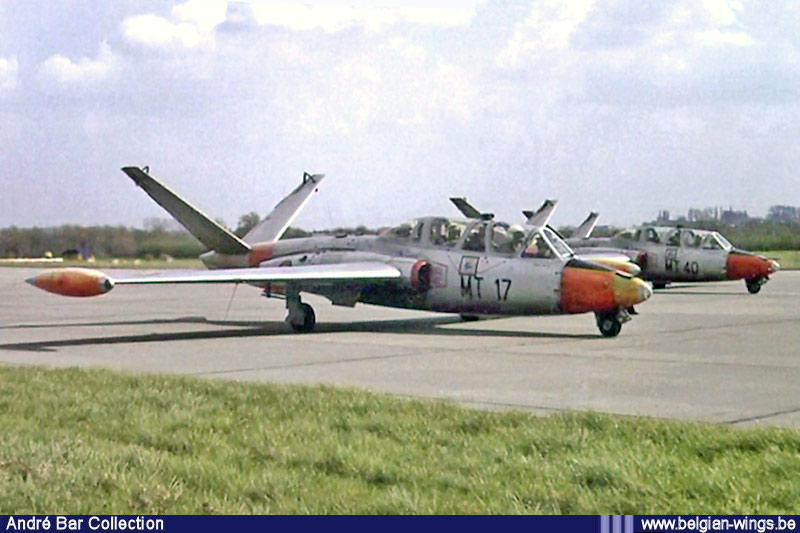
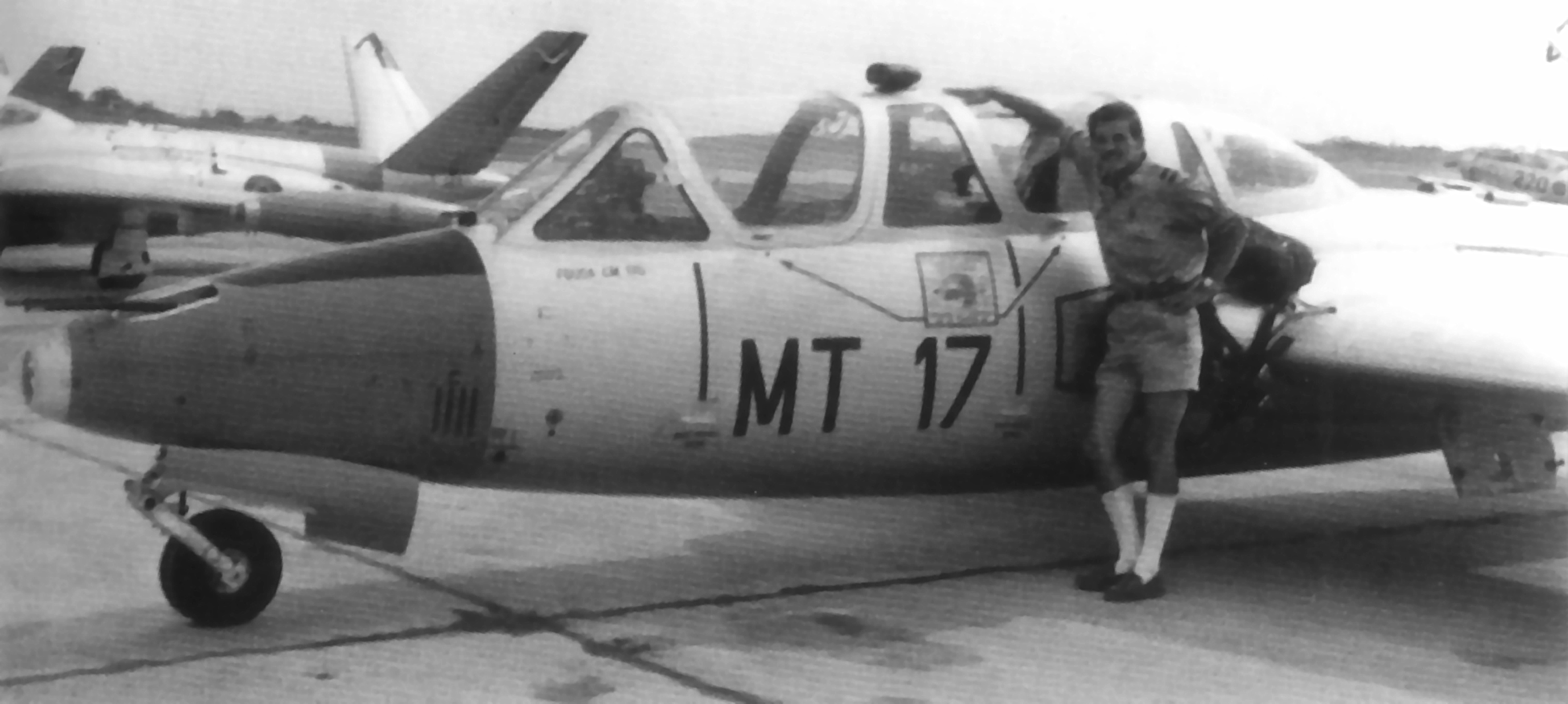
To provide protection for evacuation aircraft and reconnaissance flights, six Belgian Magisters, MT-4, MT-6, MT-10, MT-14, MT-17 and MT-18, were converted into armed aircraft by fitting two 7.5 mm machine guns in the nose and two underwing rocket launchers, capable of carrying either T.10 120 mm or T.900 90 mm rockets. These aircraft were employed on armed reconnaissance missions, escorting evacuation flights, protecting transport helicopters and cargo aircraft, demonstrating force over unstable regions, and searching for isolated European civilians awaiting evacuation.
Although the aircraft saw only limited combat, this marked one of the very few occasions on which Belgian Fouga Magisters were employed in an operational combat role. Their speed, excellent visibility and low operating costs made them well suited to reconnaissance flights over large areas, while their rockets and machine guns provided enough firepower to deter or suppress lightly armed opponents if necessary.
Armed on July 1960 at KaminaBelgian operations in the Congo were relatively brief. By the end of July 1960, Belgian forces withdrew from Kamina, handing responsibility over to United Nations peacekeeping forces. The Magisters subsequently returned to Belgium, ending their short but historically significant operational deployment.
Return to Belgium
Following their withdrawal from the Congo, the Belgian Fougas resumed the role they had originally been purchased for.
The aircraft became the backbone of advanced jet training at Brustem Air Base, where they equipped the Voortgezette Vliegschool. For decades, virtually every Belgian military jet pilot completed advanced flying training on the Magister before progressing to operational fighter aircraft. Dutch student pilots also continued to receive training on the type as part of the long-standing Belgian-Dutch cooperation programme.
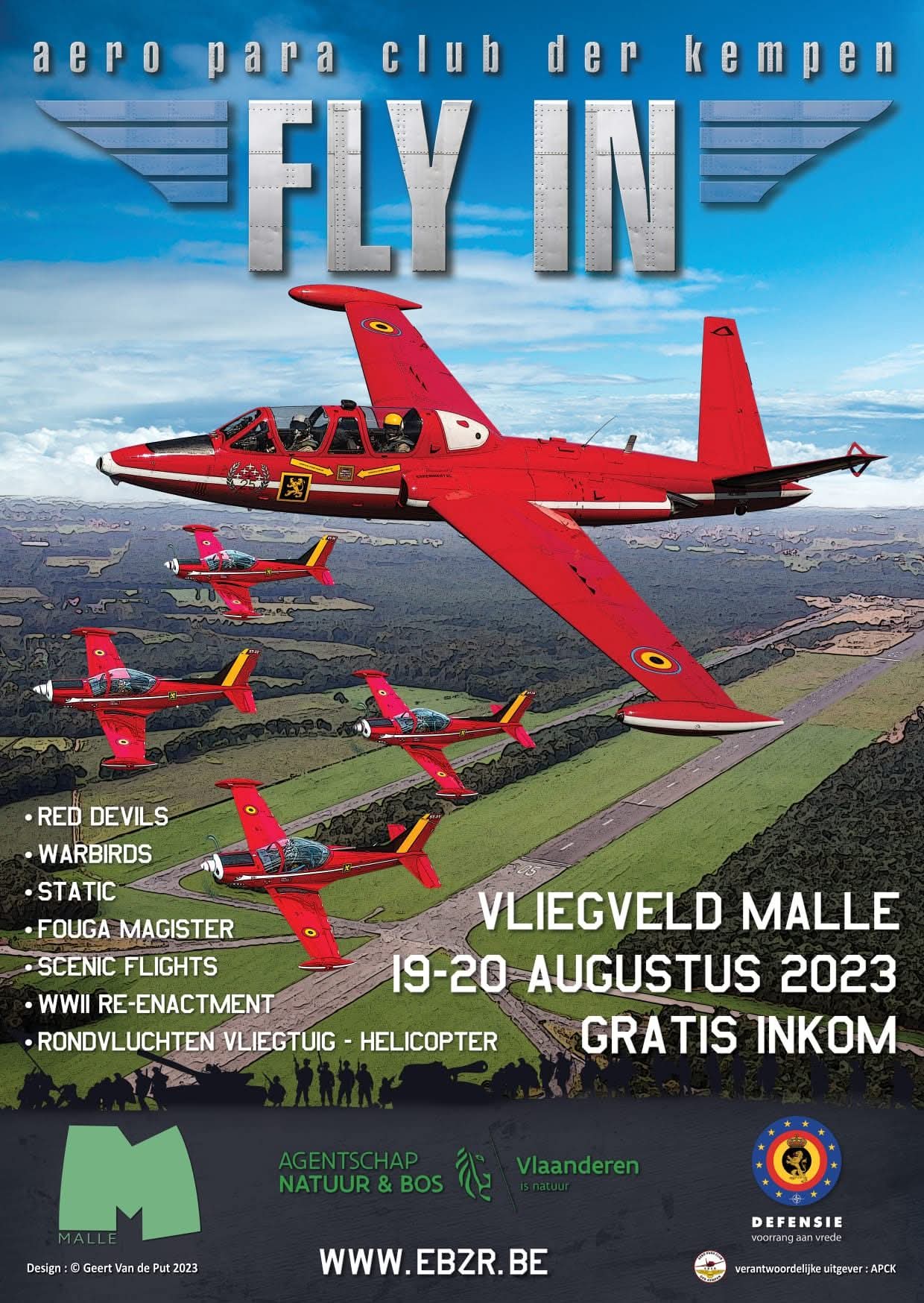
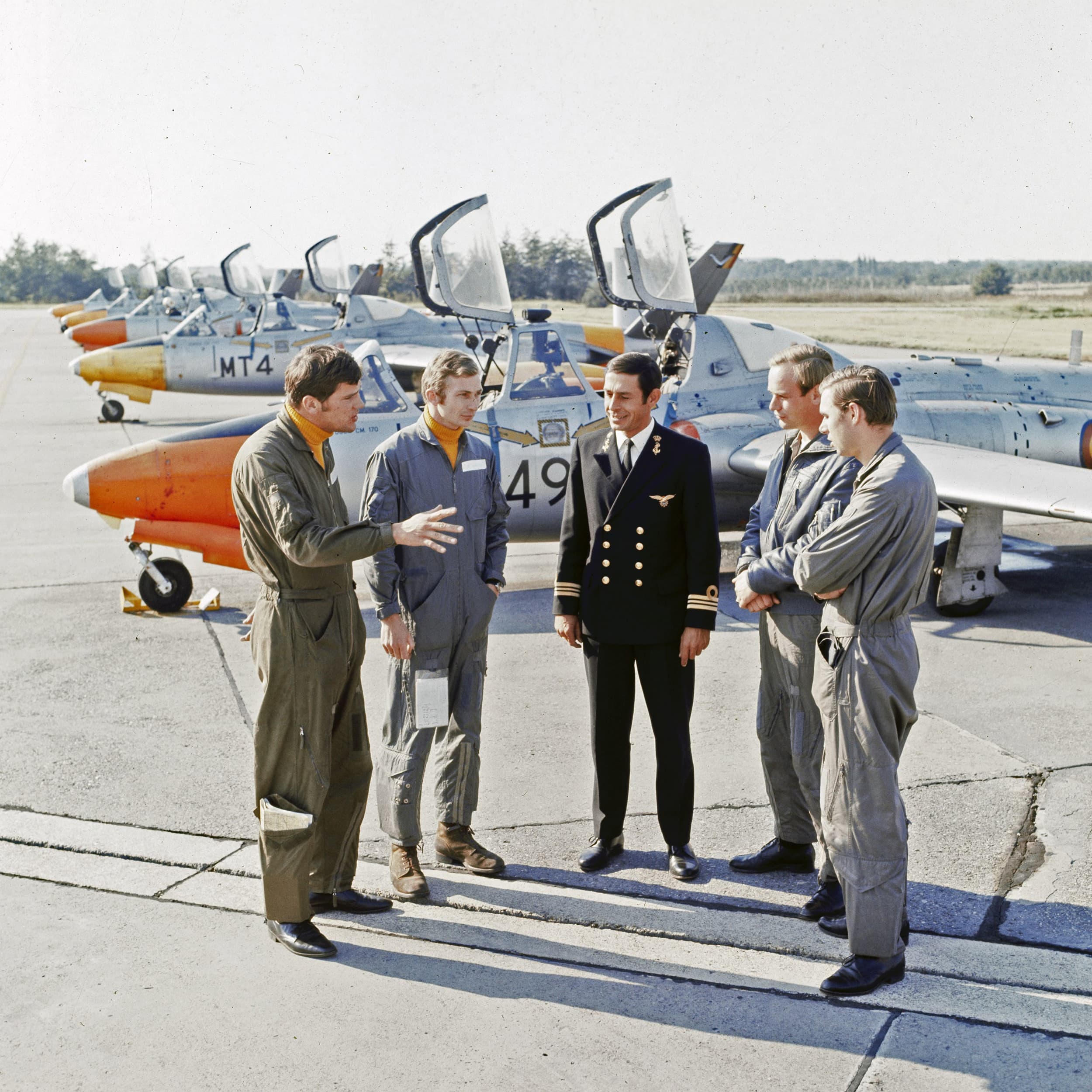
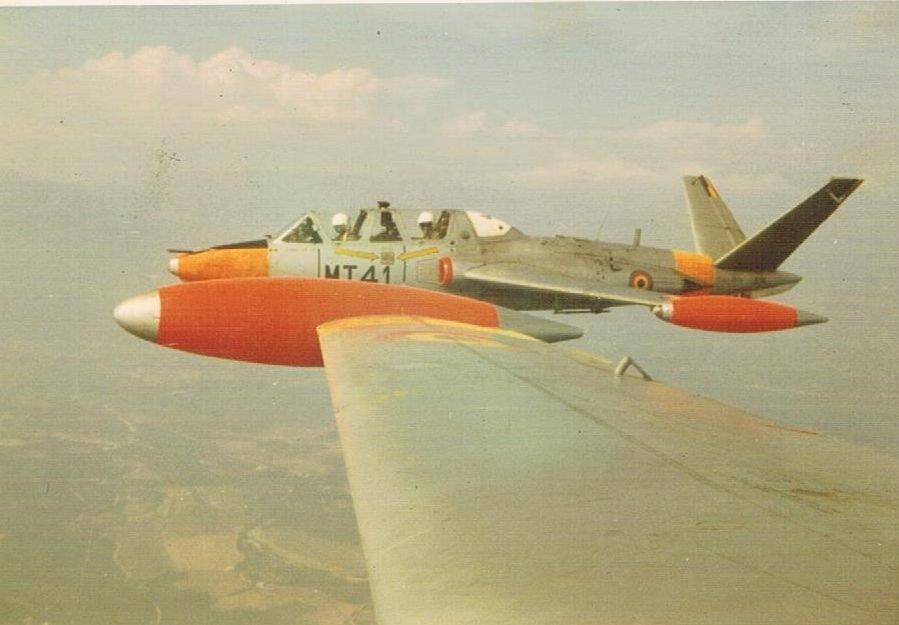
Brustem Airfield, Belgian and Dutch pilots are discussing the flightplan.Beyond pilot training, the Magister became one of the most recognizable aircraft in Belgian military aviation. It served with the famous Red Devils aerobatic display team, whose red-painted Fougas became an iconic sight at European airshows throughout the 1960s and 1970s.
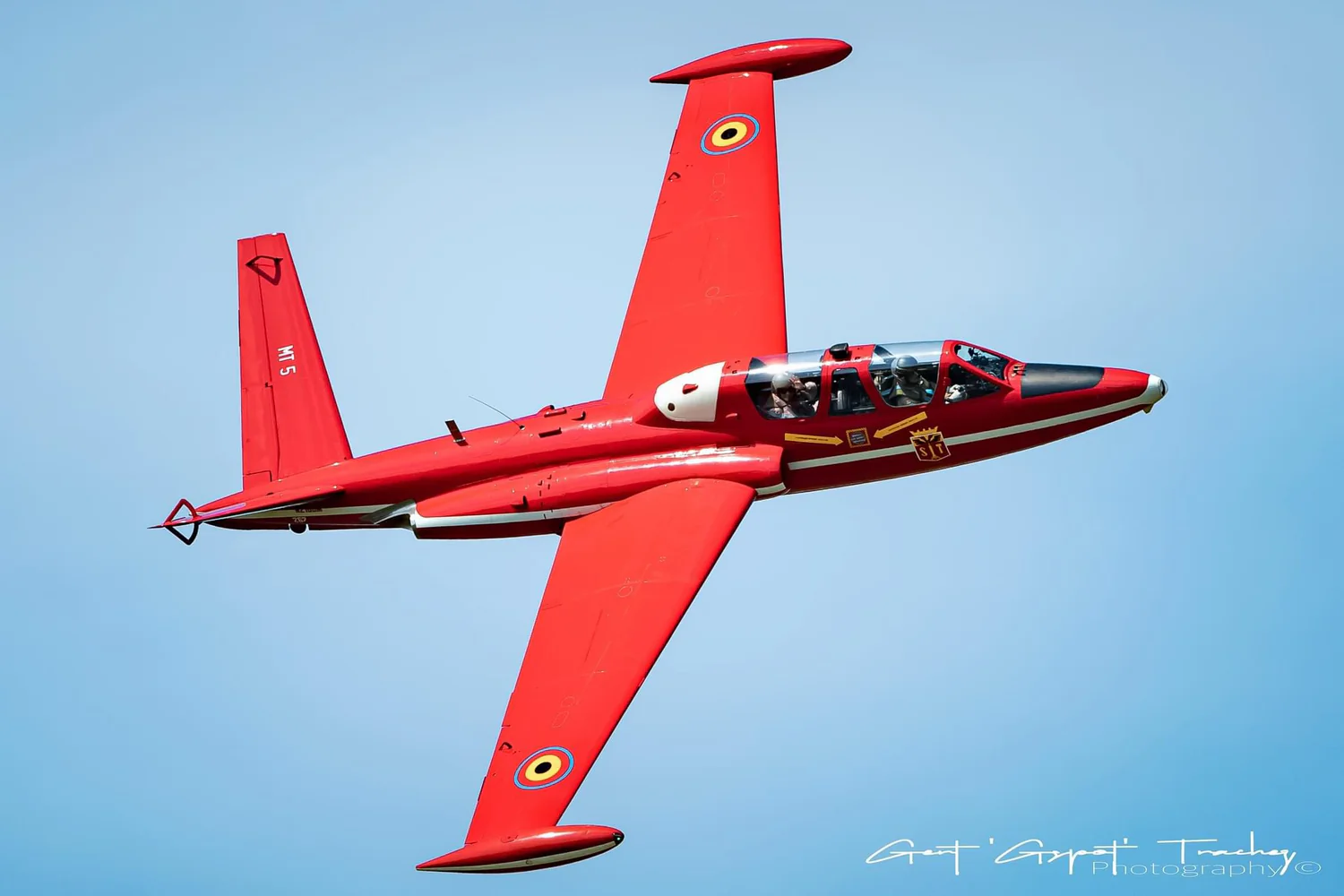
Red Devils aerobatic display teamBelgium eventually expanded its fleet to 50 aircraft, including several ex-German examples. The Magister remained in frontline training service until 1995, with a handful of aircraft continuing in limited proficiency and officer training duties until 2007, making Belgium the final military operator of the Fouga Magister anywhere in the world.
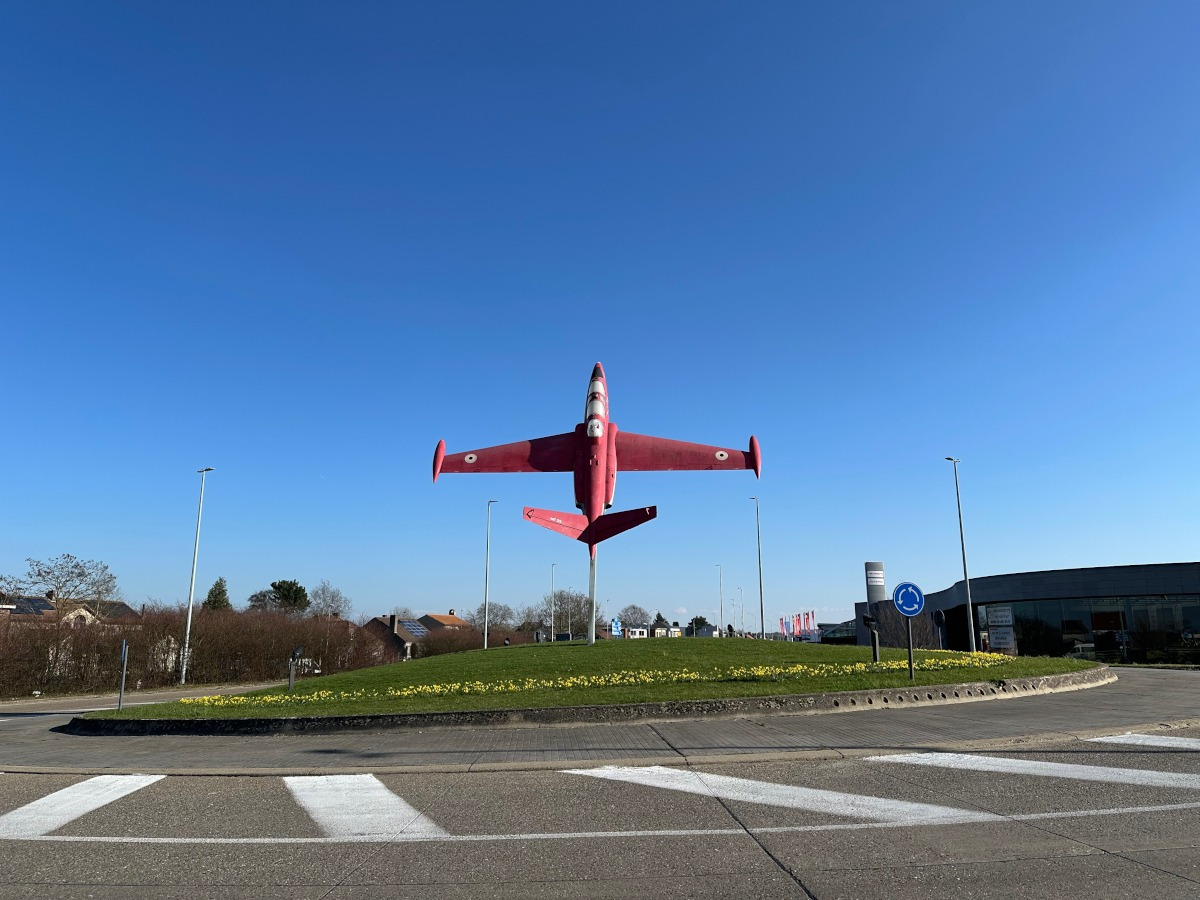
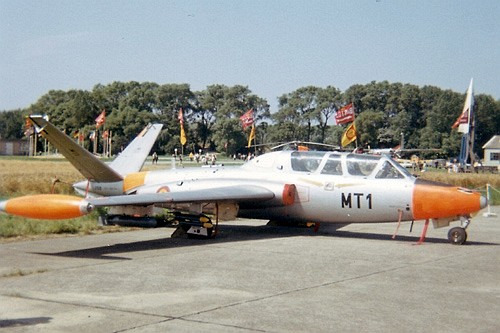
MT1, photographed in 2019Today, numerous Belgian Magisters have been preserved in museums, gate guardian displays and private collections both within Belgium and abroad, serving as reminders of an aircraft that trained generations of Belgian military aviators while also briefly serving in combat during one of the Cold War’s lesser-known conflicts.
Design
Design
The Fouga CM.170 Magister was one of the world’s first aircraft designed from the outset as a dedicated jet trainer rather than a conversion of an existing fighter. Its designers prioritized forgiving handling characteristics, excellent visibility, low operating costs, and ease of maintenance, resulting in an aircraft that would become one of the most successful trainers of the Cold War.
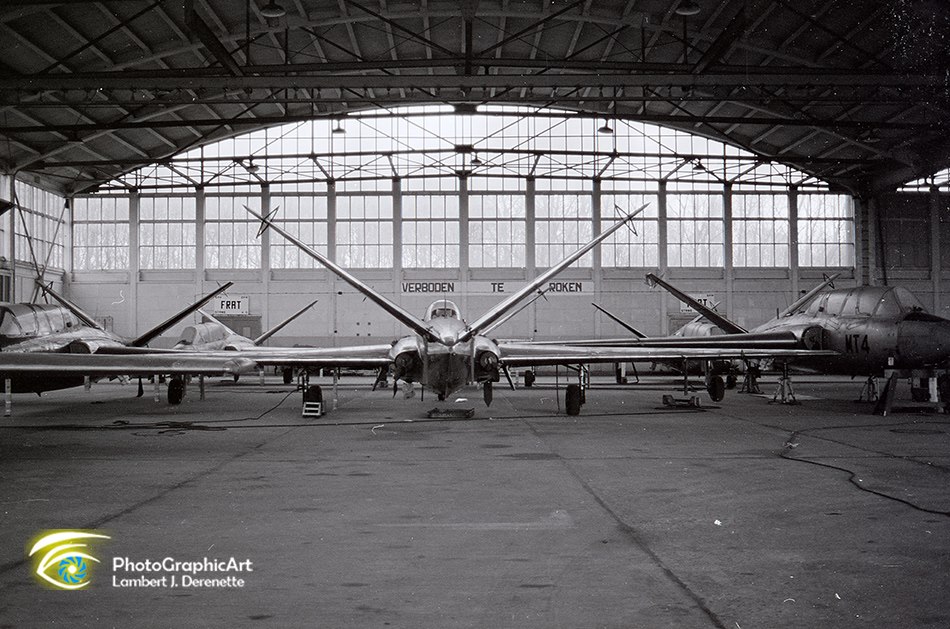
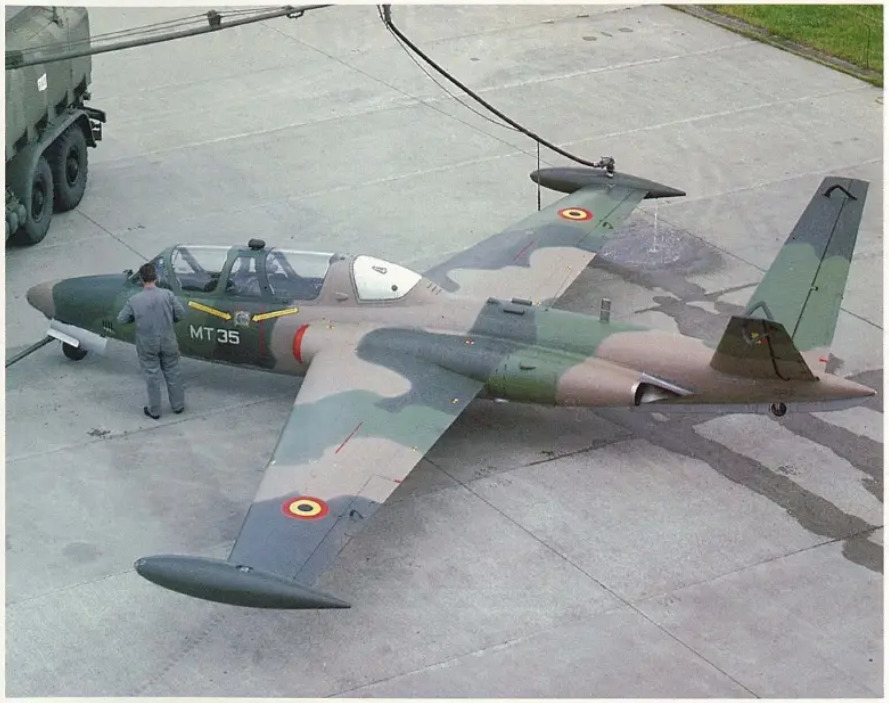
Perhaps its most distinctive feature was its butterfly (V-)tail, which combined the functions of the horizontal and vertical stabilizers into two inclined tail surfaces. Besides giving the Magister its unmistakable appearance, this configuration allowed the twin Turboméca Marboré IIA turbojets to exhaust freely between the tail surfaces, reducing aerodynamic interference while keeping the rear fuselage compact and lightweight.
The aircraft featured a straight mid-mounted wing with permanently fitted 125-litre wingtip fuel tanks, increasing fuel capacity while also reducing wingtip vortices and improving lateral stability. The combination of a low wing loading, responsive controls and excellent low-speed behaviour made the Magister exceptionally forgiving for student pilots, yet agile enough to perform advanced aerobatics.
Its tandem cockpit provided excellent visibility for both instructor and student, with fully duplicated flight controls allowing either occupant to fly the aircraft. The cockpit layout followed contemporary NATO standards, placing the primary flight instruments directly ahead of each pilot, while engine controls were mounted centrally between the seats. Large sliding canopies provided excellent all-round visibility and could be jettisoned in an emergency.
Belgian Magisters were originally delivered with French-built ejection seats, but during their long service life they were progressively modernised. From the late 1970s onwards, the fleet was retrofitted with the Martin-Baker Mk.4 (GR.4) ejection seat, significantly improving crew survivability and bringing the aircraft in line with modern safety standards. The retrofit required modifications to the cockpit structure and canopy jettison system but did not alter the aircraft’s external appearance.
Designed with simplicity in mind, the Magister proved exceptionally reliable and easy to maintain. Large access panels provided straightforward servicing of the engines and aircraft systems, while the twin-engine arrangement offered an additional level of safety during training operations. These qualities contributed to an operational career spanning nearly five decades in Belgian service.

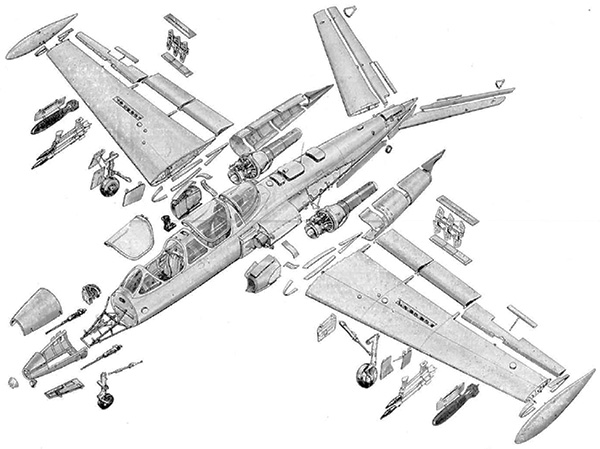
Specifications
Specification Value Crew 2 Length 10.06 m Wingspan 12.15 m Height 2.80 m Wing area 17.3 m² Empty weight 2,150 kg MTOW 3,200 kg Engines 2 × Turboméca Marboré IIA Thrust 400 kgf each Maximum speed 715 km/h Cruise speed 650 km/h Range 900 km Range (tip tanks) approx. 1,200 km Service ceiling 11,000 m Climb rate 17 m/s
Armament
Belgian Fouga CM.170-1 Magister (Armed Configuration) Fixed armament 2 × 7.5 mm FN machine guns (200 rounds per gun) Hardpoints 2 × underwing pylons + 2 × outerwing pylons Rocket armament 2 × rocket launcher hardpoints (documented during the Congo Crisis)
• Twin T.10 120 mm rocket launchers or
• Twin T.900 90 mm rocket launchersBomb armament Provision for light bombs (50 kg) External fuel 2 × 125 L wingtip fuel tanks (standard equipment) X-ray
Place in War Thunder
Place in War Thunder
The Belgian Fouga CM.170-1 Magister would be a unique early jet trainer in a potential independent Benelux TT that bridges the gap between piston trainers and first-generation jet fighters. While never intended to fight front-line aircraft, the Belgian combat-modified Magisters demonstrated that the type was capable of carrying offensive armament during the Congo Crisis.
Armed with two fixed 7.5 mm machine guns and two underwing rocket launchers, it would provide an interesting light attack aircraft comparable in gameplay to aircraft such as the Saab 105 or Strikemaster, albeit at a lower battle rating.
Within the current French aviation tree, the aircraft would fit naturally in the French-BeNeLux subtree, representing Belgium’s first domestically operated jet trainer. However, in that case it could easily come as a skin for a French one too. Should a separate Benelux tree ever be introduced, the Magister would become one of the cornerstone early jet aircraft, representing the beginning of Belgium’s jet aviation.
Pictures
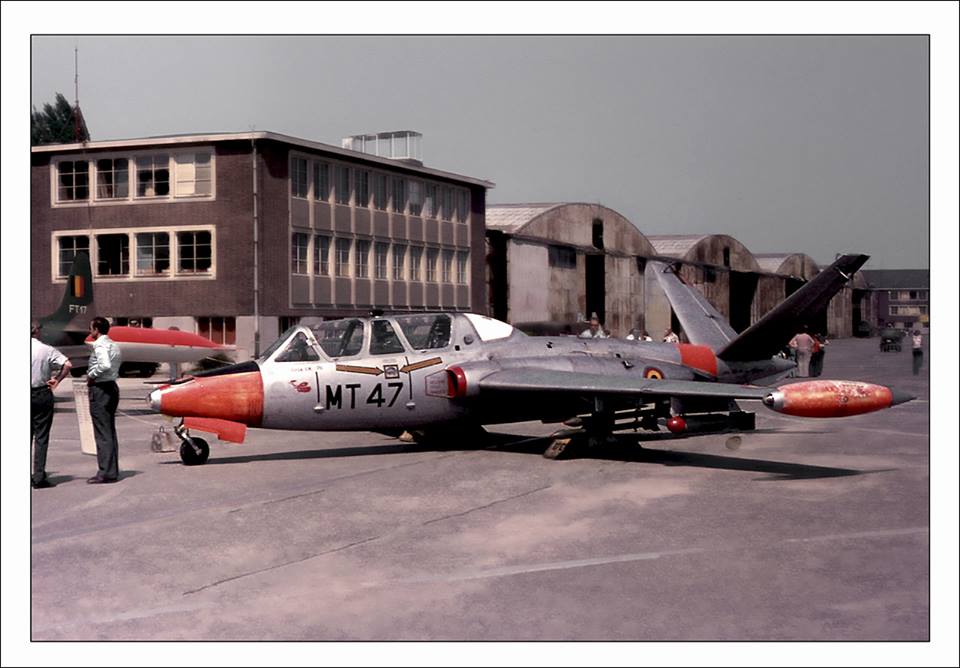
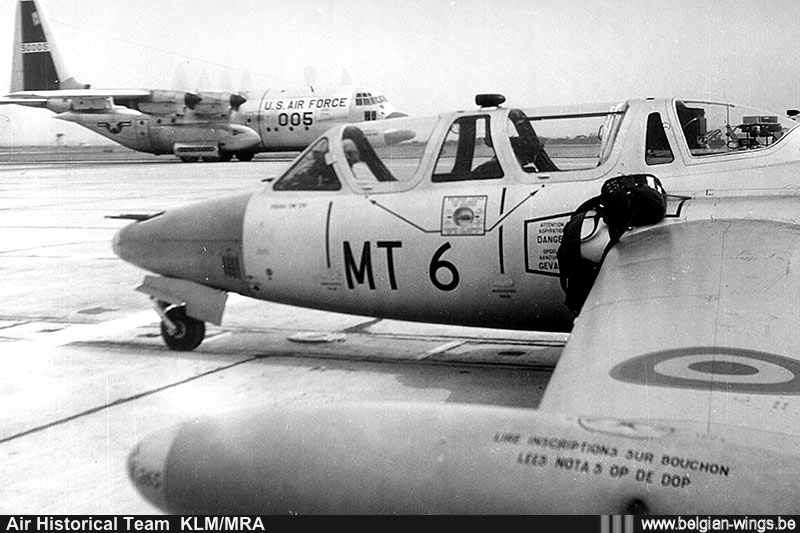
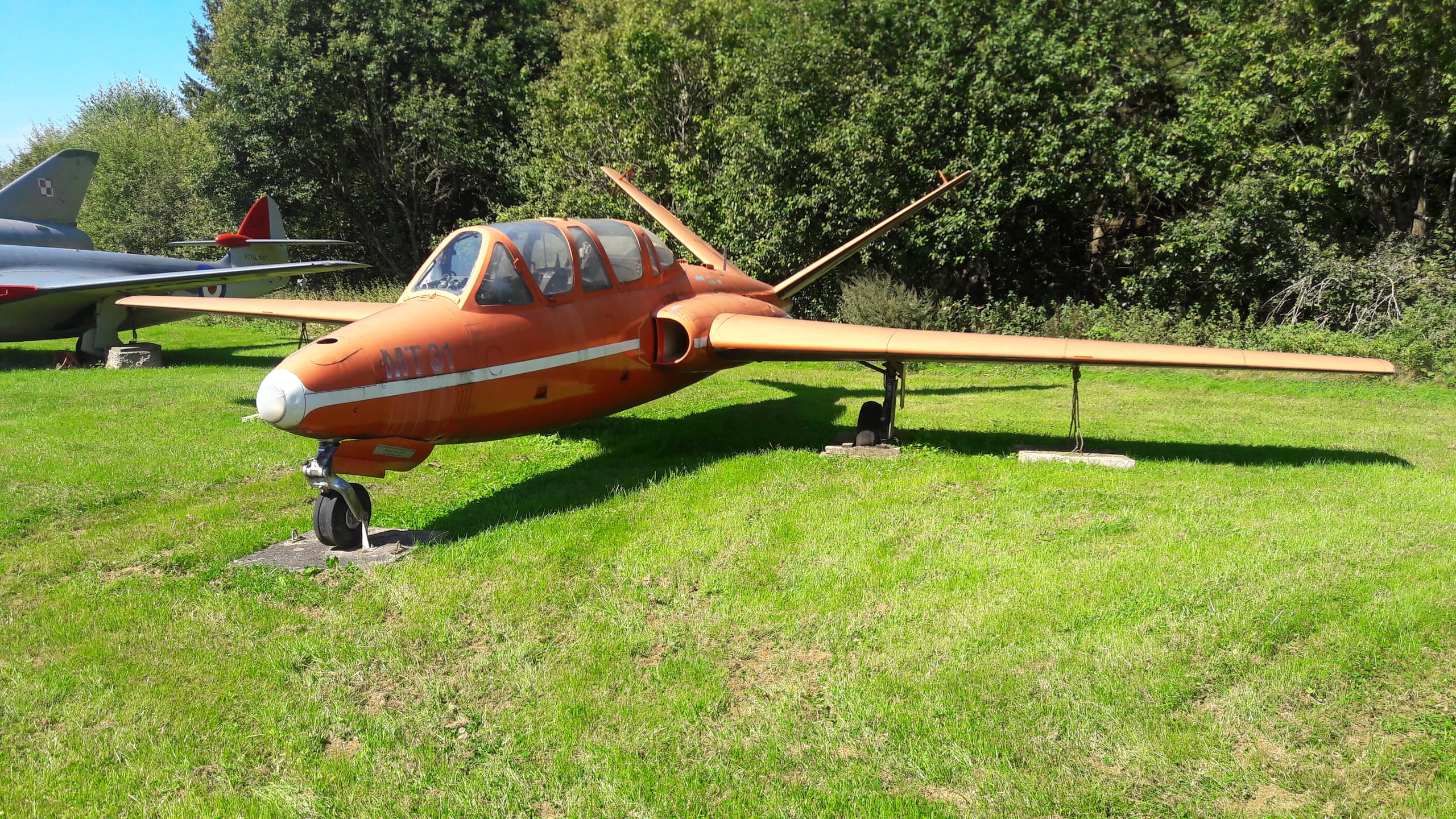
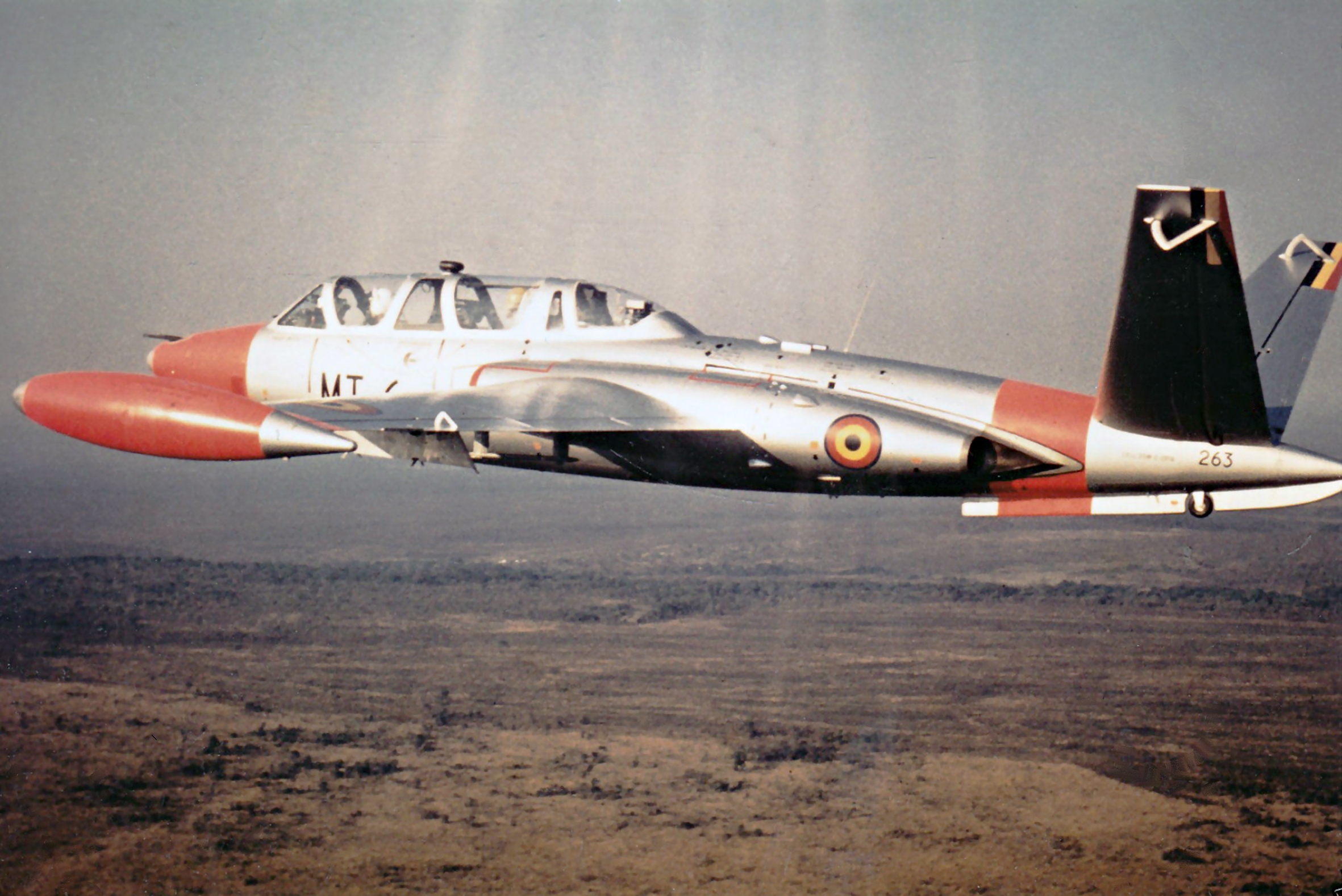

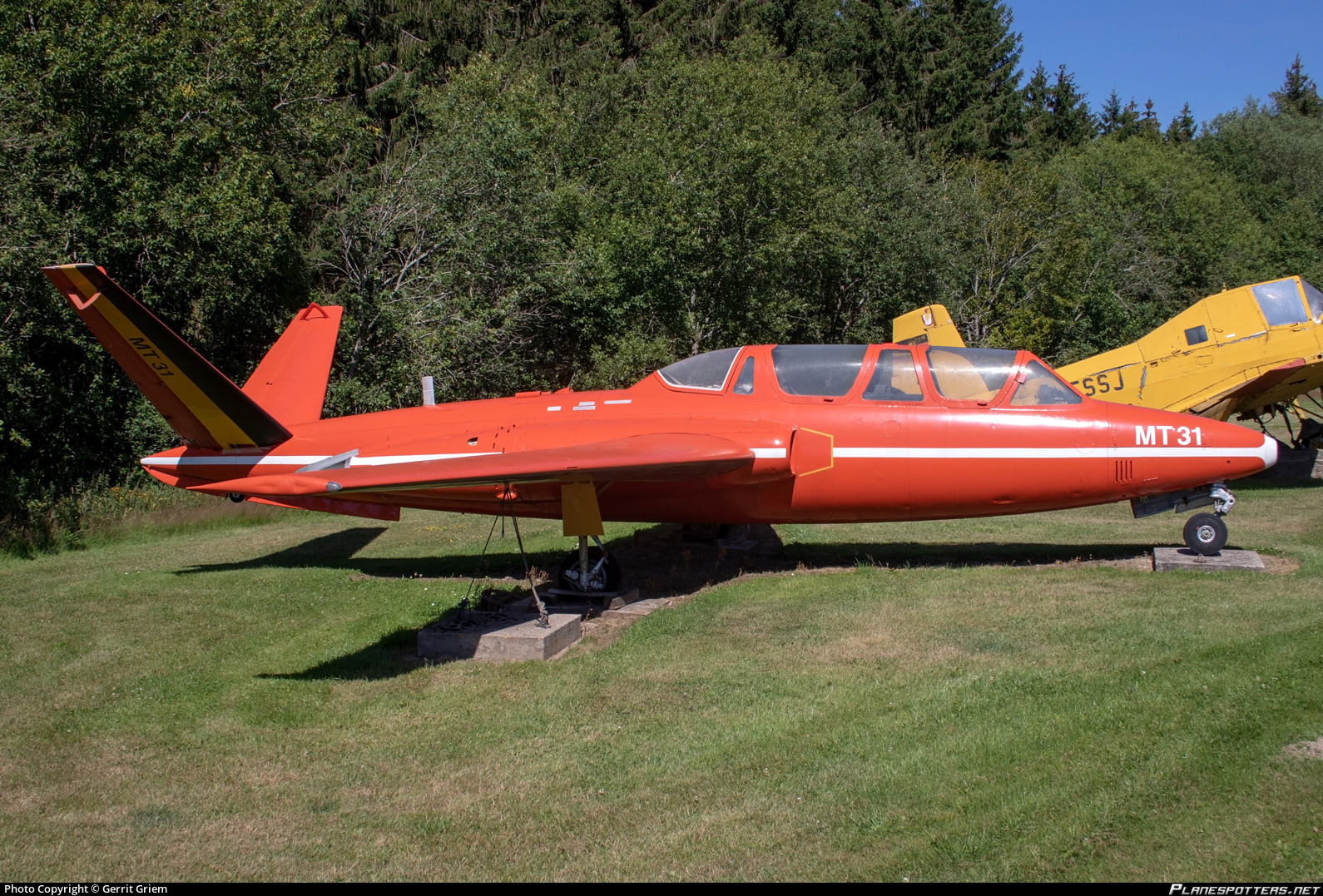
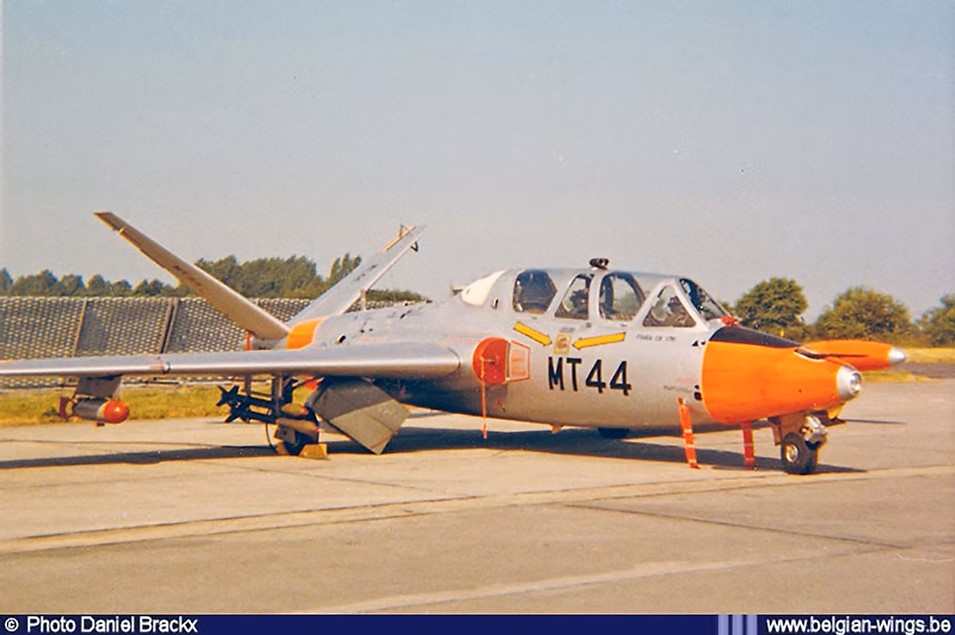
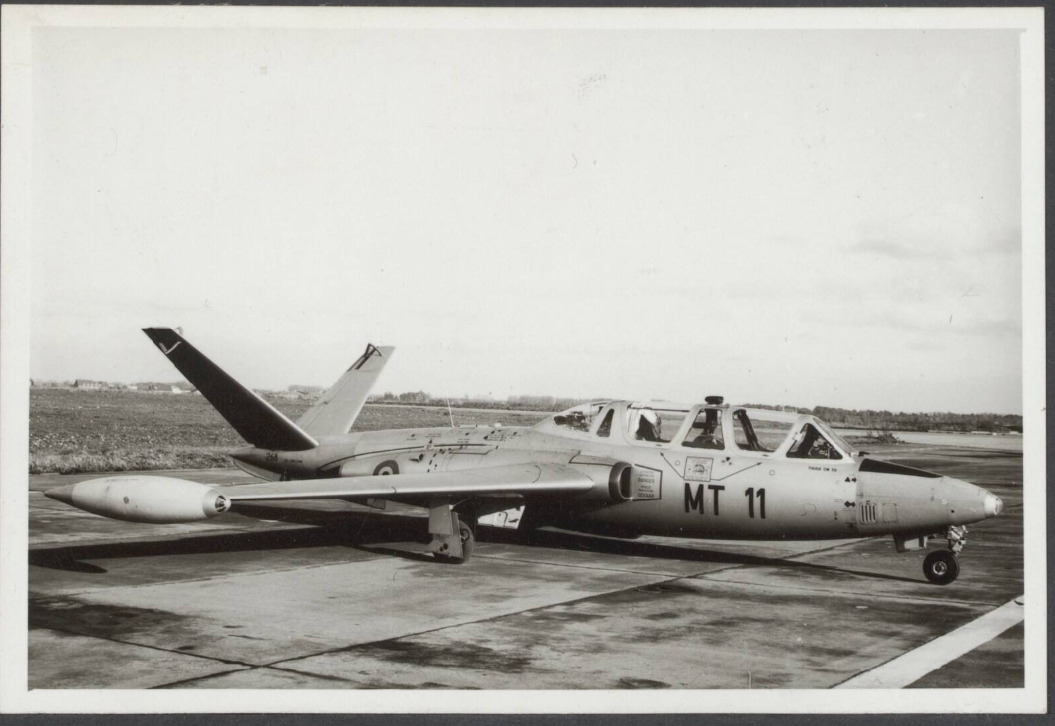
Sources
Sources
Official documentation
- Belgian Air Force Fouga CM.170 Technical Instructions for Pilots (1960s) https://fouga.be/wp-content/uploads/2025/11/techinstruct.pdf
- Belgian Air Force Fouga Flight Manual (-1), latest edition https://fouga.be/wp-content/uploads/2025/11/Fouga-1.pdf
- Belgian Air Force Fouga Painting Instructions (1965–1995) https://fouga.be/wp-content/uploads/2025/11/Fouga_painting_instructions_1965.pdf
- Belgian Air Force Fouga Painting Instructions (1995–2007) https://fouga.be/wp-content/uploads/2025/11/Fouga_painting_instructions_1995.pdf
- 1958 Belgian Air Force Technical Manuals (Kamina Air Base)
- Martin-Baker GR.4 Ejection Seat Retrofit Manual https://fouga.be/wp-content/uploads/2025/11/GZ4.pdf
- STANAG 3109 Painting Instructions (Marc Leydecker) https://fouga.be/wp-content/uploads/2025/11/Belga_Stanag3109.pdf
Available through:
https://fouga.beBooks
- Soetaert, Tine. Fouga Magister. MMP Books, 2015. ISBN 9788363678388.
Articles
“Fouga CM.170 Magister / CM.175 Zéphyr”
75 - Fouga CM-170 « Magister » & CM-175 « Zephyr ». - Le blog de Avions de la Guerre d'AlgérieDebourse, Benoît; Sonck, Jean-Pierre.
Les Fouga Magister du Katanga / De Fouga Magisters van Katanga. (badly translated version here: Client Challenge )Additional references
- Belgian Air Force serial lists (simplified below) (https://fouga.be)
Serial c/n Final fate / Current location MT-1 258 Crashed (1985) MT-2 259 Volo Museum, Illinois (USA) MT-3 260 Brustem monument (Belgium) MT-4 261 Landen reserve collection MT-5 262 Stampe & Vertongen Museum, Antwerp MT-6 263 Crashed (1976) MT-7 264 Crashed (1967) MT-8 265 Crashed (1987) MT-9 266 Baarlo, Netherlands MT-10 267 Crashed (1965) MT-11 268 USA (under restoration) MT-12 269 New York, USA MT-13 270 Stampe & Vertongen Museum MT-14 271 Kleine Brogel Museum MT-15 272 Delaware, USA MT-16 273 USA MT-17 274 Airshow aircraft, Washington, USA MT-18 275 Crashed (1968) MT-20 277 Hatzerim Museum, Israel MT-21 278 Crashed (1967) MT-22 279 Brussels Air Museum MT-23 280 Landen reserve collection MT-24 281 USA MT-25 282 Crashed (1964) MT-26 283 Private owner, Belgium MT-27 284 Beauvechain Museum MT-28 285 Miami, USA MT-29 286 France (private) MT-30 287 Techspace Aero gate guardian, Herstal MT-31 288 Beauvechain Museum MT-32 289 Dutch Transport Museum MT-33 290 Crashed (1971) MT-34 291 Landen reserve collection MT-35 292 Beauvechain Museum (last operational Belgian Fouga) MT-36 293 Florennes Museum MT-37 312 Beauvechain Museum MT-38 313 Dutch Transport Museum MT-39 314 Crashed (1979) MT-40 317 Landen reserve collection MT-41 318 Crashed (1973) MT-42 319 Crashed (1986) MT-43 322 Preserved (parts), Hermeskeil/Peutie MT-44 323 Landen reserve collection MT-45 327 Crashed (1962) MT-46 145 Saffraanberg Technical School MT-47 203 Crashed (1977) MT-48 204 Beauvechain Museum MT-49 222 Beauvechain (recruitment aircraft) MT-50 224 Crashed (1987)
- Belgian Air Force Form 781 maintenance documentation (https://fouga.be)
- Belgian Air Force Kamina operational records (DAKOTA — 15 Wing Heritage Museum )